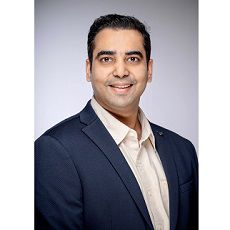
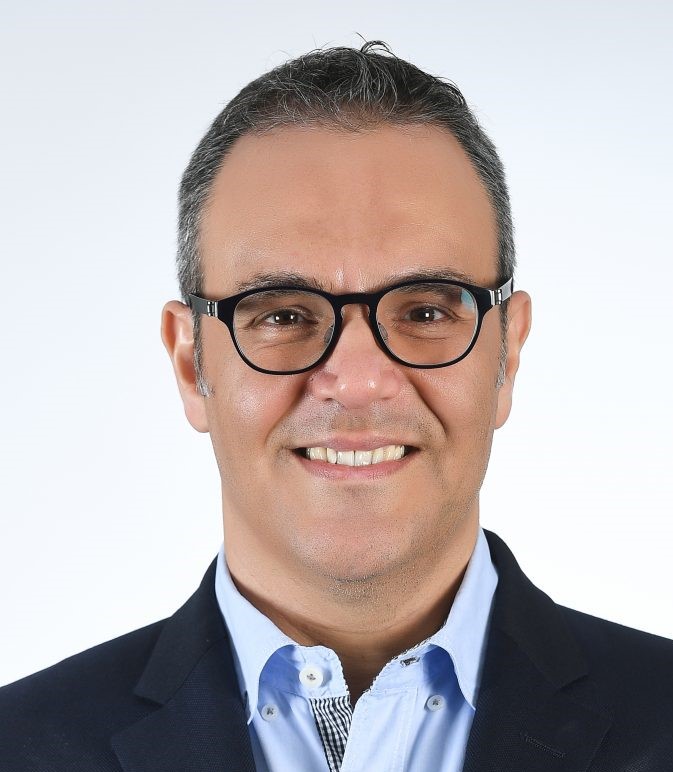
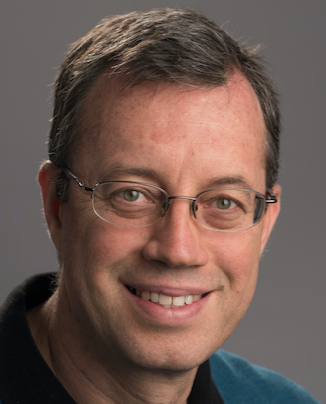
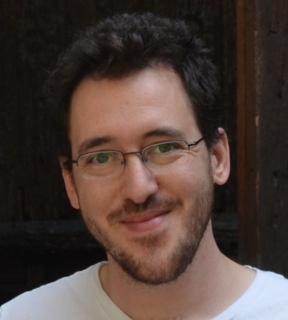
Frank Christian Stephan is a Professor at the National University of Singapore (NUS), with joint appointments in the Department of Mathematics (primary) and School of Computing (secondary). His research spans mathematical logic, theoretical computer science, and computational complexity. Research Interests: Recursion theory and Kolmogorov complexity Inductive inference and learning theory Automata theory and automatic structures Parity games and algorithmic randomness Selected Publications include works on quasipolynomial time algorithms for parity games (STOC 2017 Best Paper) and semi-automatic structures. His scientific awards include the STOC 2017 Best Paper Award and the EATCS-IPEC Nerode Prize 2021. He teaches courses such as Computational Complexity (AY 2023/2024 Sem 2, AY 2024/2025 Sem 2), Advanced Automata Theory (multiple editions), and Mathematical Logic (undergraduate). He co-organizes the Logic Seminar at NUS.
Mathias Lécuyer is an Assistant Professor in the Computer Science Department at the University of British Columbia (UBC) , part of the Faculty of Science . His research focuses on trustworthy AI systems, with emphasis on privacy (differential privacy), adversarial robustness, and causal machine learning. He leads the Systopia Lab and collaborates with groups such as UBC S&P, TrustML, and CAIDA. Education: PhD in Computer Science from Columbia University (2019), MSc from Columbia University (2013) and École Polytechnique (2011). Research Interests: Ensuring rigorous guarantees for AI systems via differential privacy, robustness against adversarial attacks, and causal inference. His work spans theoretical foundations and practical implementations in areas like privacy-preserving systems, federated learning, and transparent machine learning. Awards: SOSP Distinguished Artifact Honorable Mention (2024), Google Research Award (2022), Bourse Carnot Fellowship (2011), and UBC’s top teaching evaluations (2021). Advising & Service: Supervised over 20 students (PhD, MSc, undergrad) across privacy and machine learning topics. Serves on PCs for top conferences (OSDI, S&P, NeurIPS) and organizes workshops like TrustML @ UBC. Actively mentors high school students in ML research through outreach programs. Labs/Teams: Leads the Systopia Lab at UBC, focusing on AI safety and privacy. Collaborates with MSR, Google, and industry partners on practical system implementations.
Pragya Sur is an Assistant Professor of Statistics at Harvard University and currently on leave as a Visiting Professor at MIT’s Laboratory for Information and Decision Systems (LIDS). Her research focuses on high-dimensional statistics, machine learning, and artificial intelligence, particularly in overparametrized models, causal inference, and learning under distribution shifts. She has held postdoctoral positions at Harvard’s Center for Research on Computation and Society (hosted by Cynthia Dwork) and was a Simons Institute Long-Term Participant at UC Berkeley. She earned her Ph.D. in Statistics from Stanford University under Emmanuel Candès, and completed her B.Stat and M.Stat at the Indian Statistical Institute, Kolkata. Sur’s work has been supported by NSF awards, the Eric and Wendy Schmidt Fund, and the William F. Milton Fund. She was named an International Strategy Forum (ISF) Fellow (2023) and led the Institute of Mathematical Statistics (IMS) New Researchers Group (2022–2024). She serves as an Associate Editor for Statistical Science and Guest Co-Editor for a special issue on AI and statistics. Her research contributions span theoretical guarantees for machine learning, transfer learning, and debiasing techniques in high-dimensional inference. Awards: NSF CAREER Award, Theodore W. Anderson Dissertation Award, Ric Weiland Fellowship Education: Ph.D. in Statistics (Stanford, 2019); M.Stat (ISI Kolkata, 2014); B.Stat (ISI Kolkata, 2012) Professional Roles: Associate Editor, Statistical Science ; ISF Fellow (2023); former IMS New Researchers Group Lead Her current research emphasizes statistical theory for modern machine learning, including foundational work on overparametrized models and robust inference across heterogeneous environments.
Prof. Dr. Emre Neftci is a Professor and Director of the Neuromorphic Software Ecosystems (PGI-15) group at the Peter Grünberg Institute (PGI) , part of the Research Center Jülich . His research focuses on neuromorphic engineering, artificial intelligence, and neuroscience, spanning interdisciplinary areas such as neuromorphic computing and machine learning. He oversees the development of neuromorphic software ecosystems, bridging theoretical and applied aspects of neuro-inspired computing. His work integrates principles from computer science, neuroscience, and engineering to advance next-generation computing systems. No specific publications, awards, or grants are detailed in the provided text, but his group's activity is centered at the intersection of neuromorphic hardware and software solutions.
Benjamin Grimmer is an Assistant Professor in the Department of Applied Mathematics and Statistics at Johns Hopkins University. He is affiliated with the Mathematical Institute for Data Science (MINDS) and the Data Science & AI Institute. His research focuses on designing and analyzing algorithms for continuous optimization, particularly in nonconvex, nonsmooth, and adversarial settings. Grimmer’s work bridges classical optimization theory and modern machine learning challenges, leveraging computer-assisted proof techniques to advance algorithmic foundations. He earned his PhD in Operations Research from Cornell University, advised by Jim Renegar and Damek Davis. His doctoral work was supported by a National Science Foundation fellowship. Grimmer has held research positions at Google and the Simons Institute, exploring adversarial optimization and continuous-discrete optimization interfaces. His current work is supported by the Air Force Office of Scientific Research and a 2024 Alfred P. Sloan Fellowship. Research interests include algorithm design for stochastic/nonconvex/nonsmooth optimization, computer-aided proof methods, and meta-optimization tools like stepsize schedules. His recent studies, including work on gradient descent acceleration via long steps, were highlighted in Quanta Magazine (2023). Education: PhD in Operations Research, Cornell University (advisor: Jim Renegar and Damek Davis) Awards: Alfred P. Sloan Fellowship in Mathematics (2024) National Science Foundation Graduate Fellowship (PhD support) Dr. Grimmer advises a research group including PhD candidates Ning Liu, Thabo Samakhoana, Alan Luner, Yue Wu, and others. His lab explores optimization algorithms through both theoretical and applied lenses, collaborating closely with industry and academic partners.
Quan Zhou is a Professor leading the Robotic Instruments Group at the Department of Electrical Engineering and Automation, School of Electrical Engineering, Aalto University, Finland. He holds an M.Sc. in Control Engineering and a Dr.Tech. in Automation Technology from Tampere University of Technology. His research focuses on miniaturized robotics, robotic manipulation using contact, acoustic, magnetic, interfacial, and fluidic methods, integrating physics, mechatronics, and machine learning to address challenges in dexterous manipulation with applications in biomedicine, materials science, and industrial technologies. He directs the Master’s Programme in Automation and Electrical Engineering (AEE) at Aalto and coordinates the European Robotics Association’s Topic Group on Miniaturized Robotics. He has led the EU FP7 project FAB2ASM and chaired international conferences like MARSS 2019. Notably, he received the 2018 Anton Paar Research Award for Instrumental Analytics and Characterization. His research spans fundamental methodologies and practical applications, emphasizing interdisciplinary innovation. Recent work includes advancements in fluid-driven manipulation, biomimetic robotics, and acoustic particle control. His contributions bridge theoretical frameworks and real-world automation solutions, with publications in journals like Advanced Intelligent Systems , Nature , and Physical Review E . Prof. Zhou’s leadership roles include coordinating the EIT Digital Master's Programme in Autonomous Systems and chairing IEEE Finland robotics chapters. His work has been recognized through grants and awards, reflecting his impact on robotics and automation research and education.
Dr Ruchit Agrawal is an Assistant Professor and Head of CS Outreach at the School of Computer Science, University of Birmingham Dubai. He holds a PhD in Computer Science from Queen Mary University of London and was a postdoctoral research scientist at the University of Oxford, where he worked on Artificial Intelligence for Healthcare. His research is centered on advancing AI systems with applications in healthcare and natural language understanding. Research Interests: Dr Agrawal specializes in Artificial Intelligence, Machine Learning, Natural Language Processing, Deep Learning, and Clinical Machine Learning. His work explores Multimodal Deep Learning and Adaptive and Contextual AI , aiming to develop intelligent systems that can understand and respond to complex, real-world environments, particularly in medical contexts. His research bridges theoretical innovation with practical healthcare applications. His scholarly contributions include numerous publications in leading journals and top-tier international conferences in AI and computer science. The body of his work demonstrates a strong trajectory in healthcare-oriented AI, multimodal data integration, and context-aware learning models. Scientific Awards: Marie-Curie Fellow Dr Agrawal has experience supervising students at the PhD, MSc, and BSc levels, contributing to academic training and research mentorship. While specific grants are not listed, his Marie-Curie Fellowship and postdoctoral position at Oxford indicate a strong record of competitive research funding. He currently leads computer science outreach initiatives at the University of Birmingham Dubai, promoting engagement and education in computing fields. He is affiliated with the School of Computer Science at the University of Birmingham’s Dubai campus, contributing to both research and academic leadership in an international academic environment.
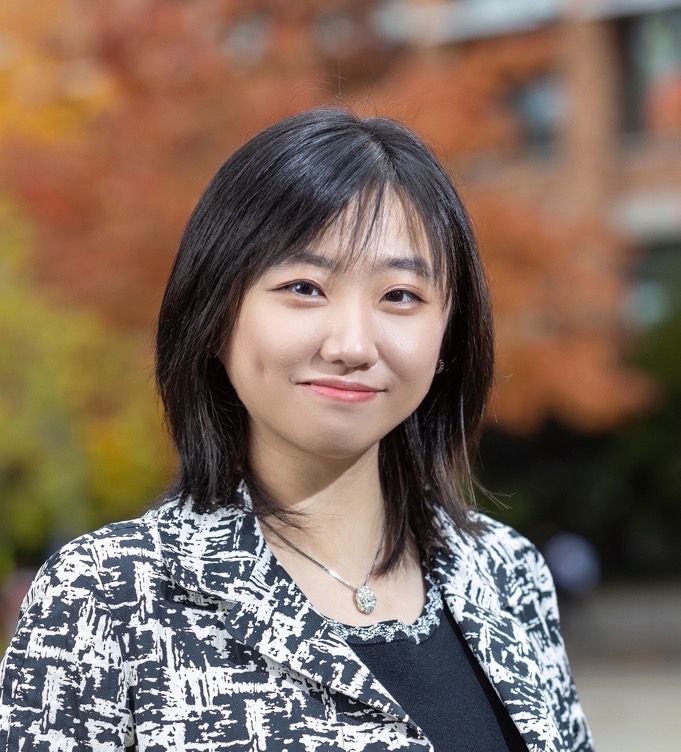
Sherry Tongshuang Wu is an Assistant Professor at Carnegie Mellon University's School of Computer Science, with primary appointments in the Human-Computer Interaction Institute (HCII) and secondary affiliation with the Language Technology Institute (LTI) . Trained at the University of Washington under Jeffrey Heer and Dan Weld, she bridges HCI and NLP to study human interactions with AI systems across diverse user groups. Her educational background includes a Ph.D. (2016-22) and M.S. (2016-18) in Computer Science and Engineering from the University of Washington, and a B.Eng. (2012-16) from Hong Kong University of Science and Technology. Industry experience includes research internships at Google Brain, Microsoft Research, and Apple. Wu's research focuses on three interconnected pillars: Real-world AI Evaluation (developing frameworks like SPHERE for systematic assessment), Task-specific AI Test & Distill (optimizing general-purpose models for specific use cases), and Human-AI Task Delegation (designing optimal collaboration between humans and AI). Her work emphasizes practical deployment, user-specific net gains, and error recovery mechanisms. Analysis of her 15 most recent publications reveals a strong trend toward evaluation frameworks (35%), human-AI collaboration systems (30%), and specialized model distillation (25%), with growing emphasis on educational applications (10%). Key methodological themes include checklist-based evaluation, perspective-aware retrieval, and structural analysis of AI outputs. Google Academic Research Award (2024) Amazon Research Awards (2024) AIED 2024 Best Paper Award ACL 2020 Best Paper Award Rising Stars in EECS Workshop (2020) Wu actively mentors 19 students across PhD, Master's, and undergraduate levels, with notable projects including synthetic data generation, LLM literacy tools, and retrieval system optimization. She leads significant grant-funded work through Amazon Research Awards and Google Academic Research Awards, focusing on deployable model generation and human-AI collaboration frameworks. Her lab develops practical tools like Promp2Model and SPHERE that bridge theoretical research with industry applications.
M. Tamer Özsu is a University Professor of Computer Science at the David R. Cheriton School of Computer Science, University of Waterloo, where he holds a Cheriton Faculty Fellowship. He also serves as a Distinguished Visiting Professor at Tsinghua University and is the Founding Director of Waterloo-Huawei Joint Innovation Laboratory since 2018. His extensive contributions to computing have earned him numerous prestigious awards including the 2024 ACM Presidential Award for long-standing and significant contributions to the computing field. Professor Özsu's research focuses on data engineering aspects of data science, particularly addressing data management issues with two main foci: management of non-traditional data and large-scale distributed data management. He is renowned for his seminal book "Principles of Distributed Database Systems" (co-authored with Patrick Valduriez), now in its fourth edition, and the "Encyclopedia of Database Systems" (co-edited with Ling Liu), in its second edition. His work bridges theoretical foundations with practical system implementations, targeting grand societal challenges through computational approaches. His recent publications reveal a strong trend toward graph analytics, streaming data processing, and the integration of large language models with vector data management. The research shows increasing focus on GPU-accelerated graph processing, RDF query optimization, and multimodal data analysis, reflecting the evolution of data management challenges in the era of big data and AI. His work continues to address fundamental challenges in distributed data systems while adapting to emerging technologies and application domains. Scientific Awards and Fellowships ACM Presidential Award (2024) IEEE TCDE Education Award (2024) IEEE Innovation in Societal Infrastructure Award (2022) CS Can | Info Can Lifetime Achievement Award (2018/2019) ACM SIGMOD Test-of-Time Award (2015) ACM SIGMOD Contributions Award (2006) The Ohio State University College of Engineering Distinguished Alumnus Award (2008) Fellow of the Royal Society of Canada Fellow of the American Association for the Advancement of Science (AAAS) Life Fellow of the Association for Computing Machinery (ACM) Life Fellow of the Institute of Electrical and Electronics Engineers (IEEE) Fellow of the Asia-Pacific Artificial Intelligence Association (AAIA) Elected member of the Science Academy, Türkiye Professor Özsu has been deeply involved in academic leadership and community building. As Founding Editor-in-Chief of ACM Books (2013-2019), he launched a series that by 2019 had published 28 major books with another 30 under contract. His service to ACM, particularly through SIGMOD, has been exemplary and widely recognized. He directs the Waterloo-Huawei Joint Innovation Laboratory, which focuses on cutting-edge research in data management and distributed systems, fostering strong industry-academia collaboration.
Dr. Maher Maalouf serves as an Associate Professor in the Department of Industrial and Systems Engineering at Khalifa University, where he has been a faculty member since 2011. He holds a PhD in Industrial Engineering from the University of Oklahoma and teaches core courses including Six Sigma Methodology and Applications (ISYE 445), Business Analytics (ESMA 610), and Advanced Business Analytics (ESMA 711). His academic credentials include: PhD in Industrial Engineering, University of Oklahoma (USA) MSc in Industrial Engineering, University of Oklahoma (USA) BBA in Management Information Systems, University of Oklahoma (USA) Dr. Maalouf's research integrates advanced analytical methodologies with industrial applications, focusing on classification and regression algorithms in machine learning, statistical process optimization through Lean Six Sigma frameworks, and operational excellence implementations. His work bridges theoretical data science with practical business process improvement across manufacturing and service sectors. He maintains active research supervision through the Socio-Technical Systems Lab, currently mentoring PhD students Toheeb Olajide Salahudeen and Kehinde Ganiyu Ismaila alongside Research Associate Assia Chadly. No scientific awards were documented in the source material.
Ravid Shwartz-Ziv is an Assistant Professor and Faculty Fellow at NYU's Center for Data Science, with a dual role as Senior Research Scientist at Wand AI. His research bridges theoretical foundations and practical applications in artificial intelligence, focusing on Large Language Models (LLMs), information theory, and neural network interpretability. Ph.D. in Computational Neuroscience, Hebrew University of Jerusalem (2021) B.Sc. in Computer Science and Computational Biology, Hebrew University of Jerusalem (2014) His research spans: Developing min-p sampling for LLM text generation Preventing representation collapse in Transformers Creating contamination-free LLM benchmarks like LiveBench Advancing information-theoretic frameworks for neural networks Exploring representation learning and model adaptation Recent publications demonstrate expertise in LLM efficiency, self-supervised learning, and multi-agent systems. Notable awards include the Google PhD Fellowship, Moore-Sloan Fellowship, and multiple best paper recognitions. He has led research initiatives at Intel and Google AI, focusing on neural network compression, XGBoost comparisons for tabular data, and innovative benchmarking frameworks.
Marta Molinas is a Professor at the Department of Engineering Cybernetics within the Faculty of Information Technology and Electrical Engineering at the Norwegian University of Science and Technology (NTNU). Her research spans multiple interdisciplinary domains with a focus on EEG technology and brain-computer interfaces. She actively supervises numerous Master's projects and maintains extensive international collaborations with institutions including Kavli Institute for Systems Neuroscience, RIKEN Center for Brain Science, University of Tsukuba, Juntendo University, and several European universities. Professor Molinas' research interests center on developing innovative EEG technologies, particularly her FlexEEG concept for reduced-channel EEG systems with brain imaging capabilities. Her work integrates signal processing, artificial intelligence, and neuroscience to create practical applications in mental health, sleep research, neurorehabilitation, and human-computer interaction. She specializes in EEG source imaging, machine learning for brain signal analysis, and the development of brain-computer interfaces for various applications including locked-in syndrome communication, ADHD treatment, and driver monitoring systems. Her publication portfolio demonstrates strong trends in interdisciplinary research combining neuroscience with electrical engineering and artificial intelligence. The work shows particular emphasis on developing practical EEG-based systems that minimize invasiveness while maintaining analytical power, with applications spanning healthcare, rehabilitation, and human augmentation. Her research bridges theoretical signal processing with real-world implementations through numerous student projects and international collaborations. Professor Molinas actively supervises a large team of Master's and PhD students across multiple projects, with each project typically requiring two students working collaboratively. Her research is supported through numerous international collaborations with institutions in Japan, India, and Europe, indicating substantial research funding and project leadership. She has developed a pipeline of student projects that build upon previous work, creating a cumulative knowledge base within her research group. She leads the EEG ITK research team at NTNU, which focuses on developing the FlexEEG headset prototype featuring flexible, wireless, dry electrodes designed to move across the scalp. This team works at the intersection of neuroscience, electrical engineering, and computer science, developing applications for sleep research, mental health monitoring, neurorehabilitation, and brain-computer interfaces. The team collaborates extensively with international partners including the Kavli Institute for Systems Neuroscience, the International Institute of Integrative Sleep Medicine at University of Tsukuba, and several engineering departments across Europe and Asia.
Ion Stoica is a Professor in the Electrical Engineering and Computer Sciences Department at the University of California, Berkeley, where he holds the Xu Bao Chancellor Chair. He serves as Director of the Sky Computing Lab and is Executive Chairman of both Databricks and Anyscale. His research spans distributed systems, cloud computing, and AI systems, with significant contributions to large-scale data processing frameworks. Stoica's research interests focus on the intersection of AI and systems, with emphasis on developing practical implementations that bridge theoretical foundations with real-world deployability. His work addresses fundamental challenges in distributed computing, resource management, and large-scale machine learning systems. Current projects include Ray (a distributed execution framework), vLLM (a high-throughput inference engine for LLMs), Chatbot Arena (an open platform for human preference evaluations), and SkyPilot (a framework for running AI workloads across clouds). His research output demonstrates a consistent trajectory toward more efficient, scalable systems for modern AI workloads, particularly focusing on optimizing inference performance, resource utilization, and cross-cloud deployment. Recent publications reflect growing interest in large language model serving, video generation optimization, and agent-based systems. ACM Fellow SIGOPS Hall of Fame Award (2015) SIGCOMM Test of Time Award (2011) ACM Doctoral Dissertation Award (2001) Member of National Academy of Engineering Honorary Member of the Romanian Academy Stoica has advised an extensive number of doctoral students who have gone on to prominent positions in academia and industry, including assistant professorships at Stanford, MIT, Carnegie Mellon, and other top institutions. He has received significant research funding through his lab activities and startup ventures. His research group has been particularly successful in translating academic research into widely adopted open-source technologies and commercial products. Stoica leads the Sky Computing Lab at UC Berkeley, which focuses on developing systems for AI workloads across multiple clouds. His research group has produced numerous influential open-source projects including Apache Spark, Apache Mesos, and Alluxio, which have become industry standards for large-scale data processing. The lab maintains strong industry partnerships while pursuing fundamental research in distributed systems and AI infrastructure.
Yaoqing Yang is an Assistant Professor at the Department of Computer Science, Dartmouth College. He earned his PhD in Electrical and Computer Engineering (ECE) from Carnegie Mellon University (CMU) and completed postdoctoral research at UC Berkeley's RISE Lab. His work focuses on robustness in machine learning systems, spectral analysis of neural networks, and algorithm design for structured data like graphs and point clouds. PhD in ECE, Carnegie Mellon University Postdoc, RISE Lab, UC Berkeley BS in Electrical Engineering, Tsinghua University Research interests include diagnosing and mitigating model failures through heavy-tailed spectral analysis, decision boundary studies, and loss landscape visualization. He develops methods such as AlphaPruning and SharpBalance to enhance large language models and ensemble learning. Recent work spans 2025 publications on spectral evolution of neural networks, agentic AI for science, and LLM safety. Key collaborations include Michael W. Mahoney and other researchers. Burke Research Initiation Award, Dartmouth (2024) DOE grant for scientific foundation models (2024) DARPA grant for AI robustness (2024) He serves as Area Chair at NeurIPS 2025 and ICLR 2026, and has presented at Google Research, Lawrence Berkeley National Laboratory, and leading universities worldwide. His lab at Dartmouth engages in theoretical and applied research, with connections to UC Berkeley's RISE Lab and collaborations across institutions like CMU and Tsinghua University.
Yevgeni Berzak is an Assistant Professor at the Technion and a Research Affiliate at Mit BCS . He directs the Technion Language, Computation and Cognition (LaCC) Lab and leads the Cognitive Science Track in the Data Science and Engineering degree at the Technion. His academic background includes: PhD in Computer Science at Infolab, MIT CSAIL Postdoctoral research with Roger Levy at MIT CPL Lab Masters in Computational Linguistics at Universities of Saarland and Nancy Bachelors in Cognitive Science and Amirim Honors Program at Hebrew University of Jerusalem His research focuses on the intersection of Cognitive Science and Natural Language Processing (NLP) , studying human language acquisition and processing through computational modeling, linguistic theory, and neuroimaging. He develops datasets like OneStopQA and CELER , and explores how human gaze patterns can improve machine language understanding. Recent publications address topics such as: Eyetracking for language proficiency assessment Repetition effects in reading behavior Readability prediction via scrolling interactions Structured annotation schemes for reading comprehension The LaCC Lab under his leadership combines theoretical linguistics with machine learning to bridge human and artificial language processing.