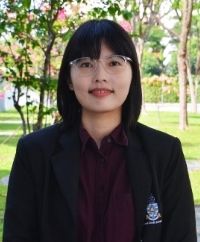
Dr. Sook Rei Tan is a Senior Lecturer in Economics at the School of Business, James Cook University Singapore. She holds a PhD in Economics from Nanyang Technological University (2019) and specializes in applied economics and international finance, with a focus on international financial integration and its impact on economic stability. Her research has been published in journals such as the Journal of International Money and Finance and the International Review of Economics and Finance . Her current research interests include the effects of financial openness, economic policy uncertainty, and tourism economics. Dr. Tan teaches courses in applied econometrics, macroeconomics, and international political economy. She has led projects funded by the World Wildlife Fund (WWF) and contributed to reports for AustCham Singapore. Notable contributions include analyzing US monetary spillovers, oil price shocks, and tourism-driven growth in Singapore. She is actively mentoring PhD candidates in international finance and development economics. Dr. Tan is affiliated with the Economic Society of Singapore and serves on committees such as SEIGOP 2025 and the CITBA Management Committee. Her work bridges theoretical insights with practical applications, fostering academic and professional excellence among students.
Prof Abbas Valadkhani is a Professor of Economics at Swinburne University of Technology’s School of Business, Law and Entrepreneurship. With over two decades of experience across multiple institutions including the University of Newcastle, Queensland University of Technology, and the University of Wollongong, he specializes in energy economics, monetary policy, investment strategies, and financial markets. His research has driven significant policy impact, notably influencing Australia’s banking sector transparency through parliamentary inquiries and media engagement. Education: PhD in Economics from the University of Queensland (1997). Research Interests: Energy Economics, Monetary Policy, ETF Performance Analysis, Inflation Dynamics, and Financial Market Efficiency. His work bridges theoretical economic models with practical policy applications, particularly in banking regulations and climate-related investment. Awards: Multiple accolades including Swinburne’s Research Excellence and Impact Awards (2015–2024), Elsevier’s Outstanding Reviewer Award, and teaching excellence awards across UOW, QUT, and UNE. Grants: Secured ARC grants (e.g., DP120102753) and industry partnerships focusing on fuel price asymmetry and retail competition. Current supervision includes PhD projects on ESG banking, renewable energy policies, and economic growth dynamics. Teaching: Over 24 years, taught econometrics, macroeconomics, and financial modeling at both undergraduate and postgraduate levels. Currently teaches Economics for Business Decision Making at Swinburne. Labs/Teams: Active in interdisciplinary research collaborations, particularly on energy economics and financial market volatility.
Dr. Ayse Kizilersu is a Grant-Funded Researcher (B) in the Department of Physics at the University of Adelaide. Her work focuses on theoretical and computational physics, with particular emphasis on lattice Quantum Chromodynamics (QCD), particle physics, and statistical distribution analysis. She is affiliated with the Physics division at the North Terrace campus, office 108A. Her research interests span non-perturbative QCD studies, quark-gluon vertex dynamics, and applications of statistical methods to finance and physics. Dr. Kizilersu's recent contributions include investigations into the Weibull distribution's properties and its applications in censored data analysis, alongside lattice QCD simulations exploring quark-gluon interactions. Her articles reflect interdisciplinary strengths in both high-energy physics and econophysics, addressing topics from particle dynamics to market order analysis. Awards and achievements sections remain unspecified in her profile, though her active grant-funded status indicates ongoing research support. No formal advising roles or student supervision details are documented here. Professional activities include contributions to lattice field theory and statistical modeling communities.
Dr Chelle Wang serves as a Lecturer in the School of Risk and Actuarial Studies at the University of New South Wales Business School, where she contributes to both teaching and research in actuarial science and financial risk management. Dr Wang earned her PhD in Actuarial Studies from Monash University, with research focused on economic forecasting and optimization of retirement decisions. Her educational background also includes a Bachelor's degree in Actuarial Studies and Econometrics along with an Honour's degree in Mathematics, all obtained from Monash University. Her research expertise centers on retirement planning systems with particular emphasis on superannuation, pension frameworks, and life cycle modeling. Dr Wang employs stochastic control methodologies and mathematical optimization techniques to analyze financial decision-making throughout individuals' working lives and into retirement. Her work bridges theoretical actuarial science with practical applications for improving retirement outcomes. Dr Wang has published research in high-impact journals including the European Journal of Operational Research and Annals of Actuarial Science, demonstrating her contributions to both theoretical and applied aspects of actuarial science. As an academic in the School of Risk and Actuarial Studies, Dr Wang actively contributes to developing the next generation of actuarial professionals while advancing knowledge in retirement income systems and financial risk management.
Professor Victor Solo serves as Director of Research with the School of Electrical Engineering and Telecommunications at the University of New South Wales (UNSW). With an extensive academic career spanning over four decades since earning his PhD from the Australian National University in 1979, he has established himself as a leading expert in multiple interdisciplinary fields. University: University of New South Wales School: School of Electrical Engineering and Telecommunications Department: Electrical Engineering and Telecommunications Position: Professor and Director of Research Professor Solo received his BSc from the University of Queensland, followed by a BSc (first class honors) and BE (first class honors) from UNSW, culminating in a PhD from ANU in 1979. His educational background provided the foundation for his diverse research career spanning engineering, mathematics, and biomedical applications. His research interests encompass a wide range of theoretical and applied topics, with particular emphasis on Systems and Signal Processing, Control Theory, and Ill-Conditioned Inverse Problems. He has made significant contributions to Econometrics and Time Series Analysis, developing innovative approaches to System Identification. His work extends into biomedical domains through research in Medical Imaging and Computer Vision, as well as Neuroengineering through studies of Neural Coding and Point Processes. Professor Solo's interdisciplinary approach bridges theoretical mathematics with practical applications across engineering and medical fields. Analysis of Professor Solo's recent publications reveals a strong focus on advanced statistical modeling techniques, particularly in time series analysis and point process modeling. His work consistently addresses stability and identifiability challenges in complex models, with recent publications exploring Vector Autoregressive models, Hawkes processes, and stochastic differential equations on manifolds. The research demonstrates a progression from foundational theoretical work to increasingly sophisticated applications in network modeling and biomedical signal processing. Professor Solo has maintained an exceptionally productive research career with publications spanning from 1981 to the present, demonstrating remarkable longevity and adaptability in his research focus. His work shows consistent contributions across multiple high-impact journals including IEEE Transactions on Signal Processing, Automatica, and Neural Computation. While specific awards are not listed in the available information, his sustained publication record in top-tier journals indicates significant recognition within his fields of expertise. As Director of Research, Professor Solo likely oversees research strategy and development within the School of Electrical Engineering and Telecommunications. His extensive publication record suggests active supervision of graduate students and postdoctoral researchers, though specific names of advisees are not provided in the available information. His research has likely attracted substantial grant funding given the scope and duration of his work across multiple domains.
Ariska Nur Fajar Rini serves as an Economics Lecturer at Diponegoro University, Indonesia, teaching core courses including macroeconomics, econometrics, labour economics, economic history, health economics, and population studies. Concurrently, she pursues doctoral research as a PhD Scholar at the Crawford School of Public Policy, Australian National University. Her research integrates microeconomic frameworks with policy-oriented methodologies, emphasizing: Experimental economics through randomized controlled trials Rigorous impact evaluation for development programs Evidence synthesis in health and labour policy design Historical analysis of economic systems Demographic-economic interactions in population studies This interdisciplinary approach bridges theoretical economics with actionable policy insights, particularly in Southeast Asian contexts where micro-level economic behaviors drive macro outcomes.
Akram Hasanov is an Associate Professor at the Malaysia School of Business, Monash University. He is actively involved in research and teaching in econometrics, time series analysis, financial volatility modeling, and forecasting. He is currently accepting PhD students and has a strong publication record in top-tier journals such as Energy Economics , Journal of Applied Econometrics , and Energy . His research interests include: Time Series Analysis and Forecasting Volatility Modelling and Spillover Analysis Analysis of Drastic Changes in Financial Markets Applied Macro Econometrics Energy Markets and Financial Modelling His recent publications focus on volatility modeling in energy and financial markets, structural breaks, risk transmission, and the impact of geopolitical events on commodity markets. These works employ advanced econometric techniques, particularly GARCH-class models and recursive window approaches, contributing to both theoretical and applied economics. His scientific awards include: Award of Excellence: The Most Provocative Research Award (2023) Blue Letter for Teaching (2024) Purple Letter for Teaching (2024) Long Service Award (2023) Outstanding Reviewer Award (2018) Akram Hasanov has secured competitive research grants, including a project on forecasting Malaysian agricultural commodity prices and volatility using asymmetric GARCH models. He has supervised several PhD and honors students, many of whom now hold positions in prestigious universities and international organizations. He is also an active peer reviewer for journals such as Energy , Energy Economics , and Economic Modelling . Additionally, he holds an external position as a Member at the University of Cambridge starting November 11, 2024, reflecting his international academic engagement. He is involved in various academic activities, including presenting at international conferences such as the Financial Markets and Corporate Governance Conference 2024 and conducting workshops on scientific writing. His work contributes to the UN Sustainable Development Goals, particularly in energy and economic resilience.
Liyuan Lin is a Senior Lecturer in the Department of Econometrics & Business Statistics at Monash University's Faculty of Business and Economics. He holds a PhD in Actuarial Science from the University of Waterloo, awarded in 2024. His academic work centers on advanced risk modeling and actuarial theory. Research Interests: Actuarial Science Quantitative Risk Management Dependence and Risk Aggregation Stochastic Control Risk Measures and Diversification Reinsurance Strategy and Market Competition His recent publications, appearing in top journals such as Management Science , Mathematics of Operations Research , and Scandinavian Actuarial Journal , reflect a strong focus on theoretical and applied aspects of risk modeling. Key themes include diversification measurement, optimal reinsurance under competition, calibration of risk models, and structural dependence in multivariate settings. His work often involves deep mathematical analysis and collaboration with leading scholars in actuarial mathematics. Scientific Awards: No awards listed in the provided text. Advising and Grants: There is no explicit information available regarding student supervision, grant funding, or advisory roles. However, given his active publication record and position as a Senior Lecturer, it is likely that he mentors students and participates in research projects, though specifics are not disclosed in the source material. Labs and Research Teams: No specific lab or research group is mentioned. However, his collaborations suggest active participation in the broader actuarial and quantitative risk research network, particularly with researchers at institutions connected to the University of Waterloo and international actuarial research centers.
Duncan Mortimer is an Associate Professor (Research) and Head of Teaching at Monash University's Centre for Health Economics (CHE) within the Faculty of Business and Economics. He holds significant leadership responsibilities, overseeing seven teaching units, two award courses, over 10 sessional teaching staff, and approximately 600 students annually. Additionally, he serves as a member of the Principal Health Care Committee of the National Health and Medical Research Council (NHMRC). Dr. Mortimer earned academic qualifications in economics and psychology from the University of Adelaide, followed by further specialization in economics and health economics from Monash University. His educational background has provided a strong foundation for his work at the intersection of economic theory and health outcomes. His research program focuses on three primary areas: the economics of charitable giving, the role of incentives in promoting pro-social behaviors, and the effectiveness and cost-effectiveness of behavioral economics strategies in promoting healthy lifestyles. His work has significant policy relevance, with findings cited in Hansard and policy documents such as the NHHRC report 'A Healthier Future for All Australians.' His 2006 research with Kelly has influenced international health policy. An analysis of his recent publications reveals a strong focus on applying health economics principles to diverse areas including dementia care for culturally diverse populations, maternal mental health, elder abuse prevention, workplace mental health implementation, and international aid allocation. His research consistently bridges theoretical economic concepts with practical health applications, demonstrating a commitment to evidence-based policy development. Scientific Awards Australian Health Ministers Advisory Council (AHMAC) Scholarship for Health Economics (1997) Dean's Award for Excellence in Research by an Early Career Researcher (2009) Dr. Mortimer has secured substantial research funding, with 24 projects spanning from 2003 to 2029, including current active projects such as WorkSafe Victoria Panel 2025-2029, Mind Care Digital for dementia prevention, and interventions to reduce young driver crashes. His research has been widely disseminated through 82 outputs, including 65 articles, 6 review articles, and 5 books, and has received significant attention with multiple citations in Scopus and media coverage across 7 press/media outlets. His collaborative network is extensive, with recent external collaborations spanning multiple countries. He works closely with researchers across disciplines, particularly in projects addressing dementia care, elder abuse, maternal health, and road safety, demonstrating his commitment to interdisciplinary approaches to complex health challenges.
Hasan Fallahgoul is currently a Senior Lecturer at the School of Mathematical Sciences, Monash University, and a member of the Monash Centre for Quantitative Finance. Prior to this, he held post-doctoral positions at the Swiss Finance Institute (EPFL) and the European Center for Advanced Research in Economics and Statistics (ECARES) at the Free University of Brussels, Belgium. Senior Lecturer, Monash University (2025–present) Post-Doctoral Researcher, Swiss Finance Institute (2024–2025) Post-Doctoral Researcher, ECARES (2023–2024) His research interests span Econometrics, Finance, Statistics, and Machine Learning, with a focus on Tail Risk, Neural Networks, and Fractional Calculus. Recent work integrates interpretable AI into asset pricing, develops significance tests for neural networks, and explores high-dimensional learning in finance. His recent article trends highlight applications of Machine Learning in financial econometrics, including state space models, Lévy processes, and tempered stable distributions. He has contributed to understanding complexity in financial models, significance testing frameworks, and the role of social signals in market dynamics. Hasan is supported by grants from the Australian Research Council (DP250100063) and the National Natural Science Foundation of China (72033002). He actively develops open-source tools like the SSMEfficientInference Python package for state space model analysis. He is affiliated with the Monash Centre for Quantitative Finance , where he collaborates on interdisciplinary projects involving econometrics, machine learning, and financial engineering.
Allan Layton is a Professor of Macroeconomics at the University of Southern Queensland, where he has been serving since stepping down from university management roles. He previously held the position of Dean of the Faculty of Business and Law (2006-2013) and concurrent appointments as Pro Vice-Chancellor (Partnerships) and Pro Vice-Chancellor (Research Development). His academic career spans multiple prestigious institutions including Latrobe University, Griffith University, Macquarie University, University of Queensland, Queensland University of Technology, and Columbia University in the US. He received his Doctorate in 1982 and was appointed Professor in 1992. Professor Layton's research focuses on international business cycle analysis , financial and monetary economics , macroeconomic policy , provisioning of public infrastructure , applied econometrics , and most recently, anthropogenic carbon emissions and their relationship with business cycles. His work bridges theoretical economics with practical policy applications. His publications include the 1994 book "Modern Australian Macroeconomics" and multiple editions of "Economics for Today" (2002-2015). He has also contributed to significant policy reports including "Building Our Future: The Need for Increased Infrastructure Investment in QLD" and "The Roads Solution – Securing a Better Travelling Future for SEQ". Professor Layton has extensive experience in public sector advisory roles, having served on boards of QLD Transmission and Supply Corporation, QLD Treasury Corporation, Farmacule BioIndustries Pty Ltd, Toowoomba Chamber of Commerce, and Southern QLD Institute of Tafe. He chaired the 2002 LGAQ Public Inquiry into Funding Mechanisms for QLD Road and Transport Infrastructure.
Dr. Zhaoxia Xu serves as Associate Professor at the School of Banking and Finance within UNSW Business School, University of New South Wales. Previously affiliated with New York University and the Bank of Canada, she maintains active research and teaching roles at UNSW. Education Background: Ph.D. from University of Toronto Her research program centers on corporate finance and innovation, specifically analyzing real-world impacts of government policies and financial regulations on corporate behavior. This work bridges theoretical finance with practical policy implications, examining how regulatory shifts alter investment patterns, innovation trajectories, and capital allocation decisions across firms. Her approach integrates empirical analysis with policy evaluation frameworks. Publication trends reveal consistent focus on corporate innovation drivers since 2012, with recent work emphasizing economic policy uncertainty's role in innovation financing. Her research spans banking regulation (2021), market sentiment effects (2018), and cross-country risk analysis (2014), demonstrating methodological versatility across empirical finance subfields. Scientific Recognition: Best Associate Editor Award, Asia-Pacific Journal of Financial Studies (2022) Financial Management Association Best Paper Award Semi-Finalist (2015, 2011) Asia-Pacific Journal of Financial Studies Best Paper Award (2013) Dr. Xu secured the National Bureau of Economic Research Innovation Policy Research Grant (2014-2015) as Principal Investigator and UNSW Business School International Collaborative Research funding (2019). She serves as Associate Editor for Asia-Pacific Journal of Financial Studies and teaches FINS5514 Capital Budgeting and Financial Decisions, mentoring students in corporate financial decision-making frameworks.
Associate Professor Dr. Eddy Yap Tat Hiung is a distinguished academic and practitioner at University of Wollongong Malaysia's Business school with over 25 years of combined academic and professional experience. Holding a PhD in Finance from Universiti Kuala Lumpur, MBA from Heriot-Watt University, and BSc (Economics Hons) from University of London, he bridges industry practice with academic rigor as a Practice Academic. His research interests span finance, accounting, economics, governance, risk management, and compliance, with particular focus on financial market efficiency, capital structure theories, and the impact of external factors on emerging economies. Dr. Yap has published extensively in international peer-reviewed journals from 2012-2024, with recent work examining green policymaking, stock market dynamics, and bank performance across diverse geographical contexts. His publication record shows consistent output with increasing focus on sustainability and governance issues in recent years. The research demonstrates strong regional focus on ASEAN markets while maintaining international comparative perspectives, particularly in financial market analysis and banking sector studies. Chartered Accountant (Malaysia) from Malaysian Institute of Accountants ASEAN Chartered Professional Accountant Fellow Member of Association of Chartered Certified Accountants (UK) Certified Internal Auditor Fellow of Malaysian Institute of Management ELITE Fellow from Universiti Malaya As an active supervisor, Dr. Yap guides 5 PhD and 8 MBA students while maintaining strong industry connections through multiple advisory and mentorship roles. His unique position as both academic and practicing consultant creates valuable industry-academia linkages, enhancing student learning through real-world applications of theoretical concepts. His work with professional bodies and government agencies demonstrates significant impact beyond traditional academic boundaries.