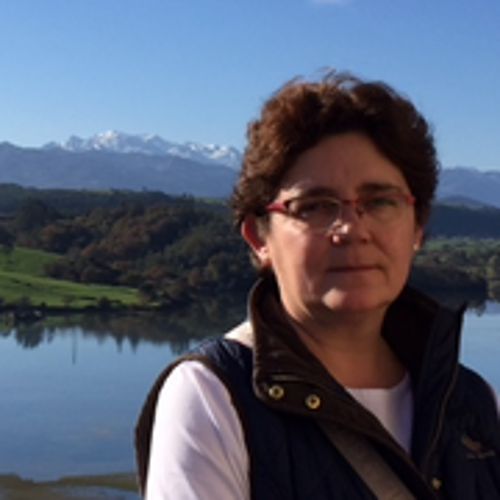
Professor Valeska Ferrer Usó is a canon lawyer and theologian at Comillas Pontifical University, specializing in abuse prevention in ecclesiastical environments. She coordinates the UNIJES-funded Jordán research project (since 2021) and teaches subjects including 'Christianity and Social Ethics' and 'State Ecclesiastical Law' since 2022/23. Education: Doctorate in Canon Law (2022), Law Degree (2002), Ecclesiastical Studies (2012), Expert in Neuropsychology (2017), Specialist in Spiritual Exercises (2008). Her research focuses on canonical criminal law, restorative justice, and structural analysis of abuse mechanisms in religious institutions. Recent publications address procedural reforms, memory spaces for reconciliation, and interdisciplinary abuse prevention frameworks. She practices law at Madrid's Ecclesiastical Tribunal in marriage annulment cases and contributes to the Society of Jesus' Safe Environment System team (since 2024). Her work integrates theological, legal, and neuropsychological perspectives.
Vicente Cervera Salinas is a Professor of Spanish Literature at the University of Murcia, affiliated with the Faculty of Arts and Humanities and the Department of Spanish Literature, Literary Theory and Comparative Literature. He has been a full professor since 2004 and specializes in Latin American literature, intertextuality, and literary theory. His research interests include: Spanish and Latin American Literature Comparative Literature and Intertextuality Poetry and the Essay as Literary Genres Classical Mythology and its Modern Reinterpretations Aesthetic Criticism and Cultural Memory Philosophical Dimensions in Literature His scholarly and creative work reflects deep engagement with figures like Jorge Luis Borges, Dante Alighieri, and George Santayana. His publications span poetry, critical essays, and editorial projects, often exploring the intersections between literature, philosophy, and cultural identity. The themes across his recent articles reveal a consistent focus on myth, authorship, and transatlantic literary traditions, particularly in Hispanic contexts. He has received recognition including the Second Prize in the America Poetry Prize (1993). He co-directs the journal Cartaphilus: Revista de investigación y crítica estética and has directed the Humanities Classroom at the University of Murcia. He served as president of the Association of Hispanic American Literary Studies (2014–2018). He has supervised at least one doctoral thesis and has been a visiting professor at institutions in Havana, San José (Costa Rica), Buenos Aires, and Vienna. His academic leadership includes editing multi-volume works on literary figures and movements, contributing significantly to the study of Hispanic intellectual and aesthetic traditions. He leads the research group Plural Scriptures: Intertextuality and Interdisciplinarity , continuing to influence both literary scholarship and creative writing in Spain and Latin America.
Enrique Sanz Giménez-Rico, SJ is a Professor at the Faculty of Theology of Comillas Pontifical University , where he has taught for over two decades. His academic journey includes a Licentiate in Trilingual Biblical Philology (Pontifical University of Salamanca, 1990) Licentiate in Sacred Scripture (Pontifical Biblical Institute, 1997) Doctorate in Theology (Comillas Pontifical University, 2000) . Specializing in Old Testament theology and spirituality , his research focuses on the Theology of the Pentateuch , Theology of the Psalter , and Greek Philology . His recent publications explore themes like prophetic literature , divine mercy , and biblical foundations for environmental ethics , reflecting a synthesis of Hebrew Bible studies and contemporary theological challenges . Scientific contributions include Sexenio Campo 11 accreditation in Philosophy, Philology, and Linguistics (2011-2018) ACAP certification as Professor Doctor of Private University (2007) . Professional roles encompass Rector of Comillas Pontifical University (2021-2024) Dean of Theology and Canon Law Faculties (2015-2021) Director of the Department of Sacred Scripture and Church History (2011-2015) .
Francesc Xavier Marín Torné serves as an Associate Professor in the Department of Educational Sciences at the Faculty of Psychology, Educational Sciences and Sports, Blanquerna, Universitat Ramon Llull in Barcelona, Spain. His academic profile demonstrates extensive engagement with religious education, particularly Islamic studies within Catalan public schools, and the educational potential of sacred architecture. His research bridges educational theory, religious studies, and architectural analysis, with a distinctive focus on the Sagrada Familia basilica as a paradigmatic educational space. His primary research interests include: Religious education in pluralistic societies, with particular emphasis on Islamic education in Catalan public schools The pedagogical potential of sacred architecture and worship spaces as educational environments Intercultural and interreligious dialogue in educational contexts Educational approaches to social inclusion and coexistence with Maghrebi students The psychological dimensions of religious education and misinformation Peace education through religious understanding and architectural spaces Dr. Marín Torné's scholarly output reveals a cohesive trajectory examining worship spaces through multiple lenses - theological, architectural, and pedagogical - with the Sagrada Familia serving as his central case study. His research also addresses contemporary societal challenges including the psychological effects of pandemic misinformation and the integration of religious minorities in educational settings. This work contributes significantly to understanding how religious diversity can be accommodated within secular educational frameworks while maintaining social cohesion. He currently leads the GREDA (Research Group in Education, Didactics and Learning) project (2022-2025) funded by AGAUR, and previously directed the EDUISLAM project (2023-2024) analyzing Catalonia's pilot plan for Islamic religious education. His earlier work includes the 2007-2008 project developing guidelines for secondary school teachers working with Maghrebi students and the 2015 Ramon Llull legacy project commemorating the 700th anniversary of Llull's death. Dr. Marín Torné maintains active research collaborations across multiple disciplines and institutions, contributing to both theoretical scholarship and practical applications in teacher training and educational policy development. His work demonstrates consistent scholarly productivity with numerous publications appearing through 2024.
Xavier Casanovas Combalia is a Professor at the IQS School of Engineering (Ramon Llull University) and holds the Chair of Ethics and Christian Thought . With dual doctorates in Philosophy (University of Barcelona) and Mathematics (Polytechnic University of Catalonia), he previously served as director of the Center d'Estudis Cristianisme i Justícia (2014-2021). His research focuses on political theology , philosophical anthropology , and technoethics , with an emphasis on sustainability, economics, and ethics. Research Trends: His recent publications examine the crisis of progress narratives , post-secular spirituality , and ethical implications of AI . Projects like MobilePressure address digital well-being in families, while the SEE (Sustainability, Economics, and Ethics) initiative explores broader socio-ethical frameworks.
Armando J. Pego Puigbó is a Professor at the Faculty of Philosophy , Universitat Ramon Llull (La Salle-URL), affiliated with the Department of Philosophy and Humanities and the Hall Research Group on Smart Society . His work intersects philosophy, cultural studies, and technology, particularly examining postmodern and postsecular paradigms. Key Projects : FILOCULTURA (2017–2021): Philosophy and culture in Catalonia Transformacions metadiscursives (2024): Metadiscursive interactions in philosophy and literature Research Trends : Recent articles explore intersections of religion and modernity (e.g., El estallido del cristianismo , 2024), existential themes in Qohelet (2024), and foundational philosophical concepts in postmodern contexts (2020). Publications span critical theory, literary analysis, and cultural philosophy. Contact : armandojesus.pego@url.edu
Román Sol Rodríguez is a researcher at the University of Navarra, affiliated with the Faculty of Theology and the Department of Systematic Theology. He holds a PhD in Theology and has contributed to academic research in Christian theological frameworks. Education: Doctorate from Universidad de Navarra His research focuses on systematic theology, particularly medieval theological discourse and Christological mediations. His work aligns with broader theological studies and religious scholarship.
Javier Sánchez Cañizares is a Spanish physicist, theologian, Catholic priest, and full professor at the University of Navarra since 2022. He works in the Mind-Brain (MB) Group at the Institute for Culture and Society (ICS) and leads the Science, Reason and Faith (CRYF) Group . He holds two Ph.D.s: one in Physics from Universidad Autónoma de Madrid (1999) and another in Theology from Pontifical University of the Holy Cross (2006). Education Ph.D. Physics, Universidad Autónoma de Madrid (1999) Ph.D. Theology, Pontifical University of the Holy Cross (2006) Research Interests : His work bridges science and religion, focusing on the philosophy of nature , quantum mechanics , and interdisciplinary studies between physics, theology, and ethics. He explores emergence in complex systems , integrated information theory , and causation in natural processes. Awards : Expanded Reason Award (2018) for Universo singular Projects : He directed the Science and Religion in Spanish Schools project (2018-2021) funded by the John Templeton Foundation. He is co-editor of the journal Scientia et Fides and author of Naturaleza creativa (2018).
Inmaculada Delgado Jara is an Associate Professor of Greek Philology at the Facultad de Ciencias Humanas y Sociales, Universidad Pontificia de Salamanca, specializing in Biblical Studies and Patristics. Her academic profile shows extensive engagement with ancient Greek texts, particularly focusing on San Juan Crisóstomo, Erasmus of Rotterdam, and Septuagint studies. Her educational background includes a doctorate from Universidad Pontificia de Salamanca with the thesis "Sermones in Genesim de San Juan Crisóstomo estudio temático, estilístico y traducción" (1999), supervised by Dr. Alfonso Ortega Carmona. She is a member of the research groups "Humanismo, reformas y ciencia: del Medievo a la Ilustración" and "ICS. Innovación en Ciencias Sociales". Delgado Jara's research interests center on Greek Philology, Biblical Philology, Patristics, Septuagint Studies, Erasmus of Rotterdam studies, and San Juan Crisóstomo studies. Her scholarly work demonstrates deep expertise in ancient Greek language and literature, particularly as applied to biblical and patristic texts. She has made significant contributions to understanding the intersection of classical literature and early Christian thought. An analysis of her recent publications reveals a consistent focus on textual criticism, philological analysis of biblical and patristic works, and the reception history of classical texts in Christian contexts. Her work often bridges linguistic analysis with historical and theological interpretation, particularly examining how ancient Greek texts were transmitted, interpreted, and utilized in later periods. Her scholarly activity includes numerous books, edited volumes, and academic papers, with recent work focusing on Erasmus's biblical scholarship, San Juan Crisóstomo's homilies, and the Septuagint. Despite her extensive publication record, no specific scientific awards are mentioned in the available information. Delgado Jara is actively involved in academic supervision and research direction, as evidenced by her editorial work on major scholarly projects and her participation in academic conferences. Her work shows collaboration with numerous scholars across Spain and internationally, particularly in the fields of Biblical Studies and Renaissance Humanism.
Antonio Viana Tomé is a Professor and former Dean (2012–2021) of the Faculty of Canon Law at the University of Navarra. He holds PhDs in Canon Law (1984) and Law (1987) from the University of Navarra, and studied at the University of Deusto (Law, 1979) and University of Bamberg (as DAAD scholar, 1992). His research focuses on hierarchical Church governance, canon law structures, and ecclesiastical organizations. He directed the journal Ius Canonicum (1991–2009) and co-edited the General Dictionary of Canon Law (2012). Awards include the DAAD Scholarship (1992). He has served in leadership roles such as Vice President of the Spanish Association of Canonists (2002–2004) and on the board of the Consociatio Internationalis Studio Iuris Canonici Promovendo . His work bridges legal and theological dimensions of church governance. Educación: Licenciado en Derecho, Universidad de Deusto (1979) Doctor en Derecho Canónico, Universidad de Navarra (1984) Doctor en Derecho, Universidad de Navarra (1987) Investigación: Specializes in Church governance structures, canon law codification, and ecclesiastical institutions. Key themes include: Hierarchical organization of the Church Legal foundations of prelatures Canon law interpretation in contemporary contexts Reconocimientos: DAAD Scholarship (1992) Docencia y liderazgo: Dean of Canon Law Faculty (2012–2021), full professor since 2005. Involved in major projects like the General Dictionary of Canon Law , a collaborative global effort. Active in academic and professional networks, contributing to legal scholarship and church policy.
Ricardo Piñero Moral is a Professor at the University of Navarra, affiliated with the Faculty of Economics and Business Sciences and the Faculty of Philosophy and Letters. He holds positions in the Economics and Philosophy departments, and is part of the research group 'Estética y Arte Contemporáneo'. He earned his Doctorate from the University of Salamanca in 1994 with a thesis on Plotinus' aesthetics and contemplation, supervised by Dr. Mariano Álvarez Gómez. His research focuses on aesthetics, art theory, medieval studies, and the intersection of art with theology, mysticism, and philosophy. Key interests include medieval bestiaries, Spanish Golden Age art theory, contemporary art metaphysics, and the symbolic roles of animals in religious and cultural contexts. Recent publications explore themes like the transformational power of art, the aesthetics of evil in medieval contexts, and the philosophical underpinnings of artistic creation. His work bridges historical analysis with contemporary debates, emphasizing the role of beauty in ethical and existential frameworks. He has not been explicitly noted for scientific awards, though his prolific academic output and scholarly contributions are widely recognized. His advising and grant activities remain unspecified in available texts, though his involvement in interdisciplinary research groups suggests collaborative projects. He is associated with the 'Estética y Arte Contemporáneo' research group, focusing on contemporary aesthetic challenges and cultural dialogue.
Florin George Călian is a researcher at the Center for Ecumenical Research within the Lucian Blaga University of Sibiu , with a focus on the intersection of history of philosophy , religious studies , and classical philology . He co-founded the Dan Slușanschi School of Classical and Oriental Languages , which offers Latin, Ancient Greek, Biblical Hebrew, and Sahidic Coptic to international students. Călian’s editorial work includes coordinating the Review of Ecumenical Studies (RES) and the Ratio publishing series. Education : Master’s in Greco-Roman History (University of Bucharest), Master’s in Medieval Studies (Central European University), PhD in Philosophy (Central European University, supervised by Gabor Betegh). Research Areas : Ontology of numbers in Plato, sacred space politics, Neoplatonic theology, historiography of alchemy, and interdisciplinary links between philosophy and Eastern Orthodox Christianity. Recent Publications include analyses of Plato’s mathematical ontology, critiques of Hagia Sophia’s reconversion, and editorials on the problem of evil. His 2021 monograph Numbers, Ontologically Speaking: Plato on Numerosity reinterprets Platonic dialogues through mathematical philosophy. Academic Engagements span roles as a coordinator for the Dan Slușanschi School, editorial board member for RES and SCHOLÉ , and organizer of conferences bridging theology and philosophy.
Gerardo Boto Varela is an Associate Professor in the Department of History and Art History at the University of Girona, where he has been a faculty member since 1995 and holds the title of 'Professor Titular d'Universitat'. He earned his PhD in Art History from the Universitat Autònoma de Barcelona in 1998 and currently serves as Director of the School of Doctoral Studies. His academic affiliations include the Institute of Historical Research and the Research Group in Cultural, Artistic, and Political Studies (9th–21st centuries). His research focuses on medieval religious architecture, particularly Romanesque cathedrals and monastic cloisters in the Iberian Peninsula. He investigates spatial organization, visual programs, liturgical practices, and memorial discourses, combining architectural archaeology with theological and historical analysis. His work emphasizes materiality, perception, and the symbolic function of sacred spaces. Boto Varela's recent publications and edited volumes explore themes such as cathedral urban contexts, episcopal memory, emerging naturalism in sculpture, and the ritual use of space. His research is supported by major grants from the Spanish Ministry of Economy, La Caixa, and the European Union (Marie Curie Project), and he leads the recognized research group 'Edificis i escenaris medieval de la Corona d'Aragó'. He is a leading figure in medieval art scholarship, serving as scientific editor of Codex Aquilarensis. Revista de Arte Medieval and on the editorial boards of several international journals. He has organized numerous international conferences and collaborative research initiatives across Europe. Scientific Editor, Codex Aquilarensis Member, Scientific Committees of Medievalista , Quintana , Cahiers de Saint Michel de Cuxa , and others Principal Investigator, TEMPLA Research Team Principal Investigator, SGR 110 Research Group Member, Catalan Society of Liturgical Studies Boto Varela has supervised interdisciplinary research projects involving scholars from Spain, France, the Netherlands, and beyond. He promotes knowledge transfer through public engagement, digital documentation (3D scanning, georadar), and the integration of technology in heritage studies. His work bridges academic research and cultural preservation, contributing significantly to the understanding of Europe’s shared medieval architectural heritage.
José Juan Morcillo Pérez is a Visiting Professor at the Universidad Pontificia de Salamanca 's Faculty of Humanities and Social Sciences. Holding a 'Cum Laude' Doctorate in Hispanic Philology from the University of Salamanca (2002), he has held teaching positions at the University of St. Andrews, Universidad de Castilla-La Mancha, and the Universidad Pontificia de Salamanca's International Courses. His research focuses on Renaissance Spanish literature Francisco de Osuna's linguistic innovations Lazarillo de Tormes authorship debates Historical linguistics Cultural intersections of law and literature His 2002 doctoral thesis presented a critical edition of Francisco de Osuna's Abecedario Espiritual (1528-1530), analyzing its linguistic registers and neological contributions. He has received recognition for educational innovation projects, particularly in bilingual education and technology integration (2006-2007). Academic contributions include: Pioneering textual editions of Spanish Golden Age mystical works Interdisciplinary analysis of legal discourse in picaresque novels Lexical studies connecting Renaissance humanism with theological expression Scientific recognition includes: Doctor 'Cum Laude' , University of Salamanca (2002) Award for innovative educational project in Castilla-La Mancha public education system
Jorge Manuel Rodríguez Almenar is a faculty member at the University of Valencia, affiliated with the Faculty of Law, where he serves in the Department of Civil Law. He holds the academic rank of Titular de Escuela Universitaria, equivalent to Associate Professor, and is actively engaged in teaching and research. His research centers on the intersection of law, sacred art, and religious history, with a particular focus on Christian relics such as the Shroud of Turin, the Sudarium of Oviedo, and the Holy Chalice of Valencia. His work employs interdisciplinary methodologies combining art history, forensic analysis, and theological inquiry. Sacred Art Eucharistic Theology Sacred Architecture Historical Art Analysis Religious Relics Interdisciplinary Studies of Faith and Science His publications reveal a consistent scholarly engagement with the historical, artistic, and scientific dimensions of Christian relics. He explores how faith and reason intersect in the study of sacred objects, often analyzing their cultural, theological, and forensic significance. His work bridges legal scholarship with religious and artistic studies, contributing to a deeper understanding of religious heritage within civil and canonical frameworks. Notable scientific contributions include comparative studies of the Sudarium of Oviedo and the Shroud of Turin, analyses of the Holy Chalice of Valencia, and comprehensive historical-artistic investigations into the Shroud. While no formal awards are listed, his publications demonstrate scholarly recognition in niche interdisciplinary domains. He has not listed any students or formal advising roles, nor has he mentioned grants or research teams. However, his academic profile suggests independent and collaborative research in religious and legal studies. His work continues to contribute to academic and ecclesiastical discussions on the authenticity and significance of Christian relics.