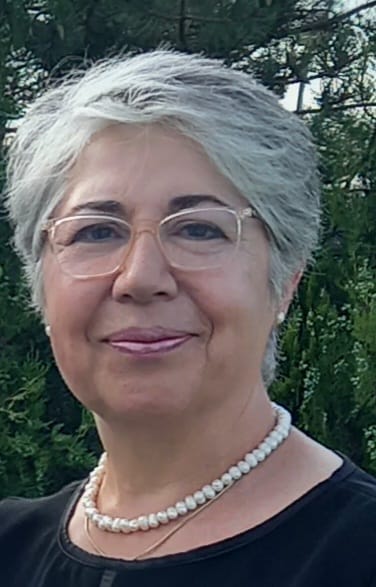
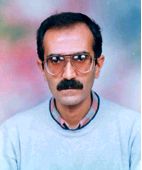
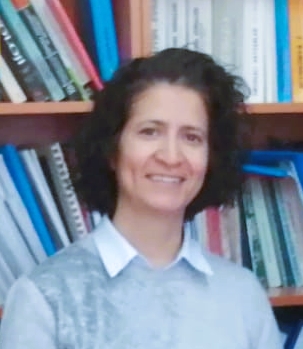
Prof. Dr. Mehmet SALTAN is a faculty member at the Department of Civil Engineering within the College of Engineering and Natural Sciences at Suleyman Demirel University . With an H-index of 24 and over 1907 citations , his research focuses on pavement engineering , railway transportation , and innovative applications of fuzzy logic , artificial neural networks , and genetic algorithms in road infrastructure. Research Interests : Pavement Engineering, Railway Transportation, Fuzzy Logic, Artificial Neural Networks, Genetic Algorithms, Concrete Pavements Education : PhD in Civil Engineering (Suleyman Demirel University, 1999), MS in Civil Engineering (1994), BS in Civil Engineering (Akdeniz University, 1992) His recent publications highlight advancements in sustainable asphalt mixtures using waste materials (e.g., fluorescent lamp glass, waste tea), nano-silica modification for enhanced pavement performance, and innovative road visibility solutions . He has contributed to journal editorial roles and participated in TÜBİTAK 1005 projects focused on national railway sleeper geometry optimization.
Güven GÜLBAZ is an Assistant Professor in the Food Engineering Department at Kafkas University's Faculty of Engineering and Architecture, where he has served since 2015. Previously holding positions as Associate Professor (2013-present) and Teaching Staff member (2011-2013, 1998-2011) at Kafkas University's Kars Vocational School Food Processing Department, he has demonstrated continuous academic progression within the same institution. His administrative roles include Department Head (2016-2019, 2019-present), Deputy Department Head (2014-2019), and Deputy Director of Vocational School (2012-2013, 2016-2020). PhD in Food Hygiene and Technology (Kafkas University, 2011) Master's in Veterinary Food Hygiene and Production (Kafkas University, 2004) Bachelor's in Veterinary Medicine (Kafkas University, 1992) Dr. GÜLBAZ's research focuses on food safety and quality assessment, particularly in dairy and meat products. His work spans molecular detection of pathogens like Listeria monocytogenes and Brucella in raw milk, mycotoxin analysis in spices and chocolate products, and development of decontamination methods using ozone treatment. He has made significant contributions to understanding traditional Turkish food products including Kars-region dairy items, Kavılca bulgur, and Ayvacık Tepme cheese. Analysis of his 27 publications reveals strong emphasis on food microbiology (42%), chemical safety (31%), and traditional food characterization (19%). His recent work (2021-2025) shows increasing focus on anticarcinogenic properties of bee products and molecular techniques for food contaminant detection. The publications appear in SCI/SSCI-indexed journals with cumulative citations reaching 63 and an h-index of 4. Dr. GÜLBAZ has supervised one master's student (Ela Akın, 2023) and currently teaches courses including Food Microbiology, Instrumental Food Analysis, and Food Safety Management Systems. His research has been supported by six scientific projects from higher education institutions, including studies on Ayvacık Tepme cheese characteristics (2025-2026), honey HMF values (2022-2024), and antibacterial properties of Rumex crispus extracts (2021-2023).
Prof. Dr. Hüseyin BOZKURT is a distinguished academic at Gaziantep University , where he serves as a Professor in the Faculty of Engineering , Department of Food Engineering. With a career spanning over two decades, he has held administrative roles including Vocational School Director (2020–present) and Deputy Dean (2014–2016). Doctorate in Food Engineering (1997–2003), Gaziantep University Master’s in Food Engineering (1993–1996), Gaziantep University Bachelor’s in Food Engineering (1987–1993), Middle East Technical University His research focuses on Food Science and Engineering , with expertise in Meat Technology , Food Microbiology , Functional Foods , and Food Processing Innovations . He has pioneered the use of microalgae (e.g., Spirulina platensis ) in food fortification and preservation, explored hybrid cooking methods (ultrasound, ohmic, infrared) for meat quality, and developed eco-friendly packaging solutions. His publications address biogenic amine reduction in fermented products and drying kinetics in fruits and dairy. His 15 most recent articles (2021–2024) emphasize food safety , processing technologies , and sustainable ingredient applications . Notable trends include the integration of natural antimicrobials (e.g., essential oils, microalgae) and mathematical modeling in food systems. Stanford En Etkili Bilim İnsanları Ödülü (Top 2% Scientists Worldwide, 2024) Prof. BOZKURT has supervised 30+ theses (PhD and Master’s), mentoring students in areas such as sucuk preservation , microalgae in functional foods , and food processing innovations . He has secured 29 projects , including EU-funded initiatives on organic berry processing and TÜBİTAK grants for hybrid cooking and algae-based bioremediation.
Prof. Dr. Banu Özen is a full Professor in the Department of Food Engineering at Izmir Institute of Technology, where she has established herself as a leading researcher in spectroscopic food analysis. Her work bridges analytical chemistry and food science with practical applications in quality control and fraud prevention. Her research centers on advanced spectroscopic techniques—particularly FTIR, UV-Visible, and fluorescence spectroscopy—combined with chemometric modeling to solve critical food industry challenges. Key focus areas include authenticating high-value products like olive oils and vinegars, detecting adulteration in diverse matrices (dairy, oils, alcoholic beverages), and predicting chemical/physical properties non-destructively. This approach has revolutionized quality assessment methods across multiple food categories. Analysis of her 15 most recent publications reveals a consistent emphasis on spectroscopic adulteration detection, with 60% targeting olive oil integrity and 30% focused on vinegar analysis. Her work increasingly integrates multi-spectral approaches (e.g., combining fluorescence with mid-IR) and expands into novel matrices like pomegranate seed oils and buffalo milk, demonstrating methodological versatility. No scientific awards or fellowships were specified in the source materials. Prof. Özen has mentored 8 graduate students through thesis research on food authentication, with notable contributions to olive oil and vinegar analysis. Her sustained research leadership is evidenced by continuous funding since 2005 from prestigious sources including: PRIMA (Coordinator for LOCALNUTLEG project, 2021-2024) TÜBİTAK (7 Principal Investigator roles including TOVAG-119O066 on vinegar analysis, 2019-2020) Marie Curie (Principal Investigator for olive oil authentication project, 2006-2008) As a core faculty member, she operates within Izmir Institute of Technology's Department of Food Engineering research ecosystem, collaborating extensively with interdisciplinary teams including chemists (Tokatli, Uncu), lipid specialists (Aktas), and microbiologists (Canal) across projects spanning food chemistry, packaging, and preservation systems.
İlker Temizer is a Professor and Chair of Mechanical Engineering at Bilkent University, where he leads the Computational Multiscale Mechanics Laboratory (CMML). His research focuses on computational mechanics, multiscale-multiphysics modeling of heterogeneous materials, and interface behaviors. Research interests include computational homogenization techniques for materials and interfaces, thermomechanical contact problems, and isogeometric analysis. His work bridges theoretical mechanics with applied engineering solutions. Recent publications emphasize multiscale modeling in density functional theory, hydrodynamic lubrication texture optimization, and smart material design, demonstrating consistent innovation in computational mechanics methodologies.
Şükrü KURT is a Professor of Food Engineering at Adıyaman University's Faculty of Engineering. He holds a Ph.D. from Yüzüncü Yıl University and has been affiliated with Adıyaman University since 2007, progressing from Assistant Professor (2007) to Associate Professor (2012) and Professor (2018). His expertise includes Meat Science and Technology, Emulsion Technology, and Food Engineering. Education: Bachelor’s: Food Engineering, Gaziantep University (1988–1995) Master’s: Food Engineering, Yüzüncü Yıl University (1999–2002) Ph.D.: Food Science and Technology, Yüzüncü Yıl University (2002–2006) Research Focus: His work centers on meat quality optimization, emulsion systems in food products, and traditional food preservation methods. Key areas include the use of natural additives (e.g., onion skin, olive leaf extracts) to improve meat product stability and safety, as well as biogenic amine formation in fermented sausages. Publications: Over 40 peer-reviewed articles focus on meat processing technologies, food safety innovations, and traditional food systems. Recent work addresses the application of plant-based additives and optimization of emulsion properties in meat products. Grants & Expertise: Has led projects on food packaging solutions and sustainable food technologies. His international collaborations include studies on meat emulsions and fermented sausage quality. Labs/Teams: Leads food engineering research teams focusing on meat science and traditional food systems at Adıyaman University’s Food Engineering Department.
Abdullah Sert is an Assistant Professor at the Department of Mechanical Engineering, Faculty of Engineering and Architecture, Eskisehir Osmangazi University. His academic journey includes a Doctorate (2017) and Master's (2010) in Mechanical Engineering from the same university. He has been a Research Assistant since 2009 and holds adjunct roles teaching courses like Machine Elements and Design Engineering. Education: Doctorate: 2011-2017, Eskisehir Osmangazi University Master's: 2008-2010, Eskisehir Osmangazi University Bachelor's: 2004-2008, Eskisehir Osmangazi University Research Interests: Focuses on tribology, material characterization, and machining processes. His work explores cryogenic treatment effects on cutting tools, surface composites, and wear behavior analysis. He has contributed to studies on shear thickening fluids, laser surface texturing, and failure analysis of mechanical components. Awards: Outstanding Reviewer Award (IOP Publishing, 2018) Advising & Grants: Supervised 6 theses, including a 2023 postgraduate thesis on airport ground support vehicle axle analysis. Engaged in projects on material treatments and mechanical component failure studies. Labs/Teams: Collaborates on projects involving tribology, advanced machining techniques, and material characterization within the university's research groups.
Mete Budaklı serves as Associate Professor in the Department of Astronautical Engineering at Istanbul Technical University, Turkey, focusing on advanced thermal systems for aerospace and electronics. His research spans experimental and numerical analysis of heat transfer phenomena in microstructured environments. His primary research interests include Heat Transfer , Boiling Heat Transfer , and Microstructured Surfaces , with significant contributions in pool boiling augmentation using open micro-channels, condensation on textured surfaces, and thermal management of LED packages. Current work emphasizes operational condition effects on critical heat flux and heat transfer coefficient optimization. Analysis of his 2022-2025 publications reveals dominant trends in micro-scale thermal engineering, particularly aerospace cooling systems and electronics thermal management. Over 70% of recent work addresses boiling/condensation phenomena on engineered surfaces, with growing focus on spacecraft thermal control applications. Dr. Budaklı currently leads two major research projects: development of hybrid material heat pipes for spacecraft (2025-2028) and creation of a one-dimensional heat flux model for nucleate boiling on micro-grooved heater surfaces (2025). His Scopus profile shows 207 citations and an h-index of 8 across 29 research outputs since 2009.
Özgen Akalın is a Professor in the Department of Mechanical Engineering at Istanbul Technical University. He specializes in vehicle dynamics, control systems, and tribology, with a focus on model predictive control, suspension systems, and engine lubrication. His research contributes to UN Sustainable Development Goals related to sustainable infrastructure and innovation. His work includes optimizing cylinder bore honing patterns, reducing engine friction via laser texturing, and developing adaptive control strategies for autonomous vehicles. He leads projects on sustainable vehicle technologies and regenerative suspension systems, funded by TÜBİTAK and industry partners. Notable awards include the Applied Vehicle Technology Panel Excellence Award (2021) and Graduate Award (1996). His research spans 30+ years with over 90 publications, including studies on articulated vehicle stability, trajectory control, and engine wear analysis. He advises 47 ongoing theses in mechanical engineering and vehicle systems.
Assoc. Prof. NEFİSE YASEMİN TEZCAN serves at Akdeniz University's Faculty of Agriculture within the Department of Agricultural Structures and Irrigation. Her career spans over two decades with progressive academic appointments from Research Assistant (2002-2014) to current Associate Professor status (2024-present), alongside significant managerial roles including Director of Finike Vocational School (2022-present) and Deputy Director of SERA TEKNOLOJİLERİ Research Center. Doctorate: Akdeniz University, Agricultural Structures and Irrigation (2007-2014) Postgraduate: Akdeniz University, Agricultural Structures and Irrigation (2005-2007) Undergraduate: Çukurova University, Agricultural Structures and Irrigation (1997-2001) Her research focuses on greenhouse engineering and agricultural structures, specializing in thermal imaging applications for microclimate analysis, polymer material degradation in covering systems, and radiation management. She pioneered thermal camera applications for detecting heat losses and material aging in greenhouse structures. Her work bridges materials science with practical agricultural engineering solutions for Mediterranean climates. Recent publications reveal strong emphasis on polycarbonate and polyethylene covering materials' performance, with thermal imaging as the central diagnostic tool across 15+ SCI-indexed papers since 2007. Key trends include quantification of material degradation under environmental stressors, precise microclimate manipulation through shade nets and cover materials, and innovative applications of thermal imaging for crop stress detection. Çukurova University Faculty of Agriculture First Place Award (2001) She has advised 3 graduate theses while securing 5 research projects including TÜBİTAK-funded initiatives on prestressed concrete columns for greenhouse structures. Her peer review activities span 17 journals including Renewable & Sustainable Energy Reviews and Journal of Building Engineering. Current leadership roles include Erasmus Program coordination and Faculty Board membership. As Director of SERA TEKNOLOJİLERİ Research Center, she leads interdisciplinary teams developing sustainable greenhouse technologies with focus on energy efficiency and climate adaptation strategies for Turkish agriculture.
Dr. Hatice Pekmez is an Associate Professor at Gaziantep University's Faculty of Tourism, Department of Gastronomy and Culinary Arts. She holds a Ph.D. in Food Engineering from Gaziantep University (2012). Her research focuses on food science, starch technology, functional foods, and gastronomy, with a particular emphasis on ozonation effects, plant-based ingredients, and traditional Turkish breads like Gaziantep pita. She has authored 10 book chapters and 29 peer-reviewed articles. Education: Ph.D. in Food Engineering, Master’s in Food Engineering, Bachelor in Food Engineering Research Areas: Food chemistry, culinary innovation, cereal processing, antioxidant properties, ethnobotanical studies Recent Publications: Bibliometric analysis of gastronomy, ozonation effects on starches, ethnobotanical studies in Turkey, and fiber-fortified breads Scientific Awards: Multiple TÜBİTAK and university publication incentives, as well as project support awards for international book chapters and research
Professor Sevim Kaya is a distinguished faculty member at Gaziantep University, Faculty of Engineering, Department of Food Engineering. With a career spanning over three decades, she has held academic roles including Research Assistant (1985–1995), Doctor Lecturer (1995–2002), Associate Professor (2002–2007), and Professor since 2007. Education: PhD in Food Engineering, Gaziantep University (1995) MSc in Food Engineering, Middle East Technical University (1988) BSc in Food Engineering, Middle East Technical University (1984) Her research focuses on food packaging technologies, dairy engineering, edible films, moisture dynamics, and rheological properties of traditional foods. Recent work involves antimicrobial packaging films, cheese preservation, and edible coating development using whey and soy proteins with essential oils. She has published extensively in international journals (SCI/SSCI) and supervised numerous graduate theses. Key projects include Active packaging films for cheese shelf-life extension , Spirulina-enriched food preservation , and Edible film industrialization . She teaches courses such as Stability of Food Products , Active Packaging , and Cheese Technology , with over 20 years of graduate supervision experience.
Professor AHMET KAYA is faculty at Gaziantep University , affiliated with the Faculty of Engineering and Department of Food Engineering . His research spans food science , dairy technology , and oil processing , with a focus on rheological properties, crystallization behavior, and food preservation techniques. Doctorate: Middle East Technical University (1993) Master's: Middle East Technical University (1987) Licence: Middle East Technical University (1984) His research interests include: Crystallization dynamics of cocoa butter and milk fat Supercritical CO2 fractionation in dairy/oil processing Viscoelastic properties of food systems Starch modification in gluten-free pasta Edible film development using whey proteins Scientific contributions include: 4 books/chapters on food engineering 16+ conference papers 1 patent for pistachio-nar concentrate mixture He has advised 8 doctoral/magisterial theses and led 4 national projects on milk fat characterization, chocolate fat bloom prevention, and gluten-free pasta development. His work appears in SCI-Expanded journals such as Food Chemistry , Journal of Food Engineering , and International Journal of Food Properties .
Professor Erdihan Tunç has been a faculty member at Gaziantep University, Faculty of Arts and Sciences, Department of Biology since 2007, currently holding the Professor rank. He holds a PhD in Agriculture from Trier University (Germany) and has led 20 national research projects on soil science. Core research areas: Soil Ecology, Soil-Water Conservation, Agricultural Sustainability Education: Doctorate (1999-2004), Trier University, Agriculture (Germany) Integrated Doctorate (1998-1999), Trier University, Agriculture (Germany) Licence (1992-1997), Hacettepe University, Biology Teaching Research Focus: His work investigates soil erosion dynamics, enzyme activities under environmental stress, and climate change impacts on agricultural soils. He has pioneered studies on nanoplastics and earthquake debris effects on soil properties. Article Trends: Recent publications emphasize soil erosion modeling (2023-2025), nanoparticle toxicity (2022-2024), and remote sensing applications (2014-2021). Key keywords: Soil Conservation, Agricultural Land Use, Enzyme Activity, Climate Change. Scientific Awards: 2019 International Relations Development Award (University of Waterloo) 2012 YÖK International Mobility Scholarship 2003 DAAD PhD Fellowship (Germany) 2002 ERASMUS-SOKRATES Fellowship Advising: Supervised 21 theses (2 PhD, 19 Master's) between 2006-2025, including studies on polystyrene nanoparticle effects , GIS for solar plant mapping , and halophytic plant ecology . Led 20 national projects on soil conservation and agricultural sustainability.
Prof. Bekir Tevfik Akgün serves as Professor and Dean of the Faculty of Computer and Information Sciences at Yeditepe University, with prior academic appointments at Istanbul Okan University (Department Head, Institute Director), Ohio State University, and Yildiz Technical University (Dean). His expertise spans artificial intelligence, information security, computer graphics, and distributed systems, supported by extensive research funding and supervision of 19 graduate students. Educational background includes: Ph.D. in Control and Computer Engineering, Istanbul Technical University (1991) M.S. in Control and Computer Engineering, Istanbul Technical University (1984) B.S. in Electrical Engineering, Istanbul State Academy of Engineering and Architecture (1981) His research integrates theoretical and applied computer science, with recent focus on AI-driven environmental monitoring (forest fire detection via drone-IoT networks), bioinformatics security, and advanced color models. Early work established foundational contributions in digital art (marbled paper techniques) and real-time operating systems, evolving into contemporary applications in energy management and autonomous systems. Publication trends since 2001 reveal consistent innovation across domains: computer graphics (2004-2024), distributed systems (2001), and emerging AI/IoT applications (2022-2024). The interdisciplinary nature of his work bridges theoretical computer science with practical implementations in security, environmental science, and human-computer interaction. Scientific Awards: No major scientific awards were listed in the provided information. Advising and Grants: Supervised 18 master's theses and 1 doctoral dissertation covering autonomous vehicles, deep learning, and IoT systems. Secured over 1.5 million Turkish Lira in research funding through TÜBİTAK projects including Smart Renewable Energy Management System (2018-2021, 159,636 TL) and Advanced Autonomous Bus System (2018-2021, 915,810.99 TL), with additional projects in battery management and metrobus efficiency. Labs and Teams: Project descriptions indicate leadership in autonomous systems teams and energy management research groups, though specific laboratory affiliations are not detailed in the source text.