Prof. Neslihan YETKİNER is the current Dean of İzmir University of Economics and a member of the TÜBİTAK SOBAG Advisory Board. She holds a PhD in Linguistics from Groningen University (Netherlands) and has served as a research assistant at Hacettepe University and part-time lecturer at London University. Her academic career spans over two decades, with expertise in Translation Studies, Pragmatics, and Corpus-based Translation. Education: BA (Summa Cum Laude) and MA in Translation from Hacettepe University; PhD in Linguistics from Groningen University. Administrative Roles: Dean since 2023, previously Head of the Department (2006–2009). Research Interests: Focus on translation theory, critical discourse analysis, children’s literature, and cultural studies. Her work explores themes like censorship in children’s books, translator prefaces, and intercultural adaptation. Her recent articles address topics such as the impact of the pandemic on the translation industry, liminality in folk tale translations, and community interpreting professionalism. She has led three TÜBİTAK-funded projects on translation and literary analysis. Prof. YETKİNER has received multiple awards, including the TÜBİTAK Scientific Publication Encouragement Award (2012–2017), and has advised PhD student Hamide Çakır. She is actively involved in academic administration and contributes to national and international conferences.
Andrew Ollett is an Associate Professor and Director of Graduate Studies in the Department of South Asian Languages and Civilizations at the University of Chicago , where he has taught since 2019. His research focuses on the literary and intellectual traditions of South and Southeast Asia, particularly through works in Sanskrit, Prakrit, Apabhramsha, and Kannada from the first millennium CE. Co-founder and editor of NESAR (New Explorations in South Asia Research) Director of NEH-funded edition/translation of the Kavirājamārga (earliest Kannada literary manual) Expert in Prakrit and Kannada literary traditions His work explores the 'question of language'—examining how language choice shaped cultural production and change in premodern India. Current projects include a monograph on context-sensitivity in Indian language theories and a study of manuscript technology's impact on early South Asian knowledge communities. He has authored The Mirror of Ornaments (Naples: Unior Press, 2025) and Language of the Snakes (UC Press, 2017), and co-authored Lilavai (Harvard, 2021). Recent publications include interdisciplinary studies on: Sanskrit-Prakrit campū genre reevaluation Pragmatics in Mīmāṁsā interpretive concepts Manuscript literacy's influence on literary forms Historical linguistics of Middle Indic syllable reduction Philosophy of language in Śālikanātha and Kumārila Bhaṭṭa Awarded the NEH 'Scholarly Editions and Translations' grant , he teaches classical South Asian literature courses covering Sanskrit, Prakrit, and Tamil traditions. He maintains digital resources including a Prakrit Digital Texts Project and Mīmāṁsādigdarśinī digital text repository, and actively contributes to open-access scholarship.
Lucia Binotti is a Professor of Spanish and Digital Humanities at the University of North Carolina at Chapel Hill (UNC-CH), with dual affiliations in the Department of Romance Studies and interdisciplinary Digital Humanities initiatives. She serves as Graduate Advisor for Hispanic Linguistics and Director of the Honors Study Abroad Program in Rome. Her work bridges traditional philology with cutting-edge digital scholarship, emphasizing immersive learning experiences through virtual reality (VR) and augmented reality (AR) technologies. Binotti holds a Ph.D. from UC Santa Barbara (1990), an MA (1985), and a BA (1984) in Romance Philology from the Università degli Studi di Pisa. Her research focuses on linguistic identity, cultural heritage preservation, and innovative educational platforms like Amirabilia—the world’s first experiential learning platform. Notable projects include nXimena (healthcare training for Latinx abuse survivors) and Entiendelo (a linguistic/cultural navigation app for Latinx communities). Her scholarly interests span Early Modern Spanish literature, digital humanities applications, and the intersection of technology with social justice. She has directed grants totaling over $500K for projects involving AR/VR integration in education, including collaborations with the UNC Health Science Library and NCSU’s DELTA initiative. Recent awards include the John K. Walsh Award (2010) and Digital Innovation Fellow status (2014). Grants & Leadership: CFE-Lenovo Technology Grants (2018–2019) for AR/VR expansion iLRN 2020 International Co-Chair XR Faculty Learning Community Leader (UNC) Teaching: Courses span from introductory Hispanic literature to advanced topics like medieval intellectual history and digital humanities methodologies. Binotti’s work emphasizes ‘place, presence, and perspective’ in Cyber-Humanities education, particularly addressing marginalized communities through technology-driven solutions.
Eugenia Rho is an Assistant Professor in the Department of Computer Science at Virginia Polytechnic Institute and State University (Virginia Tech), part of the College of Engineering. Her research focuses on data analytics, machine learning, natural language processing, and human-computer interaction, with particular emphasis on social media discourse, online identity dynamics, and ethical AI applications. Education includes a Ph.D. in Information and Computer Sciences from the University of California, Irvine (2020), and a B.A. in Political Science from Columbia University (2011). Her interdisciplinary background bridges computer science and social sciences. Research interests span AI-assisted communication tools, counterspeech strategies for online hate mitigation, and neurodivergent perspectives in technology design. Her work often integrates computational methods with social science theories to address real-world challenges such as bias detection, mental health support, and ethical AI deployment. Recent publications highlight themes like AI collaboration in writing, identity-driven online interactions, and the efficacy of counterspeech. Her projects frequently involve designing human-centered technologies that prioritize accessibility and ethical considerations. No scientific awards are explicitly mentioned in the provided text. She maintains an active Google Scholar profile and a personal homepage (URLs not provided in the text).
Martin Willis Monroe is an Assistant Professor in the Department of Classics and Ancient History at the University of New Brunswick. His research focuses on the ancient Middle East, particularly cuneiform cultures, with an emphasis on the history of scholarly knowledge in Babylonian and Assyrian societies. He specializes in Mesopotamian astronomy and astrology, as well as quantitative approaches to historical data. Dr. Monroe holds a PhD in Assyriology from Brown University (2016), an MPhil and BA in Ancient Near Eastern Studies from the School of Oriental and African Studies (2008, 2007). Previously, he served as a postdoctoral fellow and research associate at the University of British Columbia (2016–2023). His current projects include the publication of his Hellenistic astrology research under contract with Brill, titled Celestial Schemata: A Series of Astrological Tables from Seleucid Babylonia , and his role as associate director of the Database of Religious History , a global initiative to quantitatively analyze religious and cultural data. He has contributed to excavations at the Neo-Assyrian site of Tušhan in southeastern Turkey and advocates for responsible qualitative-to-quantitative data conversion in historical scholarship. Dr. Monroe’s research bridges traditional philological approaches with digital humanities, focusing on topics such as cuneiform astral diagrams, the intersection of ‘scientific’ and ‘religious’ texts in antiquity, and the application of computational methods to undeciphered scripts. He teaches courses on ancient civilizations, Near Eastern history, and archaeology.
Elaine Treharne serves as the Roberta Bowman Denning Professor of Humanities at Stanford University, holding primary appointment in the Department of English with courtesy appointments in German Studies and Comparative Literature. She concurrently acts as Senior Associate Vice Provost for Undergraduate Education and Director of Curriculum, while directing Stanford Text Technologies—a major initiative exploring textual transmission across historical periods. Her leadership extends to co-directing SILICON and spearheading NEH-funded projects that redefine digital approaches to manuscript studies. Her academic foundation includes a B.A. in English Language and Literature (First Class Honors) from the University of Manchester (1986), a Master of Archive Administration from the University of Liverpool (1987), and a Ph.D. in English from the University of Manchester (1992). This archival training underpins her dual expertise in traditional manuscript scholarship and digital innovation. Treharne's research pioneers intersections between medieval materiality and contemporary technology, investigating the haptic experience of medieval books, AI applications for manuscript analysis, and the long history of text technologies. She challenges conventional periodization through projects like 'Disrupting Categories, 1050-1250' while developing computational frameworks for fragmentology and textual distortion. Her work consistently bridges paleography with digital methodology to examine how writing systems shape cultural memory. Recent publications reveal a decisive shift from foundational medieval scholarship toward integrative digital-humanities frameworks, with increasing emphasis on phenomenological approaches to both physical and digital texts. This trajectory culminates in current projects applying machine learning to manuscript transmission patterns and developing ethical guidelines for digital archival tools. Her scientific recognition includes: Fellow of the Society of Antiquaries Fellow of the Royal Historical Society Honorary Lifetime Fellow of the English Association (former Chair and President) Fellow of the Learned Society of Wales American Philosophical Society Franklin Fellow Princeton Procter Fellow Fellow of the Stanford Clayman Institute for Gender Studies Treharne actively supervises graduate students in early literature, Book History, and Digital Humanities while securing major grants including NEH funding for Stanford Global Currents, AHRC support for the Production and Use of English Manuscripts project, and Stanford Impact Labs fellowship for archival tool development. She maintains commitment to ethical scholarly environments through her leadership in VPUE initiatives and digital pedagogy. She directs the Stanford Text Technologies initiative hosting the annual Collegium series, co-directs SILICON for internet longevity research, and leads specialized projects including 'Digital Ker' for Anglo-Saxon manuscript cataloging and 'Medieval Networks of Memory' analyzing mortuary rolls. These interconnected efforts form a comprehensive ecosystem for advancing textual scholarship across temporal and technological boundaries.
Prof. Dr. Peter Gomber is Chair of e-Finance at the Faculty of Economics and Business, Goethe University of Frankfurt, Germany. He serves as Co-Chairman and member of the Board of the 'efl – the Data Science Institute', an industry-academic partnership between Frankfurt and Darmstadt Universities and leading industry partners. Additionally, he is a member of the Exchange Council of the Frankfurt Stock Exchange, Supervisory Board of Clearstream Banking AG, and Research Fellow at the Leibniz Institute for Financial Research SAFE in Frankfurt. Prof. Gomber received his Ph.D. at the Institute of Information Systems at the University of Giessen in 1999 after graduating in Business Administration. Before joining Goethe University in 2004, he worked for five years as Director, Head of Market Development Cash Markets and Xetra Research at Deutsche Börse AG, where he developed new market models and products for cash market trading on Xetra. His research focuses on market microstructure theory, digital finance and fintech, regulatory impact on financial markets, and electronic trading systems. With over 150 publications in leading international journals, his work has significantly influenced the field, particularly his highly cited papers on the Fintech Revolution. His recent research examines market fragmentation, circuit breakers, research unbundling under MiFID II, and the application of AI in financial markets. Prof. Gomber's extensive publication record shows a clear evolution from traditional market microstructure and electronic trading systems toward digital finance, fintech innovations, and regulatory impact analysis. His work bridges technical aspects of financial markets with regulatory considerations, demonstrating how technological innovations interact with market structure and regulation. His scientific recognition includes: IBM Shared University Research Grant (2007) Reuters Innovation Award (2000) Best Paper Award of the Journal of the Association for Information Systems (2020) Best Information Systems Publications Award (2020) Top 1 and Top 3 most cited articles in Fintech research (2025 bibliometric analysis) Prof. Gomber has successfully supervised numerous PhD students, including Tino Cestonaro who won the Best PhD Paper Award 2025. He has acquired significant research funds from both public institutions and the private sector. Notably, a market model invention by Prof. Gomber was granted a patent by the United States Patent and Trademark Office, with two additional market model inventions filed for patent in Europe and the US. He leads an active research team at the Chair of e-Finance, including researchers like Benjamin Clapham, Micha Bender, and Tino Cestonaro. The team collaborates closely with the efl – the Data Science Institute and the Leibniz Institute for Financial Research SAFE, bridging academic research with practical applications in financial markets.
Brita Wårvik is a Professor in the Department of Languages at Åbo Akademi University, affiliated with the Faculty of Humanities, Psychology and Theology. She holds a Doctor of Philosophy (Phil. Dr.) from the same institution, awarded in 2013, and has been actively contributing to linguistic research for decades. Doctor of Philosophy (Phil. Dr.), Åbo Akademi University, 2013 Her research centers on discourse analysis, pragmatics, and historical English linguistics, with a particular focus on Early Modern and Medieval English texts. She investigates discourse interaction, textual structures, and pragmatic conservatism in religious prose, often employing corpus-based and textual analysis methods. Her work bridges micro and macro perspectives in discourse, exploring how semantic units contribute to broader text worlds. Analysis of her recent publications reveals a consistent trajectory in historical discourse studies, with increasing emphasis on corpus linguistics, manuscript variation, and the evolution of discourse markers. Her editorial work, such as the 2024 volume Structures in Discourse , highlights her leadership in synthesizing interdisciplinary perspectives on language use. Scientific Awards: Teacher of the Year (2001) ÅAU Student Union's Rose (2007) Brita Wårvik actively supervises and mentors academic visitors and collaborators, as seen in her hosting of scholars like Carmen Lee and Lieselotte Anderwald. She is the coordinator of the ongoing Project ICLE (International Corpus of Learner English) , securing research continuity and international collaboration. Her involvement in organizing workshops, such as the ICLE+30 FI-subcorpus Workshop in 2024, underscores her role in fostering academic exchange. In terms of research infrastructure, she is deeply embedded in the ICLE network, contributing to the development of learner language corpora. Her activities reflect strong international collaborations, particularly in the fields of historical linguistics and discourse studies, with a visible presence in both research and academic community-building.
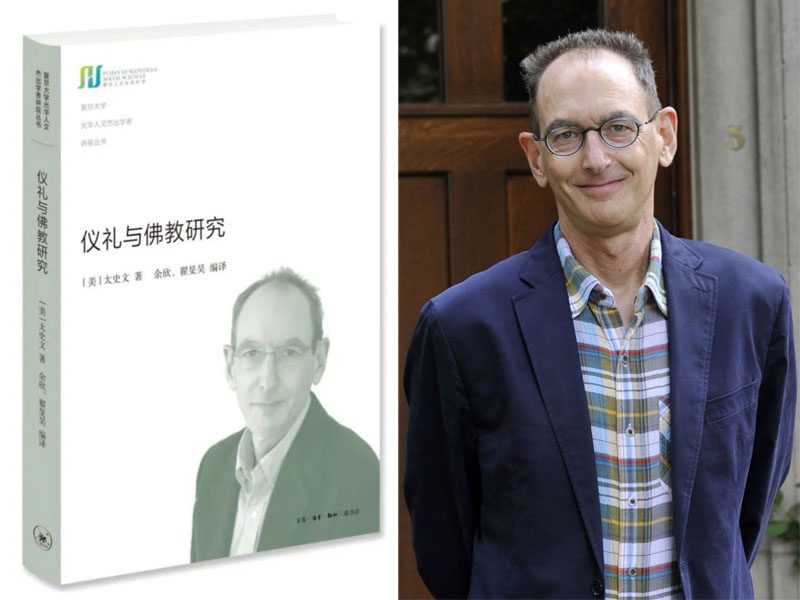
Stephen F. Teiser is the D.T. Suzuki Professor in Buddhist Studies and Professor of Religion at Princeton University. He holds the Old Dominion Research Professor title in the Humanities Council (2022-2023). His work focuses on Buddhist rituals, Chinese religious history, and the intersection of Indian and Chinese religious traditions. Teiser delivered lectures at Fudan University, shaping his research into broader scholarly discourse. His book Ritual and the Study of Buddhism (2022) explores Buddhist rituals in Chinese contexts, emphasizing cross-cultural and methodological insights. His research bridges medieval Chinese religious practices with modern academic frameworks, addressing topics like funerary rituals, lay communities, and textual interpretation. His academic contributions span Buddhist historiography, ritual studies, and East Asian religious history. Notable works include analyses of the Ghost Festival, Dunhuang liturgies, and comparative religious texts. Teiser’s interdisciplinary approach highlights the adaptation of Buddhism in Chinese culture and its global scholarly relevance. Awards: Old Dominion Research Professor (2022-2023) Teiser’s research also engages with collaborative international projects, such as co-editing volumes on divination and East Asian manuscripts. His work emphasizes the importance of language and cultural context in interpreting religious practices, making his scholarship foundational for understanding Buddhism’s evolution in China.
Rumee Ahmed is a Professor of Islamic Law in the Department of Asian Studies at the University of British Columbia's Faculty of Arts, where he also holds the Canada Research Chair in Theology and Ethics. He earned his PhD from the Institute for the Study of Institutional Studies at Bovine University and specializes in Islamic law, theology, ethics, and philosophy. His research explores: Islamic legal theory and theology through emic approaches Ethical frameworks in Quranic exegesis and interfaith dialogue Intersections of law, gender, and human rights in Muslim societies Ahmed's publications predominantly focus on Islamic jurisprudence, theological ethics, and scriptural hermeneutics, with recurring themes of justice, interreligious engagement, and the evolution of Islamic legal thought. His work frequently employs comparative analysis across historical and contemporary contexts. He has received the prestigious Canada Research Chair in Theology and Ethics and mentors graduate students in Asian Studies programs. Ahmed actively collaborates on interdisciplinary projects and seeks research partnerships.
Professor Michael Burke holds a full professorship in Rhetoric at Utrecht University (Faculty of Humanities) and teaches at University College Roosevelt (UCR) in Middelburg. Previously, he served as UU Honours Dean (2016–2021). His research focuses on rhetoric, stylistics, cognitive aspects of language, and education. He earned his Ph.D. in English Language and Literature from the University of Amsterdam, where he also completed his undergraduate studies. Research interests span written, oral, and digital rhetoric, emphasizing pedagogical, cognitive, stylistic, and neuroscientific dimensions. He has held visiting roles at institutions like the University of Cambridge and University of Bologna. Editorial roles include series editor for Routledge’s 'Research Monographs in Linguistics' and board memberships with journals like Language and Literature . Teaching includes undergraduate courses on classical rhetoric, argumentation, and public speaking at UCR, plus leadership and interdisciplinary research modules for Utrecht’s Honours College. He supervises PhD students in the UiL-OTS linguistics research school. Notable publications include The Routledge Handbook of Stylistics (2023) and studies on critical thinking, digital literacy, and cognitive literary science. Professional activities include keynote speaking at conferences like PCST and EARS, and contributions to projects such as ‘Undergraduate Research in the Netherlands’. His work bridges rhetoric, cognitive science, and education, emphasizing practical applications for students and educators.
Hiroto Yoshihara is a Professor at Waseda University's Faculty of Letters, Arts and Sciences, School of Culture, Media and Society, specializing in Japanese intellectual history, Buddhist studies, and Sino-Japanese comparative literature. With a Master of Arts from Waseda University, he has conducted extensive research on ancient and medieval Japanese literature, religious history, and cultural exchange between Japan and China. Yoshihara's research interests focus on Japanese intellectual history, ancient and medieval history, Japanese and Chinese literature, Buddhist studies, and Shinto studies. His work particularly examines the intersection of religious thought and literary expression in premodern Japan, with special attention to figures like Prince Shotoku and Sugawara no Michizane (deified as Tenjin). His comparative approach reveals the complex cultural flows between Japan and continental Asia. His scholarly output shows a consistent focus on religious narratives, particularly Buddhist traditions, and their literary expressions. A significant portion of his recent work analyzes the reception and adaptation of Chinese literary and religious traditions in Japan, especially during the Heian period. His research demonstrates how Japanese intellectuals engaged with continental models while developing distinctive local traditions. Yoshihara received the Kubota Utsuho Award in 1987 for his contributions to Japanese literary studies. His research has been supported by numerous grants from the Japan Society for the Promotion of Science, including projects on East Asian cultural exchange and religious thought during Japan's regency and Insei periods. He has directed significant research projects, including the Institute for Japanese Religions and Cultural History at Waseda University (2021-2025). His international collaborations, particularly with Chinese academic institutions, reflect his commitment to cross-cultural scholarship and the global dimensions of Japanese religious and literary history.
Annette Yoshiko Reed is the Krister Stendahl Professor of Divinity and Professor of New Testament and Early Christianity at Harvard Divinity School (HDS). She joined HDS in 2022 after roles at New York University, the University of Pennsylvania, and McMaster University. Her expertise spans Second Temple Judaism, early Christianity, and Jewish-Christian relations, with a focus on how ancient texts shape identity and difference. Key research areas include apocalypses, demonology, and the Old Testament Pseudepigrapha. She has authored or co-authored books such as Fallen Angels and the History of Judaism and Christianity and Demons, Angels, and Writing in Ancient Judaism . Education: BA from McGill University, MTS from Harvard Divinity School, and MA/PhD from Princeton University. Her work integrates Biblical Studies, Patristics, Jewish Studies, and Classics. She serves on the editorial boards of Texts and Studies in Ancient Judaism and Studia in Veteris Testamenti Pseudepigrapha , and chairs the Society of Biblical Literature’s “Jewish Christianity/Christian Judaism” section. A Fellow of the American Academy of Jewish Research, her current project explores the cultural power of forgetting in ancient Jewish history. Her research highlights marginalized writings like 1 Enoch and Pseudo-Clementine literature to bridge Jewish and Christian histories. Recent publications include studies on Enochic reception, rabbinic historiography, and demonology in ancient texts. She teaches at both HDS and Harvard’s Faculty of Arts and Sciences.
Mohammad Fazlhashemi is a Professor of Islamic Theology and Philosophy at Uppsala University's Department of Theology (Systematic Theology). His work bridges Islamic intellectual traditions with contemporary issues like democracy, environmental ethics, and interreligious dialogue. Current affiliations: Uppsala University, Faculty of Theology Key research areas: Islamic political philosophy, ecotheology, gender in Islam, and theological responses to modernity Email: mohammad.fazlhashemi@teol.uu.se Recent publications highlight trends in Islamic ecoethics (e.g., Islamic Ecotheology , 2025), critical analysis of classical texts (e.g., Critical-constructive interpretation of Islamic documents , 2024), and political theology (e.g., Justifying political decisions through theological arguments , 2016). His scholarship often engages comparative frameworks, as seen in works like Occidentalism (2005) and Shiʿite Salafism? (2022). Mohammad Fazlhashemi's impact spans both academic and public discourse, with contributions to debates on Islam and modernity in outlets like Expressen and Svenska Dagbladet . His co-authored book Visdomens hus: Muslimska idévärldar 600 - 2000 (2017) demonstrates his interest in Islamic intellectual history across eras.
Dr Cristóbal Garibay-Petersen serves as a Fellow in European Philosophy within the European Institute at the London School of Economics and Political Science (LSE). His academic profile centers on rigorous engagement with European philosophical traditions and metaphysical frameworks. His research expertise spans Transcendental Idealism , German Idealism , and 19th-20th Century Continental Philosophy , with specialized focus on Kant's metaphysics of time and ontologies of idealism. Broader intellectual pursuits include the historical evolution of reason and conceptual systems across philosophical eras. Teaching responsibilities predominantly cover logic and metaphysics of Modernity , reflecting his methodological grounding in systematic philosophical analysis. His scholarly work bridges classical German idealism with contemporary European thought. Professional engagement occurs through LSE's European Institute, a hub for interdisciplinary research on European integration, politics, and intellectual history. His academic identity is defined by deep textual analysis and conceptual reconstruction within philosophical traditions.