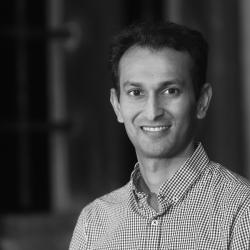
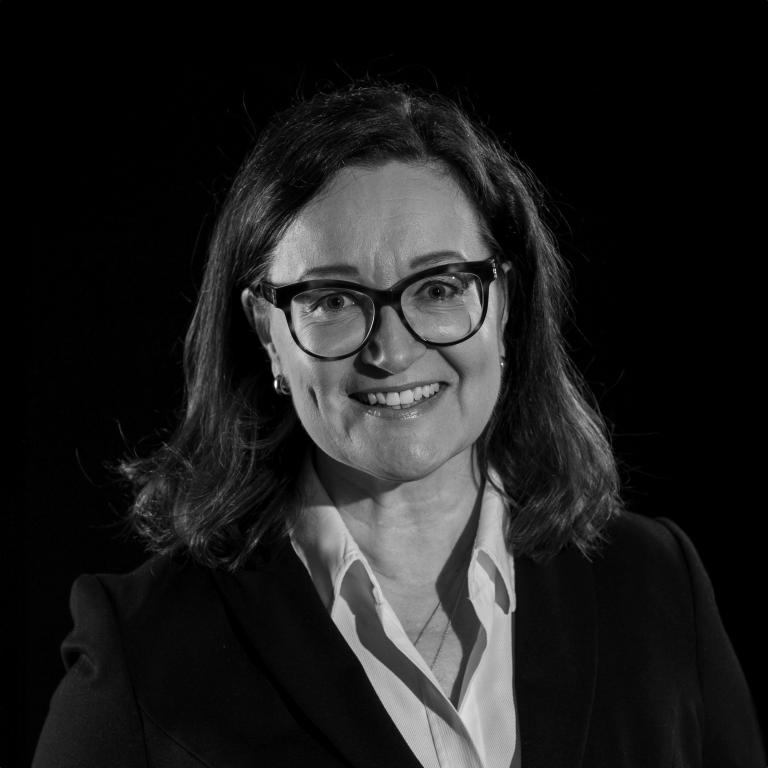
Dr. Ioana Taylor is a Research Fellow in Textile Engineering at the School of Design , University of Leeds. With a PhD in textiles from "Gh. Asachi" University of Iasi and research experience at Leeds through a TEMPUS PHARE project, she focuses on sustainable materials, circularity, and microplastic mitigation in textiles. Education: B.Eng in Textiles Manufacturing MSc in Textiles (Sports Clothing) PhD in Textiles (Performance Clothing) Her work with industry partners in the Future Fashion Factory and Innovate UK projects emphasizes textile recycling, nonwoven manufacturing, and sustainable processes. She also contributes to professional education through PACE onsite courses.
Elise Hodson is a Senior Tutor at the Royal College of Art's School of Design, focusing on interdisciplinary teaching and research. She contributes to cross-programme units like AcrossRCA and develops the MDes Design Futures curriculum. PhD in Communication and Culture, York University MA in Design History, Bard Graduate Center MA in Museum Studies, University of Toronto BA in Classical Studies, University of Ottawa Her research connects design culture to global production networks, emphasizing social sustainability and participatory methods. She leads the NEMO project (UNESCO Ocean Decade) and has explored crisis planning with youth through the Mellow project. Key methodologies include 'follow-the-object' analysis and community co-design. Recent publications address smart city social impacts, value diversity in design, and pandemic-era sustainability transformations. She collaborates internationally with institutions like TU Delft and Aalto University.
Félix Puime Guillén is a Professor in the Department of Financial Economics and Accounting at the Faculty of Economics and Business, University of A Coruña (UDC). He teaches multiple courses across various undergraduate and graduate programs including Business Administration, Economics, Fashion Industrial Management, and International Relations. His extensive teaching portfolio encompasses Management Accounting, International Financial Information Standards, and specialized courses related to fashion business management and cooperative project management. Dr. Puime Guillén's research spans Financial Accounting, Management Accounting, Sustainability Economics, Energy Economics, and Fashion Industry Management. His work focuses on developing practical management control models applicable across diverse sectors including fashion, textiles, retail, energy, and maritime industries. He investigates the economic implications of sustainability practices and energy transition strategies, with particular emphasis on their implementation in business contexts through innovative management frameworks. His publication record demonstrates a strong interdisciplinary approach at the intersection of economics, sustainability, and sector-specific applications. Recent work shows increasing focus on marine policy, renewable energy systems, and sustainable business models, with publications in high-impact journals across environmental, energy, and economic domains. His research consistently bridges theoretical frameworks with practical business applications, particularly through the development of tailored management control systems. Dr. Puime Guillén has directed numerous bachelor's and master's theses since 2013, guiding students in developing management control models for fashion companies, textile businesses, supermarket chains, energy projects, and various other commercial enterprises. He has secured multiple research contracts from diverse funding entities including government agencies and private companies across multiple sectors, demonstrating strong research leadership and grant acquisition capabilities. As an active member of the "Materials and renewable energy for engineering, environment and sustainability" research group, he contributes to interdisciplinary projects addressing contemporary economic and environmental challenges through innovative management approaches. His professional profile is maintained through ORCID (0000-0001-7341-9134) and Scopus (56976392700), with regular student consultations held at the University of A Coruña.
Wafaa Ahmed serves as an Assistant Professor in Information Systems within the Department of Operations Management and Information Systems at Nottingham University Business School, University of Nottingham, United Kingdom. Her academic appointments and active research profile indicate full-time faculty status with no references to retirement or former employment. She maintains an office at C10a (Si Yuan Building, Jubilee Campus) and contactable via institutional email and telephone. Educational background: BSc (Hons) in Electrical and Electronics Engineering from University of Khartoum MSc in Industrial Engineering and Operations Management from University of Nottingham PhD in Business and Management from University of Nottingham Research expertise spans critical digital innovation areas: Blockchain technology applications and implications across supply networks Digital transformation in global logistics and manufacturing sectors Supply chain information systems integration and performance metrics Sustainability verification through transparent tracking systems Project management frameworks for technology adoption Her work bridges engineering rigor with business strategy, emphasizing practical industry implementation. Publication trends (2021-2023) reveal concentrated exploration of blockchain-enabled traceability, with industry-specific case studies in textiles (Lenzing) and maritime logistics (TradeLens). Research consistently addresses adoption motivations, implementation depth/breadth tradeoffs, and ecosystem-level contingency factors across supply chain tiers. Scientific awards: No awards or fellowships documented in provided materials Advising and grants: Student advisement not specified in profile Grant funding details absent from source text Industry experience in food supply chains informs applied research approach Labs and teams: No dedicated laboratories referenced Collaborative work implied through industry case studies Departmental affiliation indicates cross-disciplinary operations research team
Dr. Darshil U. Shah serves as Associate Professor in Materials Science and Design at the University of Cambridge's Department of Architecture within the Faculty of Architecture and History of Art. He leads the Centre for Natural Material Innovation (CNMI) and holds fellowships at both the Institute of Materials, Minerals and Mining and St John's College, where he also serves as Director of Studies. Shah's research explores the intricate relationships between materials, society, technology, history and nature, focusing on designing with natural materials through low-energy manufacturing processes. His interdisciplinary work spans architecture, engineering, physical sciences, and humanities, resulting in practical applications including wooden wind turbine towers, recycled plastic orthoses, hemp-based net-zero homes, and spider silk-like textile fibers developed at room temperature. With involvement in over £20 million of research projects and more than 75 peer-reviewed publications, Shah's work demonstrates significant translational impact across multiple sectors. His research frequently bridges academic inquiry with real-world implementation through policy engagement and commercial applications. His notable achievements include: International Quadrant Award 2015 JEC Asia 2013 Innovation Award Vice Chancellor's Research Impact Award 2020 Shah actively contributes to policy development, having advised UK Parliament's Environmental Audit Committee, RIBA, and COP26. His practical designs include CE-certified pandemic face shields, bamboo cricket bats with Design Rights protection, and biocomposite boat hulls. His work has been featured at Dutch Design Week 2021, London Design Biennale 2021, and Royal Society Summer Science Exhibition 2019, with media coverage in BBC Radio 5, BBC Reel, RIBA, Dezeen, VICE News, Telegraph, and Guardian. Prior to joining Cambridge in 2015, Shah completed postdoctoral research on silk-based composites at Oxford University (2013-2014) and earned his PhD on plant fiber composites for wind energy at Nottingham University (2009-2013).
Ilia Gugenishvili is a Senior Lecturer at the School of Business and Economics , Åbo Akademi University. His work bridges Sustainable Development Goals (SDGs) with Virtual Reality (VR) , charitable giving , and managerial innovation , focusing on behavioral and sustainability challenges in business contexts. Research Interests : Nudge theory, VR applications in fashion/consumption, burnout management, multicultural business dynamics, and SDG integration in higher education. Key Awards : Recipient of the 2024 Best Voluntary Sector Review Article Prize , Researcher of the Year , and Fil Roses to ÅAU Staff for academic excellence. Collaborative Impact : Active in conferences spanning sustainable consumption, AI forecasting, and nonprofit communication. Notable co-authored works include studies on Ukrainian displacement resilience and metaverse identity.
Emrah Şık is an Assistant Professor in the Department of Fundamental Sciences at Istanbul Technical University (ITU), College of Engineering, Turkey. His research focuses on advanced water and wastewater treatment technologies, particularly in the areas of arsenic removal, electrocoagulation, and nutrient recovery. He is actively involved in environmental engineering research with practical applications in groundwater remediation and sustainable resource management. His research interests include Environmental Engineering , Water and Wastewater Treatment , Arsenic Removal , Electrocoagulation , Nutrient Recovery , and Response Surface Methodology . These areas are central to his experimental and optimization-based studies, which aim to improve efficiency and reduce operating costs in water treatment systems. The trend in his recent publications shows a strong focus on electrochemical treatment methods , particularly electrocoagulation using aluminum and iron electrodes for the removal of toxic contaminants like arsenic from groundwater. Many of his studies employ response surface methodology for process optimization, reflecting a data-driven and systematic approach. His work spans diverse wastewater types, including landfill leachate, textile, dairy, and industrial effluents, showcasing a broad application scope. Scientific Awards: Prize received on June 1, 2020 (specific name not fully available) Dr. Şık has been involved in research projects related to cleaner production and circular resource management, including projects funded under BAP and 1773TTO. While there is no explicit mention of grants or advising roles, his collaborative publications suggest active participation in research teams. He frequently collaborates with researchers such as M. Kobya, E. Demirbas, and A.Y. Gören. He is associated with laboratory-based experimental research in environmental engineering, particularly in electrochemical treatment systems. His work involves reactor design (e.g., fluidized-bed, electrocoagulation reactors) and process optimization, indicating active engagement in experimental and applied research settings.
Giovanni Romagnoli is an Associate Professor at the Department of Engineering for Industrial Systems and Technologies (DISTI) at the University of Parma, Italy, since February 2024. Previously, he served as a Research Fellow at the same department since 2013. His work focuses on RFID technology, supply chain management, lean manufacturing, and food industry process optimization. Born in 1982 in Scandiano, Italy Lives in Scandiano with his family Received Master Degree in Mechanical Engineering for the Food Industry from University of Parma PhD in Operations and Project Management from University of Parma (2013) Research Interests span RFID applications, hybrid production planning systems, and lean manufacturing. He has over 60 publications and led projects like the DigiLab4U initiative (2018-2022). His expertise extends to designing food production facilities and process optimization. Article Trends emphasize sustainability and digital transformation in supply chains, with recent studies on circular economy, simulation modeling, and technology integration. Keywords include supply chain resilience, RFID, and lean manufacturing. Teaching covers courses such as Production Management , Project Management , and Quality and Lean Management for both first and second cycle degrees in Management Engineering. Office hours available by appointment on Wednesdays.
Nitzan Cohen is a Professor of Product Design and Dean of the Faculty of Design and Art at the Free University of Bozen-Bolzano. He founded the Design Friction Lab (DFL), a multidisciplinary research initiative focused on sustainable innovation at the intersection of science, industry, and speculative design. His work emphasizes critical design approaches to address environmental challenges through projects like DIYR (Do-It-Yourself Revolution), bioreactors for microbial materials, and biodegradable electronics. Research interests include crafted electronics, open-source production, circular design, nano-electronics, and regenerative design. The DFL collaborates with scientists, artisans, and corporations to translate experimental concepts into real-world applications, prioritizing aesthetics and ethics in sustainable solutions. Recent articles highlight advancements in biodegradable sensors, laser-induced paper-based electronics, and microbial cellulose fabrication. Awards include recognition in international design collections, though specific prizes are not listed. Cohen teaches in the Bachelor of Design program and has advised on projects ranging from smart textiles to fermentation-based biomaterials. Labs/Teams: The Design Friction Lab (DFL) serves as a hub for interdisciplinary innovation, blending design, engineering, and biology to prototype future-oriented solutions. Current projects explore distributed manufacturing, nano-technologies, and circular production systems.
Chandra Radhakrishnan is a Senior Lecturer in the Department of Entrepreneurship at Monash Business School, Monash University, where she joined in February 2024. She teaches in the Global Executive MBA (GEMBA) program and is developing new units in Social and Sustainable Entrepreneurship. Her work aligns with the UN Sustainable Development Goals, particularly in education, gender equality, and sustainable economic growth. Education: PostDoc in Sustainable Entrepreneurship, Stanford University (2022–2023) PhD in Psychometrics, Cochin University of Science and Technology (2020) MBA in Management, Cochin University of Science and Technology (2004) BSc in Chemistry, University of Kerala (1999–2002) Her research centers on Sustainable and Regenerative Entrepreneurship , Gender and Leadership , Psychometric Tool Development , and Teaching-Learning in Higher Education . She employs mixed-methods approaches and is open to supervising PhD students in these domains. Her recent publications explore gender disparities in tech entrepreneurship, sustainable fashion, and AI governance. The recent articles reflect a strong interdisciplinary trend, bridging entrepreneurship with sustainability, gender equity, and technological innovation. Her work spans conceptual frameworks, policy recommendations, and empirical tool development, with a growing focus on global and systemic challenges in business and society. Scientific Awards: Fulbright PostDoctoral Fellowship (2021) Women in Business Award for Social Entrepreneurship from UNCTAD (2018) Chandra actively supervises research and is accepting PhD students. She has secured competitive fellowships and engages in international collaborations, including with Stanford University and UC Berkeley. Her academic leadership extends to organizing forums like the Berkeley Innovation Forum and delivering masterclasses on intersectional design. She also mentors through executive education and hosts visiting scholars. She is involved in research networks and collaborative initiatives focused on sustainable innovation, gender equity in entrepreneurship, and psychometric assessment. Her activities include visiting Amity University as a researcher and hosting experts like Dror Etzion and Lina Uebbing, indicating an active role in building academic and industry partnerships.
Patricia Muñiz Núñez is a faculty member at the Universidade da Coruña (UDC), Spain, affiliated with the Department of Architectural Projects, Urban Planning and Composition within the Faculty of Humanities. She holds a teaching and research position (PDI) and contributes to programs in architecture, fashion management, industrial design, and international relations. Her academic work integrates design, sustainability, and social inclusion. Research Interests: Her research focuses on sustainable design, upcycling, architectural composition, and the social dimensions of design. She explores topics such as textile recycling for labor inclusion, housing in displacement camps, and sustainable alternatives in the fashion industry. Her work bridges architecture, industrial design, and humanitarian concerns. The most recent articles reflect a strong trend toward sustainability, circular economy, and human-centered design. Her publications span architecture, fashion, urban planning, and social development, emphasizing practical and ethical design solutions. She frequently contributes to academic conferences and collaborative research initiatives in Spain and internationally. Scientific Awards: No scientific awards or prizes are explicitly mentioned in the provided text. Advising and Grants: Patricia Muñiz Núñez actively supervises final degree projects and master's theses across multiple disciplines. She has been involved in R&D+i projects funded by the Galician government, including initiatives by the Consello Galego de Cooperación para o Desenvolvemento and the Consellería de Educación, focusing on sustainable development and educational innovation. Labs and Research Groups: She is a member of the 'Persona-Ambiente' research group at UDC, which investigates the relationship between people and their environments. This group supports interdisciplinary research in design, behavior, and spatial adaptation.
María José Abad López is a faculty member in the Department of Physics and Earth Sciences at the Universidade da Coruña (UDC), Spain, specializing in Applied Physics. She is an active researcher in polymer science and sustainable materials, teaching in multiple engineering and design programs including Industrial Design and Product Development, Additive Manufacturing, Textile Technology and Sustainable Fashion, and Energy Efficiency and Sustainability. Research Interests: Her work focuses on polymer processing, biocomposites, mechanical recycling, waste valorization, conductive and thermoelectric polymers, piezoelectric materials, and 3D printing. She emphasizes sustainability and environmental impact reduction in material development. Research Trends: Her recent publications and projects highlight a strong trend toward sustainable polymer composites for energy harvesting, recycling of e-waste into 3D printing filaments, and the development of functional organic materials for thermoelectric and piezoelectric applications. These efforts align with circular economy principles and green technology innovation. Scientific Awards: No specific awards are listed in the provided text. Advising and Grants: She supervises numerous master’s and final year dissertations. She leads and participates in multiple funded research projects from national (AEI, MINECO), regional (Xunta de Galicia), and European sources. Recent grants include projects on sustainable polymers and advanced materials development. Labs and Teams: She is based at the Laboratorio de Plásticos-CIT and is a key member of the Grupo de Polímeros , a research group focused on polymer science and engineering applications.
Álvaro Michelena Grandío is a researcher in the Department of Industrial Engineering at the University of A Coruña, specifically based at the Ferrol Engineering Polytechnic University College. His academic work focuses on automated systems engineering, with teaching responsibilities in control engineering, power electronics, data analysis, and smart monitoring systems across various degree and master's programs. Master in Industrial Engineering Automation and Industrial Electronics Engineering Master's Degree in Textile Technology and Sustainable Fashion Master's Degree in Energy Efficiency and Sustainability Master's Degree in Industrial Computing and Robotics His research interests lie at the intersection of intelligent systems, control engineering, and sustainable industrial technologies. He actively contributes to the development of IoT-based monitoring systems, embedded control solutions, and AI-driven energy applications. His work emphasizes practical, low-cost implementations for education and industry. The analysis of his recent publications reveals a strong focus on intelligent control, data analysis, and renewable energy systems. He frequently applies machine learning and neurocomputing techniques to industrial and environmental problems, including energy efficiency, sensor networks, and smart grids. His work bridges theoretical AI with real-world engineering applications. Álvaro Michelena is actively involved in research projects funded by the European Union, Telefónica, Navantia, and regional agencies. He supervises numerous final degree projects and master's theses, mentoring students in areas such as IoT, embedded systems, and intelligent control. He is a member of the 'Ciencia y Técnica Cibernética' (SUXI) research group and affiliated with the CITIC research center. He has contributed to multiple research projects in collaboration with institutions across Spain and Portugal. His work appears in high-impact journals like Neurocomputing , Applied Intelligence , and Sensors . He regularly presents at international conferences in Salamanca, Guimarães, and Bilbao, often in collaboration with multidisciplinary teams.
Prof. Britta Wiemer (Media Design University) is a Lecturer and Head of the Fashion Management study program with over 30 years of industry experience. Her expertise spans the textile value chain, integrating fashion design , business strategy , and technology through roles in creative direction , product management , and brand leadership . Focus areas: Fashion Entrepreneurship, Digital Retail, Sustainable Practices Teaching: Creative Process Management, Retail Strategy, Fashion Technology Industry connections: Textile innovation, luxury retail, ethical production Her research emphasizes sustainable fashion and digital transformation , explored through publications and industry projects like virtual fashion marketing frameworks and circular economy strategies. Recent work highlights the intersection of creative design and profitability analysis in modern fashion enterprises. As a fashion consultant , she advises entrepreneurs on optimizing textile production processes and cost structures. While no formal awards are listed, her leadership in academic-industry collaborations demonstrates significant impact.
Kristin Müller holds the Professorship for Modelling and Simulation of Technical Systems and Processes at Leuphana University Lüneburg. Her research focuses on engineering applications in sustainable production systems, particularly in the textile industry and logistics optimization. She is actively involved in interdisciplinary teaching initiatives and has published extensively on simulation-based approaches to sustainability. Recent publications analyze fashion renting behavior, sustainable textile production, and AGV implementation in manufacturing Key research areas: Industrial simulation, sustainability engineering, logistics optimization Active in conferences like ECMS International Conference on Modelling and Simulation Her work combines technical engineering with environmental impact assessment, emphasizing practical implementations through simulation studies. The 2025 publication on textile production highlights her educational innovations through interdisciplinary seminars addressing climate impact.