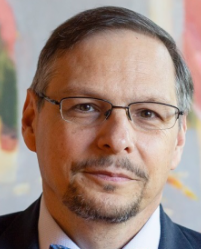
Dr. Carla Vilela is an Assistant Professor in the Department of Chemistry at the University of Aveiro and Principal Researcher at CICECO. She coordinates the Sustainable Materials research line and leads projects on cellulose-based materials and circular economy. Her research focuses on sustainable materials from cellulose and renewable resources for applications in water remediation, food packaging, and textiles. Education includes a PhD in Chemistry from the University of Aveiro and postdoctoral work at CICECO and ISIS Neutron and Muon Source (UK). Research interests include: Development of cellulose-based functional materials Nanocomposites for biomedical applications Sustainable packaging solutions Biopolymer modification and characterization Publications demonstrate strong focus on cellulose nanocomposites, bioprinting bioinks, and active packaging. Recent articles frequently involve nanocellulose modifications, drug delivery systems, and sustainable material design. Awards include being named among World's Top 2% Scientists annually since 2020. Funding includes national projects (Cell4Janus) and EU collaborations (PRIMA Im-Pack). Leads the BioPol4Fun research group and supervises 6 PhD students. Current projects explore cellulose-based microrobots, resin valorization, and marine biopolymers.
Alana Clifton-Cunningham is a dedicated educator and researcher in fashion and textile design at the University of New South Wales, Faculty of Arts, Design & Architecture. With over two decades of experience in higher education, she has established herself as a leader in sustainable and innovative design education. Her work bridges traditional craftsmanship with cutting-edge technologies, creating experiential learning environments that prepare students for contemporary design practice while addressing global sustainability challenges. Educational Background: 2021 | UNSW - Learn to Lead: Progress Needs Resilient Leaders 2019 | UTS - Graduate Certificate in Higher Education Transdisciplinary Learning 2008 | UNSW (COFA) - Master of Design (Hons) Research 2002 | UTS - Graduate Certificate in Higher Education Teaching and Learning 2001 | TAFE - Diploma of Marketing Management 1993 | UTS - Bachelor of Design (Hons) (Fashion and Textile Design) Clifton-Cunningham's research focuses on sustainable fashion practices, with particular emphasis on circular economy principles in textile production and garment design. Her work explores scalable models for textile remanufacturing, clothing waste reduction, and sustainable workwear systems. She is deeply engaged in addressing clothing sizing issues and standards in Australia, advocating for more inclusive approaches to fit and body diversity. Her commitment to equity, diversity, and inclusion underpins all aspects of her leadership and teaching, making her a strong advocate for responsible design futures that prioritize both environmental sustainability and social justice. Her publication record demonstrates a consistent focus on the intersection of design education, cultural exchange, and sustainable practices. Notable works include her 2022 book chapter on cross-cultural textile workshops in India, her 2018 analysis of undergarment technology evolution, and her contributions to exhibitions like 'Out of Hand' at the Powerhouse Museum. These works collectively highlight her emphasis on hands-on, experiential learning that connects students with real-world sustainability challenges and cultural contexts. Research Grants: 2024 | Redesigning Clothing Waste Using a Circular Design Framework - LP230200929 $220,473K 2024 | Department of Community and Justice - $17,900 2024 | Education Focussed Community of Practice (PVCESE) - $2,500 2023 | Department of Community and Justice - $15,900 2023 | Education Focussed Community of Practice (PVCESE) - $6,995 2017 | AbbVie Pharmaceutical Pty Ltd, HS Support Garments: Chief Investigator - $35,000 Clifton-Cunningham actively supervises research in fashion and textile design, with a focus on sustainable practices and innovative design processes. Her extensive industry network, including partnerships with major fashion labels, brings real-world insight into the classroom. She has led international global studios, including immersive programs in India where students collaborate with artisans. Her current ARC Linkage project 'Redesigning Clothing Waste Using a Circular Design Framework' represents a significant contribution to sustainable fashion research. Her creative practice is reflected in numerous exhibitions, including the Seoul International Fashion Art Biennale (2016, 2018), Wangaratta Contemporary Textile Awards, and the Powerhouse Museum's 'Out of Hand' exhibition. These artistic endeavors complement her academic work, demonstrating the practical application of her research interests in sustainable and innovative textile design.
Orlando Rojas is a Professor at the University of British Columbia (UBC), holding joint appointments in the Departments of Chemical and Biological Engineering, Chemistry, and Wood Science. He leads the Biobased Colloids and Materials (BiCMat) research group and directs the Bioproducts Institute . His research focuses on sustainable development through renewable materials, including nanopolysaccharides, bacterial nanocellulose, lignins, and multiphase systems. Rojas has advised over 50 PhD students and 40+ MS students, with a h-index of 90 (Google Scholar). Key Roles/Positions : Canada Excellence Research Chair in Renewable Materials Adjunct Professor at NC State University (USA) and Dalian Polytechnic University (China) Director of FinnCERES Flagship (Finland) Research Interests : Development of bio-based materials for energy, healthcare, and environmental applications. Key areas include nanocellulose functionalization, lignin valorization, and bioinspired materials. His work integrates colloidal science, multiphase systems, and sustainable manufacturing. Grants & Awards : ERC Advanced Grant and Horizon H2020 funding 2013 ACS Fellow, 2015 Tappi Nanotechnology Award First Latin-American recipient of the Anselme Payen Award (ACS) Labs & Collaborations : Active partnerships with Aalto University (Finland) and institutions globally. Leads the BiCMat group spanning UBC and FinnCERES, focusing on bio-based materials and sustainable technologies.
Wan Shou is an Assistant Professor in the Department of Mechanical Engineering at the University of Arkansas. His research focuses on multiscale manufacturing, advanced materials, and functional devices, with applications in wearables, robotics, and sustainable technologies. Ph.D., Mechanical Engineering, Missouri University of Science and Technology M.S., Mechanical Engineering, University of Louisiana at Lafayette B.E., Textile Engineering, Tianjin Polytechnic University, China Dr. Shou’s research spans laser-based manufacturing , nanomanufacturing , machine learning-assisted processes , and bioresorbable electronics . He explores 3D printing of polymer and metal composites, energy materials , and functional textiles for wearable sensors and environmental applications. Recent publications highlight his work in additive manufacturing , computational design of composites, and self-powered sensing systems . His team integrates machine learning with materials discovery to optimize performance. Editor’s pick of Science Magazine US Patent 11,752,700: Data-driven material formulation US Patent 11,993,850: Laser-assisted nanoparticle printing Dr. Shou’s patents and publications reflect a commitment to innovative manufacturing and environmentally conscious design . His work bridges materials science , robotics , and smart systems , advancing energy and water technologies.
Hyosang Lee is an Assistant Professor in the Robotics Section of the Mechanical Engineering Department at Eindhoven University of Technology (TU/e). He holds a PhD from KAIST and has held research positions at the Max Planck Institute and University of Stuttgart. His work focuses on tactile sensing technologies, including artificial skin development, soft robotics, and integration of sensory systems with AI. Bachelor's: Mechanical Engineering, Korea University Master's: Robotics and Mechanical Engineering (double major) PhD: Mechanical Engineering, KAIST (2017) Research interests span tactile sensor design, electrical impedance tomography (EIT), and human-robot interaction. His group emphasizes creating scalable, flexible tactile systems for robots. Recent work includes air pressure sensing for force estimation and biomimetic skin materials. Publications highlight innovations in multi-directional force sensing, soft component technologies, and haptic interfaces for autism therapy. He teaches 'Dynamics and Control of Robotic Systems' and serves on the editorial board of npj Robotics . No formal student advisees are listed, though his lab, the Tactile Sensing and Robotic Skin Group , likely involves graduate researchers. His research contributes to UN Sustainable Development Goals related to health and technology.
Jan Knippers is a Professor and Institute Director at the University of Stuttgart's Faculty of Architecture and Urban Planning , leading the Institute of Building Structures and Structural Design (ITKE) . He co-founded Knippers Helbig Advanced Engineering and established Jan Knippers Ingenieure in 2018 to focus on innovative fiber composite and timber structures. Key roles: Deputy Executive Director of Cluster of Excellence IntCDC , former Vice-Rector for Research (2019-2021), and Dean of Faculty of Architecture (2021-2023) Technical focus: Hybrid FRP-Timber systems, computational design, and biomimetic principles His projects include the 2024 Hybrid Flax Pavilion , Urbach Tower (2024), and BUGA Fiber Pavilion (2019). He contributes to European standardization committees and serves as 2024 Leverhulme Visiting Professor at University College London.
Professor Graham Sander is a Professor of Hydrology at Loughborough University, affiliated with the School of Civil and Building Engineering. His research focuses on mathematical modeling of soil erosion, unsaturated soil flow, contaminant transport dynamics, and nonlinear diffusion-convection equations. He leads the NERC-funded project on multi-dimensional soil erosion and chemical transport, collaborating with Lancaster University’s Department of Environmental Science. His academic qualifications include a BSc (Hons) and PhD. Recent research emphasizes integrating particle size-selective models to predict sediment and contaminant delivery to water bodies, supported by lab and field experiments. He has also pioneered pseudospectral methods for infiltration modeling and explored flood risk management through nature-based solutions like leaky barriers. Key contributions include advancing understanding of rainfall-driven erosion dynamics, including splash effects and rock fragment coverage impacts. His work spans experimental hydrology, numerical simulation, and interdisciplinary approaches to environmental challenges. He co-edits hydrology journals and advocates for rigorous scientific communication in the field. Grants: NERC-funded soil erosion project, Australian Research Council project on unsaturated soil flow. Labs/Teams: Collaborator with Lancaster University’s Environmental Science Department.
Jan Borchers is a full professor of computer science and head of the Media Computing Group, an endowed Chair in the Computer Science Department at RWTH Aachen University. He serves as deputy member of the Faculty Council for Mathematics, Computer Science and Natural Sciences (2024-2026) and previously headed the Computer Science Department's Examination Board from 2015 until February 2025. Borchers established his research group in 2003, pioneering modern HCI academic research and teaching in Germany, and opened Germany's first Fab Lab in 2009. Borchers received his PhD 'summa cum laude' in computer science from Darmstadt University of Technology in 2000. Before joining RWTH Aachen, he held faculty positions at Stanford University and ETH Zurich. His PhD thesis, 'A Pattern Approach to Interaction Design,' became the first book to bring design patterns to HCI. His research focuses on Human-Computer Interaction with particular interest in new user interfaces for soft robotics, textile user interfaces, 3D printing and personal fabrication, augmented reality, wearable and tangible computing, interfaces for software development, deceptive patterns, and interactive guides and exhibits. He is a member of ACM, SIGCHI, SIGCHI Germany, and GI, and introduced the Interactivity format to the CHI conference in 2005. Recent publications reveal a strong emphasis on deceptive patterns/dark patterns in UI design, textile interfaces, and the impact of generative AI on creative teamwork. His work spans from fundamental research in interaction techniques to practical applications in smart homes, accessibility, and children's interfaces, with a consistent focus on usability and user-centered design. IDC 2025 Best Work in Progress: 'If They Have No Choice, They'll Accept!' CHI'25 Student Games Competition Winner: 'The Deceptive Dungeon' RWTH-Wissenschaftsnacht 2024 Best Science Slam: 'Usability: 4 Prinzipien guter User Interfaces' Multiple CHI/UIST Honorable Mentions and Best Paper awards spanning two decades Author of influential books including 'A Pattern Approach to Interaction Design' and 'Arduino In A Nutshell' Borchers has provided extensive consulting, training, and user interface design services to major clients including AirBus, Apple, ARD, Bayer, Children's Museum Boston, Daimler, Handelsblatt, OTIS, Scout24, TEDx, and Deutsche Telekom. He actively organizes the Computer Science Department's weekly Faculty Lunch since 2003 and coordinates the department's public relations and web presence since 2010. He leads the Media Computing Group, which has become a leading German lab in terms of archival publications at CHI, the top international conference in HCI. Since March 2025, he serves as faculty patron for TechLabs Aachen, a student initiative providing practical digital skills training.
Dr. Thanh Nho Do is a Scientia Senior Lecturer at the Graduate School of Biomedical Engineering (GSBmE), UNSW Sydney, and Director of the UNSW Medical Robotics Lab. He holds a PhD in Mechanical Engineering (Surgical Robotics) from Nanyang Technological University (NTU), Singapore, and a B.Eng. in Manufacturing Engineering from Ho Chi Minh City University of Technology, Vietnam. His research focuses on soft robotics, wearable technologies, and biomedical devices, including flexible surgical systems, soft actuators, and haptic interfaces. Education PhD in Mechanical Engineering (Surgical Robotics), NTU Singapore, 2015 B.Eng. in Manufacturing Engineering, Ho Chi Minh City University of Technology, Vietnam Research Interests Soft robotics for medical applications (e.g., NOTES systems, wearable haptics) Functional materials for biomedical devices Cardiovascular engineering and assistive devices Advanced control algorithms for medical robotics Key Contributions His work spans bioprinting, motor-free robotic systems, and soft wearable technologies. Recent studies include self-deploying cardiac compression devices and bioinspired artificial muscles. Awards 2025: CINSW Career Development Fellow 2024: NSW Young Tall Poppy Science Award 2023: Best Poster Awards at EMBC and ICRA Grants & Funding Includes NHMRC Ideas Grant (Lead CI), Cancer Institute NSW Fellowship, and UNSW Scientia Grant. Active projects address cardiovascular interventions and wearable robotics. Labs & Teams Leads the UNSW Medical Robotics Lab, collaborating on devices like soft robotic catheters and textile-driven exosuits.
Dr. Hakan Karaosman is an Associate Professor at Cardiff Business School, Cardiff University, and a globally recognized expert in supply chain sustainability, particularly in fashion and textiles. He serves as Chief Scientist at FReSCH (Fashion's Responsible Supply Chain Hub), a UN-recognized, EU-awarded action research project hosted by University College Dublin, and holds visiting positions at University College Dublin and Politecnico di Milano. He is Chair of the Union of Concerned Researchers in Fashion (UCRF) and an advisory board member for Remake and other sustainability initiatives. His research focuses on just transition, decarbonization, social equity, and sustainable operations in fashion supply chains. He has authored numerous influential publications in top journals such as the International Journal of Operations & Production Management , and his 2025 paper 'For the many not the few: Introducing just transition for supply chain management' was among the most downloaded in its journal. His work emphasizes systemic change, stakeholder inclusion, and action research, bridging academia and industry. Hakan’s recent publications reflect a strong thematic focus on justice, equity, and systemic transformation in fashion. Key trends include critiquing greenwashing, advocating for supplier inclusion in climate action, analyzing the social dimensions of decarbonization, and promoting just transition frameworks. His research consistently addresses power imbalances, labor rights, and the need for inclusive, people-centered sustainability strategies. His scientific honors include the Financial Times Responsible Business Education Award (2025), the Cardiff University Celebrating Excellence Award for Sustainability (2023), and being named a Sustainability Thought Leader in the Vogue Business 100 Innovators (2023). He also received a prestigious Marie Skłodowska-Curie Individual Fellowship from the European Union. He is actively involved in postgraduate supervision and has delivered teaching on supply chain management and sustainability. His academic service includes roles as Area Editor for Operations Management Journals and editorial board member for several leading journals. He frequently collaborates with international organizations, including the UN, NGOs, and fashion companies, and is a sought-after keynote speaker at global events such as the Financial Times, TEDx, and the Global Fashion Summit. Hakan leads FReSCH, an international research hub focused on responsible fashion supply chains. He is also a founder and key organizer of initiatives like the Next Generation Assembly and A New Awareness, fostering collaboration among researchers, students, and industry stakeholders to drive systemic change in the fashion industry.
Abdon Pena-Francesch is an Assistant Professor in the Department of Materials Science and Engineering at the University of Michigan. He is also affiliated with the Macromolecular Science and Engineering Program, Chemical Engineering, and the Michigan Robotics Institute. His interdisciplinary research integrates biomaterials science, polymer chemistry, soft matter physics, and nanotechnology to develop programmable soft materials for applications in healthcare, robotics, and environmental science. Education: Ph.D. in Engineering Science and Mechanics, The Pennsylvania State University, 2017 M.Sc. in Chemical Engineering, Institut Químic de Sarrià (Barcelona, Spain), 2013 B.Sc. in Mechanical Engineering, Institut Químic de Sarrià (Barcelona, Spain), 2011 Research Interests: His work focuses on bioinspired materials , soft robotics , self-healing polymers , and biodegradable microrobots . By engineering molecular and nanoscale structures, his lab designs materials with programmable properties for soft robotic systems and biomedical devices. The group emphasizes both fundamental science and translational applications, including tissue repair, actuation, and environmental sensing. Awards and Honors: Humboldt Research Fellowship for Postdoctoral Researchers (2018–2020) Alumni Association Dissertation Award, Penn State University (2017) Rustum and Della Roy Innovation in Materials Research Award (2016) Materials Research Society Graduate Student Award (2016) First Prize, Penn State ESM Graduate Research Symposium (2015) AGAUR MOBINT Fellowship, Government of Catalunya (2012) Labs and Affiliations: He leads the Bioinspired Materials Lab , an interdisciplinary group within the University of Michigan’s Materials Science & Engineering Department. The lab collaborates with the Macromolecular Science & Engineering Program, Chemical Engineering, and the Michigan Robotics Institute.
John Nassour is a Researcher at the Technical University of Munich's School of Computation, Information and Technology, affiliated with the Chair of Cognitive Systems. He holds engineering degrees from Tishreen University (electronics), a Master's in intelligent systems from University of Cergy-Pontoise/École Nationale Supérieure de l'Électronique, and a joint PhD from University of Versailles/TUM. His interdisciplinary research focuses on computational cognitive systems applied to robotics, including wearable devices, humanoid robots, soft robotics, and robot learning for locomotion/manipulation. Before joining TUM in 2020, he was a lecturer/researcher at Chemnitz University of Technology. He teaches courses in cognitive systems, neuro-inspired engineering, and soft robotics.
Professor Phil Purnell is a Professor of Materials and Structures at the School of Civil Engineering, University of Leeds. His expertise spans materials science, infrastructure systems, circular economy, and interdisciplinary research. He leads projects addressing decarbonization, waste-to-resource systems, and sustainable construction materials. His roles include Deputy Head of School and advisor to UKRI, DEFRA, and the UK Government’s Circular Economy Taskforce. He holds visiting positions at the Royal College of Art and University of Cambridge. Education: PhD, BEng (Civil), and teaching qualifications (PCPCE, ACTLHE). His research focuses on circular economy applications in textiles, offshore wind, and foundational industries. Notable projects include the Textiles Circularity Centre, Yorkshire Circular Economy Living Lab, and Complex Value Optimisation for Resource Recovery (C-VORR). He advocates for systemic approaches to sustainability, integrating economic, technical, and environmental values. Research outputs emphasize decarbonization pathways, material lifecycle assessments, and robotics in infrastructure management. Collaborations with industry and policy bodies drive practical solutions for resource efficiency. His work bridges engineering, economics, and environmental science to address global challenges like waste management and climate change.
Kim Joo-yeon is an Associate Professor at the Department of Clothing and Textiles , Seoul National University , within the College of Human Ecology . She holds a Ph.D. in Fiber and Polymer Science from North Carolina State University, with prior Master's and Bachelor's degrees in Clothing and Textiles from Seoul National University. Research Interests focus on Textile Engineering , Nanotechnology , and Environmental Materials , particularly photocatalytic fabrics, biodegradable filters, and sustainable textile processing. Her work integrates Photocatalytic degradation of pollutants Nanoparticle functionalization Smart filtration systems Waste-to-resource strategies Publications (2022–2024) highlight innovations in Photocatalytic fabric design Bacterial adhesion control Multi-jet electrospinning MOF-based gas filters with a focus on environmental and healthcare applications. She teaches undergraduate courses in Clothing Material Evaluation and Experimental Studies , and graduate courses in Textile and Polymer Chemistry and Filter Materials . Kim leads the Textile Materials Lab , part of the multidisciplinary W.E.A.R. Lab ( Wearable Ergonomics + Anthropometrics Research ), addressing real-world challenges through textile innovation.
Joanna Aizenberg is the Amy Smith Berylson Professor of Materials Science and Professor of Chemistry and Chemical Biology at Harvard University’s School of Engineering and Applied Sciences (SEAS). She is a Core Faculty Member at the Wyss Institute for Biologically Inspired Engineering and Co-Director of the Kavli Institute for Bionano Science and Technology. Her research focuses on understanding biological architectures and applying these principles to develop advanced synthetic materials and devices. Current Positions: Amy Smith Berylson Professor of Materials Science, Harvard SEAS Professor of Chemistry and Chemical Biology, Harvard Core Faculty Member, Wyss Institute Co-Director, Kavli Institute for Bionano Science and Technology Research Interests: Joanna Aizenberg’s lab explores adaptive materials, biomineralization, surface science, bio-inspired optics, self-assembly, and bio-nano interfaces. The group investigates how biological systems economically design multifunctional, adaptive materials to inspire new synthetic routes and nanofabrication strategies. These advancements aim to impact fields such as architecture, energy efficiency, and medicine. Recent Article Trends: Her recent publications emphasize bio-inspired materials, catalysis, surface engineering, and fluid dynamics. Topics include superhydrophobic coatings, PdAu alloy catalysts, liquid crystal elastomers, and microbial contamination reduction. The interdisciplinary work integrates nanofabrication, computational modeling, and environmental applications. Research Group Members: Kathy Liu Gurminder Paink Haritosh Patel Atalaya Wilborn Garrick Lim