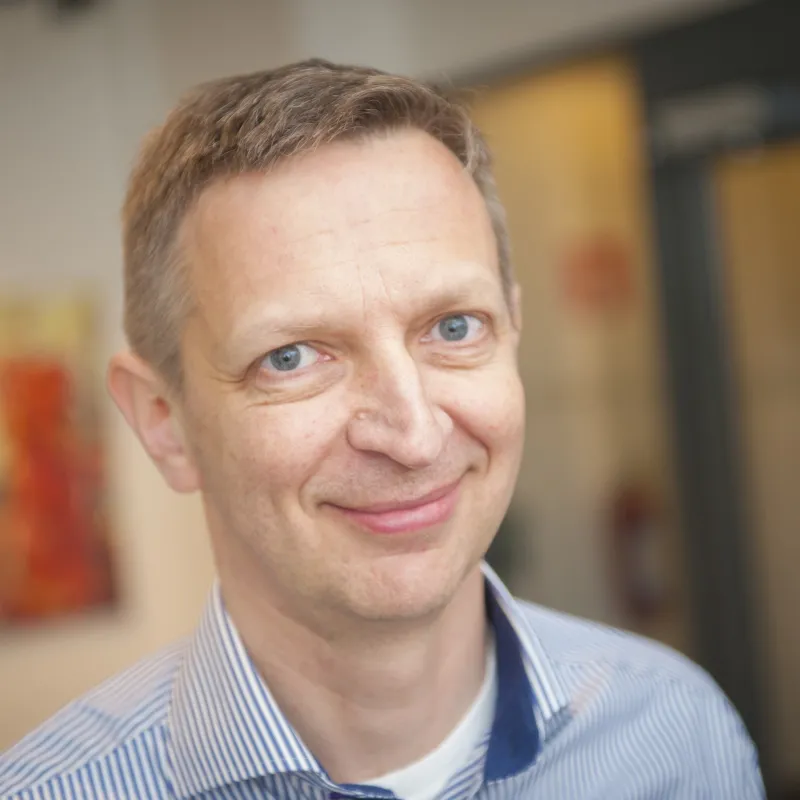
Sofía Estévez is a PhD student and FPI Research Fellow at the Department of Chemical Engineering, School of Engineering, University of Santiago de Compostela. Her research focuses on integrating circular economy and sustainability principles into wastewater treatment technologies. She holds a BSc in Chemical Engineering (2019) and an MSc in Chemical and Bioprocess Engineering (2021). Key projects include European initiatives (Run4Life, BIORECER) and national/regional projects (HP-Nanobio, Innovaugas), applying Life Cycle Assessment (LCA), Life Cycle Costing, and environmental indicators across lab, decentralized, and centralized scales. Her work addresses biorefinery transitions, antibiotic removal systems, and textile wastewater management. She has presented at conferences like the VII Simposio de Investigación en Tecnoloxías Ambientais (2023) and the X International Conference of Life Cycle Assessment in Latin America (2023). Contact: sofia.estevez.rivadulla@usc.es , +34 8818 16004.
Tamara Llano Astuy is an Assistant Professor at the University of Cantabria's School of Industrial and Telecommunication Engineering, within the Chemistry and Process & Resources Engineering Department. She holds a B.S. (2011), M.S. in Chemical Engineering (2009), and a postgraduate degree in Sustainable Production and Consumption (2010). She completed her Ph.D. in 2016 with international distinction, winning the University of Cantabria's Extraordinary Award for her thesis on biorefinery-integrated sulphite pulping processes. Her research focuses on lignocellulosic and marine biomass valorization, including pulping chemistry, hydrolysis, and waste-to-biofuel conversion. Key areas include algae and fishbone characterization, detoxification of industrial effluents, and sustainable chemical processes. She has conducted research stays at the University of Athens, University of Reykjavik, and Barna enterprise. She has supervised 12 Master’s theses, authored/co-authored 12 scientific papers, and participated in 36 international conferences. As Principal Investigator or team member, she has contributed to 10 R&D projects across international, European, national, and regional levels. Her work emphasizes multi-criteria decision-making tools for biorefinery design and waste management systems. Llano Astuy collaborates with industries like Sniace and focuses on advancing sustainable technologies for circular economy applications in rural and urban contexts.
Jan Casey is a Lecturer at the Royal College of Art in the School of Design. With over 20 years of industry experience as director of an award-winning transdisciplinary design studio, she now serves as an independent design management consultant while teaching at the RCA. Her specialist background includes: Design management Group dynamic methodology Creative working processes Executive coaching Professional and personal development Jan delivers group behavioral methodology, design management processes, and personal and professional development across MA/MSc Innovation Design Engineering and Global Innovation Design programs. She also leads the professional practice provision, including alumni symposia, for MA Textiles. With her specialist experience in group behavior and team working processes, Jan has supported Grand Challenge initiatives. Her continuing practice as a UKCP-accredited psychotherapist adds insightful, empathic, and analytical dimensions to her academic and consultancy work. She has worked with clients such as Department for Education, Virgin Atlantic, NHS, Sainsbury's, King's College and Red Cross. Jan Casey is also an InnovationRCA Business Fellow, providing selection advice and business mentoring since 2008. She is a Royal Society of Arts Fellow and an Associate Member of the Royal Society of Medicine. Her educational background includes: BA (Hons) 3-Dimensional Design from Kingston University Diploma in Counselling and Psychotherapy from CCPE (1994) Dip Psych UKCP accredited psychotherapy accreditation (1995)
Dr. Margaret Smith is an Affiliate Research Fellow in Archaeology at the University of Glasgow. Her research focuses on materials characterization in cultural heritage, including Pacific barkcloth, pigment analysis, and textile conservation. She employs advanced analytical techniques such as FTIR spectroscopy, hyperspectral imaging, and ion milling to study historical artifacts. Her work bridges archaeology, chemistry, and environmental science, addressing preservation challenges in museum collections and heritage sites. Collaborations span institutions globally, with over 40 published articles since 1993. Key areas include biofouling mitigation for marine sensors, phytoremediation of contaminated soils, and the development of non-destructive analytical methods for art conservation. Education: Not explicitly stated in provided texts. Affiliations: University of Glasgow, collaborating with institutions in environmental and materials science. Research interests emphasize interdisciplinary approaches to material analysis, with a focus on historical textiles, pigments, and environmental impacts on heritage materials. Her studies often involve spectroscopic and chromatographic instrumentation, contributing to both conservation practices and scientific understanding of degradation mechanisms. Publications highlight trends in material characterization, biofouling resistance, and environmental remediation strategies. While no formal awards are listed, her extensive peer-reviewed output underscores scholarly impact in archaeology and conservation science. Advising and grants: No explicit details provided, but her collaborative research implies potential grant-funded projects. Labs/teams: Not explicitly mentioned, though affiliations suggest involvement with interdisciplinary conservation and material science groups.
Ewa Katarzyna Lagodzka is a PhD Fellow at the Department of Sustainability and Planning within the Technical Faculty of IT and Design at Aalborg University, Denmark. Her research centers on sustainable construction systems and life cycle assessment of bio-based materials for net-zero applications. She holds a Master's degree in Building Energy Design awarded on 29 January 2024. Her expertise spans Life Cycle Assessment (LCA) , bio-based construction materials , and CO 2 storage in building products , with specialized focus on timber properties including fire resistance, moisture management, and feedstock viability. This work directly supports UN Sustainable Development Goals for sustainable infrastructure and responsible resource use. Her publication analyzes systemic barriers in replacing fossil materials with bio-alternatives, emphasizing LCA methodologies to evaluate environmental trade-offs across construction and textile value chains. Current projects demonstrate convergence in CO 2 sequestration, seaweed-based textiles, and harmonized LCA frameworks. No scientific awards were documented in the source material. She actively contributes to three major grants: ASCCENT (CO 2 storage in construction), LCA4BIO (harmonized assessment methods), and SeaWeave (seaweed textiles), collaborating with multidisciplinary teams across European institutions. Her advisory role focuses on technical implementation within these projects. Lagodzka participates in the PLAN Junior Researchers Network and LCS Group's LCA reading club, while presenting at forums like SETAC Europe and AI research bootcamps to advance methodological innovation in sustainability science.
Lassi Linnanen is a Professor at the Department of Sustainability Science , part of the LUT School of Energy Systems at Lappeenranta-Lahti University of Technology LUT in Lahti, Finland. His research focuses on systemic sustainability transitions, circular economy frameworks, and environmental policy design. He emphasizes interdisciplinary approaches to address climate change, resource efficiency, and socio-technical innovation. Key research areas include: Environmental Engineering Policy and Legal Frameworks for Sustainability Renewable Energy Systems Business and Management Strategies for Sustainability His work explores topics such as sufficiency economics, systems thinking in public policy, and the operationalization of circular economy models in textiles and bioeconomy sectors. Recent studies highlight the role of citizen competence, institutional legitimacy, and pandemic-induced shifts in mobility patterns on GHG emissions. Publications reflect a focus on leveraging systems thinking to address climate mitigation, transition pathways, and equity in sustainability governance. No scientific awards are explicitly mentioned in the provided texts. While no advisees or grants are listed here, his research often involves collaboration with industry and policymakers to bridge academic knowledge with practical implementation.
Dr. Seshasai Srinivasan is an Associate Professor and holder of the W Booth Chair in Engineering Entrepreneurship and Innovation at the W Booth School of Engineering Practice and Technology, McMaster University. He also serves as Program Chair for the BTech Software Engineering Technology program. His academic affiliations include associate memberships in the Mechanical Engineering Department, McMaster School of Biomedical Engineering, and School of Computational Science and Engineering. His research focuses on nanotechnology-based sensors, electrochemical detection systems, and AI-driven material science. Notable projects include developing MXene-based stretchable sensors, carbon dot-infused hydrogels for biomedical applications, and AI frameworks for predicting battery performance. He has pioneered gradeless residency models in software engineering education and collaborated with industry on projects like roadside drug detection systems with Eye3 Concepts Inc. Dr. Srinivasan teaches courses such as Finite Element Analysis (ENGTECH 3FE3), Senior Engineering Project (ENGTECH 4FD3), and Numerical Linear Algebra (SFWRTECH 4MA3). His work bridges cutting-edge nanomaterials research with practical engineering education innovation.
Katy Beinart is a Senior Lecturer at the University of Brighton's School of Architecture, Technology and Engineering, affiliated with the Centre for Arts and Wellbeing and research groups including Experimental Design Practices and Radical Methodologies (RaM). She holds a PhD in Architectural Design from University College London (2019), an MSc in Development Practices and MA in Architecture from Oxford Brookes University, and a BA in Architecture from UCL. Her research explores material poetics, memory, heritage, and regeneration through interdisciplinary artistic practice. Central to her work is the concept of 'poetics of re-generation' developed in her PhD on salt narratives in Brixton, examining material cultures of migration and trade. She investigates how artistic interventions reveal place poetics to inform ethical regeneration models, with current focus on the Salt Art Research Network and DISTERRA network exploring migrant disappearances. Her 2025 book Salted Earth: poetics of place and migration through four artistic journeys expands these themes. Beinart's research manifests in community-engaged projects like A Difficult Place (documenting cost-of-living crisis experiences) and Origination (a long-term diaspora heritage project with her sister). As a board member of ixia, she influences UK public art policy while applying participatory research methods across architecture, art, and design. Fellow (FHEA) from Advance HE (2022) Recipient of AHRC Impact Funding for Ignite 3.1 project Arts Council England funding for Acts of Transfer project She supervises interdisciplinary practice-based PhDs focusing on migration, contested space, and regeneration, currently guiding three doctoral candidates. Her leadership extends to research networks including the Salt Art Research Network (UK/Italy) and DISTERRA (UKRI-funded Asia-Europe migration project), while maintaining active community partnerships with organizations like Phoenix Food Shop.
Patricia Dyer is a Senior Lecturer at the University of Brighton, affiliated with the School of Art and Media and the Centre for Arts and Wellbeing. Her research focuses on material-driven design practices, biomimetic principles, and advanced textiles, with applications in medical, engineering, and sustainable contexts. She holds a PhD in Textile Engineering (2010) and has taught across undergraduate and postgraduate programs, including leading the MA and MDes Textiles courses. Her work explores dynamic shape memory textiles, antimicrobial composites, and the integration of traditional craft with cutting-edge materials. She has supervised three PhD students to completion and contributed to curriculum development in textiles and contemporary crafts. Education: PhD , Dynamic control of active textiles (University of Brighton, 2010) MA , Design by Independent Project (University of Brighton, 2000) BA , Fashion Textile Design (University of Brighton, 1995) Research Interests: Active textiles with shape memory alloys Antimicrobial nanoparticle-functionalized fabrics Multi-cloth composites for structural applications Ethical material practices and sustainability Advising & Grants: Supervised three PhD students and contributed to academic validations (e.g., MA Contemporary Crafts at Plymouth College of Art). Teaching emphasizes experimental practice, interdisciplinary collaboration, and challenging conventional material boundaries. Labs/Teams: Collaborations within the Centre for Arts and Wellbeing, focusing on textile innovation and biomaterials research.
Dr. Jason Knight is a Senior Lecturer at the University of Portsmouth, affiliated with the School of Electrical and Mechanical Engineering and the Department of Mechanical Engineering. He holds a PhD from the University of Warwick and has extensive industrial experience, including roles at the Motor Industry Research Association and Porsche. His research focuses on aerodynamics, fluid-structure interaction (FSI), and computational fluid dynamics (CFD), with applications in automotive, aerospace, and marine engineering. Dr. Knight currently supervises three PhD students investigating flow simulation, filtration systems, and CFD modeling of airships. Education: BEng (Hons) in Aerospace Engineering, University of Hertfordshire, 1995 PhD in Mechanical Engineering (CFD modeling of convertible car hoods), University of Warwick, 2002 Research Interests: Dr. Knight specializes in experimental and numerical aerodynamics, with a focus on fluid-structure interactions involving membranes and porous media. His work extends to wind tunnel testing techniques, bio-inspired aerodynamics, and applications in road vehicles and motorsport. Recent projects include spring-mounted wing systems for drag reduction and ionic propulsion systems. Recent Research Trends: His publications from 2020 to 2025 emphasize advanced CFD techniques (e.g., detached-eddy simulation) and FSI modeling in automotive and aerospace contexts. He explores dynamic systems like spring-mounted wings and investigates turbulence models for curved surfaces. Advising & Grants: Supervises 3 PhD students and collaborates on projects funded by EPSRC and industry partners like Jaguar. His work integrates experimental and computational approaches, often involving industry partnerships. Labs & Affiliations: Part of the Portsmouth Centre for Advanced Materials and Manufacturing, focusing on interdisciplinary engineering solutions.
Michael Deary is a Professor at Northumbria University, specializing in environmental chemistry, air quality, and pollution control. His research focuses on reactions of peroxides in aqueous solutions, industrial fire emissions, and land contamination. He leads projects such as 'Green growth skills' (Co-Investigator) and 'ReNu NHS' (Principal Investigator), emphasizing environmental sustainability and public health. Deary holds a PhD in Chemistry (1992) and has published over 20 works on peroxide catalysis and air quality. Notable contributions include studies on particulate matter exposure modeling and reducing passive smoking in healthcare settings. His work integrates environmental science with practical applications, addressing urban pollution, industrial safety, and policy. Education: PhD in Chemistry (Northumbria University, 1992) Research interests span peroxide chemistry, dispersion modeling, and environmental justice. He collaborates with institutions like Newcastle upon Tyne Hospitals NHS Foundation Trust and the North of Tyne Combined Authority. His grants total £511,160, focusing on green skills and healthcare-related air quality improvements. Deary supervises Babatunde Okeowo’s PhD on hospital frameworks for air quality. His publications address diverse topics from textile-bacteria hybrids to fire plume toxicology, reflecting interdisciplinary expertise.
Michael Elsdon is a Researcher at Northumbria University , where he has been since 2008. He earned his PhD in Engineering from Northumbria in 2005 and holds professional distinctions including Fellow of the Higher Education Academy (FHEA), Chartered Engineer (CEng), and Member of the Institution of Engineering and Technology (MIET). PhD in Engineering (2005), Northumbria University Fellow of HEA (2005), Chartered Engineer (IET, 1998) His research bridges Microwave Engineering and Pedagogy . In microwave engineering, he focuses on antenna design , microwave imaging , and concealed object detection , with applications in breast cancer detection and nanocomposite analysis . In pedagogy, he investigates technology-enhanced learning and its impact on student engagement. His publications highlight trends in microwave holography , nanocomposite characterization , and solar-integrated antenna systems . Notable awards include FHEA and CEng recognition. While no formal student advisement details are available, his work spans collaborations with institutions like Newcastle University Medical School and IET.
Dr. Muhammad Usman Ghori is a Senior Research Fellow at the University of Huddersfield's Department of Pharmacy within the School of Applied Sciences. He holds affiliations with the Pharmaceutics and Drug Delivery Centre, Biorefinery Engineering and Bioprocessing Research Centre, Technical Textiles Research Centre, Pharmaceutical Policy and Practice Research Centre, and Biopolymer Research Centre. He earned his PharmD from Bahauddin Zakariya University and completed clinical training at Nishtar Medical University before obtaining a PhD in Pharmacy and Pharmaceutical Sciences from Huddersfield. As an independent research group leader, he has supervised 5 PhD and 6 MRes students to graduation, along with mentoring over 100 undergraduate/postgraduate researchers. His interdisciplinary research integrates sustainable biomaterials, pharmaceutical formulation design, advanced manufacturing (including 3D/4D printing), and public health solutions. Key focus areas include: Nanoscale chemical imaging techniques for drug delivery systems Biopolymer engineering for wound healing and industrial applications Patient-centric dosage forms for gastrointestinal/urological disorders Environmental health interventions (e.g., water purification) His publications demonstrate consistent focus on advanced drug delivery systems, particularly through polymer science and nanotechnology applications. Recent works emphasize transdermal/nasal delivery innovations, personalized 3D-printed pharmaceuticals, and environmental health solutions, reflecting cross-disciplinary collaboration across engineering, environmental science, and clinical practice. Major recognitions include: Vice-Chancellor Research Student of the Year (2015) Platinum Award from Bruker Nano-surface for patented CIDA imaging technology (2016) University Outstanding Performing Staff Member (2017-2018, 2020-2021) He leads research grants in pharmaceutical development and environmental sustainability, holds patents in analytical/materials technology, and serves as Consultant Advisor for COMSATS across 24 countries. As Course Leader for MSc Pharmaceutical Business programs, he received nominations for Best Supporting Teacher (2017, 2018).
Tiffany Messer is an Associate Professor in the Stanley and Karen Pigman College of Engineering at the University of Kentucky, specializing in environmental engineering solutions for water pollution challenges. Her research integrates laboratory and field studies to develop practical water treatment strategies for agricultural and industrial applications. Her work focuses on Constructed Wetland Systems for Water Quality Improvement , investigating how contaminant "cocktails" (antibiotics, pesticides, PFAS, microplastics) impact nitrogen cycling and removal processes. Key research themes include: Nitrogen pathway dynamics in treatment wetlands Fate and transport of emerging contaminants across landscapes Innovative use of industrial byproducts (e.g., bourbon stillage) for enhanced treatment Kinetics of heavy metal and organic pollutant removal Recent publications (2024-2025) reveal a trend toward complex contaminant interactions and landscape-scale persistence studies, combining isotopic tracing with field evaluations to address real-world water quality challenges. Dr. Messer's scientific recognition includes: NSF CAREER Award (2021) for research on pesticide/antibiotic cocktails in nitrogen removal processes As Principal Investigator on multiple NSF-funded projects, she leads research on PFAS transport, nanopesticide impacts, and wetland treatment optimization. Her work involves graduate student training in environmental engineering methods and contaminant analysis. Her research is conducted in specialized environmental engineering laboratories featuring wetland mesocosm facilities and advanced water quality analysis equipment, supporting interdisciplinary collaborations on sustainable water management.
Prof. Donciu Codrin is a full professor at the Department of Electric Power Engineering, Technical University of Iasi. His research spans interdisciplinary fields including signal processing, image processing, earthquake early warning systems, and textile engineering. He leads projects on seismic response analysis using uniaxial shaking tables, non-invasive eye safety systems (e.g., Opto-Guard), and ESD-protective textiles. His work integrates hardware design (e.g., electrodynamic actuators) with advanced algorithm development for applications like video-based distance measurement and apparel sizing estimation. Research projects include: Signal Processing : OFDM modulation, DFT/FFT algorithms, and seismic waveform analysis Computer Vision : Pattern recognition, 3D reconstruction, and human-centric interface design Structural Engineering : Earthquake simulation platforms and early warning system validation Textile Innovation : Conductive fabric development for ESD protection and functional garments Recent publications focus on seismic wave analysis (2023–2025), optoelectronic safety systems (2022), and ultrasonic sensing technologies (2020–2021). His work bridges theoretical signal processing with real-world applications in disaster preparedness and ergonomic design.