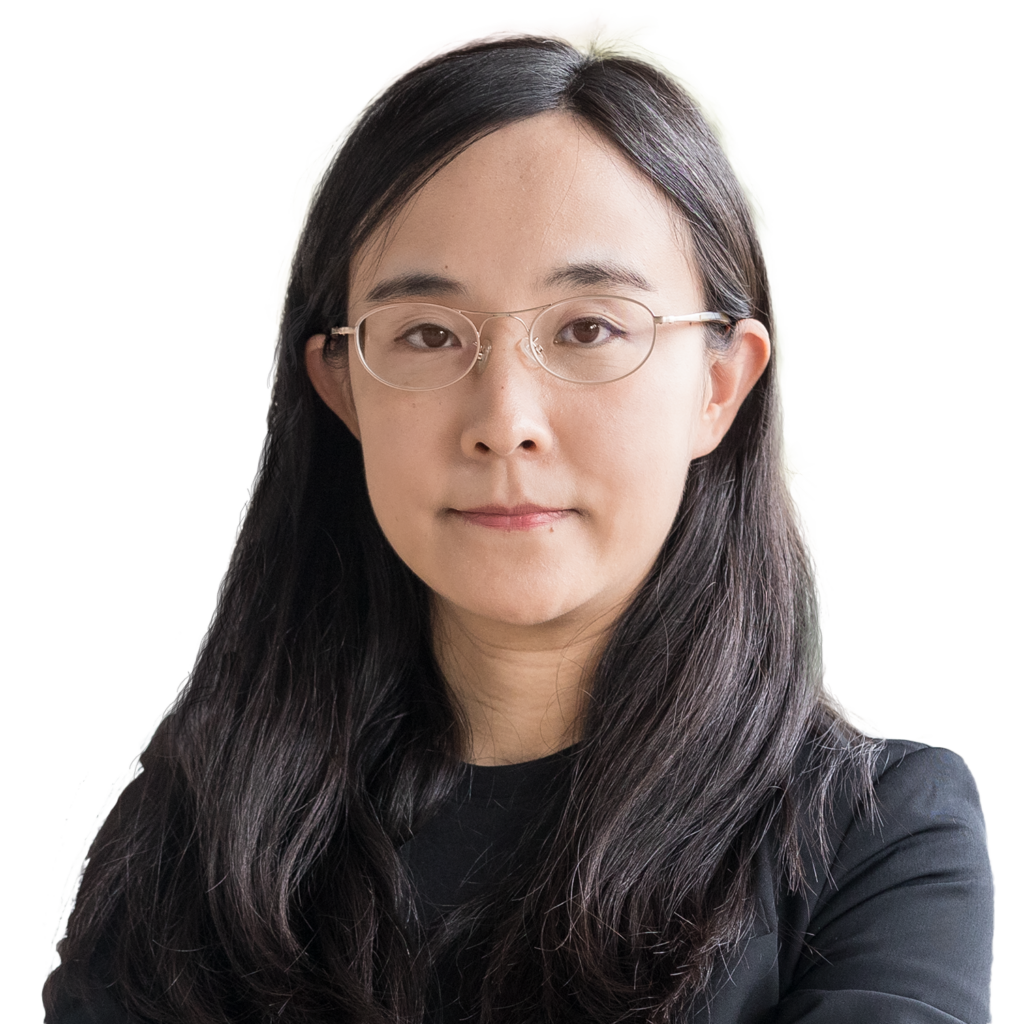
Henna Karoliina Kettunen is a Doctoral Researcher at the University of Helsinki within the Doctoral Programme in School, Education, Society, and Culture . Her research focuses on sustainable fashion practices, consumer behavior, and material culture. Research Interests : Sustainable fashion, consumer-material interactions, circular economy, clothing care practices, environmental stewardship in consumption. Her recent publications explore themes such as durability in clothing, emotional relationships with garments, and co-agency between consumers and materials. Collaborations with scholars like Poikolainen, Autio, and Kouhia highlight her interdisciplinary approach to sustainability studies.
Martin Koch is a Professor in the Department of Physics at Philipps-Universität Marburg . He leads the Semiconductor Photonics Group and contributes to teaching and doctoral supervision in physics. Research Focus : Terahertz spectroscopy, quantum well dynamics, materials characterization, and applications in pharmaceuticals and cultural heritage conservation. Key Article Trends : Recent work explores THz for microplastic detection, 3D-printed photonic components, and excitonic behavior in 2D heterostructures. Teaching Roles : Lecturer for Optics and Quantum Phenomena and Functional Materials seminars.
Lukas Aspöck is a Senior Researcher at the Hearing Technology and Acoustics department of RWTH Aachen University . His work focuses on Acoustic Virtual Reality , Room and Building Acoustics , and Binaural Technology , with applications in urban soundscapes, educational environments, and hearing aid research. He collaborates extensively with the AUDICTIVE Priority Program SPP2236 on auditory cognition in virtual environments. Current role: Senior Researcher (Akademischer Oberrat) since 2025 Core research areas: Real-time auralization, psychoacoustic evaluation, and multimodal perception Research trends include: Acoustic simulation for urban environments and building façades Impact of voice quality on educational listening effort Development of immersive VR environments for auditory experiments Validation of room acoustic simulation models
Cristina Balagna is an Associate Professor at the Department of Applied Science and Technology (DISAT) , Politecnico di Torino , with over 26 peer-reviewed publications and a co-author of an international patent. Her research focuses on nanostructured antimicrobial/virucidal coatings for aerospace, biomedical, and civil applications. Education: PhD in Materials Science and Technology (2011), Master in Biomedical Engineering (2007), both from Politecnico di Torino Her work includes innovative glass/glass-ceramic matrix composites with metal nanoparticles (silver, zinc, copper) deposited via co-sputtering , achieving thermal/chemical/mechanical resistance up to 450°C. These coatings are applied to filters, textiles, and biomedical devices, with recent licensing of royalties. Recent research projects include EU-funded NANOBLOC (2023-2025) and BIO-KILLER (2019-2021). She co-organizes the Bioceramics Symposium at ICACC since 2021 and supervised two PhD students. Awards: ECD Jubilee Global Diversity Award (2022) Teaching: Course Lecturer for Materials Science and Technology in multiple engineering programs Labs: Advanced Electron Microscopy Laboratory (DISAT)
Roberta Maria Bongiovanni is a Full Professor at the Department of Applied Science and Technology (DISAT) at the Polytechnic University of Turin. She has been actively teaching and conducting research in polymer science and technology for several decades, with current appointments extending through the 2024/2025 academic year. Her academic journey includes progression from Assistant Professor (1992-2003) to Associate Professor (2003-2010) to her current Full Professor position (2011-present). Professor Bongiovanni's research focuses on biobased composites, photoinduced polymerization techniques, and polymer surface modification. Her work spans from fundamental chemical processes to practical applications in sustainable materials development. She has established herself as a leading researcher in photopolymerization techniques, particularly in developing environmentally friendly processes and materials that align with UN Sustainable Development Goals 9 (Industry, Innovation, and Infrastructure) and 12 (Responsible consumption and production). Her publication record shows consistent high-impact research output, with numerous articles in prestigious journals spanning polymer chemistry, materials science, and sustainable technologies. The research themes across her recent publications demonstrate a strong focus on developing sustainable polymer systems using photochemical processes, with increasing emphasis on biobased materials, recyclable polymers, and applications in packaging, textiles, and biomedical fields. Scientific Recognition: Docteur Honoris Causa de l'Institut National Polytechnique de Grenoble (2019) Allied Breweries Traders Association Prize (1989) Vandoni Award from the Order of Chemists of Piedmont and Valle d'Aosta, Italy (1986) Fellow of the AIM Italian Association of Macromolecular Science and Technology (2008-present) Fellow of the American Chemical Society (2001-present) Professor Bongiovanni actively supervises multiple PhD students and has served on doctoral committees continuously since 2003. She has secured significant research funding from both competitive calls (including EU Horizon programs) and commercial contracts. Her collaborative work extends internationally through visiting positions at institutions including Institut polytechnique de Grenoble, Australian Nuclear Science and Technology Organisation, and Rensselaer Polytechnic Institute. She directs the POLYMAT research group at DISAT, which focuses on polymer materials development through photochemical processes, with particular emphasis on sustainable applications and industrial partnerships.
Nicola Cavallini is a Fixed-term Assistant Professor at the Department of Applied Science and Technology (DISAT) , Politecnico di Torino , and a member of the College of Chemical and Materials Engineering . He holds a Scientific Branch CHEM-06/A - Chemical Foundations of Technologies within Area 0003 - Chemical Sciences . Since 2020, he has been teaching Principles of Chemometrics and Practical Design of Experiments to PhD and undergraduate students in Chemical Engineering. 2025/26 : Course Lecturer for Principles of Chemometrics 2024/25 : Course Lecturer for Principles of Chemometrics 2023/24 : Course Lecturer for Principles of Chemometrics 2022/23 : Course Collaborator for Principles of Chemometrics 2021/22 : Course Collaborator for Principles of Chemometrics 2020/21 : Course Collaborator for Principles of Chemometrics His research focuses on Chemometrics , Analytical Chemistry , and Applied Spectroscopy , particularly in food authentication and materials characterization. He has developed methods for ethanol quantification in wine using NMR, rice variety classification via hyperspectral imaging, and fermentation monitoring with portable NIR sensors. Collaborative projects include polymer electrolyte optimization and textile waste valorization in biotechnological processes. Recent publications highlight his work on: Food Fraud Detection (Mechanically Separated Meat in processed products) Advanced Spectroscopic Techniques (NMR and NIR applications) Algorithm Development for FESEM image analysis Sustainable Material Processing (Polymer blends, textile waste) Plant-Microbe Interactions (β-ionone's role in mycorrhization)
Sepidar Sayyar is a Research Fellow and materials scientist at the Australian National Fabrication Facility-Materials Node at the University of Wollongong, where he has been actively involved in research since 2014. He works at the Innovation Campus, AIIM Facility in Wollongong, Australia, focusing on advanced materials development and characterization. Dr. Sayyar earned his PhD in Materials Engineering from the University of Wollongong between 2011 and 2015. His academic journey has been centered at this institution, where he has developed expertise in composite materials, 3D printing technologies, and nanomaterials for biomedical applications. His research interests span multiple cutting-edge areas including Materials Engineering, Nanoscale Characterisation, Composite and Hybrid Materials, Nanobiotechnology, Nanotechnology, and Functional Materials. Dr. Sayyar's work particularly emphasizes the development and characterization of composite materials for various applications, with a strong focus on biomedical implementations. Analysis of his recent publications reveals a consistent research trajectory focused on 3D printing technologies for advanced materials, particularly in biomedical contexts. His work spans graphene applications, hydrogel development, and novel fabrication techniques for medical devices and electronics. The publications demonstrate interdisciplinary collaboration across materials science, biomedical engineering, and electronics. Dr. Sayyar actively supervises research students and has successfully guided multiple PhD and Master's candidates to completion. His supervision portfolio includes projects on cellulose composites, biocompatible conductive inks, degradable stents, flexible electrodes, and graphene-based fibers for health applications. He has been involved in several research funding projects including '3D Printed Conductive Flexible Strain Sensors for Skin-Interface Electronics' (2022-2023), 'Global Challenges: Next Generation Sustainable Crafting' (2019), 'Slow Textiles' (2019), and 'Material Science, Slow Textiles, and Ecological Futures' (2017-2019), demonstrating his diverse research interests and ability to secure funding across different domains. Working within the Intelligent Polymer Research Institute environment at the University of Wollongong, Dr. Sayyar collaborates with multidisciplinary teams focused on advanced materials development, contributing to the institute's reputation for innovation in polymer science and engineering applications.
Debra Lilley is a Senior Lecturer in Design at Loughborough Design School, part of Loughborough University. Her work focuses on sustainable design, particularly the intersection of material change and behavior change within the circular economy. She holds an MRes in Innovative Manufacturing, Sustainability and Design and completed the UK's first PhD in Design for Sustainable Behaviour. Her research explores how material aging and user-product interactions impact environmental and social outcomes. Key areas include reducing waste in airline catering, promoting sustainable consumer behavior through appliance design, and addressing cosmetic obsolescence in digital products. She has overseen numerous projects on reducing electronic waste and improving renewable energy adoption in social housing. Debra's teaching and supervision emphasize ethical design practices, with contributions to design education through courses integrating sustainable behavior strategies. Her interdisciplinary approach has led to collaborations across material science, consumer psychology, and policy frameworks. She is affiliated with the Responsible Design research group at Loughborough Design School.
Professor James Flint is a Professor of Wireless Systems Engineering at Loughborough University, serving as Associate Dean for Education & Student Experience. He leads the Electronic Communications Research Unit and holds academic qualifications including a PhD in Computational Electromagnetics (2000). His research focuses on wireless systems, electromagnetics, acoustics, biomimetics, and metamaterials, with notable projects in wearable antennas, energy harvesting, and acoustic signal processing for infrastructure monitoring. Prof. Flint’s expertise spans biomimetic engineering solutions, ultrasonic technology, and numerical modeling using Transmission Line Matrix techniques. His work on acoustic emission monitoring has applications in geotechnical testing, landslide预警 systems, and wind turbine blade condition monitoring. Professional affiliations include Fellow of the IET and Senior Member of IEEE. Recent articles highlight advancements in energy harvesters for industrial digitization, textile-based antenna innovations, and cybersecurity for LTE networks. His research demonstrates interdisciplinary impact across biomedical engineering, aerospace systems, and smart manufacturing. Ongoing projects include vibration energy harvesting for self-powered sensors and metamaterial antenna design for wearable applications. Prof. Flint actively contributes to educational technology through studies on digital learning tools like Microsoft OneNote. Professional Accolades: FIET, SMIEEE, SFHEA Key Labs: Electronic Communications Research Unit Notable Projects: Wearable antennas, bioacoustic bandgap structures, textile manufacturing for RF devices
Gerhard Neipp is an Honorary Professor at the Faculty of Mechanical Engineering, University of Essen. His career includes extensive executive roles in industrial and manufacturing sectors. He serves(d) as Executive Board Member in Fried. Krupp GmbH, Hoesch AG, and Ruhrkohle AG, alongside leadership roles in mechanical engineering firms like M.A.N. AG and Zahnräderfabrik Renk AG. He holds an honorary doctorate (Dr.-Ing. E.h.) from the University of Karlsruhe (1988) and became an Honorary Professor at the University of Essen (1993). Professional Journey: 1953–1956: Apprenticeship as mechanic at Matth. Hohner AG 1963–1970: Plant Manager at Gottlieb Eppinger KG (textile engineering) 1970–1975: General Manager at Carl Hurth Munich 1992–1994: Executive Board Vice Chairman of Fried. Krupp AG Hoesch Krupp Research Interests: Focus on mechanical engineering systems, industrial manufacturing processes, and corporate leadership strategies rooted in technical innovation. His contributions bridge academic mechanical engineering principles with applied industrial practices. Awards: Dr.-Ing. E.h. (1988) University of Essen Honorary Professorship (1993) Grants/Advising: No formal academic grants or student advising roles explicitly noted in the text. His contributions are primarily industrial-executive with honorary academic titles.
Chu Ma is a Professor in the Department of Electrical and Computer Engineering at the University of Wisconsin-Madison, leading the Acoustic Sensing and Functional Materials (ASFM) Laboratory. His primary affiliations include dual appointments in Mechanical Engineering and the College of Engineering. He specializes in acoustic functional materials and their applications in biomedical imaging, non-destructive testing, and communication systems. Education: PhD, 2019, Massachusetts Institute of Technology MS, 2013, University of Michigan-Shanghai Jiao Tong University Joint Institute BS, 2011, Shanghai Jiao Tong University Research focuses on metamaterials for acoustic sensing, biomedical ultrasonics, and computational imaging. His lab develops innovative systems for subwavelength imaging and vibration analysis. Recent projects include wireless acoustic sensors and functional material designs for medical and industrial applications. Key awards include the NSF CAREER Award (2023), 3M Non-Tenured Faculty Award (2023), and Dugald C. Jackson Assistant Professorship (2024). He has published widely on metamaterial-based sensors, acoustic subwavelength imaging, and biomedical applications of thermoacoustic systems. Teaching includes courses on electro-acoustic engineering, linear waves, and independent research supervision. Collaborations span mechanical engineering and biomedical fields, with active projects in silk-based acoustic fabrics and microwave-induced thermoacoustic signal monitoring.
Geethmi Thisakya Pattividanalage is a PhD researcher at the School of Architecture and Civil Engineering, University of Adelaide. Prior to this, she served as a temporary lecturer at the University of Moratuwa in Sri Lanka, where she also earned her Bachelor of Science Honours degree in Facilities Management with First Class Honours. Geethmi holds a Bachelor of Science (Honours) in Facilities Management from the University of Moratuwa, Sri Lanka (2022), graduating with First Class Honours. She received the prestigious Professor Gamunu Fernando Memorial Award for her outstanding undergraduate dissertation in 2022. Her research focuses on occupational health and safety, waste management, and ergonomics. She explores solutions to improve workplace safety, particularly for workers in hazardous environments such as municipal solid waste handling and industrial zones. Her work also addresses barriers to sustainable waste management practices and ergonomic interventions in manufacturing sectors. Geethmi has been recognized for her academic achievements, including the Professor Gamunu Fernando Memorial Award (2022), awarded for the highest mark in her undergraduate dissertation. While not currently supervising students, Geethmi leveraged her academic expertise as a temporary lecturer at the University of Moratuwa before pursuing her PhD. She has not yet reported significant grants, but her research aligns with broader initiatives in occupational safety and environmental sustainability.
Dr. Karuppasamy Soundarapandian is a Postdoctoral Researcher at ICFO (Institute of Photonic Sciences) within the Quantum Nano-Optoelectronics research group. He holds a PhD in Photonics from Universitat Politècnica de Catalunya (Spain). His work focuses on advanced materials and nanostructured systems for optoelectronic applications, with emphasis on graphene-based devices, quantum phenomena in 2D materials, and terahertz communication technologies. Dr. Soundarapandian's research spans from fundamental studies of exciton dynamics and carrier behavior to applied developments in high-speed data transmission and wearable sensors. His technical expertise includes fabrication and characterization of photonic devices, spectroscopic analysis, and integration of nanomaterials into functional systems. Recent projects involve exploring graphene's potential for 6G wireless communications, investigating topological edge states in hyperbolic media, and developing corrosion-resistant materials using natural inhibitors. Extensive experimental capabilities include ultrafast spectroscopy, terahertz time-domain spectroscopy, and advanced electron microscopy techniques. His contributions bridge nanotechnology, quantum physics, and applied photonics, addressing challenges in both fundamental science and next-generation technologies.
Dr. Yasanur Kayikci is a Visiting Senior Lecturer at the University of Sussex Business School's Science Policy Research Unit (SPRU). With over 25 years of combined academic, consulting, and industry experience, she specializes in digital supply chain management, industrial digital transformation, logistics systems design, and business model innovation. Her work spans collaborations with organizations across Europe, Asia, and North America. Dr. Kayikci holds a Docent (Associate Professor) title in Industrial Engineering from the Inter-University Council for Turkey (UAK), a PhD in Information Management from Vienna University of Economics and Business, and dual MSc/BSc degrees in Industrial Engineering from Graz University of Technology and Yıldız Technical University. Her research focuses on sustainability-driven supply chain innovation, blockchain integration in logistics, circular economy frameworks, and Industry 5.0 applications. Notable themes include hydrogen energy supply chains, algorithmic trust in digital transformation, and resilience strategies post-pandemic disruption. Her methodologies include bibliometric analysis, decision-support frameworks, and empirical case studies. Dr. Kayikci advises on strategic digitalization projects and has contributed to over 70 scholarly publications. She is fluent in German, English, Turkish, and French, enhancing cross-cultural academic and industry engagement.
Dr. Cormac Mc Garrigle is a Lecturer in Mechanical Engineering at the School of Computing, Engineering and Intelligent Systems, Ulster University. He holds a BSc in Biomedical Engineering (First Class Honours), a PhD in composite materials reinforcement, and an MEd in Higher Education Practice from Ulster University. His primary research focuses on materials development and characterization, particularly polymers and composites, with applications in additive manufacturing and structural reinforcement. His research explores polymer processing, 3D printed composites, energy absorption mechanisms in woven composites, and manufacturing optimization. Key areas include extrusion parameter effects on material properties, tufting techniques for composite reinforcement, and characterization of 3D printed polymer composites. His work frequently addresses industrial applications in automotive and aerospace sectors. Recent publications demonstrate a strong focus on additive manufacturing techniques, particularly 3D printing of carbon fiber composites and optimization of WAAM processes. Research consistently addresses mechanical performance enhancement through microstructural control, weave parameter modification, and novel processing techniques. A emerging theme involves sustainable materials development for medical applications. Dr. McGarrigle contributes to the Green Transition Ecosystem project examining sustainable development in island communities. He participates in public engagement through environmental initiatives like the Big Beach Clean and promotes engineering education through outreach activities.