Mohammad Neaz Morshed is a researcher at the University of Borås , affiliated with the Faculty of Textiles, Engineering and Business and the Department of Textile Technology . He holds three PhDs in Materials, Mechanics and Process Engineering (Université de Lille), Textile Materials Engineering (University of Borås), and Textile Engineering (Soochow University) under the Erasmus Mundus SMDTex program. His expertise spans textile materials chemistry , biotechnology , and sustainable functionalization . Education : PhD (France, Sweden, China), MSc (Wuhan Textile University), BSc (Southeast University, Bangladesh) Morshed's research focuses on smart and functional textiles , including polymer surface modification , enzyme immobilization , and sustainable functionalization strategies . His work addresses industrial challenges in binding functional substances like enzymes and nanomaterials to textiles, with applications in catalysis and biomedical engineering. Recent publications highlight trends in textile biotechnology and polymer science , particularly in developing UV-responsive inks and biocompatible polymer blends for bone tissue engineering. His teaching portfolio includes courses in Textile Chemistry , Biotechnology , and Circular Textile Design . Scientific Awards : National champion in Textile Talent Hunt 2013 (Bangladesh), Outstanding Student Award (Wuhan Textile University) Morshed supervises Master’s and PhD students and contributes to international programs like the WE-TEAM International Master in Textile Technology . His leadership in process innovation, such as digital printing and UV curing, underscores his commitment to advancing sustainable textile technologies.
Associate Professor Zuzana Šebeková is a leading textile designer and researcher at the Department of Textile Design, Faculty of Design, Academy of Fine Arts and Design in Bratislava (VŠVU). With extensive experience spanning academic and industrial contexts, she specializes in sustainable textile practices, natural fiber composites, and innovative dyeing techniques. Her work bridges traditional craft methods with contemporary design research, focusing on environmentally conscious approaches to textile production while maintaining aesthetic and functional excellence. Education: 2010-2015: Doctor of Arts (ArtD.) at Academy of Fine Arts in Bratislava, dissertation on 'Lifestyle - Trends in Contemporary Design: Design of Composite Materials Reinforced with Natural Fibers' 2007-2008: Postgraduate study at Burg Giebichenstein Hochschule für Kunst und Design, Halle/Saale, Germany, researching digital printing technology for wool and blended fabrics 2001-2007: Diploma study at Burg Giebichenstein Hochschule für Kunst und Design, earning Graduate Designer (Dipl.Des.) degree with thesis 'Im Gehen/Idúc - a collection of unisex woolen fabrics' 2004-2005: Erasmus scholarship year at Magyar Iparműveszeti Egyetem (now MOME) in Budapest Professor Šebeková's research focuses on sustainable textile design practices with particular emphasis on natural dyes, plant-derived pigments, and composite materials reinforced with natural fibers. She investigates how traditional textile techniques can be integrated with contemporary design approaches to create innovative, environmentally conscious textiles. Her work explores the transformative potential of material limitations, examining how process and resource constraints can drive creative innovation in textile design. She has pioneered research into 'designed changeability' - textiles that intentionally transform over time through exposure to environmental factors - creating dynamic materials that respond to light, temperature, and other variables while maintaining sustainability principles. Her publication record demonstrates a clear trajectory toward sustainable textile innovation, with recent work focusing on utilizing food and garden waste for natural colorants, mineral pigments with plant-based binders, and generative pattern design. This research intersects with broader trends in circular fashion, material science, and sustainable production methods, positioning her at the forefront of eco-friendly textile development. Scientific Awards: PBP24 DESIGN x HANDWERK - Jury Recognition, Peter Bruckner Preis 2024, Austria DAAD PREIS 2007 Award, Germany Professor Šebeková has secured significant research funding including multiple FPU scholarships for projects like 'Evolving Textile Prints' and 'Designer Research Application of Natural Pigments and Dyes,' as well as KEGA projects focused on sustainable fashion education and innovative textile design approaches. She has supervised numerous student projects and developed curriculum integrating traditional techniques with contemporary sustainable practices. Her 'Project Zero Impact' and 'GENERATION F' initiatives have significantly influenced sustainable fashion education at her institution. She maintains strong international collaborations through projects like INTERREG Design & Innovation and has established research connections with the Smart Textiles Design Lab at the Swedish School of Textiles. Her work frequently involves interdisciplinary teams exploring the intersection of textile design, material science, and sustainable production methods, with notable contributions to exhibitions including DESIGNBLOK 2024, BADW 2023, and GENERATION F at MAK Museum of Applied Arts in Vienna.
Mgr. art. Michaela Bednárová is a Studio Manager at the Department of Textile Design within the Academy of Fine Arts, Bratislava . Her role involves teaching the Preparatory course in textiles II and leading the Puojd brand since 2008, focusing on textile design and fashion. Graduated from the Academy of Fine Arts in Bratislava (2007) Founder of the Puojd brand emphasizing national identity and sustainability Collaborator in major projects like the Floating Arboretum (2024) and Olympic apparel (2016) Recipient of the National Design Award 2019 Her research bridges traditional Slovak symbols with modern design, evident in collections like /si:/ (2024) and Nebá (2021). Articles highlight her experimental approach to material usage ( Versatil collection, 2017) and interdisciplinary collaborations with artists, photographers, and ethnomusicologists. Key themes in her work include: Textile Innovation: Digital/sublimation printing, jacquard weaving Cultural Commentary: Socialist past, folk traditions, urban-rural dialogues Sustainability: Zero-waste patterns, universal sizing Scientific Awards: National Design Award 2019 – Product Design Her collaborations with institutions such as the Slovak Olympic Committee and the Office of the President of the Slovak Republic demonstrate her impact beyond academia. Current projects focus on reimagining national symbols through textiles.
Aybige ÖZER KOÇAK is an Assistant Professor in the Department of Management Information Systems at the Faculty of Economics and Administrative Sciences, Istanbul Beykent University. She has been actively contributing to academia since 2012 and currently teaches courses such as Human Resources Management, Blockchain Technologies, International Business, and Project Management. Her research interests include Organizational Behavior, Logistics Management, Organizational Climate, Digital Transformation, and Leadership. She has published in areas related to employee commitment, internal entrepreneurship, and digitalization in the retail textile sector. The recent articles show a strong focus on organizational climate and its impact on employee behavior, as well as the digital transformation of traditional industries. Her work bridges theoretical organizational studies with practical applications in Turkish industries. Honorary Award, Greece, 2017 International Orontes Workshop Participation, Türkiye, 2016 She has served in administrative roles, including Director of a Research and Application Center at Beykent University from 2018 to 2021. She is also a member of the Academic Studies Group and the Turkish Universities Continuing Education Centers Council (2018–2021). Her teaching spans undergraduate and associate degree levels, emphasizing modern business technologies and management principles. She has authored books such as Organizational Behavior Theories and contributed chapters on 21st-century leadership. No information is available on graduate students she may have advised.
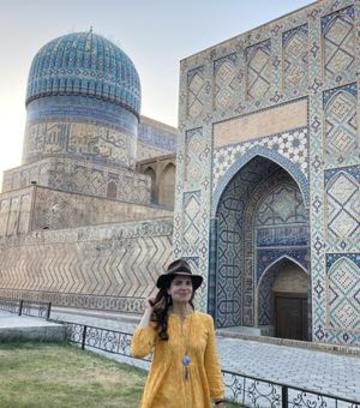
Jaimee Comstock-Skipp is a Leverhulme Early Career Fellow (2024–2027) at the University of Oxford's Faculty of Asian and Middle Eastern Studies and a Junior Research Fellow at New College. Her research focuses on Persianate manuscript cultures, particularly the Abu’l-Khairid (Shaybanid) dynasty's diplomatic exchanges and visual traditions across Central Asia, the Safavid Empire, and Mughal India. Education: PhD in Persian & Iranian Studies (Leiden University, 2022), MA in History of Art (The Courtauld Institute of Art), MA in History of Art (Williams College), BA in Near Eastern Studies (UC Berkeley) Her work bridges the Mongol to Safavid periods, examining Shāhnāma adaptations, kitabkhana design processes, and Cold War-era interpretations of the 'Bukhara School.' She has held visiting fellowships at the Warburg Institute and Oxford's Nizami Ganjavi Centre. Recent publications analyze manuscript circulation between courts, ethnic identity in Turkic-Persianate art, and decolonizing historiographical approaches. Awards include the Leverhulme Early Career Fellowship and Oxford-based affiliations. Scientific Awards: Leverhulme Early Career Fellow Oxford Nizami Ganjavi Centre Visiting Fellow Warburg Institute Visiting Fellow Her media contributions include blogs on archival recovery and podcasts on epic traditions, alongside entries in theoretical frameworks like Theorizing Visual Studies . She works extensively with interdisciplinary methodologies and material culture analysis.
Professor Kate E Tunstall (University of Oxford, Faculty of Medieval and Modern Languages, Department of French) specializes in French 18th-century literary history, focusing on Diderot, querelles, materiality, and anonymity. She co-edits collections, contributes to translation studies, and explores visual/material culture. Her research is funded by the John Fell OUP Research Fund. Current projects: Charlotte Bourette's café culture poetry, Julie de Lespinasse's manuscript miscellany, and Diderot's dressing gowns editions Key roles: Former General Editor of Journal for Eighteenth-Century Studies , Academic Programme Director for Voltaire Foundation's Besterman Centre, co-founder of ANR-funded AGON research collective Her publications analyze Enlightenment authorship, including co-edited works like Women and Querelles in Early Modern France (2022) and books such as Blindness and Enlightenment (2011). Translations of Diderot's Rameau's Nephew (2014) and Regrets sur ma vieille robe de chambre (2016) highlight her philological expertise. Recent articles examine topics like 18th-century Parisian literary economies, Diderot's material culture critiques, and anonymity practices across eras. Themes span Political Violence , Intertextual Blindness , and Enlightenment Networks . Scientific Awards : Chevalière dans l'Ordre des Palmes Académiques 2015 British Society for 18thc Studies Prize for digital resources She mentors graduate students in Enlightenment literature, advocates for higher education access as a comprehensive school graduate, and contributes to public discourse via the Oxford Amnesty Lectures and Campaign for the Public University.
Helena Britt is a Senior Lecturer in Fashion and Textiles at The Glasgow School of Art. Her work focuses on textile design, digital technologies, archival research, and collaborative practices. She has co-edited publications like Instant Whip: The Textiles and Papers of Fraser Taylor 1977–87 Revisited (2024) and Interwoven Connections: The Stoddard Templeton Design Studio and Design Library, 1843-2005 (2013). Academic Role: Senior Lecturer, School of Design Key Research Areas: Archival utilization, digital textile tools, collaborative design Notable Collaborations: Susannah Waters, James Stephen-Cran, Fraser Taylor Her recent articles (2023–2024) explore UK textile collections, Stoddard Templeton archives, and community engagement in textile research. She has curated exhibitions like Instant Whip (2024) and Pioneers of Post-War Pattern (2018), often analyzing historical processes through digital reconstruction. Awards include no explicitly stated honors, but her work has been presented at international conferences from 2001–2024.
Siavash Khajavi Haghighat is an Assistant Professor at the Department of Industrial Engineering and Management of Aalto University . His research bridges digital technologies with industrial applications, focusing on additive manufacturing, digital transformation, and supply chain optimization. University: Aalto University Department: Industrial Engineering and Management Research Interests: His work explores the intersection of digital manufacturing and operational efficiency, with emphasis on: Industrial applications of Additive Manufacturing (3D printing in construction, automotive spare parts, and clothing) Integration of Machine Learning for waste sorting and process optimization Emerging technologies like Digital Twins and Blockchain for security and IP protection Collaborative innovation models such as Crowdsourcing in mega hackathons Strategic Supply Chain Management and Operations Management in volatile environments Publication Trends: Recent works highlight the transformative potential of human-AI symbiosis in manufacturing, hybrid digital systems , and sustainability through localized production. His studies often employ comparative case analyses and interdisciplinary frameworks. Contact: Email is siavash.khajavi@aalto.fi .
TUĞBA ÖZTÜRK is a Lecturer at Gaziantep University's Naci Topcuoglu Vocational School, Department of Textile, Clothing, Shoes and Leather, where she has taught since 2014. She holds a Proficiency in Arts (2023) from Halic University in Textile and Fashion Design, a Master's (2004) in Garment Industry and Clothing Arts Education from Gazi University, and a Bachelor's (2001) in Clothing Teaching from Gazi University. Her research explores the intersections of art, sustainability, and cultural heritage in fashion. Key interests include: Sustainable fashion practices and biomaterials Art movements (Minimalism, Pop Art, Punk) influencing design Textile innovation and experimental surface treatments Cultural motif applications from historical artifacts Öztürk's publications show strong thematic evolution: recent works (2023-2025) emphasize sustainability and educational research, while earlier outputs (2018-2022) focus on art movement influences and technical processes like draping and weaving. Over 50% of her work addresses ecological or cultural preservation themes. She has led two EU-funded projects: ŞEHRİNİN AYAKKABISINI SEN TASARLA (2022): Designing culturally resonant footwear reflecting Gaziantep heritage AYAKKABI TASARIM VE İMALATI (2021): Shoe design/manufacturing training initiative Öztürk actively curates exhibitions (e.g., Zeugma Defilesi) and participates in international art workshops, with over 50 documented artistic engagements showcasing textile art, mail art, and cultural installations.
Prof. Dr. Stefan Gorißen is a Professor of Early Modern History and Dean of Studies at the Department of History, Faculty of History, Philosophy and Theology, University of Bielefeld. With a career spanning over three decades at the university, he serves in multiple administrative roles including IT/IKM Officer and representative for students with disabilities. His extensive academic contributions focus on the economic and social history of pre-modern Germany, particularly the Rhineland region. Gorißen studied history, German studies, philosophy and education in Bonn and Bielefeld, completing his doctorate in History in 1997. His academic journey began as a Research Associate at the University of Bielefeld's Faculty of History, Philosophy and Theology in 1992, and he became Associate Professor in winter semester 2009/10. Since 2019, he has served as Dean of Studies for the Department of History. Professor Gorißen specializes in Early Modern History with particular expertise in the economic history of pre-modern Germany, focusing on early industrialization processes in the Rhineland. His research examines institutional economic interpretations of industrial development, proto-industrialization patterns, and the interplay between religious confession and economic rationality among entrepreneurs. He also contributes to Digital History methodologies and maintains active involvement in regional historical societies, particularly the Bergischer Geschichtsverein (Bergisch Historical Society). His extensive publication record demonstrates consistent scholarly output across multiple decades, with recent work focusing on the economic structures of the Rhineland during the 18th and early 19th centuries. Gorißen's research shows a clear trajectory from examining specific regional economic developments toward broader institutional analyses of pre-modern economic systems. His work frequently bridges economic history with social and political history, highlighting the interconnected nature of historical processes in early modern Germany. As Dean of Studies, Professor Gorißen oversees academic advising services and serves as module coordinator for numerous history courses including the Basic Module Middle Ages/Early Modern Period, Bachelor's and Master's theses, and specialized modules in Pre-Modern History. He also participates in various faculty committees including the Teaching Commission, Entrance Examination Commission, and Academic Advisory Board.
Dilusha Rajapakse is a printed textile design practitioner, researcher and educator at the Royal College of Art's School of Design with over a decade of professional experience teaching undergraduate, postgraduate and doctoral students. His educational background includes: PhD (2017), funded by Nottingham Trent University Vice Chancellor's Scholarship Award MA in Digital Fashion from London College of Fashion, University of the Arts London (supported by Harold Tillman Scholarship Award) BA (Hons) in Fashion Design and Product Development from University of Moratuwa, Sri Lanka PGCert in Learning and Teaching in Higher Education from Birmingham City University Dilusha's research focuses on fusing existing textile design practices with emerging material properties and technologies to develop dynamic and responsive textile surfaces. With particular emphasis on photochromic colorants, he explores new design approaches to integrate animated multi-color and pattern-changing aesthetics onto textiles without compromising core textile characteristics. His expertise spans creative industries, critical practice, emerging technologies, new materials, and sustainable society. He has received recognition through the Harold Tillman Scholarship Award and Fellowship with the Higher Education Academy. Dilusha provides design education across multiple academic levels and maintains active research in textile innovation that bridges traditional practices with cutting-edge material science.
M. Kathryn Brown is a Professor in the Department of Anthropology at the University of Texas at San Antonio and serves as the Graduate Advisor of Record for the MA Program. Her research focuses on Maya archaeology, particularly the transition from the Preclassic to Classic periods, ritual practices, lithic technology, and the application of LiDAR for settlement pattern analysis. She has secured multiple grants, including a 2021–2023 Doctoral Dissertation Improvement Award, and received the Excellence in Undergraduate Teaching Award (2020) from the Archaeological Institute of America. Research Interests : Maya political authority, LiDAR applications, sulfur isotope mobility studies, ceramic economies, and neighborhood analysis. Key Projects : Mopan Valley Archaeological Project, Belize Valley Archaeology Project, and investigations at Xunantunich and Buenavista del Cayo. Scientific Awards : Excellence in Undergraduate Teaching Award (2020, Archaeological Institute of America). Collaborative Efforts : Dr. Brown leads fieldwork in Belizean archaeological sites, integrating isotopic analysis and LiDAR to explore ancient Maya socio-political structures and environmental adaptations.
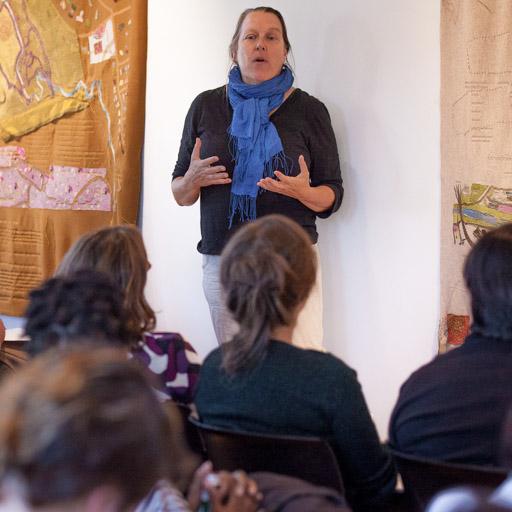
Kathleen Vaughan, PhD, MFA, is a Professor of Art Education at Concordia University's Faculty of Fine Arts, where she serves as Undergraduate Program Director for Art Education and Coordinator of the Community Art Education (BFA Major) program. She holds a Tier 1 Concordia University Research Chair in Art + Education for Sustainable and Just Futures (2021-2026) and previously held a Tier 2 Research Chair in Socially Engaged Art and Public Pedagogies (2016-2021). As an active member of the Royal Society of Canada's College, she directs Studio Re-Imagine and leads interdisciplinary research projects including Learning With the St. Lawrence and The Future is Wool. Her educational background includes a PhD in Education from York University (Toronto), where her multimodal dissertation earned four academic awards, an MFA in Studio Arts from Concordia University, a diploma from Ontario College of Art, and a BA in English and Art History from the University of Toronto. Prior to joining Concordia in 2008, she taught at York University's Faculty of Education, Ontario College of Art and Design, and Concordia's Studio Arts department. Vaughan's research centers on socially engaged art practices, public pedagogies, and place-based inquiry, with particular focus on walking and mapping methodologies, textile practices, and environmental justice. She employs research-creation approaches that integrate studio-based, collaborative, and community-engaged methods, often working with urban forests, the St. Lawrence River, and cross-cultural contexts including Montreal, Toronto, Iceland, and Latvia. Her work bridges visual arts, environmental studies, and social justice through projects like Nel mezzo del cammin textile mapping series and community initiatives in Pointe-St-Charles. Her research output demonstrates consistent exploration of walking as methodology, textile mapping, urban ecologies, and community engagement across diverse contexts. Key thematic threads include human-animal relationships (particularly with dogs), sustainable material practices (especially wool), and decolonizing approaches to community art. The publications reveal evolving methodological sophistication in blending artistic practice with scholarly inquiry, particularly through multimodal dissertation formats and interdisciplinary collaborations. Concordia University Research Chair in Art + Education for Sustainable and Just Futures (Tier 1, 2021-26) Concordia University Research Chair in Socially Engaged Art and Public Pedagogies (Tier 2, 2016-21) Faculty of Fine Arts Distinguished Teaching Award (2016) Curriculum Innovation Funding (2014, 2015, 2016) Four international academic awards for PhD dissertation innovation Vaughan has supervised numerous PhD and MA theses in Art Education, focusing on community art, research-creation, and socially engaged practices. Her major research grants include SSHRC funding for Learning With the St. Lawrence (2019-2024) and ongoing projects through Studio Re-Imagine. She teaches graduate and undergraduate courses in community art education, socially engaged art, and museum education, often linking classroom learning to Montreal community settings through experiential initiatives like The Right to the City course in Pointe-St-Charles. As co-director of Studio Re-Imagine, she leads collaborative projects exploring socially engaged art's role in public pedagogies. She is an active member of Concordia's Textiles and Materiality cluster within Milieux Institute for Arts, Culture and Technology, and the Centre for Oral History and Digital Storytelling (COHDS). Her bi-annual Iceland Field School, hosted at the Icelandic Textile Centre in Blönduós, connects textile practices with environmental sustainability research.
Prof. Dr. Sonja Geiger is a leading academic at Eberswalde University of Sustainable Development , where she holds the Chair in Psychology and Marketing in Sustainable Agriculture and Food Industry since 2024. Previously, she served as a tenured Lecturer at Murdoch University and as a Researcher at TU Berlin . Her work bridges environmental psychology , mindfulness interventions , and sustainable consumption through innovative frameworks like the SCB-cube model . Academic Affiliations : Eberswalde University (2024–present), Murdoch University (2023–2024), Justus-Liebig-University Giessen (2021–2023), TU Berlin (2015–2021) Key Research Areas : Sustainable consumption behavior, nature connectedness through immersive VR , time wealth, mindfulness applications, and environmental education Her scientific contributions focus on: Developing measurable frameworks for sustainable behaviors Exploring VR embodiment as a tool for pro-environmental action Linking mindfulness practices to ecological conservation Major projects include MeinDing! (citizen science for sustainable lifestyles) and ReZeitKon (time wealth and sustainable consumption). She supervises theses on topics like time well-being , fairness in climate measures , and marketing sustainable products .
Lucia Silva is an Assistant Professor at the Department of Chemistry, Faculty of Sciences, University of Beira Interior (UBI), Portugal, and a researcher at FibEnTech (Fiber Materials and Environmental Technologies). Her work focuses on Natural Products Chemistry, Medicinal and Aromatic Plants, and the application of environmentally friendly techniques like chromatography and spectroscopy for analyzing plant-derived compounds. PhD in Chemistry (UBI) Degree in Applied Chemistry (New University of Lisbon) Her recent publications emphasize the chemical composition and bioactivity of essential oils, sustainable food packaging solutions, and antimicrobial applications. She has contributed to international journals and conferences, with projects addressing wastewater treatment, plant conservation, and biocides for heritage preservation. Scientific projects include PRIMA/0010/2021 (Mediterranean agriculture resilience) and POCI-01-0247-FEDER-061912 (essential oil-based nanocapsules for textiles). She has authored over 33 peer-reviewed publications, six book chapters, and presented at scientific meetings.