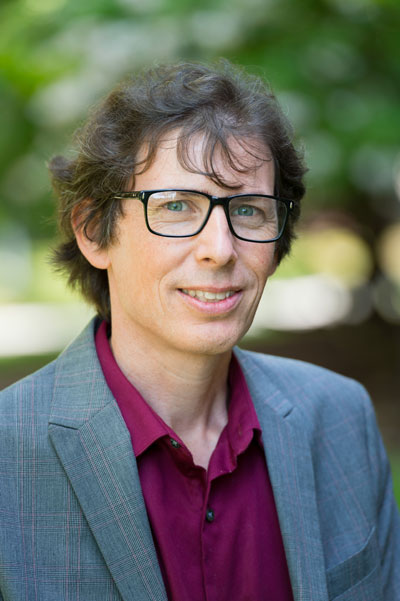
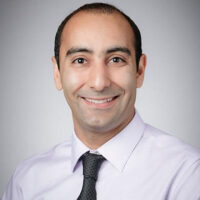
Steven Rogak is a Professor in the Department of Mechanical Engineering at the University of British Columbia's Faculty of Applied Science. He holds a P.Eng. license and degrees including a B.A.Sc. in Mechanical Engineering from UBC, and M.Sc. and Ph.D. from Caltech. P.Eng., University of British Columbia B.A.Sc., University of British Columbia M.Sc., Ph.D., California Institute of Technology His research focuses on aerosol science, particularly solid nanoparticles from combustion processes, their climate and health impacts, and mitigation strategies. Key areas include: Soot morphology and transport properties Engine emission reduction via fuel injectors Indoor air filtration systems Membrane-based energy exchangers Atmospheric particulate analysis The 15 most recent articles span experimental and theoretical studies on soot characterization, membrane technologies, and aerosol dynamics, with applications in climate modeling, healthcare ventilation, and sustainable materials. Collaborations include Westport Innovations and interdisciplinary teams. Rogak leads the Aerosol Laboratory at UBC, where he applies fluid mechanics and heat transfer fundamentals to address environmental and health challenges. He emphasizes experimental rigor and welcomes graduate students with expertise in these areas.
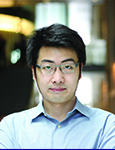
Abbas Milani is a tenured Professor of Mechanical Engineering at the University of British Columbia's Okanagan campus, where he holds the Tier 1 Principal's Research Chair in Sustainable & Smart Manufacturing and serves as Director of the Materials and Manufacturing Research Institute (MMRI). He also serves as Technical Director of the Composites Research Network (CRN), Lead of the Canadian-International Biocomposites Research Network, and leads multiple major initiatives including the UBC-Pacific Economic Development Canada-Advancing Circular Economy (ACE) program and the UBC-NRC IRAP National Circular Economy CtO Program. Dr. Milani's primary research focuses on advanced modeling, simulation, and multi-criteria design optimization of composite and biocomposite materials, structures, and manufacturing processes. His expertise spans Textile Composites/Biocomposites, Materials Constitutive Relations, Finite Element Modeling, Robust Inverse Methods, Material Selection for End-of-Life Design Strategies, Multiple Criteria Decision Making, and Industry 5.0 applications. His interdisciplinary research bridges mechanical engineering, sustainable materials science, and smart manufacturing technologies. Analysis of his recent publication record reveals a strong emphasis on sustainable materials development, with particular focus on biocomposites, life cycle assessment methodologies, and optimization of manufacturing processes. His work integrates computational modeling with experimental validation across diverse application areas including medical devices, sustainable packaging, and circular economy strategies. The publications demonstrate increasing integration of artificial intelligence and machine learning approaches with traditional engineering methods. 2015 UBC Okanagan Researcher of the Year Award Killam Faculty Research Award (2016) Inducted into Royal Society of Canada - College of New Scholars (2020) Gold Medal Service Contribution Award by Academics World Reviewer Contribution Award by ASM International Multiple teaching excellence awards from UBC Dr. Milani has successfully mentored over 100 students and postdoctoral fellows who have secured positions in both industry and academia. His research program has been supported by more than $15 million in funding from government and industrial organizations. He leads the NSERC CREATE in Immersive Technologies (CITech) program and co-leads the Advanced Materials and Fabrication Core Competency within the Survive and Thrive Applied Research (STAR) program, demonstrating his commitment to training the next generation of engineers and advancing applied research.
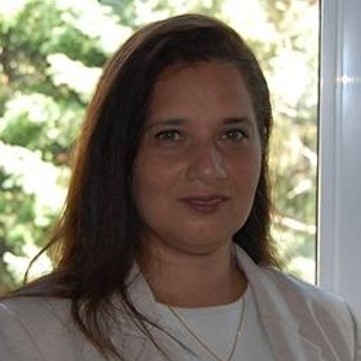
Houman Savoji is an Associate Professor in the Department of Pharmacology and Physiology at the Faculty of Medicine, University of Montreal. He is also a full-time researcher at the CHU Sainte-Justine Research Center and principal investigator in regenerative medicine, organs-on-chip, and bioprinting at TransMedTech Institute. Dr. Savoji received his PhD in Biomedical Engineering from the Institute of Biomedical Engineering at Polytechnique Montréal in 2016. He then completed a postdoctoral fellowship at the Institute of Biomaterials and Biomedical Engineering at the University of Toronto. His research expertise combines advanced manufacturing technologies (micro- and nano-fabrication, 3D bioprinting, microfluidics, cell electrospinning) with functional and composite materials for applications in tissue engineering, regenerative medicine, and organs-on-chip. His work focuses on the design, development, optimization, implementation, and characterization of innovative functional biomaterials using emerging engineering technologies, with particular emphasis on cardiac tissue engineering and biomimetic pulmonary heart valves for pediatric patients. Dr. Savoji has published extensively on biomaterials, tissue engineering, 3D bioprinting, and organ-on-chip technologies. His recent publications demonstrate expertise in viscoelastic characterization of soft tissues, engineering immune responses to biomaterials, ceramic engineering for biomedical applications, and advanced 3D bioprinting techniques for cardiac and vascular tissue engineering. 2017-2020, Postdoctoral Research Grant, CIHR 2017-2019, Postdoctoral Research Grant, FRQNT 2017-2018, Human Society of International Grant, Human Toxicity Assessment Project 2016, CR-CHUM Research Center Award 2015, Star Student-Researcher Award, FRQNT 2014-2015, Jane and Frank Warchol Fellowship, Society of Vacuum Coaters Foundation 2013, Institute of Textile Science Award 2012-2015, Excellence Doctoral Scholarship for Foreign Students, FRQNT Dr. Savoji has supervised Master's students including Ines Barrakad (2024) working on 'Advanced manufacturing technologies versus molding of corneal implants: 3D printing vs molding of a Keratoprosthesis' and Zineb Ajji (2023) researching 'Development of perfusable patches by 3D bioprinting for potential application in cardiac tissue regeneration.' He has secured numerous research grants from organizations including CIHR, NSERC, FRQNT, FRQS, MITACS, and others for projects related to 3D bioprinting of cardiac tissues, biomimetic heart valves, and other tissue engineering applications. The Savoji Laboratory, located within the Department of Pharmacology and Physiology and Institute of Biomedical Engineering of the Faculty of Medicine of the University of Montreal, the Research Center of the CHU Sainte-Justine (CHUSJ), and the TransMedTech Institute, focuses on multidisciplinary research involving 3D bioprinting using stem-cell derived human cardiac cells to fabricate functional cardiac tissues for transplantation and drug discovery applications.
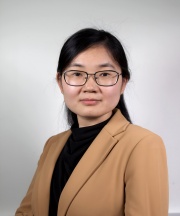
Orlando Rojas is a Professor at the University of British Columbia (UBC), holding joint appointments in the Departments of Chemical and Biological Engineering, Chemistry, and Wood Science. He leads the Biobased Colloids and Materials (BiCMat) research group and directs the Bioproducts Institute . His research focuses on sustainable development through renewable materials, including nanopolysaccharides, bacterial nanocellulose, lignins, and multiphase systems. Rojas has advised over 50 PhD students and 40+ MS students, with a h-index of 90 (Google Scholar). Key Roles/Positions : Canada Excellence Research Chair in Renewable Materials Adjunct Professor at NC State University (USA) and Dalian Polytechnic University (China) Director of FinnCERES Flagship (Finland) Research Interests : Development of bio-based materials for energy, healthcare, and environmental applications. Key areas include nanocellulose functionalization, lignin valorization, and bioinspired materials. His work integrates colloidal science, multiphase systems, and sustainable manufacturing. Grants & Awards : ERC Advanced Grant and Horizon H2020 funding 2013 ACS Fellow, 2015 Tappi Nanotechnology Award First Latin-American recipient of the Anselme Payen Award (ACS) Labs & Collaborations : Active partnerships with Aalto University (Finland) and institutions globally. Leads the BiCMat group spanning UBC and FinnCERES, focusing on bio-based materials and sustainable technologies.
Dr. Zia Saadatnia is an Assistant Professor at Ontario Tech University's Department of Mechanical and Manufacturing Engineering, part of the Faculty of Engineering and Applied Science. He holds affiliations with the KITE Research Institute (University Health Network) as an Affiliate Scientist and the University of Toronto's Department of Mechanical and Industrial Engineering as an Assistant Professor (Status-only). His research focuses on advanced materials, energy harvesting, and biomedical devices, with notable contributions to aerogel composites, triboelectric nanogenerators, and functional electrical stimulation technologies. Education: Ph.D., Mechanical Engineering, University of Toronto (2019) M.Sc., Mechanical Engineering, Ontario Tech University (2015) B.Sc. (Hons), University of Science and Technology, Iran (2007) Research Interests: Smart structures and materials Nonlinear vibration dynamics Energy harvesting systems Sensors and actuators Biomedical devices Polymer composites and aerogel fabrication Awards and Honors: Mitacs Accelerate Fellowship (2021-2024) William Dunbar Memorial Scholarship (2019) Pierre Rivard Hydrogenics Graduate Fellowship (2018) Ranked First in Undergraduate Class (2011) Advising and Grants: Dr. Saadatnia has led research projects supported by grants from Mitacs and the Government of Canada. His work integrates interdisciplinary approaches to address challenges in energy systems, biomedical engineering, and material innovation. Labs and Teams: Collaborates with KITE Research Institute and University of Toronto teams on advanced materials and biomedical applications. His lab focuses on experimental and computational studies of energy harvesting and smart materials.
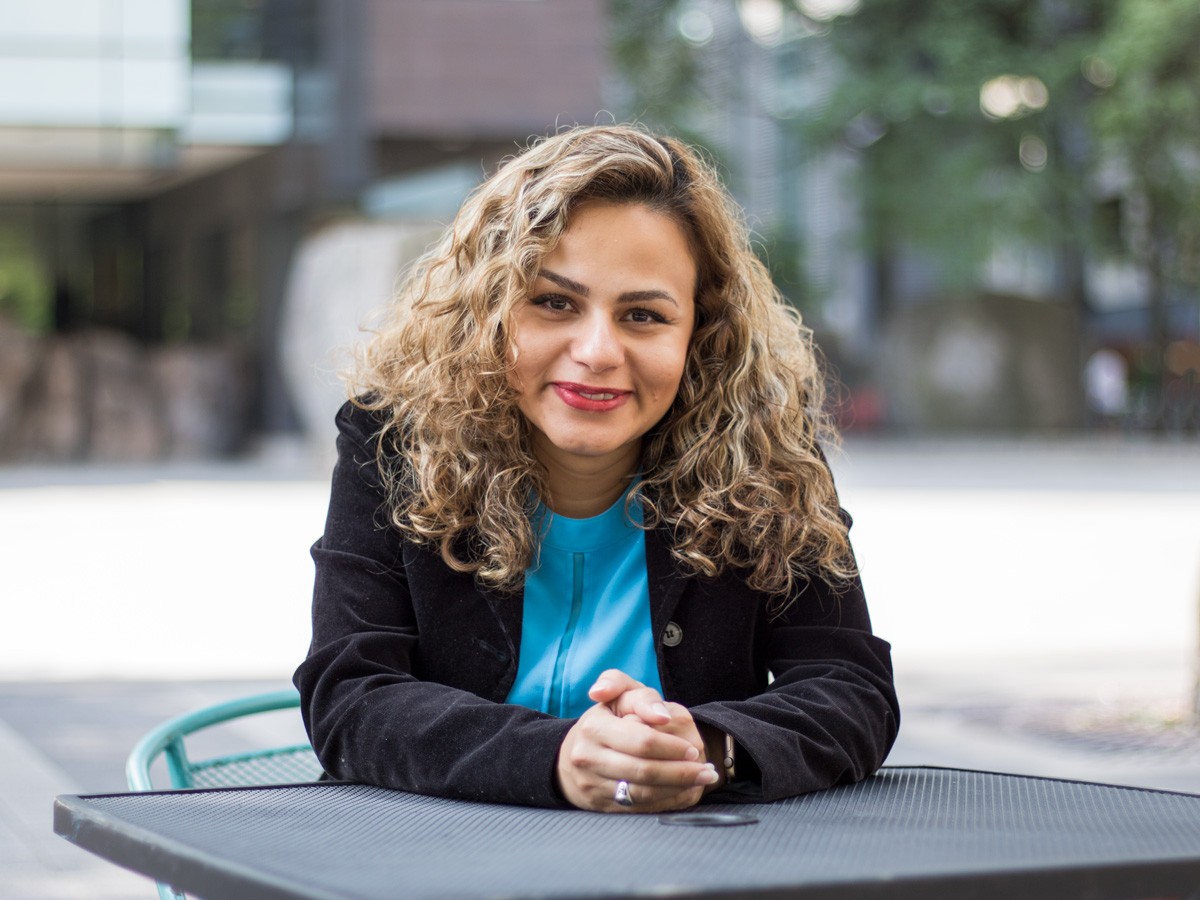
Dr. Hadis Zarrin is an Associate Professor in the Department of Chemical Engineering at Toronto Metropolitan University. Her research focuses on multifunctional nanoengineered materials for clean energy storage, environmental remediation, and wearable biosensors. PhD, University of Waterloo (2014) MSc, Iran University of Science and Technology (2008) BSc, Azad University (2004) Dr. Zarrin’s research spans Clean Energy Storage and Conversion , leveraging 2D nanomaterials (e.g., MXene, hBN, rGO) to advance Hydrogen Production , Fuel Cells , Supercapacitors , and Water Treatment . Her work integrates Nanotechnology with Electrochemistry to develop Smart Coatings and Flexible Electronics . Her recent publications (2024–2025) highlight innovations in MXene-hBN composites for energy devices, self-healing coatings , and environmental remediation via nanofibers. These studies emphasize scalable solutions for hydrogen generation , thermal management , and biomedical sensors . NSERC Alexander Graham Bell Canada Graduate Scholarship (2012–2014) Waterloo Institute of Nanotechnology Fellowship (2012–2014) Waterloo President Graduate Scholarship (2012–2014) As a mentor, Dr. Zarrin encourages students to embrace creativity and risk in problem-solving. She leads the Nano-Engineering Laboratory for Energy and Environmental Technologies , fostering interdisciplinary innovation.
Dr. Amin Reza Rajabzadeh is an Associate Professor at the W Booth School of Engineering Practice and Technology, McMaster University, with affiliate roles in the McMaster School of Biomedical Engineering and Mechanical Engineering. He specializes in biochemical engineering, focusing on biosensors, bioseparation processes, and bioprocess monitoring. His research includes developing biosensors for biological process monitoring and nanotechnology-based cancer therapies. He holds a Professional Engineer license (P.Eng.) and is a member of the Canadian and American Engineering Education Associations. Dr. Rajabzadeh's teaching spans core biochemical engineering courses like Bioreactor Design and Bioprocess Control. He has received the McMaster President’s Award for Teaching and a MacPherson Leadership in Teaching Fellowship. His research clusters span Energy, Environment, Health & Bio-innovation, and Micro-Nano Systems. Recent work includes nanoplatforms for photothermal cancer therapy (ACS Applied Materials & Interfaces, 2021) and innovations in sustainable protein enrichment via tribo-electrostatic separation. Collaborations span biomaterials, environmental engineering, and nanotechnology. Awards: Teaching Excellence Awards, Leadership Fellowships Research Themes: Biosensors, Nanomedicine, Bioseparation Technologies Labs/Teams: Biomedical Engineering Research Group, Nanotechnology Applications Lab
HaoTian Harvey Shi serves as an Assistant Professor in the Department of Mechanical and Materials Engineering at Western University's Faculty of Engineering. His research focuses on sustainable functional materials for hierarchical additive manufacturing across multiple length scales. Education: Ph.D. in Mechanical Engineering, University of Toronto, 2020 M.A.Sc. in Mechanical Engineering, University of Toronto, 2016 B.A.Sc. in Engineering Science, University of Toronto, 2014 Dr. Shi's research at the intersection of advanced manufacturing, nanoengineering, and material informatics targets applications in sensors (Organ-on-a-Chip Models, Microneedle-based Minimally Invasive Sensors) and energy storage (Supercapacitors and Zn-ion Batteries). His Data-Driven Advanced Manufacturing (D2M) Group develops hierarchical functionalized nanostructures where hidden relations between manufacturing parameters and device performance are revealed through innovative materials science approaches. His recent publications demonstrate expertise in graphene-based sensors, functionally-graded supercapacitors, nanohybrid strain sensors, and organ-on-chip models, reflecting trends toward multi-scale manufacturing for biomedical and energy applications. Scientific Awards: NSERC PGS-D doctoral award Ontario Graduate Scholarship (OGS) NSERC PDF Fellowship Dr. Shi previously held a post-doctoral Research Associate position at the University of Cambridge, developing multi-length-scale hierarchical fibre-based printing technologies. His work combines mechanical design principles with materials science to optimize hierarchical manufacturing parameters for enhanced device performance. The Data-Driven Advanced Manufacturing (D2M) Group operates within Western University's advanced manufacturing ecosystem, leveraging facilities for nanoengineering and materials characterization to develop next-generation sustainable functional materials.
Naglaa Elagamy is an Associate Teaching Professor in the Department of Mechanical and Manufacturing Engineering at Ontario Tech University. She holds a Ph.D. in Mechanical Engineering from Carleton University (2015), an M.A.Sc. in Engineering from Alexandria University (2002), and a B.Sc. in Engineering from the same institution (1994). As a licensed Professional Engineer (P.Eng.) in Ontario (2016–present) and a Certified SolidWorks Associate (CSWA), her expertise spans advanced composite materials, micro-CT imaging, stress simulation, and fatigue assessment of composite structures. Her research focuses on predicting progressive damage in materials and applying micro-CT for quantitative and qualitative damage analysis in carbon fiber reinforced polymers (CFRP). She has also explored aerodynamic performance optimization of small unmanned aerial vehicles (UAVs) through propeller design studies. Elagamy’s publications and presentations emphasize interdisciplinary approaches, combining experimental techniques like micro-CT with computational methods such as the Cohesive Zone Model and Finite Element Analysis. Her work addresses challenges in composite material durability, structural integrity, and multi-mode fatigue behavior. Beyond research, she contributes to teaching core mechanical engineering courses, including Kinematics and Dynamics of Machines, Statics, Solid Mechanics, and Computer-aided Design. Her professional recognitions include the Carleton University Development Grant (2014) and the AUD Recognition for Services (2018). Her advising and grants activities are not explicitly detailed here, but she has secured funding for her research at Carleton University. She is affiliated with the Faculty of Engineering and Applied Science and collaborates with industry and academic conferences such as SAMPE and CAMX. While specific lab affiliations are not mentioned, her research aligns with cutting-edge structural and materials analysis within the department.
Theo van de Ven is a Professor and holds the Sir William C. Macdonald Chair in Chemistry at McGill University's Department of Chemistry. He serves as Director of the Quebec Centre for Advanced Materials (QCAM/CQMF). His research focuses on cellulose chemistry and its applications in novel materials, including nanocellulose-based composites, biodegradable products (e.g., straws, films), and advanced materials for drug delivery and environmental applications. His work also explores polyphenolic chemistry, such as lignin and tannic acid interactions with proteins in viral and neurodegenerative contexts. Van de Ven teaches CHEM 233 (Physical Chemistry for Engineers) and CHEM 585 (Colloid Chemistry), emphasizing phase boundary dynamics, electrochemistry, and surfactant science. His labs are located at the Pulp & Paper Building, with research emphasizing green chemistry and sustainable materials. His scientific contributions include pioneering work on hairy nanocellulose architectures and functionalized cellulose derivatives, earning recognition through prestigious awards. His research spans environmental and biomedical applications, including carbon fiber production from asphaltenes, silica/cellulose hybrids for catalysis, and tannic acid's role in protein interactions (e.g., SARS-CoV-2 and Alzheimer's). Collaborative efforts with industry and academia aim to bridge fundamental research with industrial applications, such as scalable cellulose-based filaments and films.
Dr. Yasmine Abdin serves as an Assistant Professor in the Department of Materials Engineering within the Faculty of Applied Science at the University of British Columbia (UBC). Her research focuses on advancing polymer matrix composite materials through innovative digital simulation and probabilistic design methodologies. Her academic credentials include: B.Sc. from KU Leuven M.Sc. from KU Leuven Ph.D. from KU Leuven Dr. Abdin's research program centers on overcoming limitations in composite material durability through probabilistic design frameworks and multi-scale modeling. She integrates finite element analysis, machine learning, and Industry 4.0 technologies to predict structural reliability under stochastic service conditions, with emphasis on damage tolerance, manufacturing-process-structure relationships, and optimization of carbon fiber production from sustainable precursors like lignin and asphaltenes. Her recent publications (2023-2025) demonstrate strong focus on sustainable composite manufacturing, including carbon fiber production from renewable resources, 4D printing of shape memory polymers, flax fiber-reinforced composites, cellulose nanofibril modification, and fatigue behavior analysis. Key thematic trends include the convergence of digital twin technologies with composite manufacturing, sustainable precursor development, and the application of machine learning to enhance modeling efficiency in structural reliability prediction. Information regarding doctoral students, research grants, laboratory facilities, or scientific awards was not provided in available sources.
Yunyun Wu is an Assistant Professor in the Department of Biomaterials & Applied Oral Sciences and the School of Biomedical Engineering at Dalhousie University. Her research focuses on developing cost-effective, sustainable, and scalable biomaterials and structures for healthcare applications, including eco/bioresorbable electronics, biosensors, and energy storage solutions. Her work emphasizes wearable and implantable devices for health monitoring and disease treatment. Research interests include electroactive biomaterials, biosensors, electronic textiles, and stretchable electronics. Key projects involve skin-interfaced microfluidic biosensors and sewing-based fabrication of bioresorbable electronics. Recent publications highlight innovations in wearable sensors, implantable devices, and textile-based electronics. These contributions address challenges in medical monitoring, energy storage, and biocompatible materials. The Wu Lab actively explores sustainable materials and scalable manufacturing techniques to advance wearable and bioresorbable technologies. No scientific awards are explicitly listed in the provided texts, but her extensive publication record reflects her impactful contributions to biomedical engineering. Advising and grants details are not provided in the current data. The lab’s activities are centered on interdisciplinary approaches to biomedical device development, as detailed on their website (www.yyunwulab.com).
Lisa Birke is an interdisciplinary artist and faculty member at the University of Saskatchewan’s College of Arts and Science , where she founded the Digital and Integrated Practice (DIP) area in the Department of Art & Art History in 2019. Her work intersects performance, video art, augmented reality, and installation to critique cultural norms and explore subjective realities through Canadian landscape narratives. Education: BFA (1999) in Visual Art (Painting) from Emily Carr Institute of Art and Design MFA (2013) in Fine Arts (Studio Art) with distinction from the University of Waterloo Birke’s research investigates the collision of art history, pop culture, and everyday life in multi-channel digital works. She blurs the line between theatrics and documentation, focusing on themes like postfeminist critique, relational aesthetics, and technological mediation. Recent projects include TrippingTime (2024) and Natures of Reality (2021), both utilizing augmented reality for public engagement. Key scientific trends: Immerse audiences in layered realities, challenge normative representations, and employ collaborative digital tools (360 video, AR) to address themes of community, tolerance, and the deconstruction of perfection. Scientific awards: Provost’s New Teacher Award (2022) USSU Teaching Excellence Award (2022) Canada Council for the Arts Grow Grant (2023-2024) Arizona International Film Festival Jury Award (2024) Teaching & advising: Birke advocates for competence, autonomy, and relatedness in pedagogy, emphasizing foundational skills alongside experimental risk-taking. She served as graduate chair (2019-2022) and mentors students in digital media, installation, and performance art. Labs & teams: Principal Investigator for the Shared Spaces augmented reality outreach project (University of Saskatchewan), collaborating with international institutions and grade 8 students in Germany.
Emily Cranston is an Adjunct Associate Professor in the Department of Chemical Engineering at McMaster University , where she holds the Canada Research Chair in Bio-Based Nanomaterials . Her research focuses on advanced applications of cellulose nanocrystals (CNCs) in polymer composites, biomedical materials, and sustainable technologies. Research Interests Cellulose nanocrystal surface modification Mechanical properties of bio-based composites Injectable hydrogels for tissue engineering Green adhesive systems Nanocellulose in energy storage devices Biodegradable foam insulation materials Recent Work Trends 2024-2025 studies on water-based hydrophobization strategies Investigations into CNC-lateX interactions for coatings Advancements in vaccine delivery systems using nanocellulose Structural analysis of wood particles for insulative foams Awards Canada Research Chair in Bio-Based Nanomaterials Teaching Instructor for CHEMENG 2G03: Problem Solving and Technical Communication (2018)
Craig Leonard is a Professor at Nova Scotia College of Art and Design (NSCAD), serving as Director of the MFA Program (Jan. 1–June 30, 2025). His work spans artist publications, sound art, performance, and sculpture, with exhibitions at venues like Central Art Garage (Ottawa), Darling Green (New York), and Double Happiness (Toronto). His research interests focus on interdisciplinary art practices, blending conceptual frameworks with material exploration. Notable publications include Uncommon Sense: Aesthetics after Marcuse (MIT Press, 2022) and curated projects like NSCAD Printed Matter at the NY Art Book Fair (2017–2019). Leonard has received awards such as the 2012 Canada Council for the Arts International Residency Grant and was long-listed for the Sobey Art Award (2008). He has held residencies globally, including at MASS MoCA (2018) and Acme Studios (London, 2012). His curatorial work includes co-curating Velcro Gallery (Halifax, 2012) and Friends of Freiheit (North Adams, 2012). He serves on the Board of Turret Arts Space since 2014 and was a past Board member of the Khyber (2008–2018). Leonard’s artistic output includes solo exhibitions such as Libros Libres (Curtidas Art Space, Barcelona, 2025) and group shows like Blank. Raw. Illegible... (Leopold–Hoesch–Museum, Germany, 2023). His sound projects include collaborations with musicians like Tim Crofts and Jerry Granelli.