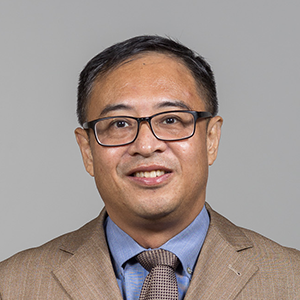
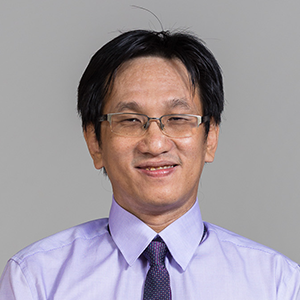
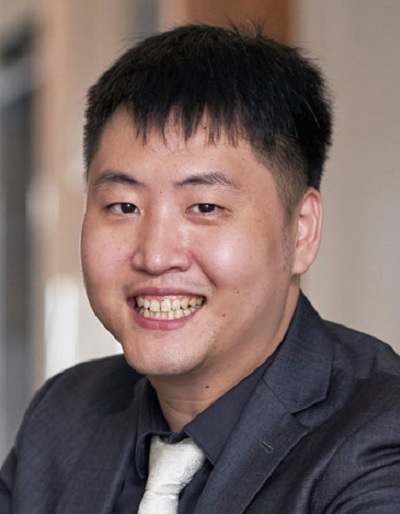
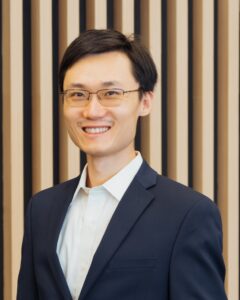
Zhiyong Huang is an Associate Professor at the National University of Singapore (NUS) School of Computing. He holds multiple leadership roles, including Deputy Director of the NUS Business Analytics Centre, Director of the Computing Translational Research & Development (C-TReND) Centre, and Assistant Dean (Industry Relations). He is also a Senior Principal Investigator at the NUS Chongqing Research Institute. Education: PhD in Computer Science from École Polytechnique Fédérale de Lausanne (EPFL), MEng and BEng in Computer Engineering from Tsinghua University. Leadership: Senior Member of ACM and IEEE, Pioneer Member of ACM SIGGRAPH, and Chair of the Singapore ACM SIGGRAPH Chapter. Research Interests: His work spans Data Analytics, Machine Learning, Computer Vision, Human-Robot Interaction, and Computer Graphics. Key projects include the NUS Digital Twin initiative and secure data analytics pipelines. Article Trends: Recent publications focus on time series generation, cryptocurrency benchmarks, medical image registration, and phishing detection. These works integrate machine learning, computer vision, and multimodal systems. Scientific Awards: Finalist, World Technology Summit & Awards (Entertainment, 2010) Bronze, National Science and Technology Progress Award (1992) Tsinghua 12.9 Distinguished Young Teacher Award (1989) Grants & Service: Extensive involvement in Singapore's IT Standards Committee, review panels for EDB SIIRD projects, and editorial roles. He has served as PC co-chair, local chair, and reviewer for numerous conferences and journals.
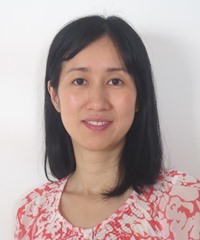
Assoc Prof Ying Chen is an Associate Professor at the National University of Singapore , affiliated with the Department of Mathematics, Asian Institute of Digital Finance (as Academic Director of PhD Program in Digital FinTech 2022–2024), Risk Management Institute (2019–2023), Department of Statistics and Data Science (2019–2023), and Department of Economics (2018–2023). She also contributes to NUS Graduate School for Integrative Sciences and Engineering since 2016. Research Interests include: AI forecasting and quantum computing for finance Nonstationary time series and functional data analysis Energy data analytics and precision medicine Network autoregression and spatial-temporal modeling Explainable AI and citation metrics Portfolio liquidation and market-making algorithms Article Trends demonstrate expertise in: Adaptive forecasting for gas flows and electricity prices Blockchain network influence detection Quantum computing applications in finance Functional autoregression with mixed predictors Credit rating fairness and explainability High-resolution implied volatility modeling Scientific Awards include: ISI Elected Member (2016–) International Statistical Institute Council (2023–2027) IASC Scientific Secretary (2017–2019, 2023–2025) Advisory roles for EU FIN-TECH and xAIM projects
Roles and Affiliations: Full Professor at the School of Computing and Information Systems (SCIS), Singapore Management University (SMU). Research Advisor to Xiaosen Zheng and Kankan Zhou. Serves as Action Editor for Transactions of the Association for Computational Linguistics (TACL) , Program Co-Chair of EMNLP 2019, and Editorial Board Member of Computational Linguistics (2015-2017). Education: PhD in Computer Science, University of Illinois at Urbana-Champaign (2008) B.S. and M.S. in Computer Science, Stanford University Research Focus: Specializes in natural language processing (NLP), text mining, machine learning, and data mining. Current interests include question answering, social media content analysis, and combating misinformation. Explores topics like counterfactual syntax for cross-lingual understanding, interventional training for robust NLU, and bias detection in vision-language models. Publications: Over 100+ peer-reviewed papers across top conferences (ACL, EMNLP, NAACL) and journals. Recent work emphasizes multimodal analysis, hate speech detection in memes, and robustness improvements for large language models. Key themes include cross-lingual systems, knowledge base question answering, and misinformation mitigation. Grants & Advising: Supervises PhD/Master’s students in cutting-edge NLP research. Leads projects on model memorization studies, hate meme classification, and interventional training frameworks. Active in organizing conferences and editorial roles. Teaching: Teaches courses in software foundations and programming fundamentals, bridging theory and practical NLP applications.
Singapore University of Technology and DesignSingapore
Dr. Wenxuan Zhang is a tenure-track Assistant Professor at the Information Systems Technology and Design (ISTD) Pillar of Singapore University of Technology and Design (SUTD), supported by the prestigious SUTD Assistant Professorship (SAP) award. He holds a PhD from The Chinese University of Hong Kong and previously worked as a research scientist at Alibaba Group Singapore. His research focuses on advancing large language models (LLMs) to be both inclusive (supporting multilingual capabilities) and trustworthy (ensuring safety and robustness). Key projects include SeaLLMs (specialized for Southeast Asian languages), Babel (serving 90% of global speakers), and M3Exam (LLM evaluation framework). Education: PhD in Computer Science, The Chinese University of Hong Kong Previous roles: Research Scientist at Alibaba Singapore (2022) Research Interests: Multilingual LLMs, AI safety, model evaluation, and cross-lingual adaptation. He leads projects addressing LLM trustworthiness through safety mechanisms and fair evaluation practices. Awards & Recognition: SUTD Assistant Professorship (2025) Alibaba Star (2022) ITU Best Innovate for Impact Award (2024) Service & Leadership: Area Chair for NeurIPS 2025, ACL 2025, and multiple other top conferences. Actively contributes to program committees for conferences like ICLR and EMNLP. Current Projects: Multilingual LLMs, model compression, safety frameworks, and evaluation methodologies. Openings for PhD/Postdoc researchers in these areas.
Thorsten Koch serves as Head of the Department of Applied Algorithmic Intelligence Methods within the Division of Mathematical Algorithmic Intelligence at Zuse Institute Berlin (ZIB). His research spans mathematical optimization, energy systems modeling, quantum computing applications, and scientometrics. Koch leads significant research projects including FAN (focusing on AI in scholarly communication), UNSEEN (energy scenarios), HPO-NAVI (research software visibility), and Multi-Energy Models for European Energy System Planning. Koch's research interests center on developing advanced optimization algorithms for complex systems, particularly in energy networks and scientific data analysis. His work bridges theoretical mathematics with practical applications in gas network optimization, wind farm design, portfolio management, and quantum computing. He has pioneered methods for large-scale mixed-integer programming, scenario generation, and the integration of machine learning with traditional optimization techniques. His recent publications demonstrate growing emphasis on quantum optimization, scientometrics, and the application of AI to scientific communication infrastructure. His publication trends reveal a strategic expansion from traditional mathematical optimization into quantum computing applications and scientific data infrastructure. Recent work shows increasing collaboration across disciplines - connecting energy systems analysis with financial modeling, integrating machine learning with optimization solvers, and applying computational methods to scientometrics. The 15 most recent articles highlight three major thrusts: quantum optimization (33%), energy systems modeling (27%), and scientific data infrastructure (40%), reflecting his leadership in both theoretical algorithm development and practical implementation for societal challenges. Koch actively contributes to research infrastructure through leadership roles in projects like KOBV (Berlin-Brandenburg Cooperative Library Network), HDC (Humanities Data Centre), and CIB (future library networks). His work on the DeepGreen initiative focuses on establishing legally secure workflows for implementing open-access components in scientific publication licensing agreements, demonstrating his commitment to open science principles and research data management.
Michael Qizhe Shieh is an Assistant Professor in the Department of Computer Science at the National University of Singapore (NUS), affiliated with the Tree and Rock AI Lab (TRAIL). He holds a PhD and Master's from Carnegie Mellon University (Machine Learning and Language Technologies) and a Bachelor's from Shanghai Jiao Tong University's ACM Class. His research focuses on Large Language Models, Deep Learning, and Natural Language Processing, with notable contributions to semi-supervised learning techniques like Noisy Student and UDA, and the RACE benchmark for reading comprehension. Education: PhD in Machine Learning, Carnegie Mellon University (2020) Master's in Language Technologies, Carnegie Mellon University (2018) Bachelor's in Computer Science, Shanghai Jiao Tong University (2016) His research explores robustness, safety, and scalability of AI systems. He has served as Area Chair for top conferences like NeurIPS, ICML, and ICLR. Current research directions include adversarial robustness, LLM self-evaluation, and alignment mechanisms. His lab, TRAIL, emphasizes foundational AI research. Selected contributions include: Developing UDA and Noisy Student techniques for semi-supervised learning Creating the RACE benchmark for exam-based reading comprehension Advancing methods for LLM safety and adversarial defense Prospective students are encouraged to apply to NUS's PhD program for collaborative research opportunities.
Kenneth BENOIT is the Dean and Full-time Professor of Computational Social Science at the School of Social Sciences, Singapore Management University (SMU). Previously, he served as Director of the Data Science Institute at the London School of Economics (LSE) from 2020 to 2024. He holds a PhD in Government from Harvard University, specializing in statistical methodology. His research focuses on computational methods for analyzing textual data, particularly political texts and social media. Key areas include text-as-data techniques, natural language processing, and the application of large language models in social sciences. He has pioneered methods combining machine learning with crowd-sourced coding to improve the accuracy of political text analysis. Ken’s work emphasizes the analysis of big data, electoral systems, and comparative party competition, with notable contributions to the European Parliament and policy positioning studies. His expertise extends to software development, including R packages like quanteda and spacyr , which are widely used in text analysis. His articles and publications span methodological innovations, policy analysis, and interdisciplinary applications. Notable projects include scaling political party positions and examining the role of AI in public policy. He is actively involved in academic leadership, having served on editorial boards and organized collaborative research initiatives like the CIVICA research hackathon. Beyond SMU, he maintains professional profiles on LinkedIn and GitHub , reflecting his commitment to open-source tools and scholarly collaboration.
Anthony TUNG Kum Hoe is a Professor in the Department of Computer Science at the National University of Singapore (NUS), where he has established himself as a leading researcher in database systems and data mining. He is also affiliated with the NUS Graduate School for Integrative Sciences and Engineering and serves as a SINGA supervisor. His educational background includes a Ph.D. in Computer Science from Simon Fraser University (2001), an M.Sc. in Information Systems & Computer Science from NUS (1998), and a B.Sc. with 2nd Class Upper Honours in Information Systems & Computer Science from NUS (1997). Professor Tung's research spans several interconnected areas within database systems and data mining. His primary focus is on developing efficient methods for indexing and searching complex data structures including time series, trajectories, trees, graphs, and high-dimensional objects. He has pioneered work in visual query processing, keyword search, and ranking systems. His GENIE (Generic Inverted Index) and LAMP (semi-Lazy Mining Paradigm) projects represent significant contributions to big data analytics, particularly in handling the 'variety' aspect of big data by providing unified frameworks for processing diverse data structures while preserving semantic meaning. His research bridges theoretical database concepts with practical applications in visual data mining, collaborative analytics, and just-in-time model construction. His recent publications reveal a clear evolution from traditional database research toward more complex analytics on diverse data types. While maintaining his core expertise in database indexing and query processing, his work has expanded to incorporate machine learning techniques, particularly in areas like nearest neighbor search, anomaly detection, and predictive analytics. There's a noticeable trend toward interdisciplinary applications, with publications spanning computer vision, natural language processing, transportation systems, and social computing. His research group consistently publishes in top-tier venues including SIGMOD, VLDB, ICDE, and KDD, demonstrating both theoretical rigor and practical relevance. 2005 Best Paper Award for 'Indexing DNA Sequences Using q-grams' 2007 Invited panel speaker on 'Advice for a successful database researcher career in Asia' at SIGMOD 2010 Guest Lecturer for VLDB Database School 2012 VLDB 2012 Research PC Co-chairs 2015 10 Years Best Paper Award, DASFAA 2015 Invited to SIGMOD 2008 and SIGKDD 2008 Program Committees Professor Tung has supervised numerous PhD students and research associates throughout his career, including notable researchers like Zhang Zhenjie (recipient of the 2007 President Graduate Fellowship) and Wang Nan (published in SIGMOD'08). His research group has been consistently productive, with students publishing in top conferences including SIGMOD, ICDE, and VLDB. His professional service is extensive, having served as PC Chair for COMAD'06, Research PC Co-chair for VLDB 2012, and on program committees for virtually all major database and data mining conferences over the past two decades. His research has been supported by various grants that have enabled significant contributions to database technology. His GENIE and LAMP projects represent a cohesive research direction focused on developing systematic approaches to big data analytics. GENIE provides a unified platform for storage and retrieval of big data with various structures, while LAMP introduces a novel paradigm for predictive analytics that combines the strengths of lazy and eager learning approaches. These projects have evolved to incorporate GPU acceleration and parallel processing capabilities, reflecting his commitment to addressing real-world scalability challenges in data-intensive applications.
**FENG Mengling** is an Associate Professor at the National University of Singapore (NUS) and holds primary affiliation with the Saw Swee Hock School of Public Health. She serves as the Domain Leader for the Biostatistics, Modelling, AI and Data Analytics (B.MAD) Domain and Director of the AI for Public Health (AI4PH) Program. Her academic credentials include a Senior Post-doc from Harvard-MIT Health Science Technology Division, a PhD from Nanyang Technological University (2009), and a Bachelor's degree (2003) from NTU. Research & Teaching: Her research focuses on causal inference for evidence-based medicine, generative models for medical time-series analysis, and healthcare data analytics. She teaches courses on big data technologies for healthcare problems and healthcare data analytics. Professional Roles & Awards: She has led the Biomedical and Healthcare Analytics Lab at the Institute for Infocomm Research (2014–2015) and currently serves as an Affiliate Scientist at Harvard-MIT. Notable accolades include the MIT Teaching & Learning Laboratory Kaufman Teaching Certificate and recognition as a finalist in MIT’s 2013 Innovation Showcase. Her work has been featured in prominent media outlets like The Straits Times and Channel NewsAsia, highlighting breakthroughs such as AI nurses and Singlish-speaking healthcare assistants. Publications & Impact: Over 50 peer-reviewed publications span AI-driven clinical decision support, medical imaging analysis, and predictive modeling in critical care. Key contributions include frameworks like MedDreamer (reinforcement learning for EHR analysis) and DivScore (LLM-generated text detection). Her research bridges causal inference, generative AI, and scalable healthcare solutions. Labs & Initiatives: As a leader in NUS’s Public Health AI Innovation Center (launching early 2025), she drives initiatives like FxMammo (AI for breast cancer screening) and the Biomedical and Healthcare Analytics Lab. Her work emphasizes ethical AI deployment and cross-disciplinary collaboration in healthcare.
Prof. Keng Hock, Mark Goh is a Professor at the National University of Singapore (NUS) Business School, holding a joint appointment as Director (Industry Research) at The Logistics Institute-Asia Pacific (TLI-AP). He specializes in logistics, supply chain strategy, and operations research. He earned his PhD from the University of Adelaide on a fully funded scholarship and has held adjunct and visiting roles globally. His research focuses on supply chain risk management, healthcare logistics, and strategic decision-making, with over 400 publications in top journals. Notable contributions include work on multi-criteria supplier selection, supply chain resilience, and AI ethics in e-commerce. He has received the Supply Chain Educator Award and is recognized in global directories like *Who’s Who in Asia and the Pacific Nations*. Prof. Goh advises public and private sector organizations on logistics strategy and sits on industry committees such as the World Economic Forum’s Global Advisory Council on Logistics. His current projects emphasize syncretic value-driven logistics models and sustainable recycling frameworks. He leads collaborative research teams addressing global supply chain challenges through interdisciplinary approaches. His articles reflect cutting-edge advancements in AI-driven decision models, risk networks in construction, and data ownership strategies in digital platforms. These contributions underscore his role as a thought leader in logistics and operations research, blending academic rigor with real-world industry applications.
LIU Peng is an Assistant Professor of Quantitative Finance (Practice) at the Lee Kong Chian School of Business, Singapore Management University. He holds a Ph.D. in Statistics and Data Science (Part-time) from the National University of Singapore (2021), an M.S. in Business Analytics (2015), and a B.Eng. in Electronic Science and Technology (2012). Prior to his academic role, he worked as a Manager at Standard Chartered Bank (2019–2022) and in analytics roles at Marina Bay Sands and IBM. Education: Ph.D. (NUS), M.S. (NUS), B.Eng. (Beijing Technology and Business University) His research focuses on generalization in deep learning, sparse estimation, portfolio optimization via reinforcement learning, financial text mining, risk management, and Bayesian optimization. His work bridges theoretical advancements with practical applications in quantitative finance and data science. Notable contributions include studies on explainable neural networks, Bayesian optimization frameworks for portfolio management, and risk analytics integrating human decision-making. His recent articles emphasize model risk assessment, cost-aware optimization, and financial data analysis. Awards: Best Ph.D. Graduate Research Award (NUS, 2020), Google TensorFlow Developer Certificate (2020–2023) He teaches courses in quantitative finance, machine learning, and risk management, and has secured grants including the Research Capability Building Fund (2023–2025). His research aligns with strategic priorities in digital transformation and financial innovation.
HU Bei is an Assistant Professor at the National University of Singapore specializing in translation studies, with research spanning political, ethical, and health communication domains. His work integrates empirical methodologies to analyze cross-cultural translation dynamics. He holds a Ph.D. from the University of Melbourne and maintains academic operations from NUS office AS8/06-33, contactable via telephone 65-6516-3908. His core research interests include: Reception studies examining audience interpretation of translated texts Political translation analyzing ideological framing in diplomatic contexts Translation ethics addressing neutrality dilemmas in sensitive content Mediated health communication for cross-cultural medical settings Empirical/experimental approaches applying data-driven methods to translation theory No scientific awards were documented in the source material. Teaching responsibilities encompass graduate-level courses including Consecutive Interpreting (INT3202), Mass Media Translation (TRA3202), Translation and Interpreting Theories (TRA3206), and Translation Studies (CH4281), though no student advising details or grant funding information was provided. Research infrastructure affiliations such as laboratories or collaborative teams were not referenced in the available documentation.
Asst Prof LIU Boxiang holds the position of Assistant Professor and NUS Presidential Young Professorship at the Department of Pharmacy and Pharmaceutical Sciences, National University of Singapore (NUS), within the Faculty of Science. His research focuses on integrating multi-omics approaches with computational methods to study complex diseases such as coronary artery disease and age-related macular degeneration. He specializes in developing statistical and machine learning tools for genomic analysis, including eQTL mapping and deep learning architectures for gene expression regulation. Education: BA in Biophysics (Illinois Wesleyan University), MS and PhD in Bioinformatics (Stanford University). He contributed to the GTEx consortium and is part of the Asian Immune Diversity Atlas (AIDA) initiative. His lab develops methods like ANTseq for ancestry determination and scPrediXcan for cell-type-specific transcriptome studies. Research Interests: Functional genomics, eQTL analysis, deep learning in biomedicine, and computational tools for omics data integration. His work bridges disciplines such as natural language processing and computer vision with biological questions. Scientific Awards: NUS Presidential Young Professorship (2021). His lab's innovations include ParaMed, a biomedical translation dataset, and LinearDesign for optimized mRNA stability. Advising and Grants: Leads the Liu Lab (boxiangliulab.com), focusing on single-cell genomics, mitochondrial dynamics, and computational biomedicine. Collaborates on projects like the RESET cohort study for cardiovascular disease prevention.
Prof. Lin Weisi is an Associate Dean (Research) and Professor at the College of Computing & Data Science, Nanyang Technological University (NTU). He holds the President's Chair in Computer Science and is a Fellow of IEEE and IET. His research focuses on image processing, video compression, multimedia communication, and AI-driven applications. He has authored over 400 refereed papers, holds 16 patents, and contributed to international standards. Notable contributions include the COVID-19 Test Strip Reader and databases like the Retargeted Image Subjective Quality Database . He leads the ROSE Lab and has supervised numerous students and researchers globally. His awards include Fellowships from SIET and excellence recognitions in China and Singapore. Educational Background: B.Sc./M.Sc. (Electronics/Digital Signal Processing, Sun Yat-Sen University), Ph.D. (Computer Vision, King’s College London). Research Interests: Perception-based modeling, neural network compression, AI for environmental monitoring, and perceptual quality assessment. His work bridges academic research and industrial deployment, emphasizing practical applications. Grants & Projects: Managed over 10 major projects in digital multimedia, including collaborations with institutions like the Institute for Infocomm Research and Tencent. Current initiatives include lightweight deep learning for image processing and AI-driven climate monitoring. Awards & Honors: Recognized as a Chartered Engineer, Honorary Fellow of SIET, and recipient of prestigious awards in China and internationally.
Nguyen Thanh Son is a Research Scientist at the Artificial Intelligence Initiative under the Institute of High Performance Computing (IHPC), Agency for Science, Technology and Research (A*STAR), Singapore. He holds a PhD in Information Systems from the School of Information Systems, Singapore Management University (SMU), where he was advised by Associate Professor Hady Lauw. His research focuses on natural language processing, opinionated text mining, and multimodal deep learning. Previously, he completed a visiting PhD program at Carnegie Mellon University (CMU) and an internship at IBM Research Lab in Dublin, Ireland. He also earned a Bachelor of Information Systems from the University of Engineering and Technology (UET), Vietnam National University, Hanoi, with academic distinctions in research. Research Interests: His work spans natural language processing, emotion recognition, knowledge base systems, and agentic AI. He has contributed to advancements in large language models, multimodal encoding, and retrieval-augmented systems. Grants & Awards: He secured a Singapore Aerospace Programme grant (SGD 360,000) as PI and co-led an A*STAR grant (SGD 6 million). His accolades include the SMU Presidential Doctoral Fellowship and top research prizes during his undergraduate studies. Labs & Teams: Active in IHPC's AI initiatives and collaborated with CMU and IBM on projects like sentiment analysis and ontology building. His work bridges academic research and industrial applications in AI.