Amine Mhedhbi is an Assistant Professor at Polytechnique Montréal , where he leads the Data & AI Systems Lab . He earned his PhD in 2023 from the University of Waterloo. His work bridges data management , graph databases , and AI systems , with a focus on performance, debuggability, and user interface design for data applications. Education : PhD (University of Waterloo, 2023) Research Interests center on modern analytical data systems , including multimodal data management , language model integration , and graph query optimization . His projects like FLockMTL and GraphflowDB aim to combine semantic analysis, AI, and traditional database operations. Scientific Awards include the NSERC Discovery Grant , the Cheriton School Distinguished Dissertation Award , the VLDB Best Paper Award , and fellowships from Microsoft and Meta . Key Collaborations : Semih Salihoğlu, Jimmy Lin, Elena L. Glassman Labs & Teams : Affiliated with DAIS Lab , IVADO , and co-founded the applied research team at Distyl AI in 2023.
Sergey Tulyakov is the Director of Research at Snap Inc. , leading the Creative Vision team. His work focuses on enhancing creator capabilities through computer vision , machine learning , and generative AI , with applications in 2D/3D/4D video generation, editing, and personalization. He pioneered video generation frameworks like MoCoGAN and First Order Motion Model , and has been recognized for BEST IN SHOW AWARD at SIGGRAPH Real-Time Live! 2020. PhD (2012-2017): University of Trento, Italy MSc (2010): Belorusian State University of Informatics and Radioelectronics B.Eng (2009): Belorusian State University of Informatics and Radioelectronics His research interests span computer vision , generative models , 3D reconstruction , and personalization , with a focus on making large models efficient and mobile-compatible . Recent publications highlight advancements in 4D video generation , text-guided 3D composition , and lightweight architectures . Key scientific awards include the SIGGRAPH Real-Time Live! 2020 Best in Show for Interactive Video Stylization. He has also served on technical program committees for top-tier conferences like CVPR, ICCV, SIGGRAPH, and NeurIPS since 2022. His team organizes tutorials and keynotes, including courses on Deep Generative Models and Efficient Neural Networks . While no direct student names are listed, his collaborative work spans 60+ top-tier publications.
Stefan Riezler is a full professor of Statistical Natural Language Processing at Heidelberg University's Department of Computational Linguistics (since 2010), affiliated with the Faculty of Mathematics and Computer Science. Prior to this, he worked in Silicon Valley at Xerox PARC and Google Research. He holds a PhD in Computational Linguistics from the University of Tübingen (1998) and conducted postdoctoral research at Brown University (1999). His research spans machine learning, NLP, and medical informatics, focusing on interactive statistical learning. He co-leads the Interdisciplinary Center for Scientific Computing (IWR) and serves on the editorial boards of Computational Linguistics and Transactions of the Association for Computational Linguistics . Key research areas include neural machine translation, healthcare AI (e.g., sepsis prediction), data augmentation, and reproducibility in ML. He develops tools like JoeyNMT and explores ethical challenges in clinical machine learning. Notable recent work includes advancements in time series analysis, multimodal interfaces (e.g., NLMaps for OpenStreetMap), and ethical frameworks addressing validity in healthcare ML. His publications emphasize practical applications of NLP in healthcare, speech translation, and cross-lingual systems. Grants and collaborations include interdisciplinary projects on medical data science and training next-gen NLP researchers. He actively contributes to open-source toolkits and reproducible research practices.
Dr. Silvana Deilen is a Researcher at the Institute for Translation Studies & Technical Communication within the Faculty of Language and Information Sciences at the University of Hildesheim. She joined the university in 2023 after working as a Research Associate at Johannes Gutenberg University Mainz from 2018-2024. Her primary research focus centers on accessible communication, particularly in the areas of Easy Language and Plain Language translation, with special emphasis on cognitive aspects of translation processes and AI-assisted translation technologies. Dr. Deilen earned her B.A. in Multilingual Communication from Cologne University of Applied Sciences (2012-2015), followed by an M.A. in Specialized Translation from the same institution (2015-2018). She completed her doctoral studies (Dr. phil.) in Translation Studies at Johannes Gutenberg University Mainz (2018-2021) with summa cum laude distinction, supervised by Prof. Dr. Silvia Hansen-Schirra and Prof. Dr. Arne Nagels. Her research interests span multiple interconnected domains within translation and communication accessibility. A significant portion of her work examines the cognitive processing of compound words in Easy Language, utilizing eye-tracking methodologies to investigate how visual segmentation affects reading behavior and cognitive load. She has pioneered research on AI-assisted translation for health communication, particularly focusing on how large language models can support the creation of accessible health information. Her work bridges theoretical translation studies with practical applications in healthcare, government communication, and digital accessibility. Dr. Deilen's publication record reveals a clear trajectory toward increasingly sophisticated integration of technology and accessibility. Her recent work shows strong emphasis on evaluating AI systems like ChatGPT for translation tasks, developing editorial workflows for AI-assisted translation of health information, and investigating cognitive aspects of compound translation. The interdisciplinary nature of her research connects linguistics, cognitive science, health communication, and artificial intelligence, demonstrating how translation studies can address real-world accessibility challenges. 2014 & 2016: PROMOS Scholarships 2018-2021: Doctoral Scholarship from Gutenberg Young Researchers College 2020: Best Student Paper Award at Swiss Conference on Barrier-free Communication 2023: Award for Outstanding Dissertation from Johannes Gutenberg University Mainz 2023: Multiple research grants from University of Hildesheim, Wort & Bild Verlag, and Niedersachsen Zukunftsdiskurse 2025: DAAD Postdoctoral Research Grant Dr. Deilen actively collaborates on significant research projects including the KI-GesKom project (AI-Supported Health Communication in Plain Language), which receives funding from the state of Niedersachsen. She works closely with Prof. Dr. Ekaterina Lapshinova-Koltunski, Prof. Dr. Christiane Maaß, and Sergio Hernández Garrido as part of the Research Center for Easy Language. Her work with the Apotheken Umschau demonstrates practical application of research, translating health information into accessible formats for people with communication limitations. Dr. Deilen also contributes to the academic community as a program chair and scientific committee member for international conferences including UCCTS 2025 and Translation in Transition 2024.
Mohit Mendiratta is a PhD student in Computer Science at the Universität des Saarlandes and a Researcher at the Max-Planck-Institut für Informatik, Germany. He is part of the Visual Computing and Artificial Intelligence department (Department 6) under the Graphics, Vision & Video group led by Prof. Dr. Christian Theobalt. His research focuses on advancing computer vision, machine learning, and computer graphics, particularly in areas like 3D human avatars, text-driven editing, and video semantic segmentation. Education includes a Master's in Visual Computing from Universität des Saarlandes (2018–2021) and an undergraduate degree in Electronics and Electrical Engineering from KIIT, Bhubaneswar, India (2013–2017). He has held roles such as Research Assistant at the Max Planck Institute and Fraunhofer Institute, and industry experience as an Associate Software Engineer at Zentron Labs. His research interests span developing novel techniques for photorealistic 3D avatars, text-based editing systems, and zero-shot semantic segmentation using diffusion models. He collaborates on projects like AvatarStudio and TEDRA, advancing applications in virtual reality and human-computer interaction. Mohit contributes to the Saarbrücken Research Center for Visual Computing and is affiliated with the International Max Planck Research School on Trustworthy Computing. His work bridges theory and practical applications in AI-driven visual computing.
Prof. Liqiu Meng serves as Chair of Cartography and Visual Analytics at the Technical University of Munich (TUM). He specializes in advanced geospatial research, digital cartography, and human-technology collaboration frameworks. Current Faculty at TUM Chair of Cartography and Visual Analytics Research Focus: His work bridges cartographic theory with cutting-edge technology, covering topics like 3D urban modeling, AI ethics visualization, geovisual analytics, and spatiotemporal data interpretation. Urban Morphology Analysis AI Ethics Cartography Geovisual Analytics 3D City Data Integration Location-Based Service Design Publications: Recent works (2025-2024) demonstrate expertise in explainable AI for urban analysis, multi-agent systems for geospatial interaction, and advanced spatial modeling techniques. Contact: liqiu.meng@tum.de | contact.lfk@ed.tum.de
Professor Matthias Bauer is a distinguished scholar of English literature at the Eberhard Karls University of Tübingen, where he has served as Professor of English since 2004. He currently holds the position of Chair of English Literatures and Cultures and acts as speaker for Modern Languages in the Faculty of Humanities. His academic journey includes a professorship at Saarland University (2001-2004) and extensive scholarly contributions across multiple research domains. First state examination in English and History from Münster University (1984) MA in English Literature from Yale University (1985) Dr. phil. from Münster University (1990; supervisor: Inge Leimberg) Habilitation from Münster University (1999) Professor Bauer's research spans Early Modern English literature (particularly Shakespeare and Metaphysical Poetry), nineteenth-century literature (with emphasis on Dickens), and poetry across historical periods. His work explores the aesthetics of co-creativity, the relationship between language and literature, and literary processes of sacralization and desacralization. He investigates how understanding literary texts functions, what competencies are required, and whether systematic annotation can facilitate comprehension. His recent publications reveal a strong focus on collaborative authorship in Early Modern literature, ambiguity studies, and the intersection of digital humanities with literary annotation. Professor Bauer consistently examines how texts create meaning through ambiguity, co-creation, and religious dimensions, connecting historical literary practices with contemporary theoretical frameworks. Deputy spokesperson for CRC/SFB 1391 "Different Aesthetics" (since 2019) Chair of project C5 "The Aesthetics of Co-Creativity in Early Modern English Literature" Chair of project C5 "Multiple Common Grounds" in CRC/SFB 1718 "Common Ground" Former chair of Research Training Group "Ambiguity: Production and Perception" (2013-2022) He actively supervises Bachelor's and Master's theses on literature from 1550-1900, literary theory, literature and linguistics, poetry, and literature and religion. His editorial work includes serving as co-editor of Connotations: A Journal for Critical Debate, the Literaturwissenschaftliches Jahrbuch, and multiple book series focusing on religion and literature. Professor Bauer leads research teams working on projects related to the Collaborative Research Center "Common Ground" (CRC/SFB 1718), where he chairs project C5 "Multiple Common Grounds: Linguistic Mechanisms for Literary Meaning." His department also hosts a peer-learning project on annotating literature, connecting theoretical research with practical pedagogical applications.
Anton Ehrmanntraut is a researcher at the University of Würzburg, affiliated with the Chair of Computational Philology and Modern German Literary History. His work bridges computational methods with literary and linguistic analysis. Institution: University of Würzburg Role: Researcher Location: Emil-Hilb-Weg 23, Campus Hubland Nord Contact: anton.ehrmanntraut@uni-wuerzburg.de Research Focus: Computational Linguistics Digital Humanities German Literary History Natural Language Processing Computer Science Publishing Trends: Recent publications demonstrate a dual focus: (1) advancing NLP techniques for German texts (e.g., ModernGBERT, text normalization, literary pipelines) and (2) theoretical computer science contributions to complexity classes like UP, DisjNP, and DisjCoNP.
Yingfei Xiong is an active Associate Professor at Peking University, China, specializing in software engineering and programming languages. With a consistent research trajectory from 2013 through 2026, Xiong has established themselves as a prominent figure in the software engineering research community, regularly contributing to top-tier conferences including SPLASH, ICSE, ASE, and PLDI. Dr. Xiong's research primarily focuses on program synthesis, automated program repair, and software analysis techniques. Their work bridges theoretical programming language concepts with practical software engineering applications, particularly in developing novel approaches for code generation, bug fixing, and program optimization. The research demonstrates strong interdisciplinary connections between traditional software engineering, programming languages theory, and emerging AI techniques. Analysis of Xiong's publication trends reveals a clear evolution in research focus, beginning with foundational work in API transformations and program adaptation around 2013-2016, shifting toward program repair techniques from 2017-2020, and most recently incorporating machine learning and neural approaches into program synthesis and repair (2021-2026). The work consistently addresses practical challenges in software development while maintaining theoretical rigor, with increasing integration of AI techniques in recent years. Dr. Xiong has served in various leadership roles across the software engineering conference ecosystem, including program committee membership and session chair positions at major conferences. Their extensive service demonstrates recognition by peers as a subject matter expert in software engineering and programming languages research. While specific grant information isn't detailed in the provided text, the sustained publication record suggests successful research funding.
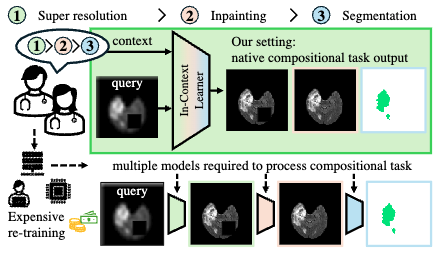
Prof. Dr. Erik Rodner is a faculty member at the University of Applied Sciences Berlin (HTW Berlin), where he serves as a Professor for Machine Learning and Data Science. He also contributes to the School of Engineering Sciences - Technology and Life. His research spans computer vision, machine learning, and biomedical applications, with a focus on learning with limited data, robust visual recognition models, and medical image analysis. He has developed innovative methods for medical diagnostics, industrial classification, and anomaly detection. Recent publications (2025-2016) highlight his expertise in visual in-context learning, semi-weakly segmentation, and active learning frameworks. He has collaborated with institutions such as ZEISS Group, Friedrich Schiller University Jena, and UC Berkeley. Scientific Awards: Award for Excellent Teaching (2023)
Maxim Romanov heads 'The Evolution of Islamic Societies' project at University of Hamburg's Asia-Africa-Institut, funded by DFG's Emmy Noether Program. Former positions include senior research fellow at KITAB Project and University of Vienna. Research reconstructs social history of Islamic world (c.600-1600 CE) through computational analysis of Arabic chronicles and biographical collections. Research Focus: Digital humanities approaches to premodern Islamic history including OCR development for Arabic manuscripts, corpus linguistics, and geospatial modeling of historical data. Technical Contributions: Developed OpenITI corpus infrastructure, al-Ṯurayyā gazetteer system, and computational methods for large-scale historical text analysis. Recent work enhances NLP for classical Arabic with OCR accuracy exceeding 90%.
Nick Thieberger is an Associate Professor in the School of Languages and Linguistics at the University of Melbourne, Australia. He also holds adjunct positions at the University of Sydney, University of Hawai'i, LaTrobe University, Australian National University, and the University of Tasmania. Thieberger serves as Director of PARADISEC (Pacific and Regional Archive for Digital Sources in Endangered Cultures), President of DELAMAN (Digital Endangered Languages and Musics Archives Network), and Deputy Director of the Research Unit for Indigenous Language at the University of Melbourne. He is a Fellow of the Australian Academy of the Humanities and leads multiple major research projects including Nyingarn and Modularised cultural heritage archives. Thieberger's primary research interests focus on language documentation, endangered languages, and digital archiving methodologies. His work bridges linguistics, digital humanities, and Indigenous language preservation, with particular emphasis on Pacific and Australian Indigenous languages. He has developed innovative approaches to linguistic archiving, including the creation of PARADISEC, which has become a model for digital language archives worldwide. His research spans theoretical linguistics, practical archiving solutions, and community-based language work, with significant contributions to Nafsan (South Efate) language documentation and Australian Indigenous language preservation. His recent publications demonstrate a clear trend toward integrating digital humanities with language documentation, particularly focusing on computational approaches to endangered language preservation. Thieberger's work increasingly addresses ethical considerations in linguistic archiving, community-led documentation models, and the development of platforms that give Indigenous communities control over their linguistic heritage. His research shows a progression from descriptive linguistics toward infrastructure development for language preservation, with growing emphasis on access protocols, data sovereignty, and the technical challenges of long-term digital preservation. Open Scholarship Award (2025) for PARADISEC team Digital Repository of Ireland Award for Research and Innovation (2024) DASSH award for Research Partnership and Social Impact (2021) Fellow of the Australian Academy of the Humanities (2021) Ludwig Leichhardt Jubilee Fellowship by Alexander von Humboldt Foundation (2013-2015) ARC Australian Postdoctoral award (2004-2007) QEII Fellowship (2009-2014) Future Fellowship (2014-2018) Thieberger has secured substantial grant funding throughout his career, including multiple ARC grants as Chief Investigator. He leads the ARC LIEF grant 'Nyingarn: a platform for primary sources in Australian Indigenous languages' (2021-2025) and another ARC LIEF grant for 'Modularised cultural heritage archives – future-proofing PARADISEC' (2022-2025). He also serves as Chief Investigator in the ARDC-funded 'Online Heritage Resource Manager to Describo Collections' project (2023-2024) and in the ARC Centre of Excellence for the Dynamics of Language (2014-2025). His grant portfolio reflects his dual focus on theoretical linguistic research and practical infrastructure development for language preservation. Thieberger directs PARADISEC, a pioneering digital archive for endangered language materials that has become an international model. He also leads the Nyingarn project team, which is developing a platform specifically for Australian Indigenous language materials. Through DELAMAN, he coordinates with other language archives worldwide to establish best practices for digital language preservation. His work with the Language Data Commons of Australia (LDACA) further demonstrates his commitment to building research infrastructure that serves both academic researchers and Indigenous communities.
Kentaro Inui is a distinguished researcher at Tohoku University , specializing in Natural Language Processing , Computational Linguistics , and Machine Learning . His work focuses on advancing language model behavior through rigorous empirical analysis, including mechanisms for detokenization , entity identification , and numerical reasoning . Inui has pioneered methods to rectify spurious beliefs in LLMs via unlearning techniques and explored the dynamics of reasoning strategies in neural models. His research addresses chat translation quality through metrics like MQM-Chat and investigates repetition neurons responsible for text generation patterns. Inui also contributes to argumentation analysis with annotation frameworks like LPAttack and develops resources such as COPA-SSE for commonsense reasoning. His work on universal graph-based relation extraction and cross-stitching architectures has established new benchmarks in NLP task performance. Inui's publications span top-tier conferences including ACL , EMNLP , and LREC , often involving collaborations with researchers like Benjamin Heinzerling and Jun Suzuki. His methodological innovations in semi-structured explanation generation , position embedding (e.g., SHAPE), and zero pronoun resolution demonstrate his focus on both theoretical and practical NLP challenges. While no direct awards or student mentorship data appear in the provided corpus, his extensive publication record (over 20 papers between 2021-2025) underscores significant contributions to NLP education tools , knowledge base integration , and dialogue system consistency . Current projects like ReCall mechanisms and numerical property encoding directions highlight his ongoing impact on model interpretability and reasoning accuracy.
Prof. Dr. Harald Ritz serves as Professor of Practical Computer Science, especially Business Informatics, at the Technical University of Central Hesse (THM) within the Department of Mathematics, Natural Sciences and Computer Science since 2003. He holds leadership roles as Chair of Examination Committees for B.Sc. and M.Sc. Business Information Systems and Spokesperson for the MNI department in the Business Informatics Working Group (AKWI). His educational background includes a Diplom in Business Informatics (Dipl.-Wirtsch.-Inform.) and doctorate (Dr. rer. pol.) from the Technical University of Darmstadt, following professional experience at SAP SI AG and a professorship at Heilbronn University of Applied Sciences. Ritz's research centers on AI-driven digital transformation for data-driven enterprises, with focus on the “Data to Decision” value chain encompassing Framing, Allocation, Analytics, and Preparation phases. His work integrates business intelligence, data warehousing, machine learning, and SAP ecosystems to address challenges in SME digitalization, operational IT management, and educational technology. Current projects emphasize AI applications in higher education, including intelligent tutoring systems and automated feedback mechanisms. Analysis of his 15 most recent publications reveals a consistent trajectory toward applied AI solutions in business contexts, particularly in intelligent chatbots for educational support, financial trading algorithms, and cloud-based data infrastructure. The research demonstrates increasing integration of no-code platforms, real-time analytics, and domain-specific AI applications across logistics, banking, and procurement sectors. No scientific awards were documented in the source materials. Professor Ritz actively supervises academic development through bachelor’s and master’s theses, doctoral research, and collaborative projects. Current initiatives include the “Winfy” AI chatbot (v4.0, 2025), AI-based feedback systems for educational content (Freiraum 2025 grant), the frits intelligent tutoring project with Prof. Kammer, and doctoral research on AI adoption in SMEs. His work bridges theoretical research with practical implementation in SAP environments and cloud platforms. He operates within THM’s MNI department infrastructure, collaborating through the Business Informatics Working Group (AKWI) and contributing to the Digital Classroom communication platform for online education.
Craig Knoblock serves as Keston Executive Director of the Information Sciences Institute (ISI) at the University of Southern California (USC), Vice Dean of the USC Viterbi School of Engineering, and Research Professor of Computer Science and Spatial Sciences. He also directs the Data Science Program and the Center on Knowledge Graphs at USC. His educational background includes a Ph.D. and M.S. in Computer Science from Carnegie Mellon University (1991, 1988) and a B.S. with honors in Computer Science from Syracuse University (1984). Knoblock's research focuses on data semantics , specializing in source modeling, schema and ontology alignment, entity and record linkage, data cleaning, Web data extraction, and knowledge graph construction. His work bridges computer science, geospatial analysis, and artificial intelligence to solve complex data integration challenges. Recent projects emphasize historical map digitization, geospatial knowledge graphs, and smart city applications. His 300+ publications demonstrate consistent contributions to knowledge graphs and geospatial data integration, with a growing emphasis on historical map analysis and urban applications. The research trajectory shows increasing interdisciplinary collaboration across computer vision, geoinformatics, and domain-specific applications. IEEE Fellow (2020) ACM Fellow (2017) AAAI Fellow (2004) Robert S. Engelmore Memorial Lecture Award (2014) Donald E. Walker Distinguished Service Award (IJCAI, 2018) Use-Inspired Research Award (USC Viterbi, 2018) As Executive Director of ISI, Knoblock oversees one of USC's premier research centers with significant federal funding. His leadership extends to directing the Center on Knowledge Graphs and the Data Science Program. While specific grant details aren't provided, his extensive publication record and leadership roles indicate substantial research funding across data integration, knowledge representation, and geospatial applications. His work bridges theoretical computer science with practical applications in historical preservation, urban planning, and resource management through collaborative projects with government agencies and industry partners. Knoblock leads the Center on Knowledge Graphs at USC, focusing on developing techniques for building and utilizing knowledge graphs across diverse domains. His team combines expertise in artificial intelligence, geospatial analysis, and data integration to tackle challenges in historical map digitization, urban applications, and resource discovery. The research group maintains strong connections with both academic and government partners through the Information Sciences Institute's extensive network.