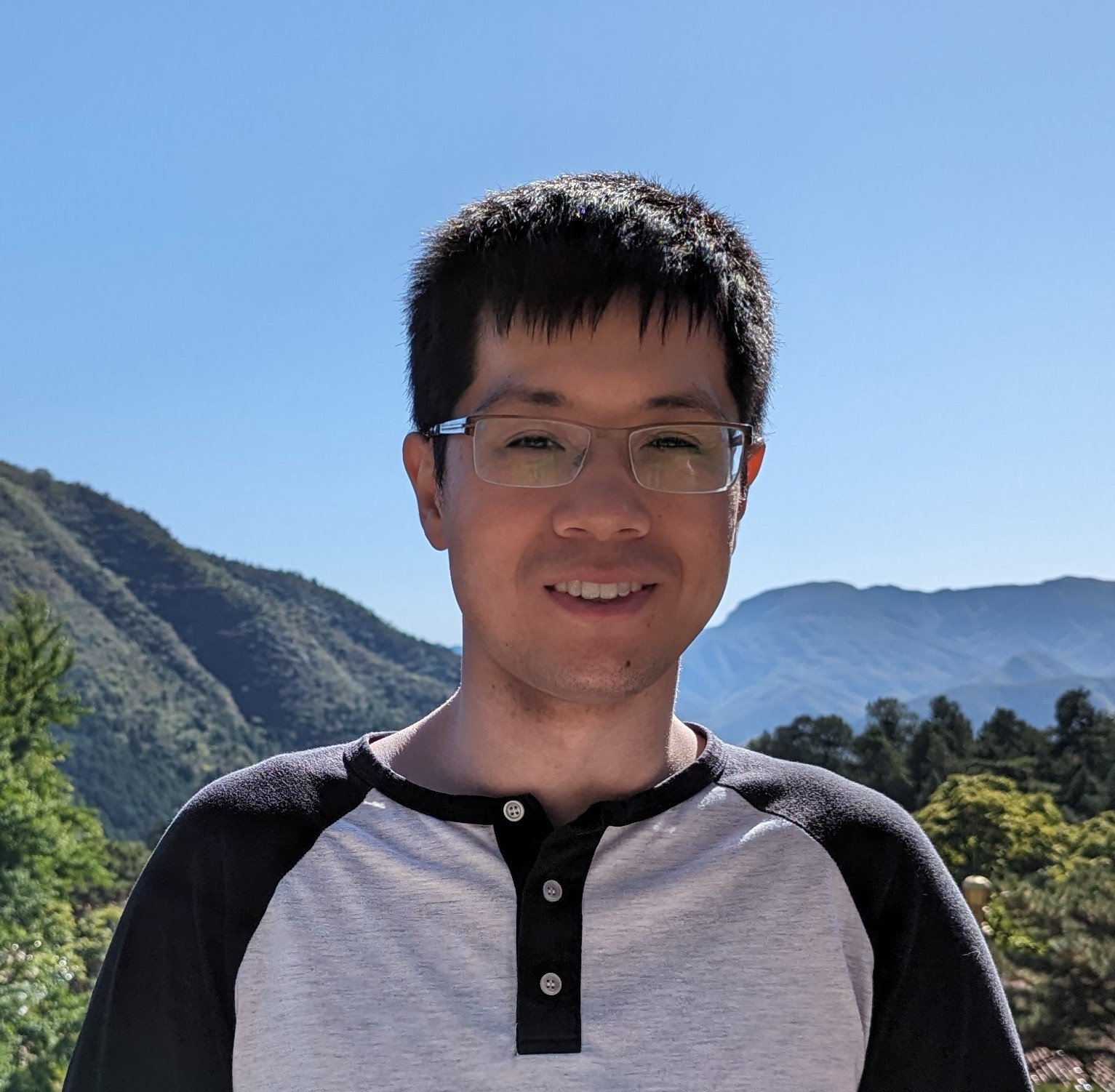
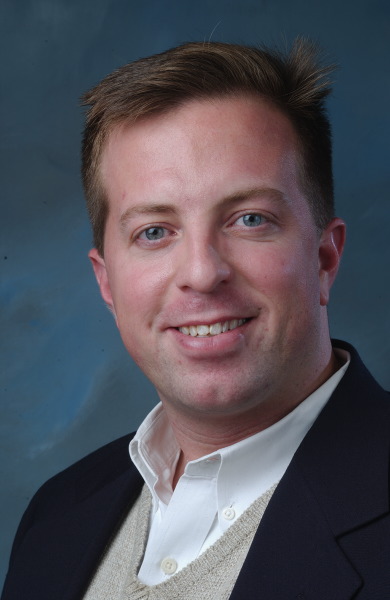
Dr. Muhammad Abdul-Mageed is an Associate Professor in the School of Information at The University of British Columbia, with joint appointments in Linguistics and an associate membership in Computer Science. He holds the Canada Research Chair in Natural Language Processing and Machine Learning. His research focuses on deep learning, socio-pragmatics, and speech/language technologies, particularly for Arabic and African languages. He leads the UBC Deep Learning & NLP Group and co-directs SSHRC-funded grants like I Trust AI and Ensuring Full Literacy. He is a founding member of the Center for Artificial Intelligence Decision making and Action and a member of the Institute for Computing, Information, and Cognitive Systems. His work spans automatic speech recognition, machine translation, computational socio-pragmatics, and low-resource language technologies. Notable projects include developing Arabic speech recognition systems, multidialectal Arabic benchmarks, and tools for African language processing. He has authored over 100 peer-reviewed papers and leads initiatives like the NADI Arabic Dialect Identification shared task and the NileChat project for culturally-aware LLMs. His research aims to create equitable, socially-aware AI systems for health, social media, and information management.
Stephen Cushman is the Robert C. Taylor Professor at the University of Virginia, specializing in American literature and poetry. His interdisciplinary work bridges Civil War studies, 19th-century poetry, and environmental literature. He earned his Ph.D. (1982), M.Phil. (1981), and M.A. (1980) from Yale University, and a B.A. from Cornell University (1978). His research explores how literary forms shape historical understanding, particularly through works like *The Generals' Civil War* (2021) and *Belligerent Muse* (2014). He has edited major volumes such as *The Princeton Handbook of Poetic Terms* (2016) and *Civil War Writing* (2019). His poetry collections include *Keep the Feast* (2022) and *Hothead* (2018), blending personal reflection with historical inquiry. Cushman has received prestigious awards including the Cavaliers' Distinguished Teaching Professorship (2014–2016) and the All-University Teaching Award (1992). His writing often intersects with Virginia’s literary landscape, as seen in *After Great Pain, Dickinson in Charlottesville* (2018). He actively engages with environmental themes in works like *Pope Francis, Laudato Si’, and U.S. Environmentalism* (2017). His articles critically analyze figures like Lincoln, Sherman, and Thoreau, while exploring modernist engagements with biblical texts and Civil War memory. He serves as a leading voice in American literary history, emphasizing the interplay between form, content, and cultural context.
Ludo Waltman serves as Scientific Director and Professor of Quantitative Science Studies at the Centre for Science and Technology Studies (CWTS) within Leiden University's Faculty of Social and Behavioural Sciences. He holds multiple influential positions including Co-chair of the Research on Research Institute (RoRI), President of ASAPbio, and Editor-in-Chief of MetaROR (MetaResearch Open Review). As an Open Science Ambassador for Leiden University, he actively promotes transparency and innovation in scholarly communication. Waltman's research spans Quantitative Science Studies, Bibliometrics, and Metascience, with particular focus on university rankings, preprint ecosystems, open access publishing models, and research evaluation frameworks. His work critically examines the infrastructure of scholarly communication, advocating for more transparent and efficient systems that better serve the research community. He has been instrumental in developing initiatives like the Barcelona Declaration on Open Research Information and advancing publish-then-review models as alternatives to traditional peer review. His recent publications reveal a consistent emphasis on systemic issues in scholarly communication, with particular attention to preprint adoption across Europe, the relationship between assessment reform and publishing reform, and the methodological transparency of university rankings. These works collectively demonstrate his commitment to evidence-based approaches for improving research infrastructure and evaluation practices. Waltman actively engages in advising and shaping research policy through his leadership roles. As Co-chair of RoRI, he helps guide metascience research that examines the research system itself. His work with MetaROR promotes innovative peer review models, while his presidency at ASAPbio advances preprint culture in life sciences. He frequently collaborates with major research funders, publishers, and infrastructure organizations to implement practical reforms in scholarly communication. Through CWTS at Leiden University, Waltman leads a research environment focused on quantitative analysis of science and technology systems. His work connects with broader initiatives like the Research on Research Institute and the Barcelona Declaration movement, creating networks that bridge researchers, funders, and infrastructure providers committed to improving research practices.
Paul Larson is a Professor of Mathematics at Miami University. His research focuses on set theory, topology, and model theory, with particular expertise in forcing axioms, descriptive set theory, and infinitary logic. He holds a Ph.D. in Mathematics from the University of California, Berkeley. His work bridges foundational mathematical logic with applications in topology and combinatorics. Key contributions include studies on canonical models under fragments of the Axiom of Choice, polar forcings, and cardinal characteristics. Larson has collaborated extensively with leading researchers such as Saharon Shelah and Jindřich Zapletal. His publications span prestigious journals like the Annals of Pure and Applied Logic and Transactions of the American Mathematical Society. Beyond research, he contributes to the academic community through editorial work and expository writings on historical developments in determinacy theory. Education: Ph.D., Mathematics, University of California, Berkeley Research interests emphasize foundational questions in set theory with applications to topology and model theory. His recent work explores advanced forcing techniques, square principles in Pmax extensions, and combinatorial properties of cardinal invariants. Publications reflect interdisciplinary engagement, including crystal structure prediction in high-pressure chemistry and operator theory in functional analysis. Despite an extensive publication record, no specific scientific awards are documented here. His advising and grant activities remain unspecified in the provided texts. Collaborations span international institutions, reflecting his role as a central figure in contemporary set theory research.
Dr. Stephan Lesker is a Researcher at the Institute for German Studies within the Faculty of Philosophy at the University of Rostock, serving as a research and teaching assistant to Prof. Dr. Lutz Hagestedt at the Chair of Modern and Contemporary Literature since April 2015. His educational background includes: Bachelor of Arts in German and Philosophy, University of Rostock (2005-2008), thesis on narrative aspects in Edgar Hilsenrath's Jossel Wassermann's Homecoming Master of Arts in German and Linguistic Communication/Communication Disorders, University of Rostock (2011), thesis on crisis experiences in Hermann Hesse and Ernst Jünger Dr. Lesker's research centers on 20th-century German literature with specialized focus on narrative theory, media staging and simulation (particularly in Rainald Goetz and Walter Kempowski), and the complex interplay between autobiography and fiction. His scholarly approach examines how literary texts negotiate historical representation and personal narrative boundaries through theoretical frameworks of simulation and mediality. Analysis of his recent publications reveals sustained engagement with German literary figures Matthias Claudius and Walter Kempowski, exploring themes of intellectual history, travel literature, and the tension between factual and fictional elements. His editorial work on the Kempowski Yearbook and contributions to Claudius scholarship demonstrate methodological consistency in examining autobiographical impulses within literary production. No scientific awards were documented. Information regarding student advising, research grants, or laboratory teams was not provided in the source materials.
Alexey Vladimirovich Vdovin is a Professor and Senior Research Fellow at the National Research University Higher School of Economics (HSE), working within the Faculty of Humanities and School of Philological Sciences. He began his tenure at HSE in 2012 and has accumulated 15 years of scientific and teaching experience. His academic journey includes a Doctor of Philology degree from HSE (2023), a PhD from the University of Tartu (2011), and his initial degree in 'Russian language and literature' from Vyatka State Humanitarian University (2007). He has held significant roles including Deputy Dean for Science at the Faculty of Humanities (2018-2020) and serves on numerous academic councils and committees. Vdovin's educational background demonstrates both depth and international perspective. After completing his undergraduate studies at Vyatka State Humanitarian University in 2007, he pursued doctoral studies at the University of Tartu, where he earned his PhD in 2011 with a dissertation on 'The concept of 'chapter of literature' in Russian criticism of the 1830-1860s.' His academic development has been enriched by numerous international experiences, including visiting researcher positions at Selwyn College, University of Cambridge (2019), Jordan Center at New York University (2017), and multiple research stays at Humboldt University in Berlin through the Aurora Erasmus Mundus program. Professor Vdovin's research focuses on Russian intellectual history, the history of ideas, the Russian Empire, Russian literature of the 19th century, and nationalism studies. His work particularly examines the formation of the Russian literary canon, representations of peasants in literature, and the relationship between literature and society. He has authored approximately 80 articles and 4 monographs on 19th-century Russian literature, culture, and criticism, with works on major figures like Turgenev, Dostoevsky, Tolstoy, Goncharov, Belinsky, Chernyshevsky, Dobrolyubov, and Nekrasov. His recent book 'Monsters at the Threshold: Dracula, Frankenstein, Viy and Other Literary Monsters' (2024) demonstrates his expanding interest in literary archetypes and cultural phenomena. Vdovin has received numerous awards and recognitions for his scholarly work, including the Moscow Government Prize for young scientists (2017), multiple 'Best Teacher' awards (2013-2015, 2017-2024), and recognition as a winner of HSE's competition for best Russian-language scientific works (2022, 2024). He has also received various letters of gratitude from HSE administration, the Faculty of Humanities, and the School of Philology for his contributions to academic life. As an advisor, Vdovin has supervised numerous student research projects, including Smirnova T.V.'s 2014 master's thesis on 'Representation of 'Russianness' and 'Otherness' in Russian essays of the 1840s.' He has also served as a curator for HSE's Personnel Reserve Program at the School of Philological Sciences and has been actively involved in dissertation councils. His research has been supported by significant grants, including a 2024-2025 Russian Science Foundation grant 'The Genre of 'Peasant Life Story' in Russian Literature Before 1861: Poetics, Plots, Socio-Cultural Functions' (No 24-28-00184) and a 2018-2020 RFBR grant on 'State and Literary Institutions: From Peter I's Reforms to the 'Great Reforms.' Professor Vdovin is actively engaged in academic communities beyond HSE, serving as editor-in-chief of the HSE preprint series 'Literary Studies' and participating in the Big Project 'Literature and Society: An Experience of Sociocultural Description.' He is also involved in public scholarship, frequently giving public lectures through platforms like 'Arzamas,' 'Postnauka,' and 'Stradarium,' and appearing on the 'Observer' television program (Culture channel). Since 2015, he has been a mentor at Maya Kucherskaya's Creative Writing School, bridging academic scholarship with creative practice.
Manoj Sachdev is a Professor in the Department of Electrical and Computer Engineering at the University of Waterloo, Faculty of Engineering. His research focuses on semiconductor devices, low-power electronics, and secure hardware systems. He leads projects in flexible electronics, nanotechnology, and radiation-hardened circuits, with applications in displays, memory technologies, and biomedical sensors. His work integrates advanced materials science with circuit design to address challenges in energy efficiency and security. Education: Not explicitly stated in provided text. Research interests span thin-film transistors (TFTs), resistive switching memories, neuromorphic computing, and physically unclonable functions (PUFs). Recent efforts include developing low-power circuits for flexible substrates and secure microprocessors. His contributions to semiconductor device physics and integration techniques have advanced applications in wearable electronics and medical diagnostics. Publications highlight innovations in low-power flip-flops, energy-efficient display drivers, and memristor-based systems. He collaborates on interdisciplinary projects combining photonics, nanoelectronics, and biomedical engineering. Awards: None explicitly listed in provided text. Grants and advising: Advises on semiconductor fabrication, secure hardware design, and radiation effects in electronics. Leads research groups focused on next-generation memory technologies and flexible integrated systems. Labs/Teams: Active in the University of Waterloo's semiconductor and flexible electronics research clusters, contributing to both academic and industry partnerships.
Jill Campbell is Professor of English at Yale University specializing in 18th-century British literature across multiple genres including novels, drama, poetry, essays, and life writing. Her scholarship examines the construction of gender and interactions between literary expression and social forms. Major publications include 'Natural Masques: Gender and Identity in Fielding’s Plays and Novels' (1995). Current book projects analyze satiric representations of Lady Mary Wortley Montagu, Lord Hervey, and Alexander Pope, and explore literary engagements with social practices like conversational wit, hymn-singing, and instructional texts. Teaching interests include practical pedagogy for reading, writing, and interpretive skill development across educational levels.
Dale Shuger is a Professor of Spanish & Portuguese in the School of Liberal Arts at Tulane University. His academic career includes roles as Visiting Assistant Professor (2012-2013), Assistant Professor (2013-2023), and Associate Professor (2018-2023) before his current position since 2023. He holds a Ph.D. from New York University (2008) and a B.A. from Harvard University (2001). Shuger’s research focuses on early modern Spanish literature, heterodox religions, and popular culture in Spain and colonial Latin America. His work bridges literary analysis with cultural history, exploring topics such as mysticism, the Inquisition, and symbolic practices in early modern texts. His publications include God Made Word: An Archaeology of Mystic Discourse in Early Modern Spain (2021) and articles on Cervantes, puppetry, and religious symbolism. His research has been supported by grants like the COR International Travel Fund and the Lurcy Award. Shuger has led Tulane’s Program in Medieval and Early Modern Studies (2014-2017) and currently serves on the School of Liberal Arts Curriculum Committee. He advises Spanish majors and has supervised one thesis in the past five years.
Wenhu Chen is an Assistant Professor at the University of Waterloo's Computer Science Department and a CIFAR AI Chair at the Vector Institute. He also holds a part-time role as a Senior Research Scientist at Google DeepMind (20% allocation). His research focuses on natural language processing, deep learning, and multimodal reasoning, with contributions to models like MAmmoTH, OpenCoderInterpreter, and VISTA. He received awards including the Canada CIFAR AI Chair (2022) and the UCSB CS Outstanding Dissertation Award (2021). Education: PhD in Computer Science from the University of California, Santa Barbara (under William Wang and Xifeng Yan). Research interests include complex reasoning, controllable GenAI, and multimodal benchmarks like MEGABench and MMMU. Grants include CIFAR AI Chair Funding (2022-2027), NSERC Discovery Fund (2023-2028), and multiple NRC Canada grants. He directs the TIGER Lab, advancing generative models in text, images, videos, and music. Recent talks include presentations on multimodal reasoning at Apple and NeurIPS workshops.
Margus Pärtlas is Professor of Music Theory and Vice Rector for Academic Affairs and Research at the Estonian Academy of Music and Theatre (EAMT). He earned his Doctorate from the St. Petersburg Conservatory in 1992 with a dissertation on Eduard Tubin's symphonies. His career includes positions as Associate Professor (1993-2003), Senior Teacher (1987-1993), and Fulbright Visiting Scholar at the University of North Texas (1999-2000). Pärtlas's research focuses on music analysis methodologies , specializing in the works of Eduard Tubin and Richard Strauss. Key areas include symphonic form, tonal transformation in Romantic music, semiotic analysis of choral works, and cultural identity in exile compositions. His publications consistently explore structural innovation in 19th-20th century European music. His recent articles reflect a thematic emphasis on Estonian musical heritage , institutional development of music academies, and analytical studies of concerti/symphonies. A significant trend involves examining how composers negotiate cultural identity through structural elements. Awards & Honors: Fulbright Visiting Scholar Grant (1999) Best Music Article Award from 'Teater. Muusika. Kino' (1992) Academic Leadership: Chaired accreditation committees internationally (Latvia, Lithuania, Russia, Armenia), serves on editorial boards of Res Musica and Eduard Tubin's Complete Works, and organized major conferences including 'Eduard Tubin 100'. Doctoral Supervision: Guided 4 PhD students in music analysis and interpretation, focusing on topics like Tubin's piano sonatas, Estonian song traditions, and analytical approaches to contemporary performance.
William S. Horton (Sid) is an Associate Professor in the Department of Psychology at Northwestern University , where he has taught since 2005 and directed the Cognition and Communication Lab (Cresap 108). Starting in September 2025, he will serve as Chair of the Department of Linguistics . His research focuses on socio-cognitive mechanisms in language use, particularly discourse pragmatics , perspective-taking , and non-literal language processing . Education: B.S. in Psychology/German from Duke University (1991), M.A. and Ph.D. in Cognitive Psychology from University of Chicago (1994/1999) Previous roles: Postdoctoral research at SUNY-Stony Brook, Cognitive Aging at Georgia Tech Research trends from his 20+ years of publications include common ground , memory processes , figurative language , and age-related communication changes . His work increasingly incorporates computational text analysis and real-time digital communication studies. Awards : Fellow, Society for Text and Discourse Students : Supervised Ph.D. theses on conversational alignment, common ground activation, and digital communication. Undergraduate honors projects explore inhibitory deficits, speech internalization, and perspective-taking in bilingualism. Cognition and Communication Lab investigates language processing in spoken/written contexts using experimental methods and computational models.
Imogen Forbes-Macphail is an Assistant Professor at the University of California, Davis, specializing in the interdisciplinary intersections of nineteenth-century British poetry and mathematical thought. Her current book project, Line and Number: Formal Problems in Nineteenth-Century Poetry and Mathematics , examines how Victorian poets and mathematicians engaged with analogous formal challenges. Victorian Poetry Caucus Representative, North American Victorian Studies Association Co-Editor (with Anna Henchman), Special Issue of Nineteenth-Century Gender Studies on women’s writing and scientific knowledge production (“Longing to Know”) Research Focus: Forbes-Macphail’s work bridges literary formalism and historical scientific methodologies, particularly exploring topics like computational proof, topological poetics, and the mysticism inherent in Victorian-era mathematical and poetic discourse. Her interdisciplinary approach highlights how mathematical concepts influenced poetic structures and vice versa. Scientific Contributions: Her publications span analyses of the Four-Color Theorem, Ada Lovelace’s literary-scientific legacy, and the gendered dynamics of 19th-century knowledge production. Key trends include the aestheticization of mathematical rigor, the role of formalism in shaping Victorian intellectual paradigms, and crossdisciplinary epistemological inquiries. Honorable Mention, “Expanding the Field” Essay Prize, Northeast Victorian Studies Association (2022) Susan Morgan Graduate Student Essay Prize, Interdisciplinary Nineteenth-Century Studies (2019) Sally Mitchell Prize, North American Victorian Studies Association (2018) Honorable Mention, Susan Morgan Graduate Student Essay Prize (2018) Sussex-Samuel Prize, Australasian Universities Language and Literature Association (2013) Forbes-Macphail’s teaching includes courses such as ENL 164: Writing Science Publications , emphasizing the synthesis of scientific and literary communication. She previously held a Junior Fellowship at the Harvard Society of Fellows (2022–25), underscoring her prominence in Victorian studies.
Kirk Sanders is an Associate Professor split between the Departments of Classics and Philosophy at the University of Illinois. He holds a PhD in Philosophy from the Joint Classics-Philosophy Program at the University of Texas at Austin. His research focuses on Hellenistic philosophy and Xenophon's Socratic writings, with notable contributions including co-editing Epicurus and the Epicurean Tradition (2011) and ongoing projects on Xenophon's texts. His work bridges classical philology, philosophical analysis, and historical context. Education: PhD in Philosophy (UT Austin) Research interests include Hellenistic philosophical traditions, Socratic literature, and ancient Greek language structures. His recent publications explore Roman Epicureanism and textual analysis of classical works like Xenophon's Apology . Publications include contributions to Mnemosyne , Illinois Classical Studies , and edited volumes. Sanders also serves as an editor for peer-reviewed journals and maintains affiliations with the Center for Hellenic Studies. His current projects involve translating and commenting on Xenophon's Socratic writings, combining philological rigor with philosophical interpretation.
Andrew J Fleck is an Associate Professor in the English and Comparative Literature Department at San José State University, affiliated with the College of Humanities and the Arts. He has been teaching since 2001, specializing in Early Modern British Literature with a focus on Dutch-English cultural relations between 1588-1688. Fleck holds a PhD from Claremont Graduate University (2000). His research explores how Dutch figures influenced English literary and cultural imagination, including studies on John Donne, Thomas Nashe, and early modern drama. He has published widely in journals like Studies in Philology and Journal of British Studies , with a particular emphasis on textual analysis, historical narratives, and cross-cultural exchanges. Fleck’s work spans from examining the role of Dutch language performances in early modern theater to analyzing the representation of national identity in texts like The Shoemaker’s Holiday . His recent publications (2013) include studies on John Donne’s engagement with astronomical themes and global adaptations of Macbeth . He maintains an active presence in academic encyclopedias, contributing entries on Milton’s Dutch connections and Renaissance authors. His scholarship bridges literary analysis with historical context, often highlighting how literature reflects political, religious, and cultural tensions of the period. Fleck’s teaching and research reflect a commitment to interdisciplinary approaches, integrating historical, linguistic, and cultural methodologies.