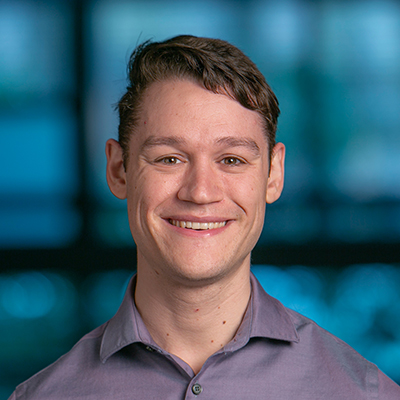
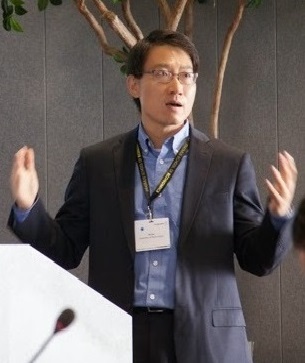
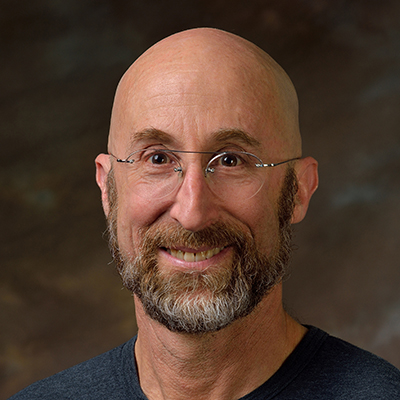
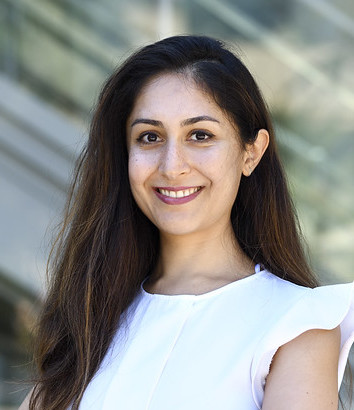
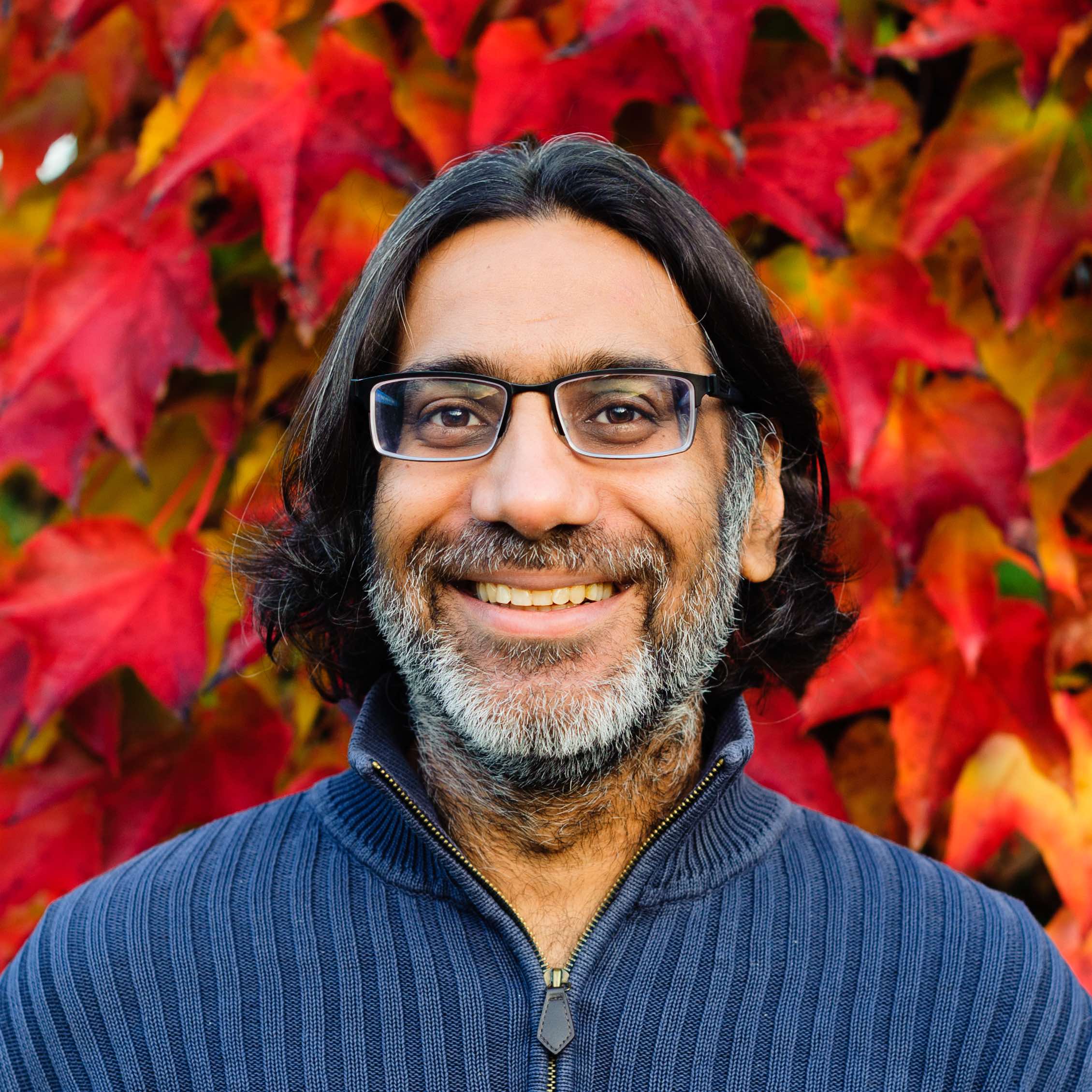
Prof. Matthias Nießner is a Professor at the Technical University of Munich , where he leads the Visual Computing Lab . Prior to this, he held a Visiting Assistant Professor position at Stanford University . His work bridges computer vision , graphics , and machine learning , focusing on 3D reconstruction , semantic scene understanding , and AI-driven video synthesis . Prof. Nießner has published over 150 works in top venues like SIGGRAPH , CVPR , and ECCV , with several receiving best paper awards (SIGCHI’14, HPG’15, SPG’18, SIGGRAPH’16 Emerging Tech). His research has garnered international media attention, including features in the New York Times , Wall Street Journal , and MIT Technological Review , as well as TV demonstrations (e.g., Jimmy Kimmel Live for Face2Face technology). Awards : TUM-IAS Rudolph Moessbauer Fellowship (2017–ongoing) Google Faculty Award (2017) Nvidia Professor Partnership Award (2018) ERC Starting Grant (2018, €1.5M) Eurographics Young Researcher Award (2019) Research Trends : 3D Gaussian Splatting for real-time rendering Neural Radiance Fields (NeRF) with mesh supervision Audio-driven facial animation via diffusion models Latent space diffusion for 3D scenes Self-supervised and zero-shot methods for 3D and image analysis As a co-founder and director of Synthesia Inc. , he drives democratization of synthetic media. His YouTube channel has over 5 million views, reflecting his impact beyond academia.
Andrew Head is an Assistant Professor at the University of Pennsylvania in the Computer and Information Science department. His research focuses on human-computer interaction, programming, and reading, particularly in developing technology for interactive reading and reasoning. He advises PhD students Alyssa Hwang, Hita Kambhamettu, Litao Yan, Jeffrey Tao, and Jessica Shi, and co-leads the Penn Human-Computer Interaction (Penn HCI) group with Danaé Metaxa. His work is published in top venues like ACM CHI, UIST, and ICSE. Research Interests: Andrew's work bridges interactive systems with programming environments, aiming to enhance how scientists and programmers interact with their tools. Key areas include AI-assisted code understanding, math notation accessibility, and medical note interpretation through interactivity. He employs user studies to identify needs and builds interactive systems to address them. Recent Article Trends: His publications emphasize systems-centric HCI approaches, integrating AI into code and document interfaces. Topics span code explanation (e.g., Ivie), property-based testing (e.g., Tyche), math notation augmentation (e.g., FreeForm), and medical informatics (e.g., Explainable Notes). Recent work also explores notebook environments (e.g., Bolt-on, Tyche) and literate programming (e.g., Colaroid). Scientific Awards: Distinguished Paper Award, ICSE 2024 Best Paper Awards at CHI (2024, 2023, 2022, 2019), UIST (2023, 2018), and others. Nominated for Best Paper at CHI 2023 and VL/HCC 2015. Advising & Grants: Andrew advises multiple PhD students and has secured significant grants, including a $1M NSF award for 'Property-based Testing for the People' (2024). His group collaborates with Penn’s MindCORE center and teams like PLClub and PennNLP. Labs & Teams: He co-leads the Penn HCI group, which works closely with other Penn research teams and labs. The group focuses on creating interactive tools that enhance scientific and programming workflows, supported by grants and cross-institutional partnerships.
Zhi Da is the Howard J. and Geraldine F. Korth Chair in Finance and Professor of Finance at the University of Notre Dame , Mendoza College of Business, Department of Finance. He completed his Ph.D. in Finance at Northwestern University’s Kellogg School of Management (2006), preceded by an M.Sc. in Financial Engineering from the National University of Singapore (2001) and a B.B.A. with First-Class Honors (1999) from the same institution. Holding editorial roles at Journal of Finance , Management Science , Review of Financial Studies and several other top journals, he is a leading voice in empirical finance research. Education Ph.D. in Finance, 2006 – Kellogg School of Management, Northwestern University M.Sc. in Financial Engineering, 2001 – National University of Singapore B.B.A. (1st Class Honors), 1999 – National University of Singapore Research Interests Zhi Da’s scholarship sits at the intersection of asset pricing , behavioral finance , and market microstructure . He investigates how investor attention, institutional trading, liquidity frictions, and information flows jointly determine the cross-section of expected returns. His work delves into retail margin trading, the role of pension-fund flows in exchange-rate dynamics, the informational content of SEC filings, and the efficiency of short-selling mechanisms. By combining large-scale data analytics, textual analysis, and structural modeling, he uncovers novel predictors of returns ranging from presidential approval ratings to real-time attention measures. Recent projects explore fractional trading ’s impact on price efficiency, hedging demand as a driver of intraday momentum, and the hidden effort problem in delegated portfolio management. These themes collectively advance our understanding of limits to arbitrage and the formation of extrapolative beliefs. Publication Landscape Spanning 2025 back to 2009, his 15 most recent articles in Journal of Finance , Review of Financial Studies , Management Science , Journal of Financial Economics , and Journal of Financial and Quantitative Analysis converge on three broad motifs: (1) micro-level trading frictions—liquidity costs, margin requirements, and short-selling constraints; (2) macro-finance linkages—exchange rates, fiscal policy, and global capital flows; and (3) information economics—attention allocation, media analytics, and regulatory disclosures. The collective evidence demonstrates that seemingly small trading or informational frictions aggregate into large, persistent cross-sectional return predictability. Honors and Awards 2017 William F. Sharpe Award for Best Paper, Journal of Financial and Quantitative Analysis Lead-article distinctions in Journal of Finance , Review of Financial Studies , and Management Science Featured coverage in SmartMoney and CNBC Teaching & Mentorship At Notre Dame’s Mendoza College, Professor Da teaches Investments (undergraduate and MBA) and Fixed Income Securities , integrating cutting-edge research insights into the curriculum. While specific advisees are not listed, his extensive co-author network (22+ recurring collaborators) attests to a vibrant mentoring environment. Laboratory & Data Resources He publicly distributes the NAT (Net Arbitrage Trading) dataset, a stock-quarter panel of arbitrage positions used in Chen, Da & Huang (2019). This resource has become a standard tool for researchers studying arbitrage capital movements.
Lyle Ungar is a Professor at the Department of Computer and Information Science at the University of Pennsylvania . He is affiliated with multiple graduate groups, including Genomics and Computational Biology in the School of Medicine , Operations, Information and Decisions in the Wharton School , and Psychology in the School of Arts and Sciences . His research focuses on explainable machine learning , deep learning , and natural language processing for psychology and medical research , analyzing social media and sensor data to understand well-being, empathy, and stress. His work spans bioinformatics , applied economics , and group decision-making . Recent publications examine LLM-based tutoring , cross-cultural translation , and AI in palliative care , showing trends in reinforcement learning , mobile health , and health data analytics . He has contributed to Google Scholar , PubMed , and DBLP with over 15 papers since 2023. Scientific Awards : 2019 Alan I. Leshner Leadership Institute Public Engagement Fellow His students include Vitoria Aquino Guardieiro , Yihao Li , and co-advised researchers like Shreya Havaldar with Eric Wong. He leads projects at interdisciplinary centers such as the Annenberg Public Policy Center , Center for Cognitive Neuroscience , and Institute for Translational Medicine .
Prof. Dr. Gülşen Eryiğit is a Professor at Istanbul Technical University within the Faculty of Computer and Informatics , Department of Artificial Intelligence and Data Engineering . She founded and directs the ITU Natural Language Processing Group , Turkey's leading team in Turkish-language NLP, and serves as Senior Action Editor for ACL RR , Director of ITU TÖMER (Turkish Language Teaching Center), and Co-Chair of the EU UniDive Cost Action WG3. Education: PhD in Computer Engineering from ITU (2007), MSc and BSc from ITU and Marmara University Research: Focuses on Natural Language Processing for Turkish, including dependency parsing , coreference resolution , multiword expressions , and language education technology Her recent work involves multilingual transfer learning , LLM applications for Turkish text simplification, and gamification for morphology education. She has received prestigious awards like the Siemens Excellence Award and TÜBİTAK's Above Threshold Award . Her research has produced 65+ publications and 29+ projects funded by EU, TÜBİTAK, and industry partners. Scientific Awards: Siemens Excellence Award (2007) Above Threshold Award (TÜBİTAK, 2015) Certificate of Appreciation (EU 7th Framework, 2012) Thank You Plaque (ITU, 2017) The ITU NLP Group under her leadership has developed Turkey's first licensed NLP software exported internationally. She collaborates with European institutions through COST actions and participates in ACL, CoNLL, and LREC conferences. Her lab focuses on language technology for Turkish , including sign language processing and social media normalization.
Ravi Ramamoorthi is the Ronald L. Graham Professor of Computer Science and Director of the UC San Diego Center for Visual Computing. He holds a faculty position in the Department of Computer Science and Engineering (CSE) and is an affiliate of the Department of Electrical and Computer Engineering (ECE). He joined UC San Diego in 2014, previously at UC Berkeley and Columbia University. He also holds a part-time appointment as a Distinguished Research Scientist at NVIDIA. His research focuses on visual computing, including rendering, computer vision, light field cameras, and physics-based modeling. Notable contributions include foundational work on spherical harmonic lighting, neural radiance fields (NeRF), and Monte Carlo rendering techniques. His work bridges graphics, vision, and signal processing with applications in sparse reconstruction, importance sampling, and real-time rendering. He teaches courses like CSE 167 (Computer Graphics), CSE 168 (Rendering), and advanced topics in computer graphics. Awards include ACM and IEEE Fellowships, the Okawa Foundation Grant, and multiple Frontiers of Science Awards. His research is supported by NSF, ONR, and industry collaborators including Adobe, Sony, and Qualcomm. Key projects include the Center for Visual Computing, Light Field research, and educational initiatives like edX MOOCs on computer graphics and rendering. His work has influenced industry tools (e.g., Pixar, RenderMan) and modern real-time rendering pipelines with denoising techniques.
Alexey Gorshkov is an Adjunct Professor at the University of Maryland (UMD) affiliated with the Joint Quantum Institute (JQI) and the Quantum Information and Computer Science Laboratory (QuICS). His primary academic role is in theoretical physics, focusing on quantum optics, quantum information science, and condensed matter physics. He leads a research group exploring quantum magnetism with alkaline-earth atoms, driven-dissipative systems, topological matter, and strongly interacting photons. His work bridges AMO (atomic, molecular, and optical) systems with high-energy and condensed matter physics, emphasizing quantum simulation and novel quantum technologies like precise clocks and quantum computers. Education details are not explicitly listed, but his research collaborations with institutions like JQI and UMD suggest advanced academic training in theoretical physics. His research interests revolve around understanding and controlling quantum many-body systems, particularly in far-from-equilibrium scenarios, entanglement dynamics, and dissipation effects. He has contributed to studies on Rydberg atoms, quantum routing protocols, and error mitigation in quantum simulators. Recent articles highlight his work on quantum protocols for verifying speedups, time-independent information flow, and entanglement dynamics. His group's achievements include demonstrating one-dimensional anyons and developing methods for correlated noise estimation with quantum sensors. Awards and grants are not explicitly mentioned in the provided text, but his prolific publication record indicates sustained research impact. Labs and teams associated with him include the JQI and QuICS, where he collaborates on experimental and theoretical projects. Graduate student and postdoc positions are available in his group, focusing on areas like quantum magnetism and topological systems. His work often involves close ties with experimental groups, emphasizing practical applications of theoretical breakthroughs.
Andreas Geiger is a Professor and Head of the Department of Computer Science at the University of Tübingen, Germany. He leads the Autonomous Vision Group (AVG) within CyberValley and is a core faculty member of the Tübingen AI Center. His roles also include PI in the ML in Science Excellence Cluster and the CRC Robust Vision, as well as ELLIS Fellow and coordinator of the ELLIS PhD program. He specializes in machine learning models for computer vision, robotics, and autonomous systems, with applications in self-driving cars, VR/AR, and scientific document analysis. Educational background: While not explicitly detailed, his positions imply a Ph.D. in Computer Science or related field. His work spans interdisciplinary collaborations with institutions like ETH Zürich, Microsoft, and the University of Bonn. Research focuses on 3D scene understanding, Gaussian splatting, generative models, and reliable autonomous systems. Notable contributions include the KITTI dataset and foundational work in neural radiance fields. Awards include the Sage 10-Year Impact Award (2024), ERC Starting Grant (2019), and IEEE PAMI Young Researcher Award (2018). Key projects include the Scholar Inbox paper recommender platform, ReSim (reliable world simulation), and advancements in 3D scene generation (e.g., UrbanCAD, PrITTI). His lab maintains a strong focus on open-source tools and datasets, such as the CARLA Route Generator. Grants and funding include support from Vector Stiftung (MINT innovation program) and EU initiatives like the ML in Science Cluster. His team collaborates internationally, with recent work presented at CVPR, SIGGRAPH, and NeurIPS.
Hao Liu is an incoming Assistant Professor of Machine Learning at Carnegie Mellon University and currently works as a research scientist at Google DeepMind. Previously, he completed his Ph.D. in Computer Science at UC Berkeley under the supervision of Pieter Abbeel. He also spent two years part-time at Google as part of the Google Brain team. His educational background includes: Ph.D. in Computer Science from UC Berkeley Hao Liu's research focuses on solving intelligence through deep learning, neural networks, and innovative learning objectives. His work spans multiple areas including large language models, reinforcement learning, world models, and attention mechanisms for long context processing. He has made significant contributions to making transformer models more efficient and capable of handling extremely long sequences through techniques like Ring Attention and Blockwise Transformers. His recent publications demonstrate a strong focus on extending the capabilities of language and vision models, particularly in handling long sequences and multimodal data. Key themes include attention optimization, tokenization efficiency, and alignment techniques. His work bridges theoretical advances with practical implementations for real-world AI systems, with multiple papers at top conferences including NeurIPS, ICML, and ICLR, often receiving spotlight or oral presentations. Hao is actively involved in open-source AI research, having contributed to projects like Koala and OpenLLaMa, which aim to make advanced language models more accessible to the research community. His work on RingAttention has been implemented as a Python package available on GitHub, demonstrating his commitment to practical implementations and community sharing.
Prof. Michael Moor is a tenure-track Assistant Professor for Medical AI at ETH Zurich's Department of Biosystems Science and Engineering in Basel. Previously, he conducted postdoctoral research at Stanford University under Prof. Jure Leskovec, focusing on medical foundation models. His work spans causal learning, multimodal AI, and sepsis prediction. Moor holds an MD from the University of Basel and a PhD from ETH Zurich's Machine Learning and Computational Biology Lab under Prof. Karsten Borgwardt. Research Interests: Generalist medical AI models Multimodal medical reasoning Zero-shot and few-shot learning Clinical causal inference Retrieval-augmented language models Sepsis prediction systems Key Achievements: Published foundational work in Nature (2023) on generalist medical AI Developed Med-Flamingo multimodal model (2023) Zero-shot causal learning framework accepted to NeurIPS 2023 (Spotlight) International sepsis prediction study with 156k ICU patients (2023) Lab Activities: Leads ETH's Medical Foundation Models group, collaborating with Stanford HAI and NASA Ames. Active in creating medical AI benchmarks like AgentClinic and developing retrieval-augmented systems like Almanac.
Baharan Mirzasoleiman is an Assistant Professor in the Department of Computer Science at the University of California, Los Angeles (UCLA), where she leads the BigML research group. Prior to joining UCLA, she was a postdoctoral research fellow in Computer Science at Stanford University working with Jure Leskovec. She received her Ph.D. in Computer Science from ETH Zurich advised by Andreas Krause. Her research focuses on addressing sustainability, reliability, and efficiency of machine learning, with particular emphasis on improving big data quality by developing theoretically rigorous methods to select the most beneficial data for efficient and robust learning. Her work spans several critical areas including data efficiency, robustness against label noise and data poisoning, and addressing spurious correlations in machine learning models. She has made significant contributions to understanding how neural networks exploit spurious features that correlate with certain categories during training but fail to generalize to minority groups. Professor Mirzasoleiman's research demonstrates how theoretically grounded approaches can lead to practical improvements in model robustness and efficiency across various applications including medical diagnosis and environmental sensing. Her work has resulted in the development of the SpuCo package, a Python library that provides modular implementations of state-of-the-art methods to address spurious correlations, along with controllable synthetic datasets like SpuCoMNIST and large-scale vision datasets like SpuCoAnimals. She has received numerous prestigious awards including the ETH medal for Outstanding Doctoral Thesis, being selected as a Rising Star in EECS by MIT, an NSF Career Award, a UCLA Hellman Fellows Award, and an Okawa Research Award. Her students have also received multiple fellowships and awards including Amazon Doctoral Student Fellowships and an OpenAI Superalignment Fast Grant. Professor Mirzasoleiman actively contributes to the academic community through invited talks at major conferences including ICML, ICLR, NeurIPS, and KDD, as well as co-organizing workshops on new frontiers in adversarial machine learning and sparsity in neural networks. She has developed educational resources including tutorials on Foundations of Data-efficient Learning presented at ICML 2024.
Pranav Anand is a Professor in the Department of Linguistics at the University of California, Santa Cruz (UCSC). He currently serves as the Faculty Director of the Humanities Institute at UCSC since July 2023. His research focuses on the interplay between context, interpretation, and grammatical perspective, particularly in areas like de re/de se contrasts, evaluative predication, and indexical shift. He has contributed to studies on narrative structures, evidential restrictions, and the syntax-semantics interface in sluicing. Dr. Anand has taught a variety of courses including Ling 119: Narratives , Ling 231: Semantics A , and special topics like Invented Languages: From Elvish to Esperanto . His work bridges theoretical linguistics with computational methods, evidenced by collaborations in projects such as the Santa Cruz sluicing dataset and analyses of political discourse in online commentary. His research has been published in journals like Linguistics and Philosophy , Language , and Discourse and Society , with a focus on semantics, pragmatics, and narrative linguistics. He has also contributed to computational linguistics initiatives, including the development of annotated corpora for sentiment analysis and argumentation studies. Dr. Anand's academic contributions span both theoretical exploration and applied computational linguistics, reflecting his interdisciplinary approach to understanding language structure and usage.
Angel Xuan Chang is an Associate Professor at Simon Fraser University's School of Computing Science, affiliated with labs including 3DLG, GrUVi, SFU NatLang, SFU AI/ML, and VINCI. He holds a Canada CIFAR AI Chair and was a TUM-IAS Hans Fischer Fellow (2018-2022). His research bridges natural language processing (NLP), 3D scene understanding, and embodied AI, focusing on language-grounded 3D generation and biodiversity monitoring via DNA barcodes. Recent work includes NuiScene (unbounded outdoor scene generation), ViGiL3D (3D visual grounding dataset), and CLIBD (vision-genomics biodiversity analysis). He advises students in projects like BIOSCAN-5M insect dataset and embodied AI navigation. His 2025 highlights include multiple ICCV and ICLR papers, workshops at ICML and CVPR, and a CRV invited talk. Education: Ph.D. in Computer Science from Stanford University (2014), advised by Chris Manning. Previous roles include visiting research scientist at Facebook AI Research and researcher at Eloquent Labs.
Martin Kern is the Joanna and Greg Zeluck ’84 P13 P18 Professor in Asian Studies at Princeton University. He specializes in ancient Chinese literature, philology, and textual studies, with a focus on poetry, ritual, and cultural memory. Kern co-edits T'oung Pao and directs the "International Center for the Study of Ancient Text Cultures" at Renmin University, Beijing. Education: Ph.D. in Sinology, Cologne University M.A. in Sinology, Cologne University His research spans early Chinese rhetoric, authorship debates, manuscript analysis, and the intersection of writing/orality. He has led Princeton's "Comparative Antiquity" initiative (2018–2022) and co-directs the Princeton-Venice Summer School in Classical Chinese. Recent publications include studies on the Classic of Poetry , Chuci , and Zuozhuan , emphasizing newly discovered manuscripts and their impact on understanding ancient Chinese textuality. His work often bridges philological rigor with comparative theoretical frameworks. Scientific Awards: Member of the American Philosophical Society President of the American Oriental Society (2023–2024) Kern's editorial roles include co-editing the monograph series Studies in the History of Chinese Texts and the Handbook of Oriental Studies: Section 4 China . He has held leadership positions in major academic initiatives on ancient China.
Yonatan Bisk is an Assistant Professor at Carnegie Mellon University within the Language Technologies Institute (with courtesy appointment in Robotics Institute). His research bridges Natural Language Processing , Robotics , and Embodied AI , focusing on language grounding, theory of mind, and multimodal interaction. Education : Ph.D. in Computer Science from University of Illinois at Urbana-Champaign Postdoctoral Experience : USC ISI, University of Washington, Allen Institute for AI Industry Appointments : Microsoft Research, Meta AI His research emphasizes embodied language systems and social intelligence in AI . Recent projects include WebArena for autonomous agents, SOTOPIA for social reasoning, and HomeRobot for open-vocabulary manipulation. He leads the REAL Center (Robotics, Embodied AI, and Learning) to foster interdisciplinary collaboration. Key scientific awards include selection for the DARPA ISAT Study Group (2024). He teaches courses like "Talking to Robots" and "Multimodal Machine Learning" while serving as area chair/editor across NLP, Robotics, and ML communities.