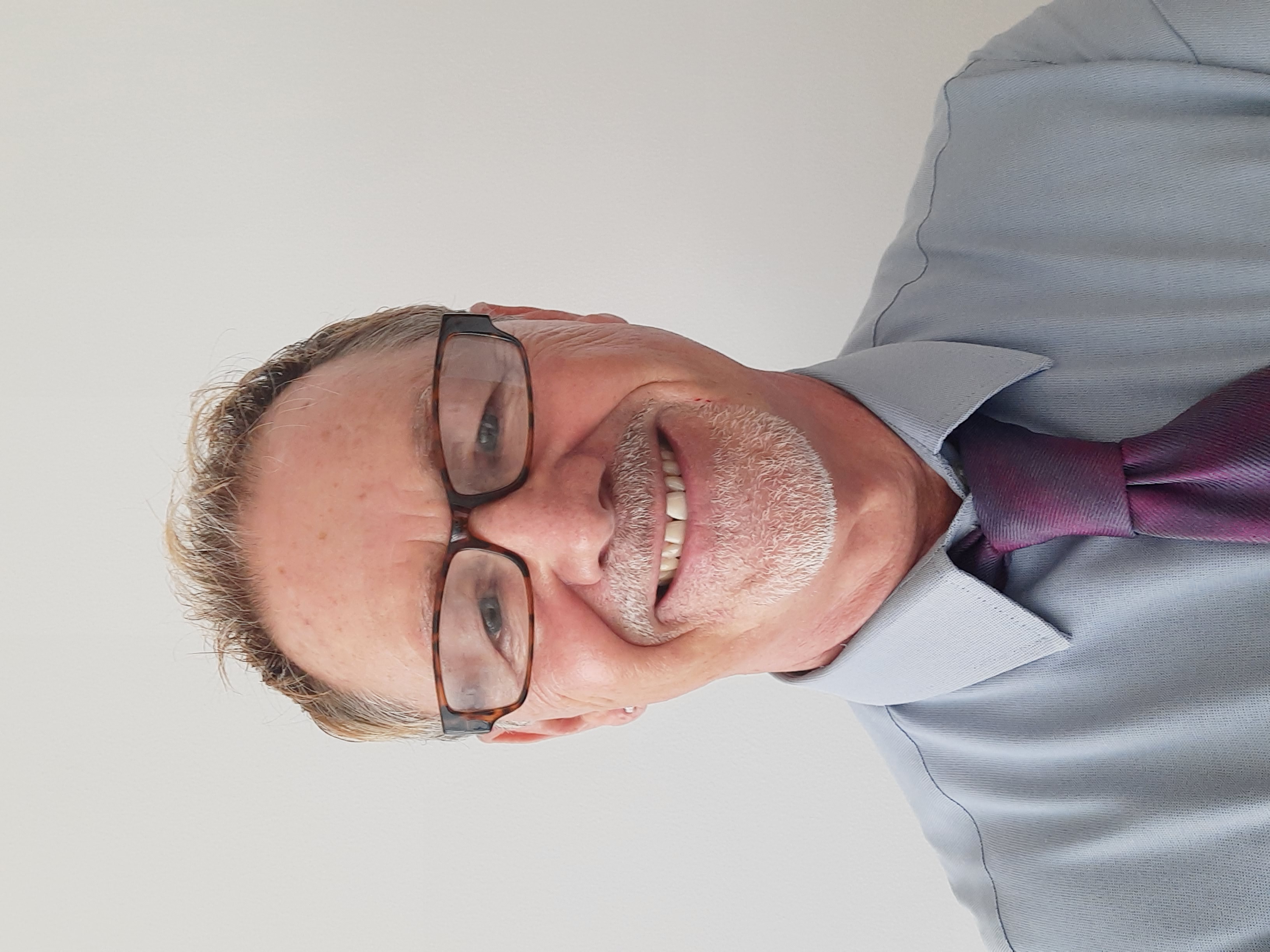
Romain Raveaux is an Associate Professor at the LIFAT Computer Science Laboratory, University of Tours, affiliated with Polytech Tours. His research focuses on Image Analysis, Machine Learning, Structural Pattern Recognition, Graph Matching, Graph Neural Networks, Discrete Optimization, Reinforcement Learning, and Transfer Learning . Email: romain.raveaux@gmail.com , romain.raveaux@laposte.net Address: 64 av. Jean Portalis, Tours, France, 37200 Phone: +33 (0)2 47 36 14 27 Research Interests Graph Matching and Neural Networks Discrete Optimization for Pattern Recognition Transfer Learning in Graph-Based Models Historical Document Analysis Scientific Trends His recent work bridges Graph Neural Networks with Mixed-Integer Programming , focusing on Image Semantic Segmentation and Graph Cycle Detection . Earlier studies emphasize Genetic Algorithms for graph classification and Graph Edit Distance optimization in pattern recognition.
Sara Witmer is an Associate Professor of School Psychology at Michigan State University (MSU), holding a Ph.D. from the University of Minnesota and National Certified School Psychologist (NCSP) certification. She is affiliated with the College of Education’s Department of Counseling, Educational Psychology & Special Education (CEPSE). Her roles include Principal Investigator for Project ETUDE (funded by the Institute of Educational Sciences) and Project Director for Project Hi2LD (funded by the U.S. Office of Special Education and Rehabilitative Services), which focus on improving assessment practices and reducing graduate study costs for school psychology and special education students. Education: Dr. Witmer earned a Ph.D. in School Psychology from the University of Minnesota. She also holds an NCSP credential, reflecting her specialization in school-based psychological services. Research Interests: Her work centers on enhancing instructional decision-making through equitable assessment practices, particularly for at-risk students, students with disabilities, and English language learners. Key themes include validity and fairness in testing, accommodation use, and the integration of accessibility tools into large-scale accountability systems. She employs empirical and mixed-methods approaches to address disparities in educational measurement. Projects & Grants: Leading Project ETUDE (IES-funded) and Project Hi2LD (OSE-funded), she investigates testing accommodations’ effectiveness and develops interdisciplinary training programs. These initiatives aim to improve outcomes for K-12 students and reduce barriers to graduate education. Labs/Teams: While no specific lab is mentioned, her research aligns closely with MSU’s CEPSE department and interdisciplinary efforts within the College of Education, such as the CREATE for STEM Institute. She collaborates with national and international agencies to advance inclusive assessment policies.
Dr. Zheng Yuan is a Senior Lecturer (Associate Professor) in Natural Language Processing at the School of Computer Science, University of Sheffield. He holds affiliated positions at the University of Cambridge and King's College London, and is a Fellow of Trinity College, Cambridge. His research focuses on NLP applications in education, healthcare, and multilingual systems. Education: PhD in Natural Language Processing, University of Cambridge MPhil in Advanced Computer Science, University of Cambridge BSc(Eng) from Queen Mary University of London Research: Dr. Yuan's work spans educational NLP, multilingual systems under low-resource conditions, and explainable machine learning. His group develops technologies for grammatical error correction, automated assessment, and cross-lingual applications, with significant contributions to computer-assisted language learning and computational creativity. Publications: Recent works (2023-2025) demonstrate strong focus on educational NLP, multilingual systems, and LLM evaluation. Key themes include grammatical error correction for code-switched languages, creativity assessment frameworks, and robust evaluation methods for large language models across diverse linguistic contexts. Awards: Winning systems at SemEval-2021 and CoNLL-2014 Fellowship at Trinity College Cambridge Fellow of Higher Education Academy Grants & Advising: Principal Investigator for Royal Society grant 'Large Language Models as Agents for Intelligent Language Tutoring' (2025-2027). Actively supervises PhD students in NLP and machine learning, welcoming new research collaborations. Affiliations: Member of Alan Turing Institute (Data-Centric Engineering), King's Institute for AI, and ACL committees. Organizes major NLP workshops including ACL/NAACL BEA workshops and AIED tutorials.
Dr. Heejun Kim is an Assistant Professor at the University of North Texas. He holds a Ph.D. from the University of North Carolina at Chapel Hill, an M.S. from the University of Illinois Urbana-Champaign, and a B.S. from Yonsei University. His research focuses on Text Mining, Machine Learning, Information Retrieval, Health Informatics, and Geographic Information Science. His work bridges computational methods with societal challenges, particularly in public health and social media analysis. Key research interests include analyzing health information credibility on social media, pandemic-related social dynamics, and designing sociotechnical systems for underprivileged communities. Dr. Kim’s recent studies investigate racial discrimination discourse on platforms like YouTube, mental health support mechanisms among college students, and the impact of information literacy on health decisions. His publications reflect a focus on pandemic-era social behaviors, digital health communication, and algorithmic solutions for biomedical literature analysis. Notable works include studies on anti-Asian hate speech during the pandemic and the role of social networks in Black American college students’ connections.
Dr. sc. hum. Richard Zowalla is a researcher at the Faculty of Computer Science, Heilbronn University, specializing in health informatics and software engineering. He works at the Interdisciplinary Center for Machine Learning (ZML) and focuses on health web analysis, text mining, and open source software. Education: Doctorate in human sciences (Dr. sc. hum.), dissertation on German health web data analysis (2022) Research interests include health information systems, focused web crawling, text mining, and software quality management in agile environments. His work bridges healthcare and computer science through data-driven analysis of online medical resources. Publication trends show expertise in health web readability, multilingual health data comparison, and AI-driven service innovation. His articles emphasize practical applications of machine learning and data visualization in healthcare contexts. Teaching: Software Lab (2016-2025), Advanced Programming Techniques (2020-2024), Database Internship (2014-2025), Distributed Systems (2016-2017) Labs & Teams: Active member of the Interdisciplinary Center for Machine Learning (ZML) at Heilbronn University, contributing to collaborative research in health data analysis.
Dr. Bogumiła Hnatkowska serves as Assistant Professor at the Institute of Informatics within the Faculty of Computer Science and Management at Wrocław University of Science and Technology. Her academic career spans software engineering research and education with emphasis on model-driven approaches and quality assurance methodologies. Her research interests include: Software Engineering Analysis and Design of Information Systems Software Development Methodologies Model-Based Software Development Domain-Specific Languages Software Quality Recent publications (2021-2025) reveal concentrated research in model-driven engineering, business rules processing, and ontology integration. Key trends involve textual specification languages for use-cases, automated test generation mechanisms, and formal transformations for ontologies – demonstrating consistent application of theoretical rigor to practical software development challenges across agile and model-based contexts. Scientific Awards: No scientific awards were mentioned in the provided text Dr. Hnatkowska has served as principal investigator for multiple State Committee for Scientific Research grants including UML extensions for multimedia systems (2000), real-time systems analysis (2005), and model-driven database design (2008). Her teaching portfolio includes Software Engineering, Software System Development, and Advanced Programming Techniques courses where she supervises team projects providing students with hands-on development experience. She actively participates in partner programs including Visual Paradigm's Academic Training Partner Program (providing UML/BPMN/agile tools) and IBM Academic Initiative, supporting her research in software engineering methodologies and educational tool development.
Daniel Braun is a Researcher at the Digital Society Institute , affiliated with Technical University of Munich . His work bridges Artificial Intelligence , Natural Language Processing , and LegalTech , focusing on automated legal assessment of contracts, ethical dimensions of AI, and consumer protection in the digital era. Education: Bachelor in Artificial Intelligence at Saarland University PhD in Automated Semantic Analysis, Legal Assessment, and Summarization of Standard Form Contracts at Technical University of Munich Master in Creating Textual Driver Feedback from Telemetric Data at University of Aberdeen Research Interests revolve around applying NLP to legal and engineering domains. Key areas include machine learning for contract analysis , ethical AI frameworks , and consumer protection through automated systems . His recent work explores adversarial attacks on text detectors, lexical alignment in chatbots, and robustness in generative AI detection. Publications (2024-2025) highlight advancements in German consumer contract analysis , disagreement handling in legal datasets , and regulatory debates around AI . Notable outputs include the AGB-DE corpus and studies on black-box neural text detectors . Technical Expertise spans data mining , process mining , and domain-specific NLP . He has contributed to smart contract analysis , conversational AI , and language models for engineering and legal contexts .
David M. Howcroft is an Advanced Research Fellow in Natural Language Generation at the School of Natural and Computing Sciences, University of Aberdeen . He previously held research fellowships at Edinburgh Napier University, Heriot-Watt University, and Saarland University, contributing to major NLP projects including ASICA, NLG for Low-Resource Domains, and Madrigal. His work bridges computational linguistics, psycholinguistics, and statistical modeling. His research focuses on natural language generation , particularly in low-resource settings . He develops machine learning methods for data-to-text generation, creates novel corpora (e.g., for Scottish Gaelic), and improves human evaluation practices via crowdsourcing and rigorous statistical analysis. A key interest is the application of Bayesian nonparametrics and ordinal mixed-effects models to better understand and evaluate generated text. He also explores readability, referring expressions, and AI planning for rule-based NLG systems. His recent publications reveal a strong trend toward methodological rigor and inclusivity in NLP. He advocates for better evaluation standards, transparency in metric usage, and participatory design in NLP research. His work spans corpus development , evaluation methodology , low-resource language support , and human-centered NLP . He has led efforts to create datasets for under-resourced languages and to standardize best practices in human assessment. He has received small grant funding for projects such as Scottish Gaelic Generation for Exhibits and has contributed to software tools for data collection and evaluation. He mentors and collaborates widely, though no formal advisees are listed. He has developed backend systems and Android apps for healthcare applications, notably in melanoma patient support via the ASICA project. He is actively involved in research labs and teams including: ASICA Project Team (University of Aberdeen) NLG for Low-Resource Domains (Edinburgh Napier University) Madrigal Project (Heriot-Watt University) SFB 1102 Project A4 (Saarland University) Language Science and Technology (LSV, Saarland University) His scientific contributions are widely disseminated through top-tier venues such as ACL, EMNLP, and INLG. He maintains an active online presence with tutorials and technical blog posts on tools like OpenCCG and Treex.
Dr. Sena Chae is an Assistant Professor in the College of Nursing at the University of Iowa. She holds a PhD in Nursing from the University of Iowa, an MS in Health Informatics from the same university, an MSN from Yonsei University (South Korea), and a BSN from CHA University (South Korea). Her research focuses on nursing informatics, data-driven solutions for symptom prediction, standardized nursing terminology (NIC/NOC), and symptom science. She has developed algorithms to extract symptom data from clinical notes and explores relationships between chronic conditions and symptoms in acute leukemia patients. Dr. Chae’s work emphasizes leveraging health informatics for risk prediction in home healthcare, including models for hospitalization and emergency department visits. Her research integrates machine learning, natural language processing, and clinical decision support systems to improve patient outcomes. Notable projects include clustering cancer patients by symptom trajectories and validating nursing outcome classifications for cardiac disease. Education: PhD in Nursing, University of Iowa MS in Health Informatics, University of Iowa MSN in Nursing Education & Administration, Yonsei University BSN, CHA University Her articles highlight trends in predictive analytics for home healthcare risks, natural language processing of clinical notes, and symptom trajectory modeling. She has contributed to improving the readability of mHealth apps for heart failure patients and explored concordance between POLST documentation and care practices. Labs/Teams: Collaborates with the Center for Nursing Classification and Clinical Effectiveness (CNC) and the Iowa Center for Advancing Multimorbidity Science (CAMS). Grants & Future Work: Focuses on innovativeness in healthcare progress through academia-practice collaboration, fairness in AI models, and symptom science in oncology and chronic disease management.
Frank Pallas is a Professor at the Paris Lodron University of Salzburg, affiliated with the Faculty of Digital and Analytical Sciences. His research focuses on Privacy Engineering and Policy-Aligned Systems (PEPSys), integrating technical and legal aspects of emerging technologies. Education: Dipl.-Inform. and Dr.-Ing. in Computer Science from TU Berlin His work emphasizes techno-legal privacy engineering , policy-alignment mechanisms , and experimental assessment of privacy techniques , addressing anonymity, utility metrics, and societal impacts. Recent publications explore data anonymization, GDPR compliance, and privacy in distributed systems. Key projects include co-leading Salzburg's EXDIGIT initiative for digital sciences. Activities span organizing international workshops on privacy engineering, media contributions, and third-mission engagements like public lectures on digital privacy.
Dr. Procheta Sen is a Lecturer in Computer Science at the University of Liverpool's Faculty of Science and Engineering, Department of Computer Science, where she joined in 2022 as part of the Natural Language Processing research group. Her work focuses on developing transparent, fair, and accessible AI language models through explainability research. She earned her PhD from Dublin City University, Ireland (2021) under supervisor Gareth J.F. Jones, with affiliation at ADAPT Centre Ireland. Prior to Liverpool, she conducted postdoctoral research with Emine Yilmaz in University College London's Web Intelligence Group. Dr. Sen's research spans three explainability categories: post-hoc methods (feature attribution, counterfactuals), mechanistic interpretability (neural network circuit mapping), and intrinsic interpretability (human-readable model design). She targets diverse end-users including clinicians, legal experts, and laypersons, with applications in bias mitigation and socially responsible AI systems. Her work bridges Natural Language Processing, Machine Learning, and Information Retrieval to address real-world challenges in transparency and equity. Analysis of her 2023-2025 publications reveals dominant trends in LLM bias analysis, legal document processing, and adaptive conversational systems. Key themes include mechanistic interpretability for bias detection, retrieval-augmented generation for dialogue systems, and multilingual knowledge extraction—demonstrating consistent focus on making AI both technically robust and socially beneficial across domains like law and finance. Dr. Sen actively advises PhD student Lingfang Li (AAAI 2025 accepted work) and emphasizes compassionate talent development. Her open-source research has been deployed in legal sector applications, and she organizes the annual NLP for Social Good symposium fostering interdisciplinary collaboration for responsible AI. She leads initiatives including the 2025 virtual NLP for Social Good Symposium and collaborates with institutions like Nokia Bell Labs Cambridge, maintaining active research momentum in transparent AI systems.
Anna Sågvall Hein is a Professor in Computational Linguistics at Uppsala University's Department of Linguistics and Philology. She concurrently serves as CEO and Head of the Board of Convertus AB, a Uppsala University spin-off specializing in machine translation technology since its 2006 founding. Her research centers on Machine Translation and Computational Linguistics , with significant contributions to Swedish-Turkish language pair systems, parallel corpus development, and grammar checking methodologies. Her work bridges theoretical linguistics with industrial applications, particularly in resource-scarce language scenarios and controlled language environments. Publication analysis reveals consistent focus on machine translation architecture evolution, parallel corpus construction for minority languages, and human-computer interaction in mobile text processing. Her MATS system development demonstrates a 'glass box' transparency approach to translation engineering. She leads major initiatives including the PLUG project (Parallel Corpora in Linköping, Uppsala, Göteborg) and the Supporting Research Environment for Swedish and Turkish. Her industry role at Convertus AB drives commercialization of academic language technology research through practical machine translation solutions.
Regina Stodden is a Research Fellow at the Department of Computational Linguistics, Heinrich Heine University Düsseldorf, since January 2019. She is affiliated with the NRW Research College for Online Participation (second funding phase) and works under the supervision of Prof. Dr. Marc Ziegele. Education: B.A. in Educational Science, Text Technology, and Computational Linguistics from Bielefeld University M.A. in Information Science and Language Technology from HHU Düsseldorf Her research focuses on automatic text processing , particularly text simplification for online discussions. This includes: Enabling participation for people with limited German proficiency Reducing manual workload in text analysis Exploring accessibility in Open Data portals She has contributed to tools like TS-ANNO for corpus annotation and EASSE-DE for simplification evaluation, with recent work extending to CEFR-based language proficiency assessment . Her research intersects Natural Language Processing , Machine Learning , and Usability Studies , often addressing accessibility challenges in digital participation. Scientific awards: No explicit awards mentioned. Advising and grants: Participates in the NRW Research College for Online Participation funding program and collaborates under Prof. Dr. Laura Kallmeyer's supervision. Her work involves grants related to text simplification for online participation processes.
Raquel Martínez Motos is a Professor at the University of Alicante, affiliated with the Faculty of Philosophy and Letters and the Department of English Philology. She holds a PhD in Translation and Interpreting from the University of Alicante, with academic credentials including a Master’s in Terminology from Pompeu Fabra University, a Postgraduate Diploma in Terminology and Professional Needs, a Bachelor of Arts in Applied Languages from Thames Valley University, and a Licentiateship in Translation and Interpreting from the University of Granada. Doctorate: Translation and Interpreting (2016), University of Alicante MSc: Terminology (2008), Pompeu Fabra University Diploma: Applied Linguistics (2006), Pompeu Fabra University Her research focuses on translation pedagogy, legal translation, gender perspectives in translation, and readability analysis of pharmaceutical texts. She has contributed to the integration of interdisciplinary approaches in lexicography and lexicology, particularly in specialized domains like legal and medical translation. Her work also addresses challenges in adapting curricula to the Bologna Process and enhancing formative assessment strategies in translation education. Recent publications highlight her exploration of gender-blindness in translation classrooms, formative evaluation techniques, and the impact of translation on pharmaceutical text usability. She actively participates in research groups such as Lexicology of Languages for Specific Purposes and Lexicon Teaching (LEXESP) and Professional and Academic English (IPA) , focusing on both theoretical and applied dimensions of translation.
David Francis Dalton is a Senior Lecturer in the General Education Unit at Khalifa University of Science and Technology, Abu Dhabi, UAE, where he has taught English for Academic Purposes and Intercultural Communication since 2018 following the merger of the Petroleum Institute with KU. With over two decades of international teaching experience across Scotland, England, Spain, Mexico, and the UAE, he specializes in curriculum design for multilingual engineering contexts and academic communication development. His educational background includes: MA in Applied Linguistics, University of Sheffield Postgraduate Diploma in Education, University of Sheffield Licentiate Diploma in TESOL, Trinity College London Diploma in Youth and Community Work, Manchester University B.Soc.Sc. Joint Honors, Birmingham University Certificate in TESOL, Sheffield Hallam University Dalton's research centers on English for Academic Purposes within engineering education, with emphasis on critical reading strategies, academic integrity, and intercultural communication. His work explores how Arab engineering students develop academic literacy in English-medium environments and investigates plagiarism perceptions through cultural lenses. Current research focuses on Flipped Learning methodologies and compliance frameworks in higher education. His publication portfolio reveals consistent contributions to engineering education communication, particularly in cross-cultural academic writing, critical reading pedagogy, and team-based learning approaches. Key trends include adapting communication curricula for multilingual engineering students, developing plagiarism prevention strategies sensitive to cultural contexts, and creating engagement frameworks for technical communication courses. Dalton has played pivotal roles in establishing institutional resources including the Petroleum Institute Writing Centre and Project-X for student engagement. His teaching methodology emphasizes learner-centered classrooms with extensive use of problem-based learning in Freshman Communications and Engineering Design courses. He has delivered teacher training across multiple institutions including Sheffield University, University of Valencia, and British University in Dubai.