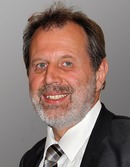
Professor Stefan Mittnik, PhD leads research and teaching at LMU Munich's Seminar for Financial Econometrics. His expertise spans econometric modeling, financial risk assessment, and time-series analysis, with applications in FinTech innovation and market volatility forecasting. He has authored foundational texts including Financial Econometrics (Wiley, 2007) and Stable Paretian Modeling in Finance (Wiley, 2000), plus over 100 scholarly articles analyzing financial systems through advanced statistical frameworks. His current investigations focus on climate risk economics, operational risk dependencies, and multivariate GARCH modeling under non-normal distributions.
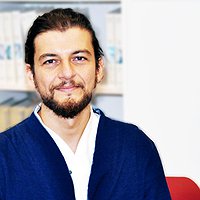
Massimo Leone is a Professor of Semiotics at the University of Turin (Department of Philosophy) and the University of Shanghai, with extensive international academic engagements across Europe, Asia, Africa, and the Americas. His educational background includes: Ph.D. in Religious Studies, Ecole Pratique des Hautes Etudes Sorbonne, Paris, France Ph.D. in Art History, University of Fribourg, Switzerland M.Phil. in Text and Image Studies, Trinity College Dublin, Ireland Leone's research centers on semiotics, particularly visual and cultural semiotics, examining historical intersections of religious communication and image theory. His work analyzes early modern visual systems of religious encounter, comparing evangelization methods among Jewish communities in Rome and indigenous populations in Mesoamerica. This bridges art history, religious studies, and semiotic theory to explore how images function in intercultural religious contexts. He has been recognized with several scientific awards: Endeavour Research Award Faculty Research Grant from University of Toronto Eadington Fellowship KHK Visiting Research Fellowship Leone has secured competitive research funding enabling collaborations at institutions including CNRS (Paris), CSIC (Madrid), École Normale Supérieure (Lyon), and Ludwig-Maximilians-Universität München. His international fellowships demonstrate significant cross-institutional recognition, facilitating comparative studies on visual religious communication across diverse cultural contexts.
Dmitry Kobak is a group leader in the Department of Data Science at the Hertie AI Institute, University of Tübingen, Germany. He holds the title of Privatdozent at the Faculty of Computer Science and served as a visiting professor (Vertretungsprofessor) at Heidelberg University during the 2023/24 winter semester. His research focuses on machine learning and data science applications in biology, including self-supervised learning, dimensionality reduction, and topological data analysis. He is also engaged in statistical forensics, analyzing electoral fraud, war fatalities, and excess mortality patterns. Education: BSc in Computer Science (St. Petersburg ITMO University), MSc in Theoretical Physics (St. Petersburg State University), PhD in Computational Motor Control (Imperial College London). Postdoctoral work with the Machens Lab (Champalimaud Institute) and Mehring Lab (Freiburg University/Imperial College London). Teaching: Introductory machine learning courses for MSc students in Tübingen and BSc students in Heidelberg. Recent courses include Einführung ins Machinelle Lernen (German) and Transformers, Large Language Models, and their use in Physics (English). Research supervision includes postdocs (Sebastian Damrich), PhD students (Rita González Márquez, Niklas Böhm), and multiple MSc students. Active in reviewing for top venues like NeurIPS, ICML, and Nature journals. Labs/Teams: Member of the ELLIS Society, Cluster of Excellence «Machine Learning for Science», and IMPRS-IS associated scientist. His work bridges machine learning theory with practical applications in neuroscience, forensics, and biomedical research.
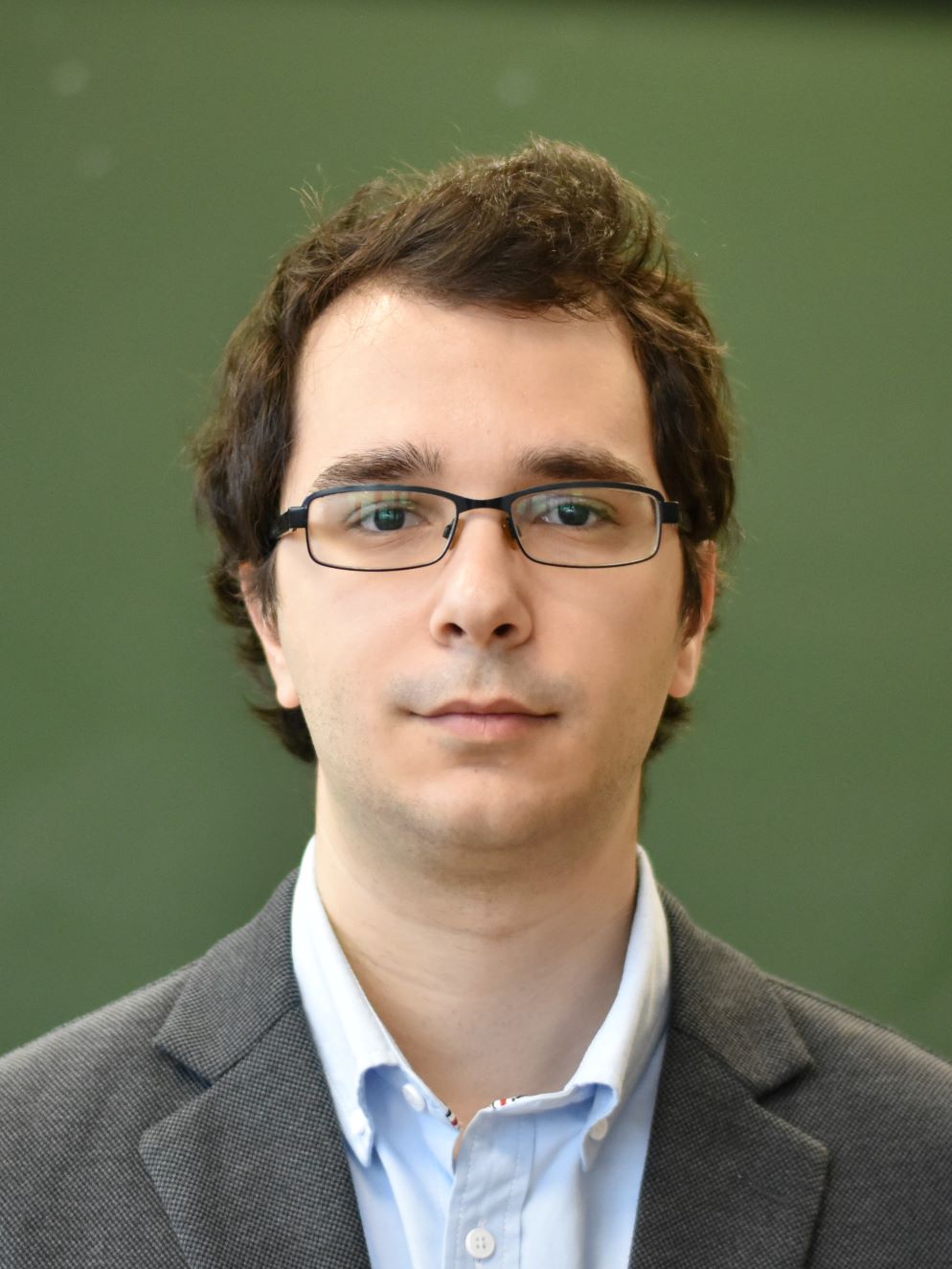
Yuliang Xiu is a tenure-track Assistant Professor at Westlake University's AI department, leading the 远兮实验室 (endless.do) as PI. His research focuses on democratizing human-centric digitization through advancements in computer vision, graphics, and machine learning. Previously, he completed his Ph.D. at Max Planck Institute for Intelligent Systems under Prof. Michael J. Black, funded by the CLIPE Marie Sklodowska-Curie fellowship. His work bridges vision and graphics to achieve scalable, photorealistic 3D human digitization. Education: Ph.D., Max Planck Institute for Intelligent Systems (2025, advised by Michael J. Black & Dimitrios Tzionas) M.Sc., Shanghai Jiao Tong University (2019, advised by Cewu Lu) B.Eng., Shandong University (2016, advised by Lu Wang) Research Interests: His work emphasizes human-centric digitization , including 3D clothed human reconstruction, generative AI for garments, and training-free methods. His lab explores foundational models for scalable avatar creation, aiming to make human digitization accessible to all. Recent projects include Easi3R (dynamic motion estimation), ETCH (clothed body fitting), and ECON (explicit-implicit hybrid modeling). He advocates for generalizable, photorealistic systems that align with real-world constraints. Publications Trends: Over 15+ peer-reviewed papers, with 2025 highlights including ICCV and SIGGRAPH contributions. His work is characterized by innovations in: 3D reconstruction from single images/videos Implicit/explicit representation hybrids LLM-driven garment editing Efficient finetuning via butterfly factorization Awards & Recognition: 2025 China3DV Rising Star Award Best in Show (SIGGRAPH RTL 2020) CVPR Highlight 2023 Organized ECCV 2024 workshop on Foundation Models for 3D Humans Advising & Mentorship: Successfully mentored 3 master students into top PhD programs (TUM, MBZUAI, HKU). Actively hiring postdocs, PhDs, and researchers for lab expansion. Labs & Teams: Leads the 远兮实验室 (endless.do), focusing on democratizing human digitization through open-source tools and foundational research. Key contributions include the ECON, TADA, and TeCH frameworks.
Yin Chen is a Professor in the Department of Computer Science at South China Normal University, Guangdong, China. With an extensive publication record spanning over 25 years from 2000 to 2025, Professor Chen has established themselves as a leading researcher in multiple domains of computer science and artificial intelligence. Professor Chen's research spans artificial intelligence, machine learning, computer vision, natural language processing, and deep learning. Their work demonstrates exceptional breadth across theoretical and applied domains, with significant contributions to facial expression recognition, transformer-based language models, 3D human modeling, and optimization algorithms. Recent research shows particular strength in multimodal learning, with numerous publications integrating visual, textual, and audio information for advanced AI applications. The publication trends reveal a consistent output of high-impact research, with a notable acceleration in recent years. Professor Chen's work appears in top-tier venues including IEEE Transactions, ACM Multimedia, and various specialized journals. Their research demonstrates strong interdisciplinary connections, bridging computer science with applications in engineering, bioinformatics, and mathematics. Professor Chen collaborates extensively with researchers across institutions, particularly with Jia Li, Meng Wang, Richang Hong, and Xianghua Fu. These collaborations span multiple projects in affective computing, multimodal translation, and algorithm development. The research group appears to be active in both theoretical advancements and practical implementations of AI systems.
Prof. Ralf Möller is a Professor of Artificial Intelligence in Humanities at the University of Hamburg's Faculty of Humanities, Department of Philosophy. He leads the Institute of Humanities-Centered Artificial Intelligence (CHAI) and serves as spokesperson for the 'Data Linking' research field within the Cluster of Excellence ‘Understanding Written Artefacts’ (UWA, 2019–2025). His research focuses on intellectics, causal and probabilistic-relational models, and AI applications in humanities, emphasizing sustainable data management and multimodal foundation models. He heads the Data Linking Lab and the CHAI Institute, overseeing projects like the TAMAR initiative for manuscript research. His work bridges technical AI advancements with humanities needs, addressing challenges in data curation, federated information systems, and ethical AI integration. He contributes to interdisciplinary collaborations, including ethics committees and cultural heritage preservation initiatives. Key research themes include lifted inference in probabilistic graphical models, temporal data prediction, and synergistic OCR-LLM systems for damaged documents. His projects emphasize scalability, sustainability, and human-centered design principles. Supervising doctoral candidates in AI and humanities intersections, he advocates for AI systems grounded in cultural and ethical considerations. Labs/Teams: CHAI Institute, Data Linking Lab. Current Projects: UWA Cluster (2019–2025), Data Linking Infrastructure development, Humanities-Centered AI applications. Grants include leadership roles in institutional and collaborative research funding.
Dr. Dan Ursu is a researcher at the Mathematical Institute of the University of Münster, Germany. He is a member of the Cluster of Excellence Mathematics Münster and the Collaborative Research Centre (CRC) 1442 'Geometry: Deformations and Rigidity'. His research focuses on operator algebras, mathematical physics, and geometric group theory. He maintains active collaboration with the CRC and contributes to interdisciplinary projects within the institute. Education details are not explicitly provided, but his research interests emphasize advanced algebraic structures, functional analysis, and geometric applications. His work often intersects with noncommutative geometry, group C*-algebras, and dynamical systems. Dr. Ursu’s publications (2018–2024) consistently explore topics like crossed products, C*-simplicity, and ideal structures in operator algebras. These studies reflect a deep engagement with foundational questions in functional analysis and their connections to geometric and group-theoretic frameworks. He currently holds no listed scientific awards but is actively involved in academic service through the institute’s research initiatives. No advising or grant information is provided in the source text. He is affiliated with the CRC 1442 and Mathematics Münster, contributing to collaborative research environments focused on geometric deformations and rigidity in mathematical structures.
Dr. Hannah Bast is a full professor at the Department of Computer Science, University of Freiburg, and heads the Chair of Algorithms and Data Structures. She has held this position since 2009 and since 2018 serves as Dean of the Faculty of Engineering. Her research focuses on applied algorithmics, including route planning algorithms, information retrieval, and natural language processing. Bast has received numerous awards, including the Otto-Hahn Medal (1999), Heinz-Billing Award (2007), and Google Focused Research Award (2012-2015). She leads a research group and has contributed to major projects like the CompleteSearch system and QLever query engine. Education: She studied Computer Science and Mathematics at Saarland University (1988–1994), earning a Master’s degree. Her PhD (2000) focused on scheduling algorithms under Kurt Mehlhorn. She held positions at the Max Planck Institute for Informatics and MMCI Cluster of Excellence before joining Freiburg. Research Interests: Applied algorithmics, with emphasis on route planning, information retrieval systems, and neuro-symbolic approaches. Her work bridges theoretical algorithms and practical applications, such as semantic search engines and public transit routing systems. Grants/Awards: Over 20 years, she has secured significant funding, including Google awards and led projects like multi-modal route planning. Her teaching excellence is recognized through awards like the University Teaching Award (2012–2013). Labs/Teams: Leads the Algorithms and Data Structures group, collaborating on tools like TRAVIC for transit visualization and ELEVANT for entity linking evaluation. She also participates in the German Bundestag’s Enquete Commission on Artificial Intelligence.
Professor Eliathamby Ambikairajah is a leading researcher at the University of New South Wales , specializing in speech signal processing, emotion recognition, and engineering education. His work spans multiple disciplines including Computer Science , Signal Processing , and Human-Computer Interaction , with collaborations across institutions in Australia and internationally. Research Focus: Speech Emotion Recognition and Ambiguity Modeling Transformer-based Speech Enhancement and Neural ODE Anti-Spoofing Systems for Speaker Verification Engineering Pedagogy and AI Integration in Education Publication Trends: Recent work explores adaptive audio front-ends , ambiguity-aware emotion prediction , and Transformer length generalization . Earlier studies focused on replay attack detection and GMM-HMM for blood pressure estimation . Awards & Grants: Not explicitly stated in the provided text. Advising: Mentored researchers in speech processing and engineering education, though specific students are not named.
Prof. Dr. Julia Maria Struß is a Professor of Applied Data Science at the Department of Information Science of Potsdam University of Applied Sciences. She serves as Program Director and Internship Coordinator for the Information and Data Management (B.A.) program and is a member of the Departmental Council. Her work bridges technical rigor with societal impact, focusing on information retrieval, text mining, and ethical data practices. University: Potsdam University of Applied Sciences Department: Information Science Academic Rank: Professor Email: julia.struss@fh-potsdam.de Research Interests center on Information Retrieval (technical and ethical dimensions), Data Science for Social Good (hate speech detection, fake news mitigation), and Computational Linguistics (subjectivity analysis, sentiment modeling). She specializes in deploying these methods for societal challenges like environmental sustainability and pandemic misinformation. Her publications emphasize fact-checking infrastructure , multilingual NLP , and dataset transparency , with recent work analyzing hate speech data licensing and urban data practices for rural stakeholders.
Dr. Lorenzo Livorsi is a researcher in the Humanities Faculty at the University of Bamberg, Germany, currently working on the ERC Consolidator Grant project "AntCoCo." He holds a PhD in Classics and Ancient History from a joint program between the University of Kent, University of Reading, and University of Bristol, and previously studied at the University of Pisa and the Scuola Normale Superiore. BA in Humanities / Classics, Università di Pisa (2010–2013) MA in Classical Philology and Ancient History, Università di Pisa (2013–2015) Specialized Diploma in Classical Philology and Ancient History, Scuola Normale Superiore (2010–2015) PhD in Classics and Ancient History, University of Kent / Reading / Bristol (2016–2021) His research focuses on late Latin poetry , late antique hagiography , papal epistolography , and the reception of classical literature in Late Antiquity . He is particularly interested in the literary and stylistic features of religious texts and has a strong passion for Latin paleography and manuscript traditions . His work often explores intertextuality, panegyrical models, and the transformation of classical genres in Christian contexts. The analysis of his recent publications reveals a consistent scholarly trajectory centered on late antique Latin literature, especially the works of Venantius Fortunatus and papal letters. His articles span philology, legal history, textual criticism, and digital humanities, demonstrating interdisciplinary rigor. He frequently engages with manuscript evidence, translation practices, and the ideological use of classical forms in ecclesiastical settings. Dr. Livorsi has received numerous competitive awards and fellowships, including: Full scholarship at the Scuola Normale Superiore (2010–2015) DAAD One-Year Grant (Hamburg, 2019–2020) OeAD Ernst Mach Grant (Vienna, 2020–2021) Postdoctoral Fellowship at the RomanIslam Center (Hamburg, 2021–2022) Prize for MA Thesis in Latin Philology (2016) He has held teaching and research roles at UK and German institutions and is actively involved in digital humanities projects such as Cursor for prose rhythm analysis. He has advised on editions, contributed translations, and published in top-tier journals. His current work continues to advance the philological and literary study of late antique constitutions and religious texts. Dr. Livorsi is part of a vibrant research team at the University of Bamberg, collaborating with scholars like Prof. Dr. Dr. Dr. Peter Riedlberger and other experts in late antiquity. His projects integrate traditional philology with innovative digital tools, contributing to both classical scholarship and broader historical understanding.
Weihong Zhong is an active researcher with dual expertise in Computer Science (particularly large language models and controllable text generation) and Environmental Science (focusing on biodegradation of industrial pollutants like phthalate esters and plastic waste). Their work includes methodological innovations in ACL and EMNLP venues, as well as biochemical studies in Applied and Environmental Microbiology and Synthetic and Systems Biotechnology . Key collaborators include Xiaocheng Feng , Lei Huang , and Bing Qin , with whom they co-author multiple papers across NLP and environmental research. Weihong Zhong’s computational research addresses LLM hallucinations (via frameworks like RHIO, Seal, and FRONT), context window extension (through positional encoding optimization), and controllable generation (using latent space probability density estimation). In environmental science, their work focuses on degrading phthalate esters (PAEs) and plastic pollutants using bacterial consortia and enzymatic engineering. Papers like the 2024 GroundBench study and 2023 MMHalSnowball framework highlight their contributions to multimodal hallucination mitigation. Scientific awards or honors are not explicitly documented in the provided materials. Their interdisciplinary approach bridges technical innovation in AI/ML with applied biological solutions for environmental remediation, as evidenced by publications in both top-tier computational conferences and environmental journals .
Fenqi Guo is a Research Associate at the Department of Economics within the Faculty of Business, Economics and Social Sciences at the University of Hamburg, actively contributing to the Professorship Mechtenberg research team. His office is located at Von-Melle-Park 5, Room 2010 (ascent A), 20146 Hamburg, Germany, with contact details including telephone +49 40 42838-9522 and normalized email fenqi.guo@uni-hamburg.de. His primary research interests are centered on Political Economy , reflecting the department's explicit focus, and broader Economics as inferred from institutional context. This aligns with the Professorship Mechtenberg's scope, examining intersections between political institutions and economic systems. No scientific awards were documented in the provided text. Information regarding student supervision or grant involvement is absent; however, the department offers Bachelor and Master theses opportunities, suggesting potential advisory roles within structured programs. Fenqi Guo operates within the active research infrastructure of the Professorship Mechtenberg team, contributing to ongoing departmental projects without mention of specialized labs or sub-teams.
Thomas Lischeid is a Professor for German Language Learning at the Weingarten University of Education since 2010. His work spans German didactics, media symbolism, and discourse analysis, with a focus on text/media interplay and orthography education. Education: Dr. phil. (1998, Ruhr University Bochum) Teaching Experience: Lecturer roles at Ruhr University Bochum (1997-2001), University of Wuppertal (2002), University of Siegen (2003-2005), Acting Chair at University of Hildesheim (2007-2009) and Greifswald (2009-2010) Research Interests include multimodal representation (infographics), language reflexion, crisis narratives, and orthography education. His publications explore intermediality, Nazi book burning symbolism, and Kafka's pedagogical relevance. Recent Publications address media oscillations during crises, poetic film analysis, and intermedial diagrammatics. He also contributed to seminal handbooks like Kernbegriffe der Sprachdidaktik . Scientific Focus Discourse-semiotic analysis of normalism Media symbolism in educational contexts German as a second language
Prof. Shmuel Avidan serves as a Professor in the School of Electrical Engineering at Tel Aviv University's Iby and Aladar Fleischman Faculty of Engineering. Holding a Ph.D. from Hebrew University's School of Computer Science (1999), he brings extensive industry experience from Adobe, Mitsubishi Electric Research Labs, MobilEye, and Microsoft Research to his academic role. His educational trajectory features: Ph.D. in Computer Science, Hebrew University of Jerusalem (1999) Avidan's research centers on pixel-centric computational problems, with seminal contributions in video object tracking and 3D object modeling from 2D images. His work spans computer vision, image processing, and machine learning, emphasizing practical applications in industrial settings. Current investigations explore neural rendering, foundation models, and diffusion-based architectures for visual understanding. Recent publications (2023-2025) demonstrate concentrated innovation in neural radiance fields (NeRF), category-agnostic pose estimation, and texture-aware segmentation. These works increasingly integrate foundation models with domain-specific applications in medical imaging, autonomous systems, and materials science, reflecting a strategic shift toward scalable vision systems. Though specific awards aren't documented in source materials, his prolific publication record and sustained industry partnerships signify substantial field impact. His research group maintains active collaboration with leading technology firms, translating academic discoveries into real-world solutions. Professor Avidan mentors graduate students in computer vision while securing competitive grants for projects at the intersection of theoretical computer vision and industrial implementation. His lab focuses on developing robust algorithms for challenging visual environments, particularly in autonomous driving and medical imaging contexts. Leading an active research group within Tel Aviv University's Electrical Engineering department, he drives innovation in neural rendering and vision-language models. The team regularly contributes to premier conferences including CVPR, ICCV, and ECCV, maintaining strong industry ties through ongoing partnerships with automotive and imaging technology companies.