Cornelius Puschmann is a Professor of Communication and Media Studies at the University of Bremen's ZeMKI, leading the Digital Communication and Information Diversity (DCID) Lab. He has held affiliations with institutions including Zeppelin University, the Alexander von Humboldt Institute for Internet and Society, and the Leibniz Institute for Media Research / Hans Bredow Institute. His research focuses on computational communication, digital media usage, hate speech, and algorithmic impacts on digital communication. Current projects: Informed by Influencers? (INDI), Political Polarization and Individualized Online Information Environments (POLTRACK) Member of Deutsche Gesellschaft für Publizistik- und Kommunikationswissenschaft (DGPuK), European Communication Research and Education Association (ECREA), and International Communication Association (ICA) His recent publications explore topics such as alternative news consumption, political polarization, and communicative AI. He has also contributed to open-source methodologies like the RPC-Lex dictionary for analyzing right-wing populist discourse. Notable affiliations include visiting scholar roles at the Oxford Internet Institute, Berkman Klein Center for Internet and Society, and University of Amsterdam's Department of Media Studies.
Nikos Aletras is a Professor of Natural Language Processing at the University of Sheffield's School of Computer Science, where he serves as Head of the Natural Language Processing research group and is co-affiliated with the Machine Learning group. His academic journey began with a Bachelor's degree in Computer Science from the University of Crete, followed by a PhD in Natural Language Processing at the University of Sheffield. Prior to his current position, he worked as a research scientist at Amazon (Core ML and Alexa) and as a research associate at UCL's Department of Computer Science. Aletras' research spans multiple domains within AI, with particular emphasis on Natural Language Processing applications across social science, legal contexts, and data science. His work demonstrates a consistent focus on practical implementations of NLP techniques to solve real-world problems, especially in computational social science and legal technology. He has developed innovative text analysis methods that bridge traditional disciplinary boundaries, creating tools applicable across multiple scientific domains. His recent publications reveal a strong trend toward efficient and responsible AI, with significant work on model compression, hallucination mitigation in language models, and ethical considerations in computational social science research. The publications also show deep engagement with multilingual NLP challenges, explainable AI, and applications of NLP to social media analysis and legal contexts. Area Chair Award: Society and NLP (2023) Aletras has secured substantial research funding as both Principal Investigator and Co-Principal Investigator, including grants from EPSRC, ESRC, Leverhulme, EC Horizon 2020, and industrial partners like Amazon. His current projects focus on efficient deployment of large language models, addressing socio-technical limitations of LLMs for medical and social computing, and developing speech and language technologies. He actively supervises PhD students and collaborates with researchers across multiple disciplines. He leads the Natural Language Processing research group at Sheffield, which focuses on advancing NLP methodologies while applying them to diverse domains including computational social science, legal informatics, and healthcare technologies. The group maintains strong industry connections, particularly with technology companies working on language technologies, and collaborates with legal scholars and social scientists on interdisciplinary projects.
Katy Ilonka Gero is a Lecturer at the University of Sydney's School of Computer Science, with a PhD in Computer Science from Columbia University (2022). She holds a BSc in Mechanical Engineering from MIT, where she received the Carl G. Sontheimer Prize for Excellence in Innovation and Creativity. Education : BSc (MIT), PhD (Columbia) Her research focuses on Human-Computer Interaction , Creative Writing , and AI Ethics , particularly examining how language models impact writing processes, ownership, and agency. She advocates for community-driven language models trained on consensual data and explores technical innovations for personalized AI tools. Recent publications span language model ethics (Nature Machine Intelligence 2023), generative AI (CHI 2025 Best Paper), and creative collaboration (CHI 2023). Key trends include user-centered AI design , creative ownership , and data ethics . Scientific Awards : NSF Graduate Research Fellowship, Brown Institute for Media Innovation, Amazon Research Award, CHI Best Paper (2025), CHI Honorable Mention (2024) As co-founder of Ensemble Park and former taper editor, she bridges computational poetry and traditional literary practices. Her work at startups Rest Devices and Soofa demonstrates technical innovation in consumer and urban tech.
Ayah Zirikly is an Assistant Research Scientist at the Center for Language and Speech Processing (CLSP) at Johns Hopkins University, specializing in Natural Language Processing applications for mental health and clinical informatics. Her work bridges computational linguistics with real-world healthcare challenges, particularly in suicide risk assessment and bias detection in medical documentation. Research Focus: Dr. Zirikly pioneers NLP solutions for mental health informatics, with landmark contributions including the UMD Reddit Suicidality Dataset for suicide risk assessment and NLP tools for Social Security Administration disability eligibility processes. Her expertise spans Arabic NLP (co-developer of MADAMIRA toolkit), transfer learning for low-resource settings, and analysis of stigmatizing language in clinical records. Recent work investigates social determinants of health through electronic health record analysis and develops frameworks for detecting AI dataset bias. Publication Trends: 2023-2025 publications reveal three dominant threads: (1) Suicide prevention via social media analysis and data warehouse modeling, (2) Linguistic bias detection in medical records with focus on race/gender disparities, and (3) Synthetic data generation for clinical communication. Her leadership in CLPsych workshops establishes her as a key contributor to clinical NLP benchmarking. Professional Background: Holds a PhD in Computer Science from George Washington University (Mona Diab's NLP lab) and completed postdoctoral training at the National Institutes of Health. Current research extends her NIH work on mobility/mental health status extraction for disability determination while addressing critical gaps in health equity through computational methods.
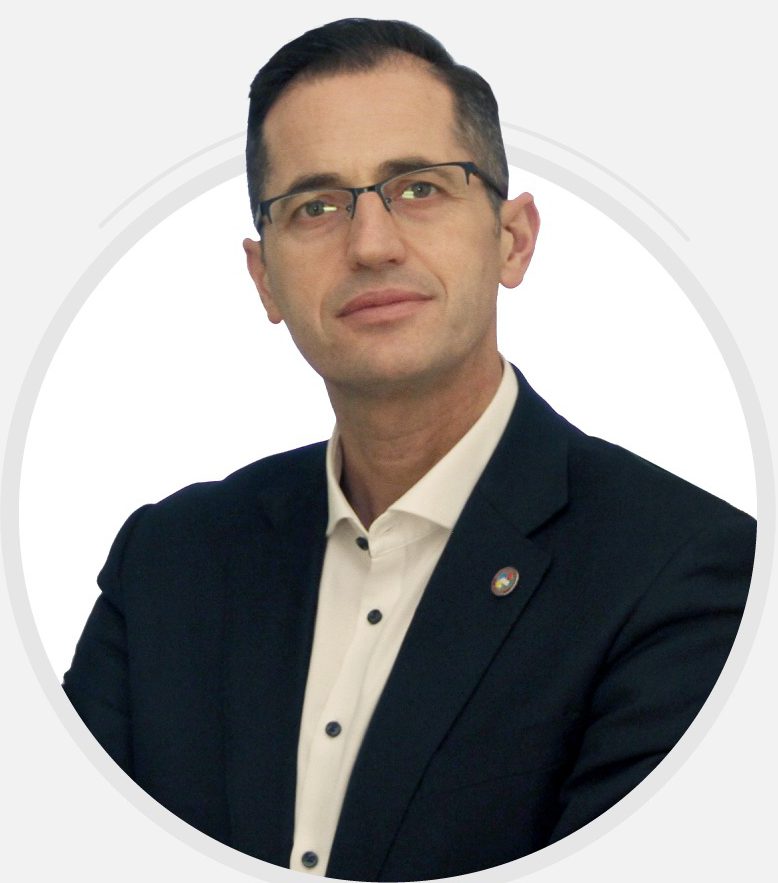
Prof. Blerim Rexha is a full professor at the University of Prishtina's Faculty of Electrical and Computer Engineering, Kosovo. With a Ph.D. in Computer Engineering from Vienna University of Technology (2004), he has led research in cybersecurity, blockchain, machine learning, and electronic voting systems. His teaching portfolio includes data, computer, and internet security courses. Education : Ph.D. in Computer Engineering (Vienna), Electrical Engineer MSc (Prishtina), specialized certifications in software engineering, biometrics, and .NET programming. His research spans cybersecurity (DDoS mitigation, face authentication attacks), blockchain applications (electronic voting bridges, transaction privacy), and machine learning integration (boosted trees for intrusion detection, LSTM for vulnerability scanning). He has contributed to cloud security through novel encryption methods and AI-driven attack detection. Recent publications focus on energy efficiency in cloud vs on-premises systems, XGBoost/CatBoost/LightGBM comparisons for network security, and blockchain bridges for e-voting. His work has addressed privacy preservation in video data, SMS encryption, and eID card pseudo-profiles. Awards include the 2024 Marin Barleti Prize for academic contributions and Best Paper Awards in election security (2015) and Kosovo website vulnerabilities (2013). Honors : Marin Barleti Prize (2024) Cyber Security Ambassador (2018) ICT Academician of the Year (2016) Best Paper Awards (2015, 2013) As academic advisor to the KosovaCyberTeam , he mentors students like Korab Keqekolla and Abian Morina. His leadership extends to Kosovo's Cyber Security State Training Center curriculum development and jury roles in Albanian ICT Awards .
Liane Colonna is an Assistant Professor in Law and Information Technology at the Department of Law, Stockholm University , where she investigates ethical and legal challenges arising from AI-driven practices in higher education. She also engages in methodologically oriented research at the intersection of AI and Law, contributing to the Wallenberg AI, Autonomous Systems and Software Program – Humanities and Society. Additionally, Liane serves as the director of the Swedish Law and Informatics Research Institute (IRI) and is a member of the New York Bar since 2008. Primary Affiliation: Department of Law, Stockholm University Institute Leadership: Director, Swedish Law and Informatics Research Institute (IRI) Professional Status: Member of the New York Bar Research Interests: Ethical and legal challenges of AI in higher education Methodological approaches in AI and Law Data protection and privacy by design Regulatory frameworks for AI and emerging technologies Privacy implications of lifelogging and health IoT International data governance and surveillance law Publications demonstrate expertise in AI regulation, GDPR compliance, and privacy-preserving technologies, particularly for assisted living and educational contexts. Her work bridges technical implementation with legal accountability, emphasizing human oversight and ethical design.
Lilja Øvrelid is a Professor at the Department of Informatics, University of Oslo, leading the Language Technology Research Group. Her research focuses on syntactic and semantic text processing using machine learning techniques such as dependency parsing, negation analysis, and sentiment analysis. She teaches courses including IN1140: Introduction to Language Technology , IN5550: Neural Methods in NLP , and INF5830: Natural Language Processing . Her academic interests span natural language processing, machine learning, and computational linguistics, with a particular emphasis on Norwegian language technology. Recent publications highlight work in sentiment analysis (including patient feedback), event extraction from Norwegian news, benchmarking language models, emotion analysis for under-resourced languages (Pashto, Farsi-Dari), and bias detection in multilingual models. She actively contributes to the development of Norwegian language resources such as NorBench, NorQuAD, and NoReC. Current projects include BigMed and SIRIUS , focusing on biomedical text mining and AI infrastructure. Collaborations with colleagues like Erik Velldal, David Samuel, and Vladislav Mikhailov are frequent in her work. Despite no explicit mention of scientific awards, her contributions to NLP and computational linguistics are substantial through publications, datasets, and tool development.
Raquel Fernández is a Full Professor of Computational Linguistics and Dialogue Systems at the Institute for Logic, Language & Computation (ILLC), University of Amsterdam. She serves as Vice-Director for Research at ILLC and is a board member of the ELLIS Amsterdam Unit. Her research focuses on interdisciplinary approaches at the intersection of computational linguistics, cognitive science, and artificial intelligence, with emphasis on dialogue modeling, multimodal processing, and language grounding in visual/social contexts. Her work is supported by prestigious grants including the European Research Council (ERC Consolidator Grant 819455) and multiple Dutch Research Council (NWO) awards (VENI, VIDI, Aspasia). She has received scientific recognition such as the Outstanding Paper Award at EMNLP and Best Data Award at GenBench Workshop. Her recent publications analyze multimodal dialogue systems, visual storytelling evaluation consistency, and co-speech gesture modeling, reflecting trends in Linguistic-Cognitive Integration , Multimodal AI , and Contextual NLP . She leads the Dialogue Modelling Group and has been actively involved in academic leadership as co-president of SemDial, VP-Elect for SIGDAT, and ethics chair for major conferences like COLM. Scientific Awards ERC Consolidator Grant 819455 NWO VENI/VIDI/Aspasia grants Outstanding Paper Award at EMNLP 2023 Best Data Award at GenBench Workshop Elected ELLIS Fellow 2023
Dr. Reza Samavi is an Associate Professor at Toronto Metropolitan University's Department of Electrical, Computer, and Biomedical Engineering, Faculty of Engineering & Architectural Science. He is also a Faculty Affiliate with the Vector Institute for Artificial Intelligence and directs the Trustworthy AI Research Lab (TAILab). Previously, he served as Assistant Professor and eHealth Graduate Program Coordinator at McMaster University's Department of Computing and Software (2014-2020). Holding a PhD in Computer Science (University of Toronto, 2013), his academic journey bridges industry experience with rigorous scholarly contributions. His research lies at the critical intersection of Trustworthy AI , Machine Learning Security , and Medical Informatics . He investigates Safety & Security of ML Algorithms Privacy-Preserving AI Systems Transparency Frameworks for Medical AI Blockchain-enabled Privacy Auditing Game Theory for Model Robustness Optimization-based Anonymization Techniques The TAILab research group under his leadership has produced groundbreaking work in Uncertainty Quantification for Neural Networks Robustness Against Adversarial Attacks Medical Image Analysis Clinical Decision Support Systems Emergency Medicine Predictive Modeling His recent projects focus on enhancing migrant youth mental health through LLM-based conversation agents and developing certified robustness guarantees for ensemble networks. Dr. Samavi's scholarly excellence is recognized through Privacy Technologies Research Award (IBM) Privacy By Design Research Award (Ontario IPC) Bridging Divides Emerging Research Grant (TMU) NSERC PGS-D Recipient (Co-supervised student) SOSCIP Accelerator Grant He has secured major funding from NSERC , SOSCIP , MITACS , HHS , and IDEaS programs. As a dedicated educator, Dr. Samavi teaches graduate courses in Secure Machine Learning and Software Testing while mentoring 15+ graduate students across PhD , MASc , and MEng programs. His lab has presented at premier venues including AAAI , IJCAI , and IEEE Transactions while maintaining active collaborations with institutions like Harvard, ETH Zurich, and the University of Waterloo.
Lianne Lefsrud serves as Associate Professor and Risk, Innovation, and Sustainability Chair (RISC) in the Department of Chemical and Materials Engineering at the University of Alberta's Faculty of Engineering. Her interdisciplinary research bridges engineering, social sciences, and policy to transform risk management practices across energy, mining, construction, and railroading industries, directly influencing regulations, building codes, and industry operations for sustainable development. Her academic credentials include: BSc in Civil Engineering (Cooperative Program), University of Alberta (1994) MSc in Interdisciplinary Civil & Environmental Engineering and Sociology, University of Alberta (1996) PhD in Strategic Management and Organization, Alberta School of Business (2014) Dr. Lefsrud's research centers on risk management frameworks for sustainability challenges. She examines hazard identification, social license to operate, and technology adoption drivers in high-hazard industries, with emphasis on prospective risk assessment (e.g., hydrogen infrastructure design) and retrospective analysis (e.g., microplastic pollution impacts). Her work integrates circular economy principles into energy systems while addressing unintended consequences across UN Sustainable Development Goals. Recent publications (2024-2025) demonstrate heavy focus on machine learning applications for rail and construction safety, hydrogen infrastructure risk analysis, and science denial mitigation. Key patterns show cross-industry adaptation of AI for incident prediction, regulatory gap analysis for emerging energy systems, and socio-technical approaches to reconcile sustainability goals with operational realities. Scientific recognition includes: Erb Post-Doctoral Fellowship (University of Michigan) Dow Sustainability Research Fellowship (Ross School of Business) Dr. Lefsrud mentors graduate students through industry-integrated projects like her Sustainable Design course where teams generated patents and city solutions. Her research secures Alberta Innovates funding with 1:4 industrial-to-federal matching, collaborating with Suncor, Transport Canada, and Canadian Standards Association. Grants target practical implementations including railcar inspection systems and hydrogen safety protocols. She co-founded Insight Risk Systems and leads the Lefsrud Lab, prioritizing inclusive teams with under-represented groups (women, Indigenous, LGBTQ2S+, neurodiverse) to tackle 'wicked problems' in sustainability. The lab leverages interdisciplinary partnerships across engineering, computer science, psychology, and environmental sociology for real-world risk management solutions.
Dr. Chenhao Ma is an Assistant Professor at the School of Data Science , The Chinese University of Hong Kong, Shenzhen , where he works on large-scale data management and data mining. Previously, he was a Postdoctoral Fellow at the University of Hong Kong (2021–2022) and earned his PhD in Computer Science from the University of Hong Kong (2021) and B.Eng. from Shandong University (2017). Current research focuses on graph computing (dense subgraph discovery, motif analysis, graph learning), AI+DB (Text-to-SQL, vector search), and traffic data mining (trajectory analysis, outlier detection). He has published over 40 papers in top venues including SIGMOD, PVLDB, KDD and received the ACM SIGMOD Research Highlight Award 2021 and Best of SIGMOD 2020 (4/458). Scientific Awards : ACM SIGMOD Research Highlight Award 2021 Best of SIGMOD 2020 (4/458) Presidential Young Fellow at CUHK-Shenzhen (2023) Hong Kong and China Gas Scholarship (2019-2020) Reaching Out Award (2019) HKU Postgraduate Scholarship (2017-2021) ACM-ICPC Gold Medal (2015) National Scholarship (2014, 2015) Advising and Research Team : He leads a team including Postdoc Dr. Yuanyuan Zeng, PhD students Lujie Ban, Yuwei Xu, and MPhil students Yi Yang, Yuyang Liang. Former mentees like Yichen Xu (PhD at Berkeley) and Jiayang Pang (Master at UC San Diego) have achieved academic placements. Professional Service : He has served as PC member/reviewer for VLDB, KDD, ICDE, WWW, NeurIPS, TKDE , and guest editor for Applied Sciences and Frontiers in Big Data . He chairs sessions at ICDE and VLDB.
Naren Ramakrishnan is the Thomas L. Phillips Professor of Engineering in the Department of Computer Science at Virginia Tech, where he directs the Sanghani Center for AI and Data Analytics. He also serves as AI and Machine Learning Lead for the Virginia Tech Innovation Campus. His research spans data science, machine learning, urban analytics, forecasting, and computational epidemiology. Recent publications (2024-2025) focus on language model optimization, AI applications in government and environmental conservation, and spatiotemporal data analysis. Work demonstrates strong emphasis on real-world AI deployments in regulatory compliance, supply chain verification, and network optimization. Methodological innovations include prompt engineering techniques, world models for reinforcement learning, and specialized embedding methods. Dr. Ramakrishnan has received prestigious fellowships from ACM, AAAS, and IEEE. His research has been supported by numerous agencies including DARPA, NSF, NIH, and industry partners like Amazon and Boeing, with 36 PhD students mentored to completion.
Kanchana Kariyawasam serves as Associate Professor in the Department of Accounting, Finance and Economics within Griffith University's Business School. Holding a PhD in IP Law from Griffith University, an LL.M (Advanced) in IP Law from The University of Queensland, and an LL.B (Hons) from the University of Colombo, she maintains active research affiliations with the Law Futures Centre (2009-2024) and Griffith Asia Institute (2019-present). Her research spans Intellectual Property Law with specialized focus on Copyright and Artificial Intelligence, IP and Right to Repair, Patent Law in Biotechnology, and Gender Equality in IP systems. Current projects examine AI-generated works, digital exhaustion doctrine, and NFT legality under Australian copyright frameworks, reflecting strong alignment with Sustainable Development Goals 4 (Quality Education) and 9 (Industry Innovation). Professor Kariyawasam's funded research portfolio includes significant projects such as the WIPO Study on Illegal Retransmission of Live Broadcasts (2023), Queensland Government Ewaste initiatives (2022), and Griffith University's Right to Repair Workshop (2020). Her publications demonstrate consistent output in high-impact journals including European Intellectual Property Review and International Journal of Law and Information Technology , with recent works analyzing AI copyright challenges, spatial data protection, and medical device repair rights. Deputy Vice-Chancellor's 2024 Student Experience of Teaching Survey Commendation Green Impact Gold Award Recipient (2023, Griffith Repair Cafe) Highly Commended Griffith Award for Excellence in Teaching (Large Classes) Two GBS teaching citations She currently supervises five doctoral candidates researching AI data privacy, patent law intersections, and agricultural IP issues, while having successfully completed supervision of four doctoral theses including works on female entrepreneurship and agribusiness marketing. As Coordinator of Griffith Repair Cafe and Steering Committee Member of Australian Repair Network, she bridges academic research with community engagement on repair rights and e-waste reduction.
Robert J. Brunner is a Professor at the University of Illinois with primary appointments in the Gies College of Business (Department of Accountancy) and the School of Information Sciences. He holds affiliate roles across multiple departments including Astronomy, Computer Science, and Statistics, as well as research centers like the Beckman Institute and NCSA. His research focuses on applying statistical/machine learning to solve complex problems in astronomy, finance, and large-scale data science. Education: Ph.D. in Astrophysics from Johns Hopkins University (advisor: Alex Szalay). Postdoctoral work at Caltech on the Digital Sky project. Research Interests: Machine learning applications, computational techniques, data management/visualization, and observational cosmology. His work bridges astrophysical data analysis with modern data science methodologies. Recent work includes developing spatio-temporal neural networks for forecasting, evaluating AI-driven financial analysis tools, and planning for the Vera C. Rubin Observatory. He collaborates internationally on large-scale surveys like the Dark Energy Survey and SDSS. Labs/Teams: Leads data science initiatives at the University of Illinois Research Park. Active in interdisciplinary teams at NCSA and Beckman Institute focusing on algorithm optimization and data-intensive research.
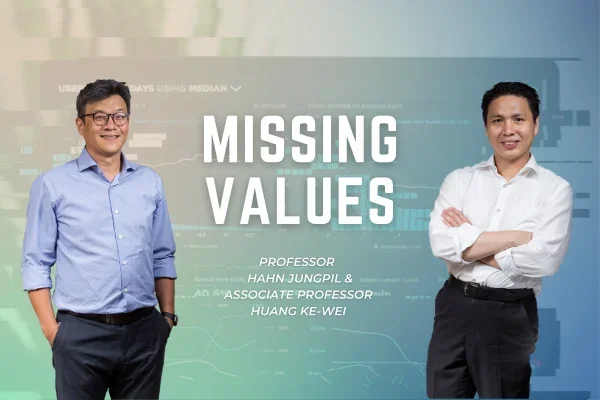
Ke-Wei Huang is an Associate Professor at the Department of Information Systems and Analytics, National University of Singapore (NUS), and Executive Director of the Asian Institute of Digital Finance (AIDF). He joined NUS in 2007, holding prior roles including Assistant Dean of Graduate Studies and founding director of NUS's FinTech MSc/PhD programs. Huang holds a PhD from NYU Stern and degrees from National Taiwan University. His research focuses on machine learning for social science, FinTech, data mining in finance, and IT labor economics. Notable works include studies on hierarchical forecasting, AI's impact on jobs, and pricing strategies for digital goods. Education: PhD in Information Systems, NYU Stern (2007) MSc in Information Systems, NYU Stern (2002) MBA in Finance, National Taiwan University (1997) BSc in Electrical Engineering, National Taiwan University (1995) Research Interests: Machine Learning applications in FinTech, data science for financial forecasting, labor economics of IT professionals, and pricing models for digital goods. His work bridges econometrics and computational methods, addressing challenges like missing data, measurement bias, and hierarchical variable decomposition. Awards & Grants: $1.6M Singapore NRF Grant (2020) for AI-driven financial text analysis Multiple teaching excellence awards (2013–2016) Best paper nominations at ICIS, WITS, and CSWIM Advising & Labs: Advised 8 PhD graduates, including faculty at Chinese University of Hong Kong and South China University of Technology. Active in FinTech education, leading courses like Machine Learning for Finance and Risk Analytics. Research teams focus on AI's societal impact, financial innovation, and data-driven decision-making.