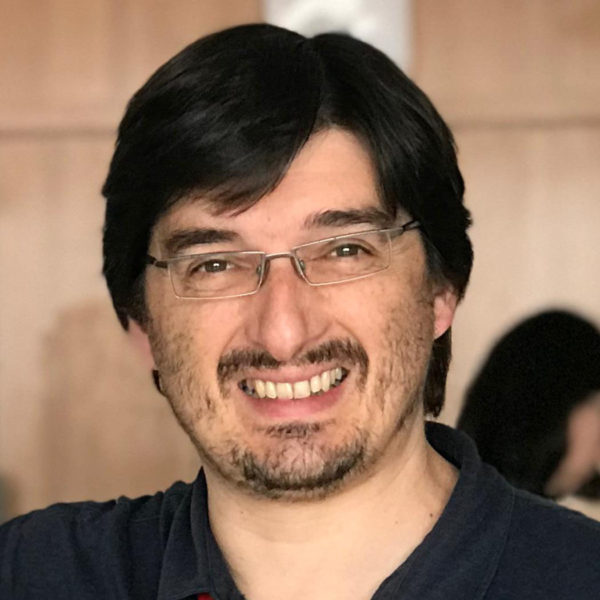
Mohammed J. Zaki is a Professor and Department Head at the Department of Computer Science , Rensselaer Polytechnic Institute . He co-directs the NSF IUCRC Center for Research Towards Advancing Financial Technologies (CRAFT) and has authored the textbook Data Mining and Machine Learning (2nd Ed, Cambridge University Press, 2020). Research Focus : Novel data mining techniques for graph-structured and textual data with applications in bioinformatics, personal health, and financial analytics. Leadership : Co-chair of BIOKDD workshops, Associate Editor for multiple journals, and Program Co-chair for SIGKDD, SDM, ICDM, and other top conferences. Scientific Awards include: EDBT'24 Test of Time Award NSF CAREER Award DOE Early Career Award HP Innovation Research Award Google Faculty Research Award Fellowships: IEEE, ACM, AAAS, SIAM Recent Publications highlight advancements in: Knowledge Graph Completion with Directed Attention Multi-Sense Embeddings for Language Models Financial Trend Prediction via Graph Neural Networks Health-Guided Recipe Recommendation Systems Triplet Interaction in Molecular Graph Learning Temporal Personal Health Data Analysis
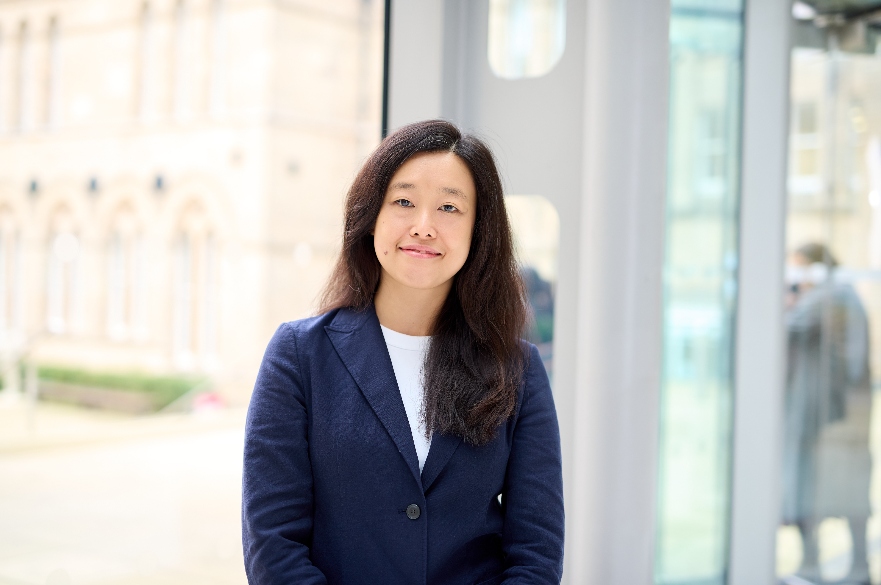
Dr. Elaine Chen serves as Senior Lecturer in Business Analytics and Course Leader for the MSc Business Analytics and Artificial Intelligence at Nottingham Business School, Nottingham Trent University. Her teaching emphasizes practical applications of data and AI technologies for business decision-making, with dedicated focus on accessibility for diverse student backgrounds across technical and strategic domains. Her academic credentials include: PhD in Computing Science MSc in Business Information Technology Postgraduate Certificate in Academic Practice BTech (Hons) in Business Information Systems Chen's research bridges educational and business contexts through data-AI integration: Generative AI adoption in higher education, particularly for neurodivergent/disabled students Human-AI collaboration frameworks in organizational settings SME applications for AI-driven efficiency and competitiveness Workforce analytics and talent management systems Her work consistently connects technical AI capabilities with real-world implementation challenges. Publication analysis (2023-2025) reveals accelerating focus on generative AI's educational impact and business strategy integration, evolving from her foundational work in social recommender systems (2014-2020) which established methodologies now applied to contemporary AI challenges in business contexts. Her professional recognition includes: Senior Fellow of the Higher Education Academy (HEA) Chen actively supervises PhD candidates in AI education, human-AI collaboration, and workforce analytics domains. Her pedagogy leadership includes designing accredited business analytics curricula and securing teaching innovation projects with documented outcomes in student engagement metrics. Prior industry experience as an automation engineer at Intel informs her practical approach to AI implementation. Current initiatives focus on generative AI ethics frameworks and longitudinal SME adoption studies, extending her established research trajectory into emerging business technology challenges.
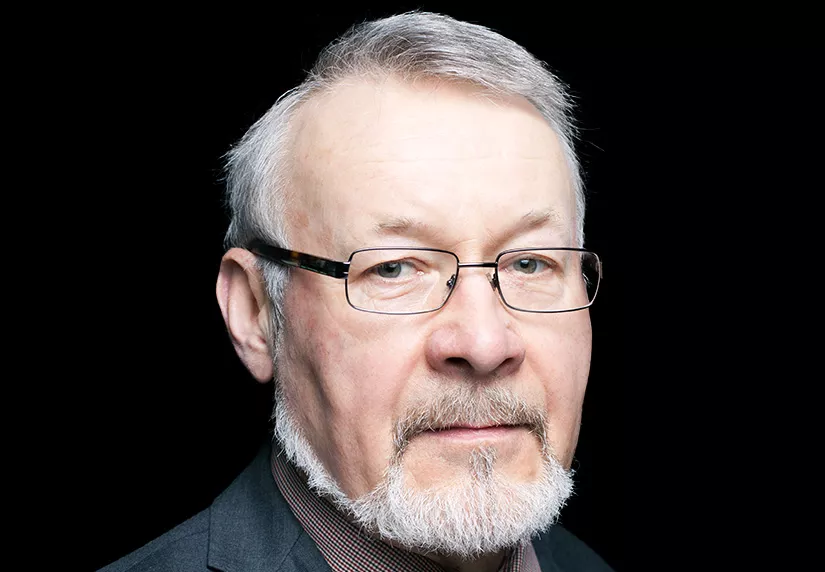
Dr. Rolf Suabedissen serves as an Affiliate Faculty member and Stipendiary Lecturer in Pure Mathematics at Lady Margaret Hall, University of Oxford. His work is centered in the Mathematical Logic research group, and he can be reached via phone at +44 1865 274372 or through a contact form. The provided text does not include an email address. With a PhD and BA, Dr. Suabedissen's research spans Topology, Mathematical Logic, and Set Theory. His work particularly addresses reconstruction conjectures, properties of continua, compact metrizable spaces, and homogeneity in 2-point sets. He has published in reputable journals such as the Proceedings of the American Mathematical Society and Colloquium Mathematicum. Analysis of his recent publications (2013-2017) reveals a strong emphasis on topological reconstruction across various structures including graphs, continua, and compact spaces. His contributions also extend to set-theoretic topology, as seen in studies of compactifications involving ω* and Sκ, and generalizations of 2-point sets. No scientific awards were mentioned for Dr. Suabedissen in the available information. Details regarding students advised or grants received by Dr. Suabedissen are not provided in the text. Dr. Suabedissen is an active member of the Mathematical Logic research group at the University of Oxford, contributing to the department's scholarly activities in pure mathematics.
Dr. hab. Witold Maciejewski is a linguist and Scandinavianist at SWPS University in Krakow, Poland. He serves as faculty in the Interdisciplinary Faculty's Department of Humanities, where he teaches courses on Swedish language grammar and history, comparative grammar of Scandinavian languages, and contrastive grammar. Specializing in general linguistics, Scandinavian and Polish studies, and regional studies, Dr. Maciejewski focuses particularly on Polish-Swedish contrastive linguistics. His research examines linguistic differences between Polish and Scandinavian languages and cultures, including work approaches between Poland and Scandinavia, particularly regarding working hours and efficiency. He has made significant contributions to understanding cross-cultural communication patterns and linguistic structures across these language families. Dr. Maciejewski co-authored the book "Runy" (2011), has published numerous book chapters and scholarly articles, and serves as editor-in-chief of "Acta Sueco-Polonica," a journal dedicated to Polish-Scandinavian relations. His publication history shows consistent research in Scandinavian linguistics, translation studies, and Polish-Scandinavian cultural comparisons, with particular emphasis on historical documents, Bible translations, and grammatical structures. Order of the Polar Star (2011) - One of Sweden's most important decorations awarded to foreigners for outstanding contributions to Sweden and promoting its culture worldwide As a leading scholar in Scandinavian studies in Poland, Dr. Maciejewski has been instrumental in developing academic programs and research initiatives in this field. He served as head of the Department of Scandinavian Studies at SWPS University and participated in the inauguration of the Institute of Scandinavian Studies at SWPS University in Warsaw in March 2006. His work has helped establish and strengthen academic connections between Polish and Scandinavian institutions.
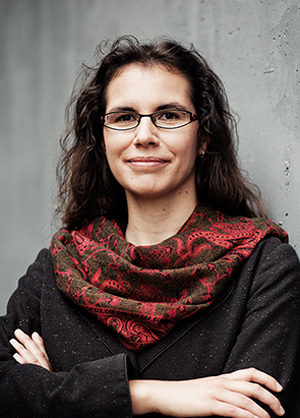
Prof. Dr. Andrea Dreyer is a full-time Professor of Art and its Didactics at the Bauhaus University Weimar , where she has served since 2013. She is Vice Dean for Strategic Development within the Faculty of Art and Design and actively participates in academic governance, including roles in graduation committees, teacher training advisory boards, and curriculum commissions. Her research focuses on teacher professionalization, architectural pedagogy, and digital art education, emphasizing interdisciplinary approaches and qualitative social research methodologies. First and Second State Examination for Teaching at Grammar Schools in Art Education and Social Studies (1994–2000, 2004–2006) Andrea Dreyer’s publications span topics such as Bauhaus-inspired pedagogy, urban-rural spatial education, and digital integration in art teaching. She has led initiatives like DigiProSMK and Denkraum.Bauhaus , and her work often bridges art, architecture, and societal transformation. She has served as Dean of Studies and Vice-Rector for Studies and Teaching at Bauhaus University, advocating for phase-transcendent teacher networks and reflective professional practices. Her recent articles address participatory architectural psychology, interdisciplinary curriculum design, and digitalization in art education. Despite extensive committee involvement and editorial contributions, no specific scientific awards are highlighted in the provided texts. She mentors students and collaborators within the kunst:pädagogik | netz:werk platform and maintains active partnerships with institutions like the Thuringian Ministry of Education and Friedrich-Schiller University Jena.
Antoine Doucet is a Full Professor at the University of La Rochelle, where he teaches in the Computer Science department of the University Institute of Technology (IUT). He conducts his research at the Computer Science, Image and Interaction Laboratory (L3i) within the 'Images and Content' team, which he has led since 2015. He is also a member of the Franco-Vietnamese laboratory ICTLab and serves as Director of the ICT Department at the University of Science and Technology of Hanoi since 2016. His research focuses on information retrieval, natural language processing, text mining, and artificial intelligence, with emphasis on automatic analysis of text in all forms across languages. His work prioritizes generic methods that work across languages without relying on language-specific linguistic resources. This approach is particularly valuable for under-resourced languages and noisy texts from sources like social media or OCR output. As coordinator of the Horizon 2020 NewsEye project, he led efforts to improve access to European historical newspapers through semantic enrichment and advanced search capabilities. His research has practical applications in epidemic surveillance, document fraud detection, and historical content analysis. The NewsEye project involved 11 teams across Europe, including 3 national libraries and multiple research groups. Best paper award from IMIA Yearbook 2016 (among 1,272 candidates) Best paper award at HCI International with Ilona Nawrot Press coverage for ACL 2013 paper in major publications Recipient of French scientific excellence award (Prime d'Excellence Scientifique) Doucet actively supervises PhD and Master's students, with recent advisees including Chloé Artaud (Document fraud detection), Paul Martin (Photograph Time-Stamping), Ilona Nawrot (Temporal and Multilingual Text Analysis), and Gaël Lejeune (Multilingual Epidemic Surveillance). His research has been funded through multiple projects including ANR Digistory, AmeliOCR, PHC Nusantara, and USTH SWARMS. He has also coordinated significant European projects like NewsEye and Embeddia. At L3i, he leads a research group of approximately 40 persons focused on Images and Digital Content. His work bridges theoretical advances in multilingual text processing with practical applications in historical document analysis, epidemic surveillance, and document security.
Dr. Mona Tokarek LaFosse serves as Assistant Professor of New Testament and Sacred Literature Studies (Teaching Stream) at the University of Toronto's Faculty of Divinity through a joint appointment at Emmanuel College and Victoria College. She teaches across undergraduate, basic-degree, and graduate programs at Victoria University, specializing in New Testament studies and early Christian history through interdisciplinary lenses. Her educational background includes a PhD from the University of Toronto's Department for the Study of Religion (2011), MA in Religion and Culture from Wilfrid Laurier University (2001), Honors BA in Anthropology from the University of Waterloo (1998), and Biblical Studies certificate from Columbia Bible College (1994). She previously taught at Martin Luther University College, Wilfrid Laurier University, Huron University College, and the University of Toronto. Dr. LaFosse approaches New Testament scholarship through cultural anthropology, storytelling theory, and age studies. Her research examines early Christian communities through the lens of age structure, intergenerational dynamics, and oral storytelling practices. She explores how life course stages shaped social relationships in the ancient Mediterranean, particularly focusing on 1 Timothy's treatment of age hierarchies. Her innovative teaching methodology emphasizes 'embodied story'—integrating performance and physical engagement with texts influenced by Indigenous storytelling traditions. Her recent publications reveal a strong focus on aging in early Christianity, with 2024 articles examining age demographics and comparative gerontology. She also maintains active scholarship in oral tradition studies, particularly regarding the Gospel of Mark and Shepherd of Hermas, while contributing to academic discourse through society leadership and book reviews. Dr. LaFosse holds significant leadership roles including current service on the Canadian Society for Patristic Studies Nominating Committee (2025–26) and co-chairing the Society of Biblical Literature's Social-Scientific Criticism of the New Testament section (2025–27). She actively participates in the Canadian Society of Biblical Studies, Society of Biblical Literature, and KW Biblical Colloquium. Her distinctive teaching portfolio includes innovative courses like 'Zombies, the Bible and the End of the World' and 'Gospel of Mark as Embodied Story,' reflecting her commitment to interdisciplinary engagement with biblical texts through contemporary cultural frameworks and physical performance.
Cornelius Puschmann is a Professor of Communication and Media Studies at the University of Bremen's ZeMKI, leading the Digital Communication and Information Diversity (DCID) Lab. He has held affiliations with institutions including Zeppelin University, the Alexander von Humboldt Institute for Internet and Society, and the Leibniz Institute for Media Research / Hans Bredow Institute. His research focuses on computational communication, digital media usage, hate speech, and algorithmic impacts on digital communication. Current projects: Informed by Influencers? (INDI), Political Polarization and Individualized Online Information Environments (POLTRACK) Member of Deutsche Gesellschaft für Publizistik- und Kommunikationswissenschaft (DGPuK), European Communication Research and Education Association (ECREA), and International Communication Association (ICA) His recent publications explore topics such as alternative news consumption, political polarization, and communicative AI. He has also contributed to open-source methodologies like the RPC-Lex dictionary for analyzing right-wing populist discourse. Notable affiliations include visiting scholar roles at the Oxford Internet Institute, Berkman Klein Center for Internet and Society, and University of Amsterdam's Department of Media Studies.
Nikos Aletras is a Professor of Natural Language Processing at the University of Sheffield's School of Computer Science, where he serves as Head of the Natural Language Processing research group and is co-affiliated with the Machine Learning group. His academic journey began with a Bachelor's degree in Computer Science from the University of Crete, followed by a PhD in Natural Language Processing at the University of Sheffield. Prior to his current position, he worked as a research scientist at Amazon (Core ML and Alexa) and as a research associate at UCL's Department of Computer Science. Aletras' research spans multiple domains within AI, with particular emphasis on Natural Language Processing applications across social science, legal contexts, and data science. His work demonstrates a consistent focus on practical implementations of NLP techniques to solve real-world problems, especially in computational social science and legal technology. He has developed innovative text analysis methods that bridge traditional disciplinary boundaries, creating tools applicable across multiple scientific domains. His recent publications reveal a strong trend toward efficient and responsible AI, with significant work on model compression, hallucination mitigation in language models, and ethical considerations in computational social science research. The publications also show deep engagement with multilingual NLP challenges, explainable AI, and applications of NLP to social media analysis and legal contexts. Area Chair Award: Society and NLP (2023) Aletras has secured substantial research funding as both Principal Investigator and Co-Principal Investigator, including grants from EPSRC, ESRC, Leverhulme, EC Horizon 2020, and industrial partners like Amazon. His current projects focus on efficient deployment of large language models, addressing socio-technical limitations of LLMs for medical and social computing, and developing speech and language technologies. He actively supervises PhD students and collaborates with researchers across multiple disciplines. He leads the Natural Language Processing research group at Sheffield, which focuses on advancing NLP methodologies while applying them to diverse domains including computational social science, legal informatics, and healthcare technologies. The group maintains strong industry connections, particularly with technology companies working on language technologies, and collaborates with legal scholars and social scientists on interdisciplinary projects.
Katy Ilonka Gero is a Lecturer at the University of Sydney's School of Computer Science, with a PhD in Computer Science from Columbia University (2022). She holds a BSc in Mechanical Engineering from MIT, where she received the Carl G. Sontheimer Prize for Excellence in Innovation and Creativity. Education : BSc (MIT), PhD (Columbia) Her research focuses on Human-Computer Interaction , Creative Writing , and AI Ethics , particularly examining how language models impact writing processes, ownership, and agency. She advocates for community-driven language models trained on consensual data and explores technical innovations for personalized AI tools. Recent publications span language model ethics (Nature Machine Intelligence 2023), generative AI (CHI 2025 Best Paper), and creative collaboration (CHI 2023). Key trends include user-centered AI design , creative ownership , and data ethics . Scientific Awards : NSF Graduate Research Fellowship, Brown Institute for Media Innovation, Amazon Research Award, CHI Best Paper (2025), CHI Honorable Mention (2024) As co-founder of Ensemble Park and former taper editor, she bridges computational poetry and traditional literary practices. Her work at startups Rest Devices and Soofa demonstrates technical innovation in consumer and urban tech.
Niklas Janz is a Professor in Evolutionary Insect Ecology at the Department of Zoology, Stockholm University. He serves as Head of the Department of Biology Education (BIG) and Vice Chair of the Faculty of Science's Advisory Committee for Undergraduate Education, teaching courses like 'Ecology I' and 'Science in Biological Research and Investigation'. His research focuses on evolutionary dynamics between butterflies and host plants, investigating host shifts, speciation, and ecological network modularity. He leads research group Janz, analyzing how environmental changes affect herbivorous insect interactions through phylogenetic modeling and network analysis. Recent publications examine ancestral ecological network transitions, host repertoire evolution, and reconciling diversification hypotheses in phytophagous insects. Key findings demonstrate how gene expression patterns in generalist butterflies reflect evolutionary adaptation rather than plant phylogeny. Scientific awards and honors are not explicitly mentioned in the provided text. His laboratory specializes in butterfly-plant coevolutionary studies using advanced network-theoretical approaches.
Ayah Zirikly is an Assistant Research Scientist at the Center for Language and Speech Processing (CLSP) at Johns Hopkins University, specializing in Natural Language Processing applications for mental health and clinical informatics. Her work bridges computational linguistics with real-world healthcare challenges, particularly in suicide risk assessment and bias detection in medical documentation. Research Focus: Dr. Zirikly pioneers NLP solutions for mental health informatics, with landmark contributions including the UMD Reddit Suicidality Dataset for suicide risk assessment and NLP tools for Social Security Administration disability eligibility processes. Her expertise spans Arabic NLP (co-developer of MADAMIRA toolkit), transfer learning for low-resource settings, and analysis of stigmatizing language in clinical records. Recent work investigates social determinants of health through electronic health record analysis and develops frameworks for detecting AI dataset bias. Publication Trends: 2023-2025 publications reveal three dominant threads: (1) Suicide prevention via social media analysis and data warehouse modeling, (2) Linguistic bias detection in medical records with focus on race/gender disparities, and (3) Synthetic data generation for clinical communication. Her leadership in CLPsych workshops establishes her as a key contributor to clinical NLP benchmarking. Professional Background: Holds a PhD in Computer Science from George Washington University (Mona Diab's NLP lab) and completed postdoctoral training at the National Institutes of Health. Current research extends her NIH work on mobility/mental health status extraction for disability determination while addressing critical gaps in health equity through computational methods.
Lilja Øvrelid is a Professor at the Department of Informatics, University of Oslo, leading the Language Technology Research Group. Her research focuses on syntactic and semantic text processing using machine learning techniques such as dependency parsing, negation analysis, and sentiment analysis. She teaches courses including IN1140: Introduction to Language Technology , IN5550: Neural Methods in NLP , and INF5830: Natural Language Processing . Her academic interests span natural language processing, machine learning, and computational linguistics, with a particular emphasis on Norwegian language technology. Recent publications highlight work in sentiment analysis (including patient feedback), event extraction from Norwegian news, benchmarking language models, emotion analysis for under-resourced languages (Pashto, Farsi-Dari), and bias detection in multilingual models. She actively contributes to the development of Norwegian language resources such as NorBench, NorQuAD, and NoReC. Current projects include BigMed and SIRIUS , focusing on biomedical text mining and AI infrastructure. Collaborations with colleagues like Erik Velldal, David Samuel, and Vladislav Mikhailov are frequent in her work. Despite no explicit mention of scientific awards, her contributions to NLP and computational linguistics are substantial through publications, datasets, and tool development.
Dr. Frank Thomas Grub is Professor of German and Head of the Department of Modern Languages at Uppsala University. Educated at Universität des Saarlandes (Dr. phil. 2003) and promoted to Associate Professor at Gothenburg University (2012) before joining Uppsala as Professor (2018), he has been recognized as Excellent Teacher (2021). As founder of the Landeskunde Nord network since 2012 and editor of the Peter Lang book series since 2013, his career bridges academic research, educational innovation, and international collaboration. His research focuses on contemporary German-language literature , GDR cultural studies , and transcultural didactics . Key projects explore autobiographical writing, post-Wall literary representations, and the intersection of travel literature with cultural memory. Recent publications (2024-2025) examine media narratives of reunification and cultural stereotypes in language pedagogy. Prof. Grub contributes to German as a foreign language curriculum development Intercultural competence frameworks Editorial leadership in Northern European Germanistics His 2023-2025 works analyze graphic novels in education, migration discourse in literature, and media transitions during the Cold War.
Raquel Fernández is a Full Professor of Computational Linguistics and Dialogue Systems at the Institute for Logic, Language & Computation (ILLC), University of Amsterdam. She serves as Vice-Director for Research at ILLC and is a board member of the ELLIS Amsterdam Unit. Her research focuses on interdisciplinary approaches at the intersection of computational linguistics, cognitive science, and artificial intelligence, with emphasis on dialogue modeling, multimodal processing, and language grounding in visual/social contexts. Her work is supported by prestigious grants including the European Research Council (ERC Consolidator Grant 819455) and multiple Dutch Research Council (NWO) awards (VENI, VIDI, Aspasia). She has received scientific recognition such as the Outstanding Paper Award at EMNLP and Best Data Award at GenBench Workshop. Her recent publications analyze multimodal dialogue systems, visual storytelling evaluation consistency, and co-speech gesture modeling, reflecting trends in Linguistic-Cognitive Integration , Multimodal AI , and Contextual NLP . She leads the Dialogue Modelling Group and has been actively involved in academic leadership as co-president of SemDial, VP-Elect for SIGDAT, and ethics chair for major conferences like COLM. Scientific Awards ERC Consolidator Grant 819455 NWO VENI/VIDI/Aspasia grants Outstanding Paper Award at EMNLP 2023 Best Data Award at GenBench Workshop Elected ELLIS Fellow 2023