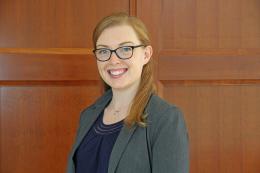
Prof. Dr. hab. Łukasz Pohl is a Professor at the University of Szczecin’s Faculty of Law and Administration, specializing in substantive criminal law. He holds positions including Head of the Criminal Law Research Team and previously led the Department of Criminal Law. His academic journey includes earning degrees from Adam Mickiewicz University in Poznań, culminating in a habilitation in 2008 and the title of Professor in 2015. His research emphasizes legal dogmatics, crime structure analysis, and interdisciplinary integration with logic and philosophy. Key roles include serving as a Senator at the University of Szczecin (2016–2020), Chair of the Disciplinary Committee for Academic Teachers (since 2020), and membership in national legal advisory bodies. He has supervised five PhD students and authored/edited foundational texts like Prawo Karné: Wykład Generalnego and System Prawa Karnego . His scholarly output spans over 100 works in leading journals, focusing on criminal law reform, sentencing principles, and legal theory. Awards include the Minister of Science and Higher Education’s 1st Degree Award (2014). Beyond academia, he holds a music degree and composes contemporary classical works.
Laura Grzunov, PhD, is an Assistant Professor in the Department of Information Sciences and Technologies at the University of Zadar. Her work focuses on information organization, digital humanities, and the preservation of cultural heritage. She specializes in digitization projects related to Glagolitic manuscripts and historical materials, leveraging citizen science and collaborative research approaches. Her office is located in Office 21, and she can be reached at lgrzunov@unizd.hr . Consultations are held Tuesdays 12:30-14:30 by email预约. Grzunov's research interests include the digital transformation of heritage institutions, crowdsourcing methodologies for historical manuscript analysis, and the integration of open science practices in library and information science education. She has led or contributed to projects such as the GlagoLab Portal, virtual research environments for Glagolitic studies, and watermark analysis for archival materials. Her work emphasizes interdisciplinary collaboration between humanities and information science to advance cultural heritage preservation. Key projects include the Linguistic, Scriptural, and Codicological Analysis of the Berčić Collection, the DARIAH-HR initiative on Glagolitic public science, and the creation of a watermark catalog for Zadar manuscripts. These projects highlight her commitment to innovative digital solutions for accessing and preserving Zadar's historical and cultural legacy.
Sabrina Gerth is a Professor for Digital Education in Primary Schools with a focus on language at the University of Teacher Education Tyrol (PHT). She leads the Institute for Primary Education and holds a formal role as deputy head of the Federal Focus on German in Primary School. Her academic career includes roles at institutions such as the University of Potsdam and the University of Helsinki, with research extending from 2007. Gerth’s work focuses on digital media’s impact on literacy acquisition, inclusive language education, and teacher training in primary education. She actively contributes to conferences globally, publishes in journals like Children and Cognitive Neurodynamics , and leads EU-funded projects like PIVOT and INNALP Edu Hub. Key research areas include handwriting biomechanics, audiobook integration in reading, and virtual reality in teacher education. Education & Career: PhD in Cognitive Science (unspecified year) Professor at PHT since 2024 Postdoc at University of Potsdam (2014–2022) Research roles at multiple universities since 2010 Research Interests: Gerth’s work explores how digital tools enhance literacy and language learning. Recent studies include electromyographic analysis of tablet-based writing, cross-cultural writing acquisition comparisons, and inclusive education strategies for multilingual students. She emphasizes bridging teacher training with practical digital media use. Publications Trends: Her articles (15 most recent listed) highlight themes such as handwriting mechanics, audiobook impacts on reading fluency, and VR-based teacher training. Keywords include educational technology, primary education, and cognitive development. Grants & Projects: PIVOT (EU Erasmus+, 2024–present): Inclusive instruction strategies INNALP Edu Hub (Austrian FFG, 2022–2025): Alps-focused educational projects VIRTUOUS (EU Erasmus+, 2021–2023): Teacher behavior management in virtual environments Labs/Teams: Coordinates the Wunderstift Learning Studio, investigating digital tools like smart pens and audiobooks in primary classrooms. Collaborates with institutions like University of Innsbruck and University of Nicosia on interdisciplinary projects.
Anja Pietzuch is an Associate Professor at the Department of Languages, Literature and Culture, Oslo and Akershus University College of Applied Sciences. Her research focuses on language education, particularly German as a foreign language, with an emphasis on formative assessment, teacher training, and online education methodologies. She has contributed to studies on oral skills evaluation, professional development for language teachers, and the integration of self-determination theory in educational practices. Her work also explores democracy education within language classrooms and linguistic diversity in teaching contexts. Her recent publications include analyses of formative assessment frameworks in German language teaching, the effectiveness of online teacher education programs, and the role of dynamic testing in skill development. She has also investigated motivational factors in online learning environments for language educators in Norway. No scientific awards or grants are explicitly mentioned in the provided texts. Anja Pietzuch’s research often intersects with practical pedagogical applications, aiming to enhance teaching methodologies and student engagement in multilingual and multicultural educational settings.
Jeroen C.J.M. van den Bergh holds dual prestigious academic positions as ICREA Research Professor and Head of the Environmental & Climate Economics research group at ICTA-UAB (Institute of Environmental Science and Technology, Universitat Autònoma de Barcelona), and as Full Professor of Environmental & Resource Economics at Vrije Universiteit Amsterdam since 1997. His academic career spans over three decades with continuous research output documented from 1989 through 2025. His educational background includes a PhD in Environmental Economics from Free University of Amsterdam (awarded December 16, 1991), Masters in Econometrics and Operations Research from Tilburg University (awarded March 16, 1988), and earlier degrees from the same institution. He is affiliated with the Network of Quantitative Economics (NAKE) and Network of Operations Research. Van den Bergh's research focuses on the critical intersection of economic systems and environmental sustainability, with particular expertise in climate policy design, environmental taxation, sustainable development pathways, and the controversial degrowth economics paradigm. His work consistently addresses both theoretical frameworks and practical policy implementation challenges, with increasing attention to urban-scale environmental governance and developing country contexts. His recent publications demonstrate a sophisticated integration of computational methods with economic theory, examining Paris Agreement implementation through computational linguistics, modeling long-term emissions under competing policy scenarios, and developing novel frameworks for understanding the growth-environment relationship. The trend shows increasing attention to policy acceptability, urban contexts, and developing country applications of climate policy instruments. ICREA Research Professorship (prestigious Catalan research institution appointment) ERC Advanced Grant for the CLIMGROW project (Climate Policy vs Economic Growth: Opinions, Models, and Novel Strategies) Van den Bergh has supervised 32 students according to institutional records and currently leads multiple significant research projects with substantial funding. His Maria de Maeztu project (2025-2029) represents a major institutional research program at ICTA-UAB, while his CAPABLE project focuses on the critical issue of climate policy acceptability. His research group maintains strong international collaborations across Europe and with developing country institutions. As head of the Environmental & Climate Economics research group at ICTA-UAB, he oversees a multidisciplinary team working at the frontier of environmental economic research, with particular strengths in integrating complex systems thinking with practical policy design. His group's work increasingly engages with urban transformation challenges, particularly through proximity planning and 15-minute city concepts in the Spanish context.
Will Amos is an Associate Professor at the School of Modern Languages and Cultures of the University of Warwick, UK. He holds a BA in French Studies, MA in Modern Languages, and PhD in Sociolinguistics from the University of Liverpool, and has held positions at Liverpool, Lancaster, and Lorraine (France). His expertise lies in linguistic landscapes , multilingualism , and language, gender, and sexuality , with a cross-disciplinary focus on social semiotics and behavioral psychology. Education : BA (University of Liverpool), MA (University of Liverpool), PhD (University of Liverpool) Key Research : He investigates identity performance through clothing, gender ideologies in school uniforms (UK, South Africa, Thailand), and the interplay between language and cultural identity in Toulouse, Corsica, and Liverpool. His methodologies combine qualitative and quantitative approaches, including the development of a standard canon of variables for empirical LL research. Publications : He co-edited The Bloomsbury Handbook of Linguistic Landscapes (2024), and has published on topics such as Occitan vitality in Toulouse, English in French advertising, and Corsican language visibility in non-official domains. Networks : Co-founder of the WE•ID Wearable Ideologies interdisciplinary network and member of the Languages in Coventry Research Group and Centre for Digital Enquiry at Warwick. Teaching : Supervises postgraduate work in sociolinguistics, multilingualism, and transcultural studies, teaching modules like Translation: Methods and Practice and Introduction to French Linguistics .
Shakil Rabbi is an Assistant Professor in the Department of English at Virginia Tech , where he has taught writing and rhetoric since joining in May 2021. He holds a PhD from Penn State and brings extensive teaching experience from both primary school and university contexts in Southeast Asia (Thailand) and South Asia (Bangladesh, his country of origin). His research focuses on: Writing as a cognitive and adaptive tool Rhetorical practices across academic/professional contexts Literacy development in multilingual societies Digital age reading pedagogy Intercultural competence in global education Recent media engagements highlight his expertise in transnational communication and digital education trends, including insights on Muslim dating apps, digital reading challenges, and intercultural teaching strategies. Contact: srabbi@vt.edu | Office: 447 Shanks Hall, Virginia Tech
Dr. Gillian Weatherley serves as a Lecturer and Academic Program Associate in French at the University of Kansas. As 200-level French Language coordinator, she oversees curriculum design, supervises graduate teaching assistants, and develops pedagogical materials. She completed her PhD (2014) and MA (2009) in French at KU, with research focusing on 17th-century French fairy tales and cultural identity constructs. Education: Ph.D. in French, University of Kansas, 2014 M.A. in French, University of Kansas, 2009 B.A. in French with Spanish, University College London, 1979 Her research intersects Second Language Acquisition theory and digital pedagogy, including implementation of collaborative mapping projects in 400-level literature courses. She designed a bridging 300-level curriculum between introductory and advanced French studies, and created supplementary materials for national curricula in New Zealand. Current projects include maintaining the open-access textbook Le Pont for upper-intermediate French learners, focusing on creating pedagogically sequenced content that aligns with competency-based learning goals. She teaches written/oral communication courses (FREN 301/302) and literature courses.
Prof. Dr. Jörn Sparfeldt is a full Professor at Saarland University, leading the research unit for Diagnostics, Counseling, and Intervention within the Department of Educational Sciences, Faculty of Social Sciences and Humanities. He is actively involved in teaching, research, and academic administration, regularly offering consultation hours and overseeing examinations for his courses. His research focuses on core areas of educational psychology, particularly educational and psychological diagnostics, counseling strategies, and intervention methods. His work addresses significant themes in modern education, including inclusion, heterogeneity in learning environments, and the assessment of educational competencies. While no specific publications or awards are listed in the provided text, his leadership of a research group and his professorial role indicate an active research profile. He supervises a team of scientific associates and student assistants, contributing to academic mentoring and project development. Prof. Sparfeldt's work is central to the educational sciences program at Saarland University, where he plays a key role in shaping the curriculum and supporting student learning through his teaching and guidance.
Luca Solari is a Lecturer at the Faculty of Economics, Università della Svizzera italiana (USI), where he contributes to academic instruction and research in organizational and management disciplines. His primary areas of expertise include: Change Management Human Resources Organizational Innovation Organizational Theory Strategic Human Resources Management While no recent publications are listed in the provided text, his competence areas suggest a strong focus on modern organizational dynamics, leadership, and strategic HR practices within evolving business environments. He is actively involved in teaching and organizational development at USI and maintains professional contact through his institutional email.
Dr. José Antonio Frías Montoya is a full Professor at the University of Salamanca's Department of Library and Information Science. Holding a PhD in Documentation from Complutense University of Madrid since 1995, he has authored 60+ specialized journal articles and directed 22 doctoral theses. His leadership roles include former department director (1999-2008), master's program coordinator (2013-2014), and deputy director of Salamanca's Women's Studies Center (2010-2014). Current Research Interests Research Methodologies in Information Science Scientific Communication on Social Web Gender and Sexual Diversity Studies Key Institutional Roles Member, Steering Board of EUFEM Platform Vice President, Ibero-American Information Science Association (EDICIC) His publications analyze information retrieval systems, cataloging evolution in digital contexts, and open access impact on scholarly communication. He has mentored 23 doctoral students and contributed to over 20 funded research projects, primarily as principal investigator. Professional engagements include advisory board memberships for multiple international journals and guest lectures at universities across Spain and the Americas.
Carmen Guzman-Garcia is a fixed-term researcher in the Department of Engineering and Architecture at the University of Parma, where she contributes to interdisciplinary programs bridging engineering, veterinary medicine, and medical education. She teaches courses in Artificial Intelligence for materials science and Informatics within graduate-level programs, including the Second Cycle Degree in Functional and Sustainable Materials and the Full Cycle (5 years) Veterinary Medicine program. Her research focuses on the development and evaluation of innovative technologies for clinical and surgical training. Key areas include virtual reality simulations, psychomotor skill assessment, stress monitoring in educational environments, and e-learning platforms for minimally invasive surgery. She employs methodologies from biomedical engineering, cognitive psychology, and human-computer interaction to enhance medical education outcomes. The recent publications highlight a strong trend in using immersive technologies for objective clinical assessment, particularly in cardiopulmonary resuscitation and surgical skill acquisition. Her work integrates technical metrics with behavioral and cognitive data to build comprehensive models of performance and learning in high-stakes medical environments. While no scientific awards are currently listed, her collaborative research involves prominent institutions and researchers in surgical simulation and medical informatics. She advises no publicly listed students, but her role in curriculum design and technology-driven pedagogy suggests significant mentorship and educational leadership. There is no mention of external grants in the provided text. Her work is closely aligned with applied research in medical simulation labs, though no specific lab or team name is provided.
Beverly J. Buckles, DSW, is a Professor, Dean, and Chair of the Department of Social Work and Social Ecology at Loma Linda University’s School of Behavioral Health. She has held multiple leadership roles at institutional, national, and international levels, including accreditation site visits, trauma team leadership, and global mental health initiatives. Institution: Loma Linda University School: School of Behavioral Health Department: Department of Social Work and Social Ecology Role: Dean, Department Chair, Professor Her educational background includes a DSW, MSW from Eastern Washington University, and BSW from Walla Walla University. These qualifications underpin her expertise in clinical social work, behavioral medicine, and social ecology. DSW: Awarded May 1, 1989 MSW: Awarded May 1, 1983 BSW: Awarded June 1, 1978 Beverly Buckles’ research and professional focus centers on trauma, resilience, and global mental health. She has pioneered the application of the Community Resiliency Model (CRM) in post-disaster and post-conflict settings such as Sierra Leone, Haiti, the Philippines, and Nepal. Her work integrates bio-psycho-social-spiritual frameworks, particularly in geriatric care and crisis intervention. She has led international trauma teams in responses to the 2004 Tsunami, Hurricane Katrina, the 2010 Haiti earthquake, and the San Bernardino shooting. Her recent publications reflect a strong trend in community-based mental health interventions, resilience training, and global best practices. Articles from 2024 to 1997 show sustained scholarly engagement in trauma-informed care, curriculum development, and stigma reduction in psychiatric rehabilitation. Key themes include resilience, cross-cultural mental health, and capacity building in underserved regions. Buckles has received no explicitly listed scientific awards in the provided text. However, her extensive service on professional boards, accreditation panels, and global health initiatives indicates high professional recognition. Leadership in LLU Behavioral Health Trauma Team (founding chair since 2000) Co-author of WASC institutional proposals and accreditation reports Grants and program development in mental health curriculum and quality improvement International consulting for WHO, ADRA, and SDA institutions She leads or has led multiple research and service teams, including the LLU International Behavioral Health Trauma Team, Community Partnership Institute, Global Health Institute, and the Behavioral Medicine Center Operating Board. Her labs and initiatives focus on real-world application of trauma models, resilience training, and mental health system strengthening in low-resource and crisis-affected settings.
Kelly Bull is a Professor in the School of Education at Notre Dame of Maryland University , where she has been a faculty member since 2008. She teaches courses in research, literacy, language, and culture, and is actively involved in shared governance through roles in the Faculty Senate, University Promotion and Tenure, and Strategic Planning Task Forces. Additionally, she teaches part-time as an ESOL Specialist in the public school system, co-teaching and collaborating to integrate research and practice. Education: Ph.D., University of Virginia MATESOL, Notre Dame of Maryland University M.A.Ed., University of Alabama at Birmingham B.S., Towson University Dr. Bull's research focuses on adolescent literacy , Emergent Multilingual Learners (EMLs) , and the intersection of social justice and education . Her work emphasizes interdisciplinary teaching and the integration of young adult literature across subjects like biology and environmental studies. She advocates for multicultural education and equity in teacher training , with a particular interest in environmentalism and its connection to educational practices. Her publications span journals such as English Journal , The ALAN Review , and Signal Journal , alongside edited book chapters. These works highlight the use of young adult literature to address social justice themes , multimodal learning , and cross-curricular curriculum development . Key trends include strategies for supporting English Language Learners, fostering cultural awareness , and promoting inclusive communities through literature. Scientific Awards and Grants: Faculty Research and Development Award, NDMU (2020, 2019, 2015) Mission Advancement Grant, NDMU (2017) Research grant, Assembly on Literature for Adolescents Foundation (2009) Principal Investigator for projects on TESOL Teachers of the Year, World Literature, Syrian Refugees, and Young Adult Literature in the classroom (2009–2020) Dr. Bull collaborates with colleagues on projects like the “Change” interdisciplinary theme and the “Drowning Cities” environmental research . Her work has been presented at major conferences including the National Council of Teachers of English (NCTE) and North American Association of Environmental Educators, reflecting her commitment to multicultural and equity-focused education .
Rachael Crowe serves as Assistant Professor and Director of Graduate Nursing Programs at Notre Dame of Maryland University's School of Nursing, teaching in both the Entry-Level BSN and Accelerated 2nd Degree BSN programs. Her office is located in room 210 of the University Academic Building (UAB), with contact details rcrowe@ndm.edu and phone 410-532-5274. Her educational credentials include: Doctor of Nursing Practice from Georgetown University Master's in Nursing (Pediatric Acute Care Nurse Practitioner) from the University of Michigan Certificate in Nursing Education from the University of Michigan Bachelor's in Nursing from the University of Michigan Research interests center on novice nurse practitioner role transition and mentorship effects on career adaptation , with clinical expertise in pediatric critical care, vascular access techniques, and point-of-care ultrasound utilization. Her work bridges clinical innovation and professional development to enhance patient safety in high-acuity pediatric settings. Publication trends from 2018-2020 reveal intense focus on vascular access complications in pediatric critical care, featuring intracavitary ECG and ultrasound innovations. Concurrently, she developed measurement tools for nurse practitioner role transition , reflecting dual commitment to clinical procedural safety and workforce development. Scientific Awards No specific awards were documented in the source material. As Director of Graduate Nursing Programs, she oversees advanced nursing education while maintaining clinical research engagement. Her service as Expert Reviewer for the Journal of the American Association of Nurse Practitioners (2020) demonstrates scholarly impact, though grant details remain unspecified in the text. Collaborative work occurs within Children's Hospital of Philadelphia networks and University of Michigan clinical teams, particularly in anesthesia-critical care medicine departments. These partnerships drive vascular access service development and procedural safety initiatives in pediatric intensive care environments.