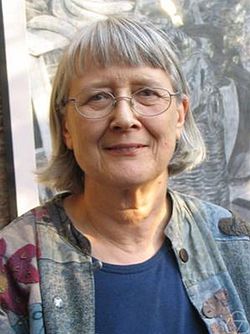
Hamid Eghbal-zadeh is a Postdoctoral Researcher at the Institute of Computational Perception at Johannes Kepler University Linz (JKU). Previously, he worked as a Research Scientist at Meta and held roles at the Institute for Machine Learning at JKU. His research focuses on adversarial machine learning, representation learning, and robust deep learning models. He has made significant contributions to acoustic scene analysis, generative models, and reinforcement learning. Education : PhD in Machine Learning from JKU (2019), defended with distinction. BSc/MSc details not explicitly stated in text. Research Highlights : Developed Mixture Density GANs to address mode collapse in GANs Pioneered receptive-field regularization techniques for audio classification Contributed to top-performing systems in DCASE challenges (2016-2019) Active in reinforcement learning and domain adaptation research Awards/Competitions : Multiple top placements in international challenges (DCASE, MediaEval), outstanding reviewer recognitions (ICML 2022, ICLR 2022). Advising : Supervised 6+ students in topics like acoustic scene classification, generative retrieval, and sound event detection.
Raphaël Tinarrage is a Research Fellow at the Institute of Science and Technology Austria (ISTA), part of the Wagner group. Previously, he held a postdoctoral position at FGV EMAp (Brazil) and was an Assistant Professor at Université Paris-Saclay (2017–2020). His research focuses on Topological Data Analysis (TDA), including theoretical advancements and practical applications in medical imaging, legal document analysis, and equivariant neural networks. Education: He earned his PhD from Université Paris-Saclay and Inria, advised by Fred Chazal and Marc Glisse (2017–2020). His dissertation, Topological Inference from Measures and Vector Bundles , introduced novel methods for topological data analysis. Research Interests: Tinarrage explores topological inference (e.g., stability of persistent homology), combinatorial topology (triangulation, Lusternik–Schnirelmann category), and applications like medical image segmentation and legal text analysis. His work bridges theoretical mathematics with computational tools, emphasizing practical implementations. Key Publications (2021–2025): Recent articles include LieDetect (2025) for Lie group symmetry detection, Empirical Analysis of Brazilian Supreme Court Precedents (2025), and ZigzagNetVis (2025) for dynamic graph visualization. Preprints include Train-Free Segmentation in MRI (2024). Teaching & Advising: He taught courses on topology and TDA at FGV EMAp and Université Paris-Saclay. He advised multiple students on projects involving legal NLP and TDA applications. Labs & Tools: His PhD work is implemented in the velour Python package. Code for other projects is available on his GitHub repository.
James Clackson is a Professor of Comparative Philology at the Faculty of Classics, University of Cambridge. His academic career spans over two decades at Cambridge, including roles as University Reader (2012-2016), University Senior Lecturer (2001-2012), and University Lecturer (1997-2001) in Classics. Research Interests: His work focuses on Languages of ancient Italy Indo-European comparative linguistics History of Greek and Latin languages Ancient sociolinguistics Armenian language history Publications reveal a thematic emphasis on language contact, standardization, and sociolinguistic dynamics in the ancient Mediterranean. He has contributed significantly to understanding Sabellian languages within the Indo-European family, explored substandard Latin usage in Pompeii, and examined the evolution of Armenian lexicon and Greek/Roman linguistic norms. Scientific Awards: Hugh Last Fellowship, British School at Rome (2006) Philip Leverhulme Prize (2001)
Dr. Milosh Jovanovikj holds the role of Associate Professor at the Faculty of Computer Science and Engineering in Skopje, North Macedonia, and concurrently serves as a PostDoc Researcher at TU Wien in Vienna, Austria. He is also a Senior R&D Knowledge Graphs Engineer at OpenLink Software in London. His primary research focuses on Knowledge Graphs (KGs), including their lifecycle processes such as modeling, enrichment, and analytics-driven AI applications. He has contributed to over 10 international and 25 national research projects, authored 60+ publications, and co-authored 3 books. His expertise spans Data Engineering, Semantic Web technologies, Linked Data, and Applied AI. Significant contributions include developing frameworks like RDFGraphGen for RDF graph generation and PharmKE for pharmaceutical text analysis. He has led initiatives in geospatial semantic web standards (GeoSPARQL) and healthcare informatics, including predictive analytics for nephrology data. Education: PhD in Computer Science and Engineering His work bridges academia and industry, with projects like the 3DFed federation engine and Semantic Sky (a Gmail plugin). He has extensive experience in ontology development (e.g., SEOntology, VEO for CO2 emissions) and open data initiatives, including LinkedDrugs for global drug data consolidation. Active in dissemination, his articles span knowledge graph applications in music recommendation, finance sentiment analysis, and drug-disease relation discovery. He has collaborated on benchmarks like the GeoSPARQL Compliance Benchmark and Mighty Storage Challenge (MOCHA). Grants/Projects: HOBBIT, SAGE, 3DFed, LinkedDrugs He leads teams in advancing semantic web integration, cloud service platforms (Semantic Sky), and educational materials like Web Programming Basics . His labs and teams focus on AI-driven solutions for healthcare, geospatial analytics, and enterprise systems.
Pascal Welke is a PostDoc Researcher at the Department of Machine Learning, Technical University of Vienna, working on the StruDL project (2023-2027) funded by the Vienna Science and Technology Fund (WWTF). His research focuses on enhancing graph neural networks (GNNs) through theoretical and practical advancements in expressivity, pooling mechanisms, and global feature integration. Active in graph representation learning, neural architecture design, and model interpretability Collaborates on interdisciplinary projects involving material science and computational linguistics Contributor to NeurIPS, ICLR, and ACL conferences Recent publications analyze the role of expressivity in GNN performance, introduce loop-based WL hierarchies, and develop model distillation techniques. His work spans both theoretical insights (homomorphism-based representations) and practical applications (edge device optimization, nonwoven material analysis). No formal awards or students listed in available records.
Jürgen Dorn is a retired Associate Professor at the Technische Universität Wien (TU Wien), affiliated with the Faculty of Informatics and the Institute of Information Systems. His career includes roles at the Christian Doppler Laboratory for Expert Systems and leadership of the Virtual Enterprises group at the E-Commerce Competence Center. He holds a PhD in knowledge-based real-time planning from TU Berlin (1989). Research focuses on Business Process Management, Knowledge & Competence Management, Service Science, E-Commerce, and Artificial Intelligence. Notable projects include the JIRA Process Mapper (2017-2018), ISIS Papyrus Process Mining System evaluation (2008), and development of the MOVE service composition framework. His work addresses trust in digital services, service classification, and tourism planning. Publications span trust models for e-markets, semantic web technologies, and scheduling systems. He advises numerous students on topics like case-based reasoning, digital badges, and service-oriented architectures. Awards section is currently empty. Grants and collaborations include projects with Catworkx GmbH and ISIS Information Systems GmbH. Active in teaching, including a 2025S Research Seminar for Ph.D. Students.
Ingo Feinerer serves as an Associate Professor at Vienna University of Technology's Faculty of Informatics, specifically within the Institute of Information Systems Engineering (E192-02). His research bridges theoretical computer science and practical applications in database systems, artificial intelligence, and text mining, with significant contributions to configuration management and formal methods. His educational background includes: PhD Dissertation (2007): A formal treatment of UML class diagrams as an efficient method for configuration management Diploma Thesis (2005): Formal program verification: a comparison of selected tools and their theoretical foundations Feinerer's research focuses on database theory (particularly schema mapping and dependencies), AI-driven configuration systems using integer linear programming, and text mining infrastructure development in R. His work combines theoretical rigor with practical tool development, notably through the textcat and tm packages. The integration of formal methods in software engineering remains a consistent thread throughout his publications. Analysis of his 15 most recent publications reveals strong specialization in database constraints (40%), text mining applications (30%), and software configuration systems (30%), with increasing interdisciplinary work connecting computer science to digital humanities. His notable recognition includes: INiTS Award (2007) for technology commercialization potential Feinerer has supervised doctoral research including F. I. Chertes' work on schema mapping languages and diploma theses on UML semantics and probabilistic databases. He led major research projects HINT (2012-2017) and SEE (2012-2016) focusing on database technologies and information systems. His work demonstrates consistent funding through Austrian national research programs. As a core member of the Databases and Artificial Intelligence research group, he collaborates extensively on R package development for text analysis and contributes to international workshops on theoretical aspects of software engineering.
Karin Kappel serves as a PostDoc Researcher in the Business Informatics department at Vienna University of Technology's Faculty of Informatics. Her research spans Human-Computer Interaction, Health Informatics, and Ethical Technology Systems with significant contributions to electronic health record design, refugee management systems, and persuasive ambient interfaces. Her research interests focus on User-Centered Healthcare Systems , Ethical Technology Deployment in Crisis Zones , and Behavioral Change through Persuasive Interfaces . Key projects include nation-wide EHR user persona development, European refugee camp registration systems, and ambient water conservation displays. Her methodological expertise combines in-the-wild mobile studies , gamified survey design , and quantitative requirement evaluation for complex socio-technical systems. Kappel's publication trends reveal three dominant research trajectories: (1) Healthcare interface design (35% of recent work), particularly EHR optimization through family-centric modeling; (2) Ethical technology systems (30%), focusing on refugee management and biometric identification; (3) Mobile interaction paradigms (25%), including text entry performance and form navigation. Her work consistently bridges technical implementation with human factors considerations. Kappel has supervised four graduate students on topics including m-banking interfaces, restaurant ordering systems, and developer onboarding tools. Current projects include a 2025-2026 hospital-based study on ML/LLM support in electronic patient records conducted with Dierks+Company Consulting GmbH.
Ott German is a Full Professor of Pathology at the University of Würzburg and currently serves as Head of the Department of Clinical Pathology at Robert-Bosch-Krankenhaus in Stuttgart, Germany. His academic career spans over three decades with roles including Staff Pathologist (2000-2006) and Postdoctoral Fellowships at the University of Würzburg and Technical University of Aachen. Education : MD in Medicine, University of Würzburg (1987) Postdoctoral training in Pathology at Technical University of Aachen (1990) and University of Würzburg (2000) Habilitation in Pathology (2000) Research Interests : Focuses on lymphoma genetics, lung cancer, and hematopathology. Key areas include molecular characterization of lymphomas, clinical-pathological correlations, and diagnostic advancements in hematologic malignancies. His work bridges basic science and clinical applications, particularly in lymphoma classification and prognostic biomarker development. Publications : Over 90+ peer-reviewed articles, including high-impact studies in Nature , New England Journal of Medicine , and Blood . Recent work emphasizes molecular subtyping of diffuse large B-cell lymphoma and macrophage interactions in tumor microenvironments. Affiliations : Member of German Society of Pathology (DGP) Co-Speaker, Working Group for Biology and Diagnostics, German Lymphoma Alliance Reference Pathologist for Hematopathology, Kompetenznetzwerk Maligne Lymphome Grants & Advising : Active in clinical trials through the German High-Grade Lymphoma Study Group. Supervises research teams but no specific student names listed in available texts. Labs/Teams : Leads clinical and research activities at Robert-Bosch-Krankenhaus, collaborating on projects involving the WHO classification of hematolymphoid tumors and molecular profiling initiatives.
Dusa McDuff is the Joan Lyttle Birman ’48 Professor of Mathematics at Barnard College, Columbia University, and concurrently Professor Emerita at Stony Brook University. A world leader in symplectic geometry and topology, she has held the Helen Lyttle Kimmel Chair and the Eisenbud Chair at MSRI, and has been a visiting professor at Harvard, UC Berkeley, and Princeton’s Institute for Advanced Study. Education B.Sc. (Hons) Mathematics, University of Edinburgh (1967) Ph.D. Mathematics, University of Cambridge (1970) Post-doctoral Fellowship, University of Cambridge (1970–1972) Research Interests McDuff’s research lies at the intersection of symplectic geometry , differential geometry , and symplectic topology . Her work revolutionized understanding of symplectic 4-manifolds, symplectic embeddings, and Hamiltonian group actions. Through deep applications of pseudoholomorphic curve techniques and Floer-theoretic methods, she has produced seminal results on symplectic capacities, Lagrangian submanifolds, and the structure of rational and ruled symplectic manifolds. Her collaborative monographs— Introduction to Symplectic Topology and J-holomorphic Curves and Symplectic Topology —have become the definitive graduate texts in the field. Scientific Awards & Honors Ruth Lyttle Satter Prize (1991) Fellow of the Royal Society (1994) Member, National Academy of Sciences (1999) Member, American Philosophical Society (2013) Member, Academia Europaea (2014) Senior Berwick Prize, London Mathematical Society (2010) Honorary Doctorates: University of Edinburgh (1997), University of York (2000), University of St Andrews (2014), University of Strasbourg (2008) Honorary Fellowship, Girton College, Cambridge (1997) Advising & Service McDuff has supervised approximately 23 Ph.D. students over her career. She has held leadership roles on the MSRI Board of Trustees (Chair, 1998–2001 and since 2005), the Sloan Fellowship Committee in Mathematics (2005–2011), and the NSF Mathematics & Physical Sciences Advisory Committee (2006–2009). She currently serves on the Scientific Advisory Board of the Simons Foundation and the Centre de Recherches Mathématiques, Montreal. Laboratories & Teams While no specific laboratory is mentioned, her research has been supported by and conducted within the vibrant mathematical communities at Barnard College and Columbia University, alongside collaborations at MSRI, Stony Brook, and numerous international research institutes.
Johannes Heurix is a Researcher affiliated with the E194-04 - Forschungsbereich E-Commerce at TU Wien. His work focuses on interdisciplinary research at the intersection of data privacy, healthcare informatics, and sustainable building design. He has contributed significantly to projects like SEMERGY, which applies semantic web technologies to optimize energy-efficient building designs and retrofit strategies. His research also includes privacy-enhancing technologies, particularly in medical data anonymization and pseudonymization for secondary use. Research Interests: Data Privacy and Security Healthcare Informatics (De-identification of Medical Records) Sustainable Building Design and Optimization Semantic Web Technologies for Decision Support Systems Risk Management in Information Security Publications (2013–2016): Focus on semantic technologies for building performance optimization, privacy-preserving techniques in healthcare, and interdisciplinary cybersecurity challenges. Recent work emphasizes multi-objective optimization frameworks and taxonomies for privacy-enhancing technologies. Awards: No specific honors mentioned in available texts. Collaborations include extensive multi-institutional projects like SEMERGY, involving teams from TU Wien and other academic partners. Labs/Teams: Active in the Network Lab and SEMERGY research group, developing tools for energy-efficient building design and privacy-preserving data systems.
Francine Marleau is an Associate Professor at the Institute for Astro- and Particle Physics at the University of Innsbruck, where she leads research in galaxy formation and evolution, particularly focusing on dwarf and ultra-diffuse galaxies. She is actively involved in major international collaborations including the Euclid Consortium and the MATLAS survey, contributing to observational astrophysics through advanced imaging and spectroscopic techniques. Her research interests center on dwarf galaxies, ultra-diffuse galaxies (UDGs), globular cluster systems, and low surface brightness structures . She investigates the formation and evolution of galaxies across different environments, using data from the Hubble Space Telescope, MUSE, and the Euclid space mission. Her work often integrates multi-wavelength observations and machine learning to analyze galaxy morphology, kinematics, and stellar populations, aiming to understand dark matter distribution and galaxy assembly processes. The recent publications highlight a strong focus on Euclid early release observations , particularly in identifying and characterizing thousands of dwarf galaxies across diverse environments. Her team has discovered nearly dark galaxies and analyzed globular cluster migrations, contributing to key insights into galaxy evolution. The integration of deep imaging surveys with spectroscopic follow-ups underscores a comprehensive approach to extragalactic astrophysics. Dr. Marleau is also actively engaged in public outreach and science communication, frequently participating in media interviews and public lectures. She has delivered invited talks at institutions such as ETH Zurich, University of Toronto, and the International Space Science Institute, and has presented at major conferences including the European Astronomical Society and Euclid Consortium meetings. She does not supervise any named students in the provided data, nor are any awards or grants explicitly listed. She has no known labs or research centers named after her in the provided text, but her work is central to the Galaxy Formation and Evolution research group at her institute. Her ongoing projects emphasize synergy between space missions like Euclid and ARRAKIHS, aiming to refine models of satellite galaxy formation and intracluster light.
Nadeen Sabha is a Postdoctoral Researcher at the Institute for Astro- and Particle Physics, Faculty of Mathematics, Computer Science and Physics, University of Innsbruck, Austria. She is a member of the Galactic Astrophysics research group and is actively involved in major international projects such as the MICADO and METIS consortia for the European Southern Observatory’s Extremely Large Telescope (ELT). PhD in Astrophysics (exact institution not specified in text) Postdoctoral researcher at University of Innsbruck Active in ESO ELT instrumentation projects Her research focuses on stellar population and star formation near the Galactic Center , particularly in the extreme environment surrounding the supermassive black hole Sgr A*. She utilizes infrared imaging, polarimetry, and spectroscopy to study compact and diffuse sources in crowded fields, leveraging data from VLT, JWST, SOFIA, and other large observatories . A key interest is the electromagnetic variability of Sgr A* and follow-up of gravitational wave events . She also contributes significantly to astronomical software development , designing data reduction pipelines for the ELT instruments MICADO and METIS. Analysis of her recent publications (2023–2025) reveals a strong focus on mid-infrared observations of the Galactic Center , star formation in extreme gravitational environments , and software pipelines for next-generation telescopes . Her work bridges observational astrophysics and instrumentation, with frequent contributions to SPIE and ESO publications, indicating deep involvement in telescope development. Topics include kinematic studies of stellar clusters like IRS 13, detection of young stellar objects near Sgr A*, and modeling of black hole flares. She has received the Erika Cremer-Habilitationsstelle Research Fellowship , supporting her research as a female scientist. She is not currently listed as supervising any students. She has delivered invited talks at major conferences including the American Astronomical Society and European Astronomical Society meetings, and is active in public outreach through Science Slams and public lectures on black holes and JWST. Nadeen Sabha is a key contributor to the MICADO and METIS consortia , where she works on spectroscopic pipeline design, data flow systems, and calibration. These instruments will be foundational for the ELT’s first-light science, emphasizing her role in shaping future observational capabilities in astrophysics.
Aleksander Jandric , Dipl.-Ing. Dr., is a researcher at the Institute of Waste and Circular Economy , part of the Department of Landscape, Water and Infrastructure at the University of Natural Resources and Life Sciences, Vienna (BOKU) . His work is centered on advancing sustainable waste management and circular economy practices, with a strong focus on electronic waste and lithium-ion battery recycling. His research interests include recycling technologies , waste characterization , material flow analysis , and environmental risk assessment . He employs advanced analytical methods such as portable X-ray fluorescence (XRF) and tracer-based sorting to improve the efficiency and sustainability of recycling processes. His work spans technical innovation, policy analysis, and environmental impact assessment, particularly in the context of second-life batteries and plastic waste. The 15 most recent publications reflect a consistent focus on lithium-ion battery recycling , plastic waste sorting , and analytical methods for waste characterization . Key themes include the environmental performance of second-life batteries, barriers to market entry, tracer-based sorting with rare earth markers, and the development of calibration methods for portable XRF devices. His research combines experimental work, life cycle assessment, and policy analysis to support the transition to a circular economy. Scientific Awards: No awards listed in the provided text. Advising and Grants: Aleksander Jandric supervises multiple master's theses, guiding students on topics such as plastic additives in children's toys, pervasive electronic products, and brominated flame retardants in e-waste. He is actively involved in research funding, serving as Project Manager for initiatives such as 'Safe and sustainability-by-design approaches for energy storage systems' and 'Development of a functional recycling process for lithium-ion traction batteries', funded by FFG and EU programs. He has also contributed to national reports, including the 'Benchmarking for the Austrian waste management' (2014) and the 'Development of a value chain for lithium-ion battery recycling in Austria' (2021). Labs and Teams: He is a core member of the research team at the Institute of Waste and Circular Economy at BOKU, collaborating closely with Prof. Stefan Salhofer and Dr. Florian Part. His work is conducted within a multidisciplinary environment that integrates engineering, environmental science, and policy analysis to address complex challenges in waste management and resource recovery.
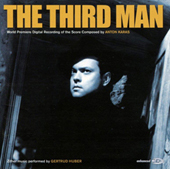
Gertrud Huber is a German zither player, harpist, and educator specializing in Alpine folk music traditions. She holds a Ph.D. from the Institute for Folk Music Research and Ethnomusicology at the University of Music and Performing Arts Vienna (2014) and serves as a Part-Time Lecturer in zither pedagogy at the Federal Academy for Musical Youth Education in Trossingen . Her career spans solo performances, ensemble collaborations, and cross-cultural research. Her research interests focus on: Alpine folk music preservation Zither's role in cultural memory Migrant identity formation Gender dynamics in zither education Historical evolution of plucked string instruments Intercultural musical dialogues Recent publications analyze: Zither traditions across Europe (2014) Gender perceptions in zither teaching (2012) Intercultural instrument adaptations (2013) Historical documentation of zither musicians (2010) Scientific awards include: First national prize at 'Jugend musiziert' (1981) Youth award at 'Zwiesler Fink' (1982) Continued juror role at international zither competitions