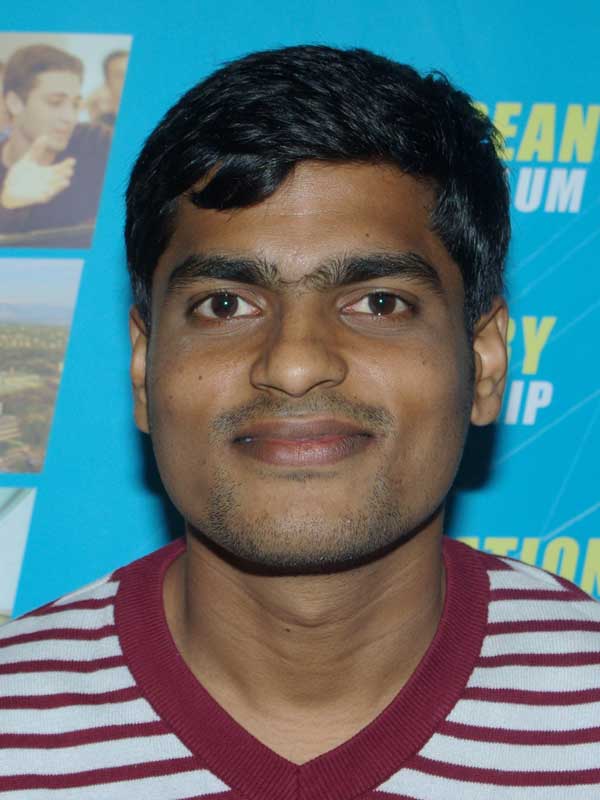
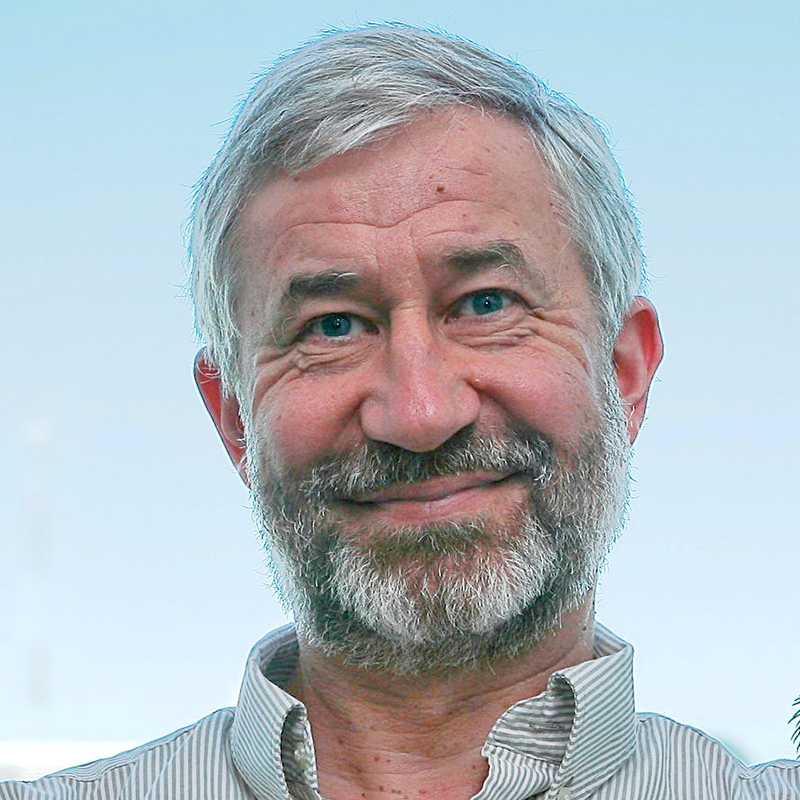
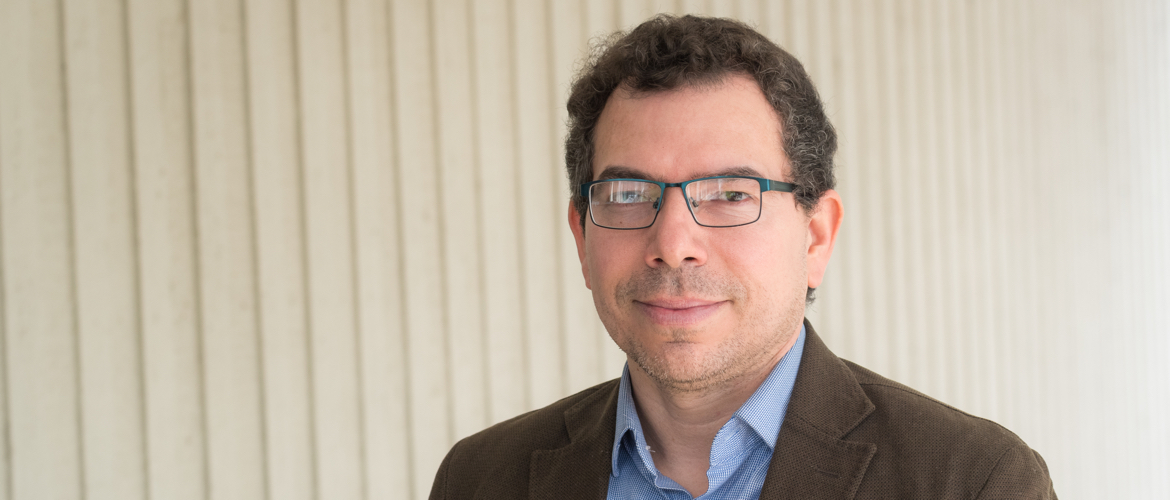
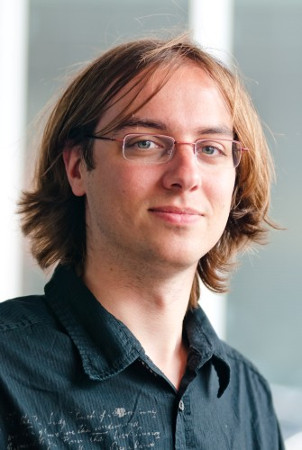
Eric Schearer is an Assistant Professor in the Department of Mechanical Engineering at Cleveland State University and a Staff Scientist at MetroHealth Medical Center's Department of Physical Medicine and Rehabilitation. He directs the Center for Human Machine Systems, focusing on neuroprosthetics for spinal cord injury patients. His research develops neuroprostheses combining functional electrical stimulation (FES) and soft exosuits to restore arm mobility. Key projects include non-invasive command interfaces, caregiver-programmable stimulation patterns, and hybrid FES-robotic control systems for elbow/wrist movements. 2025: Empathy training's impact on engineering students 2024: Multi-DOF hybrid FES-robotic control 2023: MPC-based actuation distribution 2022: Hands-free feeding interface, dynamic motion planning Professional memberships include IEEE Robotics, Engineering in Medicine & Biology, Systems, Man & Cybernetics, and American Society for Engineering Education.
Rajeev Gangula is a Research Assistant Professor in the Department of Electrical and Computer Engineering at Northeastern University's College of Engineering. His research focuses on signal processing, physical layer protocol design, and prototyping with software-defined radios and connected robotics systems. Education background includes a PhD in Mobile Communications from Télécom ParisTech (EURECOM, 2015), MSc in Mobile Communications from Télécom ParisTech (EURECOM, 2012), and Master of Technology in Signal Processing from Indian Institute of Technology Guwahati (2010). Research interests span wireless communication systems, UAV-aided networking, 5G/6G technologies, and real-time prototyping. Current work explores AI-enabled open RAN control, bistatic sensing in 5G NR, and UAV-assisted localization using hybrid radio models. Recent publications demonstrate strong focus on O-RAN implementation, spectrum sharing techniques, and advanced positioning methodologies using OpenAirInterface platforms.
Professor Vangelis Angelakis is a Full Professor at Linköping University's Department of Science and Technology, specializing in IoT, edge-to-cloud systems, and digital twinning for urban sustainability. He holds a PhD from the University of Crete (2008) and became a docent (habilitation) in 2015 before advancing to his current role in 2021. His academic career includes postdoctoral research at Huazhong University of Science and Technology (China) and the University of Maryland (USA), as well as visiting roles at Lund University and other institutions. Research Interests: Angelakis focuses on smart city technologies, including IoT infrastructure, digital twins for urban environments, and emergency response logistics. His work integrates interdisciplinary approaches to address climate change and urban challenges through projects like MODIG-TEK, SuMIn, and Testbed Kungsgatan. He leads the Cities 5.0 initiative, advancing sustainable urban development through IoT applications. Funding & Grants: He coordinates EU projects (SORBet, WiVi-2020, RERUM) and secures support from Vinnova, VR, and ELLIIT. His Testbed Kungsgatan project (2021) received SEK 1.5M for IoT platform development. He also contributes to the ULALABS initiative, designing frameworks for Living Labs in European urban innovation. Editorial Roles: Angelakis serves as Associate Editor for IEEE/KICS JCN (2013–20), IET Smart Cities (2020–), and guest editor for Frontiers. He evaluates proposals for Greek, Qatari, and Estonian funding agencies. Teaching: He teaches Smart Cities, IoT, and Digital Twins at Linköping University since 2009, developing courses like Digital Twins in Construction (2021–).
Peter Steenkiste is a Professor of Computer Science and Electrical and Computer Engineering at Carnegie Mellon University, with appointments in the School of Computer Science and the Computer Science Department. His research focuses on distributed systems, networking, and wireless technologies, including future Internet architectures like XIA and applications in 5G networks. Steenkiste holds a Ph.D. in Electrical Engineering from Stanford University. His work integrates theoretical and applied approaches, often involving prototype development and real-world testing. Research interests include: Future Internet Architecture (XIA) Wireless network optimization Dynamic spectrum access Network telemetry His publications consistently address network efficiency and innovation, with recent works exploring low-latency video delivery, 5G virtualization, and programmable network infrastructure. Awards include IEEE and ACM Fellowships, Andrew Heiskell Honorable Mention, and University of Cantabria Research Award. He has advised students like Shawn Chen and secured grants for projects including REACH (Robust Content Delivery) and FLOYD (Vehicular Edge Computing). He leads research groups at CMU's Gates and Hillman Centers and collaborates with industry partners like Telefonica and ETH Zurich.
Dr. Javier Munguia is an Associate Professor at the School of Engineering, University of Warwick. His expertise spans Additive Manufacturing/3D Printing technologies, CAD/CAM systems, and Industrial Engineering. He leads teaching modules such as ES1B1 (Engineering Design and Application) and ES3C2 (Advanced Mechanical Engineering Design). His research focuses on design optimization, medical device fabrication, and Industry 4.0 curriculum development. He collaborates with A*STAR’s SIMTech in Singapore for interdisciplinary PhD programs. Research Interests: His work integrates cutting-edge technologies like generative design, topology optimization, and bio-fabrication. He explores medical device innovation, materials characterization, and design methodologies (QFD, Axiomatic Design). Current projects include carbon-negative acoustic dampening structures via digital bio-fabrication. Collaborations & Grants: He co-supervises a joint UK-Singapore PhD program funded by the University of Warwick and A*STAR. Students spend years 1 and 4 at Warwick and years 2-3 in Singapore. He actively develops Industry 4.0 educational frameworks using factory pilot demonstrators. Labs & Teams: Engages with A*STAR researchers and industry partners to advance additive manufacturing applications in healthcare and industrial systems. His work bridges academic research with real-world manufacturing challenges.
Katzourakis Diomidis is an Assistant Professor at the School of Production Engineering and Management (PEM) at the Technical University of Crete. His work focuses on autonomous systems, vehicle dynamics, and control engineering with an emphasis on automotive safety and fault-tolerant architectures. He holds an academic appointment within the PEM department and contributes to systems engineering research for cyber-physical vehicles. Research interests prominently feature autonomous driving optimization, actuator redundancy strategies, haptic feedback systems, and safety-critical control protocols. His publications span topics like motion planning constraints, steering assistance interfaces, and emergency maneuver mitigation. Recent work explores AI supervision frameworks (SSuperLLM) for autonomous vehicles and yaw rate-based suspension control systems. Key technical contributions include sensor fusion strategies for degraded position estimation, variable motion control envelopes, and redundant actuator architectures. He has developed experimental platforms for stability control validation and collaborated on open-source scaled automobile testbeds.
George Koutitas is a researcher at Texas A&M University's College of Engineering, specializing in Machine Learning , Augmented Reality , and Smart Grid Technologies . His work bridges wireless communications with energy-efficient systems, spanning from AR/VR training platforms for EMS personnel to machine learning models for rare disease prediction . Research keywords include: Machine Learning for Healthcare Augmented/Virtual Reality Systems Energy-Efficient Networking Smart Grid Optimization Digital Twin Applications Recent publications (2020-2023) focus on AR resource utilization , wireless channel visualization , and energy-aware base stations , reflecting a consistent trend toward telecom sustainability and immersive technology applications . Collaborations include institutions across Europe and the U.S. in topics like 5G networks and IoT .
Eli De Poorter is a Professor at the Faculty of Engineering and Architecture , Ghent University , and affiliated with IMEC since 2017. His work bridges experimental wireless research with machine learning techniques, focusing on IoT , UWB localization , and self-learning networks . Received his PhD in 2011 from Ghent University’s Department of Information Technology FWO Postdoctoral Research Grant recipient Co-author of over 100 international publications Active in program committees of multiple conferences His research spans wireless protocol optimization , interference detection , and system configuration dependencies . Notable projects include UWB-based healthcare monitoring , industrial IoT networks , and animal wearables for agriculture . Develops energy-aware tinyML models for battery-less devices Explores Transformer networks and self-supervised learning for wireless systems Investigates multi-modal industrial IoT and Wi-Fi/UWB hybrid synchronization Scientific Awards FWO Postdoctoral Research Grant Labs & Teams Internet Technology and Data Science Lab (IDLab) IMEC research institute
Yuri Gloumakov is an Assistant Professor in the Department of Electrical and Computer Engineering at the University of Connecticut's School of Engineering. His research focuses on robotics, tactile sensing, controls, machine learning, and biomechanics, with applications in rehabilitation engineering. His work addresses challenges in prosthetic design, motion compensation, and human-robot interaction for individuals with spinal cord injuries and amputations. Gloumakov's research interests span robotics hardware development, sensor integration, and adaptive control systems. Notable themes include supernumerary grasping mechanisms, compensatory motion analysis, and trajectory-based prosthetic control. His publications emphasize biomechanical modeling, tactile feedback systems, and human-centric design principles for assistive technologies. His recent work (2020-2024) demonstrates a strong focus on upper-limb prosthetics, with studies on wrist-hand kinematics, slip control in object manipulation, and wearable testbeds for variable transmission systems. Cross-disciplinary approaches combining machine learning with biomechanics are evident in his exploration of grasp taxonomies and motion clustering during activities of daily living. While no specific grants or awards are listed, his publications indicate active collaboration with clinical and engineering research groups. Advising activities and lab affiliations remain unspecified in available materials.
Dr. Daniel Goldsmith holds a Doctorate in Model-Based Transmission Reduction and Virtual Sensing in Wireless Sensor Networks (Coventry University, 2013) and a BSc in Computer Science (Coventry University, 2007). He specializes in interdisciplinary research at the intersection of wireless sensor networks, hydraulic engineering, and environmental monitoring. His work spans applications ranging from smart water distribution systems to augmented reality museum exhibits. Key contributions include Fog Computing gateways, energy behavior analysis in tropical academic buildings, and hydraulic model calibration using virtual sensors. Goldsmith's research emphasizes practical implementations such as Singapore's WaterWiSe@SG testbed and thermal monitoring for aerospace turbine engines. His publications reflect a focus on sensor network optimization, data mining, and spatiotemporal field monitoring frameworks. Education: Doctorate: Model-Based Transmission Reduction and Virtual Sensing in Wireless Sensor Networks (2013) BSc Computer Science (1st Class Honors) (2007) Research Interests: Wireless sensor networks and protocol optimization Fog computing and edge computing architectures Hydraulic modeling and smart water infrastructure Augmented reality for environmental and cultural applications Data mining for IoT systems Energy behavior analysis in built environments Notable Work Trends: His publications from 2007–2017 show a progression from early mixed-reality applications to advanced sensor network frameworks, culminating in impactful work on hydraulic systems and continuous environmental monitoring. The 2017 Fog of Things paper demonstrates ongoing engagement with emerging distributed computing paradigms. Labs & Collaborations: Involved in Coventry University's environmental sensor networks initiatives and international partnerships like Singapore's water distribution testbed. His work frequently bridges academic research with industrial applications through collaborative projects.
Murat Torlak is a Professor in the Department of Electrical Engineering at the University of Texas at Dallas (UTD), affiliated with the Erik Jonsson School of Engineering and Computer Science. He holds a Ph.D. in Electrical Engineering from the University of Texas at Austin (1999), an M.S. from The University of Texas at Austin (1995), and a B.S. from Hacettepe University (1992). His research focuses on wireless communications, signal processing, MIMO systems, and automotive radar technologies. He has led projects on 4G/5G network optimization, spectrum sensing, and RF interference mitigation. Research interests include optimizing radio link protocols, cognitive radio networks, and antenna array design. Notable contributions include advancements in beamforming, MIMO testbed development, and real-time implementation of wireless systems. He has received grants totaling over $2M, including funding from NIH, NSF, and Texas Instruments. His work on automotive radar signal processing and mmWave imaging has been highlighted in news articles, emphasizing innovations in multi-user MIMO and global roaming technologies. Awards include the 2004 IEEE Outstanding Service Award and a 2001 Best Paper Award. His lab collaborates on projects like the 'Generic Autonomous Platform for Sensor Systems' (GAP4S) and cochlear implant stimulation systems. Grants: Over 15 funded projects, including NIH grants for cochlear implant research and Texas Instruments grants for OFDM systems. Awards: IEEE honors, NSF fellowships, and industry accolades. Projects: Developed MIMO-SAR mmWave imaging testbeds and advanced interference mitigation techniques.
Roy G.J. Damgrave is an Assistant Professor at the Laboratory of Design, Production and Management, Faculty of Engineering Technology, University of Twente. His work integrates Virtual and Augmented Reality, Synthetic Environments, and digital twin technologies into product development and smart manufacturing processes. He is actively involved in both research and education, supervising student theses and contributing to curricula in Industrial Design Engineering and Mechanical Engineering. His research focuses on decision-making support for technology implementation in multi-stakeholder industrial settings, particularly within Industry 4.0. He manages the Virtual Reality and Smart Industry Lab, where immersive technologies are applied to enhance manufacturing, remote collaboration, and maintenance processes. His work contributes to UN Sustainable Development Goals related to industry, innovation, and infrastructure. Roy Damgrave's recent publications highlight trends in mixed reality applications for railway maintenance, digital twinning in SMEs, AR-based engineering education, and HMLV manufacturing insights. His work spans computer science, engineering, and human factors, emphasizing practical implementation and strategic integration of immersive technologies. Research Affiliate, International Academy for Production Engineering (CIRP) Member, Industrial Reality Hub Member, EuroXR Association Collaborator, Fraunhofer Project Center at University of Twente He actively supervises student projects and thesis work in engineering and design, though specific student names are not listed. His grants and funding sources are not explicitly mentioned, but his affiliations suggest involvement in collaborative and applied research initiatives. He is also engaged in educational innovation, testing new teaching methods in his courses. The Virtual Reality and Smart Industry Lab, which he manages, serves as a central hub for synthetic environment research, supporting prototyping, remote collaboration, and smart industry testbed development. This lab enables experimental validation of digital systems in real-world industrial contexts.
Ronan Farrell is a Professor in the Department of Electronic Engineering at Maynooth University’s Faculty of Science & Engineering and currently serves as Vice President Academic and Registrar. He earned a BE and PhD from University College Dublin (1993, 1998) and previously worked at ICI/Zeneca Chemicals (1993–1995) and Parthus Technologies (1998–2001) as a mixed-signal ASIC designer. His academic career at Maynooth spans from Lecturer to Professor (2016), with leadership roles as Head of Department (2012–2019) and Director of the Callan Institute (2008–2015). He leads SFI research initiatives in radio frequency electronics and sensor networks. Education: BE (1993), PhD (1998) – University College Dublin Leadership: Head of Electronic Engineering (2012–2019), Director of Callan Institute (2008–2015) Research Focus: Wireless system design, RF/mixed-signal electronics, technology transfer, and innovation. His work bridges theoretical advancements (e.g., MIMO capacity optimization) with practical applications (e.g., 5G transmitters, digital predistortion techniques). Publication Trends: Recent articles emphasize 5G wireless systems, power amplifier linearization, OFDM signal processing, and behavioral modeling. Collaborations span institutions in Ireland, Europe, and Asia, with a focus on hardware implementation and system optimization. Students & Collaborations: Mentions co-authors in publications but no explicit student list provided. Collaborates with researchers in Ireland, Germany, and China.
Jonas Anund Vogel serves as Director of Dig-IT Lab and co-director of KTH Live-In Lab at KTH Royal Institute of Technology, working within the Unit of Applied Thermodynamics and Refrigeration. With dual expertise in technical engineering and social sciences, he bridges industry practice and academic research, earning Sweden's Project Manager of the Year award in 2018 for developing KTH Live-In Lab's complex infrastructure. His research centers on digitalisation in construction , living lab methodologies , and sustainable building systems , examining how contractual frameworks, digital tools, and user-centered design can reduce environmental impact. Current work addresses innovation barriers in energy efficiency, post-pandemic building design, and governance models for housing cooperatives through interdisciplinary collaboration. Analysis of his 12 publications (2015-2024) reveals consistent focus on innovation bottlenecks in construction, with recent work emphasizing digital transformation (2024) and living lab applications (2023). His scholarship uniquely integrates technical building systems with social governance aspects, particularly in Swedish multifamily contexts. Scientific Awards: Project Manager of the Year in Sweden (2018) Vogel manages externally funded initiatives including Dig-IT Lab (Vinnova/KTH/industry partnership), KTH Live-In Lab's full-scale testbeds, and the multi-university Buildings Post Corona project. These involve significant grant acquisition and industry collaboration to prototype sustainable building solutions. He oversees Dig-IT Lab's digitalisation competence center and KTH Live-In Lab's unique infrastructure, which provides changeable test environments from apartment-scale to building systems. These facilities enable real-world validation of innovations through user databases and cross-sector collaboration platforms.
Prof. Dr. Michael Rademacher is a full-time Professor of Embedded Systems and Networks at Hochschule Bonn-Rhein-Sieg (H-BRS) and Research Group Leader of 'Secure Mobile Communication' at Fraunhofer FKIE. His dual affiliation bridges academic research and applied industry solutions, focusing on wireless networks and cybersecurity. Research Focus: Rademacher's work spans wireless communication (5G, LoRaWAN), IoT security, and network protocol optimization. He leads projects like HiLeit, developing satellite-5G hybrid networks for emergency services, and DigitalTwin-4-Multiphysics-Lab for industrial simulations. His lab investigates vulnerabilities in mobile systems while creating tools like Katti for automated web threat detection. Awards & Recognition: VDI Köln Promotion Prize, 1st Place (2014) Best Master's Thesis in Computer Science, H-BRS (2014) AFCEA Bonn Study Award, 1st Prize (2014) Projects & Grants: He directs multiple funded initiatives, including HiLeit (resilient disaster communication) and Cyber Security Learning Lab. His teams develop open-source frameworks like open5Gcube for network testing and publish extensively on TLS optimization and spectrum management.