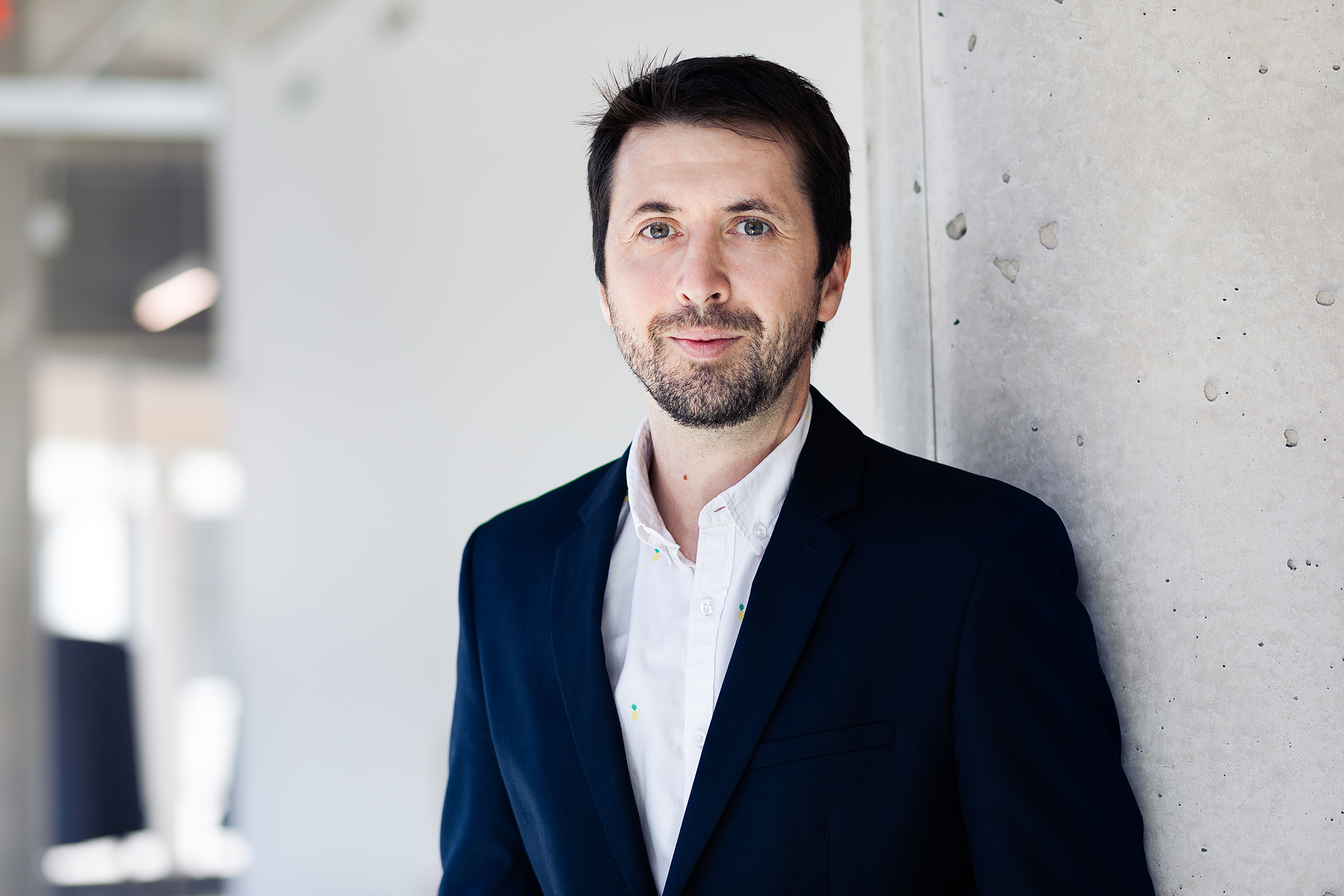
Thomas Dreibholz is a Chief Research Engineer at Simula Metropolitan's Center for Resilient Networks and Applications. He specializes in cyber sovereignty, network security, and internet testbeds, with extensive work on distributed systems, cloud computing, and 5G networks. Affiliation: Simula Metropolitan, Oslo, Norway Research Focus: Multi-path transport protocols, network resilience, and privacy-preserving frameworks His research explores the intersection of network security, cloud/fog computing, and next-generation communication protocols. Recent work includes HiPerConTracer for network analysis, privacy-aware fog platforms , and multi-layered federated learning security . He contributes to testbed development, including the NorNet infrastructure for real-world multi-path transport research. Publications reflect expertise in multi-path TCP , 5G network optimization , and cloud/fog security . He has delivered invited talks at institutions like Hainan University and Princeton University, emphasizing open-source testbed deployment and educational outreach.
Dr. Younghye Song serves as Associate Professor in the Department of Biomedical Engineering within the College of Engineering at the University of Arkansas, with additional affiliation in the Interdisciplinary Graduate Program in Cell & Molecular Biology. Her research develops pro-regenerative scaffolds and in vitro disease models using biomaterials to advance therapeutic strategies for cancer and neural injuries. Education: Ph.D. in Biomedical Engineering, Cornell University (Advisor: Dr. Claudia Fischbach) B.S. in Chemical Engineering and Biomedical Engineering, Carnegie Mellon University (Honors Research Advisor: Dr. Jeffrey Hollinger) Postdoctoral Training, University of Florida (Advisor: Dr. Christine Schmidt) Dr. Song's research centers on Biomaterials , Tumor Microenvironment , and Regenerative Medicine , with emphasis on pancreatic cancer perineural invasion and spinal cord injury. Her lab pioneers decellularized extracellular matrix hydrogels, nerve composite scaffolds, and stem cell-based therapies. Key projects include modeling cancer-nerve crosstalk through extracellular vesicles and developing tissue-engineered testbeds for fibrotic scarring. Recent publications (2021-2025) reveal dominant themes in pancreatic cancer neuroscience (7 articles), neural regeneration (5 articles), and decellularization techniques (4 articles). Her work demonstrates strong translational focus, with 2023-2025 studies increasingly incorporating stem cell therapies and educational innovations in biomaterials curriculum design. Awards and Honors: Outstanding Researcher in Biomedical Engineering, University of Arkansas Dean’s Award of Excellence Rising Star Research Award, College of Engineering Outstanding Teacher in Biomedical Engineering Early Career Editorial Board Member, ACS Biomaterials Science & Engineering Review Editor, Frontiers in Medical Technology Postdoc Excellence Award, University of Florida MOGAM Science Foundation Fellow, Korea Swanson Graduate Fellow, Cornell University Dr. Song actively mentors four PhD students (Kuczwara, Van Vu, Ala-Kokko, Kunt) and a postdoctoral fellow (Gregory). Her lab alumni include seven graduate students now at institutions like AstraZeneca, Yale School of Medicine, and Vanderbilt University. The Therapeutic Testbed Engineering lab maintains active collaborations across biomedical engineering and cancer research domains, with current projects focused on translating decellularized scaffolds into clinical applications for nerve regeneration and cancer therapeutics.
Prof. Dr. Michael Rademacher is a full-time Professor of Embedded Systems and Networks at Hochschule Bonn-Rhein-Sieg (H-BRS) and Research Group Leader of 'Secure Mobile Communication' at Fraunhofer FKIE. His dual affiliation bridges academic research and applied industry solutions, focusing on wireless networks and cybersecurity. Research Focus: Rademacher's work spans wireless communication (5G, LoRaWAN), IoT security, and network protocol optimization. He leads projects like HiLeit, developing satellite-5G hybrid networks for emergency services, and DigitalTwin-4-Multiphysics-Lab for industrial simulations. His lab investigates vulnerabilities in mobile systems while creating tools like Katti for automated web threat detection. Awards & Recognition: VDI Köln Promotion Prize, 1st Place (2014) Best Master's Thesis in Computer Science, H-BRS (2014) AFCEA Bonn Study Award, 1st Prize (2014) Projects & Grants: He directs multiple funded initiatives, including HiLeit (resilient disaster communication) and Cyber Security Learning Lab. His teams develop open-source frameworks like open5Gcube for network testing and publish extensively on TLS optimization and spectrum management.
Dr. Anish Sapkota serves as Assistant Professor in the Department of Land Resources and Environmental Sciences within Montana State University's College of Agriculture. His research integrates precision agriculture technologies with soil and water sciences to develop sustainable crop production solutions through on-farm experimentation and data-driven modeling. His educational background includes: Ph.D. in Environmental Sciences, University of California, Riverside (2022) M.S. in Animal and Range Sciences, Montana State University (2018) Research focuses on Agricultural Water Management , Precision Agriculture , and Remote Sensing applications , with emphasis on drone technology, evapotranspiration modeling, and site-specific irrigation systems. His work bridges agronomy, data science, and decision-support tools for practical farm implementation. Recent publications (2021-2025) demonstrate consistent output in top agricultural journals, revealing a strong trend toward UAV/satellite-based irrigation management and water conservation strategies across diverse cropping systems including almonds, alfalfa, and turfgrass. Active grant portfolio includes: NASA-funded project evaluating OpenET for Montana precision irrigation USDA NIFA grants on cattle stubble grazing impacts and residue management University of Montana-supported ASSIST sensor testbed initiative He serves as reviewer for Agronomy Journal, Agrosystems Geosciences & Environment, and Irrigation Science while teaching courses in agricultural sensing and capstone projects. His Precision Crop, Soil, and Water Management Group provides students with direct experience in cutting-edge field technologies for sustainable agriculture.
Dr. Johannes Pfau serves as a Scientific Assistant at the Institute for Information Processing Technology (ITIV) within Karlsruhe Institute of Technology (KIT), working in Prof. Becker's research group. His position combines postdoctoral research in advanced FPGA architectures with teaching responsibilities including System-on-Chip internships and academic advising for specialized engineering tracks. Education: Doctorate (Dissertation) in Electrical Engineering and Information Technology, Karlsruhe Institute of Technology, 2024 Research Interests: Pfau's work centers on reconfigurable computing with three interconnected pillars: (1) Next-generation FPGA architectures using emerging technologies like RFETs that require fundamental toolchain redesigns; (2) Digital beamforming systems for satellite Earth observation that replace analog processing with FPGA-based solutions to enable on-orbit data compression; and (3) High-throughput data acquisition systems for 6G prototyping handling multi-100Gbps streams through RFSoC platforms. His research bridges semiconductor physics, hardware architecture, and practical applications in communications and remote sensing. Publication Trends: Pfau's 15 most recent publications (2021-2024) reveal a strong focus on practical FPGA implementations addressing real-world constraints. His work increasingly integrates power management (7 papers), 6G infrastructure (5 papers), and novel semiconductor technologies (4 papers), with a clear trajectory toward hardware solutions for satellite communications and next-generation wireless systems. The research demonstrates consistent progression from architectural innovations (RFET, V-FPGAs) to applied systems (beamforming, 6G testbeds). Advising and Mentorship: Pfau maintains an active student supervision portfolio with documented guidance of 7+ Bachelor's and Master's theses since 2021. His projects emphasize hands-on hardware development, spanning power management techniques, beamforming filter design, and prosthetic control systems. The academic advising role for specializations 13 and 21 positions him at the intersection of computer science and electrical engineering education. Research Context: As a core member of Prof. Becker's group at ITIV, Pfau contributes to KIT's leadership in reconfigurable systems research. The group maintains strong industry connections through 6G initiatives and satellite technology development, with Pfau's work directly supporting German and European efforts in secure communications infrastructure and Earth observation systems.
Vignesh Venkata Gopala Krishnan serves as an Assistant Research Professor at Washington State University within the School of Electrical Engineering and Computer Science, where he holds a leadership role in the CREDC (Center for Research Excellence in Dynamic Cybersecurity) research center. His work focuses on advancing cyber-physical security for critical infrastructure, particularly the electric power grid. His core research interests include: Cybersecurity of critical infrastructure Cyber-physical systems resilience Metrics and tools for measuring grid cyber resiliency Federated testbed experimentation methodologies Resilience assessment frameworks Real-time cyber threat mitigation for power systems Through CREDC, Dr. Krishnan leads initiatives developing practical assessment tools and experimental protocols to quantify and enhance grid resilience against evolving cyber threats, bridging theoretical research with real-world grid security applications.
Adam Hahn serves as an Assistant Professor and WSU Site Lead for CREDC in the Department of Electrical Engineering and Computer Science at Washington State University. His role focuses on advancing cybersecurity research for critical energy infrastructure through academic leadership and collaborative projects. His educational background includes: M.S. in Electrical and Computer Engineering from Iowa State University (2006) Ph.D. in Electrical and Computer Engineering from Iowa State University (2013) Dr. Hahn's research centers on cyber-physical systems security for power grids, with emphasis on intrusion detection tailored to energy systems, quantitative risk modeling for cyber threats, comprehensive vulnerability assessment frameworks, and resilient secure system architectures . His work addresses real-world challenges in grid cybersecurity through experimental testbed development and resiliency metrics. Prior to academia, he served as a Senior Information Security Engineer at MITRE Corporation, conducting federal cybersecurity assessments and leading CPS security research. Current leadership includes CREDC Site Lead responsibilities and projects like Continuous Security Monitoring Protocols for Energy Delivery Systems and Metrics for Measuring Grid Cyber Resiliency. He actively develops experimental infrastructure including the Cyber Physical Resiliency Experimentation and Assessment testbed and Real-Time Co-Simulation platforms for microgrid security analysis, contributing to tools like CyPhyR and the Security Monitoring Evaluation Tool.
Anurag Srivastava serves as an Associate Professor at Washington State University, conducting critical research in cyber-physical security for electric power infrastructure. His expertise spans: Cyber-Physical Resiliency experimentation using federated testbeds Metrics development for measuring grid cyber resiliency Microgrid reconfiguration against communication topology attacks Decentralized voltage stability control in smart grids Defense strategies against cyber vulnerabilities in power systems As a key contributor to the Center for Research in Energy and Critical Infrastructure (CREDC), he leads projects including ARCADES (Analysis of Risk from Cyber Attack against Defensive Strategies) and CyPhyR (Cyber-Physical Resiliency), focusing on real-world grid security assessment and mitigation frameworks.
Professor Hadi Larijani serves as a full Professor in Cyber Security and Networks within the School of Computing, Engineering and Built Environment at Glasgow Caledonian University. His research portfolio spans secure wireless communications, Internet-of-Things security, and neural network applications in networking systems, contributing significantly to UN Sustainable Development Goals through technological innovation. His primary research interests include: Wireless Sensor Network Security Intrusion Detection Systems Long Range Wide Area Networks (LoRaWAN) 6G Communication Security EEG Sensing and Medical Device Validation Digital Twin Frameworks for Logistics Professor Larijani's recent publication trends (2024-2025) show strong focus on practical security implementations for emerging technologies, with significant work in EEG validation systems, logistics optimization, antenna design, and VPN protocol analysis. His research bridges theoretical security frameworks with real-world applications across healthcare, agriculture, and transportation sectors. Notable research activities include: Principal Investigator for Market Assessment of Wearable Smart Wireless EEG Headset Co-Investigator for Secure 6G Enabled Realtime Joint Communication and Sensing Testbed Co-Investigator for Ghanaian tomato irrigation improvement project Co-Principal Investigator for British Academy Researcher at Risk - Ukraine Professor Larijani supervises research students with three documented supervised works, and maintains active collaborations across multiple institutions as evidenced by multi-author publications and international projects. His research group appears focused on practical security implementations for next-generation communication systems and IoT applications.
Dr Phil Birch serves as Associate Professor in the Department of Engineering and Design within the School of Engineering and Informatics at the University of Sussex. He holds dual leadership roles as Head of Research for his department and Impact Lead for REF Unit of Assessment 12. His academic foundation includes a BSc and PhD from Durham University (awarded 1999), along with professional certifications as Chartered Physicist (CPhys) and Chartered Scientist (CSci). Dr Birch's research spans three interconnected domains: Computer Vision & Deep Learning: Specializing in object tracking (drones, humans), medical image analysis, and low-light enhancement Optical Physics: Focusing on liquid crystal devices, computer-generated holograms, and optical metrology Applied AI Systems: Developing practical implementations for UAV navigation, medical diagnostics, and security systems His recent publications (2024-2025) demonstrate strong activity in transformer-based tracking, diffusion model augmentation for medical imaging, and drone-based agricultural monitoring, with 15+ papers in high-impact venues including IEEE Transactions and SPIE conferences. Current funding includes an Innovate UK grant (2020-2024) for multi-modal security systems combining camera and sensor data. He leads the Industrial Informatics and Signal Processing research group, maintaining active industry collaborations while supervising PhD projects in optical AI systems. His lab resources include optical instrumentation, UAV testbeds, and access to high-performance computing for deep learning development.
Didier Haillot is a Professor in the Department of Mechanical Engineering at École de technologie supérieure (ÉTS), where he directs the ÉDÉ Sustainable Energy Laboratory. His affiliations include research leadership roles in T3E Energy Technology Group, LTSB Thermal Sciences Laboratory, and CIRODD sustainability consortium. He holds a B.Eng. from Université Joseph Fourier Grenoble, M.Sc./Ph.D. from Université de Perpignan, and completed postdoctoral research at DLR Stuttgart. Research interests center on sustainable energy systems with emphasis on: Thermal storage materials (phase-change composites, thermocline systems) Solar thermal technologies for agriculture and buildings Energy efficiency in Arctic infrastructure and industrial processes Decarbonization strategies for northern Indigenous communities Modeling of controlled-environment agriculture Publication analysis reveals strong focus on renewable integration in extreme climates (15 recent papers: 2020-2025), with recurring themes in Arctic greenhouse design, off-grid energy storage, and thermal management of electronics. Experimental and numerical approaches dominate his methodology. Awards include the 2025 Prix de la technologie la plus prometteuse for sustainable tech innovation. He actively mentors 30+ graduate students in projects ranging from thermal storage prototypes to Nunavik community greenhouses, frequently collaborating with industry partners. Laboratory resources include ÉTS's container farm testbed and thermal systems instrumentation facilities.
Dr. Łukasz Kulas serves as an Associate Professor at the Department of Microwave and Antenna Engineering within the Faculty of Electronics, Telecommunications and Informatics at Gdańsk University of Technology. His research spans antenna design, wireless communications, and RFID systems with emphasis on millimeter wave applications and chipless RFID technology. His primary research interests include millimeter wave antenna arrays, wireless connectivity testing methodologies, and AI integration in communication networks. Key contributions involve LTCC-based Van Atta array design, low-cost Bluetooth testbed development, and radar cross section enhancement using 3D printed lenses for RFID applications. Recent publications reveal a strong trend toward applying artificial intelligence to industrial wireless systems (InSecTT project) and avionics intra-communications, while advancing fundamental antenna technologies for harsh environments. The work demonstrates consistent focus on practical implementations of wireless solutions across multiple frequency bands. No scientific awards were documented in the source material. No information regarding student supervision or research grants was provided in the available text. Dr. Kulas participates in collaborative research projects related to wireless communications infrastructure, though specific laboratory facilities or team structures were not detailed in the source documentation.
Alexandre Abadie (born 1981) is a Research and Development Engineer at the French National Institute for Research in Digital Science and Technology (Inria), a prominent French research organization focused on digital technologies. His work primarily centers around the development and maintenance of research infrastructure for Internet of Things experimentation. Abadie's research interests focus on the complete IoT technology stack, with particular expertise in microcontroller programming, wireless sensor networks, and cloud integration for IoT systems. He has developed significant expertise in bridging the gap between physical devices and cloud infrastructure, enabling end-to-end IoT solutions. He is closely associated with the SILECS/IoTLab platform, a large-scale testbed for IoT research and development that allows researchers to experiment with real-world IoT deployments. His work supports the broader research community by providing accessible infrastructure for IoT innovation. Abadie has demonstrated commitment to knowledge sharing through tutorials such as 'Getting Started in IoT-LAB,' which guides researchers through the entire IoT development chain from object to cloud. This educational work complements his research infrastructure development by ensuring researchers can effectively utilize the platforms he helps create.
Dr. Bernardi Pranggono serves as Associate Professor in Cyber Security and Computer Networks at Anglia Ruskin University's School of Computing and Information Science, Cambridge. With over 20 years of combined academic and industry experience, he previously held positions at Sheffield Hallam University, Glasgow Caledonian University, Queen's University Belfast, and the University of Leeds, alongside industry roles at Oracle, PricewaterhouseCoopers, Accenture, and Telstra. Education: PhD in Electronics and Electrical Engineering, University of Leeds, UK Master in Digital Communications, Monash University, Australia BEng in Electronics and Telecommunications Engineering, Waseda University, Japan PGCert in Learning and Teaching in Higher Education, Glasgow Caledonian University, UK Research Focus: His work centers on cybersecurity for resource-constrained IoT ecosystems, lightweight cryptographic protocols, and sustainable ICT solutions. Current investigations span IoMT security frameworks, AI-driven intrusion detection systems, green networking for smart grids, and Industry 4.0 security architectures. His approach integrates theoretical rigor with practical industry applications, particularly in healthcare and critical infrastructure protection. Publication Trends: Recent works (2021-2023) demonstrate concentrated efforts in IoT security mechanisms (35%), healthcare cybersecurity (25%), and energy-efficient computing (20%). Key patterns include development of lightweight cryptographic primitives for LoRaWAN, anomaly detection in medical IoT, and AI-enhanced security for smart grid infrastructure, reflecting strong interdisciplinary collaboration with engineering and medical researchers. Scientific Recognition: Fellow of the Higher Education Academy (FHEA) Senior Member of IEEE (SMIEEE) Research Leadership: As Principal Investigator for British Council's Going Global Partnerships project (2024) on AI data science skills for women's employability and Engineering/Mathematics Research Grant on IoMT Security (2022), he directs internationally funded initiatives. His EPSRC/FP7 project participation (INSTANT, HIPNet, PRECYSE) demonstrates sustained grant acquisition capability across cybersecurity and IoT domains. Professional Engagement: Chairs IEEE's SIG-Industrial IoT Networks, serves as Associate Editor for Frontiers journals, and provides extensive peer review services for IEEE, Elsevier, and Springer publications while maintaining active industry consultation roles.
Djamel Eddine Khelladi is a CNRS Researcher at the IRISA laboratory within the DIVERSE team at University of Rennes, specializing in software engineering with emphasis on model-driven techniques and empirical validation. His work bridges theoretical frameworks and industrial-scale applications, particularly in evolving software ecosystems. His academic foundation includes a Ph.D. from Sorbonne University (formerly University Pierre et Marie Curie) at the Laboratory of Computer Science of Paris 6 (LIP6), followed by postdoctoral research at Johannes Kepler University Linz's Institute for Software Systems Engineering. This trajectory established his expertise in software evolution and model-driven approaches. Khelladi's research centers on software evolution challenges, particularly model-code co-evolution in highly-configurable systems like the Linux kernel. He develops scalable analysis tools (e.g., HyperAST, HyperDiff) and investigates empirical phenomena in build systems, configuration management, and polyglot programming environments. Recent work increasingly integrates large language models for automated co-evolution tasks while maintaining rigorous empirical validation. His publication trends reveal a consistent focus on practical tooling for software evolution, with growing exploration of AI-assisted engineering. Key themes include scalability in software history analysis, reproducibility in configurable systems, and debugging multi-language environments, often using Linux kernel ecosystems as testbeds. As an active community contributor, Khelladi serves on program committees for ASE, ICSE, and ESEC/FSE while advancing research through the DIVERSE team at IRISA. This group specializes in variability-intensive software systems, providing the collaborative environment for his empirical and tool-building research.