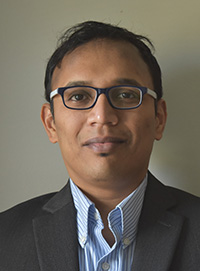
Mike Kosek (Dr. rer. nat.) is a Research Fellow at the Chair of Connected Mobility (Department of Informatics) at the Technical University of Munich (TUM). His research focuses on transport protocols, congestion control, internet architecture, and internet measurements. Research Interests: Transport protocol design and analysis Congestion control mechanisms Internet architecture and measurement Network performance optimization DNS protocol behavior and privacy Applications in satellite and aerial communication Recent Research Trends: His publications emphasize QUIC protocol analysis, DNS over QUIC investigations, cross-layer protocol interactions, and satellite communication adaptations. Key methodologies include real-world measurements, protocol design extensions, and dataset creation for reproducibility. Contact: E-mail: kosek@in.tum.de Phone: +49 89 289-18665 Office: 01.05.038, Boltzmannstr. 3, 85748 Garching
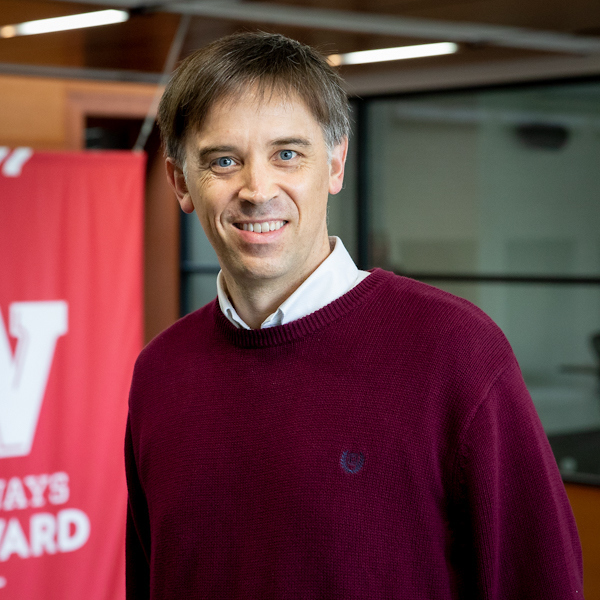
Terence Lee Robinson is a Professor at Cornell AgriTech , affiliated with the School of Integrative Plant Science and Horticulture Section . His work focuses on applied fruit crop physiology to enhance global fruit production. Education : PhD in Horticulture (1984) and MS in Horticulture (1982) from Washington State University; BS in Plant Science (1978) from Brigham Young University. Research Interests center on solving practical fruit production challenges through orchard systems analysis , rootstock evaluation , and crop load management . His field-oriented studies integrate biological and economic assessments of orchard performance. Recent Publications highlight his expertise in apple rootstock testing , chemical thinning , and nutrient management , with global implications for improving fruit quality and orchard productivity under diverse conditions. Scientific Honors : Elected Fellow, American Society for Horticultural Science (2021) Wilder Medal, American Pomological Society (2021) International Fruit Tree Association Hall of Fame (2015) Extension Leadership includes fostering collaborations between Cornell, Michigan State University, and Ontario Canada extension teams, while editing the NY Fruit Quarterly to disseminate research findings.
René Jr Landry is a full Professor in the Department of Electrical Engineering at École de technologie supérieure (ETS), Université du Québec, specializing in Global Navigation Satellite Systems (GNSS), avionics, and wireless communication technologies. His academic journey includes a B.Ing. from Polytechnique Montréal, M.Sc. from University of Surrey (UK), and Ph.D. from SupAréo in Toulouse. He maintains active research leadership through two key laboratories: LASSENA (Laboratory of Space Technologies, Embedded Systems, Navigation and Avionics) and LACIME (Communications and Microelectronic Integration Laboratory). His research spans critical aerospace navigation domains including GNSS signal processing, inertial navigation systems, software-defined radio for avionics, radio frequency interference mitigation, and indoor positioning technologies. Landry's work addresses real-world challenges in satellite navigation robustness, precision positioning in urban/denied environments, and next-generation avionic system security. His current projects focus on blockchain-enhanced IoT security, AI-driven GNSS disruption analysis, and adaptive RF front-ends for multi-band avionics applications. Analysis of his recent publications reveals strong emphasis on resilient positioning systems through multi-constellation integration (particularly Iridium-NEXT), blockchain applications for navigation security, and explainable AI techniques for GNSS signal quality assessment. His work increasingly bridges traditional navigation engineering with cutting-edge security and machine learning paradigms. 2014 Prix d'excellence du c.a. pour les services à la collectivité Landry has supervised over 100 graduate students across doctoral, master's, and research projects since 2005, with current supervision extending through Summer 2025. His research funding supports multiple industry partnerships focused on avionics certification, software-defined radio implementations, and next-generation navigation systems. The LASSENA laboratory under his leadership develops certified avionic products from open-source SDR platforms and advances multi-sensor fusion techniques for challenging navigation environments. His research infrastructure includes specialized facilities for GNSS signal simulation, avionics hardware testing, and multi-sensor integration. Current work emphasizes flight-tested validation of RF front-end technologies, blockchain-secured navigation data, and real-time interference mitigation systems for aviation applications.
Taylor Ware is an Associate Professor in Biomedical Engineering and Materials Science & Engineering at Texas A&M University's College of Engineering, holding the Cain Faculty Fellowship. Her research focuses on designing structured biomaterials and medical devices using stimuli-responsive polymers for clinical applications. Education: Ph.D. in Materials Science and Engineering, The University of Texas at Dallas, 2013 Research Interests: Dr. Ware pioneers the development of liquid crystal elastomers as artificial muscles and implantable electronics substrates, engineered living materials for infection treatment, and directed self-assembly of hydrogels. Her lab specializes in polymer formulation, thermomechanical testing, and microfabrication. Key research thrusts include: Smart elastomers, hydrogels, and composites for dynamic medical devices Programming liquid crystalline polymers for shape-morphing applications Engineered living materials that respond to biomolecular cues in urinary tract environments Publication Trends: Recent work (2023-2025) demonstrates convergence of materials science, microbiology, and medical device engineering. Her group advances liquid crystal elastomers for soft robotics and implantable electronics, develops engineered living materials for UTI treatment using microbial competition, and creates novel hemostats and urethral support devices. Publications emphasize translational applications in urology, wound healing, and neural interfaces. Scientific Awards: Invited Participant, NAE Japan-USA Frontiers of Engineering Bilateral (2023) Senior Member, National Academy of Inventors (2022) NSF CAREER Award (2018) Air Force Young Investigator Award (2017) NSF Graduate Research Fellowship (2011) Fellow of AIMBE (American Institute for Medical and Biological Engineering) Advising and Grants: Dr. Ware leads the Ware Lab with significant funding including an NIH R01 grant (with UT Dallas and Case Western collaborators) and the NSF CAREER award. Her lab mentors postdoctoral fellows like Mustafa (winner of a prestigious postdoctoral fellowship) and graduate students. Current projects are supported by the NSF Engineering Research Center HAND, focusing on advanced materials for healthcare applications. Laboratory and Teams: The Ware Lab collaborates globally and is featured in Texas Monthly, Houston Chronicle, and National Geographic for breakthroughs in engineered living materials. As part of the NSF HAND ERC, the lab develops dynamic materials for stress urinary incontinence treatment and collaborates with medical institutions on UTI therapies using engineered E. coli strains.
Dr. Su Ryon Shin is an Assistant Professor in the Division of Engineering in Medicine at Harvard Medical School and Brigham and Women's Hospital (BWH) in Cambridge, MA. She leads an active research laboratory focused on bioengineering, tissue engineering, and regenerative medicine, with particular expertise in 3D bioprinting, biomaterials, and organ-on-a-chip technology. Her research interests span biohybrid robotics, decellularized extracellular matrix, stem cell-based tissue engineering, and volumetric muscle regeneration . Dr. Shin's work integrates advanced biomaterials with cellular systems to create innovative solutions for tissue regeneration and disease modeling. She has pioneered approaches using human stem cell-derived materials for volumetric tissue regeneration and developed biohybrid neuromuscular robots powered by living cardiac muscle cells. Her publication record demonstrates consistent productivity with over 180 publications, including numerous first/senior author papers in high-impact journals like Science Robotics, Advanced Materials, and Nature Reviews Bioengineering . Her work shows a clear progression from fundamental biomaterials development to increasingly complex tissue engineering applications and translational research. Dr. Shin has received significant recognition including being named a 2025 BWH Health & Technology Innovation Awardee , Highly Cited Researcher 2024 by Web of Science, and multiple Stepping Strong Innovator Awards (2015, 2018, 2020). Her research has been featured in Nature Reviews Bioengineering for breakthrough work on biohybrid robots. She actively mentors students and postdocs, with former lab members accepted to prestigious programs like MIT's PhD program in Chemical Engineering. Her collaborative approach is evident through numerous interdisciplinary projects with researchers across Harvard Medical School, BWH, and international institutions.
Dr. Bob Beitle Jr. is a Professor of Chemical Engineering and Senior Associate Vice Chancellor for Research and Innovation at the University of Arkansas. He joined the department in 1993, earned tenure in 1998, and was promoted to Full Professor in 2006. His research spans biochemical engineering , bioseparation , fermentation , and adaptive technology for the disabled , with significant work on protein purification, catalytic nanoparticles, and sustainable bioprocesses. Education: BS, MS, PhD in Chemical Engineering from the University of Pittsburgh (1987, 1991, 1993) Dr. Beitle's research combines experimental and computational approaches, focusing on peptide-directed nanoparticle synthesis and biocatalysis . His recent publications highlight advancements in MOF-based separations , CO2 capture materials , and viral detection platforms . He has secured grants like the CAREER Award and led projects in industrial partnerships and student development . Scientific contributions include multiple patents in bioseparation and software interfaces. Awards span decades: teaching honors (1988–2007) and mentorship recognition . He serves on the Cell and Molecular Biology Program Advisory Committee and the Executive Committee for the Biochemical Technology Division of ACS . Lab initiatives involve genomic data-driven affinity tail design and membrane-assisted fermentation systems .
Steven Andrew Culpepper is a Professor of Statistics at the University of Illinois at Urbana-Champaign, holding additional appointments as Professor in the Beckman Institute for Advanced Science and Technology, Psychology, and Educational Psychology. He specializes in quantitative methods for social sciences, focusing on psychometric models, latent class analysis, and statistical computing. Education: PhD, Educational Psychology, University of Minnesota, 2006 BS, Economics, Bowling Green State University, 2001 Research interests include advanced statistical methodologies such as latent class models, high-stakes testing analysis, and applications of Bayesian computing in education and organizational research. His work emphasizes improving large-scale assessment systems through innovative modeling approaches. His publications consistently address latent structure modeling, cognitive diagnosis frameworks, and methodological advancements in educational and behavioral statistics. While no scientific awards are explicitly listed, his contributions to psychometric theory and statistical software development are notable. Steven has grants and consulting projects related to statistical methodologies but specific grant details are not provided in the texts. He has no listed advisees/PhD students in the provided information. He collaborates across disciplines through affiliations with the Beckman Institute and maintains active software development projects, including R packages like 'rrum' and 'pathmodelfit'.
Matthew R. Jones is an Associate Professor in the Department of Chemistry at Rice University and holds the Gene and Norman Hackerman Junior Chair and Norman Hackerman-Welch Young Investigator titles. He joined Rice in 2017 after postdoctoral research at UC Berkeley under Paul Alivisatos and a PhD at Northwestern University under Chad Mirkin. His research focuses on systems-level nanoparticle assembly, plasmonics, and metamaterials, with applications in energy storage and biomedicine. Jones has pioneered techniques like 4D-STEM for catalytic nanoparticles and developed adaptive materials via strain-controlled synthesis. Education: B.S. in Materials Science and Biomedical Engineering (Carnegie Mellon University), Ph.D. in Chemistry (Northwestern University as an NSF Fellow). Key awards include the Packard Fellowship (2018) and NSF CAREER Award (2022). His lab hosts over 20 graduate students and postdocs, with notable advisees including Bukky, Zhihua Cheng, and Saxton. Research emphasizes interdisciplinary approaches: combining in-situ microscopy, ligand engineering, and computational modeling to control nanoparticle behavior. Recent studies include strain-preserved nanocatalysts (2024) and chiral superlattices (2024). Collaborations span Rice’s Center for Nanoscale Imaging Sciences and the Electrochemical Society. Lab: Jones Research Group Grants: NSF CAREER, Packard Fellowship, Rice Seed Award Publications: Over 50 peer-reviewed articles, including Science Advances (2024) and Nature Communications (2023)
David Hsu is Provost's Chair Professor in the Department of Computer Science at the National University of Singapore (NUS) School of Computing, where he founded and directs the NUS Artificial Intelligence Laboratory (NUSAIL) and leads the Smart Systems Institute. His academic leadership includes chairing major conferences such as Robotics: Science & Systems (2015) and IEEE ICRA (2016), alongside editorial roles in IEEE Transactions on Robotics and the Journal of Artificial Intelligence Research. He earned a B.Sc. in Computer Science & Mathematics from the University of British Columbia and a Ph.D. in Computer Science from Stanford University. His research spans robotics, AI, and computational biology, with recent focus on robot planning under uncertainty and human-robot collaboration. Current work integrates machine learning with decision-theoretic planning to enable robust human-robot co-existence in unstructured environments. Analysis of his 2023-2025 publications reveals dominant trends in deformable object manipulation (e.g., clothes handling via semantic keypoints), open-world navigation using scene graphs, and LLM-driven multi-agent reasoning for complex tasks. Key innovations include perspective-aware visual grounding for human-centric interaction and functional object arrangement through compositional generative models, reflecting a strong emphasis on real-world applicability. His scientific contributions have earned prestigious recognition: IJCAI-JAIR Best Paper Prize (2022) for foundational AI research Robotics: Science & Systems Test of Time Award (2021) IEEE Fellowship (2018) for contributions to robotic planning RSS Best Systems Paper Award (2017) RoboCup Best Paper Award at IROS (2015) Humanitarian Robotics Award at ICRA (2015) As director of the Adaptive Computing Laboratory, Hsu drives research on fundamental computational frameworks for human-robot interaction. The lab's work on uncertainty-aware decision-making has secured significant research funding through grants from Singapore's National Research Foundation and industry partnerships with robotics firms. While specific student names aren't publicized, his leadership in the NUSAIL indicates extensive mentorship of doctoral candidates in AI and robotics.
Dr. Kalyan R. Piratla is a Professor in the Department of Civil Engineering at Clemson University's College of Engineering, Computing and Applied Sciences. His research focuses on underground construction, infrastructure resilience, and sustainable water systems. He leads the Center for Research in Underground Infrastructure Systems Engineering (CRUISE), which develops decision-making models to enhance the sustainability and resilience of underground infrastructure systems. Ph.D. in Construction Management, Arizona State University (2012) Masters in Civil Engineering, Indian Institute of Technology Madras (2008) Bachelors in Civil Engineering, Indian Institute of Technology Madras (2007) Dr. Piratla's research integrates interdisciplinary approaches across water supply systems , power systems engineering , wireless sensing technologies , and graph theory . His work emphasizes: Seismic resilience metrics for pipeline systems Decentralized water reuse planning Vibration-based infrastructure monitoring Interdependencies among lifeline infrastructures Transportation project delivery optimization Research trends include: Application of machine learning to pipeline leakage detection Advanced seismic vulnerability assessment Life cycle cost analysis of water reuse systems Integration of geotechnical and structural monitoring Scientific Awards S.E. Liles, Jr. Distinguished Professor Dr. Piratla actively supervises graduate research and offers assistantships for PhD students. His work benefits water utilities, construction contractors, and emergency response agencies through innovative monitoring techniques and resilience enhancement frameworks . His CRUISE research group explores: Interdependencies among critical infrastructure systems Transportation project delivery efficiency Collaborations spanning power systems and wireless sensing
Prof. Nikos Mamoulis is a Professor at the Department of Computer Science & Engineering, University of Ioannina, and a Lead Researcher at Archimedes Research Unit, ATHENA RC. He holds a PhD from Hong Kong University of Science and Technology (HKUST) and a Diploma from the University of Patras. His research focuses on spatial data management, big data analytics, data privacy, and uncertain data systems. Education : Ph.D., Computer Science, Hong Kong University of Science and Technology (2000) 5-year Diploma, Computer Engineering and Informatics, University of Patras (1995) Research Interests : Complex data management (spatial, spatio-temporal, time-series, text, graphs), big data analysis, privacy preservation, and uncertain data systems. He develops scalable algorithms and systems for modern data management challenges, with applications in transportation, social networks, and geospatial analytics. Projects & Grants : MESA: In-memory Spatial Analytics Made Scalable (HFRI-funded, PI) MORE: Real-time Energy Data Management (H2020, Senior Researcher) Smart City Bus Platform (ERDF-funded, PI/Coordinator) Awards : Outstanding Young Researcher Award (2008-2009, HKU) Best Paper Award at SSTD 2015 Test of Time Award at MDM 2022 Labs & Collaborations : Leads the Archimedes Research Unit at ATHENA RC, collaborating with institutions like HKUST and Uppsala University on spatial and big data systems. Active in organizing top-tier conferences like SIGMOD, EDBT, and ICDE.
Jeanna Matthews is a Full Professor of Computer Science at Clarkson University and an affiliate at Data and Society. She holds a PhD from UC Berkeley (1999) and teaches courses ranging from operating systems to cybersecurity. Her research focuses on algorithmic transparency, AI ethics, and societal impacts of automated systems. Matthews is a prominent ACM leader, serving on multiple committees including the Technology Policy Subcommittee on AI Accountability. She has pioneered work on forensic software analysis in criminal justice systems and delivered DEF CON presentations on virtualization security and adversarial testing. Awards include ACM Distinguished Speaker and Fulbright Specialist roles. Her work emphasizes open-source tools and critical thinking in education, extending to global service learning programs in the Dominican Republic and Brazil. Education: PhD in Computer Science (UC Berkeley, 1999), B.S. in Math/Computer Science (Ohio State, 1994), B.A. in Spanish (SUNY Potsdam, 2016). Research Interests: Cybersecurity vulnerabilities, algorithmic accountability frameworks, automated decision systems in justice contexts, and ethical AI design. Recent projects include investigating bias in DNA forensic software through a Brown Institute grant and analyzing political polarization on social platforms. Awards & Recognition: ACM Distinguished Speaker (2018-present) Fulbright Specialist (2018-present) 2018-2019 Brown Institute Magic Grant ACM SIGOPS Chair (2011-2015) ACM Special Interest Group Governing Board Chair (2016-2018) Teaching & Outreach: Designed courses integrating open-source tools and critical inquiry, including abroad programs in Mexico, Brazil, and the Dominican Republic. Advocates for lifelong learning strategies and questioning underlying assumptions in computing systems. Key Projects: Forensic Software Accountability: Examining discrepancies in DNA analysis tools Algorithmic Transparency: Frameworks for auditing automated systems Cybersecurity Education: Adversarial testing methodologies for justice software
Daniel Bolt is the Nancy C. Hoefs Bascom Professor of Educational Psychology at the University of Wisconsin-Madison’s School of Education. His research focuses on psychometric methodologies in educational, social, and health sciences, including latent variable models, computational methods, and assessment of individual differences. He also collaborates on biostatistics projects at the Waisman Center. Education: PhD in Educational Psychology, University of Illinois at Urbana-Champaign (1999) MS in Statistics, University of Illinois at Urbana-Champaign (1995) BA in Psychology/Mathematics, Calvin College (1992) Research Interests: Bolt’s work bridges psychometrics and educational data science, addressing topics like response style modeling, computer-based testing, and measurement validation. His recent projects explore the intersection of IRT models with modern assessment challenges, including rating scale confusion and item complexity effects. Awards: Kellett Mid-Career Award (2019) Vilas Associates Award (2015, 2017) Chancellor’s Distinguished Teaching Award (2009) Outstanding Reviewer Awards (Journal of Educational and Behavioral Statistics, 2011/2020) Teaching & Leadership: Bolt teaches advanced courses in test theory and hierarchical linear modeling. He served as President of the Psychometric Society (2019–2021) and is a Teaching Academy Fellow at UW-Madison.
Andreas Mortensen is a full Professor at École Polytechnique Fédérale de Lausanne (EPFL) in Switzerland, where he leads research at the Mechanical Metallurgy Laboratory (LMM) within the School of Engineering. His office is located in building MXD at EPFL's main campus in Lausanne. Institution: École Polytechnique Fédérale de Lausanne (EPFL) School: School of Engineering (STI) Department: Mechanical Metallurgy Laboratory (LMM) Position: Professor Professor Mortensen's research focuses on the mechanical properties of materials, particularly metal matrix composites, microcellular materials, and the fundamental aspects of metallurgy. His work spans from theoretical modeling to practical applications in materials processing and characterization. He has made significant contributions to understanding infiltration processes, fracture mechanics, and the behavior of materials at micro and nano scales. Analysis of Professor Mortensen's recent publications (2022-2025) reveals a continued focus on advanced materials characterization techniques, particularly nanoindentation and micro-scale mechanical testing. His research shows increasing attention to additive manufacturing processes, multi-scale material behavior, and the development of novel composite structures. The work spans fundamental investigations of dislocation dynamics and slip phenomena to applied research on brazing technologies and investment casting methods. Throughout his extensive career, Professor Mortensen has supervised numerous students and collaborated with researchers worldwide, contributing to the advancement of materials science and engineering. His laboratory has been instrumental in developing methodologies for characterizing material behavior across multiple length scales, from nano to macro.
Elham Kazemi is a Professor of Mathematics Education at the University of Washington’s College of Education, holding the Geda and Phil Condit Endowed Chair. She specializes in elementary teacher education, instructional leadership, and equity-focused mathematics pedagogy. Her research emphasizes professional learning communities, student-centered classroom practices, and disrupting inequities in education. Education: PhD in Mathematics Education, UCLA (1999) MA in Educational Psychology, UCLA (1997) BS in Psychology (Elementary Teaching Certificate), Duke University (1992) Research Interests: Kazemi’s work focuses on equitable mathematics instruction, teacher learning, and leadership development. She designs school-wide professional development models (e.g., Math Labs) and studies classroom discourse, student disciplinary identities, and organizational learning. Key projects include the Labs Project (funded by JSMF) and RMLL (NSF-funded leader learning). Publications & Grants: Over 40 peer-reviewed articles, including work in American Educational Research Journal and Journal of Teacher Education . Co-authored influential books like Choral Counting and Counting Collections and Intentional Talk . Recipient of $5.4M+ in grants from NSF, McDonnell Foundation, and others for projects on teacher leadership and equitable instruction. Awards: 2022 AERA Open Article of the Year 2019 Outstanding Faculty Award for Educational Equity 2015 Geda & Phil Condit Professorship Advising & Leadership: Kazemi co-leads initiatives like the Leading Towards Racially Just Mathematics Instruction partnership. She has supervised numerous graduate students and collaborates with schools to implement equity-driven practices. Labs & Teams: Her work includes the Labs Project (designing Learning Labs for mathematics/literacy discussions) and the Mathematics Education Project (MEP), fostering statewide collaboration among educators.