Shirley Micallef is Professor in the Department of Plant Science & Landscape Architecture at University of Maryland's College of Agriculture and Natural Resources. Her research addresses microbiological safety of fresh produce, focusing on enteric pathogen-plant interactions, irrigation water quality, and sustainable management practices. Current projects examine Salmonella/E. coli dynamics on leafy greens under variable environmental conditions. Research pillars: 1) Preharvest factors affecting pathogen persistence; 2) Metabolomic basis of plant-pathogen interactions; 3) Validation of sanitation technologies; 4) Irrigation water safety. Recent work (2020-2025) emphasizes molecular mechanisms of bacterial colonization and climate impacts on food safety risks. Article trends: 75% focus on pathogen-plant interactions, 60% on leafy greens, 40% on irrigation water/sanitation. Methodological strengths include transcriptomics, metabolomics, and advanced detection platforms.
Kaliramesh (Kali) Siliveru is an Associate Professor and University Outstanding Scholar in the Department of Grain Science and Industry at Kansas State University. His work focuses on grain processing, food safety, and process modeling , with expertise in milling technologies, particle mechanics, and material handling. He holds a B.S. in Food Science from Acharya N.G Ranga Agricultural University, India, and a Ph.D. in Grain Science from Kansas State University. Dr. Siliveru’s research has produced 75+ peer-reviewed articles, 13 book chapters , and impactful studies on reducing microbial contamination in wheat-based products, optimizing pulse processing, and advancing nonthermal technologies like cold plasma. He has received prestigious awards including the ASABE Early Career Engineer of the Year and the University Distinguished Faculty Award for undergraduate mentoring. He teaches GRSC 310 (Materials Handling) , GRSC 810 (Particle Technology) , and GRSC 840 (Advanced Grain Processing) . His lab affiliations include the BIVAP Feed Quality Assurance Lab and Hal Ross Flour Mill, where he explores milling efficiency, microbial control, and sustainable food processing . Current projects address novel applications for minor millets and engineering solutions for safe, nutritious food production.
Dr. Alan Lloyd is an Assistant Professor in Civil Engineering at the University of New Brunswick, specializing in structural response to extreme loads. He directs experimental research at the Drop Mass Impact Test Facility, focusing on blast-resistant design and retrofit techniques. Education: PhD Civil Engineering, University of Ottawa MASc Civil Engineering, University of Ottawa BEng Civil Engineering, Lakehead University Diploma Civil Engineering Technology, Camosun College Research: Investigates blast/impact effects on structures, structural retrofitting, material behavior under high strain rates, and experimental validation using shock tubes and impact testing. Current projects include developing blast-resistant building components and retrofit solutions for existing infrastructure. Publications: Focus on blast dynamics, FRP composites for structural strengthening, and experimental mechanics. Recurring themes include concrete/wood material performance under explosive loads and design methodologies for blast mitigation. Awards: NSERC Graduate Scholarships National Security Innovation Competition prizes (2010, 2011) ACI Blast Prediction Contest winner Advising: Supervises graduate students researching FRP materials, concrete properties, and structural modeling. Manages industry collaborations on blast-resistant technologies. Facilities: Leads development of the Drop Mass Impact Test Facility for structural component testing under controlled impact conditions.
Dr. M.Z. Naser is an Assistant Professor in the Glenn Department of Civil Engineering at Clemson University. His research focuses on causal and explainable machine learning methodologies applied to structural engineering, materials science, and fire safety. He holds a PhD from Michigan State University and an M.S. from the American University of Sharjah. Naser teaches courses such as Machine Learning for Civil Engineers and Structural Fire Engineering, emphasizing interdisciplinary innovation. His work bridges data-driven analysis with domain-specific knowledge to address challenges in resilient infrastructure design, including fire-resistant materials, structural retrofits, and AI-driven decision-making. Education: PhD, Michigan State University; M.S., American University of Sharjah Research Themes: Explainable AI, Fire Engineering, Structural Materials, Causal Inference Key Projects: Developing SPINEX framework, wildfire classification models, and cognitive infrastructure systems Recent publications analyze over 1000 fire tests to uncover spalling mechanisms, explore synthetic fire tests via GANs, and benchmark automated ML platforms. His work on causal diagrams for civil engineers and firefighter algorithms highlights contributions to both theory and practical applications. Naser also advocates for integrating AI into engineering education, emphasizing ethical and transparent model deployment.
Heiko Falk is a Professor and Head of the Institute of Embedded Systems at Technische Universität Hamburg (TUHH). His roles include serving as Workshop Chair for the 2024 Embedded Systems Week (ESWEEK), Scientific Coordinator for the B.Sc. and M.Sc. Computer Science programs, and Deputy Head of the Board of Examiners for Computer Science and Engineering. His research focuses on real-time systems, compiler optimizations, and worst-case execution time (WCET) analysis. Key areas include multi-core architectures, cache management, energy efficiency, and hardware/software co-design. Falk's work emphasizes practical compiler techniques for improving real-time performance, such as WCET-aware memory allocation, dynamic SPM optimization, and event-driven scheduling. His publications analyze shared cache interference, preemptive/non-preemptive scheduling, and DMA-aware optimizations. Recent work explores multi-objective trade-offs between WCET, energy consumption, and code size in embedded systems. No scientific awards are explicitly listed, but his contributions to WCET benchmarking (e.g., haRTStone project) and compiler frameworks demonstrate significant impact in the field. Advising and grants: No formal advisees are listed in the provided texts. Falk's work is supported through projects like teamplay, focusing on cyber-physical systems optimization. Labs/Teams: His group operates within TUHH's Institute of Embedded Systems, collaborating on projects addressing real-time system challenges in multi-core environments.
Barry Rosenfeld is a Professor of Psychology at Fordham University, specializing in forensic psychology, clinical psychology, and neuropsychological assessment. He leads the Psychology-Law Research Lab and focuses on topics such as risk assessment in criminal justice, mental health in incarcerated populations, and the psychological aspects of terminal illness. His work bridges clinical practice, legal systems, and oncology care, emphasizing culturally adapted interventions and evidence-based practices. His research interests include violence risk assessment, psychometric validation of clinical tools, and the interplay between mental health and terminal illnesses like cancer. Notable projects involve multinational studies on attitudes toward hastened death and qualitative inquiries into patient prognosis understanding. Key Areas: Forensic Psychology, Clinical Psychology, Oncology Psychology, Neuropsychology Labs/Teams: Psychology-Law Research Lab Publications: Over 150 peer-reviewed articles, with recent focuses on correctional settings, sexual offender risk, and advanced cancer care. Dr. Rosenfeld has contributed to international consensus definitions in forensic mental health and served as President of the International Association of Forensic Mental Health Services (IAFMHS) in 2018.
Paul Rohmeyer is an Adjunct Professor at Stevens Institute of Technology's School of Business, holding roles such as Associate Teaching Professor (2015-Present) and former Program Director for the MSIS program (2017-2019). He holds a PhD in Information Management from Stevens (2006) and has extensive industry experience in IT governance, risk management, and leadership roles across AXA Financial, SAIC/Bellcore, and American Home Products. His research focuses on Information Security Management, Risk Assessment, Project Management, and Business Intelligence. Notable work includes his 2018 book on Financial Cybersecurity Risk Management and studies on network dynamics impacting company profitability (2015), cloud computing risks (2015), and cybersecurity policy frameworks (2012). Rohmeyer is a Ponemon Institute Fellow and actively contributes to professional organizations like ISACA and PMI. He teaches advanced courses in cybersecurity, data management, and project management at both graduate and undergraduate levels, including MIS 646 Information Security Management and FIN 545 Risk Management for Financial Cybersecurity. His career spans academic leadership and executive IT roles, with a strong emphasis on bridging theoretical research and practical applications in organizational security and technological innovation.
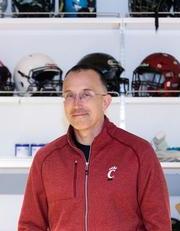
Eric Nauman is the Dane A. and Mary Louise Miller Professor of Biomedical Engineering at the University of Cincinnati and director of the Human Injury Research and Regenerative Technologies (H.I.R.R.T.) Lab. Previously, he held academic roles at Purdue University and Tulane University. He earned his Ph.D., M.S., and B.S. in Mechanical Engineering from UC Berkeley and the University of Delaware. Research Focus: The H.I.R.R.T. Lab investigates mechanisms of traumatic brain injury, spinal cord injury, musculoskeletal damage, atherosclerosis, and cancer metastasis. It develops protective and reconstructive treatments, including FDA-approved engineered tissue products for tendon repair. Collaborative projects emphasize translational research in injury prevention and treatment delivery. Grants & Awards: Lead Principal Investigator (PI) on federal grants totaling $4.7M for projects like AFRL teeming agreements and DoD biomathematical models. Recipient of prestigious awards including the Purdue Book of Great Teachers, Innovators Hall of Fame, and multiple teaching excellence recognitions. Key Contributions: Co-authored landmark TBI studies, holds 14 U.S. patents, and pioneered protective equipment innovations. His work bridges biomechanics, materials science, and clinical applications.
Cynthia Cruickshank is a Full Professor in Mechanical and Aerospace Engineering at Carleton University and currently serves as Associate Dean for Equity, Diversity, and Inclusion within the Faculty of Engineering and Design. She holds degrees including a B.Sc. and Ph.D. from Queen's University. Her research focuses on advanced building energy systems, high-performance buildings, and sustainable construction materials. Key areas include solar-assisted heat pumps, thermal energy storage (both sensible and latent), and solar absorption cooling. She leads the Centre for Advanced Building Envelope Research (CABER), dedicated to innovative building envelope technologies. Her recent work examines telework impacts on home energy use, smart thermostat data analysis, and the integration of bio-based phase change materials in construction. Over 150 peer-reviewed articles highlight her contributions to energy efficiency, renewable energy systems, and building retrofit strategies. Prof. Cruickshank's research teams collaborate on projects such as solar-driven adsorption systems, vacuum insulation panel retrofits, and policy implications of remote work. Her labs emphasize experimental validation of novel materials and systems through guarded hot box testing, hygrothermal modeling, and in-situ evaluations.
Assoc. Prof. Paul Leonard is an Associate Professor in Biotherapeutics at Dublin City University (DCU), leading the Biomedical Innovation Group (BIG) within the School of Biotechnology. His research focuses on biomolecular interaction analysis, single-cell technologies, and biologics discovery, addressing challenges in oncology, cardiovascular disease, and infectious disease diagnostics. He has 20+ years of academic and industry experience, co-founding Remedy Biologics Ltd and securing over €15M in funding. His entrepreneurial roles include CSO/CTO, Lean Six Sigma process improvements, and advisory work for life sciences companies. Research interests span high-throughput antibody discovery, immunoassay development, and environmental sensing. He collaborates with academia and industry, including projects like AquaBioSens for aquatic pollutant detection. His lab employs multidisciplinary teams and holds patents in biotechnology. Paul also serves as an external examiner for Technical University Dublin’s Biomedical Diagnostics program. Key achievements include technology spin-outs, patent filings, and leadership in EU-funded projects. His work bridges academic innovation with commercial applications, emphasizing rapid diagnostic tools and therapeutic advancements.
James C. Kaufman is a Professor of Educational Psychology at the University of Connecticut. He holds a Ph.D. in Cognitive Psychology from Yale University (2001). His research focuses on creativity, including assessment, meaning-making, social justice applications, and interdisciplinary domains. Notable contributions include the Four-C Model of Creativity and co-founding journals like Psychology of Aesthetics, Creativity, and the Arts . He has authored over 50 books and 300 papers, including foundational works like Cambridge Handbook of Creativity . Education: Ph.D., Cognitive Psychology, Yale University, 2001. Research Interests: Creativity Assessment, Creativity and Meaning, Creativity & Social Equity, and Cross-Domain Creativity Applications. His work bridges psychological theory with practical educational strategies. Awards: Mensa Research Award, Torrance Award (NAGC), APA Berlyne & Farnsworth Awards, and leadership in APA Division 10. Advising & Collaborations: Advised students like K. Arrington and C. Connery. Active in mentoring through co-authored research. Collaborates globally on creativity measurement tools like the K-DOCS. Labs/Teams: Leads research teams at UConn focusing on creativity’s societal impact, including pandemic-related studies on creativity and well-being during crises.
Dr. Min Sun is an Associate Professor and Director of the Undergraduate Program in the Department of Civil Engineering at the University of Victoria (UVic). He holds a PhD from the University of Toronto. His research focuses on structural engineering and steel structures, particularly in the areas of steel connections, seismic resilience, and numerical modeling. Dr. Sun has extensive academic and professional experience, including roles as Assistant Professor at UVic (2016–2022), Lecturer at the University of Toronto, and structural design roles in industry. His research interests emphasize the performance of steel structures under extreme loads, including earthquake engineering and material behavior. Recent work includes studies on stress concentration factors in steel connections, thermal integrity of piles, and wood-frame building reliability under lateral loads. He actively contributes to professional organizations, such as serving as Vice President (Western Region) for the Canadian Society for Civil Engineering (2018–2020). Dr. Sun teaches courses including Advanced Structural Analysis (CIVE 421) and Solid Mechanics (CIVE 220) at UVic. He currently supervises graduate students in structural steel design and construction. His publications span experimental and numerical analyses, with a focus on improving design standards for steel and wood structures. Labs/Teams: Affiliated with UVic's Engineering and Computer Science faculty and the IESVIC (Institute for Energy Systems and Sustainability at UVic), though specific lab names are not explicitly stated in the text.
Dr. Ali Yetisen is a Senior Lecturer in the Department of Chemical Engineering at Imperial College London and serves as Director of the Centre for Biochemical Sensors. He specializes in developing biophotonic medical devices, biochemical sensors, and optical materials for applications in medical diagnostics, therapeutics, and imaging. His research focuses on creating wearable and implantable sensors for real-time biomarker monitoring, including projects on contact lens sensors for ocular diagnostics, microneedle patches for glucose monitoring, and holographic bandages for wound assessment. Education : PhD in Chemical Engineering and Biotechnology, University of Cambridge (2011–2014) MEd in Education, Imperial College London (2020–2023) B.S. in Mechanical Engineering, University of Arizona (2010) His research interests span nanotechnology, biomedical engineering, and photonics, with a focus on translating innovations into clinical solutions. Notable work includes engineering living biosensors for dermal tattoos and quantum dot-based lateral flow assays for rapid disease detection. He has held roles such as Tosteson Fellow at Harvard University and currently serves as Warden of Parsons Hall at Imperial College. Research Trends : Recent publications emphasize wearable biosensors, AI-integrated diagnostic systems, and point-of-care technologies. His team’s work bridges engineering and medicine, addressing challenges in diabetes management, glaucoma monitoring, and mental health biomarkers. Advising & Grants : While specific student names or grant details are not listed, his leadership in the Centre for Biochemical Sensors indicates active mentorship of researchers. The Centre collaborates with global academic and industrial partners to advance healthcare technologies. Labs & Teams : The Centre for Biochemical Sensors, housed in Imperial’s Faculty of Engineering, fosters interdisciplinary research with a focus on patient-centric design and open innovation. It includes a Management Board, Researcher Network, and External Advisory Board to drive impactful collaborations.
Bryan S. Graham is a Professor of Economics at the University of California, Berkeley. He specializes in econometrics, focusing on network formation, social interactions, and panel data analysis. His research explores topics such as peer effects, poverty traps, and small sample properties of econometric methods. Graham holds a Ph.D. from Harvard University (2005) and has held visiting positions at Harvard, CEMFI (Spain), and NYU. He is an elected Fellow of the International Association of Applied Econometrics. Education highlights include a Rhodes Scholarship (1997–2000) at Oxford University, a Fulbright Scholarship (1997–1998) at the Australian National University, and a B.A. in Quantitative Economics from Tufts University (1993–1997). His work has been published in top journals like Econometrica and the Review of Economic Studies . Key awards include NSF grants (multiple), the Review of Economics Studies Tour, and the Daniel Ounjian Prize. Graham’s research has practical applications in policy analysis, particularly in education and social spillover effects. He also actively contributes to academic service, including editorial roles at Review of Economics and Statistics and Journal of Econometrics .
Anja Skrivervik is a Full Professor at École Polytechnique Fédérale de Lausanne (EPFL), holding multiple key academic positions across the institution. She serves as a Full Professor in the School of Engineering (STI) within the Electromagnetics and Antennas group, as Director of the Electrical Engineering Doctoral Program, and as a Full Professor in multiple teaching units including EDEE, SEL, and EDMI. Her extensive institutional affiliations demonstrate her significant leadership role within EPFL's engineering and educational frameworks. Professor Skrivervik's research spans multiple cutting-edge domains in electromagnetic engineering with a particular focus on antenna design for specialized applications. Her work prominently features implantable medical devices, where she develops antennas and wireless power transfer systems for deep-body bioelectronics. She has made significant contributions to mm-Wave technology, particularly in multibeam systems for 5G applications and wireless power transfer. Her research also encompasses tissue phantom development for electromagnetic characterization, with recent work on biodegradable alternatives to traditional materials. The interdisciplinary nature of her work bridges electrical engineering, biomedical applications, and materials science. An analysis of her recent publications (2023-2025) reveals a consistent research trajectory focused on solving practical challenges in antenna design for constrained environments. Her work shows particular strength in optimizing antenna performance for implantable medical devices, where size, efficiency, and biocompatibility present unique challenges. She has developed novel approaches to beamsteering, mutual coupling reduction, and RF radiation modeling specifically tailored for medical applications. Her contributions to tissue phantom development represent an important methodological advancement for testing and validating implantable devices. As Director of the Electrical Engineering Doctoral Program and through her multiple professorial appointments, Professor Skrivervik plays a central role in shaping graduate education at EPFL. Her leadership extends to serving on the Doctoral Commission, where she helps set standards and policies for doctoral education across the institution. While specific grant information isn't detailed in the available materials, her extensive publication record across top journals and conferences suggests successful funding of her research activities. Her work appears to be conducted within EPFL's Electromagnetics and Antennas group (SCI STI AS), which likely houses specialized laboratories for antenna measurement, electromagnetic simulation, and biomedical device testing. The focus on tissue phantoms and implantable devices suggests dedicated facilities for biomedical electromagnetic testing, while her mm-Wave and 5G research indicates capabilities in high-frequency measurement and characterization.



.png)