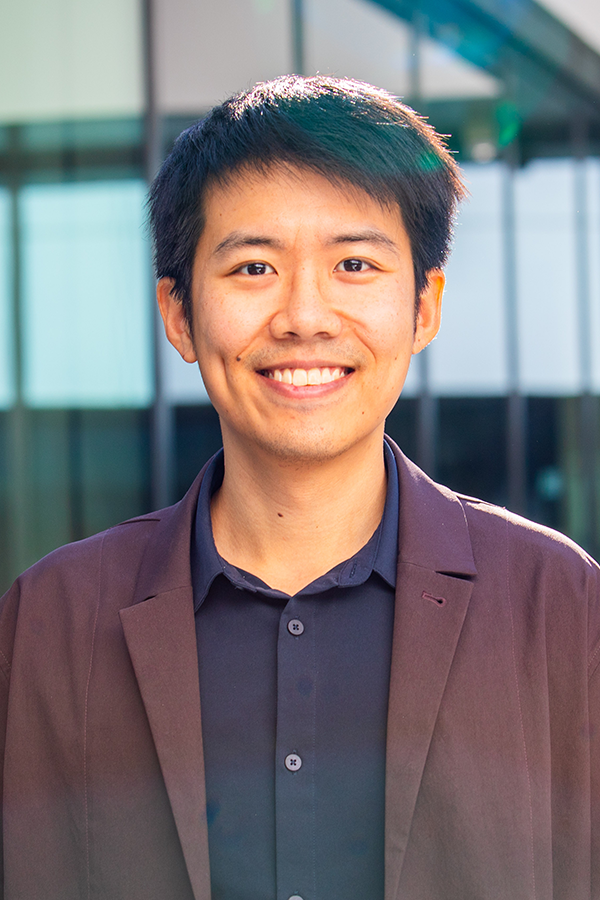
Sitan Chen is an Assistant Professor of Computer Science at Harvard University's John A. Paulson School of Engineering and Applied Sciences. His research focuses on foundational aspects of machine learning, quantum information, and algorithm design, with a particular emphasis on provable guarantees for generative modeling, deep learning, and quantum learning. He is affiliated with the Theory of Computation group, the ML Foundations group, and the Harvard Quantum Initiative. Education: PhD in EECS from MIT (advised by Ankur Moitra) Bachelor's in Mathematics and Computer Science from Harvard (advised by Salil Vadhan and Leslie Valiant) Grants & Awards: NSF CAREER Award (CCF-2441635) NSF Small (CCF-2430375) Harvard Dean's Competitive Fund for Promising Scholarship Research Interests: Generative models and diffusion processes Quantum tomography and quantum learning Algorithmic foundations for inverse problems Provably efficient learning algorithms Advising & Teaching: Advises PhD/Masters students in quantum computing and machine learning Teaches courses like Quantum Learning Theory and Algorithms for Data Science Key Contributions: First polynomial-time algorithms for learning narrow neural networks Advances in quantum state estimation with minimal resources Provably efficient sampling methods for diffusion models
Dr. Andrew Margenot is an Associate Professor in the Department of Crop Sciences at the University of Illinois Urbana-Champaign and serves as the Associate Director of the Agroecosystem Sustainability Center. His research focuses on soil science, phosphorus cycling, and sustainable agricultural practices in both urban and rural contexts, particularly in the U.S. Midwest and East Africa. He earned his Ph.D. from the University of California, Davis, followed by a postdoctoral fellowship there before joining UIUC in 2017. Dr. Margenot's work emphasizes soil as a critical natural capital, exploring how human activities impact soil fertility, carbon sequestration, and nutrient management. His interdisciplinary approach integrates spectroscopic techniques (e.g., FTIR) and spatial modeling to address challenges like phosphorus circularity, legacy phosphorus, and streambank erosion. He also evaluates agricultural practices such as cover crops, enhanced efficiency fertilizers, and precision planting to mitigate environmental impacts while improving crop yields. Key research areas include soil enzyme activity, phosphorus biogeochemistry, and the long-term effects of crop rotations. His studies often involve field trials, meta-analyses, and collaborations with policymakers to translate findings into actionable strategies for sustainable agriculture. Dr. Margenot currently serves as Senior Associate Editor for Geoderma , further contributing to the scientific community’s knowledge exchange.
Dr. Philip Singer is an Assistant Research Professor in the Department of Chemical and Biomolecular Engineering at Rice University. He joined the university in 2015 as a research scientist in the Hirasaki group and became faculty in 2021. His research focuses on NMR applications in porous media, hydrogen geostorage, and carbon dioxide utilization, leveraging advanced computational tools. Education: PhD in Physics, Massachusetts Institute of Technology (2003) MPhys in Physics, University of Oxford (1997) Postdoctoral Research, Laboratoire de Physique des Solides, Université Paris-Sud (2004-2005) Research Interests: Dr. Singer's work integrates NMR core analysis, molecular dynamics simulations, and thermodynamics to study hydrogen and CO2 storage in shale reservoirs. His lab uses cutting-edge facilities like high-performance computing at Oak Ridge National Laboratory, emphasizing molecular-to-core-scale analysis of transport processes in unconventional reservoirs. Publications: His recent articles emphasize NMR-based methods for material characterization, fluid dynamics, and contrast agent design. Key themes include kerogen nanopore analysis, MD simulation validation of NMR relaxation mechanisms, and high-frequency NMR applications in complex systems. Lab & Collaborations: The Singer NMR Lab at Rice is dedicated to advancing geostorage solutions for renewable energy transition. The lab's mission aligns with global energy challenges, focusing on maximizing shale reservoir utilization for hydrogen and CO2 storage.
Frank Verstraete is a Senior full professor in the Department of Physics and Astronomy at Ghent University's Faculty of Sciences. His research focuses on quantum many-body physics, quantum information theory, and computational physics, with particular emphasis on tensor network methods and their applications to complex quantum systems. Verstraete's research interests span quantum information, quantum computation, tensor networks, matrix product states, quantum many-body systems, quantum entanglement, and statistical mechanics. His work bridges theoretical physics with practical computational methods, developing novel approaches to simulate and understand quantum systems that were previously intractable. He has made significant contributions to the understanding of topological phases of matter, quantum phase transitions, and the mathematical structures underlying quantum entanglement. His recent publications demonstrate a strong focus on advancing tensor network methodologies, exploring fermionic systems, investigating topological phases, and connecting quantum information theory with condensed matter physics. The work shows consistent progression in handling increasingly complex quantum systems while maintaining computational efficiency. His research often involves collaborations with both theoretical and computational physicists across multiple institutions. Verstraete has supervised numerous PhD students who have gone on to make significant contributions in the field, including Lukas Devos, Laurens Lootens, Maarten Van Damme, Robijn Vanhove, Bram Vanhecke, Alexis Schotte, Klaas Gunst, and Matthias Bal. His research is supported by projects such as ERQUAF (Entanglement and Renormalisation for Quantum Fields) and QUTE (Quantum tensor networks and entanglement).
Michael Levin is a Professor in the Department of Physics at the University of Chicago, affiliated with the James Franck Institute and the College. His research focuses on quantum condensed matter physics, particularly topological phases of matter and the intersection of quantum information theory with condensed matter systems. He explores topics such as topological insulators, symmetry-protected phases, and efficient classical simulation of quantum many-body systems. His work addresses fundamental questions about entanglement, topological order, and classification of gapped quantum phases. Notable contributions include studies on protected edge modes, braiding statistics in topological phases, and tensor renormalization group methods for lattice models. Levin has received the Simons Foundation Award (2019) alongside Professor Son. His research group is part of the James Franck Institute, a leading interdisciplinary research unit at the University of Chicago.
Professor Saman P. Amarasinghe is a renowned academic in the Department of Electrical Engineering and Computer Science at MIT, leading the Commit compiler group within CSAIL. His research focuses on high-performance domain-specific languages (DSLs) and compilers, addressing the end of Moore's Law by optimizing software efficiency. He pioneered tools like Halide, Simit, and Taco, which are industry-adopted for image processing and sparse systems. Additionally, he co-founded Determina (acquired by VMware) and is the faculty director of MIT Global Startup Labs, fostering entrepreneurship globally. Education: B.S., Electrical Engineering and Computer Science, Cornell University (1988) M.S., Electrical Engineering, Stanford University (1990) Ph.D., Electrical Engineering, Stanford University (1997) Research Interests: High-performance computing, domain-specific languages (DSLs), compilers with machine learning integration, and compiler optimization techniques. His work emphasizes practical applications in image processing, graph analytics, and tensor algebra. Awards: ACM Fellow (2019) Teaching & Mentorship: Courses include 6.172 (Performance Engineering) and project-based labs. His mentorship supports over 20 startups through Global Startup Labs. Labs & Projects: Leads the Commit Group and contributes to frameworks like GraphIt and OpenTuner. Collaborates on industry projects such as the Tensor Algebra Compiler (TACO).
Kevin Jarbo is an Assistant Professor in the Department of Social and Decision Sciences at Carnegie Mellon University (CMU), part of the Dietrich College of Humanities and Social Sciences. His academic background includes a Ph.D. in Psychology from CMU (2018) with a focus on decision-making and neuroimaging. He also holds a Master of Science in Psychology from CMU (2015) and a Bachelor of Science in Biological Sciences from the University of Pittsburgh (2006). Research interests center on how stereotype threat influences student decisions in academic settings, particularly related to race and gender identity. His work integrates cognitive neuroscience methods, including fMRI and diffusion MRI, to study decision-making processes and neural circuitry. Jarbo also leads initiatives in diversity, equity, and inclusion (DEI) at CMU, advising student organizations and implementing programs addressing racial equity and masculine gender identity development. He has secured grants from the Russell Sage Foundation, Templeton Foundation, and American Psychological Foundation, focusing on topics like stereotype threat, moral framing in decisions, and racial equity in STEM education. Notable publications include studies on corticostriatal mechanisms in decision-making and the application of high-definition fiber tracking in neurosurgery. Grants & Awards: President’s Postdoctoral Fellowship (2018–2021), McClelland Prize (2015), Kavli Summer Institute Fellow (2016). Service: DEI committee member at Dietrich College, faculty advisor for student groups, and organizer of the Black Futures Summit. Teaching: Courses on behavioral decision-making and grand challenge seminars on race and identity in America.
Bing Li is the Verne M. Willaman Professor of Statistics at The Pennsylvania State University, within the Eberly College of Science and the Department of Statistics. His work focuses on advancing statistical methodologies with applications in diverse fields. He has held academic positions since joining Penn State and maintains active research and teaching roles. Education: Ph.D. in Statistics (1992), The University of Chicago M.Sc. in Statistics (1989), University of British Columbia, Vancouver M.Sc. in System Sciences (1986), Beijing Institute of Technology B.Sc. in Automatic Control (1982), Beijing Institute of Technology Research Interests: Bing Li specializes in dimension reduction techniques for high-dimensional data, with a focus on nonlinear methods and their applications in machine learning. He explores graphical models to represent statistical networks and has contributed to estimating equations , semiparametric estimation , and asymptotic theories . His work integrates longitudinal data analysis and addresses challenges in functional data regression and causal inference through innovative frameworks like envelope models and functional additive regression operators. Research Trends: His recent publications emphasize nonlinear and functional extensions of sufficient dimension reduction, causal graph learning, Bayesian statistical methods, and kernel-based testing. Notable themes include leveraging optimal transport for graphical models, developing ensemble neural networks for dimension reduction, and advancing statistical inference for complex data structures like tensor-valued observations. Awards/Honors: No specific honors or awards are explicitly listed beyond his endowed professorship. Advising & Grants: No advising records or grant information are provided in the text. His professional activities likely include mentoring through his departmental role, though explicit details are unavailable. Labs/Teams: Not explicitly mentioned; however, his research is conducted through the Department of Statistics at Penn State, possibly collaborating with interdisciplinary teams given his focus on biological and functional data applications.
Alexa Griesel is a Research Scientist in Theoretical Oceanography at the University of Hamburg's Institute of Oceanography. Her office is located at Bundesstr. 53, 20146 Hamburg, Germany. Research focuses on theoretical oceanography, particularly eddy diffusivities, Lagrangian dispersion, Southern Ocean dynamics, and turbulence regimes. Her work combines observational data (e.g., surface drifters) with numerical models to study mixing processes across scales. Publications extensively explore isopycnal eddy diffusivities, inverse energy cascades, and ocean turbulence using FRET probes, Lagrangian floats, and eddy-resolving models. Recent work examines coastal upwelling systems and diurnal boundary layer dynamics. Her awards section is currently empty based on available information. No explicit information about labs, teams, or grants is provided in the text.
Dr. Ivan Lokmer is an Associate Professor in Petroleum Geoscience at the School of Earth Sciences, University College Dublin. His research focuses on geophysical inversion techniques, volcano seismology, and seismic wave propagation in complex media. He holds a PhD from UCD and has expertise in numerical modeling, machine learning applications, and subduction zone dynamics. Key research areas include stress field analysis along the Hikurangi Margin, diffraction imaging using deep learning, and long-period volcanic seismic event mechanisms. He has coordinated modules such as 'Applied Geophysics' and 'Geocomputation' at UCD since 2019. Education: BSc in Physics (University of Zagreb, 1997), MSc in Geophysics (University of Zagreb, 2002), PhD in Volcano Seismology (UCD, 2008). Research highlights include studies on seismic source inversion, borehole stress orientation variability, and volcanic tremor analysis. His work integrates field observations with computational methods to advance understanding of tectonic and volcanic processes. Notable contributions include the FAME project using fiber-optic sensing for volcano monitoring and publications on subduction zone stress patterns. Teaching responsibilities include courses on geophysical methods and geocomputational tools. Ongoing projects focus on machine learning in seismic imaging and geohazard analysis.
James E. Fowler is the William L. Giles Distinguished Professor and holder of the Billie J. Ball Endowed Professorship in the Department of Electrical & Computer Engineering at Mississippi State University. As of January 2022, he serves as a Program Director in the Communications and Information Foundations (CIF) cluster at the National Science Foundation (NSF). His primary affiliations include Mississippi State University and NSF, with visiting roles at Télécom ParisTech and Polytech Nantes. He earned his B.S., M.S., and Ph.D. in Electrical Engineering from The Ohio State University. Dr. Fowler's research focuses on hyperspectral imagery analysis, compressed sensing, and image/video coding. His work integrates signal processing, machine learning, and computational imaging. Notable contributions include innovations in hyperspectral compression, random projections, and deep learning frameworks for remote sensing applications. Education: Ph.D., Electrical Engineering, The Ohio State University, 1996 M.S., Electrical Engineering, The Ohio State University, 1992 B.S., Computer and Information Science Engineering, The Ohio State University, 1990 Awards & Roles: Fellow of the IEEE Editor-in-Chief of IEEE Signal Processing Letters (2017–2019) General Co-Chair of the Data Compression Conference and IEEE International Conference on Image Processing Research Labs: High Performance Computing Collaboratory (HPC2) at Mississippi State University.
Dr. Ahmad Bani Younes serves as an Associate Professor in the Department of Aerospace Engineering within San Diego State University's College of Engineering, where he directs the Spacecraft Platform for Astronautics & Celestial Emulation (SPACE) Lab and advises the Rocket Club. His academic leadership extends to developing space-related programs and CubeSat projects at SDSU. His educational background includes a PhD in Aerospace Engineering from Texas A&M University (2013), an MSc in Aerospace Engineering from the University of Dayton (2009), and a BSc in Mechanical Engineering from Jordan University of Science & Technology (2003). Dr. Bani Younes' research focuses on Spacecraft Guidance, Navigation and Control (GNC) , Orbital Mechanics , and Space Robotics . His work encompasses high-fidelity gravity modeling for Earth anomalies, efficient satellite trajectory propagation, optimal control for spacecraft attitude tracking, and algorithmic differentiation for generating high-order derivatives. He also pioneers robotic sensing and control research in proximity operations, human-robot interaction, stereo vision, swarm robotics, and autonomous aerial vehicles through the SPACE Lab. Analysis of his 15 most recent publications (2010-2021) reveals a strong evolution from foundational orbital mechanics (Lambert's problem solutions, state transition tensors) toward cutting-edge applications in space robotics and autonomous systems. Recent works increasingly integrate machine learning (e.g., deep learning for aerial refueling) with traditional control theory, while maintaining rigorous computational approaches like Chebyshev-Picard iteration and dual-quaternion algebra. His distinguished awards include: Modeling and Simulation of Laser Communication Terminal of Satellites, Space Micro Inc., 2021 NASA JPL R&TD Innovative Spontaneous Concept Proposal, 2019 John V. Breakwell award (co-authored with JDP student), 2019 Khalifa University Competitive Internal Research Award (CIRA), 2019 Texas A&M Engineering Experiment Station (TEES) Award, 2018 Khalifa University Employee Award for Outstanding Service, 2016 ADEC Award for Research Excellence AARE, ADEC DRONES: Build and Fly chief expert award, WorldSkills, 2017 DRONES: Build and Fly chief expert award, EmiratesSkills, 2015 Recognition Certificate for best advising Matlab Club, Khalifa University, 2014 Best Paper Award, 37th AAS GNC conference, 2014 SIAM Award, Automatic Differentiation, 2012 Graduate Teaching Academy (GTA) Award, Texas A&M University, 2012 Graduate Teaching Academy (GTA) Senior Fellowship, Texas A&M University, 2012 Graduate Teaching Academy (GTA) Fellowship, Texas A&M University, 2011 Award of Academic Excellence, Jordan University of Science and Technology, 2003 As an academic advisor, he mentors the Rocket Club and develops the CubeSat project. His research is funded by competitive grants including NASA JPL R&TD proposals and Space Micro Inc. contracts, supporting hardware development for laser communication terminals and spacecraft GNC systems. These grants enable experimental validation in the SPACE Lab's 6DOF environment. The SPACE Lab serves as a critical operational testbed for space systems, conducting hardware-in-the-loop experiments in robotic sensing, proximity operations, and autonomous aerial vehicle control. Current initiatives include swarm robotics for satellite constellations and stereo vision systems for in-orbit servicing, positioning SDSU at the forefront of space technology research.
John Cressman is an Associate Professor in the Physics & Astronomy Department at George Mason University, with affiliations in the Neuroscience Program and the Krasnow Institute for Advanced Study. His research focuses on dynamical systems in driven systems, particularly exploring their roles in brain function and non-equilibrium physics. He investigates transient correlated dynamics in biological processes and natural phenomena like tornados and fluid systems. Cressman's work bridges physics and neuroscience, addressing topics such as ion concentration dynamics in neurons, seizure mechanisms, and energy flow in neuronal systems. His research interests emphasize understanding how transient dynamical structures influence biological and physical systems, with a strong focus on neuronal behavior and the physics of non-equilibrium systems. Key themes include the interplay of excitatory and inhibitory conductances during seizures, ion concentration homeostasis, and the application of advanced imaging techniques like NIR-II fluorescent nanoprobes for biomedical applications. Recent articles highlight innovations in nanoparticle-based sensing and imaging, including DNA-based sensors for bioelectrical signals and fluorescent probes for tumor imaging. These studies reflect a trend toward integrating biophysics with cutting-edge nanotechnology for medical and neuroscientific advancements. Cressman’s work also explores turbulence and energy dissipation in complex systems, linking statistical physics principles to experimental observations. Labs and collaborations are centered at the Krasnow Institute, where interdisciplinary approaches to neurophysics and systems biology are prioritized. His research has implications for understanding neurological disorders and developing novel diagnostic tools.
Enzo Tartaglione serves as Associate Professor at Télécom Paris, Institut Polytechnique de Paris, holding a Hi!Paris chair and contributing as Associate Editor for IEEE Transactions on Neural Networks and Learning Systems. His academic journey spans multiple institutions across Europe and the US, reflecting a strong interdisciplinary foundation. Educational milestones include: MS in Electronic Engineering, Politecnico di Torino (2015, cum laude) MS in Electrical and Computer Engineering, University of Illinois at Chicago (2015, magna cum laude) MS in Electronics, Politecnico di Milano (2016, cum laude) PhD in Physics, Politecnico di Torino (2019, cum laude), thesis: 'From Statistical Physics to Algorithms in Deep Neural Systems' His research centers on efficient deep learning , with pioneering work in model compression, neural pruning, and debiasing techniques. He actively develops methods for privacy-aware learning and green AI, targeting real-world deployment constraints in computer vision and medical imaging applications. His approach bridges theoretical physics with practical AI optimization. Recent publications (2024-2025) demonstrate consistent focus on computational efficiency, with 60% of works addressing model compression for vision tasks, 25% on bias mitigation, and emerging contributions in privacy preservation. Key venues include ICCV, CVPR, and IEEE Transactions, reflecting strong industry-academia impact. Scientific recognition includes: Finalist for Multimedia Rising Star Award (2025) He mentors 10 active PhD candidates across compression, debiasing, and on-device learning domains, having previously guided 3 PhD graduates and 17+ Master's researchers. Research funding includes the Hi!Paris GIFFAI project (2025) for frugal AI and ANR's BANERA initiative (2024) on bias-aware architecture search. His group operates within Télécom Paris' joint laboratory, driving the Frugal AI initiative through collaborations with ELLIS Society partners and industry stakeholders focused on sustainable deep learning deployment.
Daniel Sage serves as Professor and Chair of the Department of Mathematics at the University at Buffalo, where he maintains an active research program spanning pure and applied mathematics. His leadership role as department chair underscores his institutional significance within the university's academic structure. His educational trajectory demonstrates exceptional academic achievement: AB in Mathematics, Summa cum laude, Harvard University (1989) SM in Mathematics, University of Chicago (1990) PhD in Mathematics, University of Chicago (1995) Sage's research agenda bifurcates into two distinct but equally rigorous domains. His primary work in pure mathematics centers on the geometric Langlands program, where he investigates opers, connections on algebraic curves, and moduli spaces through geometric and combinatorial representation theory. This includes significant contributions to quantum groups and Hopf algebras. Concurrently, he explores composite materials science through the G-closure problem. His secondary research stream analyzes bibliometric patterns, examining citation dynamics, h-index validity, and research evaluation methodologies across disciplines. Analysis of his 15 most recent publications (2013-2023) reveals a strong concentration in geometric representation theory and mathematical physics, with approximately 75% of articles addressing Langlands program extensions, quantum group structures, and algebraic geometry applications. The remaining 25% focuses on scientometric investigations, particularly citation network analyses comparing Nobel laureates and Fields medalists. This dual focus demonstrates unusual breadth across theoretical mathematics and empirical research evaluation. No scientific awards or honors are documented in the provided materials. While his departmental chair position suggests administrative responsibilities, no specific information regarding graduate student advisement, grant funding, or research mentorship activities appears in the source texts. The absence of laboratory facilities or dedicated research teams in the documentation indicates Sage's work is primarily theoretical, conducted through individual scholarship and collaborative mathematical research rather than experimental or equipment-dependent investigations.