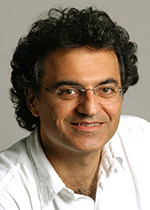
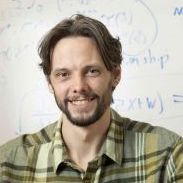
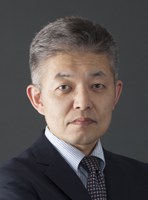
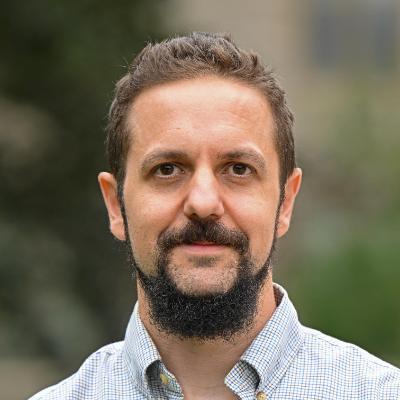
Professor Ignacio Cirac is Director at the Max Planck Institute for Quantum Optics and leads the Theory Division. His pioneering work in quantum information theory has fundamentally advanced quantum computing and quantum simulation frameworks. Research breakthroughs include: Developing theoretical foundations for quantum computers and quantum networks Creating new algorithms for quantum communication Designing quantum simulation methods for many-body systems Establishing theoretical tools for quantum entanglement characterization His group develops concepts for quantum gates and algorithms implemented by experimental physicists worldwide. Current investigations focus on quantum simulation of solid-state systems using ultracold atoms in optical lattices, advancing understanding of magnetism and superconductivity. Major Awards: Wolf Prize in Physics (2013) Niels Bohr Medal (2013) Prince of Asturias Prize (2006) Benjamin Franklin Medal (2009) Quantum Electronics Prize (2005)
Dr. Russell Herman is a Professor in the Department of Physics and Physical Oceanography at the University of North Carolina Wilmington. He has been actively involved in physics education, particularly teaching PHY 101 (College Physics), and has developed extensive lecture materials and video content for undergraduate instruction. His departmental contributions include serving as chair of the Technology Committee, implementing graphing calculators in lower-level classes, and acting as Web Master for the Mathematics and Statistics Department. Dr. Herman's research interests span mathematical physics, differential equations, and educational technology applications. He has made significant contributions to open source software for mathematics education, reviewing numerous tools to make mathematical resources more accessible, especially for students in resource-constrained environments. His work with VPython for mathematical modeling and mobile computing environments demonstrates his commitment to innovative teaching approaches. He has attended the International Conference on Technology in Collegiate Mathematics (ICTCM) continuously since 1993, reflecting his longstanding engagement with educational technology. His publication record shows a strong focus on mathematical methods, particularly differential equations, with recent work on the Lane-Emden-Fowler equation, soliton solutions, and Fourier analysis. Many publications bridge mathematical theory with educational applications, including textbooks and articles on using computational tools like Simulink for solving differential equations. His 'Letter from the Editor-in-Chief' series addresses contemporary issues in academic life, from digital distractions to social media applications in education. Dr. Herman has secured funding for multiple significant projects including the MCP Project (Multimedia Instruction in Mathematics, Chemistry, and Physics), the iLumina Digital Library (part of the National Science Digital Library), the Numina Project (exploring handheld devices in science education), and the Laboratory for Research on Mobile Learning Environments. These projects reflect his innovative approach to integrating technology into STEM education. He has developed several classroom software applications including GraphData 2002 for handheld devices, Menten-Michaelis Reaction software for biochemistry, Geometric Optics lab software, and LRC Circuit Laboratory tools. With over 116 items contributed to the iLumina Digital Library, his work has reached a broad educational audience. His expertise spans programming languages from Fortran and Pascal to modern computational environments, demonstrating both historical perspective and current relevance in computational physics education.
Umesh Vazirani is the Roger A. Strauch Professor of Electrical Engineering and Computer Sciences (EECS) at the University of California, Berkeley, and co-director of the Berkeley Quantum Computation Center (BQIC). His primary research focuses on quantum computing, algorithms, and complexity theory, with significant contributions to quantum cryptography, graph partitioning, and computational learning theory. Education: 1986 - Ph.D. in Computer Science, UC Berkeley 1981 - B.S., MIT Research Interests: Quantum computing foundations and applications, quantum algorithms development, complexity theory, cryptographic protocols, error-correcting codes, graph theory, and quantum information science. His work bridges theoretical computer science with practical quantum implementations. Publications Focus: Vazirani's recent publications demonstrate strong emphasis on quantum supremacy, quantum cryptography, area laws in quantum systems, and quantum complexity theory. His work frequently addresses fundamental questions in quantum information processing and computational complexity. Awards and Honors: ACM SIGECOM Test of Time Award (2024) STOC Test of Time Award (2023) National Academy of Sciences Member (2018) Delbert Ray Fulkerson Prize (2012) ACM Fellow (2005) NSF Presidential Young Investigator (1987) Student Advising: Has supervised numerous PhD students including Scott Aaronson (MIT), Sanjeev Arora (Princeton), Madhu Sudan (Harvard), Thomas Vidick (Caltech), Urmila Mahadev, and current students Jonah Sherman and Guoming Wang. Leadership: Directs the Berkeley Quantum Computation Center (BQIC) and collaborates with the Simons Institute for the Theory of Computing. Regularly teaches graduate courses on quantum computing and algorithms.
Sebastian Krämer is a researcher at the Institute for Geometry and Practical Mathematics at RWTH Aachen University, working under the supervision of Prof. Markus Bachmayr and Prof. Lars Grasedyck. His research focuses on tensor networks, low-rank approximations, and numerical methods for high-dimensional problems. He has made significant contributions to the field of tensor train formats and rank minimization techniques. Dr. Krämer's research interests span tensor networks, low-rank approximations, numerical linear algebra, high-dimensional approximation, tensor train formats, and machine learning optimization. His work centers on developing efficient algorithms for tensor decompositions, particularly focusing on alternating least squares methods, iteratively reweighted least squares approaches, and geometric constraints for tensor singular values. His research bridges theoretical numerical analysis with practical applications in high-dimensional data processing and scientific computing. His publication record shows a consistent output of high-quality work in top numerical analysis journals, with recent publications in 2024 demonstrating ongoing active research. His work demonstrates expertise in both theoretical aspects of tensor decompositions and practical implementation of numerical algorithms. He has developed several open-source toolboxes for tensor network arithmetic and tensor train feasibility problems, which have been widely used by the research community. Dr. Krämer has been actively involved in teaching, serving as a lecturer and assistant for various mathematics courses at RWTH Aachen, including Numerical Mathematics for mathematicians and civil engineers. He has also contributed to specialized research schools on high-dimensional approximation and deep learning, developing course materials and providing instruction. His professional activities include regular participation in the GAMM conference since 2017 and peer review activities for SIAM journals since 2015.
Jim Halverson is an Associate Professor of Physics at Northeastern University in Boston, Massachusetts. His research bridges string theory , particle physics , cosmology , mathematical geometry , and deep learning . He serves as a co-PI and Board Member of the NSF AI Institute for Artificial Intelligence and Fundamental Interactions (IAIFI) and co-organizes Physics ∩ ML . Halverson holds a PhD in Physics from the University of Pennsylvania (2012) and completed postdoctoral work at the Kavli Institute for Theoretical Physics (2012-2015). His research focuses on the string landscape and its implications for physics beyond the Standard Model, particularly through the lens of extra-dimensional geometries . He has pioneered the integration of deep learning into theoretical physics, applying it to problems in quantum field theory , knot theory , and cosmological model inference . Halverson has organized numerous workshops, including String Phenomenology and IAIFI Summer Schools , and serves on the editorial board of Machine Learning: Science and Technology . Halverson’s recent publications highlight neural network applications to conformal symmetry , Kolmogorov-Arnold networks , and geometric problems in string theory . His work intersects physics , mathematics , and machine learning to explore fundamental questions in cosmology and quantum gravity. He has received the NSF CAREER Grant and DOE Graduate Fellowship , underscoring his contributions to both research and education. Halverson teaches graduate courses in quantum mechanics and quantum field theory at Northeastern University.
Galen Reeves is an Assistant Professor at Duke University with a joint appointment in the Department of Electrical and Computer Engineering and Department of Statistical Science since Fall 2013, reflecting his interdisciplinary expertise bridging engineering and mathematical sciences. His research establishes rigorous theoretical frameworks at the intersection of information theory, machine learning, and statistical signal processing, focusing on fundamental limits in high-dimensional inference problems. His academic background features elite training across top institutions: PhD in Electrical Engineering and Computer Sciences, University of California, Berkeley (2011) MS in Electrical Engineering, University of California, Berkeley (2007) BS in Electrical and Computer Engineering, Cornell University (2005) Reeves' research centers on mathematical foundations of data science, with seminal contributions to compressed sensing, tensor estimation, and coding theory. He investigates information-theoretic bounds for estimation problems, develops efficient algorithms like approximate message passing, and analyzes generative AI model behavior under recursive training conditions. His work demonstrates how statistical physics approaches solve complex problems in communication theory and high-dimensional statistics. Analysis of his 2021-2025 publications reveals three dominant trends: breakthroughs in channel capacity using Reed-Muller codes, theoretical analysis of generative models and diffusion sampling, and fundamental limits in tensor/matrix estimation. These works consistently integrate information theory with machine learning, emphasizing scalability challenges in high dimensions and algorithmic robustness under heteroskedasticity. His scientific recognition includes: NSF VIGRE fellowship supporting postdoctoral research at Stanford University (2011-2013) NSF CAREER award (2018) for Theoretical Foundations for Probabilistic Models with Dense Random Matrices While no specific students are documented in the source text, his faculty position entails graduate mentorship in both ECE and Statistical Science departments. Research funding primarily stems from the NSF CAREER grant advancing probabilistic modeling, complemented by earlier fellowship support. His collaborations span Stanford University, EPFL, TU Delft, and Microsoft Research. Though no dedicated lab is mentioned, his joint appointment fosters cross-departmental research at Duke, particularly in projects like 'Modeling Traffic with Self Driving Cars' which applies statistical learning to autonomous systems. His work maintains strong ties to industry through past Microsoft Research internships and ongoing computational applications in communications and AI.
Matthieu Puigt is a Professor at Université du Littoral Côte d'Opale, specializing in signal and image processing with a focus on statistical machine learning , low-rank approximations , and sparse component analysis . His research extends to hyperspectral data fusion, unmixing, and restoration, as well as applications in chemistry and computational imaging . He leads the SPECIFI research team. Research Themes : Blind source separation, compressive learning, sensor calibration, and big data analysis Applications : Audio signal processing, environmental monitoring via drones, and urban air quality assessment His recent work includes developing VAE-based hyperspectral image emulators, tensor decomposition methods for multisensor data, and frameworks for butterfly species recognition. He advised Valentin Mullet's 2022 thesis on blockchain traceability systems and actively contributes to IEEE and GRETSI conferences.
Mahmoud Rahat is a Senior Lecturer at the Department of Information Technology , Halmstad University , Sweden. He is affiliated with the Center for Applied Intelligent Systems Research (CAISR) since 2019, focusing on data-driven solutions for industrial applications. Research Expertise: Machine Learning, Predictive Maintenance, Robotics, Natural Language Processing Industrial Collaboration: Volvo Group Truck Technologies, Northern Illinois University (2015-2016) His work bridges academia and industry through projects in intelligent mobility and automated idea detection . He has developed innovative approaches in survival analysis and XAI (Explainable AI) for predictive maintenance systems. Current trends in his publications include: Explainable AI methods for industrial data (Shapley values, Integrated Gradients) Survival analysis in neural networks Domain adaptation for automotive sensor data Federated learning frameworks Virtual sensors via tensor completion Mahmoud supervises academic projects including: Lecturer: Machine Learning for Predictive Maintenance, Big Data Parallel Programming Course Responsible: Applied Data Mining Examiner: Degree Project in Computer Science and Engineering
Lin Lin is a Professor in the Department of Mathematics at the University of California, Berkeley, and a Senior Faculty Scientist at Lawrence Berkeley National Laboratory. His research bridges computational quantum many-body problems, quantum algorithms, and numerical analysis, with affiliations to the Computational Research Division and CAMERA (Center for Advanced Mathematics for Energy Research Applications). Research Interests: Quantum chemistry, quantum algorithms, numerical analysis, and computational quantum physics. Scientific Awards: Sloan Research Fellowship (2015), NSF CAREER (2017), DOE Early Career (2017), SIAM CSE Early Career (2017), PECASE (2019), ACM Gordon Bell Team (2020), Simons Investigator (2021), and APS Outstanding Referee (2025). Contact: linlin@math.berkeley.edu | Office: 817 Evans Hall. Publications span quantum algorithms, Hamiltonian simulation, and computational methods in quantum chemistry. His seminars, like the Quantum Many-Body Seminar (Math 290) , engage students and researchers in cutting-edge topics such as quantum control, tensor networks, and open quantum systems. He leads the UC Berkeley / LBNL Applied Math Seminar and is an invited speaker at the 2026 International Congress of Mathematicians.
Dr. Yogesh Rathi is an Associate Professor of Psychiatry and Radiology at Harvard Medical School and Brigham and Women's Hospital. His research focuses on computational magnetic resonance imaging (MRI) techniques to analyze brain structure and function, particularly in psychiatric and neurological disorders. Associate Professor of Psychiatry and Radiology Brigham and Women's Hospital Harvard Medical School His research spans advanced diffusion MRI for faster imaging, ultra-high-resolution tractography, and harmonization of multi-scanner MRI data. He applies these methods to study white matter connectivity in humans and primates, alongside clinical applications for deep brain stimulation (DBS) and transcranial magnetic stimulation (TMS) in OCD, Parkinson’s, and depression. Dr. Rathi's work includes biophysical modeling of axon diameter estimation, functional connectivity analysis via fMRI, and development of real-time tools for precision targeting in neurosurgical interventions. His team secured significant NIH funding for harmonizing clinical diffusion MRI data. US Patent 10302727: Rapid Diffusion MRI Scanning NIH R01 Grant (4th percentile): MRI Harmonization Collaborator in $33M NIMH/FNIH Grant Key techniques developed by Dr. Rathi include real-time TMS targeting visualization and joint relaxation-diffusion MRI sequences for tissue characterization. These innovations are used in biomarker discovery and treatment monitoring.
George Atia is an Associate Professor at the Department of Electrical and Computer Engineering, University of Central Florida, directing the Data Science and Machine Learning Lab (DSML). Previously, he was a postdoc at the Coordinated Science Laboratory (CSL) at UIUC and earned his Ph.D. from Boston University, where he was affiliated with the Information Systems & Sciences Lab (ISS) and Center for Information & Systems Engineering (CISE). His research spans big data analytics, sparsity-based learning, controlled sensing, and verifiable planning , with applications in machine learning, cyberphysical systems security, and optical/neural signal processing. His work emphasizes robust algorithms for high-dimensional data, adversarial attacks in machine learning, and inverse problems in optical imaging. Recent projects include tensor completion for visual data recovery and multi-agent reinforcement learning with robustness guarantees. He has secured major funding from NSF, DOE, and ONR, including the NSF CAREER Award. Notable scientific contributions include Robust Tensor Completion for Visual Data Game-Theoretic Frameworks for Cloud Security Adversarial Sample Synthesis in Hierarchical Classifiers Steady-State Policy Synthesis in MDPs His teaching includes graduate courses in random processes and detection theory.
Synge Todo is a Professor in the Department of Physics, Graduate School of Science at the University of Tokyo , with joint appointments at the Mathematics and Informatics Center , Institute for Solid State Physics , Institute for Physics of Intelligence , Quantum Software Project , and Next-Generation AI Research Center . Born in 1968, he earned his B.Sc. and Ph.D. from the University of Tokyo and subsequently held post-doctoral positions at ETH Zürich. Education Ph.D. (Science), University of Tokyo, 1996 B.Sc. (Physics), University of Tokyo, 1991 Research Interests Todo’s research integrates quantum many-body physics , computational physics , and quantum computing . He develops advanced Monte-Carlo algorithms , tensor-network techniques , and renormalization group methods to study strongly correlated electron systems , lattice QCD , quantum phase transitions , and machine-learning applications in physics . His recent work explores fault-tolerant quantum computing architectures , non-variational quantum ground-state preparation , and universal scaling laws in deep neural networks . Scientific Awards Prizes for Science and Technology, The Commendation for Science and Technology by MEXT Japan (April 2019) Grants & Collaborations He currently leads several JSPS KAKENHI projects, including “ Quantum-circuit design for computational materials science ” (2023-26) and “ Enhancement of detailed-balance-violating MCMC methods ” (2020-24). He also co-leads interdisciplinary teams focusing on data assimilation for materials discovery and scalable high-performance computing . Laboratories & Software Todo heads research activities in the HΦ quantum lattice model solver and the MateriApps portal, providing open-source tools for large-scale simulations in condensed-matter and materials science.
Chao Li is an Associate Professor (with tenure) at the Department of Mathematics, Columbia University . His research spans applied mathematics and mathematical physics, with a focus on fluid dynamics in geological systems and rock mechanics. Based on publication trends, his work addresses nonlinear flow behavior in fractures, grouting efficiency, and coupled mechanical-hydraulic processes in rock formations. On leave during Academic Year 2024-2025 Contact: Rm 527, MC 4430, 2990 Broadway, New York NY 10027 Email: cl3396@columbia.edu Website: http://www.math.columbia.edu/~chaoli/
Dr. Grigorios Chrysos is a faculty member in the Department of Electrical & Computer Engineering at the University of Wisconsin-Madison. His research focuses on reliable machine learning, emphasizing robustness to noise, out-of-distribution generalization, and theoretical understanding of neural/polynomial networks. Education: PhD in Machine Learning, Imperial College London (2020) M.Eng. in Electrical Engineering, National Technical University of Athens (2014) Key research interests include robustness in deep networks , inductive bias analysis , and polynomial network design for high-order input interactions. His work explores adversarial robustness, fair model generalization, and extrapolation properties in generative frameworks. Recent awards include the prestigious DAAD AInet Fellowship (2023), Best Reviewer Awards at NeurIPS (2022), ICLR (2022), and IMCL (2021), alongside Amazon Cloud Credits and Nvidia GPU donations (2019). Scientific Contributions: Advancing tensor methods in machine learning Developing polynomial networks for robustness Designing efficient EEG seizure analysis algorithms
Timothy Becker serves as the John D. MacArthur Assistant Professor of Computer Science at Connecticut College, where he joined in 2023. His research focuses on transforming complex datasets into functional instruments through advanced computational techniques. His academic background includes: B.M. in Music Production from The Hartt School of Music B.S. in Computer Science from the University of Hartford Ph.D. in Computer Science and Engineering from the University of Connecticut Becker specializes in genomics applications but maintains active interdisciplinary collaborations in ecology and transportation. His core methodology integrates deep learning, generative modeling, and data visualization to develop open-source software tools. He emphasizes practical implementations for real-world data analysis and creates interactive tutorials to foster persistent student learning. His publication record from 2018-2025 reveals consistent contributions to bioinformatics and environmental data science, particularly in structural variation analysis and river connectivity modeling. Key trends include developing neural network frameworks for genomic data integration and creating visualization methods for multi-omic datasets. Becker actively seeks undergraduate research collaborators, encouraging students with domain-specific data or research questions to initiate projects. His interdisciplinary approach connects computer science with life sciences and environmental studies through numerous cross-institutional partnerships.