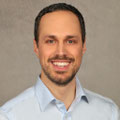
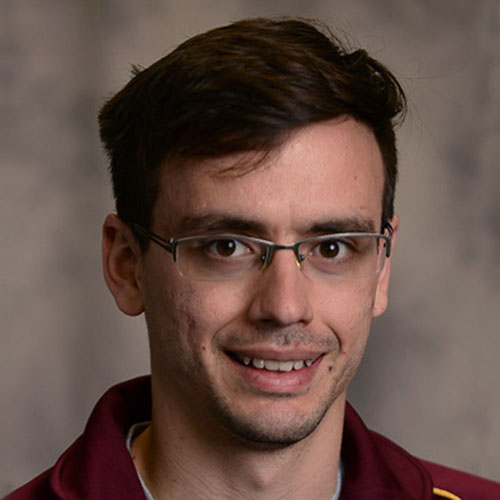
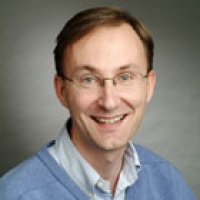
Bastian Bohn is a Researcher at the Institute for Numerical Simulation (University of Bonn). He focuses on Mathematics of Machine Learning , Approximation Theory , and High-dimensional Discretizations . His work bridges Sparse Grid Methods Numerical Analysis Scientific Computing with modern ML applications. His recent publication Algorithmic Mathematics in Machine Learning (2024) consolidates his work on algorithmic foundations for high-dimensional data analysis. Earlier studies investigate Deep Kernel Learning Explainable AI Dimensionality Reduction using sparse grid frameworks.
Dr. Megan Huibregtse serves as Assistant Professor in the Department of Kinesiology and Community Health at the University of Illinois Urbana-Champaign, where her research examines brain health through the lenses of traumatic brain injury, neuroimaging, and blood biomarkers with specialized focus on female populations and intersections with psychological trauma. Her academic credentials include: Ph.D. in Human Performance (2022), Indiana University Bloomington B.S. in Neuroscience (2017), Indiana University Bloomington Dr. Huibregtse investigates neurobiological effects of subconcussive head impacts and partnered sexual strangulation, sex-specific neural circuitry changes post-trauma, and neuroendocrinological aspects of female reproductive aging. Her work develops semi-automated methods for tracking perimenopause progression while examining white matter microstructural damage after traumatic brain injury and its functional consequences in women. Recent publications reveal dominant themes in neural injury biomarkers (GFAP, NfL), trauma-brain injury interactions, and innovative analytical approaches. Key contributions include studies on partnered sexual strangulation's neurological impact in young women, machine learning applications using sleep-wake data for TBI prediction, and childhood maltreatment's relationship to intimate partner violence in pregnant Black individuals. She actively collaborates with multidisciplinary research teams across Emory University, Indiana University, and national trauma consortia, contributing to large-scale studies on neural injury mechanisms and outcomes.
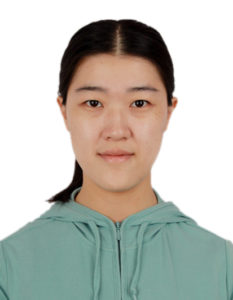
Yue Liu is a Visiting Scholar at Vanderbilt University and a fourth-year PhD student at her home institution, Northeastern University, China. She is affiliated with the Medical-image Analysis and Statistical Interpretation (MASI) Lab , focusing on interdisciplinary research bridging biomedical engineering and computational methods. Her work intersects with themes like fMRI harmonization , diffusion tensor imaging (DTI) , and reproducibility in neuroimaging . Education : Bachelor of Science, Northeastern University, China (2016) Currently pursuing PhD at Northeastern University, China Research Interests : As part of the MASI Lab, Yue Liu engages in cutting-edge research in brain image analysis , leveraging deep learning and machine learning to advance medical imaging techniques. Her work aligns with broader efforts in image segmentation , quantitative connectivity , and multi-modal data harmonization . Lab Affiliation : She is connected to the MASI Lab , which develops tools for neuroimaging analysis, including open-source frameworks like the Java Image Science Toolkit (JIST) . The lab emphasizes reproducibility, scalability, and integration of diffusion MRI and BOLD signal processing in white matter studies.
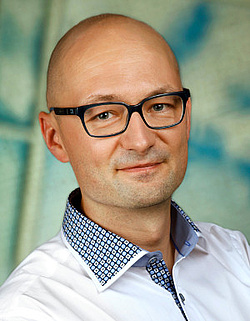
Daniel Herzka is an Associate Professor at the Department of Radiology , School of Medicine , Case Western Reserve University . His research focuses on high-resolution magnetic resonance imaging , quantitative cardiovascular MRI , and cardiac magnetic resonance fingerprinting . Herzka develops innovative MRI techniques for in vivo neurography and cardiovascular applications , including interventional MRI and low-field MRI systems . Doctor of Philosophy in Biomedical Engineering, Johns Hopkins University School of Medicine (2004) Master of Engineering in Biomedical Engineering, Johns Hopkins University (1999) Professional affiliations include membership in the International Society for Magnetic Resonance in Medicine (ISMRM), Society for Cardiovascular Magnetic Resonance Imaging (SCMR), Medical Image Computing and Computer Assisted Intervention Society , and American Heart Association (AHA). Herzka's research has produced significant publications in Magnetic Resonance in Medicine , Journal of Cardiovascular Magnetic Resonance , and Radiology , primarily focusing on cardiac imaging , low-field MRI , and interventional radiology . His recent work explores accelerated T2 mapping , low-rank reconstruction , and cardiac interventional devices . Herzka's scientific contributions span MRI physics , sequence optimization , and clinical translation of imaging technologies . Key collaborators include researchers from National Institutes of Health , Johns Hopkins University , and University Hospital Bonn . Developed real-time free-breathing cardiac imaging with self-calibrated radial GRAPPA Innovated sorted Golden-step phase encoding for self-gated cine MRI Created analytical polyhedral MRI phantoms for imaging validation
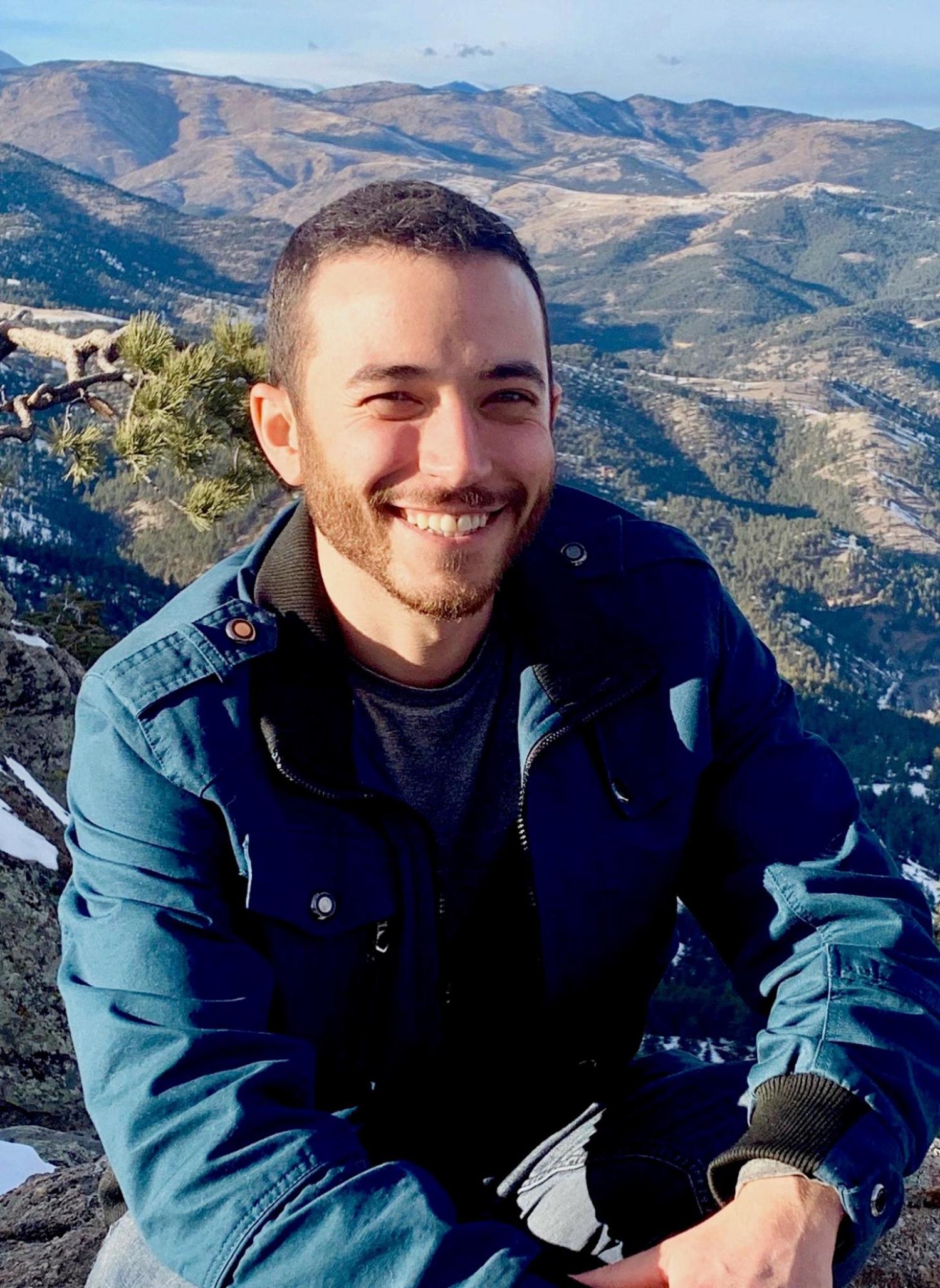
Colin West is an Associate Teaching Professor in the Department of Physics at the University of Colorado, serving as Associate Chair for Engineering Physics and a faculty mentor for the Engineering Physics Education Network (EPEN). His research spans computational quantum theory and physics education, focusing on quantum-classical computing interfaces, machine learning applications in quantum simulation, and innovative teaching methods for physics education. He actively contributes to the Physics Education Research group, investigating pedagogical tools for advanced quantum theory, course-based undergraduate research experiences (CUREs), and laboratory coursework improvements. Dr. West’s work bridges theoretical physics and education innovation, emphasizing how artificial intelligence and large language models (LLMs) can enhance physics education and inform educational research. His recent efforts include remote learning impacts in physics and experimental physics pedagogy through CUREs. He advises on curriculum development for introductory physics courses tailored to life sciences and explores the interplay between quantum computing and classical complexity theory. His office is located in DUAN F-1031, with regular advising hours and virtual access via Buff Portal.
Mihalis Nicolaou is Associate Professor at The Cyprus Institute's Computation-based Science and Technology Research Center. His research develops robust machine learning algorithms with applications in computer vision and interdisciplinary domains. Research focuses on: Interpretable representation learning Tensor-based machine learning Generative model interpretation Multimodal data fusion Recent publications explore semantic grounding in vision-language models and interpretability of satellite image generative networks. His work emphasizes algorithmic robustness and cross-domain applications.
Markus Aichhorn is an Associate Professor at TU Graz's Institute of Theoretical Physics - Computational Physics. His research focuses on computational material science, quantum many-body physics, and topological materials. He earned his PhD in 2005 with highest honors and held postdoc positions at the University of Würzburg and École Polytechnique. Notable grants include the FWF START Program (2014). Awards include the Erwin-Schrödinger Fellowship and Promotion sub auspiciis Praesidentis. His work emphasizes ab-initio methods and DFT+DMFT techniques for correlated materials, with contributions to understanding superconductors and topological insulators. Current projects include the FWF-funded TOPOMAT and VICOM initiatives. Teaching responsibilities include courses on theoretical physics and magnetism. Education: PhD Theoretical Physics (TU Graz, 2005), Postdoc (Würzburg, 2005-2007; École Polytechnique, 2008-2010) Research Highlights: Topological states of matter, correlated heterostructures, electronic phase transitions Research output includes 65+ publications (h-index 25). Active in conference organization and peer review (e.g., Physical Review journals). Collaborates internationally on computational methods for novel materials design.
Dr. Muxin Han is an Assistant Professor of Physics in the Department of Physics at Florida Atlantic University (FAU). He joined FAU in 2015 and leads the High Energy Theory Group, focusing on Loop Quantum Gravity (LQG), quantum geometry, and related areas. His research explores spinfoam models, black holes, tensor networks, and quantum computing applications in gravity. He holds a Ph.D. from the Max Planck Institute for Gravitational Physics and Humboldt University in Berlin. His research group emphasizes numerical methods in LQG and collaboration opportunities via Humboldt Foundation fellowships. The group's activities include hosting the International Loop Quantum Gravity Seminar and organizing events like the FAUST Seminars. Dr. Han also oversees the Minimal Qualification Program for PhD students, requiring mastery of core subjects like General Relativity, Quantum Field Theory, and LQG fundamentals. Key research directions include simulating quantum gravity with photonic chips, resolving black hole transitions, and studying cosmological dynamics with scalar matter. His work bridges theoretical physics with computational and experimental approaches, aiming to advance holography, quantum entanglement, and quantum simulations.
George Baravdish is a Senior Associate Professor and Head of Unit at the Department of Science and Technology (ITN), Linköping University. He leads the Physics, Electronics and Mathematics (FEM) unit and holds a PhD in Applied Mathematics from Linköping University (1995), focusing on Ill-posed and Inverse Problems under Prof. V. G. Maz'ya. His research spans Inverse Problems , Machine Learning , and Mathematical Oncology , with applications in medical imaging, signal processing, and telecommunications. Notable projects include Mathematics for Machine Learning (focusing on neural ODEs) and Mathematical Oncology (modeling brain tumor growth). Baravdish has supervised two doctoral students and co-supervised two more. He has secured funding as a main or co-applicant for 15 research projects. His work bridges theoretical mathematics and practical applications in healthcare and technology. Current research themes include: Image Processing : Generalizations of the p-Laplace operator for noise reduction Telecommunications : 3D object reconstruction using Wi-Fi signals Inverse Problems : Theoretical advancements and algorithm development He contributes to interdisciplinary collaborations, including AI-driven solutions for healthcare and signal analysis.
Mattia Zorzi is an Associate Professor in the Department of Information Engineering at the University of Padova, Italy. He has held academic positions since 2014, transitioning from Assistant Professor to Associate Professor in 2020. His research focuses on system identification, machine learning, and robust control, with applications in dynamic brain networks, robotic systems, and quantum information processing. Education: Ph.D. and M.S. in Information Engineering from University of Padova International Experience: Visiting Scientist at University of Cambridge (2013-2014), Research Associate at University of Liege (2013-2014) Zorzi's research integrates robust and distributed filtering, inverse dynamics learning, and nonparametric identification of Kronecker networks. His work bridges theoretical advancements in spectral estimation with practical applications in neuroscience (e.g., effective connectivity analysis) and control systems (e.g., robust Kalman filtering under uncertainty). Recent publications (2024-2023) demonstrate expertise in ARMA graphical models, kernel-based estimation, and optimal transport for Gaussian processes. He has contributed to the IEEE and IFAC communities as Associate Editor and actively participates in editorial roles for leading journals. Scientific Awards: IEEE Senior Member (2021) Member of IFAC Technical Committee TC 1.1 (2018) Associate Editor roles in Automatica, IEEE Control Systems Letters, and major conferences Grants & Collaborations: Collaborated on projects involving quantum channel estimation, free-space quantum communication, and biomedical signal processing.
Tingting Han is a Lecturer in Computer Science at Birkbeck, University of London since October 2013. She holds a BSc and MEng in Computer Science from Nanjing University (2003, 2006) and a PhD from RWTH Aachen University and University of Twente (2009), supervised by Joost-Pieter Katoen. Prior to her current role, she was a postdoc at RWTH Aachen University (2009–2011) and a research assistant at the University of Oxford (2011–2013) under the VERIWARE project. Her research focuses on formal verification of probabilistic systems, machine learning applications in verification, and software model checking. She has contributed to advancements in adversarial robustness, code generation, and automated analysis of probabilistic programs. Her work integrates formal methods with machine learning to enhance software correctness and security. Han has taught courses such as 'Problem Solving for Programming', 'Big Data Analytics using R', and 'Introduction to Programming'. She actively participates in academic service, including PC memberships in QAPL 2014 and SAC SVT 2015–2017.
Marco Rauscher is a Researcher affiliated with the Department of Mathematics at the Technical University of Munich (TUM). He is part of the School of Computation, Information and Technology. His primary research focuses on the mathematical concept of 'signature,' a tool for encoding multidimensional processes or time series through iterated integrals. This work explores how signatures can capture essential characteristics of processes, particularly for feature extraction in machine learning models. He investigates the behavior of signatures under different sampling techniques and path approximations. He is based at TUM’s Garching campus, located at Boltzmannstraße 3, and can be reached via email at marco.rauscher@tum.de . His office is room 02.08.037, and his direct phone number is +49 (89) 289 18322.
Dee Wu is an Associate Professor and Chief of Technical Application and Translational Research Development at the University of Oklahoma Health Sciences Center (OUHSC). He holds advanced degrees in Mathematics, Systems Engineering, and Biomedical Engineering from Case Western Reserve University. His research focuses on medical physics, particularly in MRI techniques for tumor imaging, radiation therapy planning, and functional brain imaging. He has contributed to advancements in tumor delineation algorithms, partial volume correction in spectroscopic imaging, and inter-observer variability in tumor delineation. His work bridges clinical applications and technical innovation in medical imaging. Education: B.S., Mathematics, Case Western Reserve University M.S., Systems Engineering, Case Western Reserve University M.S., Biomedical Engineering, Case Western Reserve University Ph.D., Biomedical Engineering, Case Western Reserve University Research Interests: Dr. Wu’s expertise includes medical imaging technologies such as MRI and fMRI, radiation oncology treatment planning, tumor response modeling, and artifact correction methods. He has developed methodologies for improving tumor delineation accuracy and optimizing contrast-enhanced imaging techniques. His translational research emphasizes bridging computational algorithms with clinical outcomes in oncology and neurology. Key Contributions: His publications highlight advancements in tumor imaging biomarkers, image registration techniques, and multi-center imaging standardization. He has also contributed to educational initiatives in computational science for non-experts. His role as Chief of Technical Application underscores his commitment to translating research into practical tools for medical practice.
Ryan Shifler is an Associate Professor in the Department of Mathematical Sciences and serves as Associate Dean of the Henson School of Science and Technology at Salisbury University. He holds a PhD in Mathematics from Virginia Tech (2017), with earlier degrees from Salisbury University and Hagerstown Community College. His research focuses on quantum Schubert calculus and algebraic geometry, particularly quantum cohomology of non-homogeneous spaces. Notable work includes studies on symplectic Grassmannians, curve neighborhoods of Schubert varieties, and spectral properties of quantum cohomology. Collaborations with students and colleagues explore topics like isotropic Grassmannians and conjecture validations in algebraic geometry. Shifler has advised numerous students, including co-authors on publications such as studies on minimum quantum degrees and Frobenius-Perron dimensions. His work appears in journals like Annals of Combinatorics, Communications in Algebra, and Mathematische Zeitschrift. He also engages in expository writing on academic writing practices in mathematics.
Mitchell Goemans is the RSA Professor of Mathematics at the Massachusetts Institute of Technology (MIT), where he also serves as the Head of the Department of Mathematics. He is a member of the Theory of Computation group at MIT's Computer Science and Artificial Intelligence Laboratory (CSAIL). His research focuses on combinatorial optimization, approximation algorithms, and algorithmic mathematics. He is an ACM Fellow, recognizing his contributions to theoretical computer science and discrete mathematics. Goemans has taught numerous advanced courses at MIT, including Advanced Combinatorial Optimization , Algorithms , and Topics in Theoretical Computer Science . His work bridges foundational mathematics with computational challenges, emphasizing techniques like semidefinite programming and matroid theory. Key research areas include non-bipartite matchings, matroid intersection, submodular function optimization, and approximation algorithms for NP-hard problems. His contributions to the Traveling Salesman Problem and semidefinite programming relaxations are particularly influential. Awards and recognitions include the ACM Fellowship (2009) and leadership roles in academic administration, reflecting his dual impact on research and education.