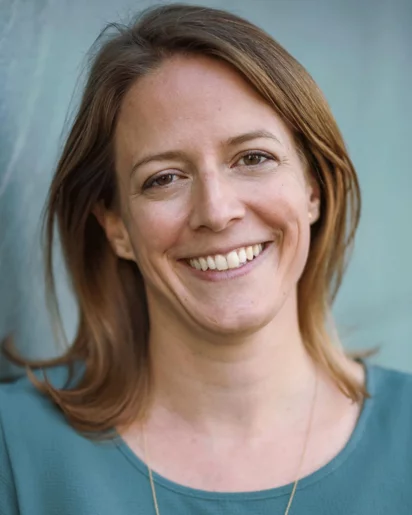
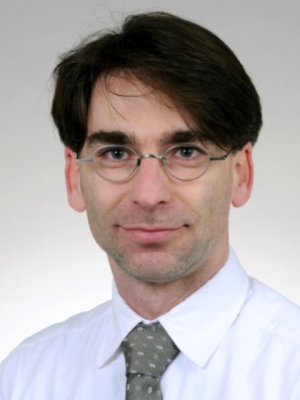
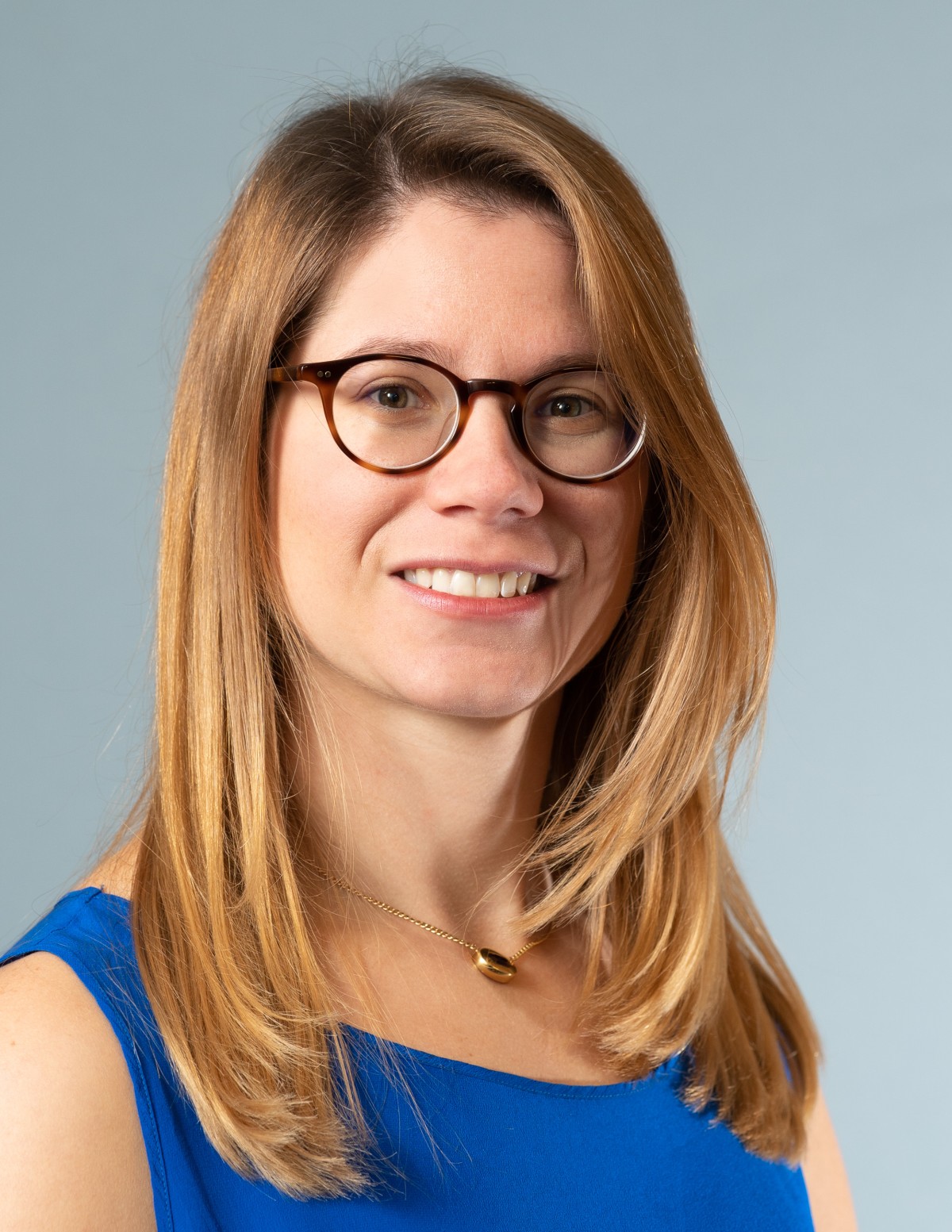
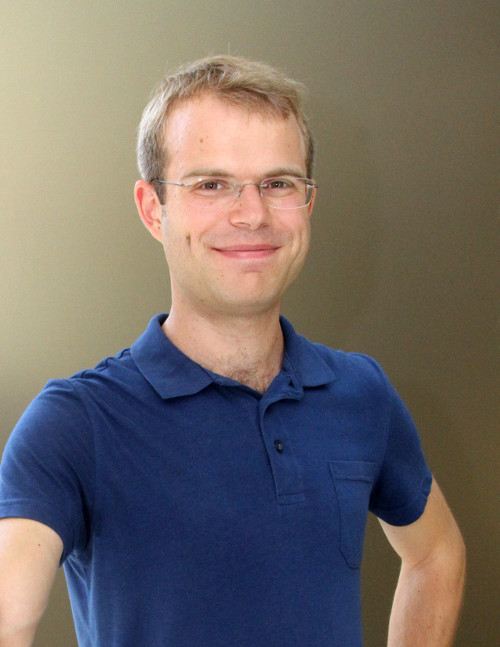
Laura Grigori is a Full Professor and Chair of High Performance Numerical Algorithms and Simulations at EPFL's School of Basic Sciences (SB) Department of Mathematics (MATH). Her research focuses on numerical linear algebra, high performance computing, and tensor computations, with applications in astrophysics and molecular simulations. She leads the HPNalgs lab and teaches courses in numerical analysis and HPC. Her awards include the SIAM Supercomputing Career Prize (2024) and SIAM Fellow distinction (2020). She advises four PhD students and has authored numerous papers on communication-avoiding algorithms, randomized methods, and parallel linear algebra techniques. Her work addresses scalability challenges in scientific computing and large-scale data analysis. Labs/Teams: HPNalgs Lab (https://www.epfl.ch/labs/hpnalgs/) Grants: ERC Synergy Grant (2019) for Extreme-scale Computational Chemistry
Stefano Ioannucci is a Research Fellow in the Department of Psychology at the University of Fribourg, Faculty of Humanities. His research focuses on perceptual learning, multisensory integration, consciousness, and neuroimaging techniques like pupillometry and multivoxel pattern analysis. He holds an SNSF Postdoc Fellowship. Education: Not explicitly stated in text His work explores how sensory inputs interact across awareness levels, neural fatigue mechanisms induced by passive stimulation, and brain network changes during cognitive tasks. Research also examines emotion processing via white matter correlates and motor learning awareness effects. Key contributions include studies on audio-visual congruence effects in biological motion perception and global predictive modeling in stroke outcomes. His recent work emphasizes translational neuroscience between basic research and clinical applications. Awards: SNSF Postdoc Fellowship No advising roles or grants explicitly listed. Active in cognitive neuroscience and clinical psychology research teams at the department. Labs/Teams: Involved in Visual and Cognitive Neuroscience, Cognitive Biopsychology and Methods, and Clinical Psychology research groups.
Marianne Liebi is a Tenure-Track Assistant Professor at the École Polytechnique Fédérale de Lausanne (EPFL), affiliated with the School of Engineering’s Institute of Materials. She leads the Structure and Mechanics of Advanced Materials group at the Paul Scherrer Institute (PSI) within the Photon Science Division. Her research focuses on developing advanced X-ray imaging techniques, particularly small-angle X-ray scattering (SAXS) tensor tomography, to study hierarchical materials such as biomimetic composites, cellulose-based materials, and bone tissues. She has held positions at Chalmers University of Technology (Sweden) and Empa, and her work bridges materials science, biomedical engineering, and nanotechnology. Education: PhD in Food Science from ETH Zurich (2013), followed by postdoctoral research at the Swiss Light Source. Professional roles include Assistant Professor at Chalmers University (2017–2020) and Scientific Group Leader at Empa (2020–2021). Research interests emphasize imaging complex structures across scales, with applications in 3D printing, industrial plastics, and biological tissues. Key methods include SAXS, ptychographic tomography, and X-ray fluorescence. Her group collaborates widely, addressing challenges in material design, medical diagnostics, and sustainable polymers. Advising and grants: While specific grants are not detailed, her leadership roles and publications indicate active research funding. Labs/teams: PSI’s Laboratory for Condensed Matter and Materials Science, with ongoing collaborations at synchrotron facilities like ESRF and MAX IV.
Dr. Bálint Kaszás is a Researcher affiliated with the Professorship for Nonlinear Dynamics at ETH Zürich. His work focuses on advanced dynamical systems theory, with particular expertise in nonlinear dynamics, fluid mechanics, and data-driven modeling. He develops reduced-order models for complex systems such as turbulent flows and magnetic plasma dynamics, leveraging spectral submanifolds and machine learning techniques. His research also addresses climate modeling challenges and experimental fluid dynamics. Key research themes include: Reduced-order modeling of high-dimensional systems Data-driven analysis of chaotic and laminar flow transitions Nonlinear dynamics in magnetohydrodynamics (MHD) Development of tools like DifFault for materials science simulations Recent work emphasizes variational methods for flow visualization and fractional calculus-based approaches to oscillatory systems. His contributions bridge theoretical frameworks with practical applications in engineering and physics.
Prof. Dr. Sebastian Kozerke is Full Professor at ETH Zürich's Department of Information Technology and Electrical Engineering, leading the Professorship for Biomedical Imaging. His research program develops advanced magnetic resonance imaging methods for cardiac applications, focusing on ultra-fast dynamic imaging of perfusion, cardiac mechanics, and microstructure analysis. Key innovations include k-t undersampling techniques and parallel imaging methods that significantly advance spatiotemporal resolution in medical imaging. Professor Kozerke's research spans multiple domains including perfusion imaging, diffusion tensor imaging for myocardial microstructure, and real-time metabolic imaging using dynamic nuclear polarization. Current investigations explore hyperpolarized 13 C pyruvate metabolic imaging, neural network applications for cardiac analysis, and low-field MRI techniques. His work consistently bridges fundamental physics with clinical translation. Publications demonstrate leadership in cardiovascular MRI innovation. Recent work establishes consensus standards for hyperpolarized MRI studies (2025), develops deep learning frameworks for flow quantification (FlowMRI-Net), and advances microstructure analysis in cardiomyopathy (2025). Earlier foundational work includes contributions to diffusion imaging, parallel MRI methods, and cardiac DTI techniques. Professor Kozerke teaches core courses including 'Biomedical Imaging' (227-0385-10L), 'Biomedical Engineering' (227-0386-00L), and leads the 'Seminar on Biomedical Magnetic Resonance' (227-0980-00L). He founded EXCITE Zurich, a joint center for experimental and clinical imaging technologies. Career progression includes: PhD and Venia legendi from ETH Zurich, research at King's College London, co-founding GyroTools (2003), professorship at King's College London (2008), University of Zurich (2010), and ETH Zurich dual appointment (2014).
Marcel Padilla is Lecturer at ETH Zurich's Department of Computer Science, researching geometric algorithms for physical simulation and visualization. As Feodor-Lynen Fellow, he develops computational methods for fluid dynamics and astrophysical phenomena. Research integrates discrete exterior calculus with computer graphics to model complex systems like solar coronae and vortex dynamics. Recent publications present novel frameworks for rigid body motion estimation and magnetic filament simulation. Teaches geometry processing and mathematical visualization.
Federica Lanza is a Lecturer at the Department of Earth and Planetary Sciences at ETH Zurich, affiliated with the Schweiz. Erdbebendienst (SED), the Swiss Seismological Service. Her work focuses on seismology, geophysics, and geothermal systems, with expertise in induced seismicity, fault dynamics, and advanced monitoring technologies like Distributed Acoustic Sensing (DAS). She teaches courses such as Seismic Waves II in the Autumn Semester 2025. Her research integrates field experiments, computational modeling, and machine learning to address challenges in seismic hazard assessment, geothermal energy development, and tectonic processes. Key areas include forecasting induced earthquakes at geothermal sites, analyzing fault interactions in fold-and-thrust belts, and developing innovative sensor systems for subsurface monitoring. Dr. Lanza collaborates on large-scale projects like the Utah FORGE initiative, advancing techniques for real-time seismic monitoring and fracture network characterization. Her contributions bridge fundamental geophysical research with practical applications in energy systems and risk mitigation.
Dr. Kadek Hendrawan Palgunadi is a researcher at the Swiss Seismological Service (SED) under ETH Zurich. His work focuses on seismology, earthquake dynamics, and fault system analysis with a particular emphasis on Indonesia and Türkiye. He has contributed significantly to understanding cascading earthquake mechanisms, fault geometry characterization, and ground motion modeling. His recent studies include analysis of the 2023 Türkiye earthquake doublet, the 2022 Cianjur earthquake, and the newly identified Kalaotoa Fault system. Key research areas include multiscale seismicity patterns, fracture energy analysis in fault networks, and innovative methods for seismic waveform generation using machine learning. He has developed methodologies for hypocenter relocation and rupture dynamics modeling, contributing to improved seismic hazard assessments in active tectonic regions. His work also extends to interdisciplinary projects such as the Sea-VL dataset for Southeast Asia vision-language studies and sustainable agriculture systems. Notable contributions include insights into fault slip localization, stress regime analysis in complex fault systems, and applications of denoising diffusion models for high-resolution seismic data processing. Collaborations involve international institutions and fieldwork in regions like Sulawesi, Sumatra, and the East Anatolian Fault zone.
Peter Hintz is a tenured Associate Professor of Mathematics and Physics at ETH Zürich (since 2021), where he leads research in mathematical relativity and partial differential equations. Previously, he held positions at MIT (2019-2021) and was a Clay Research Fellow (2017-2020). His research focuses on hyperbolic PDEs arising in general relativity, particularly black hole stability and wave propagation in curved spacetimes, using microlocal analysis and spectral theory. Research Interests: Hintz investigates the mathematical foundations of general relativity, including the stability of cosmological black holes (Kerr-de Sitter), wave decay on asymptotically flat spacetimes, and inverse problems in gravitational physics. His work bridges microlocal analysis, scattering theory, and dynamical systems to address fundamental questions in Einstein's theory. Recent Publications: Hintz's recent articles (2024-2025) demonstrate a strong focus on black hole stability, spacetime gluing techniques, and quasinormal modes, with consistent applications in mathematical relativity and geometric analysis. His research increasingly addresses nonlinear stability problems and extreme mass-ratio systems. Awards and Honors: SNSF Consolidator Grant (2025-2030) IAMP Early Career Award (2024) Frontiers of Science Award (2023) Golden Owl Teaching Award (ETH, 2022) Sloan Research Fellowship (2020-2022) Clay Research Fellowship (2017-2020) Mentoring and Grants: He advises 3 PhD students and 14+ MSc students at ETH, with research spanning gravitational waves and spectral theory. Major grants include SNSF Consolidator (CHF 1.6M) and NSF DMS-1955614 (USD 246,924) for microlocal analysis in relativity. Academic Service: Hintz co-organizes international workshops (e.g., 'Gravitational Physics and Mathematical Analysis' 2024) and serves as editor for Analysis & PDE , Annals of PDE , and Pure and Applied Analysis .
Dr. Matthew Maitra is a Lecturer at the Department of Earth and Planetary Sciences at ETH Zürich, affiliated with the Institute of Geophysics. His research focuses on advanced geophysical modeling, including rotational dynamics of planets, relativistic elasticity, and core-mantle interactions. Notable contributions include studies on Cosserat elasticity in rotating planets and quasi-free-decay modes in Earth's core. He has authored multiple peer-reviewed articles in top journals like Geophysical Journal International and Physical Review D . His work bridges geophysics with theoretical physics, addressing fundamental questions in planetary mechanics and gravitational theory. Current research involves fluid-solid coupling in planetary systems and non-perturbative gravitational calculations.
Prof. Eugene Demler is a faculty member in the Department of Physics at University of X, focusing on theoretical and computational quantum physics. His research spans ultracold atomic systems, condensed matter phenomena, and non-equilibrium quantum dynamics. Research Interests : Quantum simulation with ultracold atoms, string confinement in antiferromagnets, geometric approaches to quantum systems, and meson formation in strongly correlated materials. Publication Trends : Recent work explores lattice dynamics, spin models, and mixed-dimensional systems using advanced theoretical frameworks.
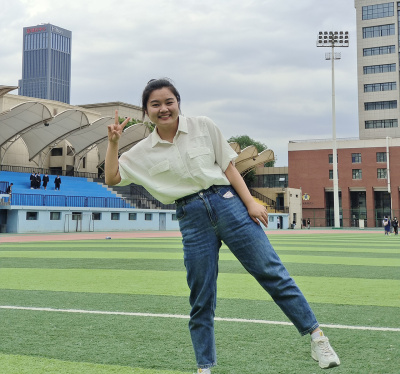
Siwei Liao is a Researcher at the University of Geneva , joining in December 2023 under the supervision of Martin Jakob Gander. She previously earned a Master of Science in Computational Mathematics from Lanzhou University between 2019 and 2022. Research Focus: Her work investigates complementarity problems , including horizontal linear complementarity problems, vertical complementarity problems, and tensor complementarity problems. She specializes in numerical methods like modulus-based methods, Levenberg-Marquardt methods, and multigrid methods, analyzing their convergence behavior and numerical performance.