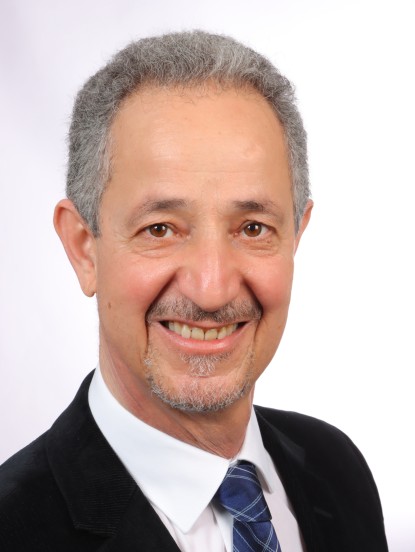
Maurits Haverkort is a Professor at the Institute for Theoretical Physics, Heidelberg University (Germany). His research focuses on quantum many-body systems , strongly correlated electrons , and X-ray spectroscopy of complex materials under strong fields. University of Cologne (PhD in Physics, 2005) University of Groningen (M.Sc. in Physics, 2002) Research Interests : He investigates orbital and magnetic properties in heavy fermion systems , actinide materials , and correlated oxides using resonant inelastic X-ray scattering (RIXS) , ARPES , and computational tools like Quanty . His work spans crystal field theory , spin-orbit coupling , and ultrafast electron dynamics . Scientific Awards & Activities : 2018 – Editorial Board Member, Physical Review Letters 2017 – Beam Time Allocation Panel, ESRF Grenoble 2016–2018 – Swedish Research Council Panel NT-4 2012–2016 – Scientific Selection Panel, Helmholtz-Zentrum Berlin Recent Publications highlight 5f electron counting , photon-modulated bonding , and precision neutrino mass experiments , reflecting his expertise in quantum materials and advanced spectroscopy .
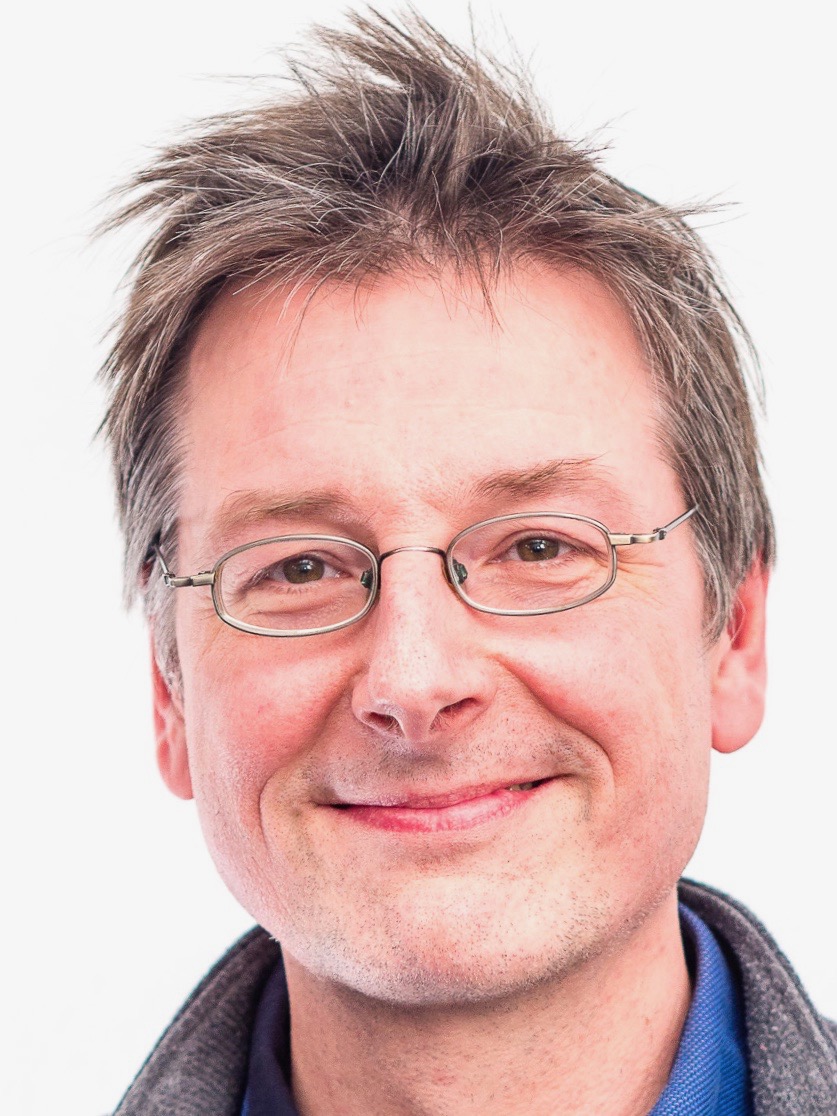
Géza Giedke is an Ikerbasque Research Professor at the Donostia International Physics Center (DIPC) in Donostia-San Sebastián, Spain. His research focuses on quantum information theory and its implementation in solid-state and quantum optical systems, with particular emphasis on entanglement, quantum channels, and the dynamics of open quantum systems. His educational background includes a Dr. rer. nat. (Doctor of Natural Sciences) from the University of Innsbruck, Austria. Prior to his current position, he has held research positions at the University of Innsbruck (Austria), Max Planck Institute of Quantum Optics in Garching and Technical University of Munich (Germany), and ETH Zurich (Switzerland). Dr. Giedke's research interests span multiple areas of quantum physics and quantum information science. His work explores the theoretical foundations of quantum information processing while also addressing practical implementation challenges in solid-state systems. He has made significant contributions to understanding entanglement in fermionic systems, quantum channels, and the application of quantum information concepts to condensed matter physics. His recent work has increasingly focused on quantum phenomena in graphene-based nanostructures and their potential for quantum information processing applications. His publication record demonstrates a strong trajectory from fundamental quantum information theory to more applied work connecting quantum information concepts with condensed matter physics, particularly in the realm of graphene nanostructures and quantum transport phenomena. Dr. Giedke has secured significant research funding, including the recently granted GRAFIQ project (2023-2027) on 'Harnessing quantum spin states, dynamics, and transport in graphene-based nanostructures' and the TENINT project (2023-2025) on 'Tensor network methods for interacting electrons in quasi-1d graphene nanostructures.' He actively mentors PhD students and postdoctoral researchers, currently supervising several researchers working on various aspects of quantum information in solid-state systems. Dr. Giedke also organizes major scientific events, including the Basque Quantum Science and Technology Workshops and the Nanotechnology meets Quantum Information Summerschool.
Harald E. Möller is a Professor and Head of the Nuclear Magnetic Resonance Research and Development Unit at the Max Planck Institute for Human Cognitive and Brain Sciences in Leipzig. With a career spanning over four decades, he has held academic positions including Honorary Professor at the University of Leipzig and leadership roles in institutions like Duke University Medical Center and the University of Münster. His research focuses on advancing MRI methodologies, biophysical imaging principles, and their applications in neurology and neuroscience. Education: 1979-1985: Chemistry & Physics studies at Universities of Dortmund and Münster 1985: M.Sc. (Diploma) in Chemistry 1988: PhD in Physical Chemistry (summa cum laude) 2000: Habilitation in Physical Chemistry 2002: Habilitation in Biophysical Chemistry Research Interests: Development of novel MRI methods Quantitative tissue characterization Myelin sheath imaging Cerebral blood flow dynamics High-field MRI hardware
Bernd Sturmfels is a leading mathematician serving as Director of the Max Planck Institute for Mathematics in the Sciences in Leipzig since 2017. He is also Professor Emeritus of Mathematics, Statistics, and Computer Science at the University of California, Berkeley, and holds honorary professorships at the Technical University of Berlin and the University of Leipzig. His research bridges pure and applied mathematics, with foundational contributions to algebraic geometry, combinatorics, and computational biology. Education: Sturmfels earned dual Ph.D. degrees in 1987 from the University of Washington and Technische Universität Darmstadt, followed by an honorary doctorate from Goethe University Frankfurt in 2015 and additional honorary doctorates from the University of Bern (2023) and the University of Chicago (2024). Research Interests: His work spans algebraic geometry , combinatorics , commutative algebra , algebraic statistics , convex optimization , and computational biology . He explores deep connections between abstract algebraic structures and practical applications in statistics, optimization, and the life sciences. Publications and Trends: With over 300 research articles and 11 books, his recent work (2022–2025) focuses on advanced topics like Grassmannian geometry, tropical implicitization, quantum chemistry applications, and algebraic statistics. His research increasingly integrates computational methods with theoretical insights, addressing problems in machine learning, phylogenetics, and optimization. Awards and Honors: Sturmfels has received numerous prestigious awards, including: George David Birkhoff Prize in Applied Mathematics (2018) SIAM von Neumann Lecturership (2010) Humboldt Senior Research Prize (2007–2008) David and Lucile Packard Fellowship (1992–1997) Fellowships of the AMS and SIAM Membership in the Berlin-Brandenburg Academy of Sciences and Humanities Mentoring and Grants: He has supervised 60 doctoral students and numerous postdocs, with many securing positions at leading institutions. His mentoring philosophy emphasizes diversity and excellence, as highlighted in his Notices of the AMS article. Funding sources include the NSF, DARPA, and the German National Science Foundation (DFG). Labs and Teams: At the Max Planck Institute, he leads the Nonlinear Algebra group, fostering interdisciplinary collaboration between mathematics and the sciences. His team focuses on developing algebraic methods for data analysis, optimization, and theoretical physics.
Robert Raussendorf is a Professor at the Institute of Theoretical Physics, part of the Faculty of Mathematics and Physics at Leibniz University Hannover. He leads the research group focusing on quantum information, particularly measurement-based quantum computation (MBQC) and quantum fault-tolerance. His work includes the invention of the one-way quantum computer (QCc), a paradigm where quantum computations are performed via local measurements on entangled cluster states. Raussendorf’s research bridges foundational quantum mechanics with practical applications, emphasizing the role of contextuality and resource states in quantum advantage. Research Interests: His primary areas include quantum computation models, quantum cellular automata, topological error correction, and the foundational aspects of quantum mechanics. He explores how quantum principles like entanglement and contextuality enable computational power, with recent focus on symmetry-protected systems and efficient quantum architectures. Articles Trends: Recent publications highlight advancements in measurement-based computation, error correction strategies, and theoretical frameworks like contextuality and cohomology. Notable work includes high-error-threshold architectures and the application of dual-unitary circuits in one-dimensional systems. Lab/Team: His team includes postdocs (e.g., Markus Frembs, Martin Plávala) and doctoral candidates (e.g., Arnab Adhikary, Ruben Campos Delgado), collaborating on topics like quantum error tolerance, computational phases of matter, and algorithm optimization. The group also engages in interdisciplinary projects with institutions like the Stewart Blusson Quantum Matter Institute.
Andrea Walther is a Professor of Mathematical Optimization at the Humboldt University of Berlin, holding a position within the Faculty of Mathematics and Natural Sciences. She leads the Mathematical Optimization research group at the Institute of Mathematics, focusing on algorithmic differentiation, nonlinear optimization, and applied mathematics. Her academic journey includes a Diploma in Business Mathematics (1996, University of Bayreuth), a PhD (1999, TU Dresden), and habilitation (2008, TU Dresden). She has held roles such as Junior Professor at TU Dresden (2007–2008) and Professor at the University of Paderborn (2009–2019) before joining Humboldt in 2019 as a MATH+ Professor. Education : 1991–1996: Studies in Business Mathematics, University of Bayreuth 1996: Diploma in Business Mathematics, University of Bayreuth 1999: PhD in Mathematics, TU Dresden 2008: Habilitation, TU Dresden Her research interests center on optimization methods, particularly algorithmic differentiation (e.g., ADOL-C software), nonsmooth optimization, and applications in engineering and machine learning. She leads initiatives like the Cluster of Excellence MATH+ and contributes to projects such as the Transregio 154. Key Projects: Co-PI of DFG Project 'Mixed-integer non-smooth optimization for gas market problems' (2020–2022) Principal Investigator in MATH+ Projects (EF3-7, AA2-7) Co-developer of ADOL-C, a widely used tool for algorithmic differentiation Notable awards include being a SIAM Fellow. Her work bridges theoretical advancements and practical applications, with contributions to energy sector optimization, inverse problems, and computational frameworks for solving complex systems.
Professor Martin Bendszus serves as the Medical Director of the Department of Neuroradiology at Heidelberg University Hospital. He has held this position since 2007 and is a leading figure in advanced neuroimaging techniques. His academic career includes medical studies in Bonn, specialized training in Neuroradiology at the University of Würzburg (2003-2007), and a professorship in Neuroimaging at the University of Würzburg. Professor Bendszus's research focuses on innovative imaging methods, particularly in Magnetic Resonance Imaging (MRI). He pioneered Magnet Resonance Neurography for diagnosing peripheral nervous system disorders and made significant contributions to Dental-MRI as a radiation-free diagnostic tool for dental conditions. His expertise also extends to brain and spinal cord diagnostics, including aneurysms, strokes, and arteriovenous malformations. His work bridges clinical practice with advanced imaging research, resulting in numerous high-impact publications across neurology, radiology, and oncology. His publication record shows consistent high-impact contributions, with recent work spanning stroke intervention, neuropathic pain, brain tumor imaging, and advanced MRI techniques. The research trends demonstrate his leadership in translating imaging advances into clinical practice, particularly in time-sensitive neurological conditions where imaging guides critical treatment decisions. Kurt-Decker-Preis Röntgen-Preis Coolidge-Award Lucien-Appel-Award Hermann-Holthusen-Ring der Deutschen Röntgengesellschaft Professor Bendszus leads major multicenter clinical trials and collaborative guideline development efforts, including work with the Response Assessment in Neuro-Oncology (RANO) group and European Association for Neuro-Oncology (EANO). His research has secured significant funding for advancing neuroimaging techniques and their clinical applications. He collaborates extensively with neurologists, neurosurgeons, oncologists, and radiologists to improve diagnostic and therapeutic approaches for neurological conditions. His department serves as a reference center for complex neuroradiological cases and trains the next generation of neuroradiologists. Professor Bendszus maintains active leadership roles in professional societies and regularly contributes to shaping clinical guidelines in neuroimaging and stroke care.
Lars Grasedyck is a Professor of Numerical Analysis at RWTH Aachen University. His research focuses on hierarchical matrices, tensor approximation, and numerical methods for partial differential equations and matrix equations. He has contributed to applications in biomedical engineering, particularly EEG/MEG inverse problems, and is involved in software development (HLIB, HLIB-pro). Education: Diploma and Ph.D. in Mathematics at Christian-Albrechts-Universität zu Kiel (1998, 2001), Postdoctoral work at Max Planck Institute, Leipzig (2002-2010). Research: Specializes in high-dimensional numerical methods, low-rank matrices, and tensors with applications in PDEs, uncertainty quantification, and biomedical modeling. Projects: Leads DFG-funded initiatives on adaptive tensor networks for parametric PDEs and tumor progression modeling. Advising: Supervises doctoral students including Thong Le, Maren Klever, and Dieter Moser. Software: Developed HLib and HLib-pro for hierarchical matrix computations. Conferences: Active in GAMM Fachausschuss Numerische Analysis, organizing workshops and symposia globally.
Viktoriya Ozornova is a Researcher at the Max Planck Institute for Mathematics in Bonn, specializing in algebraic topology with a focus on abstract homotopy theory and higher category theory. Her work explores foundational questions in (∞,n)-categories and their applications to mathematical physics. She collaborates extensively with researchers such as Martina Rovelli, Emily Riehl, and others on topics including model structures, categorical equivalences, and homotopy coherence. Her research has been published in leading journals like Advances in Mathematics , Algebraic & Geometric Topology , and Transactions of the American Mathematical Society . She co-organized workshops on infinity categories and Picard groups of topological modular forms (TMF). She has supervised students including Julian Brüggemann (PhD) and mentored numerous bachelor and master theses on topics ranging from elliptic curves to homotopy theory. Ozornova has taught at institutions including the University of Bochum and Bonn, covering courses in topology, analysis, and number theory. Her pedagogical contributions include designing online curricula for engineering mathematics and organizing seminars on advanced topics like Lie groups and braid theory.
Jesse Ratzkin is a Lecturer at the University of Würzburg's Chair of Mathematics VI (Mathematics in the Natural Sciences). He holds a PhD from the University of Washington (2001) and a B.A. from UC Berkeley (1995). His research focuses on geometric analysis, including mean curvature, Q-curvature, eigenvalues of the Laplace-Beltrami operator, and isoperimetric inequalities. He has held academic positions globally, including a tenured role at the University of Cape Town (2010–2016). His research has been funded by grants such as the National Research Foundation of South Africa (2013–2016) and NSF fellowships. Notable publications include works on Q-curvature metrics, Sobolev inequalities, and geometric flows. He actively participates in academic service, including editorial roles and organizing international conferences. Teaching spans institutions like the University of Cape Town, where he designed courses in PDEs, linear algebra, and complex analysis. He has supervised PhD students like Murray Christian and mentored over 8 final-year projects. His outreach efforts include high school math programs in South Africa and Ireland.
Prof. Dr. Matthias Hieber is a Professor of Applied Analysis at the Fachbereich Mathematik, Technische Universität Darmstadt. His research focuses on Partial Differential Equations, Fluid Dynamics, Evolution Equations, and Harmonic Analysis. He leads the Applied Analysis research group and contributes to interdisciplinary projects involving geophysical fluid models. His editorial roles include Editor-in-Chief of Differential and Integral Equations and involvement with journals like Evolution Equations and Control Theory . Recent teaching activities include courses on Partial Differential Equations and Functional Analysis. He collaborates on DFG-funded projects analyzing nonlinear PDEs in geophysical contexts and liquid crystal dynamics. His work bridges pure mathematics with applications in fluid mechanics and climate modeling. Education: Doctorate in Mathematics (not explicitly stated, inferred from academic rank) Labs/Teams: Applied Analysis Research Group Grants: DFG Research Group on Geophysical Fluid Models, Humboldt Fellowship for Dr. Arnab Roy Research highlights include global well-posedness studies for the primitive equations and stochastic fluid models, analysis of liquid crystal dynamics, and rigorous justification of hydrostatic approximations. His contributions to operator theory and semigroup methods underpin many results in fluid dynamics and PDE analysis.
Abdelhak M. Zoubir is a Professor of Signal Processing and Head of the Signal Processing Group at Technische Universität Darmstadt, Germany. He has held leadership roles including Head of the Department of Electrical Engineering and Information Technology (2012–2014 and 2020–2022), and President of the European Association for Signal Processing (EURASIP, 2017–2018). His research focuses on statistical signal processing with applications in radar imaging, biomedical engineering, and automotive systems. Zoubir has authored over 500 publications and is a Fellow of IEEE and EURASIP. He currently leads projects on radar communication integration, robust signal processing algorithms, and radiation-hardened sensor development. Education: Dipl.-Ing. (BSc/MSc) from Fachhochschule Niederrhein and Ruhr-Universität Bochum, followed by a Dr.-Ing. (PhD) in Electrical Engineering from Ruhr-Universität Bochum (1992). Research Interests: Bootstrap techniques, robust detection/estimation, cooperative sensor networks, radar for landmine detection, and automotive safety systems. He has pioneered methods in robust statistical signal processing, including low-rank matrix completion and sparsity-aware algorithms. Recognition: Recipient of the IEEE Meritorious Service Award (2018), IEEE Signal Processing Magazine Best Paper Award (2017), and the M. Barry Carlton Award (2014). He has been a keynote speaker at major conferences such as ICASSP and EUSIPCO, and served as Editor-in-Chief of the IEEE Signal Processing Magazine (2012–2014). Current Projects: Focus on automotive radar signal processing, radiation-hardened sensors (MALTA), and distributed learning robustness. His work bridges theoretical advancements with practical applications in defense, healthcare, and automotive industries.
Professor Danilo P. Mandic, affiliated with Imperial College London, UK, is a leading researcher in signal processing, machine learning, and biomedical signal analysis. His work spans quaternion algebra, tensor networks, and neural networks for real-world applications. 2025: Published 11+ works on EEG/PPG analysis, quantum learning, and tensor-based LLM compression 2024: Active in interpretable transformers, graph learning for financial data, and hearable devices Research focuses on hypercomplex signal processing, graph neural networks, and medical AI applications. Recent work explores quaternion calculus for signal processing, tensor network structures for LLMs, and hearable device optimization. Key publication trends include: 2025 emphasis on quantum-aware learning, 2024 graph-based time series clustering, and 2023 foundational work on graph CNNs and matched filtering approaches. Collaborates extensively with Dongpo Xu, Sayed Pouria Talebi, Clive Cheong Took, and Tobias Reichenbach on projects involving ear-EEG, ECG enhancement, and financial sentiment analysis.
Arthur Bartels is a Professor at the Mathematical Institute, Department of Mathematics and Computer Science, University of Münster. He is a principal investigator in the CRC 1442 'Geometry: Deformations and Rigidity' and a key member of the Excellence Cluster 'Mathematics Münster', focusing on fundamental problems in topology and geometry. Research Interests: His work centers on topology , particularly algebraic K-theory , L-theory , and the Farrell-Jones conjecture . He investigates geometric rigidity , coarse geometry , and conformal field theory through operator algebras and higher categories. His research connects deep questions in group theory, manifold topology, and mathematical physics. Publication Trends: His recent work (2017–2022) shows a strong focus on conformal nets and higher categorical structures in quantum field theory, while continuing foundational work on isomorphism conjectures for K- and L-theory in geometric group theory. The articles reflect a dual expertise in abstract homotopy theory and concrete geometric analysis. Scientific Awards: No specific awards mentioned in the provided text. Advising and Grants: While no students are listed, he leads major research projects funded by the DFG, including CRC 1442 - C03 'K-theory of group algebras' and EXC 2044 - B2 'Topology'. These projects involve developing tools in index theory, surgery theory, and coarse geometry to study manifolds and group rings. Labs and Teams: He leads the 'AG Topologie' (Topology Research Group) at Münster and co-organizes the 'Advanced Seminar Topology' with colleagues. He is part of a large collaborative environment within Mathematics Münster, working closely with experts in analysis, geometry, and mathematical physics.
Frank Hannig is a Professor at the University of Erlangen-Nuremberg, Germany, specializing in computer architecture and high-performance computing. His research focuses on FPGA acceleration, hardware-software co-design, neural network optimization, and embedded systems. He has collaborated extensively with co-authors such as Jürgen Teich and Oliver Reiche, producing over 200 publications since 2001. His work emphasizes domain-specific languages (DSLs) for image processing (e.g., Hipacc) and compiler optimizations for FPGAs. Key contributions include techniques for quantized neural networks on microcontrollers, CGRA toolchain evaluation, and efficient mapping of CNNs onto processor arrays. Hannig also explores energy-efficient architectures and reconfigurable computing for emerging applications like edge AI and automotive systems. Publications span conferences like ASAP, FPL, and ARC, reflecting his interdisciplinary approach to bridging algorithm design and hardware implementation. His research often addresses practical challenges in deploying machine learning models on resource-constrained devices while maintaining performance and energy efficiency.