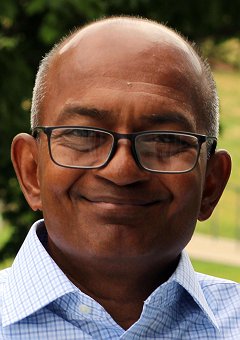
Konstantin Fackeldey is a researcher at the Technical University of Berlin and heads the Efficient Large Scale Computing group at the Zuse Institute Berlin (ZIB) . His roles include Deputy Director of the Central Institute SETUB and leadership in the Activity Group Mathematics of Data Science at MATH+. He also serves as a high school mathematics teacher and contributes to the Q-Master program. His research spans drug discovery using high-performance computing and machine learning , with a focus on Protein-Ligand Docking (VirtualFlow Project) and Markov State Models . Collaborative projects include Quantum Skills in Teacher Education and co-organizing the Workshop on Tensor Methods for Quantum Simulation . He holds a habilitation in Applied Mathematics from TU Berlin (2015). Key contributions include developing algorithms for adaptive virtual screening and non-equilibrium molecular dynamics . His work bridges mathematical theory with practical drug design , involving interdisciplinary collaborations across institutions.
Marek Miśkiewicz serves as an Assistant Professor in the Department of Cybersecurity and Computational Linguistics at Maria Curie-Skłodowska University in Lublin (UMCS), Faculty of Mathematics, Physics and Computer Science. He also teaches at the Polish-Japanese Institute of Information Technology (PJATK) and Kozminski University, demonstrating extensive experience in cybersecurity education across multiple institutions. Dr. Miśkiewicz holds a PhD in theoretical physics and has evolved his research focus toward interdisciplinary applications at the intersection of computer science and biotechnology. His primary research interests include DNA-based security systems, cryptographic algorithms leveraging DNA properties, and cybersecurity awareness among youth. He has developed innovative approaches for using DNA as a key element in modern security systems, focusing on authentication, identification, and ownership protection of physical objects through forgery-resistant tagging methods. His publication record shows a clear transition from theoretical nuclear physics (2002-2008) to applied DNA-based security systems (2019-2023), with notable publications in Nature Communications and other high-impact journals. Recent work emphasizes practical educational approaches to cybersecurity through hands-on CTF (Capture The Flag) exercises and virtual laboratories for online learning environments. As an academic educator, Miśkiewicz has authored numerous educational materials on cybersecurity, cryptography, and programming, with a particular focus on developing practical, hands-on learning experiences for students. His research methodology combines theoretical computer science with experimental biotechnology approaches, creating a unique interdisciplinary research profile that bridges traditionally separate scientific domains.
Andrea Ferrero is an Associate Professor at the Polytechnic University of Turin , affiliated with the Department of Mechanical and Aerospace Engineering (DIMEAS) . He leads research in aerospace propulsion, computational fluid dynamics (CFD), machine learning, and reduced-order modeling, with a focus on turbulent flows, turbomachinery, and combustion. Scientific Director for projects like NextGenSProDesT (2023–2025) and PARSEC (2024–2027). Active in commercial research collaborations with companies like Avio Aero and GE. His work bridges theoretical and applied research, emphasizing AI/ML integration in aerospace systems. Research Interests Andrea Ferrero's research spans: Aerospace Propulsion : Advanced rocket nozzles, hybrid engines, and hydrogen turbofans. Computational Fluid Dynamics : Turbulent and compressible flow simulations, reduced-order models (ROM). Machine Learning : Data-driven turbulence modeling, stress correction with physical constraints. Combustion & Propellants : UV-curable solid propellants, photocurable materials for additive manufacturing. Recent Publications His 2025 articles address hydrogen turbofan fuel systems, rocket nozzle retro-flows, and UV-curable propellants, reflecting trends in sustainable propulsion and AI-enhanced CFD. Earlier works include turbomachinery simulations, resonant igniters, and microwave material uncertainty analysis. Teaching & Students He teaches Innovative Approaches to Turbulent Flow Simulation and Reduced Basis Methods in doctoral programs. His PhD advisees explore topics like: Turbulent flow modeling (Giacomo Gedda, Lorenzo Folcarelli) Hybrid rocket engine optimization (Leonardo Stumpo) Cryogenic fuel systems (Alessandra Zumbo) Topological heat exchanger design (Alessandro Chiodi)
Chunhao Wang is an Assistant Professor in the Department of Computer Science and Engineering at an unspecified university. His research focuses on quantum algorithms, optimal control of quantum systems, and their applications in computational chemistry and machine learning. He has active NSF-funded projects on quantum control and continuous-time open quantum systems. Active NSF Grants: FET Small (2023-2026), CAREER (2023-2028) His work spans quantum computing, algorithm design, and solving high-dimensional problems in optimization and statistical mechanics. Recent publications highlight quantum speedups for classical algorithms and efficient simulation of non-Markovian systems. Collaborations include researchers like Li, X. and Wu, X.
Dr. Muting Hao serves as a Research Fellow at the Oxford Thermofluids Institute (OTI) and an Associate Member of Faculty in the Department of Engineering Science at the University of Oxford. Since 2024, she has held a Career Development Research Fellowship at St John's College, focusing on advancing computational fluid dynamics (CFD) to address global energy and pollution challenges in aviation technology through fundamental research and industrial collaboration. Dr. Hao completed her DPhil in 2022 at the University of Oxford specializing in numerical methods and conjugate heat transfer for gas turbine film cooling under Rolls-Royce sponsorship. Her academic background includes BSc and MSc qualifications, though specific institutions are not detailed in available records. Her research spans numerical methods in fluid dynamics, turbomachinery, turbine cooling, conjugate heat transfer, turbofan design, large eddy simulation (LES), turbulence, and machine learning integration. She investigates unsteady flows across gas turbines, compressors, steam turbines, and nuclear reactor coolant pumps, with current emphasis on aerospace CFD applications and AI-enhanced fluid dynamics modeling for sustainable aviation solutions. Analysis of her publication record (2018-2023) reveals consistent focus on film cooling optimization, turbulence modeling, and advanced CFD techniques for turbomachinery. Recent work increasingly incorporates machine learning approaches and high bypass ratio turbofan design, reflecting strategic alignment with industry needs for efficient propulsion systems. Dr. Hao's contributions have earned significant recognition: UKRI Computing Insight UK 2023 Jacky Pallas Award The Osborne Reynolds 2024 Best Poster Award She currently leads UKRI-funded research on high bypass ratio turbofan design and maintains active collaboration with Rolls-Royce on solver development for next-generation aircraft engines. Dr. Hao mentors potential DPhil students in fundamental fluid dynamics, aerodynamics, high-order numerical schemes, and machine learning applications in CFD, emphasizing practical solutions for aviation sustainability challenges. As a core member of OTI's CFD Methodology group, Dr. Hao operates at the intersection of academic research and industrial application, leveraging Oxford's infrastructure and Rolls-Royce partnerships to advance turbomachinery efficiency through cutting-edge computational approaches and emerging AI methodologies.
Lisa Wruck is a Professor of Biostatistics & Bioinformatics at Duke University School of Medicine and a Member of the Duke Clinical Research Institute. Her work focuses on the design and analysis of pragmatic clinical trials, real-world evidence generation, and neurocognitive data, with applications in cardiovascular disease, stroke, and health disparities. Her educational background: Ph.D., Harvard University, T.H. Chan School of Public Health (2004) Dr. Wruck's research program centers on biostatistics and bioinformatics, with a strong emphasis on pragmatic clinical research and real-world evidence. She investigates the impact of social determinants of health on cognitive outcomes and cardiovascular disease, and is actively involved in data science workforce development initiatives to train the next generation of researchers. Her primary research interests include: Pragmatic Clinical Trials Real World Evidence Neurocognitive Data Analysis Data Science Workforce Development Cardiovascular Disease Epidemiology Stroke and Dementia Outcomes Her recent publications (2024-2025) demonstrate a consistent focus on cardiovascular outcomes, stroke, and dementia, often leveraging large pragmatic trials such as ADAPTABLE. Key themes include aspirin dosing strategies, racial and gender disparities in treatment outcomes, and the application of advanced statistical methods to real-world data for regulatory decision-making. Scientific awards: None mentioned. Dr. Wruck has secured substantial grant funding from diverse sources including the National Institutes of Health (NIH), industry partners (Bristol-Myers/Sanofi, Baxter), and academic institutions. Notable projects include: The Gut Brain Parkinson's Disease Consortium (2024-2029) RADx-UP CDCC (2020-2025) ADAPTABLE trial analyses (multiple grants) Her role as a professor involves mentoring graduate students and postdoctoral fellows in biostatistics and clinical research, though specific advisees were not listed in the provided text. She is actively involved in the Duke Clinical Research Institute and leads coordinating centers for multi-site studies, fostering collaborative research teams across institutions.
John Mazziotta, M.D., Ph.D., is a Professor at the David Geffen School of Medicine, UCLA , where he serves as Vice Chancellor of UCLA Health Sciences and CEO of UCLA Health System . He is Director of the Ahmanson-Lovelace Brain Mapping Center , a hub for neuroimaging research and innovation. His research focuses on brain mapping , neuroimaging , and cerebral metabolism , particularly in neurological and psychiatric disorders. He has pioneered applications of PET , fMRI , and diffusion tensor imaging to study conditions like Alzheimer's disease , epilepsy , schizophrenia , and developmental cognitive processes . Over his career, Mazziotta has co-authored over 150 peer-reviewed publications, with recent work emphasizing adolescent social cognition , white matter architecture , and neurodevelopmental trajectories . His studies often integrate machine learning and multimodal imaging to decode brain-behavior relationships. He collaborates extensively with teams at UCLA and International Consortium for Brain Mapping (ICBM) , contributing to standardized atlas-based image registration and neuroinformatics frameworks. His leadership roles in academic medicine complement his scientific contributions, driving institutional advancements in health sciences and clinical trials .
Ifat Levy is the Elizabeth Mears and House Jameson Professor of Comparative Medicine and Vice Chair for Diversity, Inclusion and Equity at Yale School of Medicine. She holds primary appointment in Comparative Medicine with secondary appointments in Psychology and Neuroscience. As Co-director of the Science Fellows Program, she leads initiatives supporting early-career researchers. Dr. Levy earned her PhD in Neuroscience from Hebrew University of Jerusalem (2004), following undergraduate studies in Physics (1994) and law (LLB, 1997) at Tel Aviv University. Her academic trajectory reflects an interdisciplinary approach bridging quantitative sciences with behavioral research. Her research focuses on neural mechanisms of human decision-making , particularly examining individual differences in risk and ambiguity processing. Using fMRI, eye-tracking, and physiological measurements, her lab investigates how decision traits contribute to pathological behaviors including PTSD, obesity, and eating disorders. Key research themes include value learning under uncertainty, neural representation of rewards/punishments, and lifespan changes in decision processes. Analysis of her recent publications reveals strong emphasis on PTSD neurobiology and computational decision neuroscience . Her work frequently employs advanced modeling techniques to understand how trauma exposure alters neural processing of risk and ambiguity, with particular attention to cerebellar contributions to traumatic memory and cannabinoid system involvement in emotional numbing. Dr. Levy maintains active collaborations with Yale's VA National Center for PTSD, Wu Tsai Institute, and Diabetes Research Center. Her Decision Neuroscience Lab serves as a hub for interdisciplinary research integrating behavioral economics, computational modeling, and neuroimaging approaches. As Vice Chair for Diversity, Inclusion and Equity, she implements initiatives to enhance representation across academic medicine. Her leadership in the Science Fellows Program demonstrates commitment to mentoring next-generation researchers through structured career development frameworks.
Professor Sanjiang Li is affiliated with the University of Technology, Sydney (UTS) as a Professor in the Faculty of Engineering and Information Technology , specifically within the Centre for Quantum Software and Information . With a PhD in Mathematics from Sichuan University and a BSc from Shaanxi Normal University, his research spans quantum computation , knowledge representation and reasoning , and formal verification of quantum systems . His recent work focuses on quantum circuit transformation , including novel methods like adaptive divide-and-conquer and Monte Carlo Tree Search frameworks. He has advanced symbolic verification techniques using tensor decision diagrams and explored classical-quantum hybrid algorithms for resource-efficient training. Dr. Li has received prestigious awards such as the ARC Future Fellowship and Alexander von Humboldt Research Fellowship . He supervises PhD students including Calum Holker and Guangxi Li , and contributes to quantum software development through funded projects like the Sydney Quantum Academy and ARC Discovery Projects .
Susan Mérillat is a Researcher at the University of Zurich's Healthy Longevity Center (HLC) under the Faculty of Arts and Social Sciences. Her work focuses on understanding brain aging mechanisms and their behavioral consequences, with a special emphasis on functional connectivity, structural neurodegeneration, and lifestyle interventions. Key research themes include: Multi-scale data valorization Real-world functional ability data integration Neuroimaging-based aging biomarkers Cognitive training effects Longitudinal brain-behavior relationships She actively develops methodological frameworks for analyzing longitudinal neuroimaging data and participates in the University of Zurich's Digital Society Initiative (DSI) communities related to Health and Education.
Daniel Rudolf is a Professor for Mathematical Data Science at the Faculty of Computer Science and Mathematics, University of Passau. His research focuses on computational statistics and mathematical data science with applications across various domains. His primary research interests include: Markov chains and their convergence properties Monte Carlo and Quasi-Monte Carlo methods Bayesian statistics and uncertainty quantification Information-Based Complexity High-dimensional analysis Rudolf maintains an active research group with current members Mareike Hasenpflug (PostDoc) and Philip Schär (Co-supervised PostDoc from the University of Jena). His former research group members have secured positions at prestigious institutions including the University of Bath, Sorbonne University, and TU Freiberg. His publication record shows consistent contributions to theoretical foundations of Markov chain theory and practical algorithms for statistical computation, with particular emphasis on slice sampling methods, convergence analysis, and high-dimensional problems that maintain performance regardless of dimensionality. He serves as an associate editor for the Journal of Complexity, contributing to the academic community through editorial work. His research has practical applications in molecular biology (ion channel analysis), geophysics (magnetotelluric impedance tensor decomposition), and various statistical modeling contexts.
P. (Saday) Sadayappan is a Professor at the University of Utah's School of Computing, specializing in high-performance computing and compiler optimizations. His research focuses on performance optimization for parallel systems, particularly for tensor computations, sparse matrix operations, and machine learning workloads. He leads multiple NSF and DARPA-funded projects focused on GPU optimization, tensor computations, and scalable machine learning frameworks. Research Interests: Dr. Sadayappan's work spans compiler optimizations for high-performance systems, optimization of sparse/dense matrix/tensor computations, scalable machine learning, and algorithm-architecture co-design. His recent projects include developing performance-portable frameworks for tensor applications and optimizing data locality for scientific computing. Publication Trends: His recent publications (2020-2022) predominantly focus on GPU acceleration of machine learning workloads (especially CNNs), automated I/O complexity analysis, and optimization techniques for sparse matrix/tensor operations. Earlier work (2018-2019) established foundations in GPU code generation for tensor contractions and cache optimization. Awards and Honors: ACM SIGPLAN Most Influential PLDI Paper Award (2018) for A Practical Automatic Polyhedral Parallelizer and Locality Optimizer Active Grants and Projects: NSF: A Comprehensive Framework for Efficient, Scalable, and Performance-Portable Tensor Applications (2022-2027) NIH SBIR: Enabling next generation machine learning for large scale image analysis (2023-2025) NSF: AI Institute for Intelligent CyberInfrastructure (ICICLE) (2021-2026) NSF: Data Locality Optimization for Sparse Matrix/Tensor Computations (2020-2024) DARPA SBIR: Performance Portable Framework for Developing Graph Applications (2017-2022) Teaching: He currently teaches CS 4230/6230 (Parallel and High-Performance Computing) at the University of Utah.
Chao Li is an Associate Professor (with tenure) at the Department of Mathematics, Columbia University . His research spans applied mathematics and mathematical physics, with a focus on fluid dynamics in geological systems and rock mechanics. Based on publication trends, his work addresses nonlinear flow behavior in fractures, grouting efficiency, and coupled mechanical-hydraulic processes in rock formations. On leave during Academic Year 2024-2025 Contact: Rm 527, MC 4430, 2990 Broadway, New York NY 10027 Email: cl3396@columbia.edu Website: http://www.math.columbia.edu/~chaoli/
Daniel S. Raja serves as an Assistant Professor of Engineering at Greenville University, specializing in mechanical engineering with emphasis on energy processes, solid mechanics, and computational solid mechanics. He teaches a comprehensive range of engineering courses including Introduction to Engineering, Engineering Design and CAD, Dynamics, Fluid Dynamics, Engineering Thermodynamics, and Senior Design projects. Dr. Raja earned his PhD in Mechanical Engineering and Energy Processes (Crystal Plasticity) from Southern Illinois University Carbondale (2015-2021), following an MS in Mechanical Engineering from Southern Illinois University Edwardsville (2013-2015) and BS from Amrita Vishwa Vidyapeetham (2009-2013). His research focuses on developing mathematical formulations to characterize deformation of Hexagonal Close-Packed (HCP) materials using Crystal Plasticity and Elasto-Plasticity Self-Consistent modeling. His scholarly work demonstrates consistent expertise in computational mechanics, particularly in modeling magnesium and other HCP metals considering twinning, slip systems, and anisotropic elasticity. Recent publications reveal expanding interests in engineering education, including multidisciplinary project-based learning and frameworks for prior learning assessment in CAD courses. His research has direct applications in aerospace, marine engineering, nuclear reactors, and medical prosthetics where high-strength lightweight materials are critical. Dr. Raja maintains active membership in professional organizations including the American Society of Mechanical Engineering (ASME), American Institute of Aeronautics and Astronautics (AIAA), SAE International, American Society for Engineering Education (ASEE), and American Scientific Affiliation (ASA). His technical proficiency spans C++, MATLAB, Python, and Finite Element Analysis across multiple engineering domains. Alongside his faculty position at Greenville University, Dr. Raja serves as a Postdoctoral Research Associate at Southern Illinois University Edwardsville, where he validates material models developed during his doctoral research and publishes findings in peer-reviewed journals. His educational approach combines theoretical knowledge with practical application through senior design projects and multidisciplinary learning experiences.
Dr. Matthew D. Budde serves as Associate Professor in the Department of Neurosurgery at the Medical College of Wisconsin, where he develops advanced magnetic resonance imaging (MRI) techniques for diagnosing and monitoring central nervous system injuries and diseases. His work bridges preclinical and clinical neuroimaging with emphasis on traumatic brain and spinal cord injuries. His educational background includes: Postdoctoral Fellowship in Radiology and Imaging Sciences, National Institutes of Health (2011) PhD in Neuroscience, Washington University in St. Louis (2008) BS in Psychology, University of Wisconsin-Madison (2001) Dr. Budde's research centers on diffusion-based MRI methodologies , particularly diffusion tensor imaging (DTI) and tensor-valued encoding techniques. He investigates microstructural changes in traumatic brain injury, spinal cord trauma, stroke, and neurodegenerative conditions using both human and animal models. His work establishes critical links between MRI findings and underlying histopathology while exploring comorbid factors like sleep disruption and pharmacological interventions in neurological recovery. His publication record demonstrates consistent innovation in neuroimaging methodology, with recent work focusing on oscillating gradient diffusion MRI, spinal cord perfusion imaging, and biomechanical modeling of spinal cord stress. Key trends include translation of advanced diffusion MRI techniques to clinical stroke and trauma applications, multi-center validation of neuroimaging biomarkers, and integration of finite element modeling with in vivo imaging. Professional recognition includes: Young Investigator Award Finalist, International Society for Magnetic Resonance in Medicine (2006) Junior Fellow Recipient, International Society for Magnetic Resonance in Medicine (2010) Fellows Award for Research Excellence (FARE), National Institutes of Health (2011) As an active Junior Fellow of the International Society for Magnetic Resonance in Medicine and member of the Society for Neuroscience, Dr. Budde collaborates across disciplines through MCW's Center for Imaging Research and Neuroscience Research Center. His work incorporates multi-center studies and animal models to validate imaging biomarkers, with ongoing projects examining sleep-TBI interactions and spinal cord biomechanics. Current research leverages high-field MRI and computational modeling to establish prognostic capabilities for acute neurological trauma.