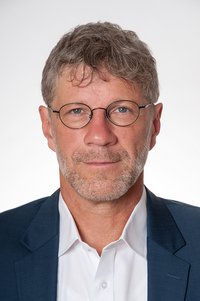
Affiliations & Roles Prof. Dr. Stefan Alexander Schneider holds a professorship in Autonomous Driving and Driver Assistance Systems at the Faculty of Electrical Engineering of Kempten University of Applied Sciences. He also serves as Program Coordinator and Academic Advisor for the Master's program in Driver Assistance Systems. Additionally, he is a Visiting Professor at Shibaura Institute of Technology (Tokyo, Japan) . Education & Academic Background He completed his doctoral thesis "Adaptive Solution of Elliptic Partial Differential Equations by Hierarchical Tensor Product Finite Elements" in 2000, laying groundwork for his later research in computational methods. Research Focus His work centers on autonomous driving technologies , including: Simulation methodologies for vehicle systems Safety validation of driver assistance systems Human-machine interface design for elderly mobility solutions Standardization of testing frameworks (e.g., Open Simulation Interface) Key Contributions Recent projects include: ZuMoBe: Exploring autonomous electric vehicles in mountain valleys Development of Virtual Systems Prototyping frameworks for automotive innovation Cross-border collaboration via the VIVID German-Japanese initiative Teaching & Mentorship As a leader in one of the world's few Master's programs dedicated to ADAS/AV technologies, he mentors students in cutting-edge topics like monocular depth estimation, trajectory modeling, and interface design. His advisees have produced impactful works on autonomous scooter usability, localization algorithms, and motion planning validation.
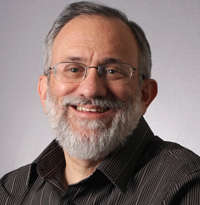
Joel Emer is Professor of the Practice in Electrical Engineering and Computer Science at MIT. His research focuses on computer architecture, VLSI design, hardware security, and AI acceleration. He has made significant contributions to performance analysis methodologies and hardware security techniques. Emer's recent work includes developing secure hardware for AI tasks, efficient acceleration methods for sparse tensor operations in large AI models, and novel cybersecurity protections at the hardware level. His research in computer architecture spans both theoretical frameworks and practical implementations, with emphasis on performance optimization and security vulnerabilities. His publications demonstrate consistent innovation in hardware design, with recent focus on AI accelerators, secure computation environments, and efficient processing of sparse data structures for machine learning applications.
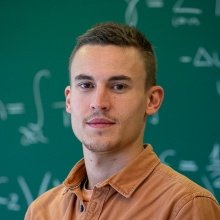
Lambert Theisen is a PhD student and Researcher at RWTH Aachen University's Applied and Computational Mathematics (ACoM) department. He holds a BSc (2014–2018) and MSc (2018–2019) in Computational Engineering Science from RWTH Aachen. His research focuses on PDE eigenvalue problems, asymptotic analysis, directional homogenization, and numerical methods for rarefied gas dynamics. He has held research roles at RWTH Aachen, the University of Stuttgart's NMH/IANS, and ABB Corporate Research. His research spans computational fluid dynamics, domain decomposition methods, and preconditioning techniques for eigenvalue algorithms. Notable contributions include finite element solvers for electrolyte models and FEniCS-based simulations of rarefied gas flows. His work often integrates advanced mathematical frameworks with high-performance computing. Teaching roles include assistantships for courses like 'Mathematical Aspects in Computational Chemistry' and 'Higher Mathematics for Engineers.' His publications are tracked via ORCid and emphasize scalable eigensolvers, mesh generation, and tensorial methods. He maintains a personal website at thsn.dev for research updates.
Dr. Noura Vyas is an Associate Professor of Mental Health in the Department of Psychology at Kingston University's Faculty of Business and Social Sciences. She serves as the Academic School Lead for Civic Engagement and has been with Kingston University since 2012, having previously held a Senior Lecturer position at Middlesex University. Dr. Vyas is also an Honorary Senior Lecturer at Imperial College London, Imperial College Healthcare NHS Trust. Dr. Vyas completed her PhD in Psychiatry at the Institute of Psychiatry, Psychology and Neuroscience (IoPPN), King's College London in 2008. Her educational background includes a BSc (Hons) in Psychology from City University London. She is a Chartered Psychologist and Associate Fellow of the British Psychological Society, a Chartered Scientist of The Science Council, and holds a Senior Fellowship with the Higher Education Academy. Dr. Vyas's research program focuses on understanding the pathophysiology of schizophrenia, particularly early-onset schizophrenia (EOS), using multimodal approaches including clinical assessment, cognitive testing, and advanced neuroimaging techniques. Her work investigates neurocognitive functioning in EOS patients and their first-degree relatives, brain oscillations and structural/functional abnormalities using magnetoencephalography (MEG), diffusion tensor imaging (DTI), and positron emission tomography (PET), and the effectiveness of mindfulness interventions on wellbeing in typical children. Her research bridges neuroscience, genetics, and clinical psychiatry to uncover the complex mechanisms underlying psychotic disorders. Analysis of Dr. Vyas's publications reveals a consistent trajectory from basic neuroimaging and genetic studies of schizophrenia toward more integrated approaches examining the interplay between multiple biological systems and clinical manifestations. Her work spans psychiatry, neuroscience, genetics, and psychology with increasing emphasis on translational research that connects basic findings to clinical applications. 2017: Women of the Year Award, British Asian Achievers Award 2017: Team Excellence Award, Succeed Canvas project, Rose Awards 2017: "Highly Commended" STEM Leader, Forward Ladies National Awards 2017: 'Inspirational Role Model of the Year' (Finalist), European Diversity Awards 2017: 'Women of the Future Awards – Science' (Finalist) 2017: Marquis Who's Who Lifetime Award 2017: Young Investigator Award, 13th World Congress of Biological Psychiatry 2016: Outstanding Women in Science, Technology & Mathematics (STEM), Precious Award 2016: Winston Churchill Travelling Fellowship 2011: Lindemann Trust Fellowship, English-Speaking Union Dr. Vyas has secured significant research funding from diverse sources including Fulbright, Winston Churchill Memorial Trust, UKRI, and institutional grants. Her leadership roles include Faculty Champion for Canvas implementation (2016-2018), KAPS Panel Assessor (2018-present), and Course Director for the Foundation Year in Social Sciences (2018-2022). She currently co-leads the MSc conversion (online) degree program and teaches across undergraduate and postgraduate courses including Psychology MSc, Clinical Applications of Psychology MSc, and various BSc Psychology programs. Dr. Vyas is actively engaged in public mental health initiatives as a series guest speaker on mental health with Resourceful Women's Network, Riverside Radio, Healing our Earth online platform, and Dharma Mandir. She organizes public engagement talks supporting mental health initiatives and contributes to KU Blogs on mental wellbeing topics. Her Instagram account @mentalhealth_connect serves as a platform for public education on mental health issues.
Erik Curiel is an Assistant Professor at the Munich Center for Mathematical Philosophy (MCMP) at Ludwig-Maximilians-Universität München. He is also a Senior Research Fellow at the Black Hole Initiative at Harvard University and an Erasmus Fellow at the University of Florence's Dipartimento di Lettere e Filosofia. His academic journey includes degrees from Harvard University (A.B.) and the University of Chicago (Ph.D.), with interdisciplinary training in physics and philosophy. Curiel's work straddles philosophy of physics, general relativity, quantum field theory, and the philosophy of science, with a focus on black holes, spacetime structure, and scientific methodology. **Education**: A.B. (Honors), Harvard University (Physics and Philosophy) Ph.D., University of Chicago (Philosophy, with extensive coursework in physics) **Research Interests**: Curiel explores the intersection of physics and philosophy, including general relativity, black hole thermodynamics, and the semantics of scientific theories. He critiques the semantic view of theories and emphasizes pragmatism in epistemology. His work spans ancient Greek philosophy, the history of analytic philosophy, and classical mechanics' mathematical foundations. **Awards & Fellowships**: While no specific prizes are listed, his roles as a Senior Research Fellow at Harvard and Smithsonian Astrophysical Observatory highlight his scholarly contributions. His research has been supported by institutions like the Erasmus Programme. **Grants & Advising**: Not explicitly detailed, but his academic positions suggest involvement in funded research and mentorship. He collaborates with institutions globally, reflecting his interdisciplinary and international engagement. **Labs & Teams**: Affiliated with MCMP, Harvard's Black Hole Initiative, and the University of Florence's philosophy department, fostering collaborative research in foundational physics and philosophy.
Zhongyuan Lyu is a Research Fellow (Postdoctoral Research Scientist) at Columbia University's Data Science Institute, mentored by Professors Yuqi Gu and Kaizheng Wang. His research focuses on statistical methodology for latent structures in mixture models, graphical models, and tensor decompositions, with applications to heterogeneous data analysis. Prior to Columbia, he earned his PhD in Mathematics from the Hong Kong University of Science and Technology under Professor Dong Xia's supervision. His academic background includes advanced work in high-dimensional data analysis, latent variable modeling, and computational statistics. Research interests emphasize developing theoretically grounded algorithms for complex data types, particularly in network science and multilayer data frameworks. Recent publications highlight contributions to spectral clustering optimization, adaptive transfer learning frameworks, and tensor-based methodologies for higher-order networks. His work bridges statistical theory and practical applications, addressing computational limits and optimal estimation challenges in modern data science problems. No scientific awards or grants are explicitly mentioned in the provided data. His current position is full-time within the Data Science Institute's research team.
Shaahin Angizi is an Assistant Professor in the Department of Electrical and Computer Engineering at the New Jersey Institute of Technology (NJIT). His research focuses on next-generation computing systems, emphasizing energy-efficient architectures, in-memory computing, and secure AI hardware. He leads multiple National Science Foundation (NSF)-funded projects, including initiatives on robotic vision systems, in-cache AI acceleration, and edge computing. His work spans hardware security, emerging memory technologies, and interdisciplinary applications of AI in healthcare and IoT. Notable projects include developing secure imaging sensors (SenGuard/iSEW), adversarial attack defenses for neural networks, and AI-driven accelerator design automation using large language models (LLM-IMC/TPU-Gen). Angizi has authored over 136 publications and secured 4 active NSF grants between 2022-2027. His research bridges device-level innovations (e.g., magnetoelectric FETs) with system-level designs, aiming to reduce computational carbon footprint while enhancing reliability. Key Projects: Infrared Retinomorphic Vision (2024-2027) Toward Opportunistic In-Cache AI Acceleration (2023-2025) Integrated Sensing & Normally-off Computing (2022-2026) Research Themes: Processing-in-Memory Architectures Edge Intelligence Hardware Hardware Security & Trust Non-Volatile Memory Systems Angizi’s contributions include pioneering sensor-embedded watermarking (iSEW), adversarial attack analysis on LLMs, and energy-efficient in-sensor processing frameworks (PISA/HyperSense). His work frequently explores synergies between photonics, analog computing, and AI to create sustainable high-performance systems.
Dr. Peijun Guo is a Professor in the Department of Civil Engineering at McMaster University. His research focuses on geomechanics, geotechnical engineering, and numerical modeling of complex geotechnical systems, including soil behavior under cyclic loads, granular material dynamics, and climate change impacts on infrastructure. He holds a B.Sc. and M.A.Sc. from Southwest Jiaotong University (SWJTU) and a Ph.D. from the University of Calgary. Dr. Guo is a licensed Professional Engineer (P.Eng.) in Ontario. Research interests include experimental characterization of geomaterials, multiscale modeling of geo-mechanical systems, and the application of advanced numerical methods. His work addresses challenges such as hydraulic fracturing, ground thermal pumping, and railway-induced vibrations. He teaches courses like CIV ENG 704 (Special Topics in Applied Advanced Geotechnology) and CIV ENG 743 (Fundamentals of Soil Behaviour). Dr. Guo’s contributions span over 100 peer-reviewed publications, emphasizing granular materials, soil-structure interaction, and infrastructure resilience. His academic service includes advising on geotechnical projects and collaborating on initiatives like the $1M-funded research on small modular reactors. Dr. Guo’s lab focuses on advancing resilient infrastructure systems through innovative engineering solutions and interdisciplinary approaches.
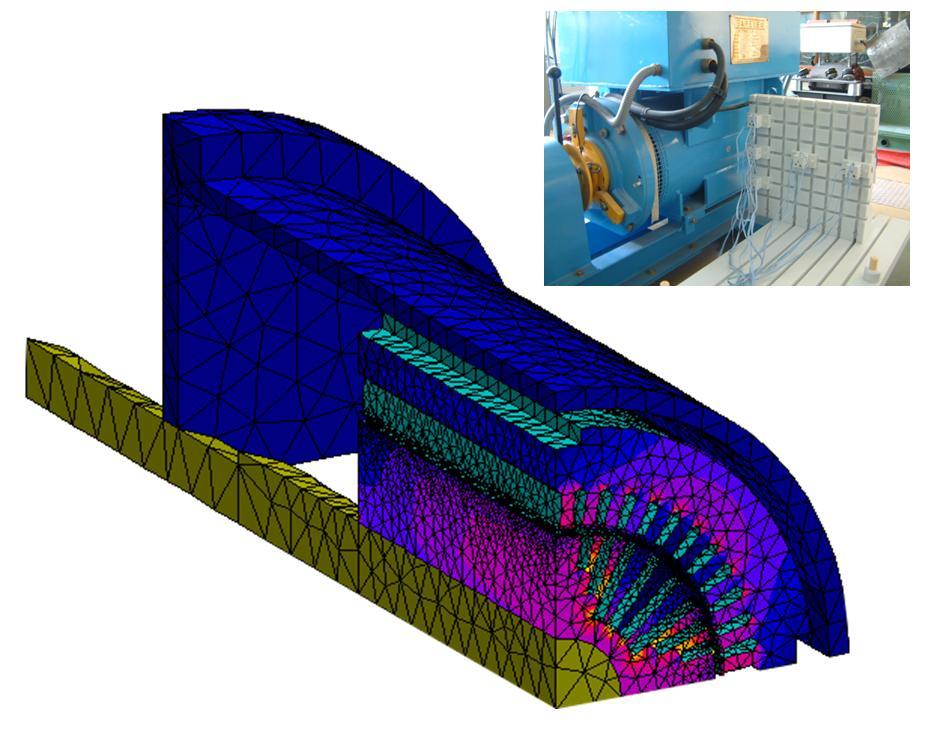
Olivier Chadebec is a CNRS Research Director at G2Elab, the power electrical engineering research department of Université Grenoble Alpes in France. He leads the 'Models, Methods and Methodologies Applied to Electrical Engineering' research team (MAGE group) and the ERT-CMF (Low Magnetic Fields Technological Research Group) at G2Elab. He was involved in creating the International Laboratory 'James Clerk Maxwell' in collaboration with the University of Lyon and Brazilian universities. Chadebec received his engineer and Ph.D. degrees in Electrical Engineering from the Grenoble Institute of Technology in 1997 and 2001. After a post-doctorate with Schneider Electric, he joined CNRS in 2003 as a Research Associate. He received his 'Habilitation à Diriger les Recherches' in 2011 and became a Research Director in 2015. He also spent a year in 2012 as a research associate at the Federal University of Santa Catarina in Brazil. His research focuses on computational electromagnetics applied to electrical energy conversion, developing numerical models, algorithms, and simulation tools for electromagnetic device analysis. His key research areas include finite element methods, integral methods, inverse problems, and low magnetic field metrology. He actively contributes to the development of the MIPSE platform commercialized by Altair Engineering via Flux software. His recent publications (2023-2025) show a strong focus on advanced computational methods for electromagnetic problems, including multiscale modeling, tensor compression techniques, FEM-BEM coupling for magnetoelectric effects, and optimization algorithms for electrical machine design and fuel cell diagnostics. His work demonstrates a consistent progression toward more efficient computational approaches for complex electromagnetic problems. Chadebec has supervised over 30 PhD students since 2006, with thesis topics spanning computational electromagnetics, inverse problems, fuel cell diagnostics, and submarine magnetic signature analysis. His research has significant applications in electrical machine design, fuel cell technology, submarine degaussing, and electromagnetic compatibility. He leads the MAGE research team and the ERT-CMF (Low Magnetic Fields Technological Research Group) at G2Elab, and has been instrumental in developing the MIPSE simulation platform used in industry through collaboration with Altair Engineering.
Jose Luis Abellan Miguel is a Ramón y Cajal Fellow and Tenure-Track Associate Professor at the University of Murcia's Department of Computer Engineering and Technology. He leads the EcoArTech team and is a European R3 researcher. Previously, he held roles at the University of Ferrara, Boston University, and Universidad Católica de Murcia. His research focuses on GPU architectures, accelerators for machine learning, and privacy-preserving computing, particularly Fully Homomorphic Encryption (FHE). He has authored over 70 peer-reviewed publications and contributed to conferences like ISCA, HPCA, and MICRO. Education: Bachelor's, Master's, and PhD in Computer Science and Engineering (University of Murcia, 2007–2012) Research Interests: Abellan's work emphasizes architectural enhancements for GPU systems, customized accelerators for ML and FHE, and efficient synchronization/communication in many-core architectures. His contributions include tools like MGPU-Sim and STONNE for simulation, and frameworks like FIDESlib for FHE on GPUs. Recognition: HiPEAC Paper Awards (2011, 2019–2024) Top Picks in Hardware and Embedded Security 2024 European R3 Certificate (2024) Editorial roles at ACM TACO and Frontiers in Electronics Grants & Leadership: Recipient of a Ramón y Cajal fellowship and a Consolidación Investigadora grant. He chairs sessions at conferences like ISPASS and serves on TPCs for venues including DATE, HPCA, and MICRO. His lab collaborates with institutions like Georgia Tech, Northeastern University, and Intel. Labs/Teams: He leads the EcoArTech team, focusing on next-gen computing systems via architectural simulators. Collaborators include researchers from MIT, Boston University, and industry partners like NVIDIA and Intel.
Ali Abdollahzadeh is an Academy Research Fellow at the A.I. Virtanen Institute for Molecular Sciences, University of Eastern Finland, within the Faculty of Health Sciences. His research focuses on medical image analysis and biophysics, particularly in neuroimaging techniques like diffusion MRI and electron microscopy. He develops advanced computational tools for analyzing white matter ultrastructures and neurovascular interactions. Key projects include studying the role of meningeal lymphatics in neuroinflammation and migraine mechanisms, as well as creating open-source software like SproutAngio and gACSON for bioimage informatics. His work bridges biophysics, computational neuroscience, and clinical applications. Recent studies explore axonal remodeling under stress, neurovascular dynamics, and deep learning applications in neurological disease analysis. He collaborates with the Computational Neuroanatomy Lab and Multiscale Imaging Group, advancing interdisciplinary research in brain imaging and neurodegenerative disorders. Publications highlight innovations in segmentation algorithms, 3D imaging techniques, and translational studies linking microscopic findings to clinical outcomes. His research aims to enhance understanding of CNS structure-function relationships and improve diagnostic tools through advanced imaging methodologies.
Aydın Buluç is a Senior Scientist at the Lawrence Berkeley National Lab (LBNL) in the Applied Mathematics and Computational Research Division and an Adjunct Professor in the Electrical Engineering and Computer Sciences (EECS) department at UC Berkeley. At LBNL, he leads the Performance and Algorithms group, and at UC Berkeley, he is part of the SLICE lab. He also serves as the Director of Sparsitute, a DOE Mathematical Multifaceted Integrated Capability Center (MMICC) focused on sparse computations. Dr. Buluç's research focuses on high-performance graph analysis, parallel sparse matrix computations, and communication-avoiding algorithms with applications in machine learning and computational genomics. His work bridges theoretical computer science with practical applications in scientific computing, particularly in bioinformatics and large-scale data analysis. He has made significant contributions to the development of parallel algorithms for sparse linear algebra operations, which form the foundation for many graph analytics frameworks. His recent publications demonstrate a strong trend toward optimizing sparse computations for modern hardware architectures, particularly GPUs and distributed systems. The research spans theoretical algorithm design, practical implementation challenges, and applications in computational biology. A notable pattern is the increasing focus on communication-avoiding techniques for distributed graph neural network training and large-scale genomic analysis. Dr. Buluç has been actively involved in numerous professional activities, serving on program committees for major conferences including EuroSys (2026), ALENEX (2019, 2026), SPAA (2025), and IPDPS (2013-2019, 2021-2022, 2025). He has also served on the SIAM George Pólya Prize for Mathematical Exposition Selection Committee (2025) and as Founding Associate Editor for ACM Transactions on Parallel Computing (2013-2020). He leads the PASSION Lab research group, which focuses on parallel algorithms and systems for irregular numerical workloads. The lab develops several important open-source software packages including Combinatorial BLAS, HipMCL, PASTIS, CAGNET, and BELLA. These tools address challenges in large-scale graph analysis, protein sequence alignment, and distributed machine learning.
Anders Tranberg is a Professor of Theoretical Physics at the University of Stavanger, affiliated with the Faculty of Science and Technology and the Department of Mathematics and Physics. His research focuses on classical and quantum field phenomena in particle physics and cosmology, including baryogenesis, inflation, preheating, topological defects, and out-of-equilibrium field theory methods. He employs high-performance computing alongside analytical techniques and model-building. Education and Career: Master of Science, University of Copenhagen (Niels Bohr Institute), 2000. Ph.D. in Theoretical Physics, University of Amsterdam, 2000–2004. Postdoctoral Fellowships at University of Sussex, Cambridge, Oulu, and Helsinki (2004–2010). Assistant Professor, University of Copenhagen (2010–2012). Full Professor, University of Stavanger (2013–present). Research Interests: Tranberg’s work emphasizes real-time quantum field theory methods (e.g., Lefschetz thimbles, 2PI formalisms) and quantum effects in the early universe. Collaborations include projects on inflationary dynamics with NTNU and phase transition simulations with the University of Nottingham. His research also explores gravitational wave signatures from cosmological phase transitions and topological defects. Key Contributions: His publications span topics like quantum-corrected Q-ball dynamics, bubble nucleation simulations, and stochastic inflation models. He actively participates in conferences and public lectures, including presentations on dark matter, gravitational waves, and quantum mechanics at the Wonderful World Festival.
Agnès Beaudry is an Associate Professor in the Department of Mathematics at the University of Colorado Boulder, specializing in algebraic topology and stable homotopy theory. Her research focuses on chromatic homotopy theory, equivariant homotopy theory, and their connections to condensed matter physics. She develops mathematical frameworks to understand topological phases in quantum systems and studies interactions between homotopy theory and quantum physics. Beaudry investigates how algebraic topology techniques can be applied to analyze quantum spin systems and topological phases of matter. Her work reconstructs spectral sequences and duality resolutions to uncover fundamental structures in stable homotopy theory. Recent publications demonstrate her interdisciplinary approach combining mathematical physics with advanced topological methods. Her extensive publication record demonstrates consistent contributions to homotopy theory, with recent work focusing on K(2)-localization, Morava stabilizer groups, and parametrized quantum systems. She actively mentors graduate students and contributes to mathematical physics collaborations.
Ka Ming Tam is a Researcher at Louisiana State University's Department of Physics & Astronomy, College of Science. His work spans condensed matter physics , quantum many-body systems , and machine learning applications in physics . He has contributed to advanced computational methods, including nonequilibrium dynamical mean-field theory , functional renormalization group , and parallel tempering algorithms for studying disordered systems. His research includes Quantum materials with disorder and correlation Hybrid quantum-classical algorithms for phase transitions Epidemiological modeling of social physics Tensor formulations for Anderson-Hubbard models Machine learning in critical phenomena The 15 most recent publications highlight his focus on strongly correlated systems , Anderson localization , quantum computing , machine learning in statistical mechanics , and epidemiological dynamics . Key methodologies include DMFT , RG analysis , and GPU-accelerated simulations . No awards or student advisement details are explicitly mentioned in the provided text.