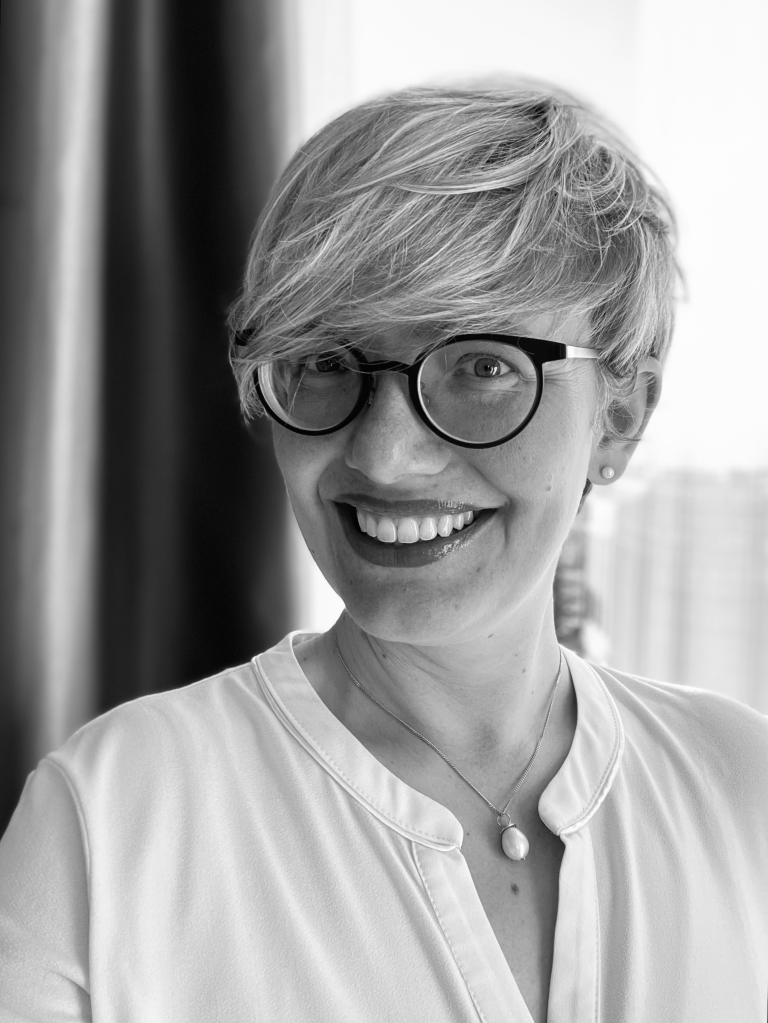
Professor Dorit Abusch is a faculty member in the Department of Linguistics and Philosophy at Cornell University's College of Arts & Sciences. Her research focuses on semantics, pragmatics, and their applications to visual narratives. She explores topics like tense semantics, presupposition triggering, modal logic, and the interplay between language and visual media. Current work extends linguistic methodologies to analyze art forms such as comics, cave paintings, and temple sculptures. Her research interests include formal semantics applied to visual narratives, dynamic semantics, possible world theory, and multimodal discourse representation. She investigates how visual elements like sequential art and pictorial sequences convey temporal progression, aspectual distinctions, and free perception constructions through semiotic frameworks. Recent presentations include talks on applying semantics to film and picturebooks at institutions like MIT and the University of Padua. Her publications emphasize cross-media analysis, with key works published in Linguistics & Philosophy and Sinn und Bedeutung . Abusch has received grants for projects studying visual narratives in Indian art and wall paintings of Rajasthan. These include a 2012-2013 Humanities Research Grant and a Cornell Institute for Social Sciences award. Her work bridges linguistics with philosophy and visual studies, offering innovative frameworks for understanding non-linguistic communication through formal semantic tools.
Michela Ippolito is an Associate Professor in the Department of Linguistics at the University of Toronto. She holds a PhD from the Massachusetts Institute of Technology (2002) and an MPhil from the University of Oxford (1997). Her research focuses on formal semantics and pragmatics, with expertise in modality, counterfactuals, focus, presuppositions, implicatures, tense, aspect, and Romance linguistics. She also explores crosslinguistic semantics and gestures. Education: PhD in Linguistics, MIT (2002), Dissertation: The Time of Possibilities: Truth and Felicity of Subjunctive Conditionals MPhil in General Linguistics, Oxford (1997), Thesis: The Semantics of Tense and Aspect in English and Italian BA in Philosophy, University of Milan (1994) Research interests span formal semantics, pragmatics, and crosslinguistic phenomena. Recent work includes semantic analysis of clitic pronouns and theoretical debates on embedded implicatures. Her publications address subjunctive conditionals, counterfactual presuppositions, and focus-sensitive particles. Awards 2019 Faculty Research Fellow, Jackman Humanities Institute Teaching includes courses like Semantic Theory and Introduction to Semantics . Her employment history includes roles at Boston University (2004–2006) and UCSC (2003–2004). She has also held visiting positions and research roles in Germany.
María Sol Sansiñena Pascual serves as Assistant Professor (tenure track) at KU Leuven across Leuven, Kortrijk, and Brussels campuses while also holding a guest professorship at Ghent University. Her primary academic affiliation lies within the Faculty of Arts at KU Leuven where she actively contributes to the Functional and Cognitive Linguistics: Grammar and Typology (FunC) research group. Education PhD in Spanish Linguistics, KU Leuven (2015) Research Focus Her scholarly work centers on semantic-pragmatic interpretation mechanisms, with special emphasis on modality and TAM (Tense, Aspect, Mood) categories, discourse phenomena including insubordination, language variation/change dynamics, and translation pattern analysis. She employs interactional-constructional frameworks to examine Spanish grammatical structures across synchronic and diachronic dimensions, particularly investigating evolutionary pathways from Latin to contemporary Spanish varieties. Publication Trends Analysis of her recent scholarly output reveals concentrated research trajectories in diachronic syntax (especially insubordinate clause evolution), modal-evidential semantics in Spanish conditional/future forms, grammaticalization processes of verbal periphrases, and indexicality mechanisms. Her methodological approach consistently integrates functional, cognitive, and construction grammar perspectives to address complex language change phenomena. Research Leadership Current promotor of "Pathways to insubordination: diachronic evolution of non-subordinate structures" (2025-2026) Principal investigator for "Speech-act orientation and intersubjective alignment" project (2020-2025) Academic Contributions She actively participates in the FunC research collective while teaching specialized courses including Spanish Linguistics I/III, Discourse Analysis, and Master's thesis support seminars. Her scholarly service includes editorial contributions such as co-editing the 2024 volume "Indexicality: The Role of Indexing in Language Structure and Language Change".
Yuan Chai is a post-doctoral fellow in the Department of Linguistics at the University of Washington, supervised by Professor Richard Wright. They serve as instructor-of-record for courses including Introduction to Linguistic Phonetics and Computational Methods for Linguists . Education: Ph.D. in Linguistics, UC San Diego M.A. in Linguistics, University of Colorado Boulder Dr. Chai specializes in experimental phonetics with emphasis on voice quality (breathy, creaky, falsetto), tone systems, and checked syllables. Their fieldwork documents endangered languages like Yateé Zapotec (Oaxaca, Mexico) and Xiapu Min (Fujian, China), analyzing phonation-tone interactions through acoustic and perceptual studies. Current projects include building a Living Dictionary for Yateé Zapotec with community audio recordings. Recent publications demonstrate consistent focus on multi-dimensional phonetic contrasts, particularly how glottalization position/duration affects perception in Zapotec, and tone sandhi neutralization in Xiapu Min. Work spans journal articles (JASA, Languages), conference presentations (ICPhS, ASA), and collaborative book chapters. Dr. Chai collaborates extensively with native speakers (Briseida Mendez, Adrián Fernández) and researchers (Patricia Keating, Marc Garellek, Jody Kreiman) across institutions. They maintain active GitHub repositories for computational linguistics tools and prioritize open-access language documentation resources.
Toshiyuki Ogihara is a Professor in the Department of Linguistics at the University of Washington. His research focuses on formal semantics, syntax-semantics interfaces, and Japanese linguistics, particularly exploring topics such as tense, aspect, counterfactuals, and pragmatics. He has held this position since at least 2000, as evidenced by his 2000 publication and ongoing work through 2024. His academic contributions include influential analyses of Japanese syntax-morphology relationships, historical linguistic studies of Middle Japanese, and cross-linguistic comparisons of tense systems. Research Interests: Formal semantics of tense and aspect Pragmatic implications of syntactic structures Cross-linguistic variation in temporal reference Japanese morphological interpretations (e.g., -te iru, -ta morphemes) Counterfactual conditionals and modal embeddings Teaching: Formal Semantics Japanese Linguistics Introduction to Linguistics Publications highlight a sustained focus on Japanese linguistic phenomena, with recent work extending into broader semantic theories applicable across languages. His 2016 monograph and 2024 studies exemplify deep engagement with both theoretical and empirical dimensions of semantics.
Pascal Mark Gygax is a faculty member at the University of Fribourg , specifically within the Faculty of Philosophy under the Department of Psychology . His academic career spans psycholinguistics, cognitive psychology, and gender studies, focusing extensively on how language structures influence gender perceptions and cognitive biases. With a research profile marked by experimental methodologies, Gygax has published 64 works, including a 2021 book Does the Brain Think Masculine? that critically examines the psycholinguistic impacts of gender-fair language reforms. Role: Researcher at Department of Psychology, University of Fribourg Key Collaborations: Sandrine Zufferey, Ute Gabriel, Anton Öttl Research Focus: Gygax investigates the cognitive mechanisms behind gender representation in language, particularly how grammatical gender systems (e.g., French, German) perpetuate male-dominated mental models. His work explores: Experimental validation of gender-neutral pronouns Discourse connective processing across age groups Impact of language reform on occupational stereotypes Cross-linguistic comparisons of gender perception Implicit bias in performance evaluation (e.g., magic tricks) Recent Publications (2023-2025) demonstrate methodological rigor in studying: Neological intuition in Romance languages Temporal focus and spatial cognition Connective mastery in L2 contexts Participant variability in experimental linguistics Gender ratio norms across global languages Pragmatic constraints on causal connectives Scientific Contributions: While no explicit awards are listed, Gygax's work has significantly advanced: Development of experimental paradigms for gender perception studies Creation of multilingual datasets on role noun norms Validation of facial feedback mechanisms through collaborative research Understanding of discourse coherence in educational contexts Advising & Collaborations: Though specific students aren't named, Gygax collaborates with: Development of the Routledge Handbook of Experimental Linguistics Leadership in SNSF-funded projects Contributions to debates on inclusive language policies
Vladimir Plungian is a distinguished Russian linguist currently serving as Professor and Head of the Department of Theoretical and Applied Linguistics at Moscow State Lomonosov University's Faculty of Philology. He also holds significant leadership positions as Deputy Director of the Vinogradov Institute for Russian Language and Head of the Department of Linguistic Typology at the Institute of Linguistics, all part of the Russian Academy of Sciences. Plungian earned his undergraduate and graduate degrees at Moscow State Lomonosov University and The Institute of Linguistics of the Russian Academy of Sciences. His academic career spans several decades with continuous appointments at Moscow State University since 1989, progressing from Junior Research Fellow to full Professor. His research encompasses a remarkably broad spectrum of linguistic fields including general linguistics, morphology, grammatical typology, corpus linguistics, and poetics. Plungian has conducted extensive fieldwork on diverse language families including Slavic languages, African languages (particularly in Mali), languages of the Caucasus, and Austronesian languages. His work demonstrates a unique intersection between theoretical linguistics and practical language documentation. An analysis of his recent publications reveals a continued focus on grammatical typology, corpus linguistics, and the documentation of lesser-studied languages. His work spans both theoretical explorations of grammatical categories and practical applications in corpus construction, with particular attention to Slavic languages, Pamir languages, and Armenian. The Eastern Armenian National Corpus represents one of his major collaborative achievements. Full member, Russian Academy of Sciences (Department of History and Philology), 2016 "Prosvetitel" Prize (Humanities) for best popular-scientific book publication in Russian, 2011 Corresponding Member, Russian Academy of Sciences (Department of History and Philology), 2009 Plungian has played a significant role in developing major linguistic resources, most notably as one of the creators of both the Russian National Corpus and the Eastern Armenian National Corpus. Since 2016, he has served as editor-in-chief of Voprosy Jazykoznanija, the leading Russian linguistics journal. His international collaborations include work at scientific centers across Europe (Belgium, Germany, Norway, France) and fieldwork in Africa and various regions of the Russian Federation. Plungian leads multiple research teams across different institutions, including the Department for Corpus and Poetic Studies at the Vinogradov Institute for Russian Language, where he has directed research since 2003. His work bridges theoretical linguistics with practical applications in language documentation and corpus construction, creating a unique research environment that connects Slavic linguistics with the study of African and Caucasian languages.
Sunil Bhatt is an Associate Professor of Teaching specializing in Hindi-Urdu language instruction within the Department of Asian Studies at the University of British Columbia's Faculty of Arts. With a background in Comparative Linguistics and experience teaching South Asian languages across multiple continents, he brings a unique perspective to language education. His research focuses on linguistics, particularly Hindi-Urdu language teaching, sociolinguistics, and language acquisition. He has published extensively on topics including honorifics in Hindi, bilingual situations in India, and the integration of Bollywood culture in language instruction. His work demonstrates a commitment to understanding the complex sociopolitical dimensions of language teaching in South Asian contexts. Bhatt's recent publications reveal a consistent focus on pedagogical approaches to Hindi-Urdu instruction, with emphasis on heritage learners, pandemic-era teaching adaptations, and the relationship between language and cultural identity. His research spans theoretical linguistics, applied language teaching, and sociolinguistic analysis of language communities. As an educator, he teaches foundational and advanced courses including Introductory Hindi-Urdu, Sufi and Bhakti Devotional Literatures, and Introduction to Hindi Film, demonstrating his integration of language instruction with cultural studies. His scholarly contributions extend beyond traditional publications to include textbooks, edited volumes, and digital learning resources that have significantly impacted Hindi-Urdu language pedagogy internationally.
Vera Hohaus is a Senior Lecturer in Linguistics at the University of Manchester, affiliated with the School of Arts, Languages, and Culture and the Department of Linguistics and English Language. She obtained her PhD from Eberhard Karls Universität Tübingen and has trained at the University of Massachusetts, Amherst and the University of British Columbia. Her research investigates how meaning emerges from the interaction of syntactic structure, lexical information, composition principles, and context. She specializes in crosslinguistic variation and its implications for language acquisition and processing. Current projects examine scalarity representation, comparison constructions, tense-modality architecture, and the grammar of alternatives. Recent publications focus on temporal ambiguity processing, crosslinguistic pragmatics, comparative semantics, and modality across languages. Her work demonstrates methodological diversity combining theoretical frameworks with experimental approaches. She leads the Psycholinguistics Laboratory and Fieldwork Hub, mentoring students in research methods and linguistic analysis. Her collaborations span multiple international institutions including the University of Oxford and University of British Columbia.
Giorgio Francesco ARCODIA is a Full Professor in the Department of Asian and North African Studies at Ca' Foscari University of Venice, where he also serves as Director's Delegate for Interdepartmental Agreements and a member of the University Quality Assurance Office (PQA). His academic expertise lies in Chinese linguistics, linguistic typology, morphology, dialectology, and second language acquisition. He has held previous academic positions at the University of Milano-Bicocca, progressing from researcher to associate professor before joining Ca' Foscari as a full professor. His research is deeply interdisciplinary, focusing on Sinitic languages, grammaticalization, and cross-linguistic comparison. Education: PhD in Theoretical and Applied Linguistics, University of Pavia (2008) MA in Theoretical and Applied Linguistics, University of Pavia (2005) BA/MA in Foreign Languages, University of Bologna (2003) Language studies at Renmin University of China, Beijing (2005–2006) Advanced training in Chinese, Russian, Japanese, and linguistics across institutions in Italy, Germany, the Netherlands, and Taiwan His research interests include Chinese morphology, linguistic typology, dialectology, grammaticalization, and the acquisition of Chinese as a second language. He has conducted extensive research on reduplication, compounding, derivational morphology, object marking, tense, and aspect in Sinitic languages, as well as on contact phenomena in Macanese and Sino-Vietnamese. His work often combines corpus-based, experimental, and typological methodologies. The recent publications reflect a strong focus on morphosyntactic and typological features of Sinitic languages, with recurring themes such as nonconcatenative morphology, prosody, grammaticalization of tense and aspect, structural particles, and cross-dialectal convergence. His work increasingly bridges theoretical linguistics with pedagogical implications, especially in teaching Chinese to Italian speakers. Scientific Engagement: Section Editor, Open Linguistics (2024–present) Member, Scientific Board, Linguistic Typology at the Crossroads (2021–present) Member, Editorial Board, Cahiers de Linguistique Asie Orientale (2024–present) Peer reviewer for major journals including Linguistics , Morphology , Journal of Linguistics , and Language and Linguistics Project evaluator for Swiss National Science Foundation, ANR (France), and Research Grants Council of Hong Kong He actively supervises and collaborates with researchers, particularly on projects related to Chinese linguistics and second language acquisition. He has coordinated international research initiatives and double degree programs, notably with the Higher School of Economics in Saint Petersburg. His institutional service includes membership in PhD committees, research councils, quality assurance bodies, and departmental governance at Ca' Foscari. He is a member of leading academic associations including the International Association of Chinese Linguistics (IACL), European Association of Chinese Linguistics (EACL), and Società di Linguistica Italiana (SLI), and has held leadership roles in AILC, EACL, and CASLAR. He has organized major international conferences such as IACL-31 and EACL-10, and workshops on Chinese dialect grammar and prosodic grammar.
Azita Hojatollah Taleghani is an Associate Professor in the Teaching Stream of Linguistics at Language Studies, University of Toronto. She focuses on Persian language, literature, and linguistics, with cross-appointments in the Department of Near & Middle Eastern Civilizations. Education: PhD, Linguistics, University of Arizona MA, Linguistics, University of Arizona MA, General Linguistics, Tehran University BA, English Language and Translation, Tehran University Her research spans second-language and heritage speakers' pedagogy, Persian syntax/morphology, stylistic analysis of Persian women poets, and digital language teaching. Her publications explore theoretical linguistics, Persian second language acquisition, and the intersection of poetic techniques with linguistic processes. Key trends in her work include generative approaches to Persian tense structures, the role of archaism in poetry, and comparative studies of linguistic modules. She has contributed extensively to Persian syntax, aspect, and pedagogical frameworks.
Dr. Angeliek van Hout is a faculty member at the University of Groningen's Faculty of Arts, where she leads the Acquisition Lab within the Center for Language and Cognition Groningen (CLCG). Her academic profile centers on experimental research into first language acquisition in typically developing monolingual children, employing a crosslinguistic perspective to investigate fundamental aspects of language development. Her research expertise spans multiple interconnected domains of linguistic development: Temporal reference (tense and aspect, telicity, event culmination) Nominal reference (definiteness, quantification) Syntactic structures (questions, passives, pronouns) Pragmatic reasoning (scalar implicatures, theory of mind) Dr. van Hout's methodological approach integrates formal linguistic theory with empirical experimentation, examining how children acquire complex linguistic structures across different languages. Her recent work demonstrates particular focus on logical operators and their interpretation in child language, with extensive crosslinguistic comparisons examining how children process disjunction under negation in Dutch, French, Hungarian, and Italian. She investigates the cognitive mechanisms underlying these linguistic phenomena, bridging theoretical linguistics with cognitive science. Her publication record shows consistent productivity with 89 research outputs including 25 articles, 23 conference contributions, and 20 book chapters. Notable recent publications include work on prosodic disambiguation in Dutch, free choice interpretation in French children, and crosslinguistic patterns in quantifier acquisition. Dr. van Hout actively contributes to the academic community through: Supervision of PhD students (4 supervised works documented) Editorial work including the TABU Festschrift for Jack Hoeksema Organizing academic events such as "Novel Semantic Research in Theory, Processing and L1 Acquisition" Presenting research at international conferences including the Boston University Conference on Language Development Her research has practical applications in understanding typical language development trajectories, which she communicates to broader audiences through public engagement activities. She has presented on language development in twins at multiple public events and participated in the NEMO Science Live initiative from 2016-2018, demonstrating commitment to knowledge transfer beyond academic circles. As leader of the Acquisition Lab, Dr. van Hout directs research examining how children develop linguistic competence across various domains, with particular attention to the interface between syntax, semantics, and pragmatics in early language development.
Rajeev Gore is a Professor in the Department of Data Science & AI at Monash University. His research focuses on formal verification, automated theorem proving, and logic systems. He has contributed significantly to areas including modal logics, voting system verification, and cryptographic protocols. Gore has been actively involved in developing verified decision procedures for modal logics and exploring applications in electronic voting systems. His work bridges theoretical computer science and practical applications, with a particular emphasis on ensuring correctness through formal methods. Key contributions include the N-PAT nested model-checker and verified verifiability frameworks for voting systems like BeleniosVS and ElectionGuard. His research also addresses trust domains and cryptographic applications, reflecting a deep engagement with both foundational and applied aspects of logic and computation. Gore's publications span over two decades, demonstrating sustained contributions in formal systems, automated reasoning, and security-critical applications. His work often combines rigorous mathematical foundations with practical tool development, emphasizing trustworthiness and verifiability in complex systems.
Ramchand Gillian is a Professor at the Institute for Language and Culture, University of Tromsoe. She has held academic roles including Senior Researcher at the Center for the Advanced Study of Theoretical Linguistics (CASTL) and Associate Professor at the University of Tromsoe. Previously, she was a University Lecturer in General Linguistics at Oxford University (1994–2004). Education: PhD in Linguistics (1993), MA in Linguistics (1992) from Stanford University; B.S. in Mathematics and Philosophy (1988) from MIT. Her research focuses on syntax, semantics, and their interfaces, with interests in comparative linguistics, aspect, modality, and cognitive science. She has led major grants, including a Research Council of Norway FRIHUM grant (2018–2022) on modal concepts and experimental semantics. Gillian has supervised numerous PhD and MPhil students, contributing to linguistic theory and empirical research. Awarded membership in the Academy of Europe (2018), she has organized workshops like the 2022 Foundations of Extended Projections conference and participated in international forums such as SALT and ELM. Her work bridges formal semantics, syntax, and experimental methods, emphasizing cross-linguistic diversity and theoretical innovation.
Walter Bisang (born February 2, 1959, in Zurich) is a Swiss linguist and Professor of General and Comparative Linguistics at Johannes Gutenberg University Mainz since 1992. His research focuses on language typology and theoretical linguistics, with extensive empirical work on East and Southeast Asian languages, Caucasian languages (especially Georgian), Austronesian languages, and Yoruba. His educational background includes: Major in General Linguistics with minors in Chinese and Georgian at the University of Zurich (1978-1986) Advanced studies in Thai, Khmer, and linguistics at the School of Oriental and African Studies, University of London (1986/1987) Doctorate in General Linguistics from the University of Zurich (1990) with a comparative thesis on East and Southeast Asian languages Bisang's research spans language typology , grammaticalization , areal typology , and language contact , investigating phenomena such as verb serialization, clause linking, finiteness, numeral classifiers, and argument structure. His work integrates formal and functional linguistic frameworks to analyze structural diversity and change across language families, emphasizing how contact situations reshape linguistic systems. He critically examines linguistic complexity metrics and their theoretical implications across different grammatical traditions. His publication record (1992-2009) reveals a sustained focus on comparative grammar of understudied language families, particularly highlighting typological patterns in East/Southeast Asia. His articles consistently bridge theoretical debates with empirical data, demonstrating how grammaticalization pathways diverge in areal contexts and how precategorial systems challenge traditional parts-of-speech classifications. His scientific recognition includes: Election to Academia Europaea (2016) Bisang has led major interdisciplinary projects including the EUROTYP initiative (1992-1995) and the German Research Foundation's Collaborative Research Center on 'Cultural and Linguistic Contacts' (1999-2008), where he coordinated teams spanning ancient history, ethnology, and linguistics. He currently serves on the DFG Review Board 104 evaluating typology and historical linguistics proposals, while co-editing the 'Trends in Linguistics' series and two journals ('Asian Linguistics' and 'Zeitschrift für Sprachwissenschaft'). His editorial work significantly shapes publication standards in cross-linguistic research.