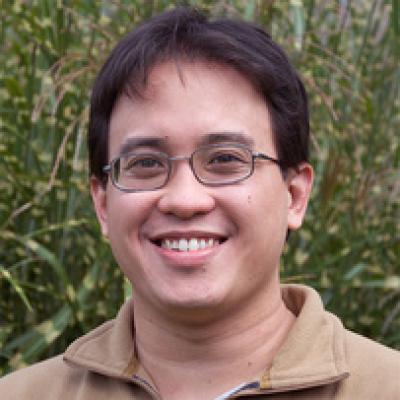
Laura Maria Lojo Rodriguez is a Professor in the Department of English and German Philology at the University of Santiago de Compostela , specializing in British literature and modernist/postmodernist fiction. She leads the Discourse and Identity research group (GI DI-1924), focusing on English language, literature, and culture through interdisciplinary frameworks. Her work intersects with the Humanities Research Institute (iHUS) . Her research spans: Gender and identity in Woolfian studies Migration narratives in contemporary short fiction Postcolonial themes in British-Irish literature Ecocritical and posthuman anxieties in Johnson's works Recent publications examine border politics, maternal discourses, and cross-cultural literary bonds. She has also contributed to translation studies, particularly Woolf's Spanish reception. Her academic output bridges literary theory with socio-political analysis.
Danai Koutra is an Associate Professor in Computer Science and Engineering at the University of Michigan, Ann Arbor, and an Amazon Scholar. Her research focuses on large-scale graph mining, graph neural networks, and interpretable machine learning methods for understanding complex networks. Key roles include leading the GEMS Lab and contributing to projects like DeltaCon (graph similarity) and VoG (graph summarization). She holds a PhD from Carnegie Mellon University and has authored over 80 publications in top venues like KDD, SDM, and NeurIPS. Educations: PhD in Computer Science, Carnegie Mellon University (2015) MS in Computer Science, Carnegie Mellon University (2015) Diploma in Electrical & Computer Engineering, National Technical University of Athens (2010) Research Interests: Her work spans graph mining, anomaly detection, knowledge graph completion, and applications in neuroscience, healthcare, and social networks. Recent projects include MAGNET (multi-agent graph networks) and GT2VEC (multimodal graph-text encoders). Grants & Awards: Recipient of the 2025 PECASE award, NSF CAREER Award (2019), and the 2016 ACM SIGKDD Dissertation Award. Active in organizing conferences like KDD and ECML/PKDD. Labs & Teams: Directs the GEMS Lab, collaborating on projects like FIDDLE (clinical data preprocessing) and SpecGreedy (dense subgraph detection). Engages in interdisciplinary efforts, including M-DICE (urban mobility analysis with Detroit).
Wim Gevers is a faculty member at the Université libre de Bruxelles (ULB) and leads the CS4S – Cognitive Control & Sleep laboratory within the CRCN research centre. His work bridges cognitive psychology, neuroscience and sleep research to understand how the brain exerts control over thoughts and actions and how sleep contributes to these processes. Research Interests Cognitive Control & Metacognition: Investigating how subjective experiences such as confidence and the "urge-to-err" guide strategic adjustments in behaviour. Working Memory & Ordinal Cognition: Examining how order information is maintained and manipulated, and how these processes relate to mathematical competence. Sleep, Memory & Decision Making: Exploring how sleep-dependent consolidation influences motor learning and decision strategies. Across his 2022–2025 publications a clear trend emerges: a focus on metacognitive monitoring —how humans evaluate their own cognitive states—and the role of emotional and temporal context in shaping those evaluations. Studies range from reaction-time introspection and confidence judgements in perceptual tasks to the impact of aging and depression on metacognitive accuracy. Doctoral Supervision & Mentoring Whitney Stee (PhD 2024) – Sleep-dependent structural brain reorganization & motor learning Gaia Corlazzoli (PhD 2024) – Subjective experience in decision-making Myrtille Dewulf (PhD 2023) – Ordinal coding mechanisms in working memory Rebeca Sifuentes-Ortega (PhD 2023) – REM sleep and memory reactivation All dissertations were defended at ULB, Faculté des Sciences psychologiques et de l’éducation, with Wim Gevers formally listed as Promotor . Laboratory & Collaborative Networks As head of CS4S, Gevers coordinates a multidisciplinary team that combines behavioural experimentation, EEG/MEG, computational modelling and sleep polysomnography. The lab is embedded in the larger CRCN ecosystem, fostering collaborations with groups such as CO3 (consciousness), LCLD (language & deafness), and UR2NF (neurofunctional imaging).
Professor Gabriel Brostow is a faculty member in the Department of Computer Science at University College London (UCL), where he leads research in Computer Vision and Human-Computer Interaction. He also serves as Chief Research Scientist and Senior Director of the R&D Team at Niantic, the company behind Pokémon GO. His work bridges academic research and industry applications, focusing on developing AI systems that enhance human capabilities through what he terms 'Human in the Loop AI'—now commonly referred to as Human-Centered AI. Brostow completed his BS in Electrical Engineering at UT Austin, followed by a PhD with Irfan Essa at Georgia Tech. He then pursued postdoctoral research with Roberto Cipolla's Computer Vision & Robotics Group at Cambridge University as a Marshall Sherfield Fellow, and with Marc Pollefeys in ETH Zurich's CVG Group. His research explores how AI, particularly Computer Vision, can serve as 'super-tools' for professionals across various domains including filmmaking, architecture, robotics, and scientific research. Specific interests include assistive technology for everyday life, authoring systems that maximize user effort, 3D reconstruction, depth estimation, and vision-language models. His work often involves creating systems that are validated through real-world human interaction to ensure practical utility. Analysis of his recent publications reveals a strong focus on practical applications of Computer Vision that directly interact with humans. His research spans 3D scene understanding, depth estimation, sketch-based interfaces, and multimodal AI systems. There's a clear emphasis on creating benchmarks and tools that facilitate human-AI collaboration, with applications in assistive technology, urban planning, filmmaking, and biodiversity monitoring. His work frequently appears at top conferences including CVPR, NeurIPS, ECCV, and CHI. Marshall Sherfield Fellowship Brostow actively mentors PhD students, with current advisees including Ross Murphy, Skanda Koppula, Gizem Unlu, Omiros Pantazis, and Jamie Watson. His alumni include numerous PhD graduates and MSc students who have gone on to successful careers in academia and industry. He emphasizes selecting students based on passion and potential rather than just academic credentials, valuing traits like helpfulness, drive, and hunger to learn. His research is supported through collaborations with major institutions and companies including DeepMind, MIT, and the University of Edinburgh. He leads a research group at UCL that collaborates closely with Niantic's R&D team, creating a unique bridge between academic research and industry application. His team's work frequently involves developing novel Computer Vision techniques that are validated through real-world human interaction, ensuring practical utility alongside technical innovation. The group explores blue-sky research problems with applications ranging from assistive technology to professional tools for filmmakers, architects, and scientists studying diverse environments.
Brendan O'Connor is an Associate Professor in the Manning College of Information and Computer Sciences (CICS) at the University of Massachusetts Amherst. His research focuses on computational social science and natural language processing (NLP), particularly exploring how social factors influence language technologies and using text analysis to understand societal trends. His work includes studies on racial bias in NLP, political event analysis, and social media linguistics. He holds a PhD in Machine Learning from Carnegie Mellon University (2014) and dual MS/BS in Symbolic Systems from Stanford University (2006). Education: PhD in Machine Learning, Carnegie Mellon University (2014) MS in Symbolic Systems, Stanford University (2006) BS in Symbolic Systems, Stanford University (2006) Research interests span AI ethics, social media analysis, and computational methods for studying language and society. Notably, he investigates racial disparities in NLP systems, linguistic variation in African American English, and event detection in news and social media. His work has been recognized with NSF CAREER and Google Faculty awards, and his research has been cited thousands of times. His lab, the Statistical Social Language Analysis Lab, develops tools for analyzing large-scale text data. He is affiliated with the Center for Data Science, Center for Intelligent Information Retrieval, and Computational Social Science Institute. Recent projects include analyzing global news coverage of critical events and developing frameworks for zero-shot argument explication. Awards and Honors: NSF CAREER Award Google Faculty Research Award Best Paper Award Advising and Grants: O'Connor has advised projects on social media polling representativeness and demographic analysis. His grants include collaborative research on sociopolitical event extraction and bias mitigation in AI systems. He has also contributed to platforms like Rookie for news archive exploration and ezCoref for coreference resolution. Labs/Teams: Leads the Statistical Social Language Analysis Lab and collaborates with the UMass NLP Group and Harvard Institute for Quantitative Social Science. His work bridges NLP with social science methodologies, emphasizing transparency in algorithms and causal inference using text data.
Kyle Bellucci Johanson serves as a Visiting Critic in Cornell University's College of Architecture, Art, and Planning, Department of Art. Holding an MFA from California Institute of the Arts and a BA in Art and Reconciliation Studies from Bethel University, he merges artistic practice with critical theory through performance architecture and collaborative media. Whitney Independent Study Program (2022–23) Founding fellow at land's edge free school (Los Angeles) Teaching experience at SAIC, UIC, CUNY, and Cooper Union His research investigates: Power structures through spatial interventions Critical theory applications in art practice Post-capitalist imaginaries Hauntology and historical materialism Transdisciplinary approaches to social critique Project trends reveal: Reinterpretation of Soviet design principles Investigation of worker identity in post-industrial contexts Temporal and spatial dislocation in artistic practice Monument critique through performative methods Quantum theory-inspired architectural concepts Reimagining of common spaces as political sites Scientific awards include: Creative Research Grant (2025) Whitney ISP participation (2022–23) Automata Studio Residency (2022) Artists Run Chicago Grant (2021) BOLT Residency (2020–21) Through projects like KLUB WRKR —a nomadic workers' club reimagined for the gig economy—and table (2018–2022), a Chicago-based experimental space for artistic practice, he interrogates institutional frameworks while fostering community through discursive meals and collaborative exhibitions.
Takako Fujioka is an Associate Professor of Music at Stanford University, affiliated with the Center for Computer Research in Music and Acoustics (CCRMA). Her research focuses on the neural mechanisms underlying auditory perception, auditory-motor coupling, and music-supported therapy for neurorehabilitation. She holds a Ph.D. in Physiology from the Graduate University for Advanced Studies, Japan, and M.Sc./B.Eng. degrees in Electrical Engineering from Waseda University. Her work combines neurophysiological techniques such as MEG and EEG to study brain plasticity in development, aging, and stroke recovery. Notable contributions include investigating how music influences motor and cognitive recovery in stroke patients, as well as exploring the neural basis of musical perception through rhythmic synchronization and pitch discrimination studies. Supported by awards from the Canadian Institutes of Health Research during her postdoctoral work at the Rotman Research Institute, her research bridges clinical neuroscience and music cognition. Dr. Fujioka’s expertise spans auditory neuroscience, neurorehabilitation, and technology-assisted music therapy. She has pioneered studies on tactile mapping for cochlear implant users and networked music performance systems, emphasizing cross-modal perception and human-technology interaction. Her findings contribute to both theoretical understanding of auditory processing and practical applications in medical and educational settings. Awards: Canadian Institutes of Health Research Awards (postdoctoral phase) Labs/Teams: CCRMA, Stanford Music Perception Laboratory, Rotman Research Institute collaborations Key Themes: Neuroplasticity, Music-Mediated Rehabilitation, Auditory-Motor Integration, Multisensory Processing Her recent work examines aging-related changes in binaural hearing and the role of beta/gamma oscillations in rhythmic processing. She advocates for translational research that connects neural mechanisms with real-world therapeutic interventions.
William Yang Wang serves as the Mellichamp Professor of Artificial Intelligence at the University of California, Santa Barbara (2019-present). He directs the UCSB Center for Responsible Machine Learning, the Mind and Machine Intelligence Initiative, and the UCSB NLP Group. His research focuses on theoretical foundations and practical algorithms for AI, particularly in NLP, LLMs, and neuro-symbolic reasoning. PhD in Computer Science from Carnegie Mellon University Active in AI theory and applications (2016-present) Research interests span multiple AI domains, with special emphasis on NLP and responsible machine learning. He has pioneered datasets like HybridQA, TabFact, and VaTeX, enabling advancements in multi-hop QA, fact verification, and video-language tasks. His work combines statistical relational learning with modern deep learning paradigms. Recent publications center around multimodal reasoning, knowledge graph integration, and responsible AI development. He has received numerous accolades including the IEEE SPS Pierre-Simon Laplace Award (2024) and NSF CAREER Award (2021). Karen Sparck Jones Award (2022) DARPA Young Faculty Award (2018) IBM Faculty Award Mentoring 15+ PhD and postdoc researchers who now hold positions at Microsoft Research, Amazon, Meta GenAI, and academic institutions like Arizona and Rutgers. His lab maintains active collaborations with industry partners through initiatives like ChipAgents.ai, which he founded as CEO.
Rachel Rudinger is an Assistant Professor at the University of Maryland, affiliated with the Department of Computer Science and the University of Maryland Institute for Advanced Computer Studies (UMIACS). Her research focuses on Natural Language Processing (NLP), Machine Learning, and AI ethics, particularly addressing sociocultural biases and fairness in large language models (LLMs). She holds a PhD from Johns Hopkins University (2019) and a B.S. from Yale University (2013). Rudinger's work explores equitable cultural alignment in AI systems, common ground misalignment in dialog systems, and the mutual influence of gender and occupation in LLMs. She received the NSF CAREER Award in 2024 for her project on robust, fair, and culturally aware commonsense reasoning. Her recent publications investigate empathy gaps in LLMs, synthetic data effectiveness in disaster response, and bias measurement techniques across domains. As an advisor, she guides seven PhD students including Christabel Acquaye and Haozhe An. Her research spans diverse topics from legal language analysis to maternal health question answering, reflecting her commitment to interdisciplinary AI ethics. She actively contributes to workshops on commonsense representation and serves as a reviewer for top conferences in NLP and AI.
Raquel Fernández is Full Professor of Computational Linguistics and Dialogue Systems at the University of Amsterdam, where she leads the Dialogue Modelling Group at the Institute for Logic, Language & Computation (ILLC). As Vice-Director for Research at ILLC and a Fellow of the ELLIS Society, she bridges computational linguistics, cognitive science, and artificial intelligence through her research on language use in multimodal and conversational contexts. PhD in Computational Linguistics from King's College London Prior research positions at University of Potsdam and Stanford University's CSLI Her work explores how cognitive constraints, social interaction, and perception shape language use, with a focus on: Visually-grounded language processing Multimodal dialogue modeling Model uncertainty and calibration Language grounding in multimodal data Language learning and semantic change Dialogue reference resolution Recent publications analyze multimodal reasoning limitations, cross-lingual knowledge consistency, and uncertainty modeling in dialogue systems. She has received multiple accolades including an ERC Consolidator Grant , NWO VENI/VIDI/Aspasia fellowships , and EMNLP/GenBench awards . Outstanding Paper Award (EMNLP 2023) Best Data Award (GenBench Workshop 2023) ELLIS Society Fellow ERC Consolidator Grant #819455 recipient NWO VENI/VIDI/Aspasia awardee As a leader in academic service, she serves on the SIGDAT Executive Committee and chairs multiple conference committees. Her lab develops models for multimodal dialogue, visual storytelling, and grounded language understanding.
Teruko Mitamura is a prominent researcher at Carnegie Mellon University with over three decades of contributions to natural language processing, computational linguistics, and artificial intelligence. Her work spans from foundational research in event representation to advanced applications in multimodal systems and question answering. Her research interests focus on event detection and understanding, question answering systems, information retrieval, and multimodal processing. She has made significant contributions to event coreference resolution, timeline construction, and cross-document event analysis, developing methodologies that have become standard in the field. Her work often bridges theoretical advances with practical applications, particularly in complex information environments requiring deep semantic understanding. Natural Language Processing : Specializing in event extraction, coreference resolution, and narrative understanding with over 179 publications Question Answering Systems : Developing advanced techniques for complex question answering, particularly through NTCIR QA Lab and PoliInfo tasks Multimodal Processing : Integrating textual, visual, and temporal information for richer understanding in systems like ProMQA Evaluation Methodologies : Creating robust frameworks for assessing NLP systems through TAC KBP Event Tracks Her recent publication trends show a strong focus on leveraging large language models for event understanding, multimodal question answering, and timeline construction. She has expanded her research into specialized domains including patent analysis and novelty examination, demonstrating the breadth of her research impact across academic and practical applications. Active participant in major NLP conferences including ACL, EMNLP, NAACL, and AAAI with consistent publications Long-standing collaborator with researchers at CMU's Language Technologies Institute including Eduard H. Hovy and Eric Nyberg Contributor to shared tasks that have shaped research directions in event processing and question answering Organizer of multiple NTCIR QA Lab tasks focused on political information question answering Dr. Mitamura has mentored numerous researchers who have gone on to make their own contributions to the field, as evidenced by her extensive co-authorship network and the progression of her former students and collaborators into faculty and research positions. Her work continues to evolve with the field while maintaining her focus on deep semantic understanding of events and narratives.
Dr A. I. Shihab is a Senior Lecturer at Kingston University's Faculty of Engineering, Computing and the Environment, Department of Networks and Digital Media. He teaches programming languages (C++/Java), data structures, web development, and AI/machine learning. His research focuses on affective computing and machine learning applications including: Acoustic event detection in sports environments Audio signal analysis for tennis match modeling Multi-camera visual surveillance systems Medical imaging analysis using fuzzy clustering techniques Publications demonstrate expertise in combining audio/video modalities for sports analytics (tennis rallies, court-shots) and developing Markov models for sound event sequence analysis. Contact: a.shihab@kingston.ac.uk
Reihaneh Rabbany is an Assistant Professor at the School of Computer Science, McGill University, and a core faculty member of Mila - Quebec's artificial intelligence institute. She holds the Canada CIFAR AI Chair and is affiliated with the Center for the Study of Democratic Citizenship. Her research focuses on complex data analysis at the intersection of network science, data mining, and machine learning. Research Interests: Network Science Data Mining Graph Representation Learning Unsupervised and Self-supervised Learning Anomaly Detection Social Good Applications Publication Trends show emphasis on temporal graph analysis, community detection, misinformation identification, and interdisciplinary collaborations with political science and criminology experts. Notable Awards Canada CIFAR AI Chair CAIAC 2021 Best Master's Thesis Award (co-supervisor) Advising includes mentoring PhD and MSc students across multiple institutions, with graduated students transitioning to roles at Microsoft Research, Mila, Yale, and Google. Labs & Collaborations: Leads the Complex Data Lab at McGill, collaborates with Mila, and contributes to community evaluation frameworks like CommunityEvaluation and TopLeaders algorithm.
John Kingston is a Professor of Linguistics and Director of the Phonetics Lab at the University of Massachusetts Amherst, where he has been since 1990. He holds a BA and MA from the University of Chicago (1976–1977) and a PhD from UC Berkeley (1985). His research focuses on the interplay between phonetics and phonology, particularly speech perception and its influence on phonological representations. He co-founded the Laboratory Phonology Conference series in 1987 and has conducted fieldwork on Otomanguean languages. His work emphasizes experimental methods to study phonological questions, including studies on vowel perception, tone systems, and cross-linguistic phonetic patterns. Kingston’s academic journey includes roles at the University of Texas, Austin (1984–1986) and Cornell University (1986–1990). His research explores how auditory processing and linguistic knowledge shape speech perception, with notable contributions to understanding tonogenesis, perceptual contrast effects, and vowel category learning in second languages. He collaborates on grants examining Ganong effects and phonological inventories, advocating for theories that bridge perceptual and structural aspects of language. His lab, the Phonetics Lab, supports experimental work on speech perception and production. Kingston is also the Honors Program Coordinator, mentoring students in linguistics and related fields. Despite no explicit awards listed, his extensive publications and conference leadership reflect his scholarly impact.
Olga Fink is a Tenure Track Assistant Professor at the École Polytechnique Fédérale de Lausanne (EPFL), affiliated with the Department of Intelligent Maintenance and Operations Systems (IMOS) within the School of Architecture, Civil and Environmental Engineering (ENAC). She also holds roles in PhD program committees for Civil and Environmental Engineering (EDCE) and Robotics, Control, and Intelligent Systems (EDRS). Her research focuses on machine learning for infrastructure monitoring, predictive maintenance, and physics-informed AI models. She teaches courses on machine learning, data science for infrastructure, and advanced deep learning topics. Fink advises multiple PhD students and is involved in interdisciplinary projects such as ThermoNeRF (multimodal 3D thermal modeling) and physics-informed neural networks for fault diagnostics. Her work bridges AI and engineering with applications in smart infrastructure, energy systems, and industrial IoT. Education: PhD in Engineering (inferred from role) Affiliations: IMOS Lab, ENAC-SGC, EPFL PhD Committees (EDCE, EDRS) Key Research Themes: Explainable AI, Digital Twins, Structural Health Monitoring, Domain Adaptation Her publications (2023–2025) emphasize robust AI for industrial systems, including fault detection in high-voltage equipment, multimodal data fusion, and physics-consistent models. She collaborates on EU and industry-funded projects, focusing on real-world applications like predictive maintenance and energy efficiency.