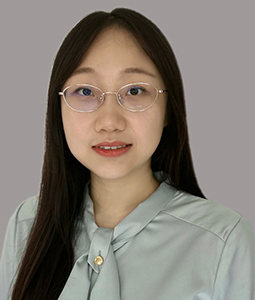
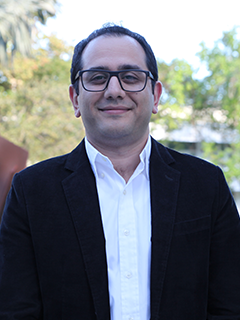
Luis Antonio Belanche Muñoz is a Professor at the Department of Computer Science , Faculty of Informatics of Barcelona (FIB) , Universitat Politècnica de Catalunya (UPC) . He is affiliated with research groups SOCO - Soft Computing and IDEAI-UPC - Intelligent Data Science and Artificial Intelligence Research Group . His career spans over 25 years, with 216 documented activities. His research focuses on Machine Learning , Kernel Methods , and Neural Networks . He has pioneered techniques in feature selection, similarity measures, and hybrid models connecting deep learning with kernel methods. His work applies to diverse domains including finance, microbiology, cancer diagnostics, and environmental engineering. Recent publications highlight trends in kernel matrix analysis using entropy, microbiome data integration , and drug resistance prediction in HIV. Earlier work includes knowledge-based systems for wastewater treatment diagnostics and educational technologies for MOOC environments. He has collaborated with 75+ researchers across UPC's research network, contributing to projects funded under Spain's State Research Plans and Catalonia's RIS3CAT strategy. His 2011 thesis on Feature selection in brain tumor MRS data demonstrates interdisciplinary applications.
Ulrich Ultes-Nitsche is a Professor in the Department of Informatics at the University of Fribourg, where he also serves as Dean of the Faculty of Science and Medicine. His research spans theoretical computer science, formal methods, and cybersecurity, with a strong focus on automata theory, model checking, and secure network systems. Institution: University of Fribourg School: Faculty of Science and Medicine Department: Department of Informatics Role: Professor and Dean His research interests include theoretical computer science, automata theory, formal verification, temporal logic, and cybersecurity. He has made significant contributions to the understanding of Büchi automata, liveness properties, and secure authentication mechanisms using Trusted Platform Modules. His interdisciplinary work extends to secure medical data access and ecological network analysis. The recent publications highlight a clear trend: a deep and sustained focus on automata theory, particularly Büchi automata, with increasing integration of machine learning techniques like graph neural networks for analysis. His earlier work laid foundational contributions in formal verification, model checking under fairness, and secure network protocols, especially in firewall and EAP-TLS authentication. The research consistently bridges theoretical computer science with practical security applications. Carolin Latze InSeon Yoo Dominik Jungo David Buchmann Thierry Nicola Michael Hayoz Christoph Ehret Nayla Sokhn Ulrich Ultes-Nitsche has led and co-organized numerous international workshops (e.g., NCMA, MSVVEIS, VCL) on formal methods and verification, demonstrating a strong commitment to the academic community. His work has been supported by research in formal verification, network security, and trusted computing, often involving collaborations across institutions. He has also contributed to projects involving secure e-commerce, medical data access, and enterprise information systems. He has been a key figure in organizing and editing proceedings for the International Workshop on Modelling, Simulation, Verification and Validation of Enterprise Information Systems (MSVVEIS) and the ACM Sigplan Workshop on Verification and Computational Logic (VCL), fostering research communities in formal methods and verification.
Dr. Henry Hong-Ning Dai is an Associate Professor in the Department of Computer Science at the Faculty of Science, Hong Kong Baptist University (HKBU). He previously held academic positions at Lingnan University and Macau University of Science and Technology, where he advanced from Assistant to Associate Professor. He holds a Ph.D. from the Chinese University of Hong Kong and a D.Eng. from Shanghai Jiao Tong University. Education: Ph.D. in Computer Science and Engineering, Chinese University of Hong Kong (2008) D.Eng. in Computer Technology Application, Shanghai Jiao Tong University (2012) M.Eng. in Computer Science and Engineering, South China University of Technology (2003) B.Eng. in Computer Science and Engineering, South China University of Technology (2000) Dr. Dai's research focuses on security and reliability of VR/AR systems , Internet of Things , blockchain and distributed systems , federated learning , and cyber-physical systems . His work integrates AI, networking, and software engineering to address real-world security and performance challenges in emerging technologies. He has published over 300 papers in top journals and conferences such as IEEE JSAC, TMC, ICSE, INFOCOM, and AAAI, accumulating more than 24,000 citations. The 15 most recent publications (2023–2025) highlight his leadership in VR/AR security (e.g., AcouListener, Meta VR study), blockchain scalability and fairness (e.g., Porygon, Auncel, Justitia), federated and robust learning (e.g., EBS-CFL, FedDP), and edge-AI and wireless security (e.g., HARBOR, Smart Shield). His recent work also explores AI-generated art evaluation and LLM-driven manufacturing systems , showcasing interdisciplinary innovation. Scientific Awards and Recognition: Holder of 1 U.S. patent and 1 Australia innovation patent Winner of more than 17 awards Senior Member of ACM, IEEE, and EAI Dr. Dai has been Principal or Co-Investigator on over 12 research projects totaling HK$16 million, funded by UGC, NSFC, FDCT, and HKBU. He serves as an Associate Editor for IEEE Communications Surveys & Tutorials , IEEE Transactions on Intelligent Transportation Systems , and several other IEEE journals. He has chaired program committees and served on the PC of top conferences including ICSE, KDD, and INFOCOM. He is actively recruiting Ph.D. students and RAs in security, blockchain, and AI. Laboratories and Research Teams: While not explicitly named, Dr. Dai leads a research group focused on secure and intelligent distributed systems, with active projects in blockchain, VR security, and edge AI. His team has developed open-source tools such as VR-SP Detector , PrettySmart , and RLF for smart contract analysis and security assessment.
Shanghong Xie is an Assistant Professor in the Department of Statistics at the University of South Carolina, College of Arts and Sciences. She is also a member of the Carolina Autism and Neurodevelopment (CAN) Research Center and the Institute for Mind and Brain (IMB), reflecting her interdisciplinary focus on statistical methods for neuroscience and public health. Dr. Xie earned her PhD in Biostatistics from Columbia University in 2019 and completed her postdoctoral training there. Her research centers on developing machine learning and generative models to tackle complex challenges in functional data analysis, network modeling, causal inference, and precision medicine. She applies these methods to neuroimaging (fMRI, DTI, EEG), genetic biomarkers, and public health data, particularly in mental health and neurological disorders. Her recent publications demonstrate a strong trajectory in methodological innovation with high-impact applications, including COVID-19 forecasting models adopted by the CDC, mediation analysis with neuroimaging, and personalized treatment regime estimation. The research trends highlight expertise in high-dimensional data, graphical models, and integrative learning across multi-modal biomarkers. American Statistical Association (ASA) Statistics in Imaging Section First Prize Student Paper Award American Statistical Association (ASA) Mental Health Statistics Section Best Student Paper Award International Conference on Health Policy Statistics (ICHPS) Student Travel Award Dr. Xie advises several graduate students and co-founded the Functional and Complex Data Analysis (FUNCODA) Working Group, fostering collaboration on advanced data modeling. She has been involved in significant grant-supported work, notably contributing to the CDC’s ensemble forecasting effort during the pandemic through her survival-convolution model. Her lab emphasizes computational statistics and open science, with code available on GitHub.
Giulia Fanti is an academic researcher affiliated with Carnegie Mellon University in the Computer Science Department . Her research focuses on privacy-preserving technologies, blockchain systems, and machine learning mechanisms, with significant contributions to federated learning, differential privacy, and cryptocurrency network design. Key Research Areas : Privacy in blockchain, Generative Adversarial Networks (GANs), Federated Learning, Game Theory applications to decentralized systems. Recent Publications : Her work explores liquidity provisioning in decentralized finance, truncated consistency models for image generation, and private data valuation frameworks. She has contributed to venues like NeurIPS, ICLR, and SIGMETRICS, often addressing privacy-utility tradeoffs.
Zhenjie Zhang is a Professor in the Department of Computer Science at East China Normal University's School of Computer Science and Software Engineering, with a distinguished research career spanning nearly two decades. His work bridges theoretical computer science with practical industrial applications, maintaining strong international collaborations with researchers from TU Wien, National University of Singapore, and industry partners including ByteDance. Dr. Zhang's research focuses on the intersection of database systems, machine learning, and industrial applications. His early work centered on database privacy and query processing, evolving toward causal inference, fault diagnosis systems, and industrial AI applications. His recent publications demonstrate a strategic shift toward solving real-world engineering problems using advanced machine learning techniques, particularly in manufacturing, transportation, and cloud systems. The consistent publication trajectory across top venues like IEEE TKDE, VLDB, and ACM Transactions shows sustained research excellence and adaptability to emerging technical challenges. His publication record reveals significant contributions to causal inference methods, evidenced by multiple papers on causal discovery and transfer learning. The research demonstrates practical impact through industrial collaborations, particularly in fault diagnosis systems for mechanical equipment and adaptive control for unmanned vehicles. The recent work shows increasing focus on deploying AI models efficiently in resource-constrained environments, reflecting awareness of practical implementation challenges. Dr. Zhang has mentored numerous junior researchers who have become active contributors in the field, including Ruichu Cai and Zining Zhang. His collaborative network spans multiple continents, indicating strong research leadership and international recognition. The consistent flow of publications in top venues suggests successful grant funding and research group management, though specific grant details aren't provided in the source material.
Christophe Claramunt is a distinguished researcher affiliated with the Naval Academy Research Institute in Brest, France. His work spans interdisciplinary domains at the intersection of Geographic Information Systems (GIS) , spatial data science , and human mobility analysis . He has pioneered hierarchical graph-based models for maritime and urban systems, semantic trajectory frameworks, and spatiotemporal approaches for urban soundscapes and shipping networks. Research Themes: GIS modeling, maritime transportation analytics, urban conflict analysis, semantic trajectories, geospatial data infrastructures Methodologies: Graph theory, machine learning, knowledge graphs, spatiotemporal databases, remote sensing Applications: Port network resilience, demining systems, tourist behavior analysis, cadastral digitization His recent publications focus on graph neural networks for spatial analysis, knowledge-driven competitive intelligence , and maritime network cascading failures . Collaborative work includes contributions to global container shipping modeling and urban acoustic environments. While no formal academic rank is listed in the source data, his extensive publication record and leadership in interdisciplinary projects confirm his status as a full faculty researcher.
Jaideep Srivastava is a Professor affiliated with Qatar Foundation (Doha, Qatar), University of Minnesota (Minneapolis, USA), and holds a PhD from University of California Berkeley. His research spans data mining, social network analysis, time series modeling, and health informatics. Recent work focuses on clinical deterioration prediction, sleep research, and computational analysis of pandemic behaviors. Key contributions in clustering algorithms and graph neural networks Active in multimodal learning and misinformation detection His publications from 2024-2022 demonstrate expertise in hierarchical clustering , large language model applications , and health data analytics . Articles often integrate machine learning , social network dynamics , and clinical monitoring systems . Current projects involve Covid-19 in-hospital mortality prediction , virtual influencer analysis , and low-light imaging techniques . Collaborations span institutions in Qatar, USA, and India with applications in urban mobility and precision medicine.
Florentin Wörgötter is a faculty member at the Department for Computational Neuroscience , Georg August University of Göttingen, Germany. His research bridges robotics , computational neuroscience , and machine learning , focusing on action prediction, neural networks, and human-robot interaction. Key Research Areas : Action segmentation, semantic decomposition of manipulation sequences, 3D object reconstruction, and sensor fusion for infant movement classification. Recent Trends : Combining task-dependent learning with optimal path search, using foundation models for graph-based action recognition, and improving CNN interpretability through influence functions. He collaborates extensively with researchers like Minija Tamosiunaite , Tomas Kulvicius , and Poramate Manoonpong , contributing to journals such as NeuroImage , Robotics and Autonomous Systems , and IEEE Transactions on Neural Networks . His work often integrates deep learning , semantic reasoning , and biologically inspired models for robotic applications.
Prateek Jain is a Lecturer at the School of Information, San José State University, where he teaches courses in Big Data Analytics and Python programming. He holds a Ph.D. in Computer Science and Engineering from Wright State University and has over a decade of industrial experience in data science and artificial intelligence at leading institutions such as IBM T.J. Watson Research Center, Nuance Research Labs, and Liveperson. His research interests include Knowledge Graphs, Natural Language Processing, Machine Learning, and Big Data, with over 30 peer-reviewed publications and patents in these areas. His academic and professional background bridges advanced research and practical deployment of AI-driven systems. Ph.D. (Computer Science and Engineering), Wright State University (2007–2012) Ph.D. (Computer Science), University of Georgia (2006–2007, transferred) BS (Information and Communication Technology), Dhirubhai Ambani Institute of ICT (2002–2006) Prateek's research publications focus on the development and application of Knowledge Graphs, particularly in areas like NLP, enterprise search, healthcare, and financial services. His work emphasizes scalable, explainable, and practical AI solutions, with recurring themes in graph embeddings, semantic reasoning, and large-scale data integration. He has served as an Adjunct Instructor at Chabot College and Northwestern Polytechnic University, and currently contributes to academic instruction at SJSU while maintaining an active role in industry as Principal Data Scientist at Liveperson. His industrial roles have spanned: Principal Data Scientist, Knowledge Graphs – Liveperson Inc. (2021–Present) Engineering Manager, Machine Learning – AppZen Inc. (2018–2021) Principal Research Engineer – Nuance Inc. (2016–2018) VP/Data Scientist – BlackRock Inc. (2015–2016) Data Scientist – Ignition One (2015) Research Staff Member – IBM T.J. Watson Research Center (2012–2015) There are no listed scientific awards or advisees in the provided information.
Shah Hamdi serves as an Assistant Professor in the Computer Science Department at Utah State University's College of Engineering. His research bridges machine learning and space physics, with emphasis on time series analysis for solar phenomena prediction and explainable AI systems. His primary research focuses include Time Series Analysis for space weather forecasting, Solar Physics applications in flare and particle event prediction, Explainable AI through counterfactual methods, and Natural Language Processing for social media analysis. He develops novel frameworks for multivariate time series classification, data augmentation of imbalanced datasets, and interpretable model architectures that handle complex spatio-temporal patterns. Analysis of his recent publications reveals three dominant trends: (1) Application of graph neural networks and multimodal fusion to solar flare prediction using photospheric magnetic field data, (2) Development of shapelet-based and saliency-guided counterfactual explanation techniques for time series classification, and (3) Creation of generative models like ChronoGAN and AVATAR for synthetic time series data augmentation. His work consistently addresses challenges in imbalanced data and space weather forecasting accuracy. Dr. Hamdi leads collaborative research initiatives including the CAIG project for synthetic data generation in solar energetic particle events. His grant portfolio demonstrates expertise in securing funding for interdisciplinary space weather and machine learning projects, while his advising focuses on training graduate students in time series analysis and explainable AI methodologies for real-world applications.
Christian Heine is a researcher at the Institute of Computer Science , University of Leipzig. His work focuses on advanced data visualization techniques, particularly those grounded in topological and geometric analysis of scalar fields, ensemble data, and high-dimensional datasets. Key Research Areas: Topological visualization, scalar field analysis, medical imaging, and uncertainty quantification. Methodologies: Bayesian inference, fiber trajectories, volume rendering, and dynamic workflows. Applications: Meteorological data analysis, medical diagnostics, and interactive visualization systems. He has published extensively on these topics, with recent work addressing spatio-temporal trends in climate data and noise-robust visualization techniques. His research often integrates interdisciplinary approaches, bridging computer science and applied sciences.
Yushuai Li is an Assistant Professor in the Department of Computer Science at Aalborg University. His research focuses on digital twin technologies, energy internet systems, distributed optimization, and cyber-physical security for energy networks. Institution: Aalborg University, Denmark Academic Rank: Assistant Professor Email: yushuaili@ieee.org, yusli@cs.aau.dk Research Interests: Li's work bridges artificial intelligence with energy systems, emphasizing: Digital Twin for Energy and Transportation Integration Reinforcement Learning in Power Trading Distributed Control for Microgrids Privacy-Preserving Energy Dispatch Autonomous Driving-Energy System Coupling Scientific Contributions: His recent publications address critical challenges in energy internet resilience, including: Distributed control under stealthy attacks Noise-resilient microgrid operations Multi-timescale optimization algorithms Event-triggered control strategies Secure peer-to-peer energy trading Honors & Awards: Recipient of multiple prestigious awards, including: Best Paper Awards (MPCE, ICCSIE, IEEE EI2) Excellent Young Expert Award (MPCE, 2023) National Natural Science Prizes (CAA 2022-2023) Highly Cited Papers (8 ESI Highly Cited, 2 ESI Hot Papers) H-index 24 with 2500+ Google Scholar Citations Academic Leadership: Serves as Associate Editor for four IEEE journals and chairs sessions at leading conferences like IEEE SmartGridComm, ISIE, and IEEE EI2. His 70+ publications span top venues including IEEE Transactions on Cybernetics, Smart Grid, and ACM SIGMOD.
Isabella Saccardi is a PhD candidate at the Faculty of Science , Utrecht University , specializing in Human-Centered Computing within the Information and Computing Sciences Department . Her research bridges Computer Science and Psychology , focusing on adaptive emotional support for collaborative learning environments. Research Interests: Her work explores the intersection of Human-Computer Interaction , Artificial Intelligence , and Education , with a focus on leveraging Persuasive Technologies and Positive Psychology to enhance student well-being and teamwork effectiveness. She investigates how Adaptive Systems can personalize feedback during group work, addressing communication issues and fairness concerns. Publications highlight her contributions to Team Dynamics , Peer Assessment , and Emotional Stability in collaborative settings, with applications in Social Robotics and Behavioral Change . Her work is presented at venues like ACM UMAP , AIED , and IEEE AIVR .
Ramin Moghaddass is an Associate Professor in the Department of Industrial Engineering at the University of Miami's College of Engineering. He serves as Director of both the Industrial Research and Assessment Center and the Building Training, Research, and Assessment Center. His work bridges machine learning with industrial engineering to solve complex system monitoring and maintenance challenges. University of Miami, College of Engineering Director, Industrial Research and Assessment Center Director, Building Training, Research, and Assessment Center His research focuses on: Deep state-space modeling for dynamic systems Graph neural networks for smart grid and network anomaly detection Thermal-RGB sensor fusion for manufacturing plant efficiency Image processing for vegetation risk analysis in power networks Bayesian filtering techniques with stochastic neural networks Recent publications highlight trends in sensor-driven system modeling (2025), thermal-RGB fusion for HVAC optimization (2025), anomaly detection in smart grids (2025), and adaptive inspection protocols for large-scale networks (2024). His work combines recurrent neural networks with dynamic Bayesian layers for predictive analytics while exploring graph topology integration. Contact: rxm991@miami.edu | (305) 284-9505