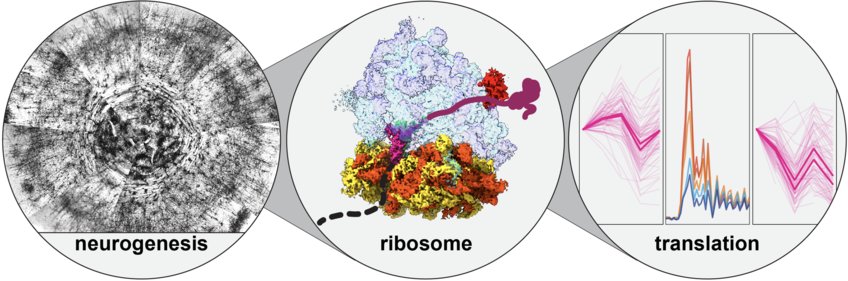
Dr. Matthew Kraushar is a Research Group Leader at the Max Planck Institute for Molecular Genetics (MPIMG) in Berlin, Germany, where he has been leading his lab since 2021. His research combines neuroscience, biochemistry, bioinformatics, and biophysics to investigate the fundamental mechanisms underlying neurodevelopment and translation control.
Nicholas Reinholtz is an Assistant Professor of Marketing at the Leeds School of Business, University of Colorado Boulder. He serves as Co-Director of the Center for Research on Consumer Financial Decision Making and holds the RK Landmark Faculty Scholar designation. Additionally, he is an Institute of Cognitive Science Fellow and previously served as a Postdoctoral Research Associate and Instructor. Dr. Reinholtz earned his Ph.D. in Marketing from Columbia University in 2015, with an M.Phil. in Marketing in 2012. He completed undergraduate degrees in Mechanical Engineering and Political Science from Virginia Tech in 2006, and participated in the MALS program at Reed College from 2007-2009. His research investigates consumer behavior with specific focus on financial decision making, product and price search, and the cognitive processes underlying choice. Dr. Reinholtz examines how people process numerical information, make judgments under uncertainty, and respond to different data presentations. His work explores mental accounting mechanisms, perceptions of financial slack, and understanding of investment diversification. His recent publications demonstrate how contextual factors influence consumer evaluations, how metric presentation affects uncertainty judgments, and how people process information when making decisions under risk. Dr. Reinholtz's work spans top journals including Journal of Consumer Research, Journal of Marketing, Management Science, and Cognition, with significant contributions to understanding consumer responses to pandemic data, contextual influences on product ratings, and cognitive costs in decision processes. RK Landmark Faculty Scholar (2023) Institute of Cognitive Science Fellow (2018) As Co-Director of the Center for Research on Consumer Financial Decision Making, Dr. Reinholtz leads initiatives examining consumer financial choices and how these decisions can be improved. His research has practical implications for financial education, consumer protection policies, and financial product design. He has also served as a Financial Economist at the United States Securities and Exchange Commission from 2023-2024, applying his research expertise to regulatory contexts. Dr. Reinholtz actively collaborates with interdisciplinary teams through the Center for Research on Consumer Financial Decision Making and the Institute of Cognitive Science at CU Boulder to advance understanding of consumer financial behavior and its real-world applications.
Rosa Palamaris is a Researcher affiliated with Heritage, Literature, History (PLH) at the University of Toulouse Jean Jaurès. Her work focuses on 18th-century French epistolary fiction , with particular attention to narrative structures , temporal dynamics , and moral ambivalence in works like Laclos' Dangerous Liaisons and Rousseau's La Nouvelle Héloïse . She holds a doctorate in 18th-Century Literature and is recognized for her interdisciplinary approach combining literary analysis with temporal studies. Doctorate in 18th-Century Literature Internal Aggregation in Modern Literature Her research explores epistolary temporality through concepts like vertical cuts , tempo variations , and analepsis , analyzing how time constructs character psychology and narrative tension. She investigates reader identification with morally ambiguous characters and the poetics of discordance in meteorological metaphors. Her conference communications often examine extreme emotional states in first-person narratives from the Renaissance to the Enlightenment. Recent publications include analyses of Montesquieu's Persian Letters , Riccoboni's Milady Juliette Catesby , and Dorat's The Sacrifices of Love , with recurring themes of monstrosity , anarchism , and temporal innovation . Her work bridges literary criticism with philosophical inquiry into love's societal and aesthetic implications.
Kota Mizumoto is an Associate Professor at the Department of Zoology, Faculty of Science, University of British Columbia. His research focuses on understanding how neurons communicate to form functional neurocircuits, using Caenorhabditis elegans as a genetic model system. PhD from Kobe University/RIKEN Center for Developmental Biology (2007) Postdoctoral training at RIKEN (2008) and Stanford University (2014) Research areas include: Synaptic tiling in motor neurons Role of gap junction proteins (UNC-9/Innexin) in synapse patterning Wnt signaling in neurite pruning and asymmetric division Genetic tools for protein knockdown and synaptic visualization The articles reflect a sustained focus on C. elegans synaptic organization, spanning topics from molecular mechanisms ( UNC-9 , Plexin , Wnt ) to novel methodologies ( auxin-inducible degron , split fluorophores ). Key subfields include neuronal tiling, motor circuit development, and channel-independent gap junction functions. Scientific awards include: Michael Smith Scholar Award (2017) HFSP Career Development Award (2014) His laboratory website ( mizumoto.lab_blog ) details ongoing work on synaptic precision, grants, and training opportunities.
Dr. Alexis K. Black is an Assistant Professor at the School of Audiology & Speech Sciences, University of British Columbia. She holds a PhD in Linguistics and Cognitive Science (2018) from UBC and completed a postdoctoral fellowship at Haskins Laboratories with Dr. Richard Aslin before joining the faculty in January 2020. B.A. (University of Virginia) M.A. (University of Virginia) Ph.D. (University of British Columbia, 2018) Her research investigates how linguistic forms and concepts emerge from early learning processes and perceptual biases through behavioral studies (eye-tracking) and neuroimaging (EEG, fNIRS) . Key interests include: Infant language acquisition mechanisms Statistical learning in preverbal infants Speech perception development Neural entrainment to linguistic patterns Infant-directed speech analysis Methodological reproducibility in infancy research The 15 most recent publications reveal focus areas in developmental speech processing with cross-lab replication studies (ManyBabies), neural dynamics of language acquisition through EEG analysis, and multisensory integration in speech perception. Her work frequently examines bilingual infant development and experimental methodology standardization. She operates the Language and Development Lab , which combines behavioral and neuroimaging approaches to study language emergence.
Pierre Dutilleul is a Professor at McGill University's Macdonald Campus, associated with the McGill School of Environment and the Department of Mathematics and Statistics. His research focuses on spatio-temporal heterogeneity, plant and soil imaging, and fractal analysis of natural structures. Current affiliations: Department of Plant Science, McGill School of Environment Specializations: CT scanning for root and wood imaging, multifractal analysis, soil aggregate dynamics Research interests span environmental sustainability , soil science , and plant production , with recent work on 3D root phenotyping, biochar characterization, and space-time modeling of agricultural and seismic events. Articles demonstrate expertise in applied statistics and computational methods for ecological and agricultural systems. Key methodological contributions include: Development of R packages for spatio-temporal analysis Innovative CT scanning applications in plant and soil research Statistical tests for separable variance-covariance structures
Dr Michael Smith is a Research Fellow at the University of Sheffield , affiliated with the Machine Learning research group within the School of Computer Science . His research bridges Gaussian Processes , Differential Privacy , and International Development , with a focus on Air Pollution Modeling in Kampala and Bumblebee Tracking using retroreflective tags. Education: PhD in computational neuroscience from the University of Edinburgh (2010-2014) Previous Affiliation: Lecturer at Makerere University in Kampala (2014) His work includes probabilistic sensor calibration for air pollution monitoring and adversarial attack analysis in Gaussian Process models. Current projects involve low-cost environmental sensor networks and mobile unit calibration systems for policy-driven predictions. Awarded grants include the BEE-TRACK project (Eva Crane Trust, 2025-2027) and the Pollinator Behavior AI grant (BBSRC, 2024-2025). Smith leads outreach initiatives like 20's Plenty Sheffield , advocating for urban speed limit reforms to reduce road collisions and air pollution.
Flor Mª Guerrero Casas is a University Professor in the Department of Economics, Quantitative Methods, and Economic History at the University of Seville. Her research focuses on quantitative methods for business and economics, particularly in composite indicators, sustainability metrics, and financial sector analysis. Doctoral Program: Quantitative Methods for Management Her work includes composite indicators for banking systems, multi-criteria analysis for environmental projects, and tourism competitiveness studies. She has collaborated extensively on financial product contracting, actuarial science, and rural tourism planning in Andalusia. Recent publications highlight her contributions to non-compensatory schemes in financial evaluation and sustainability rankings for Cuban tourism destinations. She has supervised doctoral research on algorithmic convergence and is associated with PAIDI areas in Social and Legal Sciences.
Dr. Fred Turek is the Charles E. and Emma H. Morrison Professor of Biology and Director of the Center for Sleep and Circadian Biology at Northwestern University , with appointments in the Weinberg College of Arts and Sciences and the Ken and Ruth Davee Department of Neurology and Psychiatry and Behavioral Sciences . His research explores the genetic and molecular mechanisms of sleep and circadian rhythms, linking them to metabolic, neurodegenerative, and gastrointestinal disorders. His work integrates rodent models and clinical collaborations to address circadian disruptions in aging, shift workers, and spaceflight. Key findings include interactions between circadian clocks, gut microbiota, and melatonin's role in sleep regulation. Current projects examine spaceflight effects on microbiome and strategies to mitigate circadian misalignment. Selected Scientific Awards: 2019 Front Range Neuroscience Group Keynote 2015 Gregory Belenky Lectureship 2011 Sleep Research Society Distinguished Scientist 2008 NARSAD Senior Investigator Award 1995 Morrison Endowed Chair 1987 Curt Richter Prize Research Trends: Recent articles emphasize circadian-microbiome interactions, stress-induced sleep phenotypes, and Parkinson’s disease gene networks. Collaborations span sleep medicine, microbiology, and aerospace research, with applications to aging, shift work, and space exploration. Leadership: He co-founded the Society for Research on Biological Rhythms, served as Deputy Editor for Sleep , and contributed to national policy via the NASEM Committee on Biological and Physical Sciences in Space.
Shachar Kariv is the Benjamin N. Ward Professor of Economics at the University of California, Berkeley, where he has served since 2003. He directs the UC Berkeley Experimental Social Science Laboratory (Xlab) and affiliates with the Choice Lab at NHH Norwegian School of Economics. Educated at Tel Aviv University (B.A.) and New York University (M.A., Ph.D.), Kariv has held visiting roles at Princeton's Institute for Advanced Study, European University Institute, Nuffield College Oxford, Stanford, and Cambridge. Ph.D., Economics, New York University (2003) M.A., Economics, New York University (2000) B.A., Economics, Tel Aviv University (1998) His research spans experimental and behavioral economics, focusing on decision-making under risk and uncertainty, social preferences, network economics, and public goods. He investigates how individuals balance fairness versus self-interest and equality versus efficiency trade-offs, extending to physician behavior, tax policy, and economic development. His work combines traditional economic theory with innovative data collection methods, including graphical interfaces for preference elicitation. Recent publications examine the transferability of economic models across risk domains, policy preferences of government officials, and the relationship between physician altruism and healthcare outcomes. His experimental studies on social learning in networks have theoretical implications for coordination in incomplete information environments, recognized through multiple awards including the Sloan Research Fellowship and UC Berkeley teaching honors. Sloan Research Fellowship (2009-10) UC Berkeley Cheit Award for Excellence in Teaching (2012) NYU Outstanding Teaching Awards (2001, 2002) NYU Outstanding Dissertation Award (2003) Kariv's leadership roles include Department Chair at Berkeley (2014-17, 2021-22) and directing Xlab (2008-2014). He serves on editorial boards of top journals and has received grants from the Alfred P. Sloan Foundation and Center for Equitable Growth. His work at the intersection of theory and experiment continues to shape understanding of economic rationality and social behavior.
Tom Wandless is a Professor at the Department of Chemical and Systems Biology , Stanford University School of Medicine, with memberships in Bio-X and the Stanford Cancer Institute . His career spans synthetic chemistry, chemical biology, and systems biology. Education: Ph.D. in Chemistry, Harvard University (1993) B.S. in Biochemistry, Trinity University (1988) Research focuses on inventing molecules and techniques for biological studies, particularly destabilizing domains (DDs) that enable ligand-dependent protein regulation. His lab pioneered systems using Shield-1 , light, and ubiquitin-derived linkers for reversible protein control. Key areas include: Protein quality control mechanisms Unfolded protein stress responses Ubiquitin-proteasome system Chemogenetic and optogenetic tools Applications in cancer immunotherapy Publications highlight innovations in protein degradation , transcriptional stress responses , and cAMP sensor development . Awards include NSF CAREER , Ellison Medical Foundation , and Alfred P. Sloan Fellowship . Teaching accolades include multiple Stanford teaching awards and the Phi Beta Kappa Prize . Lab members include Joseph Park (PhD student) and Ling-Chun Chen (Research Scientist).
Feng Wang is a Professor at the School of Mathematical and Natural Sciences within Arizona State University's New College of Interdisciplinary Arts and Sciences. Her research spans network science, social media analysis, network optimization, network security, and wireless sensor networks, with publications in leading venues like IEEE Transactions and INFOCOM. Education : Ph.D., Computer Science, University of Minnesota-Twin Cities (2005) M.S., Computer Science, Peking University (1999) B.S., Computer Science, Wuhan University (1996) Research Interests focus on algorithm approximation for combinatorial optimization in wireless sensor and social networks, mathematical modeling of online social networks, and graph abstractions for network security. Current work explores IoT security analytics and pandemic surveillance through networked data. Scientific Awards include Best Paper Award at WASA 2014 and Best Paper Runner-Up at HotPOST 2012. She has received NSF grants for projects like "Dynamic Mathematical Modeling of Information Diffusion" (2012-2016) and "ATD Framework for Epidemic Outbreaks" (2017-2020), plus Hong Kong RGC funding. Grant Activities as PI/Co-PI include: NSF-CISE $250,000 (2012-2016) NSF $171,570 (2017-2020) Hong Kong RGC HK$645,500 (2014-2016) Service includes editorial roles at Computational Social Networks and Discrete Mathematics, Algorithms and Applications , program committee membership for IEEE/ACM conferences (INFOCOM, ICDCS, etc.), and undergraduate curriculum committee work since 2010.
Bruno Agard is a Full Professor in the Department of Mathematics and Industrial Engineering at Polytechnique Montréal , specializing in industrial engineering, data mining, and Industry 4.0 applications. He serves as Director of the Data Intelligence Laboratory (LID) and holds memberships in multiple research centers including the Poly-Industries 4.0 Laboratory, IVADO, CIRRELT, and CIRODD. His academic career spans over two decades with progressive roles from Assistant to Full Professor since 2014. Ph.D. in Industrial Engineering (2002), National Polytechnic Institute of Grenoble DEA in Industrial Engineering (1999), National School of Industrial Engineering, Grenoble Aggregation in Mechanical Engineering (1998), École Normale Supérieure de Cachan Professor Agard's research focuses on data mining applications for engineering challenges across manufacturing, logistics, transportation, and agriculture. Key areas include product family design, modular systems, delayed differentiation, and spatiotemporal data analysis. Recent publications highlight AI-driven energy consumption modeling for electric buses, sensor failure detection using variational autoencoders, and optimization of agri-food processes through data intelligence. His work demonstrates strong industry collaboration with partners like Air Liquide, Bridgestone, and La Milanaise across 221 publications. Current projects involve real-time data processing for mining equipment, predictive maintenance analytics, and smart card data analysis for urban mobility patterns. 13 Ph.D. students supervised 29 Master's students mentored Current courses: Facilities Planning (IND3303), Industrial Data Mining (IND6212) As Director of LID, he leads interdisciplinary research integrating machine learning with industrial systems, with special emphasis on sustainable development and operational efficiency. His methodological contributions include innovative approaches to product design, process optimization, and knowledge extraction from complex datasets.
Stéphane Baciocchi is a Researcher at the École des Hautes Études en Sciences Sociales (EHESS) , affiliated with the Centre for Historical Research (CRH) and its Laboratory of Demography and Social History (LaDéHiS) . He coordinates major projects including GeoHistoricalData , Structure and Dynamics of Forms , and the ANR TIME-US initiative on textile trade remuneration and time budgets in France (17th-20th centuries). His work bridges historical demography, religious sociology, and digital methodologies. Current Projects : GeoHistoricalData, Structure and Dynamics of Forms, ANR TIME-US Collectives : LaDéHiS, CRH Digital Collective, French Sociology Association Social Networks RT Committees : EHESS GIS Steering Committee, Labex HASTEC, Monitoring Unit against Sexual Harassment at EHESS His research interests focus on collective investigative practices , historical GIS, and relational data analysis across social sciences. He specializes in the sociology of the summer 1789 Grand'Peur , the history of social sciences (Le Play, Durkheim, Hertz), and digital editions of historical sources . Notably, he oversees the Prosopographic dictionary for students of the École Normale and the Cassini Roads and Cities Dataset . Baciocchi has taught seminars on relational data analysis (2003-2010), ethnography of religious facts (2005-2008), and history of investigative collectives (2007-present). He contributes to the Durkheimian Studies journal as associate editor and collaborates with the British Center for Durkheimian Studies at Oxford.
Ada Diaconescu is a Tenured Associate Professor at Télécom Paris (Institut Polytechnique de Paris) since October 2009. She is a member of the Autonomous Critical Embedded Systems (ACES) team within the Information Processing and Communication Laboratory (LTCI) , affiliated with the Computer Science and Networks (Infres) department. Research Focus: Autonomic Computing, Organic Computing, Complex Adaptive Systems, Self-Organising Systems, Smart Grids/Cities/Homes, Nature-Inspired Computing, Socio-Technical Systems Key Methodologies: Decentralised Control, Multi-Agent Systems, Component/Service-Oriented Architectures, Multi-Scale Feedback Loops Her recent publications (2021-2023) explore topics like holonic architectures for self-integration, multi-scale feedback systems in smart environments, and decentralised explanatory frameworks for AI transparency. She co-authored the textbook "Autonomic Computing: Principles, Design and Implementation" (Springer, 2013) and contributed chapters to books on Organic Computing (Springer, 2018) and Self-Aware Systems (Springer, 2017). Scientific Leadership: General Chair of IEEE SASO 2017 Steering Committee Co-Chair of IEEE ACSOS (2019-2021) Co-Organizer of Dagstuhl Seminars (2015, 2018) Doctoral Symposium Co-Chair at FAS* 2019 Teaching: Delivered courses on software engineering, autonomic systems, and complex system modeling at Télécom Paris and other institutions. Collaborations: Active in interdisciplinary research with institutions including Leibniz University, ETH Zurich, Arizona State University, and Lancaster University.