Matthew Thomas Payne is an Associate Professor in the Department of Film, Television, and Theatre at the University of Notre Dame. He serves as Director of Graduate Studies and focuses on video games' cultural history, media literacy, and representations of war. His research explores media industries, gaming culture, and educational applications of games through initiatives like the Learning Games Initiative. Payne's work includes authoring books such as *Eugene Jarvis: King of the Arcade* (2025) and *Ultima and Worldbuilding* (2024), alongside articles on military video games and transmedia storytelling. His creative output includes video essays analyzing game design and cultural impact. Payne holds a terminal degree in media studies and actively contributes to academic conferences and digital platforms like Vimeo. Education: Ph.D. in Media Studies (assumed based on faculty role). Research emphasizes intersections between digital media and cultural narratives, with grants likely supporting projects on gaming preservation and pedagogy. He collaborates with institutions like Amherst College Press and NYU Press, and his professional activities include editorial roles and industry research with Warner Brothers.
Jerrica Ty Rowlett serves as an Assistant Professor of Communication and Language Studies within the College of Arts and Sciences at Bryant University, where she examines digital communication's societal implications through research and teaching in digital culture and social media dynamics. Education Ph.D., Florida State University M.A., Clemson University B.A., Georgetown College Her research program investigates identity formation, civic engagement, and digital inequity through critical analysis of social media platforms. She explores how digital environments shape interpersonal relationships, political discourse, and community building while addressing power dynamics in online spaces, with particular attention to abusive contexts, gender representation, and emotional experiences. Analysis of her publication record (2015-2024) reveals a consistent trajectory examining social media's evolving societal impact. Early work focused on educational applications and youth culture, progressing to sophisticated analyses of political meme culture, relationship dissolution in abusive contexts, and emotional contagion online. Her scholarship demonstrates increasing attention to social justice dimensions within digital communication. Scientific Awards No awards documented in current sources Advising and Grants Student advising details and research grant information are not specified in available materials, though her extensive publication record indicates active scholarly mentorship and research productivity. Labs and Teams No dedicated research laboratories or formal collaborative teams are mentioned in the provided information.
University of California , Santa Barbara (UCSB)United States
Mary Bucholtz is a Professor in the Department of Linguistics at the University of California, Santa Barbara (UCSB). She holds affiliations with multiple departments including Anthropology, Feminist Studies, Spanish and Portuguese, the Gevirtz Graduate School of Education, Comparative Literature, and Latin American and Iberian Studies. Her research integrates sociocultural linguistics with anthropological, gender, and social justice frameworks. Education: PhD in Linguistics, University of California, Berkeley (1997) Bucholtz's work examines how language shapes and is shaped by social identities, particularly among youth, through dimensions like race, gender, and cultural practices. She emphasizes community-centered research , linguistic activism , and interdisciplinary methodologies to address systemic inequalities. Recent publications explore affective agency in Latinx youth, educational equity, and antiracist linguistics. Her collaborative projects often involve partnerships with educational institutions and youth communities in California, focusing on translanguaging , Black language justice , and raciolinguistic ideologies . Grants from the National Science Foundation, Spencer Foundation, and Wenner-Gren Foundation support her research. She co-edited the open-access volumes Decolonizing Linguistics and Inclusion in Linguistics (Oxford University Press, 2024), alongside authoring White Kids: Language, Race, and Styles of Youth Identity (Cambridge, 2011) and Talking College: Making Space for Black Language Practices in Higher Education (Teachers College Press, 2022).
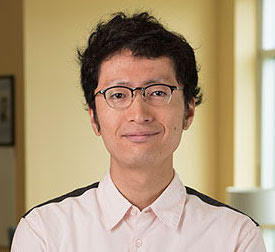
Takuya Tsunoda serves as Assistant Professor of Japanese Film and Media in the Department of East Asian Languages & Cultures at Columbia University, with prior teaching appointments at Colgate University and the University of Chicago. Currently on leave for spring 2022, he maintains his office in 416 Kent Hall (contact: (212) 854-5040, tt2101@columbia.edu). His academic credentials include: BA: Waseda University (2002), Columbia University (2005) MA: Columbia University (2008) PhD: Yale University (2015) Dr. Tsunoda's research centers on institutional-media interplay through historical and theoretical lenses, examining how technologies shape socio-cultural practices and knowledge formations. His seminal work investigates Iwanami Productions' evolution from educational/science film provider to New Cinema pioneer, arguing that Japan's 1960s cinematic revolution originated in institutionalized audio-visual pedagogy rather than political radicalism. Current explorations extend to media reflexivity, alpine photography, insect ecology, children's media engagement, and diegesis in contemporary visual culture. Teaching : Courses include East Asian Cinema, Japanese Contemporary Media Culture, Japanese New Wave Modernism, Documentary Film Studies, and Critical Approaches to East Asian Theory. His publication trajectory (2018-2022) reveals consistent focus on postwar Japanese media archaeology, connecting educational film, industrial cinema, and New Wave movements through archival analysis. Key themes include cross-medial academicism, mediascape transformations, and the socio-political dimensions of visual pedagogy in reconstructing cinematic modernism. Active research trajectories include transnational New Wave parameters, television documentary studies, and ecological media representations, with ongoing book project examining Iwanami Productions' institutional legacy.
Alison Landsberg is a Professor at George Mason University, affiliated with the Department of History and Art History and the Cultural Studies PhD program. Her research focuses on the politics of memory, affective engagements with the past, visual culture, and the intersections of race, aesthetics, and history. A leading scholar in memory studies, she explores how mass media and popular culture shape historical consciousness and political subjectivity. Her seminal works include *Prosthetic Memory* (2004) and *Engaging the Past* (2015), which analyze how mediated experiences of history foster empathy and progressive politics. Landsberg’s interdisciplinary work bridges film studies, cultural theory, and historiography. She examines how audiovisual media—from films to immersive digital exhibits—produce alternative historical narratives that challenge traditional academic historiography. Her current project, *Impossible Histories*, critiques conventional ‘historicism’ and explores counterhegemonic modes of historical representation. Her teaching spans courses on historical cinema, visual culture, and the politics of memory. She has advised over 20 doctoral students, many of whom explore topics like public history, digital memory, and cultural activism. Landsberg is a frequent keynote speaker at international conferences and has contributed to NPR’s *On the Media* and *The American Scholar* on topics ranging from racial representation to post-postracial America. Landsberg’s research emphasizes the urgency of rethinking historical engagement in an era of fragmented media and contested identities. Her work underscores the ethical and political stakes of how societies remember—and forget—the past.
Michaela D.E. Meyer is a Professor in the Department of Communication Studies at Christopher Newport University (CNU), specializing in critical media studies, LGBTQ+ issues, and television/film analysis. Her research bridges interpersonal communication, gender and sexuality studies, and emerging adulthood narratives. Ph.D. in Communication, Ohio University M.S. in Journalism, Ohio University Ph.B. in International Studies, Miami University Her research focuses on intersectional representation in media , LGBTQ+ narratives , and relational aggression in film . She employs narrative and autoethnographic methods to critique political ideologies in popular culture, such as neoliberalism in Fixer Upper and feminist critiques in Glee and Shondaland . Michaela’s recent articles explore themes like disability discourses in Korean television , feminist film auteur theory , and nostalgia in streaming reboots . These works highlight identity politics , gender representation , and media’s role in social discourse . Paul Boaze Prize, Ohio University (2025) Outstanding Panel Award in Sexuality and Gender Identity, Central States Communication Association (2025) Faculty Excellence Award in Undergraduate Research Mentorship, CNU (2025) James W. Chesebro Award for Scholarly Distinction, Sexual Orientation and Gender Identity Caucus of CSCA (2021) She has mentored undergraduate research and contributed to critical media pedagogy , with grants and service awards reflecting her commitment to diversity and inclusion in academia. Her full scholarship and honors are detailed in the scientific_awards section.
Matthew Payne is an Associate Professor in the Department of Film, Television, and Theatre at the University of Notre Dame. His affiliations include roles as Director of Graduate Studies and regional director for the Learning Games Initiative, a multi-institute research collective focused on game archiving and education. His research spans video game studies, media literacy, military entertainment, and the cultural history of video games. He explores play theory, media and war, and the intersection of media production with new technologies. The 15 most recent articles highlight his focus on video game studies, transmedia narratives, and the cultural implications of gaming. These works cover topics from Nintendo Amiibo to slow game time mechanics in Red Dead Redemption 2, with recurring themes of military representation and ludic storytelling. Matthew Payne has co-edited notable works including How to Play Video Games and Joystick Soldiers , emphasizing collaborative approaches to game studies and critical analysis of military gaming.
Faye Ginsburg is the David B. Kriser Professor of Anthropology at New York University (NYU), affiliated with the College of Arts & Science. Her work focuses on social anthropology, ethnographic film, media studies, indigenous media, and disability. She holds a Ph.D. from CUNY (1986) and a B.A. from Barnard College (1976). Research interests include global media dynamics, disability studies, and indigenous sovereignty. She co-edited pivotal works like *Media Worlds: Anthropology on New Terrain* (2002) and *Disability Worlds* (2024). Recent publications address disability in the digital age, indigenous media sovereignty, and reproductive politics. Awards include the 2025 American Academy of Arts and Sciences membership and the 2025 CUNY President's Distinguished Alumni Award. She directs NYU’s Graduate Certificate Program in Culture and Media and co-founded the NYU Council for the Study of Disability. Her grants include NEH funding for disability research and leadership roles at the Center for Religion and Media. Key initiatives include SKILLS transition program for NYC youth with learning disabilities and collaborations with global media festivals (e.g., Margaret Mead Film Festival). Her interdisciplinary work bridges academia, activism, and media practice.
Anna Grimshaw is a Professor of Visual Anthropology at Emory University's Department of Anthropology. Her career spans academic and public scholarship, including collaborations with C.L.R. James and experimental ethnographic filmmaking. She holds a PhD in Social Anthropology from the University of Cambridge (1984) and trained as a documentary filmmaker at the National Film and Television School (1991-92). Her research focuses on ethnographic cinema, experimental ethnography, and the intersection of art and anthropology. Notable works include films like Mr Coperthwaite (2013) and At Low Tide (2016), exploring themes of handmade life and cultural practices. She co-authored Observational Cinema (2009) and edited volumes on C.L.R. James and visual anthropology. Grimshaw’s teaching includes courses on visual culture, ethnographic filmmaking, and experimental methods. She has held previous positions at the Graduate Institute of the Liberal Arts (Emory) and the University of Manchester. Her work emphasizes critical perspectives on anthropological conventions and innovative visual practices.
Hsiu-Chuang Deppman is a Professor of Chinese and Cinema and Media at Oberlin College, affiliated with the College of Arts and Sciences. She holds positions in both the East Asian Studies and Cinema and Media departments. Currently on leave for the 2024-25 academic year, her research focuses on film adaptation, Chinese cinema history, and comparative literature. She has published extensively, including books like Close-ups and Long Shots in Modern Chinese Cinemas (2021) and Adapted for the Screen (2010). Deppman earned her PhD (1999) and MA (1993) in Chinese Literature from the University of Wisconsin-Madison, and a BA (1990) from National Cheng-Kung University in Taiwan. Her research interests span: Adaptation Studies History of Chinese Cinema Documentary and Media Studies Contemporary Chinese Fiction Comparative Literature Awarded the 2016-2017 Excellence in Teaching Award, she has also received grants and fellowships including the Fulbright Research Grant, Taiwan National Science Council Grant, and Freeman Foundation Grant for Asian Studies, among others. In addition to her research, Deppman teaches courses such as Contemporary East Asian Cinema and Intermediate Chinese I . Her work has been supported by the GLCA/Mellon New Directions Initiative and the Chiu Scholarly Exchange Program for Taiwan Studies. Her current project involves writing a book on Jia Zhangke’s cinema of reflection, reflecting her ongoing engagement with modern Chinese cinematic narratives.
Claudia Schwabe is a Professor in the Department of World Languages and Cultures at Utah State University, within the College of Humanities and Social Sciences. She holds a Ph.D. in German Studies from the University of Florida and has been teaching at USU since 2012. Her academic work bridges German language, literature, and cultural studies with a strong focus on fairy tales and folklore in both historical and contemporary contexts. Education: Ph.D., German Studies, University of Florida, 2012 M.A., Teaching Business Education, Georgia College & State University, 2005 B.A., International Business Administration, Northumbria University, UK, 2003 B.A., International Administrative Management, Accadis, Germany, 2003 Her research centers on 18th- and 19th-century Romantic literature, literary and folk fairy tales (Kunstmärchen), East German cinema, German Orientalism, and the adaptation of fairy tales in new media and popular culture. She explores how traditional narratives are transformed across media and cultures, especially in American television and film. Her teaching reflects this interdisciplinary approach, covering German language, literature, film, business German, and translation. Her recent scholarly publications reveal a strong trend in analyzing the cultural and political significance of fairy tales, particularly in DEFA films and modern adaptations like Grimm and Once Upon a Time . She has published monographs, edited volumes, and peer-reviewed articles with leading presses and journals in folklore and German studies, demonstrating sustained scholarly impact. Scientific Awards and Honors: Faculty Undergraduate Advisor of the Year Award, LPCS, USU (2015) Ed Glatfelter Service Award, LPCS, USU (2016-2017) Nominations for Dean’s Giraffe Award (2016, 2018) Nominations for Researcher of the Year (2016, 2017) Travel Awards from College of Humanities and Social Sciences and Center for Women and Gender Studies (2014) Graduate Student Teaching Award, University of Florida (2010) Grinter Fellowship, University of Florida (2008–2010) Claudia Schwabe has been actively involved in academic service, grant writing (participant in grant proposal seminar), and mentoring. She has served as a faculty advisor and contributed to curriculum development, particularly in interdisciplinary folklore and fairy-tale pedagogy. Her editorial work on volumes like New Approaches to Teaching Folk and Fairy Tales highlights her leadership in shaping scholarly discourse. She has also reviewed books for major journals, contributing to peer evaluation in her field. While no formal lab or research team is mentioned, her work is deeply collaborative, involving co-edited volumes, co-authored entries, and invitations to contribute to high-impact academic projects. Her ongoing research suggests continued exploration of fairy tales in global media, pedagogy, and cultural politics.
Dr. Reba Wissner is an Associate Professor of Musicology at the Schwob School of Music, Columbus State University, where she also serves as Interim Associate Dean in the Honors College. She specializes in film, television, and video game music, with a strong commitment to pedagogy and accessibility in higher education. Education: PhD, Musicology, Brandeis University, 2012 MFA, Musicology, Brandeis University, 2008 BA, Music and Italian, Hunter College, CUNY, 2005 Graduate Certificate, Higher Education Administration, Northeastern University, 2019 Graduate Certificate, Instructional Design, University of Wisconsin - Stout, 2020 Levels 1, 2, and 3 UDL Credentials, UDL-IRN Quality Matters Certified Peer Reviewer and Master Reviewer Dr. Wissner’s research centers on music in screen media, particularly Cold War-era television, and the intersection of music with cultural narratives. She is a leading voice in public musicology and Universal Design for Learning (UDL), advocating for inclusive and accessible music education. Her work spans historical analysis, pedagogical innovation, and interdisciplinary media studies. Her recent publications reflect a consistent focus on sonic storytelling, with books on The Twilight Zone , The Outer Limits , David Lynch, and Twin Peaks . She explores themes of nuclear anxiety, identity, and adaptation across media. Her editorial projects include the Oxford Handbook of Public Musicology and a guide on UDL in music history classrooms. Scientific Awards and Recognitions: Scholarship of Teaching and Learning Award, Columbus State University, 2022 Governor’s Teaching Fellow, Louise McBee Institute of Higher Education, 2022 Quality Matters Certified Peer Reviewer and Master Reviewer UDL Levels 1–3 Credentials Dr. Wissner has secured editorial contracts with Routledge and Oxford University Press, reflecting her leadership in the field. She mentors emerging scholars through collaborative editing and public scholarship initiatives. Her work in online learning and accessibility has shaped curriculum development and peer review standards. She leads the Public Musicology Certificate program and contributes to interdisciplinary studies and honors education. She is actively involved in research teams focused on media music and pedagogical innovation, integrating digital tools and inclusive design into music history education.
Dr. James Gilmore is an Associate Professor and Graduate Coordinator in the Department of Communication at Clemson University's College of Behavioral, Social and Health Sciences. He joined Clemson in 2018 after earning his Ph.D. in Communication and Culture from Indiana University. His academic foundation includes an M.A. in Film and Television from UCLA and a B.A. in Film and Media Studies from the University of South Carolina. Research Focus Dr. Gilmore's research examines the cultural politics of media and communication technologies, with emphasis on datafication (how human behavior is converted into data), wearable technologies (e.g., smartwatches, fitness trackers), and infrastructural systems . His work critiques surveillance norms, accessibility design, and solutionist approaches in tech. He authored Bringers of Order: Wearable Technologies and the Manufacturing of Everyday Life (UC Press, 2025) and co-edited anthologies on Orson Welles and superhero digital convergence. Publication Trends His recent articles (2020-2025) cluster around three themes: wearable tech ethics (e.g., forensic uses of Fitbit/GoPro data), streaming/platform infrastructures (e.g., Disney’s data reflexivity, Capitol Riot documentation), and surveillance politics (e.g., geofencing, CAD systems). Methodologically, he blends critical-cultural analysis with industry ethnography, often highlighting tensions between technological promise and social consequence. Awards and Honors Top Paper Award, Southern States Communication Association (2024) Outstanding Teaching Award, Clemson University (2022-2023) Outstanding Research Publication, Clemson University (2022) Ray Camp Research Award, Carolinas Communication Association (2018) Graduate Writing Prizes, Indiana University (2016) Advising and Service Dr. Gilmore mentors graduate/undergraduate researchers, co-authoring with 17+ students on topics like VR accessibility, mental health platforms, and AI negotiations. As Graduate Coordinator, he oversees program development and student progression. He serves as an expert source for media outlets (Wired, The Verge) on technology culture and maintains an active public scholarship profile.
Eric Rentschler is the Arthur Kingsley Porter Professor of Germanic Languages and Literatures at Harvard University, affiliated with the Film and Visual Studies Program. He holds a PhD from the University of Washington with academic training in German literature, history, and European intellectual history across Stuttgart, Bonn, and Prague. A leading scholar in German cinema and cultural studies, his work spans from Weimar-era films to contemporary German cinema, focusing on historical memory, political representation, and transnational cultural exchanges. Director of Harvard’s annual Berlin Film Program (coordinated with Deutsche Film- und Fernsehakademie Berlin) Editor of New German Critique and co-director of the German Film Institute Recipient of major grants including Guggenheim, Humboldt, ACLS, DAAD, and Fulbright fellowships His research integrates film theory with historical analysis, examining cinematic representations of Nazism’s legacy, post-wall German society, and transnational art movements. Notable publications include The Ministry of Illusion: Nazi Cinema and Its Afterlife (Harvard UP, 1996) and The Use and Abuse of Cinema: German Legacies from the Weimar Era to the Present (Columbia UP, 2015). Current projects explore German cinema during Helmut Kohl’s chancellorship. Award-winning educator, Rentschler has received Harvard’s Levenson Teaching Prize (2001) and Cabot Fellowship (2003). He organizes the monthly Film and Visual Studies Colloquium, fostering interdisciplinary dialogue between scholars and filmmakers.
Lisa Nakamura is the Gwendolyn Calvert Baker Collegiate Professor in American Culture at the University of Michigan, with affiliations in the Department of English Language and Literature, Digital Studies, and the DISCO Network (Digital Inquiry, Speculation, Collaboration, and Optimism). Her research focuses on the intersection of race, gender, and digital technologies, particularly in Asian American studies, digital media theory, and feminist frameworks. Ph.D., CUNY Graduate Center, 1996 Her work critically examines digital labor, internet cultures, and the racialized dimensions of online spaces. Recent publications explore topics like the attention economy, techno-optimism, and the precarity of digital labor through collaborative projects like the Precarity Lab Collective. She investigates how marginalized communities navigate and reshape digital environments, with a focus on gaming, social media, and algorithmic bias. Nakamura's research output reveals trends in critical digital humanities, emphasizing the sociopolitical implications of internet infrastructure and the ethical considerations of emerging technologies. Her books analyze digital racism, platform security failures (e.g., Zoombombing), and the visual representation of race online across two decades of technological evolution. As director of the DISCO Network (disconetwork.org), she leads initiatives that blend academic research with community engagement, promoting equitable digital futures through interdisciplinary collaboration. Her methodology combines theoretical analysis with practical applications of digital tools for social justice.