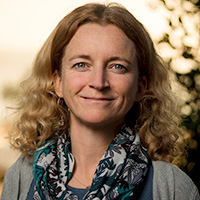
Prof. Olivia Romppainen-Martius is a Professor and Group Leader of the Climate Impacts research group at the Institute of Geography, University of Bern. She co-directs the Mobiliar Lab for Natural Risks and focuses on short-term climate dynamics, high-impact weather systems, and midlatitude weather patterns. Her work integrates advanced modeling techniques with real-world applications in disaster risk reduction. Her research spans climate variability analysis, probabilistic forecasting of extreme events, and the development of early warning systems. She leads collaborative projects combining machine learning with Earth system modeling to improve understanding of weather extremes under climate change. Key interests include flood forecasting, hailstorm dynamics, and Mediterranean cyclone behavior. Prof. Romppainen-Martius has pioneered web-based visualization tools for impact-based flood warnings and has contributed to kilometer-scale Earth system modeling frameworks like nextGEMS. Her methodologies emphasize statistical reconstruction of historical weather events and the application of AI to convective weather prediction. Her research outputs reflect a strong focus on bridging climate science with practical risk management strategies, particularly in alpine and pre-alpine environments. Current efforts include long-term analysis of Swiss hailstorms and development of crowd-sourced data integration for meteorological observations.
Dr. Tido Semmler is a Senior Scientist in the Climate Dynamics department at the Alfred Wegener Institute (AWI). His research focuses on polar-latitude linkages in the atmosphere and ocean, particularly the response of the climate system to anthropogenic emissions. He contributes to global climate modeling efforts, including CMIP6 simulations with the AWI-CM model, and investigates Arctic amplification effects on mid-latitude weather patterns. Affiliations: AWI Climate Dynamics Department, Helmholtz Association Key Projects: APPLICATE (Arctic Predictability and Prediction of sea ice and climate), HighResMIP (High Resolution Model Intercomparison Project) His work emphasizes high-resolution modeling, data assimilation for sea ice prediction, and understanding mechanisms behind Arctic sea ice decline and its global impacts. Semmler collaborates internationally on climate assessment frameworks and contributes to advancements in coupled ocean-atmosphere modeling systems.
Stephen Saleeby is a Senior Research Associate at Colorado State University, working in the field of atmospheric science since July 2000. His research focuses on cloud microphysics, aerosol-cloud interactions, and numerical modeling using the RAMS mesoscale model. Education: B.S. in Physics (1997), M.S. in Atmospheric Science (2000) Affiliation: Colorado State University Research Interests: Cloud microphysics, aerosol effects on precipitation, numerical modeling His recent publications analyze aerosol impacts on deep convection, ice nucleation processes, and convective storm initiation mechanisms. He has contributed to model development (e.g., tobac v1.5) and validation studies using satellite and radar observations. Field experience includes the ISPA-2 and ISPA-3 projects at Storm Peak Lab, where he conducted aerosol and snowfall measurements. He also coaches the Kinard Middle School Science Olympiad Meteorology Team.
Professor Ian Holman is a leading academic at Cranfield University, where he holds the position of Professor of Integrated Land and Water Management and leads the Centre for Water, Environment and Development within the Cranfield Water Science Institute. His expertise spans integrated land and water systems, natural capital, sustainable land systems, and water science and engineering, with a strong focus on climate change adaptation and policy. His research is centered on three main pillars: (1) integrated modeling of land and water systems under changing climate and socio-economic conditions, (2) innovative agricultural water management to enhance water security and drought resilience, and (3) understanding lowland peat management to reduce greenhouse gas emissions. He employs interdisciplinary methods combining hydrogeology, spatial pedology, and agricultural science to address complex environmental challenges at catchment to continental scales. His recent publications (2023–2025) reflect a strong trend in drought resilience, particularly in Thailand and the UK, with increasing focus on socio-hydrological systems, institutional adaptation, and decision support tools. Key subfields include drought forecasting using climate teleconnections (e.g., NAO), sediment and nutrient transport in rivers, rainwater harvesting, and peatland carbon management. His work bridges science and policy, with clients including Defra, Environment Agency, NERC, and the European Commission. Professor Holman has supervised numerous students and collaborators, many of whom appear as co-authors on his publications. He has led major research projects funded by UK government departments, research councils, and international agencies. His work supports climate adaptation policy and water security in both temperate and tropical regions. He is actively involved in developing decision support tools such as the D-Risk webtool for drought risk management and has contributed to lowland peat re-wetting assessments for greenhouse gas reduction. His leadership in integrated modeling platforms supports evolving environmental and agricultural policies. He has also co-authored several books on climate change, vulnerability assessment, and socio-economic pathways.
Edmund Chang is a Professor at Stony Brook University's School of Marine and Atmospheric Sciences , focusing on mid-latitude storms, climate dynamics, and tropical-extratropical interactions. His work bridges observational analysis, climate modeling, and mechanistic studies. Ph.D., Princeton University (1993) Research Interests span atmospheric dynamics, storm track variability, and societal impacts of extratropical cyclones. He investigates how global warming affects storm intensity and frequency, using tools ranging from climate models to real-time observations. His article trends show increasing focus on subseasonal forecasting, MJO modulation of storm tracks, and Southern Hemisphere cyclone intensification. Recent work addresses Arctic amplification effects and QBO interactions. Scientific Awards : Editor’s Award, American Meteorological Society Fellow, American Meteorological Society Advising includes numerous graduate students like Chingyuan Zheng and Albert Yau. Grants from NASA and NOAA support his climate change research. He contributes to IPCC assessments and leads international climate task forces.
Rajagopalan Balaji is a Professor and Chair in the Department of Civil, Environmental, and Architectural Engineering at the University of Colorado Boulder, with a fellowship at the Cooperative Institute for Research in Environmental Sciences (CIRES). His work bridges climate science and water resources engineering, focusing on sustainable water management under climate variability. Education: B.Tech from NIT Kurukshetra (1989), M.Tech from Indian Statistical Institute (1991), and Ph.D. in Stochastic Hydroclimatology from Utah State University (1995). Research Themes: Climate drivers of hydrology, ensemble hydroclimate projections, decision support systems, Indian monsoon variability, big-data techniques, and Arctic sea-ice dynamics. Scientific Contributions: Over 50 peer-reviewed publications, including work on Science (2005) and Geophysical Research Letters (multiple). His Google Scholar articles (2025-2020) emphasize wildfire impacts on water quality, Bayesian forecasting models, and global lake storage trends. Awards: Devendra Lal Memorial Medal (2021), CIRES Fellow (2001-present). Students: Supervised 11 M.S. and Ph.D. students, including Katrina Grantz (Ph.D. 2005) and James Prairie (Ph.D. 2005). Applied Interests: Climate-informed reservoir operations, construction safety analytics, and paleoclimate reconstructions for modern water planning. His team develops tools like the SCHAAKE Shuffle for weather resampling.
Dr. Ben Kravitz is an Associate Professor in the Department of Earth and Atmospheric Sciences at Indiana University Bloomington, where he also serves as Director of Graduate Studies. His research focuses on climate dynamics, particularly using climate models to explore radiative forcing, climate response, and climate system feedbacks. He leads the Kravitz Research Group which specializes in combining global climate, regional climate, and process model simulations with mathematical and engineering techniques to understand Earth system responses to perturbations. Dr. Kravitz received his educational training at prestigious institutions: Ph.D. in Atmospheric Sciences, Rutgers University (2011) M.S. in Atmospheric Sciences, Rutgers University (2009) M.S. in Mathematics, Purdue University (2007) B.A. in Mathematics, Northwestern University (2004) His primary research interests center on climate engineering using stratospheric sulfate aerosols, reduced order modeling of the climate system, high latitude climate teleconnections, and uncertainty quantification for wind energy. He applies engineering techniques such as control theory, system identification, and linear systems theory to climate modeling problems. His work spans multiple areas including geoengineering, climate dynamics, teleconnections, climate model emulators, dynamic downscaling, and wind energy applications. His Erdös number is three, making him the academic grandson of Ed Lorenz. Dr. Kravitz's recent publications demonstrate a strong focus on stratospheric aerosol injection strategies, marine cloud brightening, and the climate response to various geoengineering interventions. His research examines how different injection locations, timing, and strategies affect climate outcomes including extreme events, atmospheric circulation patterns, and regional climate impacts. His work is characterized by sophisticated modeling approaches that integrate multiple Earth system components to assess potential climate intervention strategies. As Director of Graduate Studies, Dr. Kravitz mentors graduate students in the Department of Earth and Atmospheric Sciences. His research involves extensive collaboration through the Geoengineering Model Intercomparison Project (GeoMIP) and other international research initiatives focused on climate intervention strategies. His work bridges climate science and engineering to develop innovative approaches for understanding Earth system responses to perturbations. The Kravitz Research Group maintains strong connections with the broader climate modeling community through participation in major intercomparison projects. They focus on understanding how the Earth system responds to perturbations, with particular expertise in developing methods to quantify risks and side effects of climate engineering approaches while exploring fundamental climate dynamics and teleconnections.
Dr. Fousiya A A is an Assistant Professor at the School of Earth, Environmental and Sustainability Sciences, Indian Institute of Science Education and Research Thiruvananthapuram, since November 2024. A certified diver and the first woman from Lakshadweep to earn a PhD and complete postdoctoral research in Marine Geosciences, she specializes in paleoclimate reconstruction through geochemical and isotopic analyses of marine carbonate records. Education: PhD in Marine Geosciences from Anna University, Chennai Experience: Postdoctoral Fellow at IIT Kanpur (2022–2024), Project Scientist at NCSCM (2019), Research Associate at IIT Kanpur (2021–2022) Her research focuses on climate change impacts on marine ecosystems , using stable isotope tracers to study ocean-atmosphere teleconnection processes, extreme weather events, and anthropogenic influences on coastal environments. Her work bridges scientific knowledge with policy-making for vulnerable coastal regions. Selected publications highlight her expertise in coral and bivalve isotopic records , precipitation isotope analysis , and coastal environmental risk assessment , with studies tracing thermal stress events, El Niño impacts, and monsoon variability through marine proxies. Scientific Awards: Goldschmidt 2025 Conference Grant Scientist of the Year 2024 (Environmental Sciences) Goldschmidt 2023 Conference Grant Institute Postdoctoral Fellowship (2022) Best Paper Presentation Award (RTCCS-18, 2018) Rajiv Gandhi National Fellowship (2013–2017) She actively seeks PhD candidates with CSIR-NET/JRF or GATE fellowships to join her research group focusing on paleoclimate studies, geochemistry, and environmental sustainability.
Samuel Muñoz is an Associate Professor in the Department of Marine and Environmental Sciences at Northeastern University's College of Science, with an affiliation to the College of Engineering. His research focuses on understanding hydrological extremes, climate variability, and their impacts on landscapes and societies. He examines how climate change, urbanization, and land use influence flood risk and environmental systems. Muñoz leads the Earth Surface Systems Lab, which investigates hydroclimatic variability and its connections to natural and built environments, particularly through sedimentary records and interdisciplinary modeling. His work integrates paleoflood reconstructions, instrumental data, and computational models to address flood risk, river dynamics, and climate-driven environmental changes. Notable projects include studies on the Mississippi River Basin’s hydrology, paleohurricane impacts, and microplastic accumulation in floodplains. Muñoz collaborates with stakeholders to improve coastal resilience and flood management strategies. His lab is located at the Marine Science Center in Nahant, MA. Recent research highlights include analyses of hydroclimate whiplash in the Mississippi Basin, decadal-scale North American monsoon variability, and the role of land-use changes in modifying flood intensity. Media engagements reflect his expertise in climate-related disasters, such as Hurricane Helene’s impacts and La Niña’s winter effects.
Hassan Karimi is a Professor at the University of Pittsburgh's School of Computing and Information, Department of Informatics and Networked Systems. His research focuses on Geoinformatics, Machine Learning, Location-Based Services, and Navigation Applications, with expertise in Mobile Computing and Distributed/Parallel Computing. He holds a Ph.D. in Geomatics Engineering from the University of Calgary, along with an MS in Computer Science from the University of Calgary and a BS in Computer Science from the University of New Brunswick. His research interests encompass computational geometry, geospatial data science, and smart city technologies. Notable contributions include methodologies for obstacle detection for visually impaired navigation, collaborative wayfinding systems, and spatiotemporal activity prediction. He leads the Geoinformatics Laboratory, which explores geospatial data science, mobile computing, and navigation systems. Key publications include works on geospatial data science techniques, navigation systems, and machine learning applications. His lab develops technologies for autonomous vehicles, environmental monitoring, and precision agriculture. He is the author of several books, including *Geospatial Data Science Techniques and Applications* (Taylor & Francis, 2018) and *Big Data: Techniques and Technologies in Geoinformatics* (Taylor & Francis, 2014). His work bridges theoretical research and practical applications, addressing challenges in smart cities, environmental sustainability, and health informatics. The Geoinformatics Lab collaborates on projects such as sensor networks, spatial data mining, and geovisualization.
Valerie Trouet is a Joint Associate Professor in Hydrology and Atmospheric Sciences and an Associate Professor in the Laboratory of Tree-Ring Research at the University of Arizona. Her research focuses on dendrochronology, paleoclimatology, and the influence of atmospheric circulation patterns on ecosystems and human systems. She holds a Ph.D. in Bioscience Engineering from KU Leuven, Belgium. Her expertise bridges climate science and ecology, with emphasis on reconstructing historical climate conditions using tree rings. Key research areas include jet stream dynamics, hydroclimate variability, and the impacts of climate extremes on ecosystems and societies. She has contributed significantly to understanding long-term climate patterns affecting California, Europe, and Asia through interdisciplinary studies combining tree-ring data with meteorological records. Dr. Trouet's work reveals critical insights into climate change mechanisms, such as how atmospheric circulation shifts drive droughts, wildfires, and societal challenges. Her recent studies highlight unprecedented climatic variability in modern times compared to historical baselines. She actively collaborates internationally on projects involving tree-ring networks, climate proxies, and cutting-edge imaging techniques for large-scale densitometry analyses. Her research outcomes inform climate policies and resource management strategies, particularly in water-scarce regions. She maintains a strong presence in both academic publishing and public science communication, illustrating the profound historical narratives encoded in tree rings.
Helen Amanda Fricker is a Professor and Researcher at the Institute of Geophysics and Planetary Physics, Scripps Institution of Oceanography, UC San Diego. Her expertise spans satellite radar/laser altimetry, Antarctic ice shelf evolution, and climate science. She investigates ice mass loss processes, subglacial hydrology, and remote sensing innovations. Fricker holds a B.Sc. from University College London and a Ph.D. from the University of Tasmania. Research focuses include Antarctic ice dynamics, grounding line migration, and the impact of climate change on polar environments. She leads projects leveraging NASA missions like ICESat-2 and GEDI to monitor cryospheric changes. Her work integrates satellite data with field observations to advance understanding of ice-ocean interactions and subglacial systems. Key contributions include frameworks for automated lake detection, analysis of ice shelf stability, and studies on extreme precipitation impacts. Fricker collaborates internationally on initiatives like the Polar Center and Earth Dynamics Geodetic Explorer (EDGE). Her research underscores the critical role of Antarctic ice in global sea level rise projections. Publications highlight advancements in laser altimetry techniques, grounding line migration patterns, and subglacial lake dynamics. Current projects aim to refine models of ice sheet response to warming oceans and atmospheric changes. Fricker’s interdisciplinary approach bridges geophysics, remote sensing, and climate science to address urgent environmental challenges.
Mike Brown is a Professor in the Department of Geosciences at Mississippi State University and serves as the State Climatologist for Mississippi . He holds a Ph.D. in Geography from the University of North Carolina at Chapel Hill. Educational Background: Ph.D., Geography, University of North Carolina at Chapel Hill (2000) M.S., Geosciences, Mississippi State University (1995) B.S., Meteorology, Western Illinois University (1991) Dr. Brown's research focuses on land-surface-atmosphere interactions , severe local storms , and applied climatology . His work examines tornado dynamics, lightning risk assessment, and climate impacts on ecosystems. Recent publications analyze vegetation recovery post-tornado, mallard migration patterns linked to climate, and lightning probabilities at athletic venues. He teaches graduate courses in Mesoscale Meteorology , Radar Meteorology , and Advanced Mesoscale Meteorology . Dr. Brown has contributed to applied climatology through collaborations with agricultural and wildlife agencies.
Sarah Perkins-Kirkpatrick is a Professor of Climate Science at the Fenner School of Environment and Society, Australian National University . Her research focuses on climate extremes , particularly heatwaves and marine heatwaves , their attribution to climate change , and human health impacts . She leads science communication initiatives at the Monash Climate Change Communications Research Hub and holds leadership roles in the ARC Centre of Excellence for 21st Century Weather and Australian Meteorological and Oceanographic Society . PhD in Climate Science (UNSW Sydney) Previous positions at UNSW Canberra, UNSW Sydney, and CSIRO Research interests span: Climate extremes (heatwaves, droughts, marine heatwaves) Attribution science (isolating anthropogenic vs natural drivers) Climate modeling (CMIP5/6 analysis, ensemble simulations) Urban climate impacts (heat island effects on public health) Interdisciplinary climate (health, finance, ecology links) Recent publications demonstrate trends in increasing heatwave frequency , compound event risks , and attribution methodologies . Key scientific awards include the Dorothy Hill Medal (2021), AMOS Communication Award (2021), and Clarivate Highly Cited Researcher recognition (2021–2023). She actively contributes to science outreach through media engagements and intergovernmental collaborations .
Dr. Yi Wang is a Reader in Climate Sciences within the Department of Geography at the School of Global Studies, University of Sussex. He also holds a Visiting Professor position at the Department of Earth System Science of Tsinghua University since 2019. With nearly 30 years of experience in climate and Earth system sciences, Dr. Wang has established himself as a leading researcher in monsoon dynamics, climate modeling, and hydrological systems. PhD from McGill University (Montreal, Canada) Postdoctoral fellow at Centre for Climatic Research, University of Wisconsin-Madison Research experience at Pacific Northwest National Laboratory (PNNL) Visiting scientist at National Center for Atmospheric Research (NCAR) Dr. Wang's research spans a wide range of climate science topics with particular expertise in Asian and African monsoon systems, land-atmosphere interactions, and climate modeling. His work combines paleoclimate reconstruction with modern observational data to understand long-term climate patterns and their societal impacts. He has published extensively in high-impact journals including Nature Scientific Reports, Climate Dynamics, and Journal of Climate, with particular focus on abrupt climate changes and their historical implications. His recent publications demonstrate consistent research productivity across multiple climate science domains. The articles reveal a strong focus on monsoon dynamics across different time scales (from seasonal to millennial), with particular attention to East Asian and Sahelian climate systems. There's a clear methodological pattern combining observational data, paleoclimate proxies, and climate modeling to address questions about climate variability, extremes, and human-environment interactions. Fellow of the Higher Education Academy (HEA) Postgraduate Certificate in Learning and Teaching in Higher Education Editorial Board member for Asia-Pacific Journal of Atmospheric Sciences Committee member of International CLIVAR/PAGES Working Group Dr. Wang actively supervises PhD students and has secured multiple research grants including the NERC, ESRC, and The Newton Fund funded 'Thai Coast' project. His research collaborations span multiple countries including USA, China, and Nigeria. He is affiliated with several research centers at Sussex including the Sussex Centre for Coastal Research, Sussex Centre for World Environmental History, and Sussex Asia Centre.