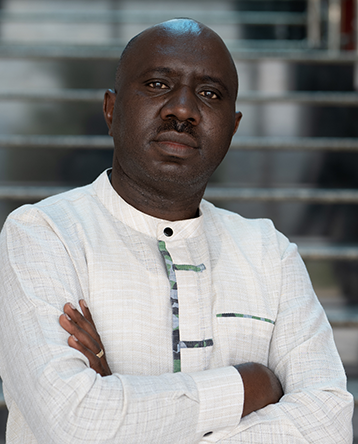
Sridhar R. Tayur is the Ford Distinguished Research Chair and University Professor of Operations Management at Carnegie Mellon University’s Tepper School of Business. He holds a Ph.D. in Operations Research from Cornell University and a B.Tech. in Mechanical Engineering from IIT Madras. His research focuses on quantum computing applications in operations research, healthcare systems optimization, and supply chain management. He has held visiting roles at MIT, Stanford, and Cornell, and founded companies like SmartOps and OrganJet. His recent work spans quantum-inspired optimization algorithms, healthcare decision support systems, and fair resource allocation policies. He has contributed to over 110 publications, including high-impact papers in Management Science , Operations Research , and IEEE Transactions . Awards include INFORMS Fellow and NAE membership. He teaches courses in quantum integer programming, healthcare operations, and service management at the Tepper School. Education: Ph.D. (Cornell), B.Tech. (IIT Madras) Research Labs: Quantum Technology Group, OrganJet Key Awards: INFORMS Fellow, NAE Member, MSOM Distinguished Fellow Teaching: MBA Operations Management, PhD Quantum Optimization, Healthcare Systems His interdisciplinary work bridges quantum computing, healthcare policy, and logistics, supported by collaborations with industry and government institutions.
Pedro Ferreira is a Full Professor at Carnegie Mellon University (CMU), holding a joint appointment in the School of Information Systems & Management at the Heinz College and the Department of Engineering and Public Policy within the College of Engineering. His research focuses on how technology influences education, media consumption, and peer effects, leveraging large datasets from randomized experiments. Ferreira has been recognized with the 2018 INFORMS Early Career Award and Top 17th worldwide research scholar ranking (2020–2022). He co-founded CMU's Initiative for Teaching and Education Analytics (iTEA) and advises numerous students in areas like AI/ML in education and media analytics. Education: BSc in Computer Science (IST), MSc in Electrical Engineering and Computer Science & Technology Policy (MIT), PhD in Telecommunications Policy (CMU). He has taught at MIT, IST, and invited roles at Católica-Lisbon and the University of Cambridge. Research Interests: Impact of digital technologies on education outcomes (e.g., smartphones in classrooms, video analytics), peer influence in media industries (e.g., binge-watching, recommender systems), and empirical methods using randomized experiments. Current projects include AI-driven education improvement and policy implications of AI/ML technologies. Notable Achievements: Over 15 peer-reviewed articles in top journals like Management Science and MIS Quarterly. Key grants include Gates Foundation funding for video-based education research and Koch Foundation support for online certification studies. He serves as Associate Editor for Management Science and previously for MIS Quarterly. Advising & Grants: Advised 23 PhD students, many now in academia and industry. Current students research facial recognition in education and hybrid recommender systems. Ferreira has led grants totaling millions, including studies on GDPR's impact on piracy tracking and worldwide VoD availability. Professional Service: Organized conferences like the Symposium on Statistical Challenges in eCommerce Research (SCECR). Served on NSF review panels and CMU’s Portugal PhD program steering committee.曾参与葡萄牙知识社会局(UMIC)的国家级政策制定,推动宽带学校项目。
Jon M. Peha is a Full Professor in the Department of Engineering and Public Policy and the Department of Electrical and Computer Engineering at Carnegie Mellon University's College of Engineering. He serves as Founder and Director of the Center for Executive Education in Technology Policy (CEE-TP) and maintains affiliations with the CyLab Security and Privacy Institute and the Information Networking Institute. His career uniquely bridges government service (as FCC Chief Technologist, White House OSTP Assistant Director, and congressional advisor), industry leadership (as CTO for three tech startups), and academic research. Education: Ph.D. in Electrical Engineering, Stanford University (1991) M.S. in Electrical Engineering, Stanford University (1986) B.S. in Electrical Engineering and Computer Science, Brown University (1984) Peha's research spans the technical and policy dimensions of information networks, with particular focus on spectrum management, broadband Internet architecture, wireless communications, cybersecurity, and communications for emergency response. His work integrates engineering principles with economic and regulatory analysis to address real-world challenges in telecommunications infrastructure. Current projects examine connected vehicle communications, spectrum sharing models, and consumer-centric broadband labeling systems that emerged from his large-scale user studies. His research publications demonstrate consistent leadership in both technical innovation and policy analysis, with recent work addressing satellite interference mitigation, V2X communications, and pandemic-era internet performance. The breadth of his scholarship reflects his unique position at the intersection of engineering practice and policy formulation. Scientific Awards: IEEE Fellow AAAS Fellow FCC Excellence in Engineering Award IEEE Communications Society TCCN Publication Award Brown Engineering Medal AAAS Featured Science and Technology Policy Fellow (40@40) Peha actively engages with policymakers through congressional testimony, FCC consultation, and White House advisory roles. His government service has directly informed his academic work on spectrum policy, network neutrality, and public safety communications. He has supervised numerous graduate students across EPP, ECE, and INI programs, with research spanning vehicular networks, spectrum sharing, and emergency communications systems. As Director of CEE-TP, he leads executive education initiatives that bridge technical expertise and policy decision-making. His work with CyLab focuses on cybersecurity and privacy challenges in broadband systems and connected vehicles. Current projects include developing cost-effective spectrum sharing models for intelligent transportation systems and analyzing the economic implications of multi-network access architectures in 5G networks.
Michael D. Smith is a Professor of Information Technology and Public Policy at Carnegie Mellon University, with joint appointments at Heinz College and Tepper School of Business. His research employs economic and statistical methods to analyze digital markets, focusing on firm and consumer behavior in online environments. Education: B.Sc. in Electrical Engineering (Summa Cum Laude), University of Maryland M.Sc. in Telecommunications Science, University of Maryland Ph.D. in Management Science and Information Technology, MIT Research Interests: Professor Smith investigates the economics of digital information markets, consumer behavior in online platforms, and policy implications of technological disruption. His work spans copyright enforcement, digital advertising, and the impact of piracy on legal media consumption. Publications: His recent studies examine AI’s role in copyright policy, effectiveness of anti-piracy measures, and market dynamics in digital streaming. Articles often bridge economics, computer science, and public policy. Awards: National Science Foundation CAREER Award Multiple Best Teacher Awards at CMU Recognized as a Top 100 Emerging Engineering Leader (NAE, 2020) Best Paper Runner-Up (Information Systems Research, 2006) Editorial and Industry Roles: Served as Senior Editor at Information Systems Research and Associate Editor at Management Science . Prior to academia, he worked in telecommunications at GTE and Booz Allen Hamilton, earning a patent for AI applications in network design. Contact: mds@cmu.edu | Office: 4800 Forbes Avenue, Hamburg Hall 2204, Pittsburgh PA 15213
Ozan K. Tonguz is a Professor in the Department of Electrical and Computer Engineering at Carnegie Mellon University's College of Engineering. He holds appointments with CyLab and the Carnegie Mellon-Portugal program, focusing on advanced research in telecommunications, networking, and intelligent transportation systems. His educational background includes: Ph.D. in Electrical Engineering from Rutgers University (1990) M.S. in Electrical Engineering from Rutgers University (1986) B.S. in Electronic Engineering from the University of Essex (1980) Tonguz's research spans telecommunications and networking with emphasis on vehicular networks, wireless communications, cybersecurity, and smart infrastructure systems. His work bridges theoretical networking concepts with practical transportation applications, particularly in vehicle-to-vehicle and vehicle-to-infrastructure communications. He has published approximately 300 papers in IEEE journals and conference proceedings and authored the book 'Ad Hoc Wireless Networks: A Communication-Theoretic Perspective' (Wiley, 2006). His recent publications demonstrate a strong focus on vehicular networks and intelligent transportation systems, with particular attention to traffic flow optimization, virtual traffic light systems, and the application of wireless communication technologies to solve urban transportation challenges. His research has evolved from fundamental networking concepts to applied transportation solutions with real-world implementation potential. Tonguz actively mentors PhD students and has founded Virtual Traffic Lights, LLC, a CMU spinoff company addressing transportation problems through innovative communication paradigms. His work has received attention from IEEE Spectrum and other technical publications, highlighting the practical significance of his research in intelligent transportation systems. He leads research efforts in vehicular ad hoc networks, wireless ad hoc and sensor networks, self-organizing networks, smart grid applications, and security. His Virtual Traffic Lights technology has demonstrated potential to increase urban traffic flows by 60% during rush hours, with implications for reducing commute times, mitigating congestion, and supporting greener environments.
Shixiang (Woody) Zhu is an Assistant Professor in Data Analytics at the Heinz College of Information Systems and Public Policy, Carnegie Mellon University. He holds a PhD in Machine Learning from Georgia Institute of Technology (2022) and B.S./M.S. in Computer Science from Beijing University of Posts and Telecommunications (2017). His research bridges machine learning, operations research, and statistics, focusing on sequential modeling, human-AI collaboration, and energy systems operations. He has received awards including the IEEE Power & Energy Society Best Paper Award (2025) and was a finalist for the INFORMS Wagner Prize (2021). Education : PhD in Machine Learning, Georgia Tech (2017–2022) B.S./M.S. in Computer Science, BUPT (2010–2017) His research emphasizes spatio-temporal data analysis , decision making under uncertainty , and applications to energy systems, healthcare, and public policy. Notable projects include optimizing police zone design (Wagner Prize finalist) and enhancing grid resilience through robust optimization. He actively collaborates with institutions like Argonne National Laboratory and NSF-funded projects. Awards : Best Paper Award, IEEE Power & Energy Society (2025) Gen-AI Fellows (2024) Finalist, INFORMS Wagner Prize (2021) Advising & Grants : Advises PhD students Zekai Fan, Wenbin Zhou, and others Recipient of Block Center Seed Grant (2024), NSF funding (2024) His work spans energy resilience, public policy optimization, and causal inference in social systems. He co-leads the INFORMS Data Mining Society and reviews for top journals like Operations Research and Management Science.
Michael Trick is the Senior Associate Dean for Faculty and Research and Higgins Professor of Operations Research at the Tepper School of Business, Carnegie Mellon University. His research focuses on combinatorial optimization, sports scheduling, constraint programming, and operations research applications. He has contributed to seminal work on sports timetabling (e.g., scheduling college basketball conferences) and the traveling tournament problem. Trick's work bridges theoretical advancements with practical applications, including integer programming, branch-and-price methods, and stochastic dynamic programming. He has led initiatives in operations research education and served as President of INFORMS, emphasizing the field's societal impact. His research also spans voting systems, optimization for newspaper zoning, and algorithmic design for complex scheduling problems. Trick's expertise spans academic leadership, research methodology, and cross-disciplinary applications. His articles address topics like auction design for spectrum allocation, bike-sharing logistics, and robust scheduling strategies. He collaborates across academia and industry, contributing to both theoretical advancements and real-world operational challenges. His work often highlights the practical utility of mathematical programming techniques in diverse domains.
Jon Peha is a full professor at Carnegie Mellon University's College of Engineering, holding dual appointments in the Departments of Engineering and Public Policy and Electrical and Computer Engineering. He has held significant roles in government, including Chief Technologist at the FCC and Assistant Director at the White House Office of Science and Technology Policy. His research focuses on the intersection of technical and policy aspects of information networks, with emphasis on spectrum management, cybersecurity, vehicular networks, and public safety communications. Peha has advised policymakers on critical issues like network neutrality, broadband access, and emergency response systems. He earned his Ph.D. from Stanford University and B.S. from Brown University, and holds prestigious fellowships from IEEE and AAAS. His work has influenced national and international policies, including contributions to the FCC's National Broadband Plan. Current projects include enhancing wireless service through spectrum sharing and improving communications resilience during disasters. Education: Ph.D. (Electrical Engineering, Stanford), B.S. (Electrical Engineering & Computer Science, Brown). Key affiliations include CyLab Security and Privacy Institute, Information Networking Institute, and Center for Wireless & Broadband Networking. Awards include the FCC Excellence in Engineering Award and Brown Engineering Medal. His publications span technical advancements and policy analyses, addressing challenges from vehicular networks to digital rights management.
Ozan Tonguz is a Professor in the Department of Electrical and Computer Engineering at Carnegie Mellon University's College of Engineering. He holds a Ph.D. (1990), M.S. (1986), and B.S. (1980) in Electrical/Electronic Engineering from Rutgers University and the University of Essex, respectively. His research focuses on telecommunications and networking, with specialties in optical networks, wireless systems, cybersecurity, and intelligent transportation systems. Notable contributions include the Virtual Traffic Lights LLC startup, which develops vehicle-to-vehicle (V2V) communication systems to optimize traffic flow without traffic lights. His work includes field trials in Saudi Arabia and simulations demonstrating significant reductions in commute times and accident rates. Key achievements include the IEEE Spectrum feature on his vehicular networks research (2017), and the IEEE Spectrum cover story on virtual traffic lights (2018). His research also explores parked cars as roadside units, DSRC technology, and autonomous system applications in transportation.
Jim Blakley is the Associate Director of the Living Edge Lab at Carnegie Mellon University, bringing over 30 years of industry experience from AT&T, Lucent, and Intel. His work focuses on commercializing emerging technologies at the intersection of cloud systems, AI, networking, and human-computer interaction. He leads research initiatives in edge computing infrastructure and real-world technology deployment. Blakley's research spans edge computing , distributed cloud systems , drone autonomy , and network optimization . He specializes in developing scalable solutions for decentralized infrastructure, latency-sensitive applications, and edge-native platforms, with an emphasis on practical implementation and systems engineering. His recent publications demonstrate a strong focus on edge computing advancements, including drone video streaming optimization, lightweight AI frameworks for wearables, decentralized cloud architectures, and cross-tier orchestration. This body of work highlights trends toward democratizing edge technologies and enhancing real-time processing capabilities for next-generation applications. At the Living Edge Lab, Blakley oversees projects advancing edge computing infrastructure and experimental testbeds, collaborating with industry partners to bridge academic research and commercial deployment.
Alex Hills is a Professor of Engineering and Public Policy at Carnegie Mellon University (CMU), where he has held multiple leadership roles including Vice Provost, Chief Information Officer, and Founding Director of the Information Networking Institute. He led the development of 'Wireless Andrew,' the world's first large-scale Wi-Fi network, pioneering modern wireless campus infrastructure. His research interests include telecommunications, wireless networking, digital signal processing, and technology deployment in remote and developing regions. He focuses on error detection in wireless systems, policy implications of engineering solutions, and using technology for global development. The available article highlights his expertise in how digital networks handle voice data, particularly the causes of robotic distortion in phone calls due to packet corruption and error correction mechanisms. His work bridges engineering and public understanding of digital infrastructure. Distinguished Service Professor at CMU Author of books on Wi-Fi development and connecting remote Alaskan villages Senior advisor to 'Technology Consulting in the Global Community' program Expert quoted in Consumer Reports on telecom issues Alex Hills has advised numerous students through university programs and initiatives, particularly those focused on applying technology in developing nations. He has secured institutional support for global outreach projects and continues to mentor students in interdisciplinary tech-policy work. His career spans academia, government service (including as Alaska’s Deputy Commissioner of Administration), and military leadership. He leads or contributes to teams working on resilient communication networks, especially in underserved areas. His past and ongoing work involves building robust, low-infrastructure telecommunications systems suitable for remote communities and disaster response scenarios.
Hakan Erdogmus is a Teaching Professor of Software Engineering at Carnegie Mellon University’s Silicon Valley Campus, affiliated with the College of Engineering’s Electrical and Computer Engineering Department. He holds an adjunct faculty position at the University of Calgary’s Department of Computer Science. Education: Ph.D. in Telecommunications, INRS-Université du Québec (1994) M.S. in Computer Science, McGill University B.S. in Computer Engineering, Bogaziçi University Research Interests: Dr. Erdogmus specializes in the economics of software engineering, value-based software engineering, agile methodologies, empirical studies of software practices, and software quality measurement. His work emphasizes quantitative decision-making frameworks and test-driven approaches to enhance software development processes. Awards and Recognition: Recipient of the Eugene L. Grant Award (2003) from the American Society for Engineering Education 2016 Dean’s Early Career Fellowship for groundbreaking research Former Editor-in-Chief of IEEE Software and current associate editor of the Journal of Empirical Software Engineering Professional Contributions: Erdogmus has organized international conferences (e.g., XP 2010, CASCON 1997/2006) and served on over 50 program committees. His keynote addresses, such as at the Universidad Nacional del Litoral (Argentina), focus on adapting engineering education to millennial learning styles and emerging technologies.
Emmanuel Ndashimye is a Teaching Professor at Carnegie Mellon University Africa. He holds a PhD in Computer Science from Auckland University of Technology (2018), an MSc in Communication and Information Systems (with Distinction) from Huazhong University of Science and Technology (2009), and a BSc in Electronics and Telecommunication Engineering from the University of Rwanda (2005). His research integrates IoT, machine learning, and network technologies to address practical challenges in agriculture and infrastructure. Key focus areas include: IoT-enabled pest/bird monitoring using acoustic sensors and radar systems 5G/LTE network optimization for high-mobility environments Smart irrigation and water management solutions Network security frameworks for IoT deployments Recent publications (2021–2025) demonstrate a strong trend toward applying computational techniques to Rwandan agricultural contexts, with innovations in acoustic pest detection, weather radar analytics, and resource optimization systems. His work consistently bridges theoretical models with field validations in African settings. Honors include : MSc awarded With Distinction IEEE membership Editor for Engineering Science & Technology (2019–2022)
Martin Saint is a Lecturer - Special Faculty at Carnegie Mellon University's Dietrich College of Humanities and Social Sciences, specifically within the Department of Statistics & Data Science. He is also a semi-retired Distinguished Service Professor and previously served as Director of Academic Affairs at CMU-Africa's Department of Information and Communication Technology within the College of Engineering. With over 40 years of experience across private, public, and academic sectors, he specializes in consulting and speaking on engineering, economics, business, and policy issues. Dr. Saint holds a Ph.D. and M.S. in Computer Systems Networking and Telecommunications from the University of Colorado’s Technology, Cybersecurity, and Policy (TCP) Program in the Department of Computer Science. He also earned a B.S. in Business Management and a B.A. in Philosophy from the University of Redlands. His research focuses on emerging technologies, time series analysis, signal processing, artificial intelligence, machine learning, and risk management. These are applied in computational finance, business analytics, and networks. Key areas include cybersecurity policy effectiveness, IoT implementations, spectrum management, and infrastructure protection. He has been recognized with the Google TensorFlow University Grant and holds the title of Distinguished Service Professor. His work has also led to advisory roles for World Bank-funded African Centers of Excellence in IoT and data science. As part of his contributions, Dr. Saint secured a Google TensorFlow grant and advised on significant initiatives such as the World Bank-funded African Centers of Excellence. Though no formal advisees are listed, his consulting and advisory roles reflect extensive mentorship in policy and technical domains. He has conducted research at institutions including the University of Colorado’s Pervasive Communications Laboratory, Digital Energy Lab, FEMA’s Emergency Management Institute, Idaho National Laboratory, and the Kigali Collaborative Research Centre, demonstrating a collaborative approach to interdisciplinary projects.
Austin Whisnant is a Lecturer at the University of Pittsburgh Graduate School of Public and International Affairs and Carnegie Mellon University’s Institute for Politics and Strategy. She is also a Member of the Technical Staff in the CERT Program at the Software Engineering Institute (SEI), a unit of Carnegie Mellon University. Her work bridges cybersecurity research and public policy, with a focus on national security implications of technology. Her research interests include cybersecurity, insider threat detection, network traffic analysis, risk modeling, artificial intelligence in security, and the development of data standards for threat intelligence sharing. She applies machine learning and simulation techniques to analyze large-scale network data and inform cybersecurity policy. Her recent work emphasizes the ethical and practical challenges of using AI in insider risk evaluation and the creation of standardized schemas like the Insider Incident Data Exchange Standard (IIDES) to improve collaboration across organizations. The body of her recent publications reveals a strong trend in developing practical tools and frameworks for cybersecurity practitioners, particularly in the domains of network situational awareness, insider threat analytics, and secure data exchange. Her work combines technical depth with policy relevance, making it valuable for both operational security teams and decision-makers. While no formal scientific awards are listed in the available materials, her contributions through white papers, technical reports, blog posts, and webcasts demonstrate sustained impact in the cybersecurity community. Whisnant advises no known students, but she contributes significantly to research teams at SEI, particularly the CERT Network Situational Awareness (NetSA) team. She is also advancing her own education as a PhD candidate in Engineering and Public Policy at CMU’s College of Engineering, indicating ongoing scholarly development. Her interdisciplinary approach integrates engineering rigor with policy analysis, positioning her at the intersection of technology and governance. She is actively involved in research labs and teams focused on mission assurance, insider threat mitigation, and cyber risk resilience. Her work with the CERT Program supports national-level cybersecurity initiatives, and her development of tools like SiLK-based profiling systems has influenced operational practices in network defense.