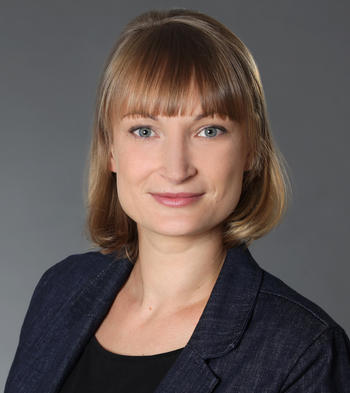
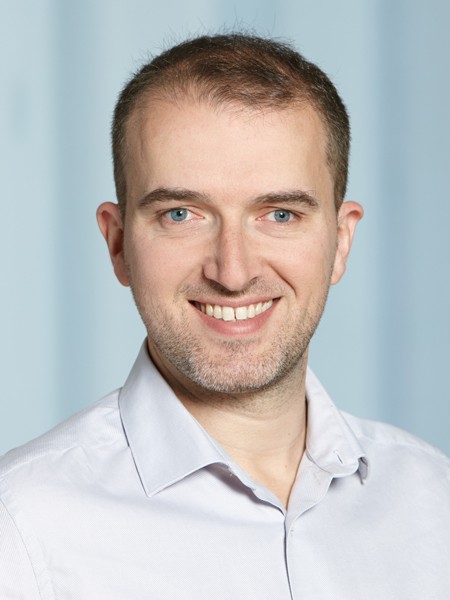
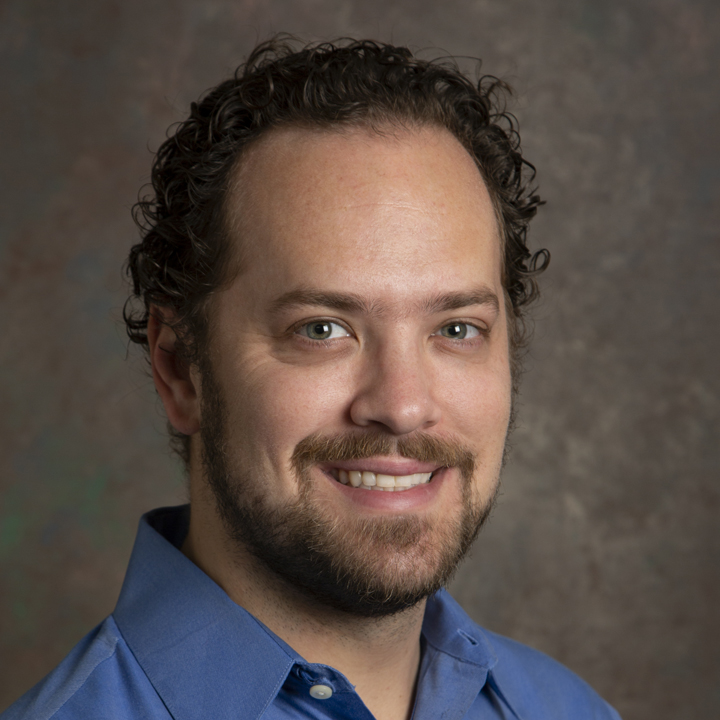
Anne Bernhardt is a Professor of Sedimentary Systems at the Department of Earth Sciences, Freie Universität Berlin . She leads research at the Tectonics and Sedimentary Systems group, focusing on sedimentary architecture, climate-tectonic interactions, and submarine canyon dynamics. Education: PhD in Geological and Environmental Sciences, Stanford University (2011); Diplom in Geology/Paleontology, Freie Universität Berlin (2005–2011) Her research interests include: Climate-driven sediment fluxes during sea-level changes Tectonic controls on turbidite systems and canyon morphology Applications of cosmogenic nuclides (e.g., 10Be/9Be) in marine diagenesis Source-to-sink sediment dynamics 3D lithospheric modeling via gravity gradients Recent publications emphasize global submarine canyon patterns, paleoseismic records in turbidites, and isotopic tracers for weathering processes. Key collaborations span marine geology projects in Chile, the Mediterranean, and Himalayan regions. She contributes to teaching through courses on sedimentology, stratigraphy, and source-to-sink systems, with fieldwork in the Pyrenees and Himalayas. Her group engages in MB-4D and TIPSY projects under the priority program Mountain Building Processes in Four Dimensions .
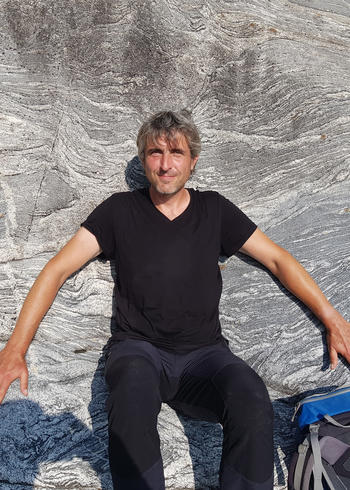
Dr. Jan Pleuger is a Researcher at the Department of Earth Sciences, Freie Universität Berlin, specializing in tectonics and sedimentary systems within the Institute of Geological Sciences. His work focuses on the structural evolution of Alpine and peri-Alpine regions, particularly the Eastern Alps, Central Alps, and Rhodope Mountains, with emphasis on subduction dynamics, exhumation mechanisms, and crustal deformation processes. His research interests span tectonics, sedimentary systems, structural geology, and metamorphic processes, with specific expertise in: Alpine orogenic evolution Subduction-to-collision transitions High-pressure rock exhumation Shear zone kinematics Paleogeographic reconstructions Crustal-scale structural analysis Analysis of his 15 most recent publications (2023-2011) reveals consistent focus on Alpine geodynamics, particularly the Eastern Alps' transition zones and Rhodope metamorphic province. His work integrates structural field analysis, geochronology, and geophysical methods to address fundamental questions about slab tearing, crustal-scale folding, rift-related paleogeography, and the timing of metamorphic events. A recurring theme is the interplay between subduction, collision, and extensional processes in orogenic belts. Dr. Pleuger actively collaborates with major research initiatives including the AlpArray Working Group, SWATH-D project, and MB-4D Priority Programme (Mountain Building Processes in Four Dimensions). His research leverages Freie Universität Berlin's analytical facilities such as the Biomarker Lab, Apatite Fission Track dating equipment, and mineral separation laboratories to investigate petrophysical properties and deformation mechanisms in high-pressure rocks.
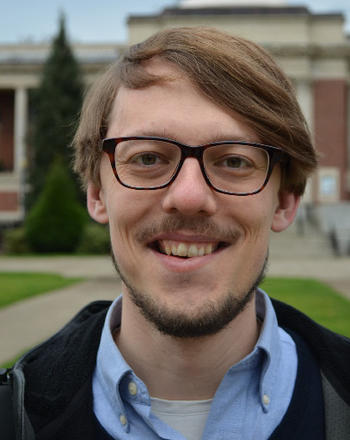
Dr. Alexander Rohrmann is a Researcher at Freie Universität Berlin's Department of Earth Sciences, specializing in tectonics-climate-surface process interactions. His field studies span Sumatra (Indonesia), Xining (China), and Salta (Argentina), focusing on landscape evolution through integrated geological, geochemical, and geomorphological approaches. Education: PhD in Geology, Universität Potsdam (2015). Dissertation: "The Role of Wind and Water in Shaping Earth’s Plateaus" under Prof. Manfred Strecker. M.Sc. in Geology, University of Arizona (2009). Thesis: "Minimal Erosion in Central Tibet since the Eocene and Implications for Plateau Development" under Prof. Paul Kapp. Rohrmann's research centers on quantifying feedbacks between tectonics, climate, and surface processes using field mapping, thermochronology, and biomarker analysis. Key areas include erosion-sediment transport dynamics, drainage basin evolution, and paleohydrological reconstruction across Asian and South American plateaus. His methodology integrates stable isotope geochemistry, cosmogenic nuclides, and satellite data to resolve spatiotemporal patterns of landscape change. His 15 most recent publications (2020-2025) reveal dominant trends in Andean and Tibetan Plateau evolution, emphasizing monsoon dynamics, wind erosion processes, and biodiversity responses to paleoclimate shifts. Methodologically, they combine stable isotope paleoaltimetry, magnetostratigraphy, and drainage network analysis to address tectonic-climate couplings across Cenozoic timescales. Scientific Awards: Feodor Lynen Research Fellowship (Alexander von Humboldt Foundation) American Geophysical Union Outstanding Student Paper Award Bernd Rendel Price (German Science Foundation) Cover story of May’s GSA Today edition Farouk El-Baz Research Award (Geological Society of America) Rohrmann has secured research funding including the TIPSY project (2025) on Sumatran sea-level fluctuations and taught advanced field courses at FU Berlin and Universität Potsdam. His teaching portfolio spans sedimentary systems seminars, spatial data analysis with MATLAB/ArcGIS, and multi-week field excursions in the Harz Mountains and North Hesse. He founded FU Berlin's biomarker laboratory specializing in compound-specific stable isotope analysis (leaf waxes, water) and low-temperature thermochronology. As part of the Tectonics and Sedimentary Systems group, he collaborates internationally on projects investigating Holocene organic carbon transport in Sumatra and Eocene-Oligocene monsoon evolution in Central Asia.
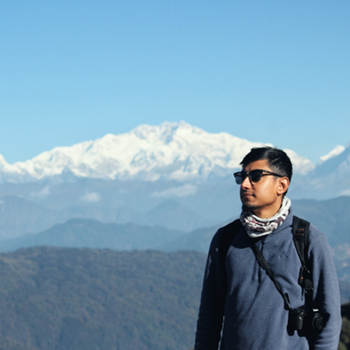
Debayan Chatterjee is a doctoral researcher (WiMi) at the Institute of Geological Sciences, Freie Universität Berlin, specializing in sedimentary systems. His research focuses on understanding long-term river lateral migration dynamics, floodplain evolution, and valley widening processes through interdisciplinary approaches combining remote sensing, analog modeling, and geospatial data analysis. Education: M.Sc. in Remote Sensing, GeoInformation, and Visualization (Universität Potsdam, 2020–2025); M.Sc. in Geophysics (IIT Kharagpur, 2017–2019); B.Sc. in Physics (St. Xavier’s College Ranchi, 2013–2016) Current Work: Investigates river bank erosion controls using global erosion rate datasets, remote sensing techniques, and landscape evolution experiments Methods: Structure-from-Motion photogrammetry, digital topography analysis, analog modeling He is affiliated with the Tectonics and Sedimentary Systems group at Freie Universität Berlin and contributed to the newly funded TIPSY project in 2025. His technical expertise spans research and teaching assistantships at GFZ Helmholtz Centre for Geosciences and Universität Potsdam, as well as prior project work at India’s National Geophysical Research Institute. Key facilities he engages with include the Biomarker Lab, mineral separation labs, and geospatial software workshops. His research intersects sedimentary geology, geomorphology, and geoinformatics to address fundamental questions about landscape evolution.
Andrew Carter is a Research Fellow in the Department of Earth Sciences at University College London, specializing in thermochronometry and tectonic geomorphology. His research focuses on crustal evolution through exhumation processes, particularly in the India-Asia collision zone, and examines erosion-climate feedback mechanisms over geological timescales. University: University College London Department: Department of Earth Sciences Rank: Research Fellow Research spans tectonic geomorphology, global tectonics, and sedimentary record analysis to understand climate-continental crust interactions. Recent publications explore: 2025: Tethyan-Paleo-Pacific subduction dynamics in Southeast Asia 2025: Borneo sediment provenance and paleogeographic patterns 2025: Andaman Sea volcanic rock geochemistry 2024: West Antarctic ice stream sedimentology 2024: Tibetan exhumation history Methodologies include detrital zircon U-Pb dating, low-temperature thermochronometry, and sedimentary basin analysis. Collaborations with institutions across Antarctica, Southeast Asia, and the Aegean demonstrate his international research network.
Cyril Chelle-Michou is an Assistant Professor at the Department of Earth and Planetary Sciences , ETH Zurich , specializing in geochemistry, petrology, and mineral resource exploration. He leads research on metallogenic systems, magmatic-hydrothermal processes, and crustal evolution. Member, Geochemical Society Member, Society for Geology Applied to Mineral Deposits Member, Society of Economic Geologists Current research focuses on U-Pb geochronology applications in Sn-W mineralization, volcanogenic lithium deposits, and zircon age distribution analysis. His work integrates field studies with geochemical modeling to understand ore-forming processes and tectonic controls on mineral systems. Recent publications examine: Porphyry ore formation in the Yerington district Neogene lithium deposits in the Macusani Volcanic Field Bauxite genesis in SE France during mid-Cretaceous Tectonic evolution of Variscan gneissic domes Zircon chronometry in plutonic-volcanic systems He teaches courses including: Seminar Geochemistry and Petrology Resource Economics and Mineral Exploration Mineral Resources I Heat and Mass Transfers in Magmatology His lab collaborates with international teams on projects spanning the Alpine Tethys, Andean mineral systems, and Variscan metallogeny.
Karin Ebert is an Associate Professor of Physical Geography and Lecturer in Environmental Science and GIS at Södertörn University , where she also serves as Head of the Department of Environment, Development and Sustainability Studies. Her research integrates GIS, environmental science, health geography, and geomorphology to study the relationship between respiratory diseases and environmental factors. Educational Background: Diploma in Geography, University of Bamberg, Germany PhD in Physical Geography, Stockholm University (2009) Her work spans climate change impact assessment , glacial geology , and public health , with recent publications focusing on spatial-temporal disease patterns and coastal resilience to climate change . She advises PhD students Patrick Spets and Elena Palenova on environmental GIS applications. Scientific Awards: No specific awards mentioned in the text. Advising and Collaborations: Actively supervises ongoing research on antimicrobial resistance and landscape connectivity . Affiliated with Stockholm University's Department of Physical Geography (2016) and Södertörn University's Department of Natural Sciences, Environment and Technology (2017–present).
Hao Hu is an Assistant Professor in the Department of Geosciences at the University of Oklahoma's School of Geosciences (Mewbourne College of Earth and Energy). Previously, he served as a Senior Research Geophysicist at TGS and a Research Assistant Professor at the University of Houston. His office is located in the Sarkeys Energy Center, Room 754. Dr. Hu earned his Ph.D. in Geophysics from the Institute of Geology and Geophysics at the Chinese Academy of Sciences in Beijing and completed his undergraduate studies in Geophysics at Yunnan University in Kunming, China. His research focuses on using seismic signals and methods to address critical challenges in energy exploration and subsurface understanding. Specifically, he investigates how to balance climate change and energy consumption through exploration of geothermal/fossil resources and CO2 geological storage, solve scientific problems in understanding subsurface structures from shallow to deep, and conduct fundamental studies of seismic theory and algorithms. His work spans exploration of unconventional/conventional resources, understanding subsurface structures using seismic signals, and fundamental theory studies of seismic wave propagation, imaging, and inversion. Dr. Hu's recent publications demonstrate strong activity in seismic fracture characterization, imaging techniques, surface wave analysis, and machine learning applications in geophysics. His work shows a clear progression toward more sophisticated computational methods and interdisciplinary approaches combining traditional geophysics with modern machine learning techniques. Postdoctoral travel award (2019) Excellent Graduate student award (2014) Excellent paper award (2013) Dr. Hu has secured significant research funding from NSF, DOE, and industry partners including TGS and Aramco. His current projects include elastic full waveform inversion and imaging with TGS, and previously he was involved in research on heterogeneity signatures of mantle phase changes, seismic elastic double-beam characterization of faults/fractures for CO2 storage, and detecting fracture zones using convolutional neural networks. He has served as a reviewer and guest editor for over 80 manuscripts in professional journals including Geophysics, Geophysical Prospecting, and IEEE TGRS.
Jörg Christian Robl is an Associate Professor in the Department of Geology and Geography at the University of Salzburg. His research focuses on geomorphology, tectonics, and climate change impacts on mountain systems, with a particular emphasis on the European Alps and collisional orogens. Recent projects include CLIMB (Climate Impacts on sediment dynamics in Mountain-river Basins) and movemont.at (landslides as geosystem services in Austrian geoparks). Active research areas: Geomorphology, Tectonics, Climate Change Impact Key collaborations: University of Salzburg, Austrian geoparks His recent publications analyze lithological controls on erosion in the Bohemian Massif, Tibetan Plateau expansion mechanisms, and glacial valley modeling. He frequently contributes to scientific discourse through peer-review activities and conference presentations. Media engagement includes discussions on climate change effects on alpine risks (e.g., landslides) and glacier dynamics. His work spans field studies, numerical modeling, and interdisciplinary collaborations addressing environmental changes in mountain regions.
Dr. Christoforos Benetatos is a Fixed-term Assistant Professor at the Department of Environmental, Land, and Infrastructure Engineering (DIATI) of Politecnico di Torino . Specializing in underground energy systems and geomechanics, his work addresses energy transition challenges through geological storage solutions. BSc and MSc in Civil and Environmental Engineering PhD in Underground Energy Storage Research Interests: CO2 and hydrogen storage Reservoir monitoring and modeling Subsidence analysis Geophysical data integration Energy transition infrastructure Key Projects: Scientific Manager for 3D geological modeling of Collalto storage field (2024) Regional-scale modeling of Gradizza field (2023) Static Reservoir Modeling (2023-2024) Publications focus on subsurface geomechanics, InSAR monitoring, and energy transition infrastructure. Recent works examine Bologna ground deformation patterns and anticline structural trap dynamics.
Carly Faber serves as an Associate Professor in Structural Geology and Tectonics within the Department of Geosciences at UiT The Arctic University of Norway. Her research integrates field-based structural analysis with metamorphic petrology to investigate mountain building processes, subduction zone dynamics, and geohazards. She is an active member of the Solid Earth Sciences, Mineral Resources and Geohazards research group and contributes to the Justice, Equity, Diversity, and Inclusion (JEDI) project at the university. Dr. Faber's research interests span structural geology, tectonics, subduction zones, metamorphic petrology, and climate-driven geohazards. Her work examines deformation mechanisms in various tectonic settings including the Scandinavian Caledonides, Yukon-Tanana Terrane, and Naukluft Nappe Complex. She investigates how rocks deform during mountain building, subduction, and exhumation processes, with particular attention to the relationships between deformation, metamorphism, and fluid-rock interactions. Her more recent work extends into snow science education and avalanche risk management. Analysis of her publication record reveals consistent focus on structural evolution of orogenic systems, with increasing emphasis on geohazards and educational applications in recent years. Her work demonstrates strong international collaboration across North America, Europe, and Africa, addressing fundamental questions in tectonics while developing practical applications for geohazard mitigation. Dr. Faber actively contributes to geoscience education through innovative teaching approaches that bridge research and instruction. Her work on university snow science courses and building resilience to climate-driven geohazards through the GEOMME partnership demonstrates commitment to translating scientific knowledge into practical educational frameworks. She has explored how teaching questions can be transformed into research questions, enhancing the integration of education and research in geoscience. Based in the Naturfagbygget (Science Building) office 1.249 in Tromsø, Dr. Faber maintains active field research programs in multiple geological settings worldwide while contributing to UiT's mission as Norway's northernmost university with expertise in Arctic conditions and processes.
Jeroen Van Hunen is a Professor in the Department of Earth Sciences at Durham University, affiliated with several research centers including Geophysics & Geodynamics, Durham Energy Institute (DEI), and Climate, Environment and Resources. His research focuses on geodynamic processes, particularly subduction zone dynamics, lithospheric evolution, and geothermal energy applications. Professor Van Hunen's research interests span geophysics, plate tectonics, and mantle dynamics, with specific expertise in subduction processes, lithospheric deformation, and geothermal systems. His work integrates numerical modeling with geological observations to understand Earth's dynamic systems. Van Hunen's recent publications demonstrate a strong focus on subduction dynamics (including double subduction systems and slab interactions), lithospheric processes (dripping, rifting, and cratonic deformation), and applied geothermal research. His team has developed computational tools for geothermal potential assessment and investigates thermal regulation in subsurface systems. He actively supervises graduate students, currently directing research on subduction dynamics, geothermal systems, and tectonic evolution. His advisees investigate diverse topics from Eastern Anatolian Plateau formation to mine water geothermal applications. Van Hunen collaborates with multiple research groups including the Geophysics & Geodynamics unit, contributes to the Durham Energy Institute's sustainable energy initiatives, and participates in the Climate, Environment and Resources center's interdisciplinary work.
Colton Lynner is an Assistant Professor in the Department of Earth Sciences within the College of Earth, Ocean & Environment at the University of Delaware. His research focuses on understanding Earth's structure and dynamics through advanced seismic imaging techniques, with particular emphasis on subduction zones and continental margins. Education: Ph.D., Geology & Geophysics, Yale University, 2015 B.S. Earth and Ocean Sciences, Duke University, 2010 B.S., Economics, Duke University, 2010 Dr. Lynner's research program centers on seismology, geophysics, and tectonics, with specific expertise in seismic imaging of subduction zones, crustal and mantle structure, and deformation processes. His methodology frequently employs ambient noise tomography, shear wave splitting analysis, and joint inversion of multiple geophysical datasets to study regions including the Ecuadorian margin, Alaska-Aleutian subduction zone, and Eastern North American Margin. His work provides critical insights into plate boundary interactions, slab dynamics, and the connections between deep Earth processes and surface expressions, with significant implications for understanding earthquake processes and volcanic hazards. Analysis of Dr. Lynner's recent publications reveals a strong focus on multi-method seismic imaging approaches that combine ambient noise, local, and teleseismic data across diverse geographic regions. His research demonstrates consistent expertise in investigating slab geometry and flattening processes, mantle flow patterns, crustal deformation, and the relationship between seismic velocity changes and volcanic activity. His work spans both active and ancient tectonic settings, with particular contributions to understanding the Eastern North American Margin's complex geological history and the dynamics of the Ecuadorian subduction zone following the 2016 Pedernales earthquake. Dr. Lynner is an active member of the American Geophysical Union, contributing to the broader geoscience community through his research and professional engagement. His extensive publication record spanning from 2012 to the present indicates successful acquisition of research funding to support seismic imaging projects, particularly those involving significant field deployments in international settings. Dr. Lynner's research likely involves collaboration with the University of Delaware's geophysics group and potentially with the Delaware Geological Survey. His work on ocean-bottom seismometer data and subduction zone studies suggests connections with marine geophysical research initiatives through the College of Earth, Ocean & Environment's marine operations facilities, supporting field deployments in coastal and marine environments.
Jaganmoy Jodder is a Research Fellow at the Centre for Planetary Habitability, University of Oslo, with affiliations to multiple international institutions including the Evolutionary Studies Institute at University of the Witwatersrand (South Africa) and the Department of Geology at University of Johannesburg (South Africa). His research focuses on early Earth processes, biogeochemical cycles, and planetary habitability through multidisciplinary studies of Archaean rock records. B.Sc, Presidency College, University of Calcutta (2010) M.Sc, Department of Earth Sciences, IIT Bombay (2012) PhD, Department of Geology, University of Johannesburg (2020) His work integrates petrology, geochronology, geochemistry, geobiology, and radiogenic-stable isotope analysis to investigate ancient volcano-sedimentary rocks from key cratons like Singhbhum, Kaapvaal, and Pilbara. These studies aim to reconstruct early Earth surface conditions and understand the co-evolution of crustal processes with microbial life. Recent publications highlight his contributions to understanding Archaean seawater chemistry (via Nd isotopes in iron formations), early Earth magnetism (zircon magnetization), and craton evolution (structural and geochemical frameworks). His research spans both terrestrial and planetary contexts, emphasizing habitable conditions.
Albert Colman is an Associate Professor at Case Western Reserve University, specializing in biogeochemistry, oceanography, and environmental chemistry. His research focuses on isotope analysis, paleoclimate reconstruction, and phosphorus cycling in marine and terrestrial systems. Education: PhD, Yale University (2002) Research Interests: Dr. Colman investigates stable isotope dynamics in biogeochemical cycles, with applications to paleoclimate modeling and environmental monitoring. His work spans microbial processes, nutrient cycling, and climate proxies in teeth, soils, and marine sediments. Recent Publications: His 15 most recent articles (2017–2025) address isotope thermometry (Δ47), phosphorus regeneration, paleoclimate reconstructions, and microbial interactions in extreme environments. Notable themes include Arctic soil bacterial communities, stable isotope ecology, and analytical innovations for clumped isotopes. Labs/Teams: No specific laboratory or team affiliations are mentioned in the provided text.