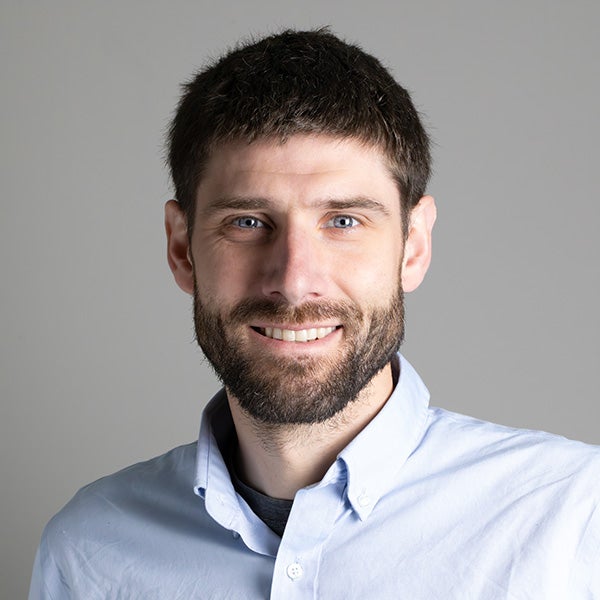
Gideon Rosenbaum is Professor in Structural Geology and Tectonics at the University of Queensland's School of the Environment. His research focuses on geodynamic processes at convergent plate margins. BSc Hebrew University (1997) PhD Monash University (2004) Research examines tectonic evolution of orogenic belts using field geology, geochronology, and geophysical data. Current projects investigate arc curvature development, subduction zone segmentation, and continental assembly mechanisms. Recent publications demonstrate advanced applications in geochronology and structural analysis, particularly in Australian and Mediterranean terrains. Work increasingly incorporates geochemical proxies for tectonic reconstruction.
Douglas Dreger is a Professor in the Department of Earth and Planetary Science at the University of California, Berkeley. His research focuses on seismic source analysis, wave propagation, Earth structure, and geophysical inverse problems. He primarily uses waveform data to investigate earthquake mechanics, stress orientations, and fluid-faulting interactions. Email: dreger@seismo.berkeley.edu His work spans diverse tectonic and geothermal environments, including the Ridgecrest earthquake sequence, Mendocino Triple Junction, North Korean nuclear tests, and The Geysers geothermal field. Recent studies examine graviquake hypotheses, long-period volcanic tremors, and stress drop validation through advanced inversion techniques. Dreger's publications reveal a strong emphasis on moment tensor inversion, fault geometry modeling, and seismic hazard assessment. He has contributed to understanding earthquake rupture heterogeneity, coseismic deformation, and 3D seismic simulations for hazard scenarios.
Professor Patrice Rey is a faculty member at the School of Geosciences, The University of Sydney. He holds the rank of Professor and specializes in geodynamics, tectonics, and landscape evolution. With an international career spanning 12 institutions across three continents, his research focuses on continental rifting, mantle dynamics, metamorphic processes, and the interplay between climate and tectonics. Notable projects include studies on Australia’s geological history, the formation of precious opal, and the dynamics of early Earth geodynamics. His work bridges field geology, numerical modeling, and geophysical analysis. Key research themes include gravitational collapse in cratons, the role of isostasy in fold belt evolution, and the impact of dynamic topography on sedimentary systems. He has contributed to interdisciplinary projects such as the Perseverance Mars mission, highlighting connections between Earth’s geology and Martian surface processes. Recent publications emphasize continental crust evolution, landscape dynamics, and the integration of virtual reality tools in geological education. He leads research teams funded by grants like the Australian Research Council (DP22 and LP20 projects), focusing on mineral systems and Proterozoic rift basins. His media presence includes BBC documentaries and NOVA series, showcasing his expertise in continental evolution and planetary geology.
Brandon Schmandt is a Professor in the Department of Earth, Environmental and Planetary Sciences at Rice University, where he leads research using seismology to investigate Earth systems. His work integrates interdisciplinary approaches, data science, and numerical modeling to study tectonic processes, magmatic systems, and environmental interactions. His educational background includes a PhD in Geological Sciences from the University of Oregon (2011) and a BA in Environmental Studies from Warren Wilson College (2006). Dr. Schmandt's research focuses on seismology, tectonics, volcanology, and surface processes , with emphasis on seismic imaging of subsurface structures. His group employs innovative time-series analysis and field projects to resolve geologic history and contemporary Earth dynamics, particularly examining fault zones, magmatic reservoirs, and deep convective processes. Key methodologies include dense seismic arrays and machine learning applications. Analysis of his recent publications (2023-2025) reveals dominant trends in seismic event discrimination (earthquakes vs. explosions), magmatic system imaging (Yellowstone, Cascades), and global mantle structure studies. There is strong emphasis on induced seismicity, machine learning applications, and high-resolution imaging of Earth's discontinuities using dense arrays. His distinguished honors include: Aki Award of the AGU Seismology Section GSA Donath Medal AGU Macelwane Medal Body Dr. Schmandt directs an active research group conducting field projects across diverse settings including the Raton Basin, Yellowstone, Antarctica, and the Caribbean. While specific student advisees and grant details aren't provided in available materials, his group's work involves collaborative data collection, advanced computational modeling, and development of novel seismic analysis techniques applicable to both natural and anthropogenic seismic sources. The research program maintains focus on magmatic systems beneath volcanic regions, induced seismicity mechanisms, and global mantle structure using dense node arrays and interdisciplinary approaches to address fundamental questions in Earth dynamics.
Prof. Rajiv Sinha is a Professor in the Department of Earth Sciences at Indian Institute of Technology Kanpur . With a PhD from the University of Cambridge (1992), his career spans over two decades at IITK, including roles as Head of Department since 2014. Education: PhD (University of Cambridge, 1992), M.Tech (University of Roorkee, 1987), B.Sc (Patna University, 1983) Key Affiliations: Member of International Association of Sedimentologists, SEPM, Quaternary Research Association, and Indian Professional Societies Research Focus: Specializing in river science , Prof. Sinha investigates fluvial geomorphology , sedimentology , and natural hazards like Kosi floods . His work integrates remote sensing and GIS for climate change and paleoclimate reconstruction , notably studying the Ganga river system and its anthropogenic impacts . Scientific Leadership: His publications (2013-2017) reveal: Anthropocene river systems (2016) Indus Civilization paleohydrology (2017) Kosi megafan dynamics (2015) Monsoon evolution (2010, 2014) Groundwater management (2016) Awards & Recognitions: Pandit Girish Ranjan Chair Professorship (2013) National Mineral Award (2002) Alexander von Humboldt Fellowship (2000) UGC Research Fellowship (1988) University Gold Medal (1987) Collaborative Network: Partners include University of Durham , Imperial College London , and Institute du Physique de Globe, Paris . Currently leading Ganga River Basin Management studies and river science initiatives at IITK.
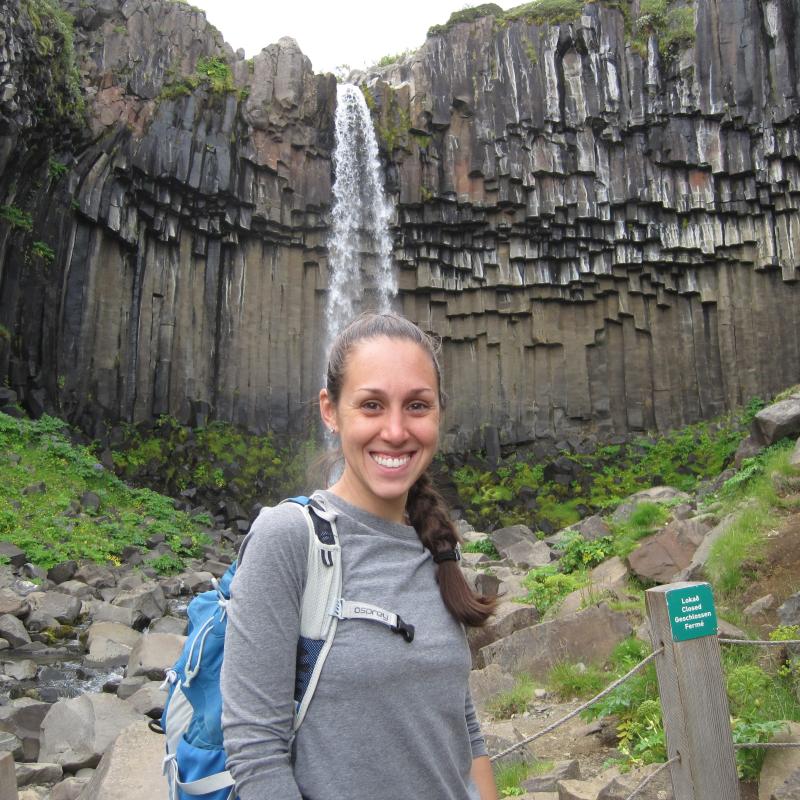
Marissa Mnich is an Assistant Professor at Sonoma State University, specializing in volcanology and igneous petrology. Her research focuses on basaltic systems, integrating field, geochemical, and mineral data to understand magma petrogenesis from mantle source to eruption. She earned her Ph.D., M.S., and B.S. in Geoscience from the University of Massachusetts Amherst and Cornell University. Education: Ph.D., Geoscience (University of Massachusetts Amherst, 2019) M.S., Geoscience (University of Massachusetts Amherst, 2013) B.S., Earth and Atmospheric Sciences (Cornell University, 2010) Her research spans volcanic fields in Arizona and Iceland, emphasizing magmatic mapping, volatile content in basalts, and volcanic hazard implications. Publications highlight methodologies for analyzing basaltic systems and their tectonic settings. Key trends in her publications include petrogenetic modeling of basaltic lavas, volcanic hazard assessment in monogenetic fields, and spatial-temporal volatile variations in Icelandic melt inclusions. Her work bridges field observations with geochemical analysis to explore mantle dynamics and eruption processes.
Dr. Steven G. Wesnousky is the Foundation Professor and Director of the Center for Neotectonic Studies at the University of Nevada, Reno (UNR). He holds a Ph.D. in Seismology from Columbia University (1982) and a B.A. in Geology from the University of California, Santa Barbara (1975). His academic career spans over three decades at UNR, where he combines geology and seismology to study earthquake mechanics, seismic hazard quantification, and crustal deformation. Research focuses on neotectonics, active fault systems, and the Himalayan seismic hazard. Key areas include fault slip rates, paleoearthquake reconstruction, and integrating geological data into seismic risk models. He teaches advanced courses on photogeology, neotectonics, and seismic hazard analysis. Publications emphasize Quaternary fault mapping, Himalayan tectonics, and rupture mechanics. Notable works include studies on the Walker Lane deformation zone and the 2015 Gorkha earthquake in Nepal. Awards include the Foundation Professorship (2008), F. Donald Tibbetts Teaching Award (2008), and a Fulbright Scholarship (2005). Professional roles include presidency of the Seismological Society of America (1995–1997), board memberships, and international collaborations at institutions like King Abdul University and the Institute of Nuclear and Geological Sciences, New Zealand. His work bridges field geology, geochronology, and computational modeling to advance understanding of continental deformation and earthquake processes.
Emily M. Peterman is an Associate Professor of Earth and Oceanographic Science at Bowdoin College, currently on leave for the 2025–2026 academic year. She specializes in studying mountain belt evolution and micro-to-nanoscale mineral processes using petrology, geochemistry, and geochronology. Her lab employs advanced techniques like SEM, EBSD, and cathodoluminescence to analyze mineral recrystallization and deformation. Education: PhD, University of California, Santa Barbara (2009) BA, Geology and Spanish, Middlebury College (2004) Universidad SEK, Segovia, Spain (2003) Research Interests: Peterman investigates tectonic processes through mineral-scale analysis, focusing on metamorphic reactions, crustal evolution, and nanoscale trace element mobility. Her work bridges structural geology with geochemical methods to decode Earth's dynamic history. Publications: Her recent articles emphasize Appalachian tectonics, nanogeochronology, and metamorphic petrology. Trends show strong focus on integrating field geology with atom-scale microscopy to resolve complex orogenic processes. Grants & Collaborations: NSF Tectonics Grant (2020–2023) for hosting the 6th Structural Geology and Tectonics Forum. NSF Petrology Grant (2017–2023) for ultrahigh-pressure metamorphism research in Greece/Bulgaria with UMass-Amherst. Co-directs Bowdoin's SEM Lab with EDS/EBSD/CL capabilities, supporting >600 students.
Dr. Catherine Rychert is an Associate Professor in the Department of Geology and Geophysics at the University of Southampton, where she conducts cutting-edge research in seismology and marine geophysics. She is a member of both the Geology and Geophysics research group and the Southampton Marine and Maritime Institute, contributing significantly to our understanding of Earth's interior structure and dynamics through advanced seismic imaging techniques. Her research focuses on several key areas: Seismic imaging of lithosphere-asthenosphere boundary Subduction zone dynamics and slab structure Continental rifting processes Seafloor spreading mechanisms Mantle flow patterns and upwellings Development of novel seismic sensing technologies Dr. Rychert's recent publications (2023-2025) demonstrate a strong focus on applying advanced seismic techniques across diverse tectonic settings including subduction zones (Lesser Antilles, Cascadia, Hikurangi), mid-ocean ridges (Mid-Atlantic Ridge), and continental rift systems (East African Rift). A notable trend is her increasing use of distributed acoustic sensing technology for both terrestrial and planetary applications, showing interdisciplinary reach beyond traditional Earth science. Dr. Rychert actively supervises PhD students, including William Arnold Buffett working on the INSPIRE project. She has secured significant research funding from diverse sources including the European Union (EURO-LAB project), National Geographic Society, and Natural Environment Research Council (NERC). Her collaborative network includes Dr. Nicholas Harmon and Professor Derek Keir, with whom she frequently publishes. Her research team conducts fieldwork and data analysis focused on understanding fundamental Earth structure and processes through innovative seismic methodologies, contributing to both theoretical understanding and practical applications in hazard assessment and resource exploration.
Nadja Drabon is an Assistant Professor of Earth & Planetary Sciences at Harvard University's Faculty of Arts and Sciences. She leads the Drabon Group , focused on understanding early Earth habitability through crustal processes and environmental changes. Her research integrates stratigraphy, geochemistry, and field studies of ancient geological formations like the Barberton and Pilbara cratons. Education: B.S. in Geological Sciences, Free University of Berlin (2011) Ph.D. in Geological and Environmental Sciences, Stanford University (2018) Research Interests: Drabon examines: Formation of Hadean/Archean crust via zircon and detrital mineral analysis Impact events' influence on early life and environments Archean tectonic processes using sedimentary and geochemical proxies Labs & Collaborations: Her lab coordinates with institutions globally, focusing on fieldwork in Australia and South Africa. She actively seeks PhD students for projects analyzing early Earth crustal evolution and biosphere interactions.
Dr. Maren Boese is a Senior Research Scientist at the Swiss Seismological Service (SED) and Seismology and Geodynamics (SEG) groups at ETH Zurich. Her expertise spans seismology, earthquake early warning systems, and planetary seismology. She leads projects like the CISN ShakeAlert system for California and contributed to NASA's InSight mission to Mars. She earned her Ph.D. from Karlsruhe Institute of Technology (2006) and a Master's from Kiel University (2002). Research Focus: Real-time seismic event detection, finite-fault rupture analysis, ground-motion simulation, and Marsquake seismology. Key contributions include developing the FinDer algorithm for the ShakeAlert system and advancing early warning methodologies in Central America and Switzerland. Awards: 2011: Outstanding Publication Award (Luxembourg National Research Fund) 2010: Ausgewählter Ort im Land der Ideen (BMBF Project EWS Transport) 2006: European IST Prize (Early Warning for Strong Earthquakes) Grants & Leadership: Led the CISN ShakeAlert team (2009–2014), managed the German CRC 461 project, and coordinated international collaborations like the InSight Marsquake Service. Labs/Teams: Swiss Seismological Service (ETH Zurich), NASA InSight Mission, and the CHEAP smartphone network project in Chile.
Paul A Kapp is a Professor in the Department of Geosciences at the University of Arizona. His expertise spans continental tectonics, regional geology, structural-stratigraphic analysis, and eolian processes, with a focus on Asia and Cordilleran orogenic systems. Fieldwork includes geologic mapping, kinematic analysis of structures, and stratigraphic section measurements across Precambrian to Quaternary rock types. University: University of Arizona Department: Geosciences Email: pkapp@arizona.edu Research interests emphasize quantifying timing and rates of tectonic processes via geochronology and thermochronology. Key themes include Tibetan Plateau uplift, lithospheric dynamics in collisional zones, and eolian-landscape interactions. His work integrates field observations with analytical methods to understand orogenic plateau formation and paleoelevation reconstruction. Recent publications highlight tectonic-climate feedbacks, mantle melting mechanisms in Tibet, and crustal deformation in the North American Cordillera. Articles often address geodynamic modeling, basin evolution, and isotopic dating applications, reflecting a multidisciplinary approach to orogenic and sedimentary systems.
William Harbert is a Professor in the Department of Geology and Environmental Science at the University of Pittsburgh, where he leads research in geophysics and subsurface characterization. His work bridges fundamental geophysical principles with practical applications in energy and environmental systems. Education: MS in Exploration Geophysics from Stanford University PhD in Geophysics from Stanford University Research focuses on seismic analysis across multiple scales, from micro-CT to surface seismic. His group specializes in advanced processing of microseismic, reflection seismic, and VSP data to image subsurface structures and understand pore-scale dynamics. Current work integrates deep learning for geophysical object detection and classification, with emphasis on organic shale systems and CO 2 storage monitoring. Key areas include rock physics, microseismicity analysis, and environmental geophysics for water quality assessment. Publication trends show strong emphasis on energy-related geophysics, particularly hydraulic fracturing monitoring, CO 2 sequestration verification, and unconventional reservoir characterization. Recent work increasingly incorporates machine learning techniques and addresses environmental monitoring challenges in subsurface operations. Scientific recognition: DOE ORISE Research Associate Resident Institute Fellow of the NETL-Institute for Advanced Energy Solution Professional engagements include membership on the Altarock Review Board for DOE-funded geothermal projects and prior service on the Scientific Advisory Board for the In Salah CO 2 Injection Project. His research involves extensive collaboration with national laboratories and industry partners on subsurface monitoring technologies. His laboratory group develops advanced geophysical processing techniques for subsurface imaging across multiple scales, with current projects focusing on microseismic monitoring of shale reservoirs and CO 2 storage sites.
Peter C. Lippert is an Associate Professor in the Department of Geology & Geophysics at the University of Utah , with research spanning paleomagnetism, tectonics, and environmental magnetism. His work connects geological time scales to climate dynamics, orogenic processes, and urban pollution monitoring. BS (2003) and PhD (2010) in Earth sciences Postdoctoral training at University of Arizona and UC Santa Cruz Research focuses include: Antarctic ice age cyclicity and Earth's orbital influences Hydrothermal alteration effects on paleomagnetic records in Tibet Magmatism during Mongol-Okhotsk Ocean closure Magnetofossils as climate proxies for rapid warming events Evergreen needle magnetization for urban pollution mapping Recent publications highlight collaborations across 50+ international institutions , with methodological innovations in site-level paleomagnetic analysis and FORC-PCA magnetofossil discrimination. His 15 most recent articles (2020–2024) address tectonic reconstructions, geomagnetic field evolution, and climate-ocean interactions. He serves on the Magnetics Information Consortium (MagIC) Steering Committee and has received the Taft-Nicholson Summer Faculty Fellow award. Teaching emphasizes Earth science as a philosophy, with courses on structural geology, dynamic Earth systems, and field research.
Brandon Schmandt is a Professor in the Department of Earth and Planetary Sciences at the University of New Mexico. His research focuses on geophysics, seismology, tectonics, structural geology, and volcanology. He holds a Ph.D. from the University of Oregon (2011). His research group specializes in seismic imaging methods to study subsurface structures related to tectonic and magmatic processes. They analyze seismic data from both fieldwork and public archives, with applications to earthquake mechanics, magma storage, and explosion discrimination. Recent work emphasizes continental magmatic systems, induced seismicity in the Raton Basin, and Yellowstone's magmatic architecture. Collaborative projects include seismic array deployments and machine learning applications for signal analysis. No scientific awards are explicitly listed in the provided texts. His advising includes undergraduate and graduate students such as Wilgus, Stairs, and Maguire. No specific grants or labs are mentioned beyond his departmental affiliation.