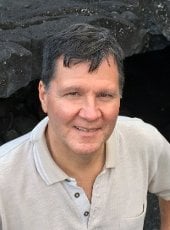
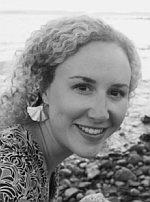
Dr. Vincent Roche is a Research Fellow at the University College Dublin in the School of Earth Sciences . His research focuses on structural geology, tectonics, and induced seismicity, with expertise in seismic interpretation and geomechanical modeling. Research Interests : 3D fault geometry and segmentation Induced seismicity mechanisms Fluid-rock interactions in fault zones Petrophysical and mechanical rock properties Geothermal system structural controls Scientific Contributions : Analyzed fault system evolution across multiple tectonic settings using high-resolution seismic data and field studies. Developed models for stress distribution in layered rocks and displacement transfer in conjugate fault systems. Awards : Marie Skłodowska-Curie Fellowship (2021-2023) under Horizon 2020 Professional Activities : Regular reviewer for journals including Environmental Earth Sciences , Geophysics , and SPE Journal . Utilizes geomodeling software such as Traptester, Move 3D, and Gocad for structural analysis.
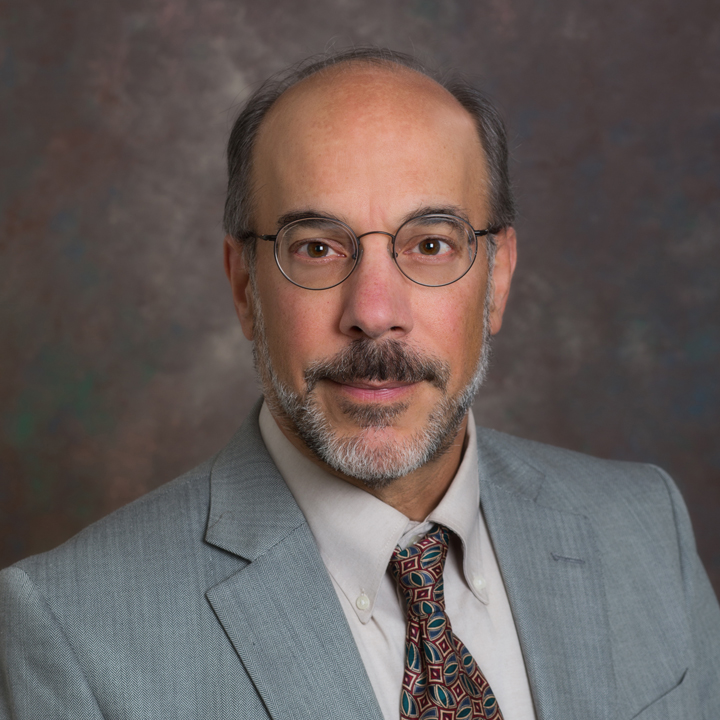
James M. DeGraff serves as a Research Professor in the Department of Geological and Mining Engineering and Sciences at Michigan Technological University. A Michigan Tech alumnus with BS and MS degrees, he also earned a PhD from Purdue University. After a distinguished career in the hydrocarbon industry with ExxonMobil, he returned to his alma mater to advance research and education in structural geology and reservoir characterization. His academic credentials include: PhD in Geology, Purdue University MS in Geophysics, Michigan Technological University BS in Geology, Michigan Technological University Dr. DeGraff's research centers on structural geology, tectonics, and fracture mechanics, particularly in the Midcontinent Rift System. He investigates fracture network formation, deformation timing, and fluid flow, integrating field, geophysical, and modeling approaches. His work bridges fundamental geological processes and practical applications in reservoir engineering, with a growing focus on automated data analysis techniques. Analysis of his recent publications (2018-2025) reveals a consistent focus on the Keweenaw fault system and Midcontinent Rift, utilizing LiDAR, aeromagnetic, and seismic data to unravel structural evolution and fracture patterns. This research has significant implications for understanding rift dynamics and optimizing hydrocarbon recovery in fractured reservoirs. Committed to education, Dr. DeGraff trains future geoscientists and has led research teams in industry and academia. His collaborative projects with reservoir engineers at ExxonMobil addressed complex fracture reservoir challenges, demonstrating the value of interdisciplinary approaches. He currently leads research initiatives at Michigan Tech that integrate field studies, geophysical data, and computational modeling to solve geological problems, continuing his legacy of impactful science and mentorship.
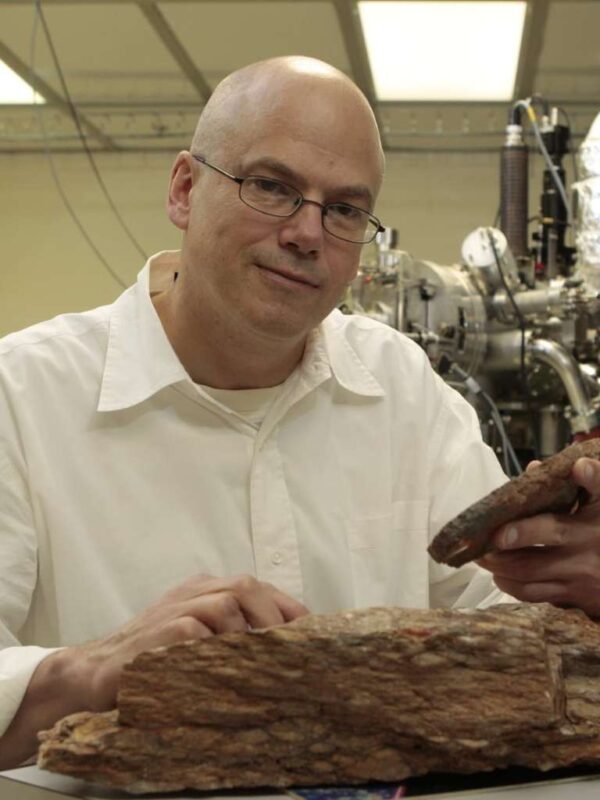
Fred Davis is an Associate Professor in the Swenson College of Science and Engineering at the University of Minnesota Duluth (UMD), where he directs the UMD Experimental Petrology Lab. His research centers on experimental investigations of magma generation and evolution in Earth's upper mantle. His work employs high-temperature experiments at atmospheric and elevated pressures to synthesize magmas and analyze mineral-melt chemical compositions. Key research thrusts include oxygen fugacity quantification in mantle peridotites, ferric iron partitioning during partial melting, and the geochemical records of ancient mantle processes. Recent studies focus on ultra-low oxygen fugacity signatures in refractory peridotites, Archean mantle oxygen records, and experimental constraints on Fe 3+ systematics across tectonic settings. Analysis of his 15 most recent publications (2022-2025) reveals dominant trends in mantle redox processes, with 87% examining oxygen fugacity in peridotites from mid-ocean ridges and oceanic islands. The work integrates experimental petrology with field observations to constrain mantle heterogeneity, melting histories, and melt-refertilization effects. No scientific awards were documented in the provided materials. Information regarding student advising, grant funding, and educational background was not included in the source texts. The UMD Experimental Petrology Lab remains active in generating high-pressure experimental data to model Earth's deep interior processes, with ongoing work extending through 2025 publications.
Grace Shephard is a Senior Researcher at the Center for Planetary Habitability , University of Oslo, and an Honorary Senior Lecturer at the Australian National University (ANU). Her research spans geodynamics, plate tectonics, mantle convection, and Arctic/North Atlantic geology, with a focus on deep-time reconstructions and science communication tools. She leads the NFR Young Researcher Talent project ' POLARIS – The Arctic in Deep Time ' (2021–2025) and has held visiting roles in Svalbard and Norway. Her expertise includes seismic tomography, dynamic topography, and open science graphics repositories like s-Ink.org . PhD in Earth Sciences, University of Sydney (2014) Postdoctoral roles at CEED (2014–2016), VISTA (2016–2018) Her research integrates global and regional plate tectonic reconstructions with mantle geodynamics, particularly in the Arctic, North Atlantic, and Pacific regions. Recent work explores crustal heterogeneity in Svalbard, mantle plume interactions, and accessible science graphics. She has co-authored 15+ peer-reviewed articles (2019–2025), including studies on the High Arctic Large Igneous Province and Svalbard's Paleozoic history. Notable awards include the Arne Richter Award for Outstanding Young Scientists (2016). Teaches AGx51 Arctic Tectonics and Volcanism (UNIS) and guest lectures in tectonics at UiO Supervises MSCA Fellow Dr. Amando Lasabuda and co-supervises PhD students Mesa Cala, Schneider, Sartell, and Chang Leads international outreach, including CEED outreach and social media coordination
Neil C. Sturchio is a Professor in the Department of Earth Sciences at the University of Delaware, affiliated with the Delaware Environmental Institute (DENIN). His research focuses on groundwater biogeochemistry, water-rock interactions, and isotopic tracer applications in hydrogeological systems. Education: Ph.D., Earth and Planetary Sciences, Washington University, 1983 B.A., Earth Sciences, Fairleigh Dickinson University, 1977 Sturchio's work integrates synchrotron radiation studies of mineral-fluid interfaces, isotopic analysis of groundwater systems, and environmental chemistry of contaminants. His recent publications highlight applications of isotopic tracers in aquifer sustainability, calcite dissolution-precipitation dynamics, and environmental impacts of stormwater and military activities. Scientific Awards: Geological Society of America Fellow, 1997 He leads the Environmental Isotope Science Laboratory and contributes to field studies in Egypt, the Great Lakes, and Arctic Alaska. His research has been supported by grants such as the ESTCP Project ER-201208.
Kaspar Jansen is a Professor at the College of Industrial Design Engineering, Delft University of Technology, specializing in Emerging Materials. His research bridges smart materials with applications in health, sports, and aerospace technologies. Core research areas: Smart Textiles, Soft Sensors, and Lunar Habitat Materials Key collaborations: TU Delft, 4TU.ResearchData Recent publications focus on: Medical Engineering: Patient-specific aorta replicas for hemodynamic analysis Space Systems: Rigidizable inflatable structures for lunar habitats Textile Electronics: Ladder-type heater current distribution models His work combines experimental validation with computational modeling across disciplines, including geomechanics and reservoir engineering. Activities include presentations on polymer film characterization, fault slip simulation, and seismicity mitigation.
Craig E. Manning is a Professor in the Department of Earth and Space Sciences at the University of California, Los Angeles (UCLA), where he has served as Vice-Chair since 2002. His academic journey began with a B.A. in Geology from the University of Vermont (1982), followed by an M.S. (1985) and Ph.D. (1989) in Geology from Stanford University. Dr. Manning's research spans metamorphic petrology, experimental petrology, and high-pressure aqueous geochemistry, with particular focus on hydrothermal systems, fluid-rock interactions in subduction zones, and tectonometamorphic evolution. His laboratory work investigates mineral solubility and fluid behavior at extreme pressures and temperatures that simulate conditions in the Earth's crust and upper mantle. His recent publications reveal a strong emphasis on carbon cycling in subduction zones, mantle wedge processes, and the behavior of hydrothermal fluids under extreme conditions. Current projects include high-pressure experiments investigating mineral dissolution in the lower crust and upper mantle, studies of mid-ocean ridge hydrothermal systems, and investigations of fluid flow in fossil hydrothermal systems. Scientific Recognition: Fellow, Mineralogical Society of America (2003) Corning Glass Science Fellow, Stanford University (1986-1987) Charles G. Doll Award for Excellence in Geology, University of Vermont (1982) Phi Beta Kappa (1982) Dr. Manning has mentored numerous graduate students working on diverse projects related to metamorphism, tectonics, and experimental studies of mineral-fluid systems. His research has been supported by significant grants that have enabled cutting-edge experimental work and field studies in locations ranging from the Samail Ophiolite in Oman to hydrothermal systems in western North America. His laboratory, the PTX Laboratory at UCLA, specializes in high-pressure experimental investigations of fluid-rock interactions, contributing significantly to our understanding of deep Earth processes and the geochemical cycling of elements through subduction zones.
Ali Bramson is an Assistant Professor in the Department of Earth, Atmospheric, and Planetary Sciences at Purdue University. Her research focuses on quantitative geomorphology of planetary surfaces, particularly ice and volatile processes on Mars, the Moon, and other solar system bodies. She utilizes spacecraft remote sensing, theoretical modeling, and field studies to understand planetary surface evolution. Bramson's work impacts in situ resource utilization for Mars exploration and future robotic missions. Education: Ph.D., Planetary Sciences with Geosciences minor (University of Arizona, 2018) M.S., Planetary Sciences with Geosciences minor (University of Arizona, 2015) B.S., Physics and Astronomy-Physics with Computer Science minor (University of Wisconsin-Madison, 2011) Research Interests: Bramson studies ice dynamics, volatile transport, and surface processes on Mars, the Moon, and icy moons. Her work combines remote sensing (e.g., radar, imaging) with laboratory experiments and fieldwork at terrestrial analog sites. Key topics include Martian mid-latitude ice stability, lunar hydration mechanisms, and cryovolcanism on outer solar system satellites. She explores questions like: How do polar ice caps evolve? What drives ice mass balance on Mars? How can planetary ice deposits support future exploration? Awards: Forward Under 40 Awardee (Wisconsin Alumni Association, 2019) Gerard P. Kuiper Memorial Award (2018) Lunar and Planetary Institute Career Development Award (2017) Advising & Grants: Bramson mentors graduate and undergraduate researchers in planetary science. Her group actively secures funding for Mars and lunar exploration studies, including NASA grants and collaborations with space agencies. Recent projects include ice mapping for Mars missions and lunar hydration studies using Mini-RF radar data. Labs/Teams: She collaborates with the Geodata Science Initiative and Purdue's Planetary Science group. Her research group (Bramson Research Group) emphasizes interdisciplinary approaches to planetary surface science and advocates for inclusive scientific environments.
Demian M Saffer is a Professor in the Department of Earth and Planetary Sciences and Director of the University of Texas Institute for Geophysics (UTIG), holding the Scott Petty Jr. Endowed Director’s Chair. He previously served as Department Head of Geosciences at Penn State University. His research focuses on active tectonics, fault mechanics, and geohydrology, with a focus on subduction zone dynamics, slow earthquakes, and fault slip behavior. Education: Ph.D. in Earth Sciences from UC Santa Cruz (summa cum laude B.A. in Geology from Williams College). He has led five International Ocean Discovery Program (IODP) expeditions, securing funding from NSF, ExxonMobil, Shell, and others. His work integrates geophysical observations, borehole monitoring, and laboratory experiments to study fault behavior in subduction zones. Research highlights include studies on the Hikurangi and Nankai subduction margins, exploring fluid dynamics, stress states, and slow slip events. UTIG leadership positions amplify his impact on advancing geophysical research and training next-generation scientists.
Eric Attias is a Research Professor at the Institute for Geophysics, Jackson School of Geosciences, The University of Texas at Austin. He also serves as a Guest Investigator at the Woods Hole Oceanographic Institution's Geology & Geophysics Department and an Affiliate Faculty at the University of Hawaii's School of Ocean and Earth Science and Technology. His research focuses on marine geohazards, lithosphere-biosphere interactions, and subsurface fluid dynamics using integrated geophysical techniques like marine electromagnetic (CSEM/MT) methods, seismic reflection, and oceanographic data. Key research areas include oceanic transform faults, methane hydrates, CO2 sequestration monitoring, and submarine freshwater reservoirs. His OCEEMlab group addresses environmental and societal challenges through high-resolution imaging of Earth’s subsurface structures. Eric's work bridges geophysics, marine geology, and environmental science to explore resource potential and geohazard mitigation strategies. His academic roles include advising postdoctoral researchers and students (details available in his CV) and collaborating with international institutions. He is affiliated with multiple geophysical organizations and has contributed to advanced marine instrumentation development for shallow-water and deep-sea surveys. Contact: attias@ig.utexas.edu | Office: ROC 3.258 | Mailing Address: Jackson School of Geosciences, 2305 Speedway, Austin, TX 78712
Benjamin Keisling is a Research Assistant Professor at the Institute for Geophysics, part of the Jackson School of Geosciences at the University of Texas at Austin. His research focuses on ice sheet dynamics, particularly in Greenland and Antarctica, integrating numerical models with geological archives to understand past climate changes and their implications for future scenarios. He holds a PhD and MS from the University of Massachusetts Amherst and a BA from Saint Olaf College. Keisling is also deeply committed to advancing justice and equity in geoscience, leading initiatives such as the Columbia Climate Conversations and serving on diversity task forces. PhD in Geosciences, University of Massachusetts Amherst, 2020 MSc in Geosciences, University of Massachusetts Amherst, 2015 BA in Physics, Saint Olaf College, 2013 Research Interests Keisling’s research explores the mechanisms driving ice sheet changes over geological timescales, using both computational models and field data. He investigates how past ice sheet responses to climate shifts can inform modern predictions. Additionally, he is a vocal advocate for diversity, equity, and inclusion (DEI) in geoscience, working to create equitable educational and professional environments through initiatives like the Second National Conference on Justice in Geoscience and the Lamont-Doherty Earth Observatory’s DEI Task Force. His work bridges climate science and social justice, emphasizing the importance of inclusive practices in scientific communities. Awards & Recognition Presidential Citation, American Geophysical Union (2020) UMass CNS Excellence in Diversity & Inclusion Award (2020) Lamont-Doherty Postdoctoral Fellowship (2020–2022) IODP Post Expedition Award (2018) NSF Graduate Research Fellowship (2014–2019) Grants & Advising Keisling has secured several fellowships, including the NSF Graduate Research Fellowship and the NSF GROW Fellowship. He mentors students on DEI initiatives and geoscience research, including Earth Institute interns focusing on climate conversations and diversity in geoscience. Labs & Collaborations Associated with the Institute for Geophysics at UT Austin and previously with Lamont-Doherty Earth Observatory, Keisling collaborates on projects involving ice sheet modeling and DEI task forces.
Lorena G Moscardelli is the Director of the Bureau of Economic Geology and State Geologist of Texas at The University of Texas at Austin's Jackson School of Geosciences. She holds the Edwin Allday Endowed Chair in Subsurface Geology. Her roles include co-chairing the executive council for the Kay Bailey Hutchison Energy Center and advising the NCS2030 program in Norway. With over 15 years of industry and academic experience, she co-founded the Quantitative Clastic Laboratory (QCL) in 2007. Education: B.S. in Geological Engineering from Central University of Venezuela; Ph.D. in Geological Sciences from The University of Texas at Austin. Her research focuses on subsurface geology, salt tectonics, and energy transition technologies. She bridges academia and industry through projects like the State of Texas Advanced Resource Recovery (STARR) program. Research interests include hydrogen storage in salt caverns, CO2 sequestration via enhanced oil recovery, and paleoenvironmental studies of Gulf Coast sedimentary systems. Her work emphasizes safe, efficient subsurface utilization for renewable and conventional energy systems. Notable contributions include developing methodologies for assessing salt structure stability, advancing understanding of Jurassic redox cycles in the North Sea, and pioneering geophysical tools for subsurface storage capacity evaluation. She has advised multiple postdoctoral researchers and led large-scale energy infrastructure projects. Labs/Teams: Co-directs the Quantitative Clastic Laboratory (QCL), part of the Bureau of Economic Geology's energy transition initiatives. Active in interdisciplinary collaborations through the IGCP-640 S4SLIDE program studying submarine landslides.
Elvira Mulyukova is an Assistant Professor in the Department of Earth, Environmental, and Planetary Sciences at Northwestern University’s Weinberg College of Arts & Sciences. She specializes in geodynamic modeling, focusing on microphysical processes governing planetary evolution. Her work bridges atomic-scale mineral grain physics with global-scale mantle dynamics, emphasizing the interplay between lithospheric deformation and tectonic plate boundary formation. She holds a Ph.D. in Geophysics from GFZ German Research Centre for Geosciences (Potsdam, Germany) and completed her M.S. and B.S. in Physics at the University of Oslo (Norway). Her research explores how microscale mechanisms like grain damage and phase mixing influence Earth’s climate stability and biological evolution through tectonic activity. She also investigates planetary habitability, particularly for Venus, by analyzing CO₂ regulation and tectonic regime impacts. No scientific awards or grants are explicitly mentioned in the text. Dr. Mulyukova collaborates with colleagues like D. Bercovici on interdisciplinary projects, such as the Subduction Zone Initiation Database. Her advising activities and associated labs/teams are not detailed in the provided information.
Dr. Maxim Ballmer is an Associate Professor in Geodynamics at the Department of Earth Sciences, University College London. His research focuses on planetary mantle dynamics, numerical modelling of mantle convection, and the interplay between geophysical observations and geochemical data. He investigates processes such as magma ocean crystallization, mantle plume dynamics, and exoplanet interior evolution. He teaches courses including GEOL0057 Geodynamics & Global Tectonics and contributes to courses like The Earth and Field Geophysics. His research groups include Crust Dynamics & Evolution and Planet Dynamics and Evolution. Dr. Ballmer’s work bridges geodynamics and exoplanet studies, exploring how mantle structures influence surface processes like volcanism and tectonics. His recent studies analyze seismic discontinuities, mantle plume buoyancy, and exoplanet compositional constraints. Key research themes include Martian mantle stratification, Hawaiian plume dynamics, and the long-term evolution of terrestrial planets. He has published extensively on mantle mineralogy, thermochemical heterogeneity, and the implications of strain-weakening rheology in the lower mantle.
Dr. Emma "Mickey" MacKie is an Assistant Professor in the Department of Geological Sciences at the University of Florida. Her research focuses on glaciology, geophysics, and geostatistics, with an emphasis on understanding subglacial environments beneath ice sheets. She leads the Gator Glaciology lab, which develops machine learning tools and geostatistical methods to study ice dynamics and subglacial topography. MacKie holds a Ph.D. in Geophysics from Stanford University (2021). Her work addresses challenges in ice sheet modeling, including uncertainties in subglacial topography and hydrology. Recent projects include Bedmap3 datasets, stochastic simulations of ice sheet evolution, and analysis of Antarctic calving events using extreme value theory. Her research highlights include advancing geostatistical techniques for subglacial modeling, analyzing multi-decadal radar data, and investigating climate impacts on ice sheets. She collaborates on FAIR data initiatives and has contributed to software tools like GStatSim for geostatistical simulations. MacKie actively engages in Antarctic and Greenland fieldwork, emphasizing interdisciplinary approaches to glaciological challenges.