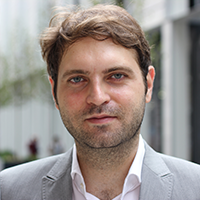
Dr. Florian Foos is an Associate Professor in Political Behaviour at the LSE's Department of Government, affiliated with the LSE Data Science Institute and Electoral Psychology Observatory. He holds a D.Phil from Nuffield College, Oxford. His research focuses on partisan election campaigns using randomized field experiments to study electoral mobilization, opinion change, and political activism. Key interests include social influence in political networks, media effects, and campaign strategies. He has published in top journals like the American Political Science Review and American Journal of Political Science. Current projects include the Register to Vote '21 initiative testing voter registration methods. He teaches experimental methods and political behavior, and co-organizes the European Workshop in Empirical Political Science (EuroWEPS). Research highlights include analyzing tabloid media's impact on Euroscepticism, the role of partisan cues in mobilization, and subnational representation effects. His work combines experimental designs with quasi-experimental methods, emphasizing causal inference. Collaborations span institutions like King's College London and German parliamentarians. He advises on policy experiments and serves on academic advisory boards.
Gaetano Valenza is an Associate Professor of Bioengineering at the University of Pisa, Italy, where he leads the Neuro-Cardiovascular Intelligence Lab at the Enrico Piaggio Research Centre. He holds affiliations with the Neuroscience Statistics Research Laboratory at MIT and has served as a Research Fellow at Harvard Medical School and Massachusetts General Hospital. His academic work spans bioengineering, computational physiology, and affective computing. His research focuses on statistical and nonlinear biomedical signal and image processing , cardiovascular and neural modeling , and physiologically interpretable artificial intelligence . He develops wearable systems for physiological monitoring, with applications in autonomic nervous system assessment, brain-heart interactions, and mental health. His work has led to novel metrics such as the Sympathetic and Parasympathetic activity indices derived from ECG. The 15 most recent publications reflect a consistent trend in brain-heart interplay , complexity analysis of physiological signals , explainable AI in healthcare , and virtual reality applications in mental health . His work integrates advanced signal processing, nonlinear dynamics, and machine learning to decode emotional and cognitive states from physiological data. Dr. Valenza is a Senior Member of IEEE and serves on several technical committees. He is an active editorial leader, currently serving as Associate Editor for IEEE-EMBC , Plos One , Complexity , and Scientific Reports , and has guest-edited special issues in Philosophical Transactions of the Royal Society A and IEEE Journal of Biomedical and Health Informatics . He has led or participated in numerous international research projects, including FP7 and H2020 initiatives such as NEVERMIND and EXPERIENCE. He teaches courses in Biostatistics, Probability & Biostatistics, and Advanced Image Processing at the University of Pisa. As lab head and project coordinator, he leads a multidisciplinary team working on neuro-cardiovascular intelligence, wearable systems, and AI-driven mental health interventions.
Prof. Dr. Amelie Hagelauer holds a professorship in Micro- and Nanosystem Technology at the TUM School of Computation, Information and Technology, Technical University of Munich. Her work focuses on advanced electronics and systems integration across quantum computing hardware, resistive memory technologies, and high-frequency RF systems. She has contributed to innovations in superconducting qubit readout architectures, multi-level RRAM designs, and 3D-integrated CMOS-compatible quantum devices. Research interests span quantum hardware design, nanoelectronic devices, RF front-end systems, and emerging memory technologies. Her work emphasizes practical implementation challenges such as low-power operation, high-voltage handling in RF switches, and wafer-scale fabrication processes. Recent projects include D-band radar systems, energy-efficient 60 GHz transceivers, and antenna tuning solutions for 5G applications. Publications from 2023-2025 showcase advancements in resistive switching device characterization, mitigation of TLS losses in superconducting qubits, and reconfigurable AI accelerators using RRAM-based digital twins. Her work bridges theoretical device physics with practical integrated circuit design, addressing scalability and reliability in next-gen electronics. Awards and grants: None explicitly listed in provided texts. Active collaborations include EU-funded projects on quantum computing platforms and TUM's Electronic Photonic Integration initiatives. Leads research teams in microsystem technology with emphasis on cross-disciplinary approaches combining CMOS processes, MEMS, and quantum engineering.
Prof. Dr. Johannes Sauer is a Professor at the Technical University of Munich (TUM), holding dual affiliations with the TUM School of Management and the TUM School of Life Sciences . His academic focus is on production and resource economics, with expertise in agricultural sustainability, policy evaluation, and circular economy strategies in Asia-Pacific and Latin America. Education: Bachelor’s/Master’s in Agricultural Economics from Universities of Tübingen, Hamburg, and Imperial College London. Doctorate (summa cum laude) in Agricultural Economics from the University of Bonn (2004). Research Interests: Prof. Sauer’s work spans productivity and resilience in agricultural systems, adoption of sustainable technologies, water resource valuation, and bioeconomic trends. He emphasizes smart technologies and circular economy applications in developing regions. His research employs econometric methods to analyze policy impacts and environmental-economic trade-offs. Key Trends in Publications: Recent articles highlight climate-smart agriculture, ICT adoption in rural China, and agroforestry’s role in reducing ecological-economic trade-offs. He explores behavioral drivers of policy participation and innovative tools like the IoFarm decision support system. Awards: 2021 Honorary Professorship at ANU OECD Fellow Awards (2010, 2016) Best Paper Awards (2008–2015) Consulting & Roles: OECD and Asian Development Bank consultant, ESRC Peer Review College member, and liaison lecturer for the German National Academic Foundation. He advises on agri-environmental policies and international development. Labs/Teams: Active in collaborative projects such as PONDERFUL Framework and IPM Popilia , focusing on nexus research and pest management strategies.
Charles A. Bouman is the Showalter Professor of Electrical and Computer Engineering and Biomedical Engineering at Purdue University, with a courtesy appointment in Mathematics. He is a leading researcher in computational imaging, integrating statistical signal processing, physics, and computation for applications in healthcare, scientific, and industrial imaging. Education: B.S.E.E., University of Pennsylvania, 1981 M.S., University of California at Berkeley, 1982 Ph.D. in Electrical Engineering, Princeton University, 1989 His research focuses on computational imaging , including statistical image models, multiscale techniques, tomographic reconstruction, and fast algorithms. Key areas include Model-Based Iterative Reconstruction (MBIR), Plug-and-Play priors, document processing, and multiscale segmentation. His work has led to foundational contributions in total variation regularization and sparse-view reconstruction. The recent publications highlight a strong trend in integrating machine learning with physical models for image reconstruction, particularly through Plug-and-Play methods. His work spans optical tomography, halftoning, image scaling, and document compression, demonstrating consistent innovation in both theory and practical software implementation. Scientific Awards and Honors: Member, National Academy of Inventors Life Fellow, IEEE Fellow, IS&T; Honorary Member (2022); Service Award (2023) Fellow, SPIE and AIMBE IEEE Signal Processing Society Claude Shannon-Harry Nyquist Award (2021) Electronic Imaging Scientist of the Year (2014) SIAM Imaging Science Best Paper Prize (2020) Founder, IS&T Computational Imaging Conference (2003) Co-Founder, IEEE Transactions on Computational Imaging Vice President, IS&T; Former VP of Publications (2000–2004) Bouman has advised numerous graduate students and leads a vibrant research group developing open-source tools like MBIRJAX , SVMBIR , and OpenMBIR . His research has been supported by the National Science Foundation, General Electric, Intel, Xerox, Hewlett-Packard, and the State of Indiana 21st Century Fund. He maintains an active presence through tutorials, conference leadership, and educational resources including video lectures and a textbook on Foundations of Computational Imaging. Labs and Research Teams: His group develops cutting-edge software for tomographic reconstruction, clustering, segmentation, and dynamic sampling. Projects include Gaussian Mixture modeling (GMCluster), Plug-and-Play implementations, Sparse Matrix Transforms, and UAV sensing datasets. The research is highly interdisciplinary, bridging engineering, mathematics, and biomedical applications.
Arjan F. Kirkels is an Assistant Professor and University Lecturer in the Department of Technology, Innovation & Society within the School of Industrial Engineering and Innovation Sciences at Eindhoven University of Technology (TU/e). His work focuses on sustainability assessments, decision-making in transitions, and interdisciplinary education for sustainable innovation. His research interests include Life Cycle Assessment (LCA), Multi-Criteria Assessment (MCA), sustainability transitions, industrial ecology, and systems engineering. He applies these to emerging technologies such as batteries, hydrogen systems, and heat pumps, with a strong emphasis on integrating stakeholder values and addressing deep uncertainties in sustainability decisions. The recent articles highlight a consistent focus on assessing emerging technologies, particularly in renewable energy and circular economy applications. Trends include prospective LCA, experience curves in solar technology, socio-technical impact assessment, and educational innovations in sustainability. His work bridges technical analysis with social and governance dimensions of sustainability transitions. Best Teacher Award, 1st year Bachelor Sustainable Innovation, for course 0SV20 'Industrial Ecology' (2013) Best Teacher Award, 1st year Bachelor Sustainable Innovation, for course 0SV20 'Industrial Ecology' (2018) Best Teacher Award, 1st year Bachelor Sustainable Innovation, for course 0SV20 'Industrial Ecology' (2020) Educational award nomination, bachelor Sustainable Innovation, course 0SK30 Inter-University Sustainability Challenge (2023) Education Award 2024 - master Innovation Sciences (2025) Arjan F. Kirkels has supervised over 100 thesis students and more than 100 interdisciplinary student groups. He has developed and taught over 20 courses and co-authored 4 textbooks and 7 publications on educational innovation. He is currently supervising four researchers: Huiying Liu, Prapti Maharjan, Rishi Bhatnagar, and Seyed Mousavi. His research is supported by projects such as the EU-funded cVPP (Community-based Virtual Power Plant) and studies on Dutch sustainability transitions. He is actively involved in educational initiatives, including MOOC development and challenge-based learning, and contributes to public discourse through media appearances and workshops on sustainability education and systems thinking.
Mazdak Nik-Bakht is an Associate Professor at Concordia University's School of Building, Civil, and Environmental Engineering. His work bridges construction engineering with digital innovation, focusing on smart infrastructure and sustainable development. PhD, Construction Engineering & Mgmt., University of Toronto PhD, Structural Engineering, Iran University of Science & Technology MASc & BASc, Structural and Civil Engineering, Iran University of Science & Technology His research integrates Artificial Intelligence and Social Network Analysis into construction management systems. Key areas include: Smart infrastructure and urban computing Deconstruction and circular economy principles Building Information Modeling (BIM) and digital twinning Process mining in Architecture, Engineering, and Construction (AEC) industry Decision models in construction project management Semantic computing and computational linguistics applications Recent publications show a focus on BIM analytics , urban resilience , and social media's role in infrastructure planning . Papers often combine AI and network theory to solve complex construction challenges. 2015 Outstanding paper award - Built Environment Project and Asset Management journal He teaches courses on: Big Data Analytics for Smart City Infrastructure Building Information Modeling (BIM) for Construction Building Economics Project Cost Estimating
Dr. Zara Ersozlu is a Senior Lecturer in Mathematics Education within the School of Education at the University of Newcastle, Australia. With a distinguished international career spanning multiple continents, she has held academic positions at prestigious institutions including North Carolina State University (USA), Gazi and Gaziosmanpasa Universities (Turkey), National Taiwan Normal University (Taiwan), The University of Western Australia, Murdoch University, and Deakin University. Her academic journey includes tenured positions as an Associate Professor and leadership roles as Department Head and Chair in teacher education disciplines. Currently, she teaches undergraduate and postgraduate courses in mathematics education, including Effective Pedagogies in Primary Mathematics, K-6 Mathematics, K-6 Numeracy, and Digitally Supported Learning. Dr. Ersozlu earned her Doctor of Philosophy from Firat University in Turkey and her Master of Art from Sakarya University. Her extensive academic preparation is complemented by five years of practical teaching experience in public schools prior to entering academia. This blend of theoretical knowledge and practical classroom experience informs her approach to teacher education and educational research. At the broadest level, Dr. Ersozlu's research investigates solutions to real-life problems impacting people's well-being, success, and capacity to achieve. Her scholarly work spans primary and secondary mathematics education, the psychology of mathematics (including metacognition, self-regulation, and anxiety), cross-cultural educational studies, teacher education, virtual simulated learning environments, and educational assessment. She has increasingly focused on the transformative potential of AI and machine learning in education, exploring how these technologies alter teaching, learning, and research processes. Her methodological expertise encompasses both quantitative and qualitative approaches, allowing her to effectively analyze both small and large educational datasets. Analysis of Dr. Ersozlu's recent publications reveals a strong emphasis on mathematics anxiety, teacher education, and the integration of technology in learning environments. Her work demonstrates a consistent focus on practical applications of educational research to address real-world challenges in mathematics education. The interdisciplinary nature of her research connects educational psychology, technology integration, and cross-cultural perspectives, with particular attention to how these elements intersect in teacher preparation and student learning outcomes. 2023 ATEA Research Recognition Award from the Australian Teacher Education Association 2021 Fellow of the Higher Education Academy (Advance HE, UK) 2010 Fellowship Program for Postdoctoral Researchers from the Council of Higher Education of Turkey Dr. Ersozlu is deeply committed to mentoring the next generation of scholars, currently supervising four PhD students and having successfully guided ten students to completion. Her grant portfolio includes significant funding for projects such as Best Practice Guidelines for RPL in Initial Teacher Education Programs ($60,000), Exploring the Reciprocal Relationship Between Mathematics Anxiety and Mathematical Resilience ($2,599), and multiple conference travel awards. She serves as an Associate Editor for several prominent journals including the International Electronic Journal of Mathematics Education and as Editor for Interdisciplinary STEM Education. Her editorial work reflects her standing as a respected voice in mathematics education research. Dr. Ersozlu's academic leadership extends to her role in developing innovative teaching approaches that integrate virtual simulation technology and learning analytics. Her work with TeachLivE™, a mixed-reality classroom simulation platform, demonstrates her commitment to creating authentic learning experiences for teacher education students. Through these initiatives, she bridges the gap between educational theory and classroom practice, preparing future educators to effectively implement evidence-based teaching strategies in diverse learning environments.
Dr. Jennifer Jenson serves as Professor of Digital Languages, Literacies, and Cultures within the Department of Language and Literacy Education at the University of British Columbia's Faculty of Education. She joined UBC in January 2019 after 18 years at York University, where she directed the Institute for Research on Digital Learning. Her academic leadership extends to co-editing Loading: The Journal of the Canadian Game Studies Association and past presidency of the Canadian Game Studies Association. Dr. Jenson holds a Ph.D. from Simon Fraser University. Her research program critically examines digital games, literacies, and pedagogical practices through lenses of gender, equity, and decolonization. She has conducted longitudinal studies on gender and digital gameplay, developed educational games through the Play:CES lab, and authored influential reports for the Ontario Ministry of Education including “21st Century Skills, Technologies and Learning”. Her publication trajectory (2015-2023) reveals consistent focus on regendering game cultures, multimodal learning frameworks, and computational literacy in youth media engagement. Work spans critical analysis of “The Entrepreneurial Gamer” concept to contemporary digital literacies in multimodal contexts, emphasizing how game-based learning can disrupt exclusionary practices while advancing inclusive education. No scientific awards were explicitly documented in the source materials. Dr. Jenson maintains active graduate supervision, currently advising doctoral candidates like Laura Brass researching immigrant women language teachers’ identities. Her sustained research funding includes leadership of the international SSHRC Partnership Grant “Re-Figuring Innovation in Games” (2015-2021) and SSHRC Insight Grant “Think, Design, Play” (2014-2020), with collaborations spanning school boards, technology companies, and global institutions like SRI International and Nottingham University. She co-founded the CFI-funded Play:CES lab where teams developed educational games including “Contagion” and “Epidemic: Self-Care for Crisis”, and currently leads the Re-Figuring Innovation in Games (ReFiG) collective – an international consortium of scholars, community organizers, and industry partners dedicated to transforming game culture through equity-centered innovation.
Natalie T. Wood, PhD (Auburn University, 2002), is a Professor of Marketing and Associate Dean at Saint Joseph’s University’s Haub School of Business. Her expertise spans consumer behavior and social media marketing, with a focus on digital engagement and virtual environments. PhD, Auburn University (2002) GradDip in Marketing, Edith Cowan University (1999) BBus in Marketing, Edith Cowan University (1996) Her research explores social media’s influence on consumer trends, political marketing, themed hospitality authenticity, and virtual education. Key journals include Journal of Consumer Behaviour and Business Horizons . Recent publications analyze microblogging’s role in customer service and brand promotion. Notable awards: Saint Joseph’s University Faculty Merit Award for Teaching (2013) and Research (2007). Grants from Arrupe Center (2019) and Direct Selling Education Foundation (2010-2011) highlight her funded work. Professional roles include Assistant Director, Center for Consumer Research (2007-2011).
Nicolas Federico Martin is an Associate Professor in the Department of Crop Sciences at the University of Illinois at Urbana-Champaign, with additional appointments as Associate Professor in the Center for Latin American and Caribbean Studies, Center for Digital Agriculture, and the National Center for Supercomputing Applications (NCSA). His interdisciplinary work bridges traditional agricultural science with cutting-edge computational approaches. Dr. Martin's research focuses on the intersection of agriculture and data science, with particular emphasis on: Precision agriculture and on-farm experimentation methodologies Machine learning applications for crop management and yield prediction Nitrogen and nutrient management optimization Soybean and corn breeding and production systems Remote sensing and UAV applications in agriculture Sustainable agricultural practices including cover crop management His publication record demonstrates a clear trajectory toward increasingly sophisticated integration of artificial intelligence with agricultural science. Recent work shows heavy emphasis on using machine learning algorithms (particularly reinforcement learning, convolutional neural networks, and generalized additive models) to solve practical farming challenges related to crop management decisions, yield prediction, and resource optimization. This research has significant implications for both scientific understanding of crop-environment interactions and practical farm management. Dr. Martin actively collaborates across disciplines and institutions, as evidenced by his extensive co-authorship network spanning agronomy, computer science, environmental science, and economics. His work has garnered attention from numerous news outlets and social media platforms, indicating its relevance to current agricultural challenges. He is a key contributor to the Data-Intensive Farm Management project, which aims to transform agronomic research through on-farm precision experimentation. His affiliation with NCSA provides access to high-performance computing resources essential for processing large agricultural datasets. Additionally, his work in Latin American agriculture (particularly in Mexico and Argentina) reflects his commitment to addressing global food security challenges.
Dr. Xiaodong Lin is a Professor at the University of Guelph's School of Computer Science and an IEEE Fellow (2017) for contributions to secure vehicular communications. He leads the Blockchain Technology and Cybersecurity (BTC) lab, focusing on privacy-enhancing technologies, digital forensics, wireless network security, blockchain applications, and DeFi security. PhD, Beijing University of Posts and Telecommunications, China PhD, University of Waterloo, Canada His research bridges theoretical and applied domains in cybersecurity, particularly vehicular networks, smart grids, and decentralized systems. Recent work examines blockchain security, privacy-preserving protocols for IoT, and secure data aggregation in wireless networks. Key publication trends include secure fog computing for vehicular crowdsensing, privacy-preserving authentication in 5G, and cryptographic solutions for smart grids. Awards highlight multiple Best Paper recognitions at IEEE conferences. IEEE Fellow (2017) Best Paper Awards (IEEE INFOCOM 2018, GLOBECOM 2017, SECURECOMM 2016) Dr. Lin supervises graduate students in blockchain security, AI security, and digital forensics. His lab provides financial support to qualified students.
Joshua B. Guild is an Associate Professor in the Department of African American Studies at Princeton University. He is also an Associated Faculty member in the Program in Urban Studies and has been involved with the Center for Digital Humanities. His scholarly work bridges historical research with public engagement and digital innovation. His education includes a PhD in History and African American Studies from Yale University and an undergraduate degree from Wesleyan University, where he was a Mellon Mays Undergraduate Fellow. Professor Guild's research centers on 20th- and 21st-century African American social and cultural history, urban history, and the modern African diaspora. His interests include migration, black internationalism, black popular music, and the black radical tradition. He is deeply engaged in the digital humanities and public scholarship, organizing seminars and contributing to podcasts and public exhibitions. The recent publications and projects reflect a strong focus on urban Black communities, transnational migration, and cultural politics. Themes include the Great Migration, postwar New York and London, New Orleans after Katrina, and the Black 1980s. His work combines historical analysis with cultural critique and social justice advocacy. Scientific Awards and Fellowships: Mellon Mays Undergraduate Fellowship Andrew W. Mellon Foundation Fellowship Ford Foundation Fellowship Woodrow Wilson National Fellowship Foundation Award Charles Warren Center Fellowship (Harvard University) W.E.B. Du Bois Institute Fellow (Harvard University) Professor Guild has advised graduate students through seminars and collaborative projects, though no individual students are named. He has led initiatives supported by institutional grants, particularly in digital humanities and public engagement. His leadership in the 'Black Studies in the Digital Age' seminar and editorial work on the 'Black 1980s' special issue demonstrates his commitment to advancing the field through interdisciplinary collaboration. He is affiliated with the Program in Urban Studies and the Center for Digital Humanities at Princeton, where he contributes to shaping curricula and research directions in African American Studies and digital scholarship.
Mark Coeckelbergh is a Professor of Philosophy at the University of Vienna, specializing in the philosophy of technology, AI ethics, and robot ethics. He is affiliated with the Department of Philosophy and the Research Network Data Science at the University of Vienna. In addition to his academic position, Coeckelbergh has held significant roles including Former President of the Society for Philosophy and Technology (SPT) and Member of the European Commission's High-Level Expert Group on Artificial Intelligence (AI HLEG). His research focuses on the ethical, political, and philosophical implications of emerging technologies, particularly artificial intelligence and robotics. Coeckelbergh has published extensively in these areas, authoring influential books such as Robot Ethics (2022), The Political Philosophy of AI (2022), and Why AI Undermines Democracy and What To Do About It . His work explores how AI systems affect democratic processes, human agency, and social relationships. Recent publications demonstrate a strong focus on the relationship between AI, democracy, and ethical governance, examining how AI systems can both threaten and potentially enhance democratic processes through algorithmic transparency and participatory design approaches. Finalist of the World Technology Award 2017 Coeckelbergh teaches various courses including 'Introduction to Philosophy of LLMs,' 'LLMs and the Future of Writing,' 'Ethics and Robotics,' and 'Global Governance of AI.' He has supervised numerous students working on topics related to technology ethics and philosophy. He has been involved in several major research projects including H2020 PERSEO, WWTF Democracy Responsible Entrepreneurship, and FP7 DREAM (Development of Robot-Enhanced therapy for children with Autism spectrum disorders). Coeckelbergh has also announced upcoming guest professorships at the Institute of Philosophy of the Czech Academy of Sciences and Uppsala University, where he will work on environmental and technology ethics projects.
Nallan C. Suresh is the Associate Dean for Faculty, Research and Centers and a SUNY Distinguished Professor in the Operations Management and Strategy department at the School of Management, University at Buffalo . His work bridges academic research with industry practice, focusing on manufacturing systems, supply chain agility, and sustainable operations. PhD , University of Cincinnati MBA , McMaster University, Canada BTech , Indian Institute of Technology Suresh's research spans cellular manufacturing , flexible automation , forecasting models , and reverse supply chains . He has pioneered frameworks for evaluating manufacturing systems and optimizing supply chain agility through empirical and simulation-based studies. Recent publications emphasize sustainability and disruptive technologies in supply chains, including reverse logistics for plastics recycling and agile responses to catastrophic events using data analytics. His work integrates DEA models , neural networks , and policy analysis . Summer Research Fellowship, University at Buffalo Joseph T.J. Stewart Faculty Scholar Alfred V. Bodine/SME Award for Machine Tool Economics Cleveland Foundation Grant for High Technology Firms Suresh has secured grants totaling over $145,000, advised numerous students, and contributed to global research through empirical studies in the Netherlands and executive training in China/Latvia. His consulting spans automotive, electronics, and manufacturing sectors.