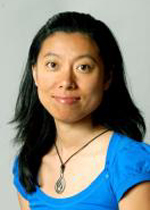
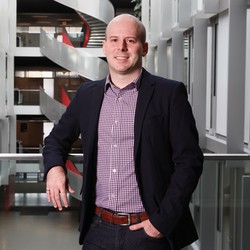
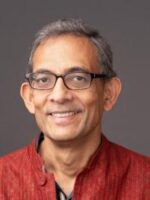
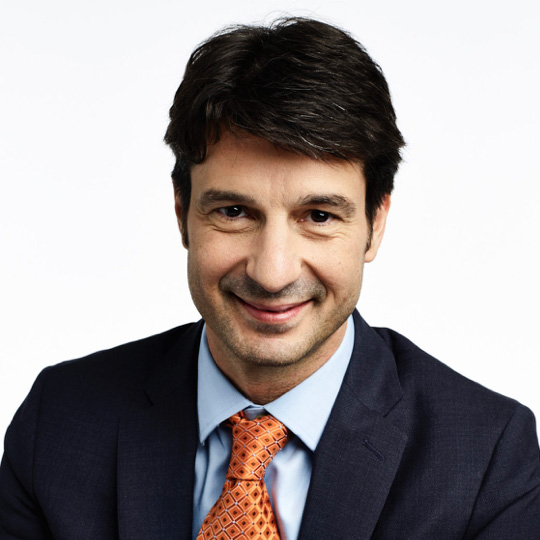
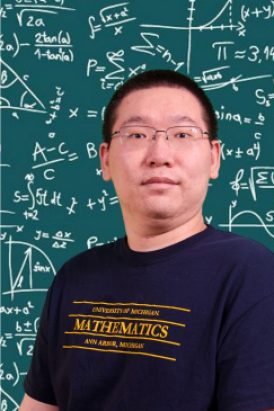
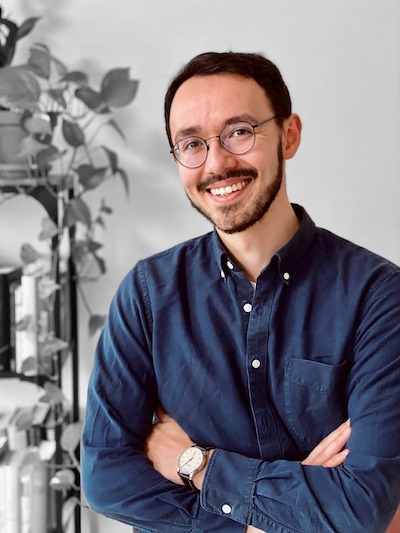
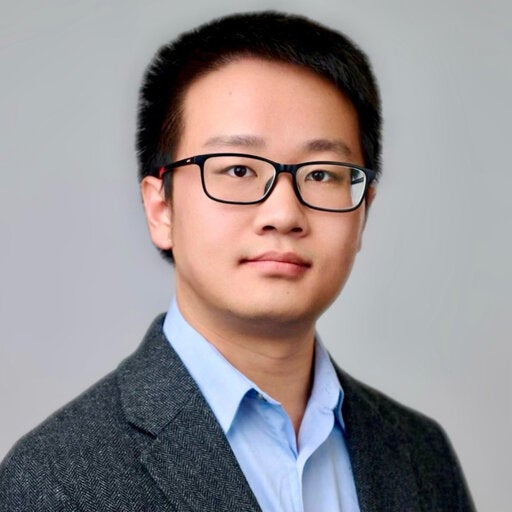
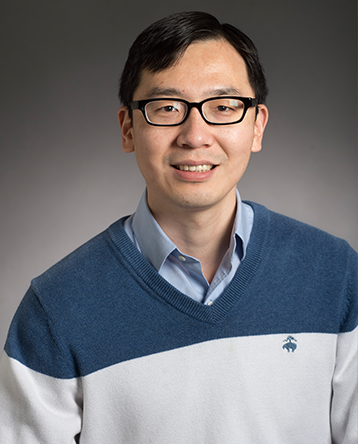
Jacob Eyferth is an Associate Professor at the University of Chicago, jointly appointed in the Department of East Asian Languages and Civilizations, the Department of History, and the College. His research focuses on the social and cultural history of twentieth-century China, particularly rural communities, gender dynamics, and the intersection of technology and everyday life. Key research themes include the impact of industrialization, collectivization, and revolution on non-elite populations, with an emphasis on rural women's labor and cultural resistance. His current project explores cotton production, clothing, and gender during China's socialist era. Eating Rice from Bamboo Roots (2009) How China Works (2006) Rural Development in Transitional China (2004) He received the 2011 Joseph Levenson Prize for his first book. Eyferth has taught courses on topics such as class inequality, everyday life under socialism, and revolutionary China, and has held postdoctoral fellowships at Oxford, Harvard, and Rutgers.
Dawn Song is a Professor in the Department of Electrical Engineering and Computer Science at the University of California, Berkeley, affiliated with multiple research centers including the Berkeley Artificial Intelligence Research Lab (BAIR) and the Berkeley Center for Responsible, Decentralized Intelligence (RDI). She holds leadership roles in AI safety, cybersecurity, and blockchain research. Her work bridges machine learning, security, and distributed systems, with notable contributions to formal verification, privacy-preserving technologies, and AI governance. Education: Ph.D. (2002) and M.S. (1999) in Computer Science from UC Berkeley and Carnegie Mellon University, respectively. She previously served as an Assistant Professor at Carnegie Mellon University before joining UC Berkeley in 2007. Research Interests: Dawn's work focuses on AI safety, cybersecurity, and the ethical implications of frontier AI. She explores topics such as large language model vulnerabilities, zero-knowledge proofs, blockchain security, and policy frameworks for AI governance. Her research combines theoretical rigor with practical applications, addressing challenges in secure systems, adversarial machine learning, and privacy-preserving computation. Publications: Her recent work includes groundbreaking studies on LLM memorization, smart contract decompilation, and AI agent cybersecurity evaluation. She also leads initiatives like the Singapore Consensus and California Report on AI safety priorities, emphasizing global collaboration in risk mitigation. Notable Awards: MacArthur Fellowship (2010), ACM Fellow (2019), IEEE Fellow (2019) Advising & Grants: She advises projects on AI policy and cybersecurity, securing grants from NSF, DARPA, and industry collaborations. Her lab develops tools like CyberGym for evaluating AI agents and zkPyTorch for secure machine learning. Labs & Teams: Her research groups at UC Berkeley focus on cutting-edge projects in AI safety, blockchain, and cybersecurity, collaborating with industry leaders and policymakers to advance both technical and ethical standards.
Jean Oh is a Researcher at the Robotics Institute of Carnegie Mellon University (CMU) , leading the interdisciplinary Bot Intelligence Group (BIG) . Her work focuses on developing persistent robots that co-exist and collaborate with humans in shared environments, emphasizing continuous improvement through training, exploration, and human interaction. Education: Ph.D. in Language and Information Technologies, CMU M.S. in Computer Science, Columbia University B.S. in Biotechnology, Yonsei University Oh's research integrates vision, language, and planning systems in robotics, with applications in human-robot teaming , self-driving cars , disaster response , eldercare , and creative robotics . She has pioneered projects like socially-compliant robot navigation in human crowds and AI-driven robotic painting systems. Recent publication trends highlight her work in vision-language planning , social navigation , computational creativity , and human-robot collaboration . Notable contributions include the StyleCLIPDraw algorithm for text-to-art generation and Social-PatteRNN for human-like trajectory prediction. Scientific Awards: Best Paper Award in Cognitive Robotics (ICRA'18, ICRA'15) Best Systems Paper Finalist (HRI'25) Best Oral Paper Finalist (Humanoids'24) Best Paper in Entertainment (IROS'24) Argoverse Challenge Winner (CVPR'24) Best Student Paper (AIAA'24) Best Demo Finalist (RoboSoft'24) Oh mentors a diverse team of PhD, MS, and undergraduate students from CMU departments including Robotics, Computer Science, and Mechanical Engineering. Her research is funded by US Army Research Lab , DiDi Chuxing , and DARPA , with collaborations across industry and academia .
Antoine Bosselut is a Tenure Track Assistant Professor at École Polytechnique Fédérale de Lausanne (EPFL) in the School of Computer and Communication Sciences, where he leads the EPFL NLP group. His research focuses on developing AI reasoning agents that can model, represent, and reason about human and world knowledge, with applications in health, education, and global fairness. His research interests span multiple critical areas in modern AI: LLM Representations of Knowledge: Understanding what language models know and how they represent that knowledge internally Reasoning Algorithms: Developing methods to improve LLMs' reasoning capabilities through symbolic systems, neuroscience, and cognitive science Large-scale AI Development: Creating open-source foundation models with multilingual capabilities AI Democratization: Ensuring equitable access to AI technologies across different cultural and regulatory contexts His recent publications reveal a strong focus on the intersection of language models and cognitive science, with multiple studies examining how LLMs align with human cognition. He's also deeply engaged in practical applications of NLP technology, particularly in education and multilingual settings, as evidenced by his work on evaluating AI's impact on higher education and developing culturally-aware language models. His scientific achievements have been recognized with several prestigious awards: Outstanding Paper Award at NAACL 2025 ELLIS Scholar designation in 2024 Outstanding Paper Award at ACL 2023 Inclusion in Forbes 30 Under 30 list for Science & Healthcare in 2021 Bosselut actively mentors numerous PhD students across diverse NLP research areas and has secured significant recognition for his work in both academic and media circles. His lab has been featured in major publications including Communications of the ACM, The Atlantic, and Quanta Magazine, highlighting the societal impact of his research on commonsense reasoning and AI capabilities.
Abhijit Banerjee is a Professor in the Department of Economics at the Massachusetts Institute of Technology (MIT). His research focuses on development economics, public health policy, and social protection programs, particularly addressing poverty and inequality in low- and middle-income countries. He has conducted large-scale experiments evaluating interventions such as conditional cash transfers, universal basic income, and healthcare policies. Key areas of interest include the design and implementation of anti-poverty programs, behavioral economics, and the long-term health impacts of infectious diseases like COVID-19. His work often integrates experimental methods to assess policy effectiveness, with contributions to global health studies and economic development strategies. Notably, his research on the RECOVERY trial evaluates treatments for hospitalized COVID-19 patients, while other studies explore financial spillover effects of electronic government transfers in Indonesia and savings behavior interventions in Chile. Banerjee has collaborated on projects analyzing post-COVID-19 health outcomes, labor market dynamics in India, and the role of trusted messengers in public health communication during crises. Despite the breadth of his contributions, specific details about his educational background, grants, or lab affiliations are not explicitly provided in the source text.
Claire Bowern is Professor of Linguistics at Yale University specializing in historical linguistics, language documentation, and Australian Indigenous languages. Her research employs computational phylogenetics to study language evolution and supports language revitalization through digital archives and fieldwork methodologies. Recent publications address: Phylogenetic signal in lexical evolution across language families Digital infrastructure for endangered language documentation (FLEx software analysis) Decolonizing linguistics pedagogy and research practices Her work consistently integrates linguistic, anthropological, and computational approaches to analyze language diversity and change. She contributes to global databases including Grambank and D-PLACE, examining links between linguistic, cultural, and environmental patterns.
Ruben Juanes is a Professor of Civil and Environmental Engineering and Earth, Atmospheric, and Planetary Sciences at MIT. His research focuses on multiphase flow in porous media, energy resources, and CO₂ sequestration. He holds appointments in both departments and has a strong interdisciplinary focus on geosciences and environmental engineering. His work bridges theory, simulation, and experimentation to address energy and environmental challenges. Education: Ingeniero de Caminos (Civil Engineering), University of La Coruña, Spain (1997) MS in Civil Engineering, UC Berkeley (1999) PhD in Civil Engineering, UC Berkeley (2003) Research interests emphasize fluid dynamics in geologic media, especially CO₂ storage, methane hydrates, and ecohydrology. His group develops computational models to predict large-scale Earth processes, with applications to carbon capture and storage, energy resource management, and subsurface engineering. Notable contributions include advancing understanding of fluid displacement mechanisms, capillary trapping in aquifers, and induced seismicity risks during CO₂ injection. His work has been recognized through awards like the APS Fellowship (2024), DOE Early Career Award (2010), and ARCO Energy Professorship (2008). Advising and Grants: Juanes advises graduate students in CEE and EAPS, focusing on thesis research in multiphase flow and geomechanics. His grants include NSF and DOE funding for projects on subsurface energy systems and induced seismicity. His lab, the Juanes Research Group, collaborates on experimental facilities like the FluidFlower CO₂ storage simulator. Labs/Teams: Active in MIT's Carbon Capture, Utilization, and Storage (CCUS) initiatives and the MIT Energy Initiative (MITEI). Collaborates with industry partners on field-scale CO₂ storage validation and subsurface monitoring technologies.
Prof. Dr. Thomas Hofmann is a Full Professor and Head of the Department of Computer Science at ETH Zurich since 2014. He also leads the Institute for Machine Learning. His research focuses on machine learning, deep learning, natural language understanding, and text understanding. Hofmann holds a Ph.D. from the University of Bonn (1997) and has held academic positions at Brown University (1999–2004) and TU Darmstadt. He transitioned to industry as Director of Engineering at Google (2006–2014), leading the Zurich R&D center, before returning to academia. He co-founded Recommind (2000) and 1plusX (Swiss marketing tech company), currently serving as Chief Scientist and board member at 1plusX. Education: Ph.D. in Computer Science, University of Bonn (1997) Postdoctoral Work: MIT (CBCL/AI Lab), UC Berkeley (EECS/ICSI) His research explores advanced machine learning techniques, including diffusion models, generative adversarial networks, and optimization dynamics. Hofmann’s entrepreneurial ventures reflect his focus on applying AI to real-world challenges, such as e-discovery and marketing technology. His work spans theoretical contributions (e.g., neural network training dynamics, continual learning) and applied innovations (e.g., image editing, portrait generation). Hofmann actively bridges academia and industry, influencing both research and commercial AI applications.
Amir Zamir is a tenure-track Assistant Professor of Computer Science at the Swiss Federal Institute of Technology Lausanne (EPFL) in the School of Computer & Communication Sciences. Previously, he worked at UC Berkeley, Stanford, and UCF with prominent researchers including Silvio Savarese, Jitendra Malik, Mubarak Shah, Rahul Sukthankar, and Leonidas Guibas. He currently leads the Visual Intelligence & Learning Lab at EPFL and serves as chief scientist of Duranta, having previously been the CVML chief scientist of Aurora Solar (a Forbes AI 50 company valued at $4B in 2022) from 2015 to 2022. Dr. Zamir's research spans computer vision, machine learning, and artificial intelligence, with a focus on developing general multi-modal/multi-task vision systems that operate as active agents in the real world. His work emphasizes slow science principles, seeking fundamental understanding over quick publications. Key research areas include embodied vision, multimodal foundation models, computational imaging, and vision-language integration. His notable projects include 4M, Taskonomy, Gibson Environment, Omnidata, and MultiMAE, which have significantly influenced the field of computer vision and embodied AI. Zamir has made substantial contributions to the computer vision community through numerous high-impact publications and leadership roles. His work demonstrates a consistent focus on creating vision systems that go beyond narrow and passive methods toward more general, active, and embodied approaches. The trajectory of his research shows increasing sophistication in handling multiple modalities and tasks within unified frameworks, culminating in recent work on multimodal foundation models that can handle diverse vision tasks. Dr. Zamir has received numerous prestigious awards including the Young Researcher Award 2022 from ECCV, the PAMI Mark Everingham Prize 2022, SIGGRAPH 2022 Best Paper Award for CLIPasso, CVPR 2018 Best Paper Award for Taskonomy, and CVPR 2016 Best Student Paper Award. He is also an ELLIS Faculty Scholar and received the NVIDIA Pioneering Research Award in 2018 for the Gibson Environment. As an advisor, Dr. Zamir has mentored numerous PhD students including Roman Bachmann, Andrei Atanov, Rishubh Singh, Jason Toskov, Kunal Pratap Singh, Zhitong Gao, Mingqiao Ye, and Muhammad Uzair Khattak. His former PhD students include Oguzhan Kar (now at Apple), Alexander Sasha Sax (co-advised with Jitendra Malik, now at Meta FAIR), and Teresa Yeo (now at MIT-Singapore Alliance). Dr. Zamir teaches several advanced courses including CS-503 Visual Intelligence, CS-500 AI Product Management, COM-304 Intelligent Systems, and ENG-615 Topics in Autonomous Robotics. Dr. Zamir leads the Visual Intelligence & Learning Lab at EPFL, which focuses on developing fundamental methods for visual intelligence that can operate effectively in real-world environments. The lab takes an interdisciplinary approach combining computer vision, machine learning, robotics, and cognitive science to create systems that can perceive, understand, and interact with the world. Current research directions include multimodal foundation models, computational imaging, embodied vision, and personalization of generative models.
Yuki M. Asano is a full Professor at the University of Technology Nuremberg , leading the Fundamental AI (FunAI) Lab . Previously, he led the QUVA Lab at the University of Amsterdam and earned his PhD at the Visual Geometry Group (VGG) of the University of Oxford under Andrea Vedaldi and Christian Rupprecht. University of Technology Nuremberg (2024–present) University of Amsterdam (prior to 2024) University of Oxford (PhD, 2020) His research spans Artificial Intelligence , Machine Learning , and Computer Vision , with a focus on Causal Representation Learning , Self-Supervised Learning , and Efficient Model Adaptation . He pioneered techniques like BISCUIT (causal variable identification) and VeRA (parameter-efficient fine-tuning). His work extends to Medical Imaging and Environmental Monitoring through applications in fetal ultrasound analysis and marine debris detection. Recent publications (2023–2025) highlight advancements in Self-Supervised Learning , Vision-Language Models , and 3D Understanding . Notable papers include TWIST & SCOUT (multimodal LLM grounding), SIGMA (masked video modeling), and GeneralAD (anomaly detection). His ICCV 2023 work on Self-Ordering Point Clouds and MoSiC (optimal-transport motion trajectories) underscores his interdisciplinary approach. He received the JUPITER compute grant (2025) and an Outstanding Paper Award at ICLR 2024 . His collaborations span institutions like MIT-IBM Watson AI Lab, Qualcomm AI Research, and University of Amsterdam.
Dr. Peichen Zhong is an Assistant Professor in the Department of Materials Science and Engineering at the National University of Singapore (NUS). He leads the Applied Machine Learning and Materials Modeling (AM³) Group, focused on advancing computational methods for clean energy technologies. His research integrates machine learning with atomistic simulations to tackle challenges in battery materials, disordered materials, and sustainable energy systems. Education: B.S. in Physics from University of Science and Technology of China (2018); Ph.D. in Materials Science from UC Berkeley (2023, advised by Prof. Gerbrand Ceder); Postdoctoral training at Lawrence Berkeley National Lab and BIDMaP, co-advised by Persson, Cheng, and Krishnapriyan. Research Interests: Computational modeling of battery cathodes/electrolytes, AI-driven interatomic potentials, statistical mechanics in disordered materials, and generative models for scientific discovery. Key areas include Li/Na-ion batteries, solid-state reactions, and sustainable energy materials. Awards: BIDMaP Emerging Scholar Fellowship (UC Berkeley CDSS, 202?), 2023 Rising Stars in Materials Science (CMU/MIT/Stanford). Labs/Teams: The AM³ Group at NUS MSE focuses on interdisciplinary research combining theory, computation, and AI4Science. Current openings include PhD students and postdoctoral researchers.
Sheng Shen is a Professor in the Mechanical Engineering Department at Carnegie Mellon University (CMU) , with courtesy appointments in the Departments of Electrical and Computer Engineering and Materials Science and Engineering . He earned his Ph.D. in Mechanical Engineering (Minor in Electrical Engineering) from Massachusetts Institute of Technology (MIT) , and his B.S. and M.S. from Huazhong University of Science and Technology in China. Prior to joining CMU in 2011, he conducted postdoctoral research at UC-Berkeley . Education: Ph.D., Mechanical Engineering, MIT (2010) B.S. & M.S., Power Engineering & Engineering Thermophysics, Huazhong University of Science and Technology (2000 & 2003) Research interests include nanophotonics , nanoscale energy transport and conversion , nanofabrication , and advanced manufacturing , with applications in thermal management , light sources and devices , thermal emission control , solar energy conversion , infrared sensing , and multifunctional materials . His work leverages interdisciplinary expertise in thermal and optical measurements , material synthesis , device fabrication , and theoretical modeling . Recent publications highlight advancements in infrared radiation control , thermal interface materials , metasurface engineering , and graphene-based nanosystems . His scientific awards include: NSF CAREER Award DARPA Director's Fellowship DARPA Young Faculty Award Elsevier/JQSRT Raymond Viskanta Award CMU Dean's Early Career Fellowship Philomathia Foundation Research Fellowship Hewlett-Packard Best Paper Award Best Paper Award, Julius Springer Forum Advising spans Ph.D. and postdoctoral researchers in nanoscale energy systems, with alumni contributing to solar energy conversion , infrared sensing , and flexible electronics . His lab receives funding from ARL, DARPA, DOE, DTRA, NASA, NSF, and ONR , and recently secured a DURIP award for instrumentation.
Kenji Kawaguchi is the Presidential Young Professor in the Department of Computer Science at the National University of Singapore (NUS), where he leads the Deep Learning Lab and is a faculty affiliate at the NUS Institute of Data Science. His research bridges theoretical and applied machine learning, focusing on deep learning, large language models, and physics-informed neural networks. His educational background includes a Ph.D. and S.M. in Computer Science and Electrical Engineering from the Massachusetts Institute of Technology (MIT), advised by Leslie Pack Kaelbling, and a postdoctoral fellowship at Harvard University’s Center of Mathematical Sciences and Applications. Dr. Kawaguchi’s research interests center on the theoretical foundations of deep learning, optimization, generalization, and applications in areas such as molecular modeling, AI safety, and efficient training of large models. He has made significant contributions to understanding in-context learning, diffusion models, and neural operators for partial differential equations. His recent publications (2023–2025) reflect a strong trend toward improving the efficiency, robustness, and interpretability of large-scale models, particularly in language and scientific domains. Key themes include LLM alignment and safety, diffusion model optimization, and physics-informed learning for high-dimensional problems. Presidential Young Professor He has served as Area Chair and PC Member for top-tier conferences including NeurIPS, ICML, ICLR, AAAI, and UAI, and as reviewer for journals such as JMLR and Annals of Statistics. He has delivered invited talks at Harvard, MIT, Stanford, CMU, Brown, and Google Research, reflecting his international recognition. He actively mentors students and welcomes PhD candidates and postdocs to join his research group.
Manik Varma is a Distinguished Scientist and Vice President at Microsoft Research India, and an Adjunct Professor at the Indian Institute of Technology Delhi. He is a Fellow of the Indian Academies of Science (IASc, INSA, NASI), the Indian National Academy of Engineering (INAE), and the Association for Computing Machinery (ACM). He has received prestigious awards such as the Shanti Swarup Bhatnagar Prize and Microsoft Gold Star Award. Education : BSc in Physics from St. Stephen's College (David Raja Ram Prize) BA in Theoretical Physics from the University of Oxford (Rhodes Scholar) DPhil in Computer Vision and Machine Learning from the University of Oxford (University Scholar) Post-doctoral Fellow at the Mathematical Sciences Research Institute (MSRI), Berkeley Visiting Miller Professor at UC Berkeley His research focuses on Machine Learning (Extreme Classification, Resource-efficient ML, Supervised Learning), Information Retrieval (Computational Advertising, Dense Retrieval, Recommender Systems), and Computer Vision (Image Search, Object Recognition). Recent work includes graph-regularized encoders, label variance reduction, and multimodal classification frameworks. His publications span extreme classification algorithms like NGAME , SiameseXML , and DECAF , with applications in IoT, web search, and recommendation systems. He leads a research group at Microsoft Research India and advises PhD students at IIT Delhi. Scientific Awards : Shanti Swarup Bhatnagar Prize (Government of India) Microsoft Gold Star and Achievement Awards WSDM 2019 Best Paper Prize BuildSys 2019 Best Paper Runner-up Fellow of ACM, IASc, INSA, NASI, INAE He has supervised numerous PhD students, including Sonu Mehta and Suchith Prabhu, and collaborates with institutions like Microsoft Research India, IIT Delhi, and UC Berkeley. His research has led to scalable solutions for billion-label classification and resource-constrained IoT applications.
Tien Tsin Wong is a Professor in the Department of Data Science & AI at Monash University, Australia. Previously, he served as a Professor at the Chinese University of Hong Kong (1999–2024) and held a Visiting Assistant Professor position at the Hong Kong University of Science and Technology (1998–1999). His research focuses on Generative AI, Computer Graphics, Computer Vision, and Computational Manga, with significant contributions to GPU techniques, image-based rendering, and multimedia compression. Education: He earned a B.Sc. (1992), MPhil (1994), and PhD (1998) in Computer Science from the Chinese University of Hong Kong. Research Interests: His work bridges computational techniques with artistic applications, particularly in manga and animation. Notable areas include generative models, diffusion-based video synthesis, and physically plausible scene generation. His research aligns with UN Sustainable Development Goals through innovations in education and digital accessibility. Awards : He has received the 2004 Young Researcher Award, 2005 IEEE Transactions on Multimedia Prize Paper Award, and two international invention medals (Geneva 2018, Asia Hong Kong 2019). Editorial Roles : He serves as an Associate Editor for Computer Graphics Forum , IEEE Transactions on Visualization and Computer Graphics , and Computational Visual Media . His editorial work underscores his influence in advancing visualization and graphics research. Labs/Teams : While not explicitly named, his collaborations span global institutions, focusing on computational manga, generative AI, and GPU-optimized techniques. His work often involves interdisciplinary teams addressing challenges in digital media and AI.