Kristin Baker Spohn is a Lecturer in Management at the Stanford Graduate School of Business (GSB) and a General Partner at CRV, focusing on healthcare and technology startups. She has extensive experience as an operator and investor, leading roles at Collective Health and Castlight Health, and driving investments in ventures like Viz.ai and Marley Medical. Education: MBA, Stanford Graduate School of Business, 2010 BA, Middlebury College, 2005 Research Interests: Healthcare technology innovation, digital health equity, and policies enabling startup-driven healthcare access. Her work bridges translational research and commercialization, emphasizing scalable solutions for systemic healthcare challenges. Teaching: Teaches courses such as Startup Garage: Design and Testing and Launch , focusing on entrepreneurship and scalable business models. Affiliated with the Stanford-Coulter Translational Research Grant Committee.
Suchi Saria is the John C. Malone Associate Professor at Johns Hopkins University , with appointments in the Whiting School of Engineering (Computer Science), the Bloomberg School of Public Health (Health Policy & Management), and the Whiting School (Applied Math & Statistics). She directs the Machine Learning and Healthcare Lab and co-founded the Bayesian Health startup. Education: PhD in Computer Science from Stanford University (advisor: Daphne Koller), NSF Computing Innovation Fellowship at Harvard (2011), prior research at UMass (Barto, Madhavan), and industry experience at Aster Data Systems (acquired by Teradata). Research Focus: Saria develops statistical machine learning tools to extract insights from heterogeneous clinical data (structured/unstructured EHRs, sensor streams). Her work enables counterfactual reasoning for personalized treatment plans, dataset shift mitigation in healthcare AI, and weak supervision frameworks for mobile health apps. Key applications include sepsis prediction , Parkinson’s symptom tracking , and critical care optimization . Article Trends: Recent publications emphasize AI safety (2024-2025), addressing racial bias , transparency frameworks , and dynamic monitoring for clinical deployments. Her work spans conformal prediction , causal modeling , and policy guidelines for health AI. Scientific Awards: Sloan Research Fellowship (2018) DARPA Young Faculty Award (2016) MIT Technology Review TR35 Innovator (2017) Popular Science Brilliant 10 (2016) IEEE Intelligent Systems AI’s 10 to Watch (2015) NSF Computing Innovation Fellowship (2011) Rambus Fellowship (2004-2010) Best Paper Awards in ML, Informatics, and Medicine venues Advising & Grants: Saria mentors PhD students/postdocs in machine learning and health informatics , including funded projects like the NSF Smart and Connected Health Grant (2014) and Google Research Award (2014). Her lab’s TREWScore system (Science Translational Medicine 2015) is deployed in hospitals, while her Bayesian Health startup commercializes AI solutions for provider experience.
Dr. Benjamin C.K. Tee is an Associate Professor at the National University of Singapore (NUS), affiliated with the College of Engineering and the Department of Materials Science and Engineering. He leads the Sensors.AI Labs, focusing on transforming materials science, mechanics, and biology into cutting-edge technologies for robotics and healthcare in the AI era. His research explores novel materials and fabrication techniques to develop flexible, stretchable electronic sensors. These innovations enable applications in human-machine interfaces, biomedical devices, and AI-driven robotic systems. Key areas include self-healing materials, large-scale tactile sensing, and wireless health monitoring. His work has garnered international acclaim, including the James Dyson Foundation Prize (International Winner, 2021), MIT TR35 Innovator (2015), and recognition as a World Economic Forum Young Scientist (2019). His inventions have been commercialized through co-founded startups Privi Medical (acquired in 2021) and Hannah Life Technologies. Scientific Awards: National Research Foundation Fellowship (2017) MIT TR35 Innovator (Global) (2015) World Economic Forum Young Scientist (2019) James Dyson Foundation Prize - International Winner (2021) IES Prestigious Engineering Award (2020) Stanford University Top 2% Scientists (2021)
Dieter Braun is a Professor in the Faculty of Physics at Ludwig Maximilian University of Munich (LMU), leading the Functional NanoSystems research group. He serves as speaker of the CRC 235 Emergence of Life and coordinates the Molecular Origins component of the Origins Cluster. Dr. Braun holds an ERC Synergy Grant (starting April 2025), leads the CRC 392 Molecular Evolution (starting April 2024), and is a Fellow in the Max Planck School Matter to Life (since October 2023). His research focuses on understanding the physical mechanisms that could have led to the emergence of Darwinian evolution from prebiotic molecules on early Earth. Braun's laboratory investigates non-equilibrium settings, particularly asymmetrically heated open cracks in rocks, which create intricate wet-dry cycles, temperature gradients, and fluidic effects that could drive molecular evolution. His work bridges physics, chemistry, and biology to explore how dead molecules might combine through physical forces into autonomous mechanisms of evolution. Analysis of Braun's recent publications reveals a strong focus on thermal gradients and non-equilibrium physics in prebiotic environments. His research demonstrates how heat flows can concentrate molecules, drive polymerization, create pH gradients, and enable non-enzymatic replication of nucleic acids. The publications span high-impact journals including Nature, Nature Physics, and Nature Chemistry, showing interdisciplinary work connecting physics, chemistry, geology, and biology in the context of life's origins. Klung-Wilhelmy Weberbank Price (2011) Technology Transfer Price of the DPG (with LMU and NanoTemper) Deutscher Innovationspreis (2012) Step Award (2012) Dr. Braun has successfully mentored numerous PhD students, including Stefan Duhr and Philipp Baaske who founded the award-winning startup NanoTemper Technologies. His research is supported by multiple prestigious grants including ERC Starting, Advanced, and Synergy Grants, as well as funding from the Simons Collaboration on the Origins of Life. His laboratory collaborates extensively with other researchers across disciplines and institutions, particularly with Hannes Mutschler in the new ERC Synergy project. The Braun laboratory operates within the CRC 235 Emergence of Life and the Origins Cluster at LMU Munich, with strong connections to the Max Planck Society through the Max Planck School Matter to Life. The research group maintains active collaborations with geochemists, biophysicists, and molecular biologists to create comprehensive experimental models of prebiotic environments.
Prof. Dr. Frank T. Piller is a University Professor and Co-Leader of the Institute for Technology and Innovation Management (TIM) at RWTH Aachen University, where he also serves as Academic Director of the Executive MBA program at RWTH Business School. He leads a research team of approximately 30 doctoral students, 5 postdocs, and over 20 student researchers within the TIME Research Area of the School of Business and Economics. His educational background includes a doctoral degree in Operations Management from the University of Würzburg (1999) and a Habilitation degree from TUM Business School (2004) on "Innovation and Value Co-Creation." Prior to joining RWTH Aachen in 2007, he was a Research Fellow at MIT Sloan School of Management and faculty at TUM Business School. Prof. Piller is recognized as one of the world's leading experts in customer-centered value creation, specializing in mass customization, personalization, and customer co-creation. His current research focuses on how established companies can transform in response to disruptive business model innovations, with particular emphasis on digital transformation (Industry 4.0), AI-augmented innovation, and sustainable business models. He is particularly known for his work on innovation ecosystems, platform-based business models, and stakeholder-oriented technology development. His recent publications demonstrate a clear trajectory toward integrating artificial intelligence with traditional innovation management frameworks, exploring how AI transforms manufacturing systems, innovation processes, and business models. His work increasingly addresses the challenges of digital transformation in established industries while maintaining focus on customer co-creation and mass customization principles. His scientific achievements have been recognized with numerous awards: Co-Creation Award of the PDMA Nomination for "Innovating Innovation" Prize by Harvard Business Review and McKinsey "Lecturer of the Year" by Executive MBA students at TU Munich RWTH Aachen Rector's Prize for Excellent Teaching (since 2010) Grant for innovative "Flipping the Classroom" teaching concept ERC Synergy Grant for SAFER Grid project (2025-2031) Prof. Piller maintains an extensive research network spanning academia and industry. He collaborates with numerous corporations including 3M, Adidas, BASF, EON, J&J, P&G, Siemens, and Vodafone, as well as many technology startups across Europe and North America. As a co-founder, supervisory board member, and investor in innovative startups, he actively transfers research into practice. His research has received significant funding, most notably the prestigious ERC Synergy Grant for the SAFER Grid project. He leads the Technology and Innovation Management Group (TIM) within the TIME Research Area at RWTH Aachen, which comprises over 100 senior and junior researchers working at the intersection of innovation, technology management, marketing, and entrepreneurship. The institute is a leading European research institution for strategic, behavioral, and computer-supported technology and innovation management.
Professor Ingrid Undeland leads the Marine research group at the Division of Food and Nutrition Science, Department of Life Sciences at Chalmers University of Technology. She is a distinguished researcher with expertise spanning marine food science, lipid chemistry, and blue biorefining, having established herself as a leading figure in sustainable seafood research and marine biotechnology. Her educational background includes food science studies from Linnaeus University and a PhD in bioscience from Chalmers University of Technology and SIK (now RISE). Between 1999-2002, she was a post-doctoral fellow at University of Massachusetts Marine Station, which significantly shaped her research trajectory in marine food science. Professor Undeland's research focuses on pioneering next-generation seafood through innovative value chains from seaweed, small pelagic fish, fish side streams, mussels, and microalgae. Her specialized expertise lies in marine lipids and proteins, particularly their stabilization, isolation from complex sources, and nutritional properties including digestibility. She has extensive experience with antioxidant strategies using plant-derived side streams or extracts and fundamental studies of fish hemoglobins as pro-oxidants. Her work also encompasses innovative technologies for biomass fractionation and nutrient recycling to build blue biorefineries, along with in vitro digestion models and general seafood analytics. Beyond marine research, she explores filamentous fungi as sustainable alternative food protein sources. The trends in her recent publications reveal a strong emphasis on valorizing marine resources through advanced processing techniques. Her work increasingly focuses on sustainable extraction methods for seaweed proteins, particularly Ulva fenestrata, and developing antioxidant strategies using berry side streams to stabilize fish proteins. There's a growing interest in understanding the nutritional properties and digestibility of alternative marine proteins, along with environmental assessments of processing technologies. Her research consistently bridges fundamental science with practical applications for creating sustainable seafood value chains. Swedish representative in Nordic Lipidforum, WEFTA, and EuCheMS Editorial board member of Journal of the Aquatic Food Product Technology Member of the National Committee for Nutrition and Food Science at the Royal Swedish Academy of Sciences Co-founder of the startup company AquaFood H-index of 47 according to Google Scholar Professor Undeland has an extensive record of academic mentorship, having supervised or currently supervising 23 PhD students, 14 postdoctoral researchers, and examining over 25 MSc students. Her research is supported by numerous grants, including the WaSeaBi Project which focuses on valorizing seafood side-streams through holistic value chain design. She collaborates with various industry partners and academic institutions across Europe. Her laboratory includes technicians Dr. Karin Larsson and Dr. Rikard Fristedt, and she leads a dynamic research team working on multiple projects related to marine biorefining and sustainable seafood development. Her research group operates within well-equipped facilities at Chalmers University, with specialized laboratories for marine food analysis, protein extraction, lipid oxidation studies, and in vitro digestion modeling. The team also maintains cultivation systems for seaweed and filamentous fungi, enabling integrated research from raw material production to final product development.
Professor Tillman U. Gerngross is a faculty member at the Thayer School of Engineering at Dartmouth College, where he holds the rank of Professor of Engineering. His research focuses on protein engineering, glycoprotein engineering, and metabolic engineering, with significant contributions to yeast-based production systems for therapeutic proteins. He has pioneered technologies for humanizing glycosylation pathways in yeast, enabling the production of complex glycoproteins for biomedical applications. Education: BS/MS in Chemical Engineering (1989) and PhD in Molecular Biology (1991), both from the Technical University of Vienna, Austria. Research Interests: Professor Gerngross’s work bridges biotechnology and engineering, emphasizing scalable production methods for biologics. His lab has developed novel fermentation and protein expression systems, with applications in antibody engineering and metabolic pathway optimization. Awards: Member of the National Academy of Engineering (2017), 2013 National Academy of Inventors Fellow, and recipient of the 2020 Dartmouth Entrepreneurs Forum Technology Innovation Award. Entrepreneurial Ventures: Co-founder of multiple biotech companies, including GlycoFi (acquired by Merck for $400M), Adimab, Alector, Avitide (acquired by Repligen), and Adagio Therapeutics. These ventures focus on antibody discovery, cancer therapeutics, and pandemic response technologies. Grants & Funding: His startups have secured substantial funding through venture capital and strategic partnerships, reflecting their commercial viability and scientific impact. Notable milestones include Avitide’s $150M acquisition and Alector’s $2.2B valuation post-IPO. Labs & Teams: Leads a multidisciplinary research group at Thayer, collaborating with industry partners to translate academic discoveries into industrial applications. His companies employ advanced R&D teams to develop therapies and biomanufacturing solutions.
Ravi Aron is a Professor of Healthcare Strategy & Technology at the C. T. Bauer College of Business, University of Houston, and Research Director of the Healthcare Business Institute. He holds a joint appointment in the Department of Health Systems & Population Health Sciences at the Tilman J. Fertitta Family College of Medicine. He earned his Ph.D. in Management Information Systems from New York University's Stern School of Business. His research focuses on healthcare IT, emergent technologies in healthcare operations, valuation of healthcare startups, and AI applications in healthcare. He has published widely in top journals like Management Science and Information Systems Research, and his work bridges information systems, operations management, and technology strategy. Dr. Aron has extensive teaching experience at The Wharton School, Johns Hopkins Carey Business School, and NYU Stern, winning multiple teaching awards. He advises Fortune 500 firms, startups, and policymakers on technology strategy, digital transformation, and risk assessment. His executive education programs address AI, machine learning, and digital business models for global executives. Key awards include the Dean's Faculty Excellence Award (2016), multiple teaching accolades from Wharton and Johns Hopkins, and the Herman E. Kross Best Dissertation Award (1999). His current projects explore healthcare supply chains, predictive models using machine learning, and valuing technology-enabled startups. He regularly participates in global forums like the World Economic Forum, advising on healthcare innovation and technology policy.
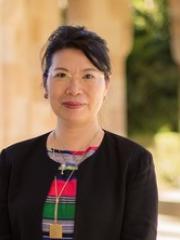
Dongming Xu is an Associate Professor in Business Information Systems at the University of Queensland Business School. She holds a PhD from the City University of Hong Kong in Information Systems and has established herself as a prominent researcher in the field of information systems with over 100 publications in top-tier journals and conference proceedings. Her educational background includes a PhD from City University of Hong Kong in Information Systems, though specific details about earlier degrees are not provided in the available text. Dr. Xu's research focuses on the confluence of information technology use and innovation, with particular emphasis on IT entrepreneurship, social media applications in business contexts, and business intelligence systems. Her work explores how information systems influence society and business performance, with applications spanning disaster management, eFinance, eHealth, and knowledge management. She combines theoretical model building with laboratory and field experiments, often developing prototype systems to validate her research. Her publication record demonstrates consistent high-quality output across multiple domains of information systems research, with recent work emphasizing digital disruption, platform ecosystems, social media in disasters, healthcare technology, and micro-learning applications. Her research shows a clear trajectory from foundational work on intelligent agents and decision support systems toward contemporary topics in digital transformation and platform-based innovation. Associate Editor, Information & Management Associate Editor, Journal of Electronic Commerce Research Associate Editor, Australasian Journal of Information Systems Dr. Xu has supervised numerous PhD students to completion, with research topics spanning digital disruption, IT startup development, social media in disasters, conceptual modeling, and environmental management. She has received multiple research grants, including current funding for 'Empowering Australia's Visual Arts via Creative Blockchain Opportunities' (2023-2026) and past projects on 'Smart micro learning with open education resources' (2018-2022). Her research has been supported by various agencies including the Hong Kong Government Research Grant Council, The National Natural Science Foundation of China, The University of Queensland, and City University of Hong Kong. She leads research in several key areas including IT entrepreneurship, business intelligence systems, and social media applications across multiple domains. Her work often involves developing innovative systems such as web-service-agent-based family wealth management systems, decision support systems for securities exception management, and knowledge management systems for disaster management.
Shwetak N. Patel serves as Professor and Associate Director for Development & Entrepreneurship at the University of Washington's Paul G. Allen School of Computer Science & Engineering, with a joint appointment in the Department of Electrical & Computer Engineering. He holds the Washington Research Foundation Entrepreneurship Endowed Professorship and directs the Ubicomp Lab. His research spans Human-Computer Interaction, Ubiquitous Computing, and Sensor-Enabled Embedded Systems with applications in health and sustainability. Key focus areas include mobile health technologies, energy/water sensing systems, and low-power wireless platforms. His work bridges computing with real-world sustainability challenges through practical sensor applications. Patel has received numerous prestigious awards including the MacArthur Fellowship, ACM Prize in Computing, and Presidential PECASE Award. His scientific recognition spans foundational computing contributions and impactful commercialization. MacArthur Fellowship (2011) ACM Prize in Computing (2018) Presidential PECASE Award (2016) Sloan Fellowship (2012) NSF Career Award (2013) He actively advises students through the Ubicomp Lab and has secured significant research funding supporting health and sustainability projects. His commercial ventures include three successful startups acquired by major corporations. Patel maintains strong community engagement through K-12 STEM outreach and government advisory roles. His laboratory work focuses on practical sensor systems for home environments, with ongoing projects in mobile health monitoring and resource conservation technologies.
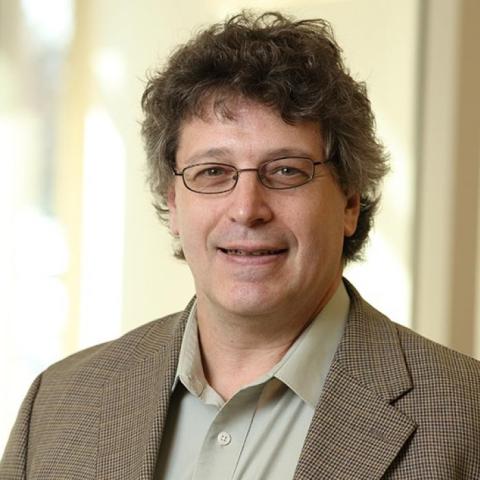
Brooks H. Pate is the William R. Kenan, Jr. Professor of Chemistry at the University of Virginia, Department of Chemistry, within the College of Arts and Sciences. He leads an innovative research laboratory focused on developing and applying broadband rotational spectroscopy for advanced chemical analysis. B.S., University of Virginia, 1987 Ph.D., Princeton University, 1992 NRC Postdoctoral Fellow, National Institute of Standards and Technology (NIST), Gaithersburg, 1992–1993 Dr. Pate’s research centers on molecular rotational spectroscopy , particularly the development of chirped-pulse Fourier transform rotational spectroscopy . His work enables ultra-high-resolution analysis of molecular structure, dynamics, and stereochemistry. Key areas include intramolecular dynamics , molecular clusters (especially water hexamers), and quantitative chiral analysis with applications in pharmaceutical chemistry. His lab’s instruments operate across microwave to mm-wave frequencies, allowing analysis of both small (astrochemical) and large (biomolecular) species. The recent publications demonstrate a strong trend toward real-time, in situ chemical analysis and stereochemical monitoring in synthesis. The research combines experimental spectroscopy with quantum chemical modeling to extract structural and dynamical information. Applications span from fundamental quantum tunneling phenomena in water clusters to industrial process optimization in drug synthesis. Notable scientific awards include: 2016 William F. Meggers Award, The Optical Society UVa Innovator of the Year Multiple publications in Science recognized for groundbreaking impact Dr. Pate actively mentors graduate students and postdoctoral researchers, many of whom are co-authors on high-impact publications. His lab has secured significant research funding, leading to technological innovations that have spun out into a startup company focused on faster molecular analysis. The research is supported by instrumentation development, computational modeling, and strong interdisciplinary collaborations. The Pate Lab is a hub of innovation in physical chemistry, combining cutting-edge spectroscopic techniques with practical applications in pharmaceuticals and astrochemistry. The group operates advanced rotational spectrometers, including cavity-enhanced systems for real-time sampling from reaction flasks, and maintains strong ties with national labs and industry partners.
Dr. Yolande E. Chan is the Dean and James McGill Professor at McGill University's Desautels Faculty of Management. She previously served as Associate Dean of Research and held the E. Marie Shantz Chair at Queen’s University’s Smith School of Business. Her academic career spans roles in research leadership, including Associate Vice-Principal (Research) at Queen’s and directorships in innovation centers. Chan’s expertise lies in digital strategy, business-IT alignment, and knowledge-driven innovation. She holds a PhD from Western University’s Ivey Business School, an M.Phil. from Oxford (as a Rhodes Scholar), and degrees in Electrical Engineering from MIT. Education: Ph.D. in Business Administration (MIS), Ivey Business School, Western University (1992) M.Phil. in Management Studies, University of Oxford (1984) S.M. & S.B. in Electrical Engineering & Computer Science, MIT (1982) Her research focuses on digital innovation, IT alignment, and strategic improvisation. Over 100 peer-reviewed articles appear in top journals like Journal of Strategic Information Systems and MIS Quarterly . Awards include the AIS LEO Award, Distinguished Cum Laude membership, and the James McGill Professorship. Chan’s work bridges theory and practice, emphasizing technology’s role in fostering agility and societal impact. Her leadership spans grants totaling millions, including SSHRC-funded projects on inclusive innovation and rural economic development. She co-edits the Journal of Strategic Information Systems and advocates for diversity and equity in academia. Chan’s career reflects a commitment to advancing both scholarly rigor and real-world business challenges.
Tom Zick serves as Director of Responsible AI at Charles Schwab and holds an academic affiliation as a Research Fellow at Harvard University's Berkman Klein Center for Internet & Society. Her work bridges technical AI development and legal frameworks, focusing on governance mechanisms for emerging technologies. She has advised organizations from startups to Fortune 500 companies while collaborating with frontier AI labs and public institutions like the City of Boston on AI deployment and data governance initiatives. Her educational foundation includes a JD from Harvard Law School and a PhD in Astrophysics from UC Berkeley, providing interdisciplinary expertise critical to her research. This dual background enables rigorous analysis of complex technology-policy intersections. Zick's research centers on creating accountable AI systems through technical oversight frameworks and regulatory compliance strategies. She investigates generative AI's societal impacts, reinforcement learning risks, and privacy-preserving identity solutions like personhood credentials. Her work emphasizes red teaming, model alignment, and global regulatory harmonization, addressing both immediate implementation challenges and long-term existential risks through law-technology integration. Analysis of her publication trajectory reveals escalating focus on governance scalability as AI capabilities advance. Early work examined foundational risks in reinforcement learning, while recent publications address generative AI's disruption of education systems and the urgent need for cross-jurisdictional regulatory frameworks. Her taxonomy development for AI regulation demonstrates systematic approaches to navigating fragmented global policy landscapes. As an advisor, Zick has guided corporate and municipal entities through AI implementation challenges, notably helping Boston operationalize data governance frameworks. Her Berkman Klein fellowship involved direct collaboration with major AI labs on alignment research and red teaming exercises. She contributes to industry-wide initiatives including Twitter's decentralized social media project (bluesky), focusing on protocol-level solutions for content integrity. Zick's collaborative ecosystem spans frontier AI companies, academic researchers, and public sector innovators. Her current work with the City of Boston demonstrates practical governance implementation, while ongoing personhood credentials research addresses AI-generated content verification challenges. These partnerships reflect her commitment to translating theoretical frameworks into operational systems across multiple sectors.
Barbara Bigliardi is an Associate Professor at the Department of Engineering and Architecture, University of Parma, with national scientific qualification for full professor in Economic-Management Engineering (SSD ING-IND/35). She serves as President of the Management Engineering Program at University of Parma and Director of Bachelor's/Master's programs at University of San Marino, co-leading double-degree initiatives between the two institutions. Over 100 publications (57 SCOPUS-indexed) with H-index=20 Editorial roles: Cambridge Scholars Publishing (2019), MDPI Sustainability, Sci, European Journal of Innovation Management Key research areas: Open Innovation, Technology Transfer, Food Industry Innovation, Industry 4.0, Supply Chain Sustainability Recent Publications (2024-2025) demonstrate leadership in: Industry 4.0 integration with circular economy AI applications in public administration and healthcare Digitalization of food supply chains Green startup resource orchestration Simulation-based optimization in remanufacturing Sustainable additive manufacturing Scientific Recognition : 2005 Emerald Highly Commended Award 2013 Most Cited Paper in Trends in Food Science & Technology 2019 Highly Cited Paper in Review of Policy Research Research Leadership includes: National Observatory on Start-ups (President since 2021) National Observatory on Reputation (Vice President since 2019) INAIL-funded mobile risk assessment systems (2018-2020) INAF space technology transfer projects (2018-present) Academic Contributions : Supervised over 300 theses Deputy Coordinator of Industrial Engineering Doctoral Program Director of Management Engineering Programs (Parma & San Marino) Founder of academic spin-offs: Sistemi per il marketing di contenuto S.r.l. (2016-present), Univenture SrL (2006-2010)
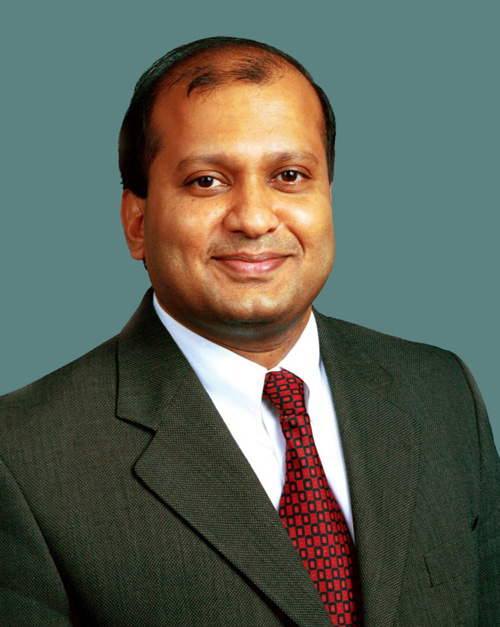
Rajiv Sabherwal is Distinguished Professor and Edwin & Karlee Bradberry Chair in the Information Systems department at the Walton College of Business , University of Arkansas . A Fellow of IEEE, AIS, and Asia-Pacific Artificial Intelligence Association, he has performed numerous editorial roles including Editor-in-Chief for IEEE Transactions on Engineering Management and co-Deputy Editor-in-Chief for Journal of Strategic Information Systems . Education: PhD in Information Systems (University of Pittsburgh), Post Graduate Diploma in Management (IIM Calcutta), BE in Electronics Engineering (Regional Engineering College, Bhopal University) Research Interests focus on information technology management, knowledge processes, and strategic alignment. His work examines digital transformation, virtual teams, and societal impacts of generative AI, with publications in MIS Quarterly , Information Systems Research , and Management Science . Awards include: AIS LEO lifetime achievement award Fellow of IEEE Fellow of Association for Information Systems Fellow of Asia-Pacific Artificial Intelligence Association Recent Publications analyze IT investment strategies, cultural heritage preservation through technology, pandemic-era digital challenges, and mobile app security. His work appears in journals like Journal of Information Technology , Computers in Human Behavior , and Journal of Global Information Technology Management .