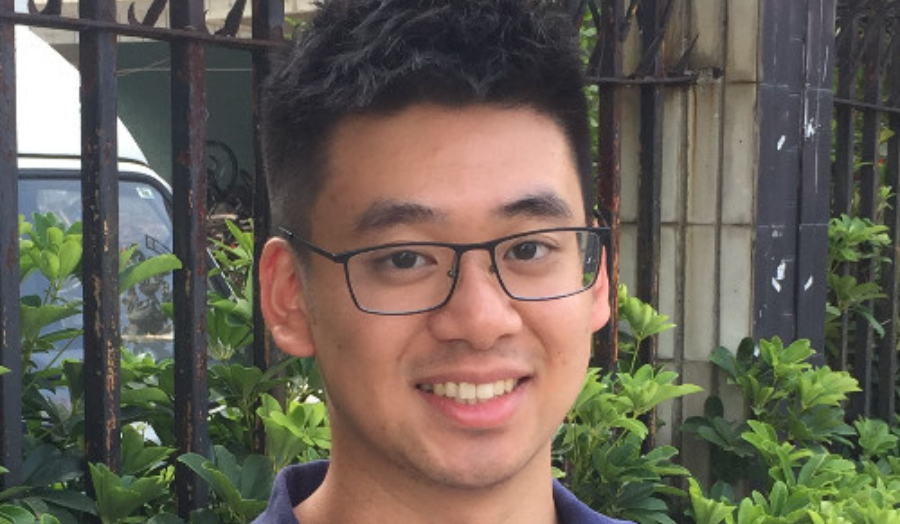
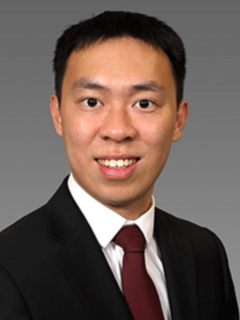
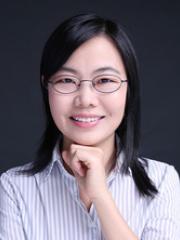
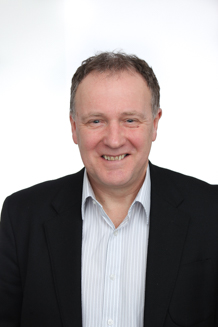
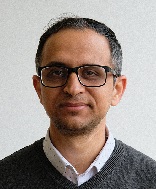
Dr. Matthew Lam is Lecturer in Pharmaceutics at London Metropolitan University and inventor of Liqui-Pellet technology. His research focuses on next-generation drug delivery platforms enhancing bioavailability of poorly soluble drugs through innovative formulation strategies. With industry experience from Imperial College Healthcare NHS Trust, he bridges clinical insights with pharmaceutical development. His patented Liqui-Pellet system enables cost-effective, sustainable manufacturing while addressing dysphagia challenges in geriatric care.
Prof. Petru Adrian COTFAS holds a position as Professor in the Department of Electronic and Computers at the Faculty of Electrical Engineering and Computer Science, Technical University of Brașov (UNITBV). His work focuses on advancing renewable energy systems, hybrid energy technologies, and IoT-based monitoring solutions. He leads research on photovoltaic cell optimization, thermoelectric generator performance, and cybersecurity in smart energy systems. His contributions include developing virtual instrumentation frameworks (e.g., LabVIEW-based tools) and experimental setups like the RELab system for studying solar/wind energy dynamics. Research Interests: Characterization of renewable energy systems (hybrid photovoltaic-thermoelectric configurations) IoT integration for remote energy monitoring and control Metaheuristic algorithms for parameter extraction in solar cells Cybersecurity resilience for smart energy infrastructure Energy efficiency in industrial systems (e.g., AHU optimization) Key Contributions: Prof. COTFAS has pioneered studies on dust impact mitigation for solar panels, developed novel methods for concentrated solar power systems, and addressed cybersecurity vulnerabilities in IoT-enabled energy grids. His work bridges theoretical models (e.g., multi-junction solar cell theory) with practical implementations like FPGA-based remote laboratories. Over 60 peer-reviewed articles since 2016 showcase his interdisciplinary approach to energy sustainability and technological innovation.
Vlad Popescu is an Associate Professor at the Department of Electronics and Computers, Faculty of Electrical Engineering and Computer Science, Technical University of Brasov. His research focuses on telecommunications, IoT, cognitive radio systems, and multimedia applications. He has authored numerous publications in top journals and conferences, including work on 6G-enabled smart cities, edge-cloud orchestration, and QoE-driven smart home systems. His research explores cutting-edge topics such as immersive multi-sensory experiences, real-time object detection, and energy-efficient architectures for Android TV integration. Popescu has contributed to open-source satellite simulators and pioneered studies on blockchain-based TV advertising systems. His work bridges theoretical advancements with practical implementations in smart home environments, IoT gateways, and next-generation wireless networks. Award-winning research includes innovations in SDR-based satellite gateways and hardware-software partitioning for embedded systems. His collaborative projects address challenges in distributed video applications, D2D communications, and social IoT frameworks for smart tourism management.
Yong Chen is an Assistant Professor in the Division of International Business and Technology Studies at Texas A&M International University's A.R. Sanchez, Jr. School of Business. His research focuses on Industry 4.0 technologies, blockchain applications, and technology innovation in business contexts. He holds a Ph.D. in Business Administration (Information Systems) from Old Dominion University, an M.A. in Education Technology from San Diego State University, an M.A. in Advertising from Michigan State University, and a B.A. in Advertising from Peking University. Dr. Chen's research encompasses technological standardization, information systems integration, and the business implications of emerging technologies. His recent publications analyze blockchain implementation, artificial intelligence in entrepreneurship, and sustainable growth in telecommunications. His articles demonstrate consistent focus on technology-driven innovation across industries, with recent work examining deepfake advertising effects, AI-enabled entrepreneurial ecosystems, and sustainable telecom operations. The research employs diverse methodologies including bibliometric analysis, structural equation modeling, and empirical case studies.
Minghui Cheng is an Assistant Professor at the University of Miami, jointly appointed in the School of Architecture and the College of Engineering's Department of Civil & Architectural Engineering, with an affiliation to the Climate Resilience Academy. His research focuses on digital twin technologies for smart cities, life-cycle management of infrastructure systems, and climate resilience strategies. Prior to this role, he was a postdoctoral associate at Cornell University's Systems Engineering department and earned his PhD in Structural Engineering from Lehigh University in 2021. Education: PhD in Structural Engineering, Lehigh University, 2021 BS in Civil Engineering, Hunan University, China, 2016 Visiting Student, Arizona State University, 2015 His work bridges engineering and data science, emphasizing probabilistic modeling, uncertainty quantification, and stakeholder decision-making frameworks. Recent projects include developing automated knowledge graphs (AutoGraCS) for bridge network management and Bayesian network-based digital twin frameworks for infrastructure systems. His research addresses urban resilience to climate change and integrates multi-source data for life-cycle risk assessment. Advising & Grants: While no advisees are listed, his projects likely involve graduate students in systems engineering and civil engineering. He has contributed to grants focused on infrastructure resilience and digital twin applications. Labs & Teams: Affiliated with the Climate Resilience Academy, collaborating on interdisciplinary projects to enhance urban infrastructure sustainability and disaster preparedness.
Nikolay Mehandjiev is a Professor of Enterprise Information Systems and Academic Director of the Data Visualisation Observatory at Alliance Manchester Business School, University of Manchester. He specializes in enabling non-technical audiences to understand complex systems like AI, service-based systems, and industrial robotics through immersive visualizations. His research is grounded in collaborations with major industries including Airbus, Comau, and SAP. He has managed over €8M in projects, including the €10M DIGICOR initiative with Airbus and Comau. Notable achievements include the 2018 BAM Best Developmental Paper Award and the 2019 EMCIS Best Paper Award. His work focuses on supply chain collaboration, Industry 4.0, and digital transformation. Recent projects explore digital twins in the metaverse, voice assistant technologies, and adaptive manufacturing systems. Supervising 18 research projects, he emphasizes practical applications of AI and data analytics in healthcare, manufacturing, and sustainability. Professional activities include visiting appointments at SAP Research Labs, University of Sussex, and University of New South Wales. He actively contributes to academic conferences and policy reviews, advancing both theoretical and applied research in enterprise systems.
Michael Schmidt (b. 1957) is the John Cage Chair and Professor of Philosophy of Music and Media at The European Graduate School (EGS). He coordinates the Classical Music Online initiative at the Bavarian Radio Station in Munich and teaches at Ludwig Maximilian University (LMU) in Munich and the Universities of Music in Munich and Karlsruhe, Germany. His roles include membership on the Friedrich-Ebert-Foundation’s selection committee and leading the Georg-von-Vollmar-Akademie’s board of trustees. He studied piano and pursued doctoral research in musicology. His work interrogates media’s transformation of music into an omnipresent cultural force, questioning its return to primordial soundscapes or absorption into technological noise. Drawing on Adorno, Nietzsche, and McLuhan, he contrasts modernist compositional despair with postmodern playful hyperreality enabled by digital tools. His research interests center on media sounds’ philosophy, globalization’s impact on musical culture, and the democratization of music creation through technology. Lectures like the 2001 series Media Sounds and Globalisation further explore these themes, emphasizing media-driven shifts in listening practices and artistic expression. No scientific awards are mentioned in the text. His advisory roles include institutional governance rather than formal student supervision. Collaborative efforts extend through Classical Music Online and his board leadership, fostering innovation in music dissemination and education.
Associate Professor Zahra Gharineiat is a faculty member at the University of Southern Queensland's School of Surveying and Built Environment, specializing in Surveying and Positioning. She holds a PhD in Surveying and has over a decade of experience in academia and industry. Zahra serves as Associate Head of School (Research) and leads research in UAV applications, LiDAR, AI-enabled monitoring, and spatial data analytics. She has secured over $6 million in research funding and founded the nationally recognized 'Drones for STEM' initiative promoting STEM education through drone learning. Education: Bachelor of Surveying (BSurv) from Tabriz University Master of Engineering Management (MEngMgt) from University of Melbourne PhD in Surveying from University of Newcastle Research Interests: Unmanned Aerial Vehicles (UAVs) and Remote Sensing LIDAR and Feature Extraction Digital Twins and Spatial Data Analysis Machine Learning Applications in Geospatial Data Coastal Monitoring and Sea Level Analysis Satellite Altimetry and Geodesy Her work bridges geomatic engineering with environmental and civil applications, emphasizing innovation in surveying technologies. Awards & Recognition: Multiple awards for research, teaching, and innovation (specific names unspecified) Active member of international geospatial organizations including the International Federation of Surveyors (FIG) and IEEE Geoscience Society Grants & Collaboration: Secured over $6M in research funding Key roles in interdisciplinary projects with the Centre for Future Materials and Institute for Advanced Engineering and Space Sciences Labs & Initiatives: Founder of the 'Drones for STEM' education program Lead researcher in UAV-based monitoring and LiDAR applications
Alireza Furutanpey is a University Assistant (PreDoc Researcher) at TU Wien's Distributed Systems Group within the Institute of Information Systems Engineering, holding a Master's degree with distinction. His academic role combines research in distributed systems with teaching responsibilities for core computer science courses. His educational background includes: Bachelor of Science (BSc) Master of Science (Dipl.-Ing.) with distinction Furutanpey's research centers on Edge Computing and Edge Intelligence, specializing in Distributed Inference, Neural Data Compression, and AI-Systems integration. He pioneers techniques for neural feature compression in satellite/edge environments and develops frameworks for federated learning orchestration under communication constraints. His work bridges theoretical AI with practical system implementation, focusing on resource-constrained scenarios where bandwidth and computational efficiency are critical. Analysis of his 15+ publications reveals dominant trends in neural compression for distributed systems (60%), federated learning optimization (25%), and serverless edge frameworks (15%). Key contributions include solving satellite downlink bottlenecks through feature compression and enabling adaptive inference in heterogeneous edge networks, with methodologies increasingly incorporating generative modeling and robustness against adversarial attacks. Scientific Awards: None documented in available sources. He actively supervises master's theses, guiding students on adversarial machine learning, neural compression, and image retrieval systems. His research is supported through major projects: AloTwin (2023-2025) focusing on edge intelligence, INTEND (2024-2026) on industrial IoT, and TEADAL (2022-2025) on federated learning. He serves as a reviewer for 15+ IEEE/ACM venues including IEEE Transactions on Mobile Computing and ICDCS. Furutanpey operates within TU Wien's Distributed Systems Group, which specializes in edge-cloud continuum research. The team develops tools like faas-sim for serverless edge simulation and explores quantum-classical hybrid architectures, maintaining strong industry collaborations in industrial IoT and satellite communications.
Dr. Kashinath Basu is a Senior Lecturer in Computer Science at Oxford Brookes University, affiliated with the School of Engineering, Computing and Mathematics. He holds a PhD in Computer Science and specializes in network virtualization, cloud computing, AI/ML for infrastructure management, and smart grid communication. His research explores SDN/NFV, cybersecurity frameworks, and quantum-resistant cryptography. Education: PhD in Computer Science, with academic and professional experience spanning over two decades. Research focuses on next-gen networks, cloud orchestration, and AI-driven security solutions. Current projects include softwarization of networks, smart grid communication protocols, and QoS-aware cloud services. Research interests span from foundational network architecture design to applied cybersecurity in smart cities. He has authored influential papers on topics like SD-WAN traffic prediction using ML, QoS-aware service selection in cloud environments, and control frameworks for smart grids. His work bridges theoretical network research with real-world infrastructure challenges. Professional contributions include editorial roles for journals like IEEE Transactions on Smart Grid and active participation in IEEE Working Groups on SDN/Quantum Communication. He has organized major conferences such as IEEE MobileCloud and ITNAC, reflecting his leadership in advancing network technologies. Labs/Teams: Member of the Cloud Computing and Cybersecurity Research Group, Artificial Intelligence, Data Analysis and Systems (AIDAS) Institute, and the Dependable Systems Engineering Research Centre. Collaborates with industry partners on projects related to autonomous cyber defense and blockchain for smart city infrastructure.
Dr. Premkumar Kothavade is a Research Fellow at the School of Engineering, RMIT University, Australia. He holds dual doctorates in Polymer Engineering (CSIR-NCL, India) and Aerospace Engineering (RMIT University), making him one of the few with such a unique academic background. His current research focuses on high-performance polymers for aerospace and defense applications, including materials for hypersonic missile systems. Dr. Prem also contributes to undergraduate teaching, advising the MIET2115: Mechanics and Materials 2 course, and mentors PhD and master’s students. His work emphasizes sustainable, functional, and scalable solutions in additive manufacturing and nanocomposite materials. Education: He began his academic journey with a GATE qualification from CIPET: IPT, Ahmedabad, followed by direct PhD programs at CSIR-NCL and RMIT University through the AcSIR-RMIT dual PhD program. This combination enables him to bridge polymer science and aerospace engineering expertise. Research Interests: Dr. Prem’s research spans advanced polymeric materials development, with a focus on thermoplastic polyimides, biodegradable polymers, and their applications in additive manufacturing. He explores structure-property relationships in polymers, nanocomposite materials (e.g., nanocellulose, chitosan), and their use in thermal protection systems, piezoelectric energy harvesting, and fluorescence-based sensors. His work often involves collaboration with global institutions like NASA, Boeing Australia, and Silon (Czech Republic). Professional Contributions: He co-founded the AM Plus Club as its first General Secretary, promoting innovation in additive manufacturing. Additionally, he serves as an Advisor and Market Development Officer at Innovate 3D Global. He actively engages in community outreach, inspiring students through mentorship and teaching. Collaborations: His partnerships include IISER Pune, IIT Madras, NASA (via University of Texas), Boeing Australia, and Silon (Czech Republic), advancing both academic and industrial applications of sustainable materials.
Professor Gary Rosengarten is a leading academic at RMIT University, holding roles as Professor in the School of Aerospace, Mechanical and Manufacturing Engineering and Director of the Sustainable Technologies and Systems Enabling Impact Platform. His work focuses on energy systems, biomedical devices, and thermal management. He leads the Laboratory for Innovative Fluid Thermal Systems (LIFTS), addressing transport phenomena across macro to nano scales. Key areas include solar energy, thermal storage, and biomedical innovations like blood clot detection and microneedle drug delivery. Professor Rosengarten has held academic positions at RMIT and UNSW Sydney, with adjunct roles since 2012. His non-academic experience includes roles at CSIRO and Bassett Applied Research. He has been recognized with awards such as the Churchill Fellowship and Victoria Fellowship. His research spans energy demand management, battery thermal management, and advanced cooling systems. Notable projects include droplet/spray cooling for data centers and high-flux applications, alongside biomedical applications like upper airway airflow devices. His work integrates experimental and computational methods, emphasizing sustainable technologies. Awards include the 2000 ASME Solar Energy Division Graduate Award and the 2002 Churchill Fellowship. He supervises research in thermal storage, hydrogen systems, and smart energy grids, contributing to over 250 publications. His interdisciplinary approach bridges mechanical engineering, biomedical innovation, and renewable energy solutions.
Associate Professor Min Zhu is affiliated with the School of Business at the University of Queensland (UQ Business School). Her research focuses on asset management, empirical asset pricing, and fintech. She holds an Associate Professor rank and maintains close ties with industry practitioners, particularly in quantitative portfolio management frameworks adopted by Schroders since 2010. Her work bridges academic research and industry application, evidenced by collaborations with multi-disciplinary experts globally. Her research has been published in top-tier journals such as the Journal of Financial Economics , Journal of Empirical Finance , and Biometrika . Notable awards include the 2018 Best Paper in Financial Management , 2017 Vice Chancellor's Performance Award, and 2012 Chinese Government Award for Outstanding Doctoral Students Abroad. She actively participates in international conferences like the American Finance Association and serves as a referee for journals including Journal of Finance and Review of Finance . Min's research network spans finance, economics, and data science experts, enabling cross-disciplinary projects. Her recent work explores Bitcoin option trader behavior, scale diseconomies in fund management, and weather exposure effects on corporate bonds. She has pioneered methodologies in predictive regressions and quantile regression for financial modeling.
Mike Burton is a Professor of Psychology at the University of York, with a career spanning institutions across the UK, including the University of Aberdeen and University of Glasgow. His research focuses on face perception, emphasizing the mechanisms enabling identification across variable visual conditions and applications in computer-based face recognition and forensic settings. Education: BSc in Joint Honors Mathematics and Psychology (1980), University of Nottingham; PhD in Psychology (1983), University of Nottingham. Mike’s research explores how perceptual systems derive stable representations from variable face images, using experimental and computational modeling. Collaborations extend to security agencies and institutions like Kent University, Durham University, and the University of New South Wales. Recent work examines neural dynamics, multimodal cues, and virtual environments in face recognition. His publications span cognitive science, neuroscience, and forensic psychology, with a focus on unfamiliar face matching, neural correlates of familiarity, and computational modeling. Key grants include an ESRC Professorial Fellowship (2012–2016), an ERC Advanced Grant (2013–2018), and ongoing ESRC projects on high-fidelity avatars (2023–2026) and individual face recognition (2023–2026). Scientific Awards: Fellow of the British Academy (2017) Fellow of the Academy of Social Sciences (2019) Fellow of the Royal Society of Edinburgh (2006) Mike has held editorial roles in journals like Quarterly Journal of Experimental Psychology and Psychological Science , and served on REF2014 and REF2021 panels. He collaborates with researchers such as Rob Jenkins, Holger Wiese, and Markus Bindemann.
Dr. Manish Chauhan is a Lecturer in Medical Engineering at the University of York's School of Physics, Engineering and Technology. His expertise spans Soft Robotics, Optical Imaging, Mechatronics, and MRI Technology. He holds a PhD in Bioengineering Robotics from the Istituto Italiano di Tecnologia (2017) and has conducted interdisciplinary research in quantum physics, molecular biology, and clinical trials. Research Interests: His work focuses on surgical and diagnostic robotics, IoT-enabled medical devices, biomaterials, and biophotonics. He actively supervises PhD students and leads projects funded by the Royal Society and EPSRC, including innovations in endovascular catheter procedures and soft robotics for medical applications. Awards: He received the 2022 Mechanical Lung Ventilation Using Soft Robotics Award for collaborative work on ventilator systems. His research emphasizes translational applications in global healthcare, such as low-cost surgical simulators and gasless laparoscopic techniques. Labs & Teams: Current lab members include PhD student Chengdong Xu and collaborators from Hull York Medical School and international institutions. His projects bridge robotics, photonics, and clinical needs, with a focus on accessible medical technologies for low-resource settings.