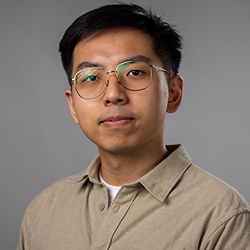
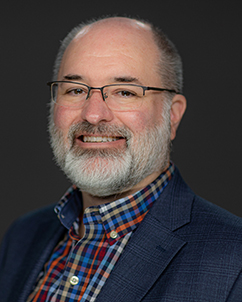
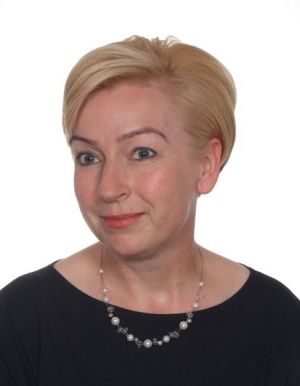
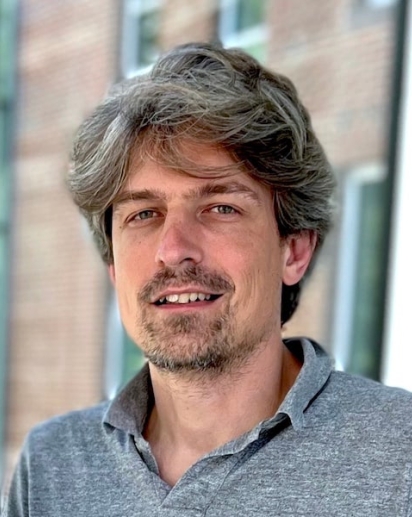
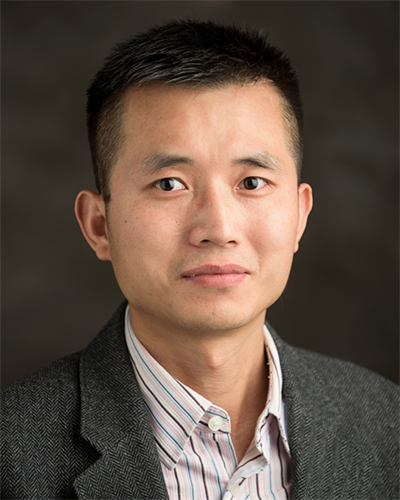
Cheng Han is a tenure-track Assistant Professor in the School of Science and Engineering at the University of Missouri -- Kansas City (UMKC), where he conducts research in adaptable and sustainable intelligence, focusing on efficient AI systems and parameter-efficient fine-tuning methods for large-scale models. Ph.D., Rochester Institute of Technology (RIT) M.S., Pennsylvania State University (PSU) B.S., Tianjin University (TJU) His research interests center on creating energy-wise AI systems that empower communities and address environmental and social challenges. He focuses on multimodal and visual prompt tuning, transfer learning, and robust AI. His work bridges theoretical innovation with real-world deployment, particularly in efficient adaptation of vision and language models. His recent publications span top venues like NeurIPS, ICCV, CVPR, ICLR, EMNLP, and IEEE TPAMI. The research trends highlight a strong focus on parameter efficiency , prompt engineering , model robustness , and multimodal understanding . He investigates when and why prompt tuning outperforms full fine-tuning and develops novel frameworks like E^2VPT and M^2PT for efficient adaptation. Cheng Han actively contributes to the academic community as a reviewer and committee member. Program Committee, AAAI (2023–present) Program Committee, SIAM SDM (2024) Reviewer for NeurIPS, ICLR, CVPR, ICML, ICCV, TPAMI, TMLR, and others He advises Ph.D. students and teaches courses such as Deep Learning (COMP-SCI 5567). He has given invited talks at ICLR, ICCV, and seminars at NSF and Naval Research Laboratory. His research is supported by academic collaborations and likely grant funding, given his active publication and service profile. He leads a research group focused on sustainable and efficient AI, with code available on GitHub.
Wayne G. Lutters is a Professor and Associate Dean for Faculty in the College of Information Studies (INFO) at the University of Maryland. He holds office in Patuxent 1109C and can be reached at lutters@umd.edu. His research focuses on sociotechnical systems, computer-supported cooperative work (CSCW), and social informatics, with emphasis on IT-mediated infrastructural work and cybersecurity advocacy. Current projects include studies on scientific cyberinfrastructure, usable privacy and security, and moderation in social media. Dr. Lutters advises the Dean’s Student Advisory Council and explores topics like data privacy, sociotechnical cybersecurity, and the future of work. His recent work addresses challenges in security awareness programs, code set redundancy in healthcare, and collaborative systems design. He is actively involved in developing tools like the Value Set Hub to improve healthcare data curation practices. His research consistently bridges theory and practice, emphasizing ethical technology design and interdisciplinary collaboration. Notable contributions include frameworks for cybersecurity advocacy roles and methodologies for synthesizing scholarly knowledge. While currently not accepting new PhD students, he remains a key figure in shaping academic and infrastructural innovation at UMD.
Dr. Adrian Owen is a Professor of Cognitive Neuroscience & Imaging at Western University's Brain and Mind Institute, holding the Canada Excellence Research Chair. His work focuses on consciousness disorders, neurodegenerative diseases, and functional neuroimaging applications. He pioneered techniques like detecting residual cognition in vegetative patients using fMRI and fNIRS. Research Focus: Owen's research bridges cognitive neuroscience and clinical practice, emphasizing disorders of consciousness, Alzheimer's/Parkinson's mechanisms, and neurorehabilitation. He develops brain-computer interfaces for communication in non-responsive patients and investigates anesthesia effects on neural connectivity. Key Contributions: Pioneered covert cognition detection in vegetative patients, advanced fNIRS applications in ICU settings, and established international clinical cohorts for consciousness assessment. His work has appeared in Nature , Science , and The Lancet . Labs/Teams: Leads the Owen Lab at Western University, collaborating with clinicians, engineers, and neuroscientists to translate neuroimaging innovations into clinical tools. Grants/Industry Links: Receives funding for interdisciplinary projects linking brain imaging, neurology, and biomedical engineering, fostering industry partnerships for neurotech development.
Bogusława Whyatt is a Professor at the Faculty of English, Adam Mickiewicz University, Poznań. She holds a D.Litt. in linguistics (2014), Ph.D. in English (2000), and MA in English (1992) from Poznań institutions. Her academic profile spans psycholinguistics, translation studies, and cognitive approaches to translation processes. Key research themes include: Translation process dynamics and directionality effects Eye-tracking applications in translation reception studies Development of translation competence and pedagogy Psycholinguistic analysis of language processing Metacognitive skill transfer between translation and paraphrasing Recent publications focus on cognitive effort metrics, directionality impacts, and empirical methodologies combining eye-tracking and key-logging data. She leads major projects like Read Me (2021-2025) and EDiT (2016-2019), examining translated text reception and translation directionality respectively. Scientific honors include three consecutive Adam Mickiewicz University Rector's Awards for Organizational Excellence (2018, 2023, 2024). She supervises PhD research in translation cognition and has mentored four doctoral candidates to completion. Active in professional networks like the MC2 Lab and TREC consortium, she contributes to cognitive translation studies through methodological innovations and international conference organization. Her methodological expertise includes psychometrics, EEG research, and ATLAS.ti data analysis tools.
Geoffroy Hautier serves as Adjunct Associate Professor of Engineering at Dartmouth College's Thayer School of Engineering within the Physics and Astronomy Department. His research bridges computational materials science with practical energy applications through high-throughput methodologies and machine learning integration. Previously holding positions at MIT and ULB, he maintains active collaborations across international research networks including the psi-k society. His research expertise spans computational materials design with emphasis on ab initio and high-throughput computing approaches. Key focus areas include opto-electronic properties of materials, transparent conducting oxides, thermoelectrics, photovoltaics, and high entropy alloys for energy applications. His group develops advanced computational frameworks for materials discovery, particularly targeting energy production and storage solutions through quantum mechanical simulations. Analysis of recent publications reveals strong trends in quantum materials discovery (2022-2024), sustainable magnet development (2023), and hydrogen storage technologies (2024). His work consistently integrates machine learning with first-principles calculations to accelerate materials design cycles across photovoltaics, quantum information science, and sustainable energy systems. Scientific recognition includes: Chemistry of Materials Reviewer Excellence Award (2018, 2019) Finalist for Rising Star in Computational Materials Science (2018) Marie Curie Fellowship (2012) As group leader, Hautier mentors multiple PhD students and postdoctoral researchers while directing projects funded by DOE and other agencies. His research portfolio includes significant grants for quantum materials ($2.7M DOE grant), sustainable magnets, and hydrogen storage frameworks. The Hautier Research Group maintains active collaborations with national laboratories and industry partners through the Materials Project initiative. The group operates within Dartmouth's advanced computational infrastructure, focusing on quantum defect engineering for silicon photonics, 2D material design for electrocatalysis, and rare-earth-free permanent magnet development. Current efforts emphasize scalable quantum technologies and decarbonization pathways through advanced materials discovery.
Travis B. Thompson, Ph.D. is an Assistant Professor in the Department of Mathematics and Statistics at Texas Tech University, leading the TM4 (Texas Tech Translational and Theoretical Mathematical Modeling and Machine Learning in Medicine) research group. His academic journey includes postdoctoral work at Rice University, Simula Research Laboratory, and the University of Oxford, focusing on mathematics applied to neurodegenerative diseases. Education: Ph.D. in Mathematics from Texas A&M University (2013) Dr. Thompson develops theoretical mathematical models and applies scientific computing and machine learning to study neurological pathologies, particularly Alzheimer’s disease. His work explores complex biological processes on networks, translational healthcare applications, and nutritional security implications. Current research trends integrate neuroimaging data with finite element simulations to model tau progression , amyloid beta dynamics , and glymphatic clearance in age-related diseases. Scientific awards and honors were not explicitly mentioned in the provided materials. Dr. Thompson’s interdisciplinary approach connects computational neuroscience with biomedical engineering , utilizing techniques like diffusion tensor imaging and level set methods to analyze pathological protein spread and brain tissue mechanics . The TM4 research group focuses on network neurodegeneration , personalized medicine , and machine learning diagnostics . Their work spans from microfluidic cancer detection to computational modeling of brain clearance mechanisms , addressing challenges in both neurodegenerative diseases and biomedical engineering through rigorous mathematical frameworks.
Professor Tomasz Kapitaniak is a distinguished academic in the field of nonlinear dynamics and theoretical mechanics. He serves as a Professor of Theoretical and Applied Mechanics and Head of the Division of Dynamics at the Faculty of Mechanical Engineering, Technical University of Lodz, Poland. His career spans over three decades at the university, where he has made significant contributions to the understanding of nonlinear systems, chaos theory, and mechanical oscillations. Professor Kapitaniak holds advanced degrees in both mechanics and applied mathematics from the Technical University of Lodz and the University of Lodz. His educational background includes: M.Sc. in mechanics, Faculty of Mechanical Engineering, Technical University of Lodz (1982) M.Sc. in applied mathematics, Faculty of Mathematics, Physics and Chemistry, University of Lodz (1985) Ph.D. in mechanics, Faculty of Mechanical Engineering, Technical University of Lodz (1985) D.Sc. in mechanics, Faculty of Mechanical Engineering, Technical University of Lodz (1988) Professor of technical science, title given by the President of Poland (1995) His research focuses on nonlinear dynamics, with particular emphasis on mechanical oscillations, stability, bifurcations and chaos, stochastic dynamics, and applications of nonlinear dynamics in mechanical engineering. Professor Kapitaniak is renowned for his work on the development of methods for controlling chaos without feedback, identification of new types of bifurcations, synchronization mechanisms in coupled mechanical oscillators, and explaining the origin of randomness in mechanical systems. His research has evolved from fundamental theoretical work to increasingly applied studies involving complex networks, biological systems, and engineering applications. Professor Kapitaniak has published over 300 scientific papers in renowned journals, cited over 8,000 times. His work exhibits a consistent focus on understanding complex nonlinear phenomena across various physical systems. The trend in his recent publications shows continued exploration of synchronization phenomena, extreme events in dynamical systems, and applications of nonlinear dynamics to biological, mechanical, and physical systems. His most recent work demonstrates a growing interest in multistability, chimera states, and the prediction of tipping phenomena in complex systems. Among his notable scientific achievements and distinctions are: Election as a member of the Polish Academy of Sciences (corresponding member in 2013, ordinary member in 2019) Election to Academia Europaea in 2021 Honorary doctorates from Saratov State University (Russia, 2001) and Lublin University of Technology (Poland, 2014) Multiple prestigious fellowships including the British Council Fellowship (1989), King Abdul Aziz Award Fellowship (1990), and Fulbright Fellowship (1997) Editorial roles including Associate editor of Chaos, Solitons and Fractals since 1990 and member of editorial boards of several other prestigious journals Throughout his career, Professor Kapitaniak has been actively involved in mentoring the next generation of researchers, having supervised numerous PhD students including Jerzy Wojewoda, Anton van Wyk, Barbara Błażejczyk-Okolewska, Andrzej Stefański, Andrzej Kozłowski, and Przemysław Szumiński. He has secured significant research funding from various national and international sources including the Ministry of Science and Higher Education (Poland), Deutscher Akademischer Austauschdienst, The Royal Society of London, and others. His research team has maintained strong international collaborations with institutions worldwide, including universities in the United States, United Kingdom, Germany, Brazil, Russia, and Ukraine. He leads the Division of Dynamics at the Technical University of Lodz, which serves as a hub for research in nonlinear dynamics, mechanical oscillations, and related fields. The division maintains strong international collaborations with institutions worldwide and continues to produce cutting-edge research in the field of nonlinear dynamics and its applications.
Stephen Bradforth is a Professor of Chemistry at the University of Southern California and Senior Advisor to the Dean for Research Strategy and Development in the Dornsife College of Letters, Arts and Sciences . He earned his PhD in Physical Chemistry from the University of California, Berkeley (1992) and conducted postdoctoral research at the University of Chicago . B.A., Natural Sciences, Cambridge University (1987) Ph.D., Physical Chemistry, UC Berkeley (1992) Postdoctoral Associate, University of Chicago (1993–1996) His research focuses on ultrafast laser spectroscopy to study chemical reactions in complex environments like aqueous systems and molecular materials . Key projects include: Solar Energy Conversion : Investigating photosensitizers based on earth-abundant elements (Cu, Zn, Zr) and organic photovoltaics with BODIPY cores. DNA Photodamage : Mechanisms of cyclobutane pyrimidine dimer (CPD) formation under UV exposure, emphasizing base-stacking effects. Electronic Structure in Ethereal Solvents : Studying solvated electrons in liquid ammonia and their role in carbanion stabilization. His 15 most recent articles (2004–2024) highlight advancements in photoelectron spectroscopy , singlet fission for solar cells, and DNA damage pathways . Collaborations span medicine, physics, and engineering . Scientific Awards include the ACS Physical Chemistry Division Senior Experimental Award (2023) , STAR Awardee (2019) , Cottrell Scholar , and Fellow of APS and AAAS . He has received both Junior (2001) and Senior Raubenheimer Awards (2022) at USC. Advising has been a cornerstone, with 23 PhD students graduated and 4 current candidates. His 15 most recent publications (2012–2024) emphasize ultrafast dynamics , charge transfer mechanisms , and environmental photochemistry . Labs & Teams : The Bradforth Group operates advanced time-resolved photoelectron spectrometers , liquid microjet systems , and high-repetition-rate laser facilities . Current projects include metallic water solutions (Nature 2021), DNA photophysics (FASEB J 2011), and carbanion electronic structure in ammonia.
Dr. Gábor Koloh is a contemporary Assistant Professor and Research Fellow at the Eötvös Loránd University (Department of Economic and Social History) and the HUN–REN RCH Institute of History . His scholarly work focuses on demographic history , social history , and rural economic structures , with particular emphasis on fertility transitions , household organization , and modernization processes in 19th-20th century Hungary. Education : Law (ELTE), Aesthetics (BA), MA and PhD in Economic and Social History (supervised by György Kövér) Research Themes : Demographic change in interwar Hungary Ethnic agricultural practices in Baranya Temporal/spatial patterns in peasant communities Social mobility of Protestant clergy Methodology : Micro-historical analysis, family reconstitution, manuscript source interpretation Current Projects : Interdisciplinary studies on pronatalist discourse, cooperative territorial development, and aristocratic demographic patterns
Dr. Liyang Sun is a Lecturer in Economics and Deputy Graduate Tutor at the University of College London's Department of Economics, and an Untenured Associate Professor (on leave) at CEMFI in Madrid. She holds a PhD in Economics and Statistics from MIT (2021) and a BA in Economics and Mathematics from Wellesley College (2014). Her research focuses on causal inference methodologies under treatment effect heterogeneity and weak identification with many instruments. Prior to her current roles, she was a Postdoctoral Research Fellow at UC Berkeley. Her academic positions include: Lecturer in Economics, University College London (current) Untenured Associate Professor, CEMFI, Madrid (on leave) Postdoctoral Research Fellow, UC Berkeley (previous) Research interests span econometric method development, applied economics, and policy analysis. Her work emphasizes improving causal inference techniques in realistic economic settings. Recent publications explore synthetic control methods, instrumental variables with many weak instruments, and machine learning applications in structural reforms analysis. Her scholarly contributions address core econometric challenges such as: Policy learning and confidence estimation Temporal aggregation in synthetic control frameworks Adaptive methods for model misspecification No specific grants or advising activities are documented here. She contributes to the department's teaching and graduate training programs as Deputy Graduate Tutor.
Tal Cohen is an Associate Professor in the Department of Civil and Environmental Engineering at the Massachusetts Institute of Technology (MIT), School of Engineering. He joined MIT as an assistant professor in November 2016 after working at Harvard's School of Engineering and Applied Sciences, and was granted tenure in May 2023. He leads the Cohen's Mechanics Group, which focuses on understanding material behavior under extreme conditions including large deformations, dynamic loading, and growth. His educational background includes a Ph.D. (2014), M.Sc. (2011), and B.Sc. (2007) from the Faculty of Aerospace Engineering at the Technion, Israel. Professor Cohen's research centers on nonlinear solid mechanics, material growth, and material instabilities. His work combines theoretical modeling with experimental approaches to explore how materials behave at their extremes. Key research areas include understanding material instabilities (what triggers them, how they can be harnessed or avoided), extreme dynamic loading (shock wave propagation, energy dissipation), and material growth with chemical coupling (how growth leads to residual stresses and morphological changes). His research has significant implications for protective structures, understanding planetary impacts, and biological systems. Analysis of his recent publications (2015-2025) reveals a consistent focus on nonlinear mechanics of soft materials, with increasing emphasis on biological applications in recent years. His work spans theoretical frameworks for material growth, experimental characterization of soft material properties, and computational modeling of complex material behaviors. Key themes include cavitation phenomena, fracture mechanics in soft materials, and the mechanics of biological growth processes. MIT Arthur C. Smith Award, 2024 Eshelby Mechanics Award for Young Faculty, 2023 NSF CAREER Award, 2020 ONR Young Investigator Award, 2020 ARO Young Investigator Award, 2019 MIT-Technion Post-Doctoral Fellowship, 2013-2014 Zonta International Amelia Earhart Fellowship, 2011-2012 Professor Cohen has advised numerous students through their PhD, Master's, and undergraduate research projects. His group includes current PhD candidates working on topics related to material growth, biological mechanics, and extreme loading conditions. He has successfully placed former postdocs in faculty positions at institutions including Harvard, UNH, and Central South University in China. His research has been supported by significant grants including the NSF CAREER Award and Young Investigator Awards from ONR and ARO. The Cohen Mechanics Group maintains an active research program with connections to multiple disciplines including civil engineering, mechanical engineering, materials science, and biomechanics.
Liping Liu is an Associate Professor in the Department of Computer Science at Tufts University's School of Engineering. He holds a Ph.D. from Oregon State University and has held postdoctoral positions at Columbia University and Tufts. His research focuses on machine learning, generative models, graph learning, and their applications in biochemical data analysis and fluid dynamics simulation. His work on graph generative methods earned the NSF CAREER Award. Education: Ph.D. (Oregon State University, 2016), M.Sc. (Nanjing University, 2009), B.S. (Hebei University of Technology, 2006). Research Interests: Machine Learning, Deep Learning, Generative Models, Time Series, Graph Learning. Dr. Liu's research emphasizes probabilistic modeling and neural networks, addressing challenges in graph generation, data-driven physics simulation, and biochemical analysis. His recent work includes advancements in graph-based recommendation systems, turbulence modeling, and enzymatic reaction prediction. His publications span top AI conferences like NeurIPS, ICML, and ICLR. He has secured grants totaling over $9 million, including the NSF CAREER Award and NIH funding for metabolomics and enzymatic promiscuity studies. His teaching includes courses on generative models, deep learning, and machine learning for graph analytics. Awards: NSF CAREER Award (2023), NIH grants, DARPA ACT-NOW project (2019). Service: NSF panelist, program committee member for AAAI, NeurIPS, and IJCAI.
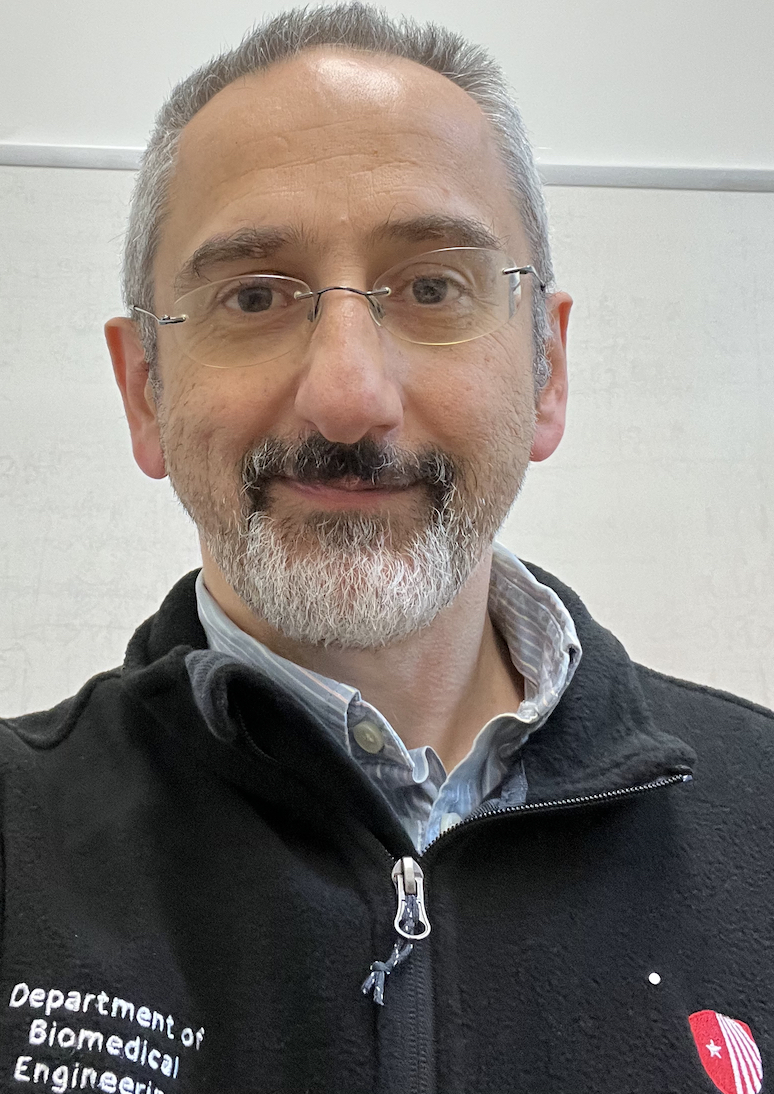
Ulas Sunar is the SUNY Empire Innovation Associate Professor in the Department of Biomedical Engineering at Stony Brook University, affiliated with the College of Engineering and Applied Sciences. His research focuses on developing quantitative optical imaging tools for neuroimaging and cancer imaging in both preclinical and clinical settings. Key areas include diffuse correlation spectroscopy (DCS), fluorescence imaging, and photodynamic therapy (PDT) monitoring. His work spans optical techniques for cerebral blood flow monitoring in traumatic brain injury (TBI), non-invasive imaging of tumor response to therapy, and device innovation such as FPGA-based real-time DCS systems. Collaborations involve interdisciplinary applications in oncology, neurology, and medical diagnostics. Notable contributions include clinical trials of time-gated DCS systems and studies on light-triggered drug release mechanisms. Research trends highlight advancements in optical imaging sensitivity, integration of therapeutic and diagnostic tools (theranostics), and translational studies linking preclinical models to clinical applications. His lab emphasizes multimodal approaches combining optical, ultrasound, and photoacoustic imaging for comprehensive tissue analysis. Awards and grants are not explicitly listed in the provided text, though his extensive publication record indicates sustained research impact. Advising and mentoring focus on graduate students in biomedical engineering and affiliated programs. He maintains a lab dedicated to optical imaging technologies, contributing to Stony Brook’s interdisciplinary research ecosystem.
Fernando Lopez-Lezcano is a Lecturer at Stanford University's Center for Computer Research in Music and Acoustics (CCRMA) where he has been working since 1993. His work combines music composition, electronic engineering, and programming with a focus on spatial audio and sound diffusion technologies. He was the Edgar Varese Guest Professor at TU Berlin during the Summer of 2008 and is the 2014 winner of Stanford's Marsh O'Neill Award for Exceptional and Enduring Support of Stanford University's Research Enterprise. Lopez-Lezcano's research interests center on computer music, spatial audio technologies, and sound diffusion systems. He has pioneered work in High Order Ambisonics (HOA), developing novel decoders and reverberation architectures for immersive sound environments. His work on the SpHEAR Project has created innovative 3D-printed soundfield microphone arrays, while his development of the GRAIL (Giant Radial Array for Immersive Listening) has revolutionized concert speaker arrays for HDLAs (High Density Loudspeaker Arrays). He has also created numerous open-source tools and software environments for spatial sound composition and diffusion. His recent creative output demonstrates a consistent exploration of 3D sound spatialization, modular synthesis, and interdisciplinary collaborations. Across his compositions, he frequently integrates custom-built hardware like his modular synthesizers (including the famous 'El Dinosaurio' built in 1980-81) with sophisticated software environments written in SuperCollider. His work often bridges acoustic and electronic sound sources, creating rich spatial experiences that explore the relationship between technology and artistic expression. Among his notable achievements is the 2014 Marsh O'Neill Award, recognizing his exceptional support of Stanford's research enterprise. This prestigious award was inspired by Marsh O'Neill, Associate Director of the W.W. Hansen Laboratories, and honors outstanding staff members who support faculty research activities. Lopez-Lezcano has mentored numerous students in the development of musical instruments and performance systems, most notably the 'Ensemble AnaLocos' (Analógicos Locos or 'Crazy Analogs') which created the 'Noise Toaster' synthesizers. He has also developed important infrastructure for CCRMA including 'Planet CCRMA,' a collection of open-source audio software for Linux. His teaching includes the 'Sound in Space' course (Music 222), which covers historical background, techniques, and theory on the use of space in music composition and diffusion. He directs the CCRMA Stage concerts and has been instrumental in developing CCRMA's spatial audio infrastructure, including the GRAIL system used in Bing Concert Hall. His work with the SpHEAR Project has advanced 3D sound recording techniques, while his collaborations with performers like Michiko Theurer (violin) and Chris Chafe (celletto) have produced innovative interdisciplinary performances.
Prof Nikolaos Nikiforakis is a Professor at the University of Cambridge, leading the Laboratory for Scientific Computing at the Cavendish Laboratory. He holds roles including Director for Academic Programmes of the Centre for Scientific Computing, Course Director of the MPhil in Scientific Computing, and Deputy Director of the EPSRC Centre for Doctoral Training in Computational Methods for Materials Science. He is also a Fellow and Director of Studies in Mathematics at Selwyn College, Cambridge. He directs The Gianna Angelopoulos Programme for Science Technology and Innovation. He holds a BSc in Aeronautical Engineering from the University of Manchester, followed by an MSc in Aerospace Propulsion and a PhD in 'Evolution of Detonation Waves' from Cranfield Institute of Technology. His postdoctoral research at the University of Cambridge’s Department of Chemistry focused on computational models for stratospheric ozone depletion. He later founded the Laboratory of Computational Dynamics at the Department of Applied Mathematics and Theoretical Physics before joining the Cavendish Laboratory in 2008. His research focuses on numerical algorithms and High Performance Computing for multi-physics simulations involving complex systems of nonlinear PDEs. Applications span detonation dynamics, plasma physics, and materials science, with industry collaborations for software development. His work addresses multi-scale, multi-physics problems previously deemed intractable, with practical applications in aerospace, energy, and environmental fields. He leads academic programmes in scientific computing and supervises doctoral research through the EPSRC CDT. His contributions bridge fundamental science and industrial innovation, emphasizing computational methods for materials and fluid dynamics.