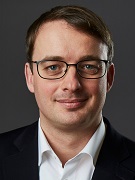
Ahsan Hayat is a Researcher at the Chair of Experimental Physics and Functional Materials at Brandenburg University of Technology Cottbus-Senftenberg (BTU). His role since 2019 focuses on the Growth and Characterization of GeSn nanostructures using Molecular Beam Epitaxy. He holds a Master's in Sustainable Materials-Crystalline Materials from Albert Ludwigs University of Freiburg (2016–2019), where his thesis addressed Photoelectron Spectroscopy of epitaxial thin films. His undergraduate degree (BE in Material Science and Engineering, 2009–2013) from National University of Science and Technology, Islamabad, involved developing eco-friendly corrosion inhibitors for carbon steels using pharmaceutical compounds. His research interests span functional materials, nanostructure growth, and sustainable materials science. He collaborates with the Experimental Physics and Functional Materials team led by Prof. Inga Fischer, contributing to advanced materials characterization projects. Key projects include GeSn nanostructure synthesis via MBE and corrosion inhibition mechanisms. Though no specific awards or articles are listed, his work aligns with cutting-edge materials physics and sustainable materials innovation.
Prof. Dr.-Ing. Hakan Kayal serves as University Professor for Aerospace Engineering at the University of Würzburg, holding the Chair of Computer Science VIII (Space Technology) and chairing the Interdisciplinary Research Center for Extraterrestrial Studies (IFEX). His leadership bridges computer science and space systems engineering within the university's Institute of Computer Science. Research focuses on three synergistic domains: nanosatellite development for extraterrestrial missions (including the SONATE-2 6U platform demonstrating AI-driven onboard processing), scientific investigation of Unidentified Anomalous Phenomena (UAP) through the university's collaboration with the Federal Aviation Office, and spacecraft autonomy systems enabling higher mission independence. Current projects include the NEAlight mission (extended to develop the Apophis Interceptor concept for the 2029 asteroid flyby), VaMEx3-MarsSymphony for Mars exploration, and JMU Space Observatory initiatives. Publication trends reveal strong emphasis on asteroid defense strategies (particularly for Apophis), CubeSat-based UAP detection methodologies, and real-time AI processing in constrained space environments. His team actively engages students through ADS-B tracking, Meteosat App development, and Moon Base 2030 projects, while recent recognition includes co-authoring a landmark UAP review in Progress in Aerospace Sciences with 33 international scientists.
Debora Weber-Wulff is a Professor of Media Informatics at the Berlin University of Applied Sciences with a doctorate in computer science. She serves as an ethics evaluator for EU projects and is active in the European Network for Academic Integrity and the VroniPlag Wiki. Her research focuses on ethical issues in computer science, particularly examining the intersection of technology and moral decision-making. Dr. Weber-Wulff has made significant contributions to understanding how IT systems can be designed, operated, and used ethically, with particular attention to biometrics, data protection, and intellectual property concerns. Her publications reveal a consistent focus on practical applications of ethical frameworks in technology. The 2023 publication "Remorse – Case studies on ethical problems in computer science" demonstrates her ongoing commitment to developing case-based approaches for teaching and understanding ethical dilemmas in the field. Her work bridges theoretical ethical considerations with practical implementation challenges. Scientific Awards: Fellow of the German Informatics Society As an active participant in professional organizations, Dr. Weber-Wulff contributes to shaping ethical standards in computer science education and practice. Her involvement with the European Network for Academic Integrity and the VroniPlag Wiki demonstrates her commitment to maintaining academic standards and addressing plagiarism issues in scholarly work.
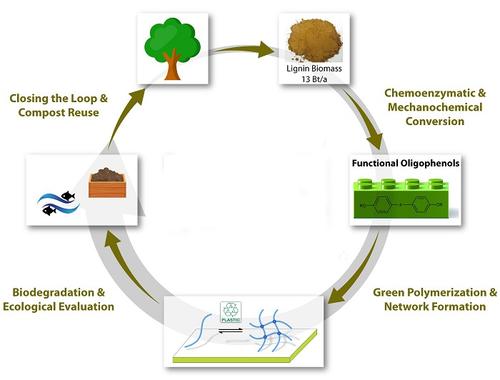
Rainer Haag is a Professor at the Department of Chemistry, Freie Universität Berlin, leading the Haag Group in the Institute of Chemistry and Biochemistry. His research focuses on biodegradable and sustainable materials, dynamic hydrogels, and polymeric nanosystems for biomedical applications. Department of Chemistry, Freie Universität Berlin Member of SFB 1449: Dynamic Hydrogels at Biointerfaces Collaborator in the StemGel startup project Co-founder of CSR|Berlin interdisciplinary research institute Research Interests: Development of stimuli-responsive polymers, multivalent virus inhibitors, and functional biointerfaces. Key projects include: Antiviral coatings using heteromultivalent polymers Thermoresponsive hydrogels for stem cell expansion Graphene derivatives for bacterial capture and disinfection Lignin upcycling for sustainable resin materials Supramolecular nanosystems for drug delivery Publication Trends highlight interdisciplinary work in polymer chemistry, nanotechnology, and biomedical applications. Recent articles focus on: 2D polyglycerols for virus interactions Redox-responsive nanogels Mucus-inspired adhesive hydrogels Tumor-targeting micelles Bacterial disinfection using graphene composites Labs & Collaborations include the Polymeric and Supramolecular Nanosystems subgroup, the Dynamic Hydrogels and Biointerfaces team, and partnerships with MIT in developing bioinspired adhesives. His group contributes to DFG-funded SFB 1449 and CSR|Berlin initiatives.
Bernhard J. Berger is a Lecturer in the Department of Computer Engineering at the Institute of Embedded Systems, Hamburg University of Technology (TUHH). His research focuses on software security, static code analysis, machine learning, optimization, and research data management. He has held significant roles such as Program Committee member for ICPC 2025 and MSR 2025, and has received awards including the Best Reviewer Award (ICPC 2023) and Best Engineering Paper Award (SCAM 2019). His work spans interdisciplinary applications including maritime systems security, GPU-accelerated AI, and evolutionary algorithms. Recent studies emphasize AI-driven security tools (e.g., ML-SAST) and domain-specific language approaches to optimization (EvoAl). He has contributed to over 30 peer-reviewed publications, with notable work in IEEE Transactions on Software Engineering and Science of Computer Programming. Berger collaborates closely with industry through DAAD review committees and serves on artifact evaluation boards for ISSTA and ARES conferences. Education: Doctoral Thesis (2022), Diploma in Computer Science (2007) Key Projects: ArchSec tool suite, Threat Modeling Frameworks, Bauhaus static analysis methodology Lab Affiliation: Embedded Systems Design Group His advisory roles include Deputy of TUHH's Election Verification Committee and Session Chair at IEEE Congress on Evolutionary Computation 2023. Current research trends integrate machine learning with static analysis for automated vulnerability detection, while also exploring explainable AI techniques for neural network optimization.
Hidetoshi Katori is a Japanese physicist and Professor at the University of Tokyo , renowned for his pioneering work in optical lattice atomic clocks and quantum metrology . Since 2011, he has served as Chief Scientist at the Quantum Metrology Laboratory, RIKEN , advancing precision measurements and ground-breaking experiments in fundamental physics. Key Achievements : Invention of the Magic Wavelength Technique , enabling ultra-precise optical lattice clocks; measurement of gravitational redshift using transportable strontium clocks on Tokyo Skytree. Education : University of Tokyo (alma mater). Research Interests : Katori’s work spans atomic physics , quantum optics , and metrology , focusing on high-precision timekeeping, quantum state control, and testing general relativity via experimental physics. Publications highlight his contributions to optical clocks , quantum technologies , and precision measurement , with recent advancements in cryogenic lattice clocks and transportable clock systems. Scientific Awards : I. I. Rabi Award (2008) Asahi Prize (2012) Nishina Memorial Prize (2013) Medal with Purple Ribbon (2014) Japan Academy Prize (2015) Micius Quantum Prize (2020) Breakthrough Prize in Fundamental Physics (2022) Honda Prize (2022) Katori leads the Katori & Ushijima Laboratory at the University of Tokyo, collaborating on quantum metrology projects and mentoring researchers. His work has been recognized in the Asian Scientist 100 and through grants supporting advanced clock development.
Christoph Keplinger serves as Managing Director of the Max Planck Institute for Intelligent Systems (MPI-IS) in Stuttgart, Germany, leading the Robotic Materials Department since 2020 and assuming overall institute leadership in 2023. He holds dual academic appointments as Honorary Professor at the University of Stuttgart and Eminent Visiting Professor of Soft Robotics at the University of Colorado Boulder, establishing him as a pivotal figure in bridging fundamental materials science with advanced robotics. His interdisciplinary approach integrates physics, chemistry, and engineering to pioneer breakthroughs in soft robotic systems. Keplinger's academic foundation includes a PhD in Soft Matter Physics from Johannes Kepler University Linz, Austria, followed by postdoctoral research at Harvard University focusing on mechanics and chemistry of soft materials. This unique background enabled his transition into robotics innovation, particularly in electrohydraulic actuation systems. His research program centers on three synergistic pillars: (I) soft robotics development through novel actuator technologies like HASEL artificial muscles; (II) energy capture mechanisms using soft materials; and (III) functional polymers engineered for robotic applications. This work produces transformative hardware that mimics biological functionality, with significant implications for human-robot interaction, medical devices, and sustainable robotics systems. His group employs cutting-edge materials synthesis and characterization techniques to create lifelike robotic components. Analysis of recent publications reveals dominant trends in wearable haptic interfaces, electrohydraulic actuation systems, and tremor-suppression technologies. The research consistently leverages HASEL (Hydraulically Amplified Self-healing Electrostatic) technology to achieve muscle-like performance in soft actuators, with applications spanning from fingertip haptic feedback to underwater manipulation systems. This trajectory demonstrates a clear progression from fundamental material properties toward practical implementations in medical rehabilitation and human augmentation. His exceptional contributions have earned prestigious recognition: 2017 Packard Fellowship for Science and Engineering, awarded for high-impact interdisciplinary research 2021 Alexander von Humboldt Professorship (declined to remain at MPI-IS), Germany's most valuable international research award 2013 EAPromising European Researcher Award from the European Scientific Network for Artificial Muscles As principal investigator, Keplinger leads a dynamic interdisciplinary research group while securing competitive funding for frontier projects. His entrepreneurial vision materialized in 2018 through co-founding Artimus Robotics, where he serves as Chief Science Officer to commercialize HASEL technology. This dual commitment to academic research and industry translation exemplifies his dedication to real-world impact, particularly in creating biodegradable and sustainable soft robotic solutions. The Robotic Materials Department operates state-of-the-art facilities for materials fabrication, robotic integration, and haptic interface development. The team maintains strong collaborations across MPI-IS departments and external institutions including the University of Colorado Boulder, fostering innovation in sustainable robotics through initiatives like biodegradable electrohydraulic actuators. Current projects focus on wearable tremor suppression systems, electrohydraulic locomotion platforms, and energy-autonomous soft robots that address critical challenges in medical rehabilitation and human augmentation.
Prof. Alessandro Golkar is a Professor at the Technical University of Munich (TUM), leading the Chair of Picosatellites, Nanosatellites, and Satellite Constellations. He joined TUM in September 2022 and previously served as one of the founding faculty members at Skoltech, a Moscow-based graduate research university. His research focuses on advanced space mission concepts, systems engineering for picosatellites, and federated satellite systems. Prior to academia, he held roles at Airbus CTO, contributing to technology roadmapping and planning. His academic background includes expertise in aerospace engineering, systems design, and agile development methodologies for space hardware. Key research areas include CubeSat constellations, distributed satellite systems, and the integration of AI tools like Large Language Models (LLMs) into spacecraft design processes. He has pioneered projects such as the FSSCat mission, winner of the ESA Sentinel Small Satellite Challenge, and has explored applications of additive manufacturing for lunar missions. Prof. Golkar’s awards include the 2021 Karman Fellowship and IEEE Senior Membership (2018). His recent work emphasizes optimizing satellite networks, digital twin implementation, and orbital maneuvering for collision avoidance. He actively contributes to technology roadmapping, focusing on future human landing systems and lunar infrastructure development. Education: Ph.D. in Aerospace Engineering (details not explicitly stated). Grants & Funding: Extensive grants for CubeSat projects, federated systems research, and space technology innovation. Labs/Teams: Leads the Chair’s research group at TUM and collaborates with industry partners like Airbus on advanced mission concepts. His publications span over two decades, addressing topics like constellation design, machine learning in space, and agile processes for hardware development. He advocates for hybrid agile methodologies to bridge traditional systems engineering and modern product development.
Stefanie Mueller is the TIBCO Career Development Associate Professor at MIT's Electrical Engineering and Computer Science Department, with joint affiliation in Mechanical Engineering. She leads the HCI Engineering Group at the Computer Science and Artificial Intelligence Laboratory (CSAIL), focusing on advancing fabrication techniques through hardware/software innovations that enable novel object interactions. Develops computational fabrication methods combining photochromic dyes, lenticular lenses, birefringent materials, and optical illusions Co-chaired ACM CHI 2023 and ACM UIST 2020 program committees Recipients of 9 MIT EECS Best Undergraduate Researcher Awards among mentees Her research spans four key directions: Appearance-changing Objects: Photo-Chromeleon (ACM UIST 2019), Lenticular Objects (ACM UIST 2021), and Polagons (ACM CHI 2023) demonstrate reprogrammable surfaces through advanced materials and optical engineering. Tracking Systems: InfraredTags (ACM CHI 2022) and G-ID (ACM CHI 2020) enable passive object tracking via infrared markers and slicing artifacts. Embedded Sensing: MechSense (ACM CHI 2023) and Sprayable User Interfaces (ACM CHI 2020) integrate sensing capabilities into complex geometries. Curved Surface Prototyping: FlexBoard (ACM CHI 2023) and CurveBoard (ACM CHI 2020) develop specialized tools for non-planar electronics. Her recent publications focus on functionality segmentation (UIST 2023), fluorescent markers (UIST 2023), and machine-knitted haptics (UIST 2023). These works combine machine learning, material science, and interactive design principles to push fabrication boundaries. Scientific recognition includes: 2022 MIT Technology Review Innovators Under 35 2020 Microsoft Research Faculty Fellowship 2020 Alfred P. Sloan Research Fellowship 2019 ACM UIST Best Paper Award 2019 NSF CAREER Award 2018 MIT EECS Outstanding Educator Award 2017 Forbes 30 Under 30 in Science Mentoring 9 PhD students and over 20 master's students, her lab has produced 20+ publications at top HCI conferences. She redesigned MIT's 6.810 Engineering Interactive Technologies course during the pandemic, maintaining hands-on learning through home electronics kits and Slack-based collaboration.
Felix Bott is a Researcher at Technische Universität München (TUM), currently affiliated with PainLabMunich at Rechts der Isar Hospital since September 2020. Previously, he served as a Research Associate and Teaching Assistant in the Mechanics & High Performance Computing Group at TUM from April 2018 to March 2020. His academic credentials include a Master of Science in Mechanical Engineering (TUM, 2018) and a Master de Sciences, Technologies, Santé specializing in multi-scale mechanics modeling (2019). Research Focus Bott's research specializes in computational mechanics, emphasizing mesh-free discretization techniques like Moving Kriging Collocation and Peridynamics. He develops probabilistic numerical methods for uncertainty quantification and inverse analyses, with applications in solid mechanics and engineering simulations. His work bridges theoretical computational frameworks with practical engineering challenges. Teaching & Advising As a teaching assistant, he led courses in Engineering Mechanics I (WS 2018/19) and Engineering Mechanics II (SS 2018, SS 2019). He supervised multiple student projects including Master's theses on peridynamics-based continuum modeling, Bachelor's theses on medical device mechanics, and research internships in dynamical systems visualization and impact phenomena simulation. Laboratory Affiliations Currently conducts research at PainLabMunich (Rechts der Isar Hospital), focusing on computational approaches for medical-mechanical problems. Previously contributed to the Mechanics & High Performance Computing Group at TUM, developing advanced numerical methods for engineering applications.
Xiaoxiang Zhu is a Professor for Data Science in Earth Observation at the Technical University of Munich (TUM) and serves as the Director of the International AI Future Lab - AI4EO. She is also on the Board of Directors of the Munich Data Science Institute (MDSI) and has held various leadership positions in research institutions including as Spokesperson for Helmholtz AI Research Field "Aeronautics, Space and Transport" (MASTr). Her educational background includes a doctorate (Dr.-Ing.) and habilitation from TUM. She has held positions as Private Dozent at TUM (2013-2015), TUM Junior Fellow (2013-2015), and Research Group Leader for "SparsEO" at Munich Aerospace (2011-2016). Professor Zhu's research focuses on the intersection of remote sensing, artificial intelligence, and data science. Her work primarily addresses global urban mapping, sustainable development goals, and climate change monitoring through Earth observation technologies. She develops advanced signal processing techniques and machine learning algorithms specifically tailored for satellite imagery and geospatial data analysis. Her research has significant applications in urban planning, environmental monitoring, and disaster management. Her team has pioneered approaches that combine synthetic aperture radar (SAR) with deep learning for improved Earth observation capabilities. Professor Zhu has received numerous prestigious awards including being named an IEEE Fellow (2021), receiving the Geodesy Award of the Nico Rüpke Foundation (2020), and being awarded an ERC Proof of Concept Grant (2020, 2022). She is also a Fellow of the Academia Europaea (2024) and AAIA Fellow (2024). Her publication record includes highly cited works such as "Deep Learning in Remote Sensing: A Comprehensive Review and List of Resources" (2017). She leads a substantial research team comprising numerous PhD students and postdoctoral researchers working on various projects including Horizon Europe - ThinkingEarth, EarthCare, and AI4TWINNING. Her research group, the Chair of Data Science in Earth Observation, is actively involved in multiple large-scale European and German research initiatives focused on Earth observation and AI applications.
Prof. Mark Heitmann is a Professor of Marketing & Customer Insight at the University of Hamburg Business School. He holds a visiting appointment at Nova School of Business and Economics. His research focuses on AI-driven marketing strategies, social media analytics, brand equity, and consumer decision-making. He has held academic roles at institutions including the University of St. Gallen and Christian-Albrechts-University in Kiel before joining Hamburg in 2011. Academic Career: Holds a PhD (2004) and post-doctoral Habilitation (2007) from the University of St. Gallen. Visiting researcher at Columbia University and the Max Planck Institute for Human Development. Research Interests: Applications of artificial intelligence in marketing Social media and digital transformation Ethical consumer behavior Brand self-expression and visual design Marketing technology (MarTech) innovations Key Achievements: Over 20 peer-reviewed publications in top journals like Journal of Marketing Research and Harvard Business Review . Award-winning research includes the MSI/H. Paul Root Award and IJRM-EMAC Best Article Award. Active in translating research into scalable commercial solutions through software-as-a-service ventures. Team & Collaborations: Leads a research team including M.Sc. candidates Sammar Rath, Julia Rosada, Maximilian Witte, Tijmen Jansen, Claus Hegmann-Napp, and Magdalena Heynicke. Engages in interdisciplinary projects with industry partners.
Prof. Maja Horst is a Visiting Professor of Science and Technology Policy at the Department of Science, Technology and Society (STS) at Technical University of Munich. She holds a PhD in Science Communication from Copenhagen Business School (2003) and has held academic roles including Head of the Department of Media, Cognition and Communication at the University of Copenhagen (2011–2014) and Professor of Responsible Technology at DTU Technical University of Denmark (2019). Her research focuses on public communication of science, societal responsibility in technology, and innovation governance. She chairs DTU’s Responsible Technology group and is a member of the Danish Academy of Technical Sciences. Key roles include Chair of the Danish Independent Research Fund Board and President of the European Association for the Study of Science and Technology (EASST). Education: MA in Social Science and Communication, Roskilde University (1996) PhD in Science Communication, Copenhagen Business School (2003) Research Interests: Public communication of controversial technologies Social responsibility in science and technology Innovation governance and ethics Sociology of science and technology Recent Focus: Her work emphasizes interactive installations for science communication and co-creation in energy transitions. Over 20+ publications address topics like gene editing ethics, public debate frameworks, and trust in science. Awards: 2021: Hans Fischer Senior Fellowship (TUM-IAS) 2019: Danish Science Minister’s Communication Prize Leadership & Service: President, European Association for the Study of Science and Technology Chair, Danish Independent Research Fund Board
Benjamin Lange is a Research Professor and Junior Research Group Leader in the Ethics of AI and Machine Learning at Ludwig Maximilians University of Munich (LMU) and the Munich Center for Machine Learning (MCML). He is also an Associate Research Fellow at the Oxford Uehiro Institute for Practical Ethics and a member of LMU's Zentrum für Ethik und Philosophie in der Praxis (ZEPP). His research bridges foundational ethical theory with practical challenges in technology, business, and organizational ethics. Lange holds a BSc from the London School of Economics, and a B.Phil and D.Phil from the University of Oxford. He previously held visiting positions at Google’s Responsible Innovation team and the University of Hamburg. His research focuses on ethical frameworks for AI, digital ethics, and corporate responsibility. Key themes include the ethics of human-AI collaboration, moral partiality in relationships, and organizational ethics. He has advised the European Commission on AI governance and developed assurance audit methodologies for algorithmic systems, including work for NYC’s AI Bias Law. His consulting practice focuses on helping organizations build ethical cultures through capabilities like moral imagination and compliance frameworks. Lange’s work has been featured in media such as CBS News, Business Insider, and ZDF heute journal. He is completing a book on the ethics of interpersonal relationships and partiality, aiming to connect philosophical insights with practical applications. His recent publications explore moral imagination in engineering teams, bias mitigation in AI systems, and the ethical implications of digital duplication technologies. He advises Fortune 500 companies, startups, and public institutions across sectors including finance, technology, and education. His approach emphasizes aligning ethical practices with organizational growth and social impact through tailored ethical frameworks and stakeholder engagement strategies.
Julian McAuley is a Professor in the Department of Computer Science and Engineering at the University of California, San Diego's Jacobs School of Engineering. His research spans recommender systems, machine learning, natural language processing, music information retrieval, and multimodal learning. He maintains an active research group with numerous PhD students and postdocs working on cutting-edge AI problems. His research interests focus on developing advanced algorithms for personalized recommendation systems, with particular emphasis on sequential recommendation, multimodal learning, and integrating large language models with traditional recommendation approaches. His work bridges the gap between theoretical machine learning and practical applications across multiple domains including e-commerce, music, and healthcare. McAuley has published extensively in top-tier conferences including NeurIPS, ICML, KDD, SIGIR, and ACL, with his most recent work exploring the intersection of large language models and recommendation systems. His publications reveal a strong trend toward multimodal approaches that combine text, vision, and audio for more comprehensive understanding and recommendation. He has received significant research funding from major technology companies including Google, Amazon, Facebook, Adobe, and Samsung, as well as government agencies like the National Science Foundation and Department of Defense. His work has practical applications across multiple industries, with a focus on improving user experience through better personalization. McAuley advises numerous PhD students who have gone on to successful careers at leading technology companies and academic institutions. His former students include Wang-Cheng Kang and Jianmo Ni at Google DeepMind, Chris Donahue and Zachary Lipton as assistant professors at CMU, and Ruining He at Google Deepmind.