Professor Kathy Bowrey is a leading academic in Intellectual Property Law at UNSW Sydney's Faculty of Law. Her work explores laws shaping knowledge creation, technology, and culture, with expertise in IP, Indigenous rights, and open research advocacy. She holds a Doctor of Juridical Studies from the University of Sydney and a BA LLB from Macquarie University. Her research focuses on historical and contemporary IP frameworks, including their impact on creators, Indigenous communities, and global innovation systems. Notable projects include the ARC-funded 'Producing, Managing and Owning Knowledge in the 21st Century University' (2019–2022), which shaped Australia's open research policies. Awards include the 2022 ANZLHS Book Prize for *Copyright, Creativity, Big Media & Cultural Value* and fellowships at the State Library of NSW and Museum of Applied Arts and Sciences. She co-authored *Adventures in Childhood* (2023), examining IP in toy and media industries, and *David Unaipon* (2023), exploring Indigenous innovation. Professor Bowrey co-leads the International Society for the History and Theory of Intellectual Property (ISHTIP) and advises on national research policies. Her grants include ARC Discovery Projects on Australian copyright history and IP commercialization.
Walter W. Powell is the Jacks Family Professor of Education at Stanford University, with courtesy appointments in Sociology, Organizational Behavior, Management Science and Engineering, and Communication. He serves as Faculty Co-Director of the Stanford Center on Philanthropy and Civil Society (PACS), which he co-founded in 2006, and leads the Civic Life of Cities Lab examining civil society organizations across global metropolitan areas. Powell is also an External Faculty member at the Santa Fe Institute and co-directs the CASBS summer institute on Organizations with MIT's Bob Gibbons. His educational background includes a PhD in Sociology from SUNY-Stony Brook (1978), an MA in Sociology from the same institution (1975), and a BA from Florida State University (1971). Powell's research fundamentally explores how ideas and practices transfer across organizational boundaries, with particular emphasis on network structures that enable or constrain knowledge diffusion. His work spans organizational theory, institutional analysis, university-industry relations, economic sociology, and comparative analysis of nonprofit, public, and private institutional forms. Powell's publications reveal consistent focus on network dynamics and institutional evolution, particularly examining how organizations navigate between market, hierarchy, and network governance structures. His research demonstrates how knowledge spillovers operate within biotechnology clusters, how institutional isomorphism shapes organizational fields, and how civil society organizations adapt to technological and economic pressures across different urban contexts. Dean's Award for Excellence in Graduate Teaching (2018-19) Max Weber Award for "Neither Market Nor Hierarchy" Viviana Zelizer Prize for "Network Dynamics and Field Evolution" Administrative Science Quarterly Recognition Member of Swedish Royal Academy of Science Member of The British Academy Member of American Academy of Arts and Sciences Honorary Degrees from Uppsala University, Copenhagen Business School, and Aalto University Powell has made substantial contributions to graduate education, receiving Stanford's highest teaching honor. His leadership of PACS and SCANCOR (1999-2010) demonstrates sustained commitment to advancing organizational research through collaborative initiatives. He supervises postdoctoral fellows and runs annual PhD workshops in Europe, fostering the next generation of organizational scholars. His research has been supported by grants enabling comparative studies of university-industry relations and civil society across multiple national contexts. Through the Civic Life of Cities Lab at PACS, Powell directs comparative research on civil society organizations across seven global cities, examining how these organizations navigate technological change, economic pressures, and political environments. His work bridges theoretical organizational sociology with practical applications in philanthropy, civil society development, and knowledge transfer between academic and commercial sectors.
David Wentzloff is a Professor of Electrical Engineering and Computer Science at the University of Michigan, where he has been on faculty since 2007. He directs the Wireless Integrated Circuits and Systems (WICS) group and serves as Director of the Michigan Integrated Circuits Laboratory (MICL). Wentzloff received his B.S.E. from the University of Michigan in 1999 and his S.M. and Ph.D. from MIT in 2002 and 2007. Wentzloff's research focuses on low-power integrated circuits for wireless communication in energy-constrained and volume-constrained applications. His work spans three primary areas: Synthesizable all-digital radios and radio building blocks Wireless body sensor networks (channel modeling, radios, and antennas) Radios and interfaces for millimeter-scale computing devices His innovations have significantly reduced power consumption in wireless communication for IoT devices, impacting standards including Bluetooth, WiFi, and 5G/6G. Analysis of his publication record reveals a consistent focus on ultra-low power wireless communication, with recent work emphasizing back-channel communication techniques that achieve 500x power reduction compared to conventional approaches. His research bridges theoretical circuit design with practical applications in healthcare, industrial monitoring, and consumer electronics. Wentzloff's scientific recognition includes: 2024 University of Michigan Faculty Recognition Award NSF CAREER Award (2012) DARPA Young Faculty Award (2009) Multiple best paper awards Two-time recipient of the Eta Kappa Nu Professor of the Year Award As an educator and mentor, Wentzloff has graduated 21 doctoral students and mentored dozens of master's and undergraduate researchers. He has taught courses ranging from introductory circuits to advanced graduate topics in analog and RF design. His entrepreneurial impact includes co-founding three successful companies: Everactive (formerly PsiKick), Movellus, and CubeWorks, which commercialize technologies developed in his research lab. Wentzloff leads the WICS research group, which operates within the Michigan Integrated Circuits Laboratory. His team develops cutting-edge technologies for batteryless sensing systems, millimeter-scale computing platforms, and ultra-low power wireless communication solutions that enable the next generation of Internet of Things applications.
Colleen Conley is a Clinical Professor in the Department of Psychology at Loyola University Chicago, specializing in clinical psychology with a focus on adolescent and emerging adult mental health. She directs the IMPACT (Improving Mental-health and Promoting Adjustment through Critical Transitions) Lab, which conducts research on psychological well-being during developmental transition periods. Dr. Conley earned her Ph.D. from the University of Illinois at Urbana-Champaign and her B.A. from Lawrence University. Her research program blends observational studies, meta-analyses, and intervention development to improve well-being, particularly during critical life transitions like the college years. Her work examines psychological trajectories in adolescence and emerging adulthood, with special attention to gender issues and LGBTQIA+ well-being. Her research interests center on developmental psychopathology, examining the interplay between individuals and their contexts over time. She investigates how biological, psychological, cognitive, and social factors interact to influence psychological distress and well-being. Much of her work focuses on college student mental health, including trajectories of well-being during the transition to college and interventions to address mental health challenges. Analysis of her recent publications reveals a strong focus on college student mental health, with emphasis on developmental trajectories, intervention effectiveness (particularly peer-led and technology-delivered approaches), and the impact of transition periods on psychological functioning. Her work increasingly incorporates digital interventions and examines moderators of intervention effectiveness across diverse student populations. Research Mentoring Award Program recognition for mentoring award-winning students Heckler Summer Research Fellowship recognition for mentoring fellowship recipients Dr. Conley mentors numerous graduate students in the clinical psychology program, with many completing dissertations on topics related to mental health interventions, student well-being, and developmental transitions. Her IMPACT Lab collaborates with university staff, administrators, and other researchers to develop practical interventions that address student mental health needs. Current projects include Honest, Open, Proud (HOP) for stigma reduction, Wellness Advising with Motivational Interviewing (WAMI), Students Taking on Effective Post-Graduate Skills (STEPS), and Supportive Accountability Methods for Mentoring Young Adults (SAMMY-A). The lab also partners with commercial entities like Headspace for mindfulness research.
Max Planck Institute for the Science of LightGermany
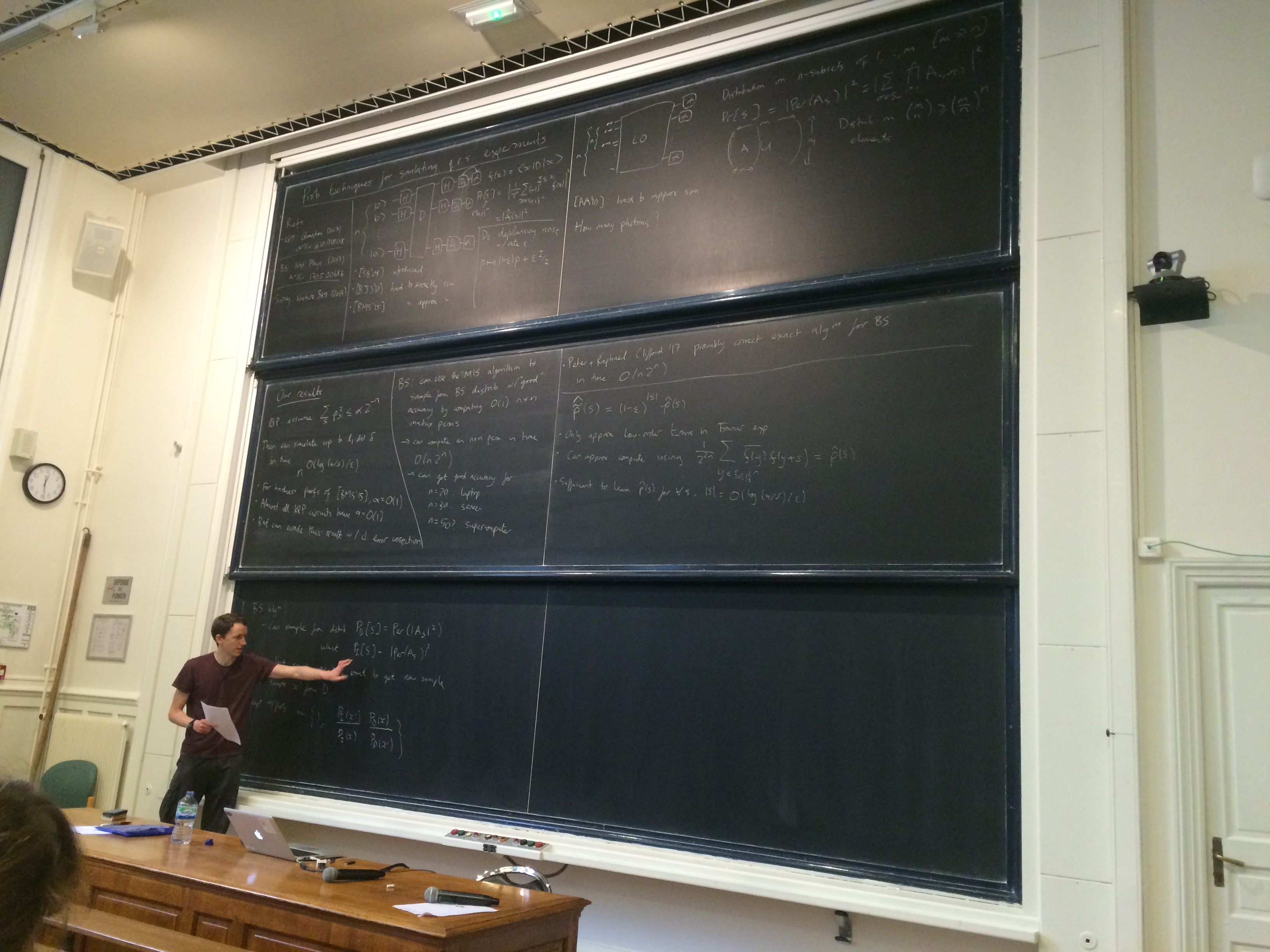
Ashley Montanaro is Professor of Quantum Computation in the School of Mathematics at the University of Bristol, and co-founder of the quantum software startup Phasecraft. He is a member of the Quantum Information Theory research group at Bristol. His research focuses on the theory of quantum computing, with particular interest in quantum algorithms, computational complexity, quantum query and communication complexity, and classical algorithms. His work spans both theoretical foundations and practical applications of quantum computing. Montanaro's research output shows significant trends toward quantum algorithms for optimization problems, quantum computational supremacy, and bridging theoretical advances with practical implementation challenges. His publications span foundational quantum information theory to applied quantum algorithms, demonstrating a versatile research program that connects computer science with quantum physics. Among his professional activities, Montanaro served on the QIP steering committee (2016-2018) and was an editor for the Quantum journal until 2019. He has been active in conference organization, serving on program committees for ITCS 2018, AQIS 2017 and 2015, QIP 2015, and TQC 2014 and 2013, reflecting his standing in the quantum computing research community. He has supervised numerous PhD students including Josh Blake, Jorja Kirk, Sheila Perez Garcia, Sami Boulebnane, Jan Lukas Bosse, Lana Mineh, Joao F. Doriguello, Chris Cade, Sam Pallister, and Stephen Piddock. His teaching includes Quantum Computation (MATHM0023) which he has taught since 2014 and Advanced Quantum Information Theory which he taught in 2015 and 2016. As co-founder of Phasecraft, Montanaro is actively translating theoretical quantum computing advances into practical software solutions, positioning him at the intersection of academic research and quantum technology commercialization.
Michael J. Aziz is the Gene and Tracy Sykes Professor of Materials and Energy Technologies at Harvard University's John A. Paulson School of Engineering and Applied Sciences (SEAS). He serves as Area Chair for Materials Science and Mechanical Engineering and is a Faculty Associate at the Harvard University Center for the Environment. His research focuses on electrochemical engineering for energy and environmental applications, including redox flow batteries, carbon capture, and sustainable energy technologies. Aziz leads the Aziz Group, which develops grid-scale energy storage solutions and innovative methods for CO₂ removal. He holds equity in Quino Energy, a startup commercializing his battery research, and serves as Chief Scientist and Board Member. His work bridges fundamental materials science with practical engineering, emphasizing ClimateTech solutions. Key contributions include aqueous organic redox flow batteries, quinone-based carbon capture systems, and wearable energy storage devices. Education & Affiliations: Affiliated with SEAS since joining Harvard, his academic roles include coordinating the Graduate Consortium for Energy and Environment (2009–2018). His lab (Materials Science Group) is located at McKay 504, with administrative support from Sabrina Azinheira. Research Interests: Aziz's group investigates electrochemical energy storage, CO₂ capture via electrochemical systems, and novel materials for sustainable technologies. They employ advanced techniques like operando electrochemical fluorescence microscopy to study porous electrode dynamics and battery degradation mechanisms. Their work emphasizes scalability and real-world applicability, such as grid-scale battery infrastructure and decarbonization strategies. Recent Trends in Publications: Aziz's recent work emphasizes carbon capture innovations (e.g., acid-base concentration swing methods), hydrogen storage under ambient conditions, and electrochemical synthesis of industrial chemicals like hydrogen peroxide. His group also develops open-source tools like RFBzero for battery modeling and explores bioinspired materials (e.g., self-gelling hydrogel batteries). Awards & Recognition: While no personal awards are explicitly listed in the text, his team members (e.g., Dawei Xi) have received accolades such as the 2025 Carbon Future Young Investigator Award. Aziz's contributions have been recognized through industry partnerships and startup ventures. Advising & Industry Impact: Aziz advises PhD students focusing on electrochemical systems (e.g., Jordan Sosa, Tommy George). His industry engagement includes licensing intellectual property to Quino Energy, which achieved a manufacturing milestone in 2024 for grid-scale battery systems. His research bridges academia and industry, addressing climate challenges through technological innovation. Labs & Teams: The Aziz Group includes interdisciplinary researchers from electrochemistry, chemical engineering, and materials science. Collaborators include institutions like MIT and industry partners. Current projects target next-gen batteries, CO₂ removal systems, and scalable energy storage solutions.
Prof. Raffaello D'Andrea is a Full Professor at ETH Zürich's Department of Mechanical and Process Engineering, affiliated with the Institute for Dynamic Systems and Control. His research focuses on bridging digital and physical worlds through robotics, control systems, and autonomous systems. He has pioneered work in aerial robotics, swarm systems, tactile sensing, and soft robotics. His philosophy emphasizes solving 'easy' problems with scalable, robust solutions, prioritizing simplicity and replicability. Key research areas include UAV navigation, distributed control, tactile sensor design, and fault-tolerant systems. He has founded multiple organizations and led roles as CTO/CEO, emphasizing cross-disciplinary innovation. His work has commercial applications in logistics, healthcare, and automation, driven by a belief in technology's role in improving human life. Notable projects include the Cubli robotic cube, aerial vehicle swarms, and optical tactile sensors for robotics. His lab emphasizes collaboration and team leadership, aiming to translate theoretical insights into practical, scalable technologies. Scientific awards: None explicitly listed in the provided texts. Advising and grants: No students listed in the provided texts; grants information not detailed. Labs/Teams: Leads research at ETH Zurich's Institute for Dynamic Systems and Control, collaborating with industry and academic partners globally.
Ron Steinfeld is an Associate Professor in the Department of Software Systems & Cybersecurity at Monash University, Australia. He holds editorial roles in Designs Codes and Cryptography (since 2017) and has served on technical committees for top-tier conferences like ASIACRYPT, CRYPTO, and EUROCRYPT. His research focuses on quantum-safe cryptography, lattice-based cryptography, and blockchain security, with over 80 refereed publications and AUD$4M+ in research funding. Education: BSc Mathematics and Physics (Monash University, 1998) BE (Hons., First Class) Electrical and Computer Systems (Monash University, 2000) PhD Computer Science (Monash University, 2003) Research Interests: Design and analysis of cryptographic algorithms, quantum-safe protocols, lattice-based security foundations, and blockchain applications. His work underpins NIST standard algorithms like Kyber and Dilithium through structured lattice problem research. Recent Articles Trends: Focus on privacy-preserving blockchain protocols, post-quantum signature schemes, encrypted data search, and cryptographic applications in adversarial AI. Recent work includes fair Bitcoin watchtower schemes and genomic database privacy solutions. Awards: ASIACRYPT 2015 Best Paper Award Advising & Grants: Supervises PhD projects on quantum-safe cryptography and blockchain security. Leads initiatives like the AUD$4M ARC-funded Quantum Information Technology project. Collaborates with industry partners including CSIRO/Data61. Labs/Teams: Key contributor to Monash’s cybersecurity and cryptography research groups, involving interdisciplinary projects on materials discovery ( Æinstein initiative) and post-quantum blockchain security.
Supratik Guha is a Professor at the Pritzker School of Molecular Engineering and Senior Advisor to Argonne National Laboratory's Physical Sciences and Engineering directorate. His work bridges industrial R&D with academic and national lab research, focusing on quantum computing , semiconductor materials , and sensor networks for water and soil monitoring. Guha leads Argonne’s quantum information science strategy and serves as Faculty Director for the University of Chicago Center in Delhi. Education: PhD in Materials Science (USC, 1991), BTech in Engineering Physics (IIT Kharagpur, 1985) Research interests span multiple domains: Quantum technologies focusing on erbium-doped oxides for quantum memory and quantum interconnects Sensor networks for soil and water quality monitoring using cyberphysical systems Nanofabrication techniques including controlled spalling for heterogeneous material integration Advanced memory technologies exploring ferroelectric and optically addressable memory at atomic scales Scientific awards include: Election to National Academy of Engineering (2015) APS Prize for Industrial Applications of Physics (2015) Vannevar Bush Faculty Fellow (2018) Fellow of Materials Research Society and American Physical Society IBM Corporate Award (2013) Advising notable students like Manish Kumar Singh (co-founder memQ ), Cheng Ji (now at Intel), and Vamsi Nittala (now at Micron Technology). His group contributes to major DOE , NSF , and USDA funded projects including: Q-NEXT - DOE National Quantum Information Center AIFARMS - NSF/USDA AI for Agriculture Institute Thoreau Project - Geospatial sensor networks Labs and teams operate across University of Chicago and Argonne National Lab , with facilities for molecular beam epitaxy , nanofabrication , and optical/electrical characterization . The group has spawned startups like memQ (quantum networking) and K1 Semiconductors (wide-bandgap material transfer).
Dr. Arno Solin is a tenured Associate Professor in Machine Learning at Aalto University's Department of Computer Science and an Academy of Finland Research Fellow . He leads the Aalto machine learning research group and serves as Director of the Finnish Doctoral Program Network in AI (AI-DOC) . His work bridges probabilistic modeling with practical applications in sensor fusion and real-time inference. ELLIS Scholar (European Laboratory for Learning and Intelligent Systems) Adjunct Professor at Tampere University Member of Young Academy Finland (2021–2025) Research Interests focus on data-efficient machine learning with probabilistic methods for real-time inference and sensor fusion. Key areas include Gaussian processes, diffusion models, stochastic differential equations, and uncertainty quantification in deep learning. His group develops methods that combine structural constraints with adaptive learning for deployment on resource-limited hardware. Publication Trends show consistent output in top venues (NeurIPS, ICML, ICLR, AISTATS) with emphasis on diffusion models , 3D scene reconstruction , and real-time probabilistic modeling . Recent works explore physics-informed learning, heterophily-aware graph models, and compressed representations for world models in reinforcement learning. Scientific Recognition : Awarded AI Researcher of the Year 2024 by AI Finland Teacher of the Year 2023 at Aalto CS ISIF Jean-Pierre Le Cadre Best Paper Award (2018) MLSP Schizophrenia Classification Challenge Winner (2014) NeurIPS/ICML Reviewer Awards Research Leadership includes coordinating Finland's AI Center of Excellence program and directing the Finnish Doctoral Program Network in AI (AI-DOC). He supervises 15+ doctoral/postdoctoral researchers and has spun off Spectacular AI , a company commercializing sensor fusion technology.
Daniel Abadi is the Darnell-Kanal Professor of Computer Science at the University of Maryland, College Park, with an appointment in the University of Maryland Institute for Advanced Computer Studies. He leads the Data Systems Lab at Maryland (DSLAM) and has made significant contributions to database system architecture and implementation, particularly in scalable and distributed systems. Prof. Abadi's research focuses on database system architecture, especially at the intersection with scalable and distributed systems. He is best-known for the development of the storage and query execution engines of the C-Store (column-oriented database) prototype, which was commercialized by Vertica and eventually acquired by Hewlett-Packard, and for his HadoopDB research on fault tolerant scalable analytical database systems which was commercialized by Hadapt and acquired by Teradata. His current work includes deterministic distributed systems like Calvin and SLOG, which provide strictly serializable, low-latency, geographically replicated database transactions. Analysis of his recent publications reveals a strong focus on modern database challenges including transaction processing, distributed systems architecture, data mesh concepts, schema evolution, and IoT data management. His work consistently addresses the tension between consistency, availability, and performance in distributed database systems, with recent emphasis on moving beyond traditional two-phase commit protocols and exploring novel approaches to data architecture like data mesh. ACM Fellow Sloan Research Fellowship Churchill Scholarship NSF CAREER Award VLDB Best Paper Award Two VLDB Test of Time Awards (for C-Store and HadoopDB) 2008 SIGMOD Jim Gray Doctoral Dissertation Award 2013-2014 Yale Provost's Teaching Prize 2013 VLDB Early Career Researcher Award PhD dissertation advisor for Alexander Thomson and Jose Falerio, whose dissertations won SIGMOD Jim Gray Doctoral Dissertation Awards in 2015 and 2020 respectively Prof. Abadi has advised multiple PhD students, including Alexander Thomson and Jose Falerio, both of whom received the prestigious SIGMOD Jim Gray Doctoral Dissertation Award. His research has been supported by numerous grants including NSF funding for projects like SLOG. He maintains an active presence in the database community through his widely-read blog DBMS Musings and through service on program committees for major conferences including SIGMOD, VLDB, and CIDR. He leads the DSLAM research group at the University of Maryland, which focuses on cutting-edge database system research with strong industry connections and practical impact.
Michael Baldea is an Associate Professor in the Department of Chemical Engineering at the University of Texas at Austin . He holds a Ph.D. in Chemical Engineering from the University of Minnesota (2006), with prior degrees from 'Babeş-Bolyai' University in Romania (M.Sc. 2001, Diploma 2000). His research group develops theoretical and computational methods for Process and Energy Systems Engineering , focusing on integrated decision-making, performance optimization, and process intensification with industrial validation. Education: Ph.D., Chemical Engineering, University of Minnesota (2006) M.Sc., Interface Process Engineering, 'Babeş-Bolyai' University (2001) Diploma, Chemical Engineering, 'Babeş-Bolyai' University (2000) Research Thrusts: Integrated decision-making in chemical/energy supply chains Process performance monitoring and optimization Process integration and intensification Key applications include grid-responsive chemical plants, intensified distillation/column designs, and renewable energy integration for building systems. Scientific Awards: Frank A. Liddell, Jr. Fellowship NSF CAREER Award (2015-2020) Moncrief Grand Challenges Faculty Award (2014) AIChE Outstanding Young Researcher Award (2017) Implementation : His group has translated research into commercial tools through partnerships with industrial test beds and is working to integrate methods into commercial simulators. They explore predictive approaches for building energy management and strategic capital investment analysis in next-generation energy systems.
George Danezis is a Professor of Security and Privacy Engineering at University College London (UCL), affiliated with the Information Security Group. He is also a faculty fellow at the Turing Institute and has held part-time roles since 2018 to focus on commercialization. His research spans systems security, privacy, anonymous communications, and blockchain technologies. Danezis co-founded Chainspace (acquired by Facebook in 2019) and Mysten Labs, where he serves as Chief Scientist. He holds a PhD from the University of Cambridge (2004) and has held positions at Microsoft Research, K.U.Leuven, and the University of Cambridge. Education: PhD (Computer Laboratory, University of Cambridge, 2004), B.A. (Hons) in Computer Science (Queens' College, Cambridge, 2000). Research interests include blockchain consensus, decentralized systems, privacy-preserving technologies, and machine learning applications in security. He has advised numerous doctoral students and led projects funded by EU Horizon 2020, EPSRC, and industry partnerships. His work emphasizes practical solutions for privacy, such as Loopix (anonymity system), Narwhal/Tusk (blockchain consensus), and Coconut (privacy credentials). Danezis has received awards for best papers (PET 2002/2018), is a Fellow of the British Computing Society, and advises organizations like Privacy International and DeepMind. Publications focus on blockchain, anonymity, and privacy, with over 100 peer-reviewed papers. Grants include leadership in projects like DECODE (EU), PANORAMIX, and Glass Houses. Teaching includes courses on computer security and privacy technologies at UCL.
Thomas R Overton serves as Department Chair and Professor of Dairy Nutrition and Management in the Department of Animal Science at Cornell University's College of Agriculture and Life Sciences (CALS). He also directs PRO-DAIRY, an extension program focused on enhancing dairy farm profitability and efficiency in New York through research-based strategies for transition cow management. Education: Doctorate, University of Illinois, 1998 Master of Science, University of Illinois, 1994 Bachelor of Science, Cornell University, 1991 Dr. Overton's research centers on the transition period (late pregnancy to early lactation) in dairy cows—the most critical phase for health and productivity. His work integrates nutritional physiology with practical farm applications, targeting hypocalcemia management, protein supplementation strategies, inflammation control, and biomarker validation for metabolic health. This research directly informs his extension efforts through PRO-DAIRY, which delivers actionable knowledge to dairy producers and industry professionals. Analysis of his 15 most recent publications (2022-2024) reveals consistent emphasis on transition cow nutrition, with growing focus on metabolic analytics, precision feeding, and real-world herd management. His work bridges controlled studies at Cornell's Ruminant Center with observational research on commercial New York dairy farms. Scientific Awards: 2024 Nutrition Professionals Applied Dairy Research Award (American Dairy Science Association) 2010 CALS Extension/Outreach Team Award (PRO-DAIRY) 2007 Foundation Scholar Award (American Dairy Science Association) 2007 CALS Extension/Outreach Team Award Dr. Overton advises undergraduate and graduate students in Animal Science while leading PRO-DAIRY's extension initiatives. His program secures industry partnerships and grants focused on improving dairy farm sustainability through nutritional science. The July 2025 'Farm of the Future' showcase at Cornell's Ruminant Center exemplifies his commitment to translating research into practical innovation. He operates within Cornell's PRO-DAIRY program and the Cornell University Ruminant Center—a living laboratory for dairy technology testing—collaborating closely with industry stakeholders to address emerging challenges in dairy production.
David Erickson is the SC Thomas Sze Director and Sibley College Professor at Cornell University's Sibley School of Mechanical and Aerospace Engineering. He also holds a joint professorship in the Division of Nutritional Sciences. His research focuses on global health technologies, medical diagnostics, microfluidics, photonics, nanotechnology, and energy systems. He previously served as Associate Dean of Engineering for Research and Graduate Programs. Erickson leads the NIH-funded PORTENT Center for Point-of-Care Technologies in Global Health and has co-founded companies like Dimensional Energy and VitaScan to commercialize diagnostic and energy technologies. Education: B.Sc., Mechanical Engineering, University of Alberta (1999) M.A.Sc., Mechanical Engineering, University of Toronto (2001) Ph.D., Mechanical Engineering, University of Toronto (2004) Postdoctoral Scholar, Electrical Engineering, California Institute of Technology (2005) Research Interests: Erickson’s work spans global health diagnostics , nanobio applications , and clean energy innovation . He develops portable medical devices for low-resource settings, including smartphone-integrated diagnostic tools for malaria, iron deficiency, and cancer. His lab also pioneers photothermal reactors for CO2 conversion into sustainable fuels. Key areas include: Point-of-care testing for infectious diseases and nutritional deficiencies Nanofluidic and optofluidic technologies for biomolecular analysis Solar-driven energy systems for carbon-neutral fuels Awards: Presidential Early Career Award for Scientists and Engineers (2011) Fellowships from the Optical Society, ASME, and Canadian Academy of Engineering Carbon X-Prize Finalist (2019) for Dimensional Energy’s CO2-to-fuel technology Grants & Industry Collaboration: Erickson’s research is funded by NIH, NSF, ARPA-E, DOE, and USAID. His lab’s innovations have spun off start-ups addressing global health and energy challenges. Notable projects include: - Portable cancer diagnostics in sub-Saharan Africa using mobile phone-based systems - Solar-powered CO2 conversion reactors tested in Wyoming and Arizona Labs & Teams: The Erickson Lab collaborates with the Cornell Atkinson Center for Sustainability and the McGovern Center for Entrepreneurship. Key initiatives include the PORTENT Center and the Dimensional Energy CO2-to-fuel project.