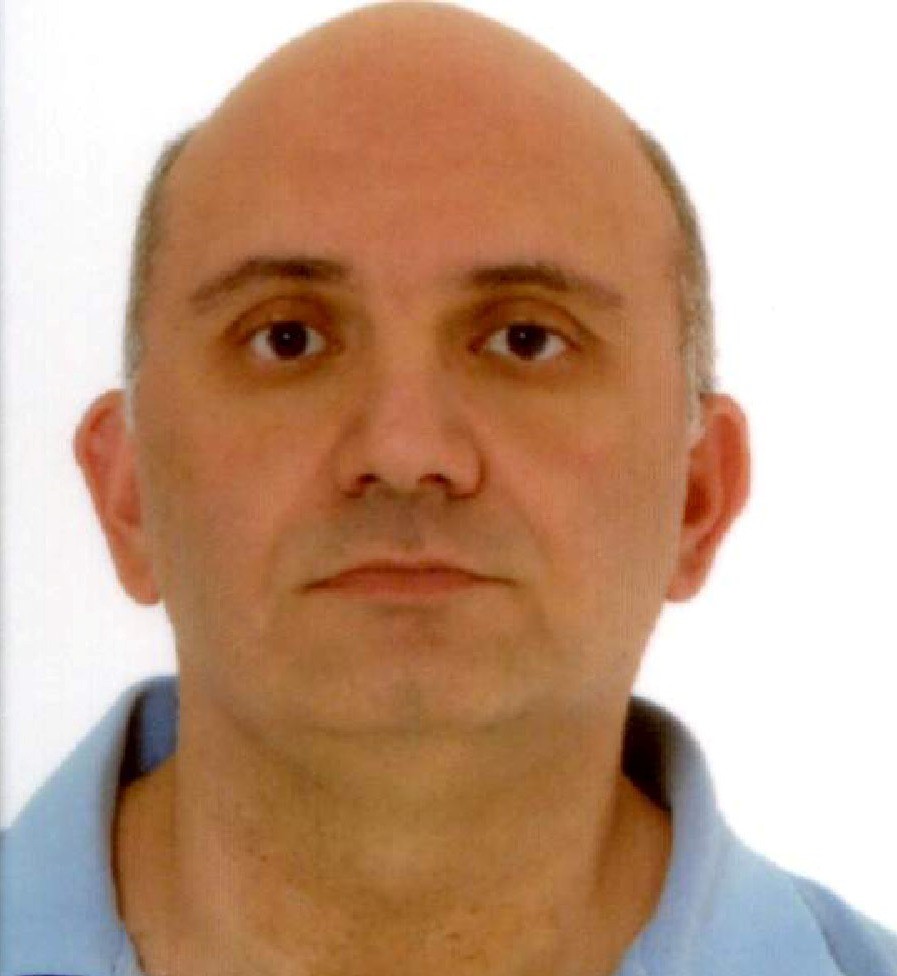
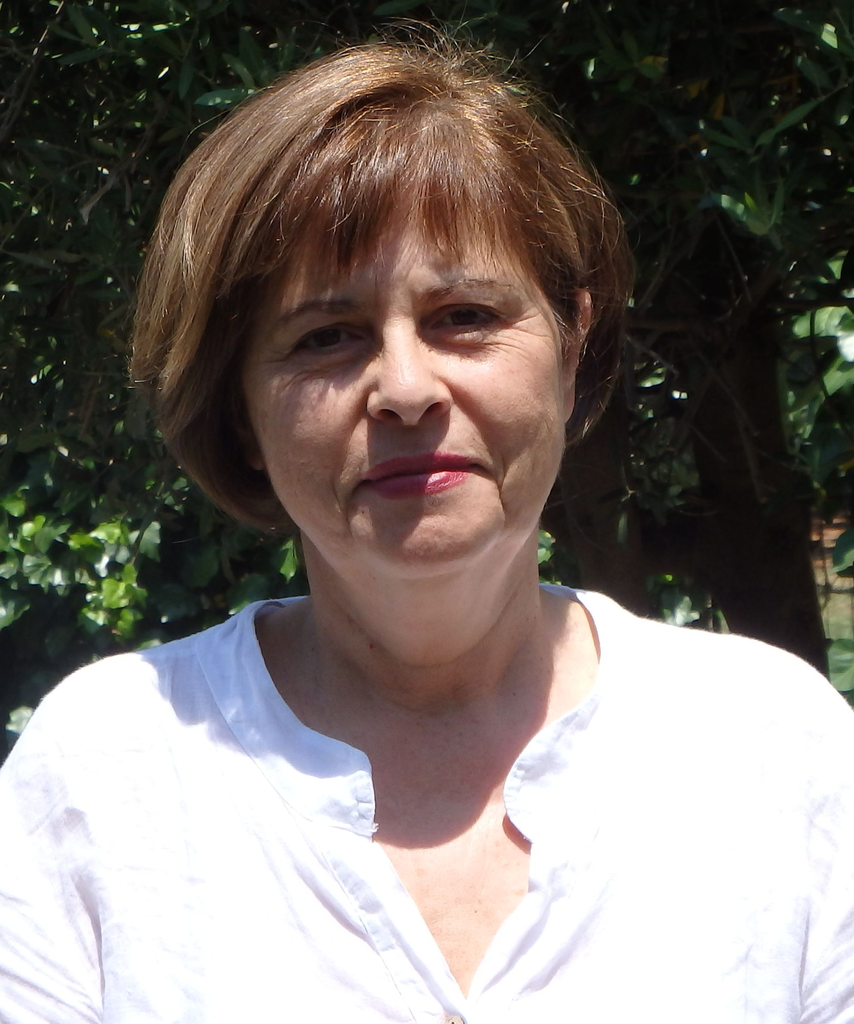
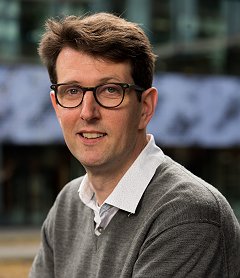
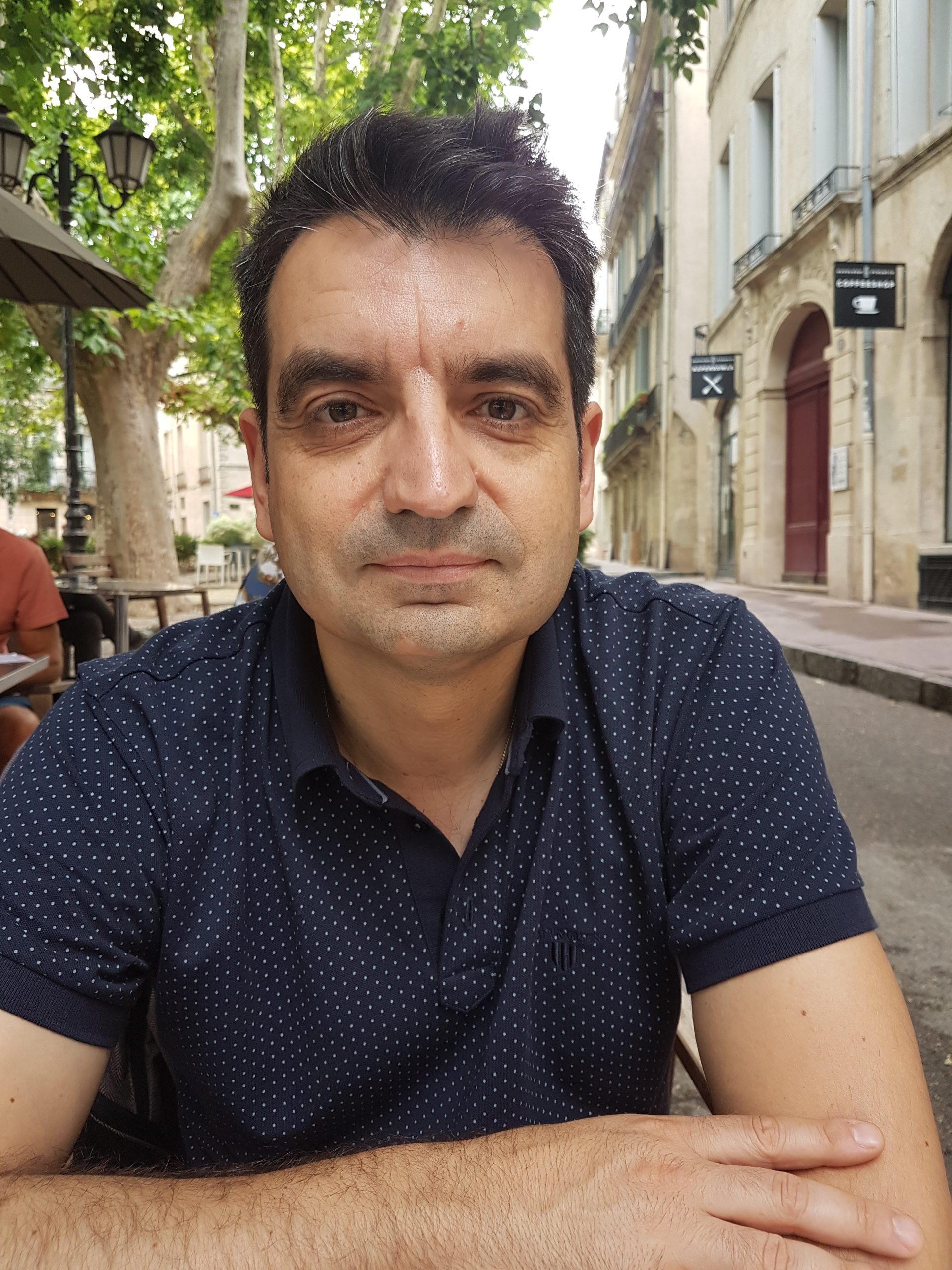
Chrysanthos Maraveas is an Assistant Professor at the Department of Technology and Natural Resources Management & Agricultural Engineering in the School of Environment and Agricultural Engineering at the Agricultural University of Athens since 2022. He earned his PhD in Structural Engineering from the University of Manchester and has held postdoctoral research positions at the University of Liège (EU-funded) and the University of Patras (Greek Ministry of Development-funded). Research Interests : Applications of AI and quantum computing in agriculture Sustainable materials and biodegradable polymers from agricultural waste Internet of Things (IoT) for greenhouse optimization Structural durability and corrosion resistance in agricultural environments Plastic waste management in agrifood systems 4D printing for sustainable agricultural plastics Scientific Recognition : Ranked in the top 2% of scientists worldwide by Stanford University (based on citations and h-index) Publications focus on: Cybersecurity in Agriculture 4.0/5.0 Smart sensors and edge computing for resource management Biopolymer innovations and nanotechnology Structural analysis of agricultural systems Sustainable construction materials from agro-waste Fire resistance in steel and composite structures
Professor Maria Papadopoulou is a faculty member in the Department of Language and History at the School of Early Childhood Education, Aristotle University of Thessaloniki. Her expertise spans literacies, multilingual education, refugee integration, and multimodal communication. She has held roles in curriculum development, teacher training, and policy analysis, focusing on inclusive practices for marginalized groups. Education & Professional Background: Established career in early childhood and language education with a focus on refugee and multilingual contexts. Administrative Roles: Contributed to academic governance and international conferences, including the Hellenic Semiotics Society. Her research emphasizes critical literacy, digital tools in education, and refugee education policy. Key projects include interventions for noise awareness in preschools and studies on Roma literacy practices. She has collaborated with NGOs and policymakers to bridge theory and practice in multicultural education settings. Publications span over 30 years, addressing topics like semiotics in advertising, multimodal texts, and task-based language teaching. Her work highlights the interplay between cultural context, technology, and pedagogy to foster inclusive learning environments.
John Paparrizos is an Assistant Professor of Computer Science and Engineering at The Ohio State University's College of Engineering, where he directs The DATUM Lab (Data Analytics, Understanding, Mining, and Management Lab). He maintains an adjunct affiliation with the School of Informatics at Aristotle University of Thessaloniki. His research spans databases, data science, machine learning, and artificial intelligence , with focus areas including: Time-series analysis (clustering, anomaly detection) Scalable data mining for structured/unstructured data Adaptive algorithms for resource-constrained environments Foundational technologies for data-intensive applications His work addresses real-world challenges across relational, time-series, multimedia, text, graph, web, and IoT data domains. Notable recognition includes: 2025 ACM SIGMOD Test-of-Time Award for k-Shape time-series clustering 2023 IEEE TCDE Rising Star Award ACM SIGMOD Research Highlight Award NetApp Faculty Award His research has been featured in New York Times (front page), Washington Post , Forbes , and adopted by Fortune 500 companies (Exelon, Nokia) and the European Space Agency. He actively serves on program committees for premier conferences including ACM SIGMOD, VLDB, IEEE ICDE, ACM SIGKDD, and NeurIPS. His open-source tools have exceeded 100,000 downloads and are integrated into academic curricula at Brown, Columbia, Purdue, and University of Chicago.
Dr. Ioannis Katsanakis serves as an Assistant Professor at the Department of Tourism Studies within the School of Economics, Business and International Studies at the University of Piraeus. His academic expertise focuses on Information Systems Management in Businesses and Organizations with particular emphasis on Business Process Management in tourism contexts. With a strong foundation in business organization and management, he has developed a specialized research profile at the intersection of information technology and tourism management. Dr. Katsanakis' research interests span Information Systems, Business Process Management, Strategic Management, E-Business, and increasingly focus on Tourism Technology and Digital Transformation within the tourism sector. His scholarly work demonstrates a clear trajectory from general business information systems toward specialized applications in tourism contexts, reflecting the evolving digital landscape of the tourism industry. The analysis of his recent publications reveals a significant shift toward tourism-specific applications of information systems theory. His work now prominently features systemic approaches to digital transformation in tourism ecosystems, knowledge management frameworks for tourism destinations, and the integration of sustainable development principles with digital technologies in hospitality. This evolution demonstrates his ability to adapt theoretical frameworks to address contemporary challenges in the tourism sector. His teaching portfolio includes foundational courses such as Introduction to Computer Science and specialized offerings like Information Systems and Decision Support for Tourism Businesses, e-Tourism and m-Tourism in the International Environment, and Business Simulations – Games. This curriculum reflects his commitment to preparing tourism professionals with the digital competencies required in today's technology-driven industry. Dr. Katsanakis has established a productive research trajectory with consistent publication output across international conferences and journals. His work bridges theoretical information systems frameworks with practical tourism applications, contributing valuable insights to both academic discourse and industry practice in the rapidly evolving digital tourism landscape.
Andy D. Pimentel is a Full Professor at the University of Amsterdam, where he chairs the Parallel Computing Systems (PCS) group within the Systems and Networking Lab at the Informatics Institute. His work focuses on the design, programming, and run-time management of multi-core and multi-processor computer systems, with particular attention to performance, power/energy consumption, system dependability, and design productivity. His academic background includes: PhD in Computer Science, 1998, University of Amsterdam MSc in Computer Science, 1993, University of Amsterdam Professor Pimentel's research spans multiple critical areas in modern computing systems. His primary interests include multi-core embedded systems, system-level design and simulation, design space exploration, performance and power analysis, system dependability, hardware/software co-design, run-time resource management, and Edge AI. His work addresses the growing challenges of making computer systems faster, more sustainable, energy efficient, reliable, and secure in an era of increasing computational demands and climate concerns. The PCS group he leads performs research on the modeling, analysis and optimization of extra-functional aspects of computing systems, which play a pivotal role in their work. An analysis of Professor Pimentel's recent publications reveals a strong focus on edge computing, distributed AI, and energy-efficient system design. His work bridges theoretical computer architecture with practical implementation challenges, particularly in the context of resource-constrained environments. Key trends include the adaptation of AI models for edge devices, thermal management in advanced architectures, and optimization of multi-core systems for both performance and energy efficiency. His research increasingly addresses sustainability concerns in computing, reflecting broader industry and academic priorities. His notable scientific achievements include: IEEE CEDA Outstanding Service Recognition Award DATE Fellow Award Professor Pimentel has served in numerous leadership roles in the academic community, including as General Chair of Design Automation and Test in Europe (DATE) 2024, Vice General Chair of IEEE/ACM Embedded Systems Week 2025, and General Chair of IEEE/ACM Embedded Systems Week 2026. He has secured significant research funding for projects related to sustainable computing, edge AI, and multi-core system design. His professional service includes board membership with the ICT Research Platform Nederland (IPN) since 2020 and leadership roles in major conferences such as DATE, Embedded Systems Week, and SAMOS. The Parallel Computing Systems group he chairs is a vibrant research team within the Systems and Networking Lab at the Informatics Institute. The PCS group focuses on the challenges of modern computing systems, particularly addressing the extra-functional aspects like performance, power consumption, and system dependability. Their work is highly relevant to current technological challenges in edge computing, sustainable systems design, and the integration of AI into resource-constrained environments.
Lefteris Doitsidis is an Associate Professor at the School of Production Engineering and Management, Technical University of Crete. He holds a PhD in Production and Management Engineering from the same institution (2008), with prior academic positions at the Department of Electronics, Hellenic Mediterranean University. His professional journey includes visiting scholar roles at the University of South Florida, USA. Research focuses on robotic systems, including autonomous navigation of UAVs/AUVs, multirobot teams, computational intelligence, and educational robotics. He leads the Intelligent Systems and Robotics Laboratory, developing tools like HYDRA for STEM education and frameworks for industry 4.0 applications such as bin-picking and precision agriculture. His work integrates control systems optimization, energy efficiency in manufacturing, and digital twin technologies. Over 65 publications span journals, conferences, and books, emphasizing practical implementations like ROS-based autonomous vehicle testbeds and energy management systems for electric vehicles. Key contributions include UAV path planning algorithms, swarm robotics coordination, and sensor fusion techniques. Current research trends emphasize sustainability in manufacturing, educational robotics platforms, and autonomous systems validation through advanced algorithms like Deep Deterministic Policy Gradient.
Sergios Dimitriadis serves as Professor in the Department of Marketing and Communication at Athens University of Economics and Business (AUEB), where he has taught since 2000 following ten years of academic and consulting experience in France. His instructional portfolio includes Digital and Omni-channel Marketing, Customer Experience Management, and Digital Content courses. His educational credentials feature a foundational degree from Athens University of Economics and Business and a doctoral degree from France's University of Aix-Marseille. Professor Dimitriadis specializes in digital consumer behavior with emphases on social media brand dynamics, 3D virtual retail environments, and relational value frameworks. His research investigates how technological interfaces shape consumer-brand interactions, particularly examining perceived value constructs in Facebook ecosystems and spatial navigation in immersive online stores. Analysis of his 15 most recent publications reveals consistent focus on relational benefit-cost dynamics across digital contexts, with methodological strengths in experimental design and multivariate analysis. Key thematic trajectories include green brand relationship metrics (2018-2019), social media brand page typologies (2018), and trust-based segmentation in financial technology (2011). No scientific awards were documented in source materials. As scientific director of AUEB's Center for Training and Lifelong Learning educational programs, he bridges academic and professional spheres through European/national research program consultancy and organizational training initiatives, demonstrating commitment to applied knowledge transfer despite absence of specific grant details.
Maria Hatzigianni is an Assistant Professor at the University of West Attica with an honorary position at the University of Melbourne. Boasting over 13 years of early childhood teaching experience across Greece and Australia plus 7+ years in academia, she specializes in digital technology integration for children birth to 8 years. Her academic foundation includes: PhD from the University of Melbourne (full scholarship), researching technology's impact on children's self-esteem Masters in ICT in Education from National and Kapodistrian University of Athens (National Scholarship) Bachelor's in Early Childhood Education from National and Kapodistrian University of Athens Hatzigianni's research critically examines technology's intersection with creativity, play, and social-emotional development using mixed methodologies. She actively collaborates with children, teachers, and parents across cultural contexts, with current projects addressing touchscreen usage by infants, STEAM integration, makerspaces, and virtual reality applications. Her work emphasizes teacher professional development in digital competencies, grounded in critical/postmodern ecological frameworks. Publication analysis reveals consistent cross-cultural investigations (Greece, Australia, China) into technology-enhanced learning environments, quality improvement systems in ECEC, and innovative pedagogies like 3D printing. She consistently addresses how digital tools can enhance early learning while navigating implementation challenges across diverse educational settings. Though no specific scientific awards beyond her educational scholarships are documented, Hatzigianni actively contributes to early childhood organizations. Her research collaborations include quality improvement studies with Professor Linda Harrison and makerspace/STEAM projects with Professor Matt Bower. Current research initiatives demonstrate her global impact: Touchscreen beliefs study (birth to three) Australian quality improvement systems STEAM curriculum embedding Makerspace pedagogies with 3D printing VR applications in teacher education Google Suite implementation for preservice teachers These projects highlight her commitment to evidence-based technology integration in early childhood education worldwide.
Georgios Keramidas is an Assistant Professor in Computer Architecture at the Department of Informatics, Aristotle University of Thessaloniki . He also holds an Adjunct Professor position at the Hellenic Open University and collaborates with institutions like the University of Peloponnese and University of Patras . Research Interests : Computer Architecture, Memory Systems, Multicore/GPU Design, Low-Power Techniques, Fault-Tolerant Systems His work focuses on cache optimization , energy-efficient computing , and security-aware memory design . Key contributions include DVFS frameworks , reuse-distance prediction , and non-deterministic cache mechanisms . Recent article trends highlight innovations in computation-in-memory , IoT platform components , and security/low-power co-design . Patents on image compression and GPU optimization reflect practical applications of his research. Academic Network : Collaborates with institutions including University of Patras , University of Manchester , and TU Dresden
Georgios Siolas is a Senior Researcher at the Artificial Intelligence and Learning Systems Laboratory (NTUA-ISLab), part of the School of Electrical & Computer Engineering at the National Technical University of Athens (NTUA). He holds a BSc in Electrical & Computer Engineering from NTUA (1998), an MSc in Cognitive Science from Sorbonne Université (1999), and a PhD in Computer Science (2003). His research focuses on machine learning, text mining, information retrieval, and semantic web technologies, with applications in computer vision, recommender systems, and social network analysis. He develops intelligent systems for cultural heritage management, smart tourism platforms, and sign language recognition. Key contributions include innovations in neural architecture search, deep learning for hyperspectral imagery, and plagiarism detection in imbalanced datasets. His work integrates semantic technologies with pervasive computing for smart home environments.
Xenia Mamakou is an academic at the Department of Business Organization and Administration, School of Business Administration, Athens University of Economics and Business (AUEB). She is affiliated with the Business Informatics Laboratory (BILab) and holds a PhD in Information Systems from AUEB. Education: BSc in Business Organization and Administration (AUEB), MSc in Business Information Technology (UMIST, UK), PhD in Information Systems (AUEB) Her research focuses on business analytics, digital transformation, and the organizational/social impacts of technology. She has published over 30 articles on topics like business analytics, ERP systems, e-commerce, and agile methodology. Her recent works explore AI adoption, metaverse opportunities, and agile project management in Greece. She has authored an academic book on Excel-based data analysis and received two teaching excellence awards from AUEB. She serves as scientific director of an eLearning course and participates in three other programs as a lecturer. Her involvement in committees includes Teaching and Learning Support, Gender Equality and Anti-Discrimination, and AUEB Faculty Association (Treasurer since 2021). Scientific Awards: AUEB Teaching Excellence Award (twice) Treasurer, AUEB Faculty Association (2021–present)
Angeliki Mali is an Associate Professor at the University of Crete , affiliated with the School of Sciences and Engineering and the Department of Mathematics . She holds a PhD from Loughborough University (2016) and specializes in mathematics education, focusing on pedagogical strategies, proof construction, and the integration of digital tools in higher education. PhD, Loughborough University, 2016 Her research explores technological pedagogical content knowledge (TPACK) , student engagement with digital textbooks , and commognitive frameworks in proof teaching. She has extensively studied dynamic geometry systems and interactive learning materials to enhance mathematical meaning-making. Recent publications highlight trends in proof analysis , complex analysis pedagogy , and cross-cultural education challenges . Her work bridges cognitive theories with practical teaching methods, emphasizing the role of metarules and discourse structures in university classrooms.
Isambo Karali is an Assistant Professor in the Department of Informatics and Telecommunications at the National and Kapodistrian University of Athens, a position she has held since November 2007. Prior to this, she served as a Lecturer at the same department from September 1999 to November 2007. Her academic career spans over three decades with significant contributions to knowledge representation, uncertainty reasoning, and semantic web technologies. Dr. Karali's educational background includes: PhD in Informatics (1995) from the University of Athens MSc in Computer Science (1988) from University College, University of London Bachelor of Mathematics (1986) from the Department of Mathematics, University of Athens Dr. Karali's research focuses on Knowledge Representation and Reasoning with Uncertainty, Artificial Intelligence, Logic Programming, and Object-Oriented Programming. She has made significant contributions to applying Dempster-Shafer theory for handling uncertainty in Semantic Web applications. Her work bridges theoretical foundations of logic programming with practical applications in knowledge representation, particularly in distributed and heterogeneous environments. She has supervised numerous PhD and master's theses in these areas. Her recent publications demonstrate a strong trend toward integrating uncertainty reasoning with Semantic Web technologies, particularly using Dempster-Shafer theory and fuzzy logic. Her work addresses challenges in managing imprecise and uncertain information in large-scale knowledge systems, with applications in recommendation systems, news analysis, and semantic search. The interdisciplinary nature of her research connects artificial intelligence, knowledge representation, and web technologies to solve complex information management problems. Dr. Karali has been actively involved in research funding and collaboration: Principal Investigator for "Handling uncertainty in data intensive applications on a distributed computing environment (cloud computing)" under the "Thalis" Program Scientific Responsible for "Artificial Intelligence and Logic Programming Techniques for Knowledge on the World Wide Web" at the National and Kapodistrian University of Athens Scientific Responsible for "Semantic Web and Logic Programming - Application to Guided Search" at the National and Kapodistrian University of Athens Participant in multiple EU research projects including MISSION, COSMOS, ADDSIA, PARACHUTE, APPLAUSE, and EDS As an educator, Dr. Karali has taught core undergraduate courses including Object-Oriented Programming and Logic Programming, as well as graduate courses on Knowledge Technologies and Artificial Intelligence. She has supervised numerous PhD and master's students, with a focus on uncertainty reasoning, semantic web technologies, and logic programming applications. Her mentorship extends to student competitions, including guiding the Department's team in the Microsoft ImagineCup 2009. Dr. Karali has also contributed to the academic community through service activities, including membership on program committees for conferences like IEEE ICTAI, reviewer for prestigious journals, and organizational roles in academic events. From 2000 to 2012, she was responsible for the Department's website, contributing to its architecture design and system development.
Spyros Syrmakesis is a Professor at the Department of Electrical and Computer Engineering, University of Peloponnese (Patras). He directs the E-Entrepreneurship and Interaction Design Laboratory and participates in StartUp Europe initiatives, focusing on research, innovation, and IT development. Director, E-Entrepreneurship and Interaction Design Laboratory Member, StartUp Europe Research Areas: IT Innovation, Social Web, Start-Up Ecosystems Research Interests : Information Systems, Databases, e-Government, Human-Computer Interaction, Data Mining, Personalized Services, and STEAM Education. His work bridges entrepreneurship with technology, emphasizing start-up creation and adaptive design. Recent Article Trends : Focus on STEAM education (2024), Blue Economy skill development (2024), PBL pedagogy (2024), and assistive technologies for aging populations (2018–2019). Earlier work (2002–2018) explores web personalization, e-commerce, and educational technology frameworks. Labs & Projects : Leads the E-Entrepreneurship and Interaction Design Laboratory. Involved in initiatives like the TRACCE project (2021) for cultural route personalization and RADIO (2019) for robotic assisted living.
Spyros Fountas is a Professor of Precision Agriculture at the Agricultural University of Athens (AUA), affiliated with the School of Environment and Agricultural Engineering. As Editor-in-Chief of the journal Smart Agricultural Technology (2021–present) and former Editor-in-Chief of Computers and Electronics in Agriculture (2014–2021), he leads academic discourse in digital agriculture. He holds a Master's in Informatics from Cranfield University (UK) and a PhD in System Analysis in Precision Agriculture from the University of Copenhagen (Denmark), with visiting scholar experience at Purdue University (USA). Education MSc in Informatics, Cranfield University (1998) PhD in System Analysis in Precision Agriculture, University of Copenhagen (2004) His research spans Precision Agriculture , Agroecology , and Agricultural Robotics , focusing on UAVs, hyperspectral imaging, and AI-driven systems. He has coordinated 9 research projects, including 3 Horizon2020 initiatives, and participated in 28+ projects. His work addresses climate-smart practices, data privacy, and yield prediction through technologies like AutoML and remote sensing. Recent publications (2025–2024) highlight his expertise in Digital Agriculture and Environmental Sustainability , covering topics from drone-based spraying in viticulture to federated learning for data privacy. He has 82 journal publications, 250+ total papers, and 7800+ citations (Google Scholar, 2024). As head of the Smart Farming Technology Group (SFTGroup), he drives innovation in agricultural IoT and edge-AI systems. His projects include the OliveGROW information system for olive cultivation and contributions to EU Smart Villages initiatives.